Where to buy
Check the latest price, availability and delivery on Amazon. Orders are placed on Amazon. We may earn a commission from qualifying purchases. Every pick below is labelled for what it really is — accessory, shade alternative or garden arch — because none of them is a pergola.
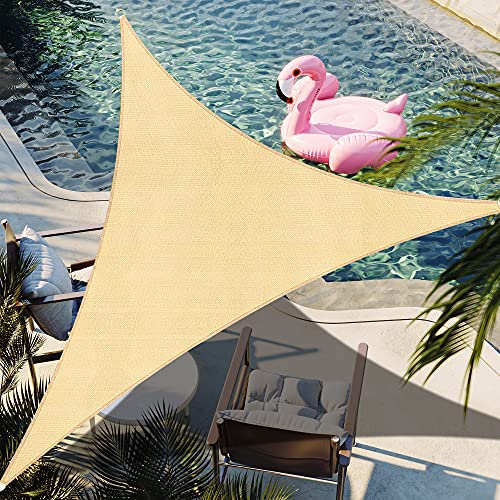
- Best overall: SHADESPEARE 10′ x 10′ x 10′ Triangle Sun Shade Sail Canopy, Sand — Check on Amazon (Shade alternative — not a pergola)
- Best right-triangle for corners: Patio Paradise 8′ x 8′ x 11.3′ Sun Shade Sail, Right Triangle, Red — Check on Amazon (Shade alternative — not a pergola)
- Best cut-to-fit pergola top cover: IMSGVIFO 90% Shade Cloth, 5 x 10 ft, with Grommets — Check on Amazon (Accessory — pergola top cover, not a pergola)
- Best garden arch for climbers: RUBFAC 7.8 ft Garden Arch, Metal Trellis for Climbing Plants, Black — Check on Amazon (Garden arch — not a pergola)
- Best walk-through garden arbor: Metal Pergola Arbor, Steel Garden Arch Trellis, 7’8″ H x 4’5″ W — Check on Amazon (Garden arbor — not a pergola)
- Best hardware kit for triangle sails: LOVE STORY Hardware Kit, 6 Inches, Stainless Steel, for Triangle Shade Sail — Check on Amazon (Accessory — not a pergola)
Read the full guide ↓
Disclosure: As an Amazon Associate, dailyhomedecorating.com earns from qualifying purchases. Links to Amazon on this page are affiliate links; they cost you nothing extra. Listing details such as price and availability change often, so check the current Amazon listing before you buy.
Start with the same honesty, aimed at a bigger space: the best pergola for backyards under $20 does not exist, because a pergola is a structure of posts and beams and no structure is sold at this budget — in a backyard least of all, where spans are wider and wind has room to work. What a backyard does give you, though, is exactly what this tier’s real products need: a house wall to anchor to, fences that mark ready-made boundaries, corners where two boundaries meet, and room to set one proper post. Spend this budget in a backyard and you are not buying a toy version of anything — you are buying a 10-foot sail of real shade over the loungers, a right-triangle sail that turns a dead corner into the children’s patch or the reading seat, shade cloth that gives the frame you already own its working top back, and arches that give the garden the entrances and climbing structure a pergola would have provided. Six purchases, each labelled for what it truly is — shade alternative, accessory, garden arch — and each chosen for the way backyards actually get used: in zones, at different hours, by people who drift between sun and shade all afternoon.
Backyard thinking is zone thinking. The dining zone wants shade at lunchtime and a clear sky by evening. The play zone wants shade that moves less than the children do. The quiet corner wants shade and a little theatre — colour, a climber, a reason to walk down the garden. A pergola answers zoning with carpentry; this budget answers it with fabric, placed where the sun actually is at the hour you actually sit there. That is why this guide’s picks are mostly sails in different shapes: the triangle for the three-anchor classic, the right triangle for corners, and cloth for the spans and frames a backyard accumulates over years. Add the hardware kit that makes any of it safe, and the two arches that handle the garden’s vertical ambitions, and a small budget starts to look less like a compromise and more like a plan. Measure your zones, check your anchors, and let us be precise about every product that follows.
How to Shop the best pergola for backyards under $20 Tier Without Wasting Money
This page is organised the way an honest salesperson would walk you through the tier: the reality first, then the six purchases that survive it, then the measuring, choosing and mistake-avoiding knowledge that decides whether those purchases succeed in your space. The quick picks table below is the whole guide in one screen — keep it open while you read the detailed reviews, and let the labels in its middle column do their quiet, essential work.
In this guide
Quick Picks
Short on time? Each row names a buyer type and the honest accessory or alternative that suits it. There is no pergola in this table, because there is no pergola at this budget — there are six genuinely useful ways to spend the money instead.
| Buyer type | Pick | What it really is | Link |
|---|---|---|---|
| Best neutral-colour triangle sail | SHADESPEARE 10′ x 10′ x 10′ Triangle Sun Shade Sail Canopy, Sand | Shade alternative — not a pergola — check price on Amazon | Check on Amazon |
| Best right-triangle for corners | Patio Paradise 8′ x 8′ x 11.3′ Sun Shade Sail, Right Triangle, Red | Shade alternative — not a pergola — check price on Amazon | Check on Amazon |
| Best cut-to-fit pergola top cover | IMSGVIFO 90% Shade Cloth, 5 x 10 ft, with Grommets | Accessory — pergola top cover, not a pergola — check price on Amazon | Check on Amazon |
| Best garden arch for climbers | RUBFAC 7.8 ft Garden Arch, Metal Trellis for Climbing Plants, Black | Garden arch — not a pergola — check price on Amazon | Check on Amazon |
| Best walk-through garden arbor | Metal Pergola Arbor, Steel Garden Arch Trellis, 7’8″ H x 4’5″ W | Garden arbor — not a pergola — check price on Amazon | Check on Amazon |
| Best hardware kit for triangle sails | LOVE STORY Hardware Kit, 6 Inches, Stainless Steel, for Triangle Shade Sail | Accessory — not a pergola — check price on Amazon | Check on Amazon |
How These Picks Were Chosen
The first filter was honesty, and it eliminated the entire premise of the search as most people type it. We looked for a freestanding pergola — four posts, roof beams, a structure you can stand under — at this budget, across the major brands and the no-name listings alike, and it does not exist. What does exist at the bottom of the market, wearing pergola keywords, is a crowd of accessories, replacement covers, shade fabrics and garden arches, some of them listed in ways that let a hurried buyer believe a structure is coming. Every pick in this guide survived three tests. First, the listing itself had to state clearly what the product is — its size, its material, and in the best cases an explicit note such as cover only or not waterproof — so the facts on this page come from the listing, not from wishful reading. Second, the product had to do a real pergola-adjacent job well: shade a seating area, cover or re-cover a frame, tension and anchor properly, add privacy or light, or give a garden the vertical structure an arch honestly provides. Third, it had to belong in this budget in the size named, at the time of checking — and because prices in this tier move constantly, every pick says check price on Amazon rather than printing a figure that would be wrong by the weekend.
We also checked for safety recalls covering the product types in this guide before finalising the list, and we favoured established outdoor brands and clearly specified listings over anonymous ones with inflated claims. Where a product family is known by a plainer name — an arch is an arch, a sail is a sail — this guide uses the plain name in its labels, even when the listing’s own title reaches for the word pergola. That discipline is the whole value of the page: six purchases that will arrive as exactly what you expected, do the job described, and leave you pleased rather than refunding a parcel and starting again.
The Backyard Budget Reality Check
A backyard pergola is the most material-hungry version of the idea: wide enough for a table or a sofa set, tall enough to walk under without thinking, and exposed on all sides to weather that a house wall would otherwise take. Posts, beams, rafters, feet and fixings for a span like that cost many times this entire budget in raw material alone, before a single cut is made — which is why nothing in this guide, or anywhere else at this level, is a backyard pergola, and why every pick is labelled as the accessory, alternative or arch it really is. Be especially wary, in a backyard context, of the photograph trick: a shade sail pictured over a beautiful pergola, an arch pictured at the end of a vista, a cloth pictured on a frame — in each case the structure in the photograph is not in the box. The box holds the fabric, the fittings or the frame for plants, and the honest listings say so. Read contents and dimensions, not photographs, and this tier cannot disappoint you.
The encouraging half of the reality is that backyards are the best possible setting for this tier’s real products. Anchors abound: the house gives you studs and masonry, fences give you lines and corners, and there is usually room to set one post exactly where the geometry wants it — a post, concreted or spiked and braced, is a modest project that unlocks sail layouts no balcony could dream of. Backyards also forgive experimentation: a sail can move from the dining zone to the play zone in a season as children grow and habits change, in a way no bolted structure ever will. And when the structure money finally arrives, nothing bought here is wasted — sails become the pergola’s shade layer, cloth becomes its top, arches stay in the garden forever. The backyard plan at this budget is therefore simple: shade the zones you use, structure the garden with arches, anchor everything like the wind is real — because in a backyard, it is.
Detailed Reviews: Every Pick, Labelled Honestly
SHADESPEARE 10′ x 10′ x 10′ Triangle Sun Shade Sail Canopy, Sand
What it really is: Shade alternative — not a pergola. A 10-foot triangle sun shade sail canopy in sand, sold as durable fabric with UV block for use as an awning over patios, lawns and garden seating.
Who it suits: a backyard with a house wall, a fence and room for one set post — the classic three-anchor layout this 10-foot sand triangle was made for.
Sand is the colour most pergola canopies come in for a reason: it throws a warm, natural shade, hides dust and pollen between washes, and sits quietly against brick, timber and render alike. This 10-foot triangle is the backyard all-rounder of the tier — big enough over a pair of loungers, a sandpit or a potting bench, small enough to tension between a house wall, a fence and one well-set post. The durable UV-block fabric is permeable, so the shaded patch stays airy and the sail is not trying to become a kite every time the wind picks up; even so, the fitting rules do not bend: three solid anchors, real tension, a slope for rain, and down it comes before a genuine storm. Gardeners will find the triangle’s moving shadow useful — plants at the edge get morning or evening sun while the seating keeps the midday shade. It is not a roof, it will not keep a cushion dry in a downpour, and it offers no privacy from above. As a first shade project in a real backyard, though, it is the easiest win in this guide.
Pros: honest labelling and a job it genuinely does well; sizing and construction details are stated in the listing so you can check fit before ordering; it solves a real pergola-adjacent problem — shade, privacy, hardware, light or garden structure — at this budget instead of pretending to be a structure it is not.
Honest limitation: it is shade alternative — not a pergola, and no wording on this page changes that. It will not give you a freestanding, roofed pergola, and if a full structure is what your garden needs, the right move is to save toward one rather than dress this purchase up as a substitute.
Choose it if the job described above is the job you actually have. Skip it if you need posts, beams and a roof — that is a different budget entirely. Check on Amazon — check price on Amazon before you buy, because prices in this tier move often.
Patio Paradise 8′ x 8′ x 11.3′ Sun Shade Sail, Right Triangle, Red
What it really is: Shade alternative — not a pergola. A right-triangle sun shade sail, 8 by 8 by 11.3 feet, in red heavy-duty shade cloth, sold as a garden and pergola cover with UV-blocking fabric for backyard and deck use.
Who it suits: a garden corner, play patch or L-shaped seating nook that needs shade and a lift of colour, where the right-triangle shape hugs two boundaries at once.
The right triangle is the problem-solver shape: the long hypotenuse spans diagonally while the two short sides hug the corner of a house, a fence junction or an L-shaped patio, putting shade exactly where corners waste it. In red, it is also the one sail in this tier that behaves like a design decision rather than an apology — over a garden seating corner or a children’s play patch it reads as intentional, cheerful colour. The heavy-duty cloth and permeable weave follow the same rules as every sail here: tension it hard, slope it so water sheds, and anchor into structure, not siding. Its diagonal layout throws a diagonal shadow, which moves interestingly through the day and covers an L-shaped seating arrangement better than a square ever will. The trade-offs are planning and taste: you must think about which corner gets the high point before you drill anything, and red fades more visibly than sand or gray over seasons of sun, so expect the colour to soften. For a garden corner that needs shade and a lift at the same time, nothing else in this budget does both jobs.
Pros: honest labelling and a job it genuinely does well; sizing and construction details are stated in the listing so you can check fit before ordering; it solves a real pergola-adjacent problem — shade, privacy, hardware, light or garden structure — at this budget instead of pretending to be a structure it is not.
Honest limitation: it is shade alternative — not a pergola, and no wording on this page changes that. It will not give you a freestanding, roofed pergola, and if a full structure is what your garden needs, the right move is to save toward one rather than dress this purchase up as a substitute.
Choose it if the job described above is the job you actually have. Skip it if you need posts, beams and a roof — that is a different budget entirely. Check on Amazon — check price on Amazon before you buy, because prices in this tier move often.
IMSGVIFO 90% Shade Cloth, 5 x 10 ft, with Grommets
What it really is: Accessory — pergola top cover, not a pergola. A 90 percent shade cloth panel, 5 by 10 feet, sold as a sturdy sunblock mesh tarp with grommets for patio, plants, greenhouse, kennel, porch and pergola sun protection.
Who it suits: a backyard pergola, frame or fence-to-wall span that already exists and needs its sun blocked — this cloth is the working top and screen for structures already standing.
If you already own a pergola — or a simple frame, a fence-to-wall gap, or two posts and a rail — shade cloth is how this budget improves it. A 5-by-10 panel at 90 percent density is a serious piece of shade: laid over pergola rafters it turns midday glare into usable, dappled-but-cooler light, and the grommets along the edges make fixing it a zip-tie or bungee job rather than a sewing project. Ninety percent is the dense end of shade cloth, so expect a real temperature difference underneath and a softer, dimmer light — gardeners use the same density over greenhouses, which tells you how much sun it removes. The mesh passes air and rain instead of fighting them, so it does not need the engineered tension a sail does; it does need its edges supported so it cannot sag between rafters and hold puddles against the fabric. Cut-to-fit is the other quiet advantage: one panel covers a narrow pergola top, a side screen against low sun, or a plant bench, and offcuts make spare screens. It looks like what it is — a working mesh, not a tailored canopy — and that honesty is the trade for the lowest cost per shaded foot in this guide.
Pros: honest labelling and a job it genuinely does well; sizing and construction details are stated in the listing so you can check fit before ordering; it solves a real pergola-adjacent problem — shade, privacy, hardware, light or garden structure — at this budget instead of pretending to be a structure it is not.
Honest limitation: it is accessory — pergola top cover, not a pergola, and no wording on this page changes that. It will not give you a freestanding, roofed pergola, and if a full structure is what your garden needs, the right move is to save toward one rather than dress this purchase up as a substitute.
Choose it if the job described above is the job you actually have. Skip it if you need posts, beams and a roof — that is a different budget entirely. Check on Amazon — check price on Amazon before you buy, because prices in this tier move often.
RUBFAC 7.8 ft Garden Arch, Metal Trellis for Climbing Plants, Black
What it really is: Garden arch — not a pergola. A 7.8-foot black metal garden arch and trellis for climbing plants outdoors, sold as a garden arbor and archway frame for backyard decoration and plant support.
Who it suits: a path entrance, gate line or lawn-to-beds junction that deserves a threshold, with a climber planted at each foot from day one.
Let us label this plainly: an arch is not a pergola. It has no flat roof beams, it shades nothing, and nobody dines under it. What a 7.8-foot garden arch does do — and does for very little money — is give a garden the vertical moment people actually want from a pergola: a threshold, a frame for a path, and a support that turns a climbing rose, jasmine or clematis into a feature instead of a fence problem. The metal trellis sides give tendrils something to grip along the whole height, and the black finish disappears behind foliage the way garden structures should. Assembly is a bolt-together frame, an hour’s work at most, and it stakes or stands at a path entrance, over a gate line, or at the junction between lawn and beds. Its honest limitations are stability and scale: in an exposed, windy garden it needs firm staking, and a vigorous climber will cover it in a couple of seasons, which is the point — but buy it as a plant support and garden ornament, never as shade or shelter, and it will not disappoint you.
Pros: honest labelling and a job it genuinely does well; sizing and construction details are stated in the listing so you can check fit before ordering; it solves a real pergola-adjacent problem — shade, privacy, hardware, light or garden structure — at this budget instead of pretending to be a structure it is not.
Honest limitation: it is garden arch — not a pergola, and no wording on this page changes that. It will not give you a freestanding, roofed pergola, and if a full structure is what your garden needs, the right move is to save toward one rather than dress this purchase up as a substitute.
Choose it if the job described above is the job you actually have. Skip it if you need posts, beams and a roof — that is a different budget entirely. Check on Amazon — check price on Amazon before you buy, because prices in this tier move often.
Metal Pergola Arbor, Steel Garden Arch Trellis, 7’8″ H x 4’5″ W
What it really is: Garden arbor — not a pergola. A steel metal garden arbor and arch trellis, 7 feet 8 inches high by 4 feet 5 inches wide, sold for climbing plants, garden decoration and outdoor entrances.
Who it suits: a wider garden path or side entrance that needs a proper walk-through frame — the extra width clears barrows, bikes and tall gardeners alike.
The listing calls this a pergola arbor, so let us be precise about what arrives: a walk-through steel garden arch, 7 feet 8 inches tall and 4 feet 5 inches wide — an arbor, not a pergola. No roof, no shade, no dining underneath. What it does brilliantly at this price is structure: placed over a path or gate it makes an entrance, and planted with a climber on each side it becomes the green doorway every cottage garden is built around. The width is the detail to check — 4 feet 5 inches clears a standard garden path with room for a wheelbarrow, and the height clears tall gardeners with headroom to spare. Steel tube construction keeps it light enough to position alone and rigid enough once staked; in soft or windy ground, firm staking or feet set into gravel makes the difference between a feature and a lean. Growers should plant climbers at both feet from day one, because an arbor looks unfinished bare and glorious covered. Buy it as the garden’s architecture and a plant support, and it is one of the best-value objects in this tier. Buy it expecting pergola shade, and no arbor at any price would satisfy you.
Pros: honest labelling and a job it genuinely does well; sizing and construction details are stated in the listing so you can check fit before ordering; it solves a real pergola-adjacent problem — shade, privacy, hardware, light or garden structure — at this budget instead of pretending to be a structure it is not.
Honest limitation: it is garden arbor — not a pergola, and no wording on this page changes that. It will not give you a freestanding, roofed pergola, and if a full structure is what your garden needs, the right move is to save toward one rather than dress this purchase up as a substitute.
Choose it if the job described above is the job you actually have. Skip it if you need posts, beams and a roof — that is a different budget entirely. Check on Amazon — check price on Amazon before you buy, because prices in this tier move often.
LOVE STORY Hardware Kit, 6 Inches, Stainless Steel, for Triangle Shade Sail
What it really is: Accessory — not a pergola. A 6-inch stainless steel hardware kit sold specifically for triangle sun shade sail installation, as a shade sail accessories set for patio, garden, backyard and deck mounting.
Who it suits: every backyard sail buyer in this guide, because fences and walls only become anchors when stainless turnbuckles, pad eyes and hooks connect them properly.
Every sail in this guide is only as good as the hardware holding it, and this is the unglamorous purchase that decides whether a shade project lasts a summer or a week. The kit is built for triangle sails: turnbuckles to tension each corner, pad eyes to fix to walls and posts, and snap hooks to connect the two, all in stainless steel so the fittings do not rust-streak your siding or seize solid after one wet season. Six-inch fittings are the right scale for the 8-to-12-foot sails in this tier — strong enough to hold real tension, small enough not to look industrial over a patio door. The working method matters more than the parts list: fix pad eyes into studs, masonry or solid post timber, never into siding alone; leave the turnbuckles half-open when you first hook up so you have travel left to tension; and take the sail down by unclipping the hooks rather than unthreading everything, so spring refitting takes minutes. If you buy one thing from this guide before any fabric, buy this — fabric without hardware is just a tarp with ambitions.
Pros: honest labelling and a job it genuinely does well; sizing and construction details are stated in the listing so you can check fit before ordering; it solves a real pergola-adjacent problem — shade, privacy, hardware, light or garden structure — at this budget instead of pretending to be a structure it is not.
Honest limitation: it is accessory — not a pergola, and no wording on this page changes that. It will not give you a freestanding, roofed pergola, and if a full structure is what your garden needs, the right move is to save toward one rather than dress this purchase up as a substitute.
Choose it if the job described above is the job you actually have. Skip it if you need posts, beams and a roof — that is a different budget entirely. Check on Amazon — check price on Amazon before you buy, because prices in this tier move often.
Comparison Table
Side by side, with the honest category of each pick in the middle column. If you read nothing else, read that column — it is the difference between a satisfying purchase and a disappointing parcel.
| Pick | What it really is | Best for |
|---|---|---|
| SHADESPEARE 10′ x 10′ x 10′ Triangle Sun Shade Sail Canopy, Sand | Shade alternative — not a pergola | Best neutral-colour triangle sail |
| Patio Paradise 8′ x 8′ x 11.3′ Sun Shade Sail, Right Triangle, Red | Shade alternative — not a pergola | Best right-triangle for corners |
| IMSGVIFO 90% Shade Cloth, 5 x 10 ft, with Grommets | Accessory — pergola top cover, not a pergola | Best cut-to-fit pergola top cover |
| RUBFAC 7.8 ft Garden Arch, Metal Trellis for Climbing Plants, Black | Garden arch — not a pergola | Best garden arch for climbers |
| Metal Pergola Arbor, Steel Garden Arch Trellis, 7’8″ H x 4’5″ W | Garden arbor — not a pergola | Best walk-through garden arbor |
| LOVE STORY Hardware Kit, 6 Inches, Stainless Steel, for Triangle Shade Sail | Accessory — not a pergola | Best hardware kit for triangle sails |
How to Choose for a Backyard
Walk the garden at three times of day before you choose anything — morning coffee time, midday, and the evening hour when the garden gets its second life. Note where the sun is kind, where it is brutal, and where you actually sit, because backyard shade fails when it is bought for the space as drawn rather than the space as lived. Most gardens resolve into two or three zones, and this budget shades one zone properly or two zones lightly; choose the zone with the most hours in it. Dining zones favour rectangles and larger triangles centred slightly west of the table, so the moving shadow stays on the seats into the afternoon. Play zones favour the right triangle in a corner, where boundaries give anchors and the shade sits still over a sandpit or trampoline edge. Quiet corners favour colour, a climber and a seat — the arch-and-sail combinations in this guide were picked with exactly that corner in mind.
Then do the anchor audit honestly, zone by zone. House walls are gold: studs and masonry hold real tension. Fence posts are silver — sound for smaller sails if the post itself is solid in the ground, useless if it wobbles in your hand. Fence panels are nothing; never fix to them. Trees are tempting and genuinely strong, but they move, grow and sway, so use them for the lightest sails and expect to re-tension. Where the perfect third anchor does not exist, set a post: it is an afternoon’s work that backyard owners never regret, because every future sail, light string and hammock will thank it. Finally, think about water and wind as a pair. Slope every sail so rain sheds to a corner away from seats and doors, keep fabric clear of roof edges and gutters, and give yourself a five-minute takedown routine for storms — in an exposed garden, the owners who unclip in time are the owners whose sails last five summers.
Measuring Your Space and Anchoring Shade Safely
Shade is a geometry problem before it is a shopping problem, and five minutes with a tape measure saves every mistake in the next section. Start with the shadow, not the structure: sit in the space at the time you actually use it — late afternoon for most gardens — and note where the sun lands and where you wish it did not. A sail or cloth shades the area roughly beneath it, shifted by the sun’s angle, so a cover centred over the table at noon throws its useful shade off to one side by five o’clock. Triangles cover less area than their side lengths suggest, because the curved edges pull in; rectangles give you the honest rectangle of shade their corners describe, minus the same curved-edge effect on each side. Measure between the anchor points you truly have — wall to fence, post to post — and remember a sail must be smaller than that span, because the hardware and tensioning take up room at every corner and the fabric itself tensions outward as you tighten it.
Anchoring is where cheap shade succeeds or fails, and the rules are simple enough to state plainly. Fixings go into structure: wall studs, masonry, or solid post timber — never into siding, render or fence panels alone, because a tensioned sail pulls constantly and a gust multiplies that pull many times over. Posts for sails should be set in the ground properly, ideally with a slight lean away from the sail so the load straightens rather than bends them. Always build in a slope or a twist — one corner clearly lower than the others — so rain runs off instead of pooling; a pooled sail can hold a startling weight of water and will tear its corners or bend its fixings. Use stainless hardware outdoors, tension evenly corner by corner, and make the sail easy to unclip, because the correct response to a forecast storm is a sail taken down in five minutes, not a sail tested against the weather. Shade cloth over an existing frame is more forgiving — support the edges, avoid sagging bays that hold water, and fix at close intervals so wind cannot get under a loose edge and work it like a flag.
Pergola, Gazebo, Shade Sail and Arbor: The Differences That Matter
Four words get used as if they were interchangeable, and at this budget the confusion costs people money, so here is the plain version. A pergola is a structure: posts and an open roof of beams or rafters, traditionally carrying vines, which gives broken, dappled shade and defines an outdoor room without enclosing it. A gazebo is a roofed structure — a real, solid or fabric roof on a frame, usually round or hexagonal, freestanding in a garden — which gives full shade and rain shelter but costs structure money for the same reason a pergola does. A shade sail is fabric only: a tensioned HDPE canopy fixed between anchor points that already exist, giving excellent shade and airflow with no posts, no roof and no rain protection worth the name. An arbor or garden arch is a narrow walk-through frame for climbing plants — decoration and plant support, shading nothing but its own path. Every product in this guide belongs to one of those last three categories, or is a part — a cover, a curtain, a bracket, a light — made to serve the first one. Knowing which thing you are buying is not pedantry; it is the difference between shade this weekend and a disappointing box.
Fabric has its own vocabulary, and two terms are worth learning before you spend anything. HDPE — the knitted or woven polyethylene used in sails and shade cloth — is permeable: air and water pass through it, which is why sails survive wind and why the shade beneath them stays fresh, and also why they are honestly listed as not waterproof. GSM is the weight of the cloth per square metre: higher numbers mean a denser, heavier fabric that tensions flatter and generally lasts longer. Shade percentage — the 90 percent on a shade cloth — describes how much sun the mesh blocks, and the higher percentages make a dramatic, greenhouse-grade difference. Waterproof covers, by contrast, are coated solid fabrics: real rain shelter, but they must be sloped and tensioned so water sheds, and they work harder in wind. Neither is better in the abstract; they are different tools, and this guide labels each pick as the one it is.
Common Backyard Mistakes
The classic backyard mistake is scale optimism: one small sail bought for a big garden, fitted over the middle of a lawn-sized patio, shading a brave little island while the family eats in the glare around it. Shade the zone, not the garden — one seating area covered properly beats three covered theatrically. Second comes the fence-panel fixing, the single most common cause of the torn sail and the leaning fence in British and American gardens alike: panels flex, fixings rip out, and the repair costs more than the sail. Fix to posts you have tested with your full weight, or set a post of your own. Third is the flat sail over the dining table, picturesque until the first shower fills it with a bathtub of rainwater above the potato salad; slope is not optional, and the low corner belongs away from the seats.
Fourth, gardeners plant the arch and forget the plants, or plant one side only and wonder why it looks lopsided for years — one climber per foot, tied in patiently the first season. Fifth, sails get left up through named storms because taking them down feels like defeat; it is, instead, the entire maintenance plan, and the snap-hook habit turns it into five minutes rather than a project. Sixth, shade cloth gets draped over a frame with no edge support and sags into water-holding hammocks of its own — support the edges, fix at close intervals, and let the mesh do its flat, quiet work. And seventh, the whole budget gets spent on fabric with nothing reserved for hardware, so the beautiful sail flies from rope and optimism. In a backyard the wind always collects its debts; pay the hardware bill first and the garden will let you enjoy everything else in peace.
Final Recommendation
For most backyards, the pairing to buy is the SHADESPEARE 10-foot sand triangle and the LOVE STORY stainless hardware kit: three anchors — house, fence post, one set post if needed — and the garden’s main seat is in honest shade by the weekend, in a colour that belongs in a garden. Corner-rich gardens should look hard at the Patio Paradise right triangle in red, which turns the wasted L of wall and fence into the garden’s most characterful seat, and owners of an existing frame or pergola should start with the IMSGVIFO shade cloth, the cheapest restoration in this entire batch of guides. The arches are not shade and never claim to be: buy the RUBFAC for a standard path entrance, the wider steel arbor where barrows and bikes pass, and plant both the day they arrive. Zone by zone, anchor by anchor, that is a backyard transformed for the price of a family takeaway — with not one pretend pergola in sight.
Frequently Asked Questions
Is there a backyard pergola at this budget?
No. Backyard pergolas span wide, stand exposed to weather on all sides, and need more posts, beams and fixings than any other kind — the materials alone cost many times this budget. What this tier buys a backyard, honestly, is shade sails, shade cloth, hardware and garden arches, each labelled as what it is.
How do I anchor a shade sail in a backyard?
Use the house wall (studs or masonry) plus sound fence posts or one properly set post of your own. Never fix to fence panels. Tension with a stainless hardware kit, build in a slope for rain, and choose a layout you can unclip in five minutes before a storm.
Which sail shape suits a garden corner?
A right triangle. Its two short sides hug the walls or fences that form the corner and its long diagonal spans the open side, putting shade exactly where corners waste space. It is the natural pick for play patches, potting corners and L-shaped seating.
Can shade cloth replace a pergola roof?
It can cover a pergola’s open rafters or a frame’s top, and at 90 percent density it gives a real, cool shade — but it is a mesh: rain softens and drips rather than being shed, and it needs edge support so it cannot sag and hold water. As a top for a structure you already own, it is the best-value fix in this guide.
Are garden arches a type of pergola?
No. An arch or arbor is a narrow walk-through frame for climbing plants — garden structure and decoration. It shades nothing beyond its own footprint at noon. The confusion comes from listings that borrow the word pergola; this guide labels every arch plainly so you buy it for the right job.
What should I buy first: fabric or hardware?
Hardware, or both together. A sail without stainless turnbuckles, pad eyes and hooks cannot be tensioned safely, and improvised rope fixings are how sails tear and fences lean. The hardware also outlives the fabric and serves every future sail, so it is the tier’s most durable money.
Related Guides
Planning the wider outdoor project? These guides cover the neighbouring purchases, each with the same honest approach to what each budget really buys.


