Where to buy
Check the latest price, availability and delivery on Amazon. Orders are placed on Amazon. We may earn a commission from qualifying purchases.
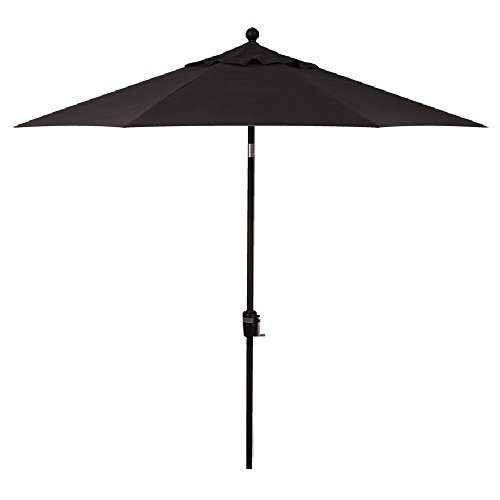
- Best overall for small patios: Treasure Garden 7.5ft Patio Umbrella, Push Button Tilt, Black Aluminum Frame, Sunbrella Black — Check on Amazon
- California Umbrella 9′ Round Aluminum Market Umbrella, Crank Lift, Push Button Tilt, Black Pole, Sunbrella Navy — Check on Amazon
- PURPLE LEAF Cantilever Patio Umbrella 11 Feet, Grey — Check on Amazon
- Abba Patio 10FT Vienna Offset Patio Umbrella, 360° Rotation, Easy Tilt, Dark Green — Check on Amazon
- Outsunny 10ft Offset Patio Umbrella, Hanging Cantilever, Gray — Check on Amazon
- California Umbrella 9′ Round Aluminum Pole Fiberglass Rib Market Umbrella, Crank Lift, Collar Tilt, Royal Blue Olefin — Check on Amazon
Read the full guide ↓
Disclosure: As an Amazon Associate, dailyhomedecorating.com earns from qualifying purchases. Links to Amazon on this page are affiliate links; they cost you nothing extra. Listing details such as price and availability change often, so check the current Amazon listing before you buy.
The best patio umbrella for small patios under $500 is a study in a paradox: on a small patio, shade is more necessary, not less — there is nowhere to retreat to when the sun takes the whole slab — and yet every square foot the umbrella claims is a square foot the chairs cannot. Big-patio guides make this worse by treating size as a virtue and footprint as a detail. On a small patio the footprint is the product. The base competes with the table legs. The pole competes with the second chair. A cantilever’s swing competes with the wall, the railing and the door that opens outward onto the very space you are trying to furnish. This guide was written from the tape measure outward: every pick below was chosen because its total claim on a small space — base, pole, swing, storage — is honest, and because what it gives back in shade is worth the claim.
Under $500, a small-patio buyer is in a genuinely fortunate position, because this is the tier where small stops meaning cheap. The best pick in this guide is a 7.5 ft umbrella in genuine Sunbrella from one of the established shade makers — compact in size, premium in everything else. The 9 ft class, which on a small patio is the large option, is available here in Sunbrella with proper crank and tilt mechanisms, and in a fiberglass-rib version for patios that catch the wind. And the cantilever question — usually dismissed for small spaces — deserves a fair hearing at this budget: a well-chosen offset umbrella parks its pole and base at the patio’s edge and hangs its shade over seating that a centre pole would have displaced, which is why three offset models appear below, each with its space conditions stated plainly. A cantilever on a small patio is a precision decision, not a default, and the reviews say exactly when it works and when it steals the room it was meant to serve.
Three small-patio rules run through the guide. First, measure three things, not one: the floor the base will occupy, the air the canopy and its tilt will sweep, and the corner the closed umbrella will live in — an umbrella that cannot be stored on a small patio will be left open, and an umbrella left open in a gust is a short-lived umbrella. Second, respect the door: on most small patios the door swings into the space, and the umbrella that blocks it will be cursed daily and used rarely. Third, smaller canopies are safer canopies — less sail, less leverage on the base, less drama in a gust — which is a genuine engineering argument for the 7.5 ft pick, not a consolation. Every linked pick was cross-checked against the Amazon Creators API for this site, matching title to ASIN, and every brand was screened against CPSC recall records, where the recalled umbrellas belong to other makers entirely. If your space is small and your budget is too, Best Patio Umbrella For Small Patios Under $300 covers the tier below; this page is about doing small properly.
In this guide
Quick Picks
Short on time, or comparing several options at once? Each row below names a small-patio situation and the umbrella that suits it, with a link to the listing.
| Small-patio situation | Pick | Why it stands out | Link |
|---|---|---|---|
| Best overall for small patios | Treasure Garden 7.5ft Market Umbrella, Sunbrella Black | Premium fabric and build at the size small patios actually need | Check on Amazon |
| Best 9 ft classic | California Umbrella 9′ Market, Sunbrella Navy | Full-size shade with crank lift and push-button tilt for a table patio | Check on Amazon |
| Best offset for edge placement | PURPLE LEAF 11ft Cantilever, Grey | Pole and base at the patio’s edge, shade hung over the seating | Check on Amazon |
| Best value cantilever | Abba Patio 10FT Vienna Offset, Dark Green | Rotation and tilt at the accessible end of the tier | Check on Amazon |
| Best corner cross-base | Outsunny 10ft Offset, Gray | Square-format cross base that owns a corner instead of the middle | Check on Amazon |
| Best for windy small patios | California Umbrella 9′ Fiberglass Rib, Royal Blue Olefin | Fiberglass ribs that flex in gusts, with collar tilt | Check on Amazon |
How we chose the best patio umbrella for small patios under $500
We measured candidates the way a small patio measures them: in total claim. For each umbrella we accounted for the base’s floor area, the pole’s position relative to seating, the canopy’s sweep when tilted or rotated, the vertical clearance needed under eaves and balcony ceilings, and the storage footprint when closed. Models that only work if the patio is emptied around them did not survive the screen, however good their shade. What survived is a deliberate spread: two compact market umbrellas that stand through or beside a small table, one 9 ft fiberglass-rib market umbrella for exposed sites, and three cantilevers whose bases can live at an edge or in a corner — included because, placed correctly, an offset pole can be the most space-efficient shade a small patio can buy, and placed incorrectly it is the least. The reviews are explicit about which is which.
Quality screens came second, and at this budget they could be strict. We favoured solution-dyed fabrics — genuine Sunbrella on the two lead picks — because a small patio’s umbrella is also its dominant visual object, inches from the door and impossible to ignore when it fades. We favoured aluminium frames, which will not rust-stain a small slab you have to look at. We favoured mechanisms a seated person can run — push-button tilt, collar tilt, crank lift, one-hand rotation — because on a small patio nobody can stand back and wrestle a pulley. And we verified: every linked pick was cross-checked against the Amazon Creators API for this site, and every brand was screened against CPSC recall records, with no recalls attaching to any product below. Where a pick needs a base that is sold separately, the review says so and says what “properly weighted” means for that format, because on a small patio the base is not an accessory — it is a piece of furniture you will see and step around every day.
The 6 best small-patio umbrellas under $500, reviewed
1. Treasure Garden 7.5ft Patio Umbrella, Sunbrella Black — best overall for small patios
Who it suits: The honest small patio: two chairs, a side table or a compact bistro set, and an owner who would rather have a smaller umbrella made properly than a larger one made cheaply. This is the pick the whole guide is built around.
Pros: The canopy is genuine Sunbrella solution-dyed acrylic — the same fabric class as umbrellas twice the size and price — on an aluminium frame from Treasure Garden, one of the established names in shade. At 7.5 ft it shades a couple completely without overhanging the neighbours, the railing or the door swing, and its modest sail area is a real safety advantage when a gust crosses a confined patio. The push-button tilt is simple, positive and operable from a chair. Closed, it stores in a corner or a closet without negotiation. In black, it is also the most tailored-looking pick here — on a small patio, where the umbrella is always in frame, that composure matters.
Honest limitation: It shades two people, not four, and tilting shrinks the effective shade further. If your small patio regularly hosts a table of four, this umbrella will leave the sunny end negotiating. The base is sold separately; choose a compact, heavy, low-profile base rather than the lightest disc that fits, and expect it to be a visible part of the furniture plan.
Choose this if your patio seats two and you want the quality tier without the size penalty. Skip it if you need to shade a four-person table — the 9 ft picks below exist for you. Check on Amazon
2. California Umbrella 9′ Round Sunbrella Market Umbrella, Navy — best 9 ft classic
Who it suits: Small patios organised around a dining table for four. Nine feet through a table is the classic small-patio arrangement for a reason: the table itself stabilises the pole, the base tucks underneath, and the canopy covers the table’s whole conversation.
Pros: Genuine Sunbrella canopy, crank lift that opens the umbrella in seconds — the habit-forming feature, since a small-patio umbrella must be closed when idle and therefore opened often — and push-button tilt for the angled hours. The black pole finish is the discreet choice against most railings and furniture. California Umbrella’s parts and replacement-canopy support matters on a small patio more than anywhere: the umbrella lives close to the house, gets used daily, and a worn canopy in year four should be a part order, not a replacement purchase.
Honest limitation: Freestanding — not through a table — a 9 ft canopy needs a properly heavy base, and on a small patio that base’s footprint is a real claim; through a table is where this pick is happiest. The shade also stays centred on the pole: it cannot drift toward a reading chair in the corner.
Choose this if your small patio has a table with an umbrella hole and four seats to shade. Skip it if your seating is a pair of loungers with no table — the offset picks will place shade better. Check on Amazon
3. PURPLE LEAF Cantilever Patio Umbrella 11 Feet, Grey — best offset for edge placement
Who it suits: The small patio with one good edge: a wall side or railing corner where a base can live permanently, and seating that a centre pole would split in two. This is the counterintuitive pick — a large canopy whose pole claims almost none of the seating area.
Pros: The offset geometry is the whole argument. Base and pole stand at the patio’s edge; the 11 ft canopy hangs over the seating from the side, so two loungers or a loveseat sit in unbroken shade with no pole between them and no base under their feet. Rotation swings the shade along the seating as the sun moves, which on a small patio — where furniture cannot chase the shade — is worth more than raw size. PURPLE LEAF’s aluminium frame, smooth handle action and fade-resistant fabric are the tier’s expected quality, and grey is the neutral that small spaces, visually, need.
Honest limitation: The conditions are strict. The base needs its maker’s specified ballast, fully filled, and a permanent edge home; the canopy’s swing must clear walls, doors and railings through its full arc; and an 11 ft canopy over a small patio is a large sail that must be closed in gusts and whenever the patio is empty. If your tape measure says any of that fails, believe it — the market umbrellas above are your picks.
Choose this if your patio has a true edge for the base and seating that a centre pole would ruin. Skip it if every edge is spoken for by doors, planters or the grill. Check on Amazon
4. Abba Patio 10FT Vienna Offset Patio Umbrella, Dark Green — best value cantilever
Who it suits: Small-patio owners who want the offset format — pole at the edge, rotating shade — while keeping most of the tier’s budget for the patio itself: the chairs, the rug, the base weights this umbrella still requires.
Pros: The Vienna delivers the cantilever essentials: a 10 ft canopy, a full 360 degrees of rotation so the shade can be walked along a loveseat or a pair of chairs, and an easy tilt adjustment for the low hours. The maker rates the canopy UV 50+, the frame runs on eight ribs, and the crank keeps daily opening and closing a one-person habit. Dark green is the garden-blending colourway — against planting, a small patio’s umbrella can nearly disappear, which is a visual space saving no measurement captures.
Honest limitation: The cross base must be weighted with proper base weights, filled fully — on a small patio, plan that ballast as a furniture decision, because it will sit visibly at your edge or corner. The fabric is a step below the solution-dyed acrylics at the top of this guide, so expect a shorter cosmetic life in hard sun and use a cover between uses.
Choose this if you want offset shade on a small patio at the accessible end of the budget. Skip it if you cannot give the ballast a permanent home — a table market umbrella will serve you better. Check on Amazon
5. Outsunny 10ft Offset Patio Umbrella, Hanging Cantilever, Gray — best corner cross-base
Who it suits: The corner patio. The cross base sits flat and square, which lets it own the one piece of geometry every small patio has — a corner — rather than competing for the middle of the slab.
Pros: You get the cantilever toolkit — 10 ft offset canopy, tilt, a full 360 degrees of rotation — in a package that is simple to assemble and simple to live with. The cross base’s flat profile is the least trip-worthy ballast frame on a small slab, and its square footprint stacks neatly into a corner where a round base wastes its curves. The grey colourway is as neutral as outdoor fabric gets. For a small patio whose seating sits diagonally or along one wall, the corner-parked pole keeps the middle of the space genuinely empty — a rare achievement at this size.
Honest limitation: A cross base is a frame for ballast, not ballast: it must be weighted fully with proper weights or slabs, and on a small patio that stack is part of the corner’s furniture. The fabric and hardware are honest mid-tier, so buy this pick for format and fit, and cover it faithfully.
Choose this if your patio has a corner doing nothing and seating along a wall. Skip it if your corners are doors or gates — the base needs to stay put. Check on Amazon
6. California Umbrella 9′ Fiberglass Rib Market Umbrella, Royal Blue Olefin — best for windy small patios
Who it suits: Exposed small patios — the roof terrace, the corner lot, the coastal balcony-adjacent slab — where the umbrella’s enemy is not the sun but the gust that arrives across an otherwise calm afternoon.
Pros: The fiberglass ribs are the story: they flex under gust load and return to shape where rigid ribs bend permanently or snap, which is the failure mode that kills small-patio umbrellas left up one hour too long. The collar tilt adjusts the canopy angle from below without a ladder or a stretch, the crank lift keeps the daily open-close routine quick, and the aluminium pole will not rust onto your slab. The olefin canopy is a sensible working fabric — fade-resistant, quick to dry after a shower, and honest about its tier.
Honest limitation: Olefin is not Sunbrella: in relentless sun it will tire sooner than the acrylic picks, and the royal blue shows that ageing more honestly than a neutral would. Flex ribs forgive gusts; they do not license leaving the umbrella open in a storm, and the base — sold separately — still needs to be properly weighted for a 9 ft canopy.
Choose this if your small patio is the windy one and rib survival outranks fabric prestige. Skip it if your patio is sheltered and appearance is the priority — the Sunbrella picks are prettier for longer. Check on Amazon
Comparison table
| Pick | Format | Canopy | Base status | Best for | Link |
|---|---|---|---|---|---|
| Treasure Garden 7.5ft, Sunbrella Black | Market, push-button tilt | 7.5′ round, Sunbrella acrylic | Sold separately | Two-person patios | Check on Amazon |
| California Umbrella 9′, Sunbrella Navy | Market, crank lift, push-button tilt | 9′ round, Sunbrella acrylic | Sold separately | Table patios for four | Check on Amazon |
| PURPLE LEAF 11ft Cantilever, Grey | Cantilever, offset | 11′ round, fade-resistant fabric | Sold separately | Edge placement, loungers | Check on Amazon |
| Abba Patio 10FT Vienna, Dark Green | Cantilever, 360° rotation, tilt | 10′ round, UV 50+ fabric | Cross base, weights needed | Value offset shade | Check on Amazon |
| Outsunny 10ft Offset, Gray | Cantilever, 360° rotation, tilt | 10′ offset canopy | Cross base, weights needed | Corner placement | Check on Amazon |
| California Umbrella 9′ Fiberglass Rib, Royal Blue | Market, crank lift, collar tilt | 9′ round, olefin | Sold separately | Windy small patios | Check on Amazon |
How to choose a patio umbrella for a small patio
Measure the claim, not the canopy. Before ordering anything, tape out three shapes on your patio: the base’s footprint, the seating it must not displace, and the arc the canopy or its tilt will sweep. Then check the verticals — eaves, balcony ceilings, wall lights — and the door’s swing. An umbrella that passes all five checks on your tape will work; one that fails any of them will annoy you daily. This five-minute exercise is the entire secret of small-patio shade, and it is why this guide’s first pick is 7.5 ft rather than 11.
Choose the format by where the pole can live. Through a table: the pole disappears into the furniture and the base hides beneath it — the most space-efficient arrangement of all, if you dine or sit at a table. Beside the seating in a weighted base: flexible, but the base becomes furniture. At the edge, as a cantilever: the seating stays pole-free, but the base and the swing need a true edge or corner to own. Rank your patio’s available spots in that order and let the ranking choose the format. The furniture guides at Best Patio Furniture Set For Small Patios Under $500 and Best Adirondack Chair For Small Patios Under $500 are built on the same footprint-first logic.
Size to the seats, then stop. Two seats need 7.5 to 9 ft of canopy; four seats at a table need 9 ft; more canopy than that on a small patio buys overhang, wind load and storage pain. Remember that tilt and low sun shrink effective shade — but on a small patio the answer to shrinkage is repositioning the chairs a foot, not upsizing the sail.
Make the base a furniture decision. You will look at this base every day and step around it every evening. Choose the lowest, flattest, heaviest-for-its-size profile that meets the umbrella maker’s requirement; place it where feet do not travel; and never trade ballast for floor space — a lighter base is not a space saving, it is a tip-over scheduled. For cantilevers, the specified fill is the product: half-filled is not a compromise position.
Plan storage before the first gust does it for you. A closed market umbrella needs a corner and a strap; a cantilever needs a defined parked position and, ideally, a cover. If neither exists on your patio, the umbrella will live open, and its life will be measured in weeks of weather rather than years of summers. A slim Best Deck Box For Small Patios Under $500 can hold the cushions and the cover, keeping the whole system tidy in the same footprint discipline.
Common mistakes small-patio buyers make
Buying the canopy in the photo. Listing photos are shot on decks the size of your whole patio, several times over. A 10 or 11 ft canopy over a two-chair slab overhangs everything, catches every gust and turns the umbrella into the room’s only feature. Size from your tape measure, not from the photograph.
Forgetting the door swing. The outward-opening patio door is the silent killer of small-patio layouts. Tape its arc before placing anything; an umbrella the door strikes daily will be moved, then resented, then removed.
Under-weighting the base to save space. The light, slim base is tempting precisely because floor space is scarce — and it is exactly wrong. The base is the one element whose job is to be heavy. Save space with canopy size and pole placement, never with ballast.
Leaving it open because closing is a chore. On a small patio an open umbrella is a sail in a funnel. Choose crank, push-button and one-hand mechanisms — as this guide’s picks do — so closing takes seconds, and then actually do it, every time the patio empties.
Ignoring the ground. A small patio’s floor is always visible, usually from the sofa inside as well. An Best Outdoor Rug For Small Patios Under $500 under the seating defines the room, protects the slab from base scuffs, and makes a compact setup look deliberate rather than squeezed.
Final recommendation
Start where this guide starts: the Treasure Garden 7.5ft in Sunbrella is the rare product that treats a small patio as a quality brief rather than a budget one, and for two-person spaces it is simply the right umbrella. If your small patio is a dining patio, the California Umbrella 9′ Sunbrella through the table is the classic, correct answer. Take a cantilever — the PURPLE LEAF for edge placement, the Outsunny for a corner, the Abba Patio for value — only when your tape measure confirms the base’s home and the canopy’s swing, and take the fiberglass-rib California Umbrella when your patio’s problem is wind rather than space. Measure first, buy once, and let the umbrella be the smallest well-made thing on your patio rather than the largest cheap one.
Worked examples: three small patios, measured
The 8 x 6 ft dining patio. A slab outside a kitchen door, furnished with a four-person table and not much else. The door swings out over the slab’s short side, which eliminates one corner and any cantilever whose swing crosses the door’s arc. The answer here is the classic one: the California Umbrella 9 ft through the table, base tucked beneath it, tilt handling the afternoon. The table stabilises the pole, the base hides in the furniture’s footprint, and the whole installation claims almost no floor that the dining set was not already claiming. A cantilever in this space would spend its life apologising to the door.
The 10 x 5 ft lounge strip. A long, narrow patio furnished with a loveseat and two low chairs along the wall — no table, nowhere for a centre pole to stand that is not inside the conversation. This is the cantilever’s honest small-patio case. The Outsunny’s cross base takes the far corner, weighted fully, and the canopy hangs over the seating from the end of the strip; or the Abba Patio Vienna parks at the same corner in green and disappears against the planting. The discipline that makes it work: the base’s corner is chosen once, the swing is checked against the wall and the door, and the canopy is closed whenever the strip is empty, because a narrow patio funnels wind along its length.
The 7 x 7 ft reading patio. A square of slab, two chairs, a side table, a book. Every large format fails here on arithmetic alone, and the Treasure Garden 7.5 ft is the patio’s whole answer: base beside one chair, canopy over both, push-button tilt for the late chapter. What this example teaches is that the correct small-patio purchase often looks modest in a listing and perfect in the space — the umbrella occupies the smallest possible share of the room while covering the largest possible share of its purpose. Owners of this patio should spend the tier’s remaining budget on the chairs and the rug, not on canopy they cannot unfold.
Living with it daily: the small-patio routine
Small patios punish friction. An umbrella that takes two people and a tool to adjust will be adjusted never, left in whatever position the last storm of opinions set, and resented by autumn. This is why the picks in this guide run on cranks, push-buttons, collar tilts and one-hand rotations: the daily routine they enable is the actual product. Open it when you take coffee out. Tilt it when the sun crosses the wall line — a two-second correction from your chair. Close it when you go in, every time, because on a small patio the umbrella is never far from a wall or a window that a gust can introduce it to. The whole liturgy takes under a minute a day, and it is what separates the umbrella that lasts five years on a small patio from the one that lasts five weeks.
Storage discipline is the second half of the routine. The closed umbrella has exactly one home — a named corner, a strap, a cover for idle weeks — and it returns there without negotiation, because a small patio has no “temporarily” space: anything left in the middle is in the way by definition. Once a month, brush the canopy down and check the base has not crept or settled; once a season, work every mechanism through its full travel and snug every bolt. None of this is burdensome, and all of it compounds: the small patio that runs this routine looks, by midsummer, like the deliberate outdoor room of someone who measured first — which, if you have read this far, is exactly what you are about to become.
The measuring worksheet: five numbers before you order
Everything in this guide reduces to five measurements, and taking them in order will choose your umbrella more reliably than any review — including this one. One: the slab. Length and width, honestly, excluding any strip the door, the grill or the storage box already owns. Two: the seating footprint. The chairs and table as they will actually sit, taped on the ground, with the space a seated person needs to push back and stand. Three: the base claim. The footprint of the base your format requires — a market base’s disc, a cross base’s square, a cantilever base’s full rectangle — taped in its intended home, with a walk-past test at the gap that remains. Four: the swing and sweep. For a cantilever, the circle its canopy describes; for a tilting market umbrella, the ellipse its tilted canopy projects; both checked against walls, rails, doors and lights. Five: the parked footprint. Where the closed umbrella stands in February, measured with the same honesty as where it stands in July.
Read the five numbers together and the format chooses itself. If number three fails for every cantilever base position but the table has a hole, you are a market-umbrella household. If number four fails for a 10 ft canopy but passes at 9, you have your size. If number five has no answer at all, you have learned the most valuable fact in small-patio shopping before spending anything: your umbrella must be the compact, storable kind, or your patio must gain a storage solution first. This worksheet is unglamorous, takes twenty minutes, and is the entire difference between the small patios that look designed and the ones that look negotiated. Do it with the tape, not the imagination — the imagination is how 11 ft canopies get ordered for 8 ft patios.
When no umbrella is the answer: honest alternatives
A small-patio guide earns its credibility by admitting the cases where its own category fails. If your five measurements say that no base fits, no swing clears and no corner stores, the correct purchase is not the least-bad umbrella — it is a different answer to the sun. The first alternative is arrangement: many small patios sit in a building’s shadow for part of the day, and seating placed for the shadow’s schedule — morning coffee in the east corner, evening drinks in the west — can cover a household’s actual outdoor hours with no equipment at all. The second is the wall’s own architecture: a fixed awning or a mounted shade belongs to the building conversation, needs the owner’s or landlord’s explicit blessing, and is a project rather than a purchase — but for a long-tenured small patio it can be the genuinely right one, precisely because it claims no floor at all.
The third alternative is to shrink the ambition rather than the quality: a single chair, a side table and the 7.5 ft pick in this guide is a complete outdoor room at a footprint many “too small” patios can in fact host, and it beats a crowded four-person arrangement that nobody uses. What we would steer you away from is the improvised middle: umbrellas clamped to railings they were not designed for, canopies tied to drainpipes, bases half-filled to fit. Small patios reward precision and punish improvisation, and the most expensive umbrella is the one bought twice — once hopefully, once correctly. Measure, be honest about which case you are in, and buy the answer that fits it.
A last word on small done well
There is a temptation, fed by every listing photograph ever staged, to experience a small patio as a failed large one. This guide has tried to argue the opposite case with a tape measure: a small patio is a room with strict dimensions and therefore clear answers, and an umbrella chosen by those answers — compact where the slab is compact, offset where the edge allows it, premium where the eye cannot escape it — produces the most satisfying outdoor rooms of any size, because every element in them is there on purpose. The 7.5 ft of Sunbrella over two chairs, a rug that fits, a door that swings free and a base nobody trips on: that is not a compromise version of anyone’s backyard. It is a finished room that happens to be outdoors, and it is what the $500 in this keyword was always capable of buying.
FAQ
What size umbrella is best for a small patio?
For two seats, 7.5 to 9 ft; for a four-person table, 9 ft. The governing measurement is not the patio’s total size but the seating area plus the base’s claim on it. Bigger canopies on small patios mostly buy overhang and wind load.
Can a cantilever work on a small patio?
Yes, under conditions: a permanent edge or corner for a fully weighted base, a clear swing arc for the canopy, and the discipline to close it in gusts. When those hold, an offset pole can be the most space-efficient shade available. When they do not, a market umbrella is the honest choice.
How heavy should the base be on a small patio?
As heavy as the umbrella maker specifies for the model — the requirement does not shrink with your patio. Choose a low, flat profile to make the weight liveable, place it out of the footpath, and never under-fill a cantilever base to save space or effort.
Where do I store an umbrella on a small patio?
A closed market umbrella strapped in a corner takes very little room; a cantilever parks against its edge with a cover on. If no corner exists, that is a signal to choose the compact market format. Covers protect fabric and keep the patio looking intentional between uses.
Is Sunbrella worth it for a small patio?
Usually, yes. The umbrella dominates a small patio visually and sits in full view of the house; solution-dyed acrylic keeps its colour and resists mildew for years where standard polyester fades within a season or two. On a small patio there is nowhere for a tired canopy to hide.
My patio door opens outward. Where can the umbrella go?
Outside the door’s taped swing arc, full stop. In practice that usually means the market umbrella goes through the table on the far side of the patio, or a cantilever base takes the corner the door does not serve. If the arc covers the whole slab, a smaller canopy on a through-table pole is the workable answer.
Can I use a half umbrella against the wall?
Flat-sided “half” umbrellas exist for exactly this geometry and can be the right answer for a wall-side bistro set. We did not include one among the picks because we could not complete a verified cross-check of a specific model for this guide, and we do not recommend what we have not verified. If your measurements point that way, shop the format by name from the established shade makers and apply this guide’s fabric and base standards unchanged.
How do I stop a small-patio umbrella from dominating the view from inside?
Choose the canopy colour from the room that looks at it: the grey, black and natural picks in this guide were favoured partly because they read as architecture from the sofa. Keep the umbrella closed and strapped when the patio is empty — a closed umbrella is a line, an open one is a landscape — and let the cover match or neutralise the canopy colour.
Is one great chair in full shade better than two chairs in partial shade?
On a genuinely small patio, usually yes. A single fully-shaded seat that gets used every day is worth more than a pair of half-shaded seats used reluctantly, and it is the honest endpoint of the footprint discipline this guide teaches: furnish for the life you will actually live out there, at the size the slab can serve properly.
How often will I actually move a small-patio umbrella?
Less than you expect, if the placement was measured once and chosen well. Most owners settle the base in its corner or the pole in its table within the first month and then only open, tilt and close around that fixed point for years. That is the quiet argument for measuring before buying: the decision you make once, correctly, is the one you never have to remake weekly.
What should I do first when my small patio floods with afternoon sun?
Check the tilt before you check the catalogue. A level canopy at three o’clock is a hat on a pole; the same canopy tilted into the sun’s angle is a wall of shade. Every pick in this guide tilts or rotates for exactly this hour, and most “my umbrella is too small” conclusions are actually “my umbrella was never angled” conclusions.
Do small patios need a cover, or is that overkill?
It is the opposite of overkill: on a small patio the umbrella is always visible, including its idle, dusty, pollen-dusted self, and a cover keeps it reading as furniture between uses while blocking the UV that ages fabric fastest. It also keeps the closed canopy dry and ready, which on a patio with no spare corner is a practical virtue, not a cosmetic one.
What is the fastest way to make a small patio feel finished?
Shade the seat you use most, completely, and stop there until you have lived with it for a month. The second improvement — a rug, a better chair, a plant in the dead corner — will identify itself from use, and it will almost never be a bigger umbrella.


