Best patio umbrella for small patios under $300
Where to buy
Check the latest price, availability and delivery on Amazon. Orders are placed on Amazon. We may earn a commission from qualifying purchases. Patio umbrella bases are almost always sold separately — budget for the base as well as the umbrella.
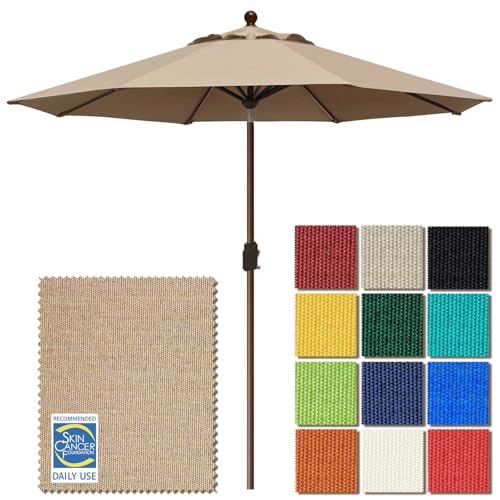
- Best overall: EliteShade USA 9Ft Market Patio Umbrella — Check on Amazon
- Best for windy small patios: EliteShade USA 9ft 3-Tier Market Patio Umbrella — Check on Amazon
- Best mid-budget pick: Abba Patio 9FT Lyon Outdoor Patio Umbrella — Check on Amazon
See more Amazon options
- Best long-term investment (prose): California Umbrella 9 ft Market Umbrella with Sunbrella Fabric — check price on Amazon (see the review below for why this pick is listed without a direct link)
- Best light and movable: Sunnyglade 9′ Patio Umbrella with Tilt and Crank — Check on Amazon
- Best simple value: Blissun 9′ Outdoor Patio Umbrella — Check on Amazon
Read the full guide ↓
Disclosure: As an Amazon Associate, dailyhomedecorating.com earns from qualifying purchases. Links to Amazon on this page are affiliate links; they cost you nothing extra. Listing details such as price and availability change often, so check the current Amazon listing before you buy.
Doubling the budget changes what the best patio umbrella for small patios under $300 can be — but not in the direction most shoppers expect. On a small patio, the extra money should not buy a bigger canopy; a 9-foot circle was the right size in the lower tier and it is still the right size now. What the under $300 tier buys is everything that makes that 9-foot canopy better at its job: solution-dyed fabrics that do not fade into embarrassment by the second summer, frames built to commercial cycles of opening and closing, vented designs that sit calmly in the gusts a tight patio funnels, and specialist makers whose umbrellas can be repaired instead of replaced. This guide is about spending the step-up budget on longevity and behavior, not on diameter.
Small patios punish umbrellas in specific ways, and the picks below answer them one by one. Space is tight, so the canopy edge lives close to walls and railings, where cheap fabric chafes and fades unevenly in reflected heat — better fabric is not a luxury here, it is the surface that survives the address. Storage is tighter, so the umbrella gets leaned, squeezed and moved more than a yard umbrella ever does — frame build quality decides whether it survives its owners’ kindness. And small patios between buildings funnel wind in gusts that arrive sideways, which is why venting earns a headline spot in this tier.
We also kept the discipline of the smaller budget: every pick is a 9-foot-class center-pole market umbrella, because that is the format a small patio can actually host, and we say plainly what this tier does not change. Bases are still sold separately. Polyester is still polyester wherever it appears, at whatever price the frame around it commands. And a premium umbrella left open in a storm fails with the same enthusiasm as a bargain one.
If you are choosing between this guide and the under $150 small-patio guide, the honest summary is this: the cheaper tier buys correct shade now; this tier buys the same shade, still correct, in year four. Renters on short horizons should save the difference. Owners, long-term renters, and anyone whose small patio is their daily outdoor room should read on.
In this guide
Quick Picks
| Pick | Best for | Canopy | Key feature |
|---|---|---|---|
| EliteShade USA 9Ft Market Patio Umbrella | Most small patios | 9 ft | Solution-dyed performance fabric |
| EliteShade USA 9ft 3-Tier Market Patio Umbrella | Exposed, gusty small patios | 9 ft | 3-tier vented canopy |
| Abba Patio 9FT Lyon Outdoor Patio Umbrella | The sensible middle | 9 ft | Sturdier 8-rib frame |
| California Umbrella 9 ft Market Umbrella with Sunbrella Fabric | Buy once, repair for years | 9 ft | Sunbrella options, spare parts |
| Sunnyglade 9′ Patio Umbrella with Tilt and Crank | Small patios that reconfigure often | 9 ft | Light aluminum pole |
| Blissun 9′ Outdoor Patio Umbrella | Simple, proven, inexpensive | 9 ft | Crank + push-button tilt |
How These Picks Were Chosen
The size filter from our under $150 guide applied unchanged — 9-foot class, crank lift, tilt mandatory — because the patio did not get bigger when the budget did. What changed is the quality bar: to earn a place here, an umbrella had to offer a measurable step up in fabric class, frame build, venting, or maker support over the entry tier, and the review for each pick names its specific step up so you can judge whether it matches your patio’s actual problem.
Each candidate’s specifications were verified against maker information, and listings were confirmed before linking through the Amazon Creators API; the specialist pick whose configurations vary too widely for a single honest link is presented in prose, with the reason stated in its review. All candidates were screened against US patio-umbrella recall records, and recalled models are excluded from this guide entirely.
We also considered the total cost of ownership on a small patio: umbrella plus a proper base plus, across five summers, the replacement canopies a cheap umbrella quietly demands. Priced that way, several picks in this tier are the cheaper umbrellas — a point the final recommendation returns to.
The Picks in Detail
EliteShade USA 9Ft Market Patio Umbrella — Best overall
Who it suits: the small-patio owner who is done replacing umbrellas: the solution-dyed canopy keeps its color against the wall-reflected sun that murders cheap fabric, and the commercial-grade frame tolerates daily use and tight storage alike.
EliteShade builds this 9-footer around its fabric: a solution-dyed acrylic performance canopy that the maker backs with a 10-year non-fading claim and rates UPF 50+. Solution-dyed means the color runs through the fiber rather than sitting on the surface, which is why this class of fabric resists the chalky fade that cheap polyester shows after one hard summer. The frame is a commercial-grade build with crank lift, tilt, and a vented top.
Key specs: 9 ft canopy, solution-dyed acrylic performance fabric, UPF 50+, crank and tilt, vented top.
Pros:
- Solution-dyed performance fabric with the maker’s 10-year non-fading claim
- UPF 50+ shade in a proper 9-foot small-patio size
- Vented top for gusty between-building patios
- Crank and tilt — shade moves because the furniture cannot
Honest limitation: Premium pricing for the size class, and the base remains a separate purchase — budget the pair, not the umbrella alone.
Choose it if you will keep this patio for years and want the umbrella to look as good in year four as in week one. Skip it if you are furnishing a short rental; the under $150 tier exists for you.
EliteShade USA 9ft 3-Tier Market Patio Umbrella — Best for windy small patios
Who it suits: the small patio that behaves like a wind tunnel — rooftop terraces, corner units, gaps between houses — where the problem was never shade but the canopy’s constant flutter, lift and bang against the wall.
The 3-tier version of EliteShade’s 9-footer splits the canopy into three overlapping tiers. The gaps between tiers give wind and rising heat a path out, so the umbrella flutters less and feels calmer in gusty weather than a single-skin canopy of the same size. The fabric is the same solution-dyed, UPF 50+ performance material as the standard EliteShade, with the same long non-fading claim from the maker.
Key specs: 9 ft canopy, 3-tier vented design, solution-dyed performance fabric, UPF 50+, crank open.
Pros:
- Three-tier canopy vents gusts instead of catching them
- Same solution-dyed, UPF 50+ fabric as the standard EliteShade
- Commercial-grade build for exposed duty
- Calmer behavior means less wall contact and less noise
Honest limitation: The tiered canopy folds slightly bulkier than a plain canopy — check your storage corner — and calm, sheltered patios gain little from the venting they are paying for.
Choose it if wind is your patio’s defining problem. Skip it if your patio is sheltered; the standard EliteShade or the Abba serves you for less.
Abba Patio 9FT Lyon Outdoor Patio Umbrella — Best mid-budget pick
Who it suits: the buyer who wants the step up in sturdiness without the premium fabric price — a heavier frame and canopy than the entry tier, at a position that leaves real money for a serious base.
The Lyon is Abba Patio’s mainstream 9-foot market umbrella: eight ribs, a crank lift, a push-button tilt, and a canopy the maker rates for UV protection and water resistance. The frame geometry is a touch sturdier than the very cheapest 9-footers, with a thicker feel to the rib arms, and the canopy fabric is a heavier polyester that holds its shape better in a breeze instead of fluttering at the edges.
Key specs: 9 ft canopy, 8 ribs, push-button tilt, crank lift, UV-protective waterproof canopy.
Pros:
- Eight-rib frame with a sturdier hand-feel than budget umbrellas
- Heavier canopy fabric resists edge flutter against nearby walls
- Full crank and push-button tilt
- UV-protective, water-resistant finish
Honest limitation: The canopy is polyester, so across many seasons it will fade where the EliteShade picks will not — you are buying structure, not fabric immortality.
Choose it if your priority is a solid frame and a fair price, with base money left over. Skip it if fabric longevity is the whole point of your upgrade.
California Umbrella 9 ft Market Umbrella with Sunbrella Fabric — Best long-term investment (prose)
Who it suits: the owner-occupier furnishing a small patio for the long term, who would rather buy one umbrella with replaceable ribs and canopies — including Sunbrella options — than three disposable ones.
California Umbrella is a long-running US umbrella specialist. Its 9-foot market umbrellas are sold in many frame finishes and canopy fabrics, including Sunbrella, and are built around replaceable parts — ribs, caps and canopies can be swapped when one piece wears out instead of replacing the whole umbrella. That parts support is the real difference between this brand and the disposable end of the market.
Key specs: 9 ft canopy, Sunbrella fabric options, push-button tilt, crank or pulley lift depending on configuration (maker listings).
Pros:
- Specialist maker with genuine spare-parts support
- Sunbrella canopy configurations — the benchmark fabric class
- Frame finishes and configurations to suit a considered small space
- Designed to be maintained, not landfilled
Honest limitation: Choice is the cost: lift, tilt and fabric vary by exact configuration, so this pick is prose-only — search the maker, pick the exact 9-foot build on the listing, and confirm the configuration before ordering.
Choose it if you maintain your possessions and keep homes for years. Skip it if you want the fewest possible decisions between reading and shade.
Check price on Amazon by searching the model name — we list this pick without a direct buy link because we could not confirm the exact listing variant at review time, and we would rather send you to search than to the wrong product page.
Sunnyglade 9′ Patio Umbrella with Tilt and Crank — Best light and movable
Who it suits: the small patio that reconfigures constantly — shade over breakfast chairs in the morning, over the lounger in the afternoon — where the umbrella gets carried more than any other furniture you own.
The Sunnyglade pairs a 9-foot polyester canopy with an aluminum pole, which matters anywhere the umbrella lives outdoors year-round because aluminum does not rust the way painted steel can once the finish chips. It opens with a crank, tilts with a push button, and the canopy is a waterproof-coated polyester with a small vent at the top. The whole umbrella is noticeably lighter than steel-pole rivals, which makes it easier to lift in and out of a base or table hole.
Key specs: 9 ft canopy, aluminum pole, push-button tilt, crank lift, waterproof polyester canopy.
Pros:
- Aluminum pole: light to carry, immune to rust
- Full crank and push-button tilt feature set
- Coated polyester canopy sheds showers
- Easy storage — leans in a corner without dominating it
Honest limitation: Lightness demands ballast discipline: in any breeze it needs the full recommended base weight, and its polyester canopy sits a class below the premium picks for fade.
Choose it if your patio layout changes weekly and you move the umbrella by hand. Skip it if your umbrella will stand in one spot all season; weight stops mattering and fabric should win.
Blissun 9′ Outdoor Patio Umbrella — Best simple value
Who it suits: the small patio that simply needs correct shade at a fair price — standard size, standard fittings, proven format — freeing the rest of the budget for the base and the furniture.
The Blissun is a classic center-pole market umbrella: a 9-foot octagonal polyester canopy on eight ribs, opened with a crank and angled with a push-button tilt. The pole is about 1.5 inches in diameter, so it drops through the umbrella hole of a standard patio table and into most universal bases. The canopy fabric is a solution-tinted polyester that sheds light rain and is treated for UV resistance; the vent at the peak lets hot air escape and reduces the sail effect in a breeze.
Key specs: 9 ft canopy, 8 ribs, push-button tilt, crank lift, polyester canopy, 1.5-inch pole.
Pros:
- The proven 9-foot crank-and-tilt format
- Standard 1.5-inch pole fits tables and universal bases
- Vented peak, eight ribs
- Straightforward, un-fussy ownership
Honest limitation: Entry-tier fabric and hardware: entirely serviceable, and entirely what the picks above charge more to improve on.
Choose it if your needs are simple and your budget has other jobs to do. Skip it if you came to this tier specifically to escape entry-tier fabric and build.
Comparison Table
| Umbrella | Size | Type | Fabric class | Tilt | Base note |
|---|---|---|---|---|---|
| EliteShade USA 9Ft Market Patio Umbrella | 9 ft | Center pole | Solution-dyed performance | Crank + tilt | Base sold separately |
| EliteShade USA 9ft 3-Tier Market Patio Umbrella | 9 ft | Center pole | Solution-dyed performance | Crank open, 3-tier vent | Base sold separately |
| Abba Patio 9FT Lyon Outdoor Patio Umbrella | 9 ft | Center pole | Polyester, heavier weave | Push-button | Base sold separately |
| California Umbrella 9 ft Market Umbrella with Sunbrella Fabric | 9 ft | Center pole | Sunbrella options | By configuration | Base sold separately |
| Sunnyglade 9′ Patio Umbrella with Tilt and Crank | 9 ft | Center pole, aluminum | Polyester, coated | Push-button | Base sold separately; weight it well |
| Blissun 9′ Outdoor Patio Umbrella | 9 ft | Center pole | Polyester | Push-button | Base sold separately |
What the Extra Budget Actually Buys on a Small Patio
Fabric is the headline. Polyester is dyed on the surface of the fiber; solution-dyed acrylic and performance fabrics carry the color through the fiber itself. On a small patio, where the canopy bakes in direct sun plus the reflection off your own walls, that difference is the difference between a canopy that looks new in year three and one that looks tired in August of year one. It also buys UV stability in the fiber itself, so the fabric keeps its strength instead of going brittle — the failure that ends with a torn canopy on a windy day.
Frame build is the second purchase. Commercial-grade umbrellas are built for hundreds of open-close cycles a season; entry umbrellas are built for dozens. On a small patio the umbrella is opened and closed constantly — it blocks the path when open, so it lives a harder mechanical life than a yard umbrella that stands open all weekend. Rib thickness, crank housing quality and tilt hardware are where the cycles show up first.
Venting is the third. A vented or tiered canopy gives gusts an exit, which on a small patio means less lift, less wall-banging, and less of the slow loosening that makes a year-old umbrella feel drunk. If your patio funnels wind, venting is worth more than any other upgrade in this tier; if it does not, it is worth almost nothing, and the honest guide says so.
What the extra budget does not buy: a bigger useful size, an included base, or immunity from weather. Spend it on fabric, frame and venting — in the order your patio’s problems rank them — and keep the operating habits of the cheaper tier: weighted base, closed when unused, stored dry.
How to Choose at This Tier
Diagnose your patio’s real problem first. Fading, flutter, or mechanical wear — each points at a different pick in this list, and buying all three upgrades when you have one problem wastes the tier’s advantage.
Keep the 9-foot discipline. Resist the 10- and 11-foot canopies this budget waves at you. On a small patio they are not upgrades; they are collisions.
Price umbrella plus base as one product. At this tier the base should be a low-profile, genuinely heavy model that shares floor space gracefully — flat steel or a wheeled design that tucks into the corner.
Value parts support if you stay. A maker who sells ribs and canopies turns a five-year umbrella into a ten-year one, which on a cost-per-summer basis beats every other pick here.
Check the folded fit. Premium frames fold to similar lengths as cheap ones, but tiered canopies fold bulkier. Your storage corner is part of the specification.
Common Mistakes When Stepping Up
Spending the increase on size. The single most common step-up error, covered above: the bigger canopy hits the wall that the 9-footer cleared.
Assuming price includes the base. It does not, at any tier in this guide. The product photos lie by composition; the ‘included’ line tells the truth.
Leaving a premium umbrella open because it feels sturdier. Build quality delays failure; it does not repeal wind. The closing habit matters more, not less, when replacement costs more.
Ignoring reflected heat. Light walls and paving bounce sun onto the canopy’s underside and edges. Solution-dyed fabric handles it; surface-dyed polyester shows it first exactly where the wall is closest.
Buying features your patio cannot use. Rotation, lighting and oversized vents all have their patios — a fixed 9-foot bistro patio is none of them. Buy for your square footage.
Final Recommendation
For most small patios under $300, the EliteShade 9Ft is the step-up done right: the correct 9-foot size wrapped in fabric and framing that will still look deliberate in year four. Windy small patios should take its 3-tier sibling. The Abba Lyon is the honest middle for buyers who want structure without the premium, and long-term owners should do the small extra homework the prose-listed California Umbrella requires. Whichever you choose, keep the size discipline of the cheaper tier and spend what remains on base weight — on a small patio, that combination is the whole secret.
Small Patio, Premium Umbrella: Setup Details That Protect the Investment
A premium umbrella on a small patio deserves a setup that protects what you paid for, and the details are different from a yard installation. Start with wall clearance, measured dynamically rather than statically: open the canopy slowly and watch the edge’s closest approach to walls, railings and the door swing, because a canopy that clears by two inches standing still clears by nothing in a gust. If contact is close, rotate the base a few degrees or shift it an inch — small patios reward small adjustments — and note the spot where fabric passes nearest the wall, because that is where reflected heat and chafe will age it first, and where your seasonal inspections should start.
Protect the floor and the base together. A low-profile steel base on pavers or decking should sit on a thin rubber mat or furniture pads: it stops the micro-movement that grinds finishes, quiets the base’s behavior in gusts, and keeps a heavy base from staining pale stone with rust weep. Seat the pole fully, lock it, and confirm the umbrella stands plumb — on a small patio a leaning umbrella is not a rustic look, it is a canopy edge two inches closer to the wall on one side and a base loading unevenly on the other.
Then set up the daily system, because at this tier the umbrella’s life is decided by routine rather than by events. The canopy tie lives on the pole, not in a drawer. The cover lives folded in the storage bench, not in the garage. The crank gets used — fully closed when you go in, every time — because the premium fabric you bought earns its years in closed hours as much as in open ones. Owners of cheap umbrellas can afford sloppy habits and a replacement; the economics of this tier are the opposite: the umbrella is built to last, and the habits are what let it.
Getting a Decade From a 9-Foot Umbrella: The Long Game
The picks at the top of this guide are built for a service life measured in many seasons, and reaching that life is a practice, not a purchase. The fabric practice comes first: solution-dyed canopies resist fading rather than escaping it, and they repay the same care as any textile — brushed clean monthly, washed with mild soap each season, dried fully before any fold that lasts longer than a day. Rotate the umbrella in its base occasionally so one panel does not take the whole southern summer, and if a panel or the whole canopy eventually tires, remember that the specialist makers in this guide sell replacement canopies: a re-canopied frame at year six is the cheapest premium umbrella you will ever buy.
The mechanical practice is a season-opening ritual of fifteen minutes. Cycle the crank through its full travel and clear any grit from the housing with compressed air; a drop of silicone lubricant on the crank and tilt hardware keeps the motion at the standard the mechanism was built to. Walk the ribs with your fingers, reseat any tip that has crept from its pocket, and tighten the screws you can reach. Check the pole’s finish for the first rust bloom on steel components and touch it up now, at the size of a coin, rather than at the size of a hand. Inspect the base with the same honesty: full weight, level pad, socket clean, locking knob biting properly.
Storage is the third practice and the one small patios make hardest. The premium umbrella folded for winter is still eight feet of precision equipment; give it the dry, breathable, off-the-floor home its price assumes — hooks high on a wall, the top of a rack, a storage bench it fits without forcing — and never the damp corner lean that bends ribs slowly all winter. Drain water ballast before freezes; store covers clean. Do these things and the arithmetic of this tier completes itself: one umbrella, bought once, shading a small patio beautifully for the better part of a decade, at a cost per summer below the disposable tier it replaced. That is what the extra money was always for.
The Premium Details Worth Checking Before You Pay Premium Money
At this tier the differences between umbrellas hide in details that listing headlines skip, and a small-patio buyer — who will live closer to their umbrella than any yard owner — feels every one of them. Start at the canopy’s edge: a valance, the short hanging skirt some canopies carry, adds privacy and low-sun blocking on a patio overlooked by neighbors, and costs a little wind calm. Check the canopy’s attachment: pockets that the rib tips slide into should be reinforced, ideally with a second layer, because the pocket is where canopies tear and where a maker’s build quality is easiest to judge in a product photo. Look at the finial — the cap at the peak — which on better umbrellas is a fitted, replaceable part and on cheap ones a glued ornament that departs in the first storm.
Move to the pole and its joints. The two sections of a market umbrella meet at a joint that takes every gust’s bending load; better builds sleeve that joint longer and lock it with a positive button rather than friction alone. The crank housing on a premium umbrella is metal where it matters and shrouded against the rain that a small patio’s walls splash back onto it. The tilt joint should hold an angle against the canopy’s weight without creep — ask the listing, read the maker’s materials, and treat silence on hardware materials as its own answer. On a small patio you operate these parts at arm’s length, daily, for years; their feel is not a luxury specification, it is the product.
Then check the ecosystem around the umbrella. Does the maker sell the matching cover, sized to the folded umbrella rather than generic? Are replacement canopies listed for this exact frame, in this fabric, so a tired canopy at year five is a refresh rather than a replacement? Are the base options in the maker’s own range sized honestly for this canopy, with weights stated rather than implied? A specialist maker’s ecosystem is the visible part of an invisible quality: a company that plans for your umbrella’s fifth year built it differently in its first.
None of these details appears in a headline, and all of them together are the actual content of the step from the under $150 tier to this one. The picks in this guide were chosen because their details survive this inspection; if you stray from the list, inspect whatever you land on with the same checklist, and let any umbrella that fails two or more items return to the shelf regardless of its headline price.
Three Small Patios at This Budget, Three Right Answers
The owner’s townhouse patio, kept for a decade
This patio’s umbrella is infrastructure, and the California Umbrella — researched properly, configured exactly, maintained with its maker’s parts — is the decade-scale answer, with the EliteShade as the one-click alternative that gives up little. The base is a flat steel plate that will outlive two canopies, the storage is a wall-mounted pair of hooks in the garage, and the annual ritual is fifteen minutes of inspection each spring. Priced across ten summers, this is the cheapest patio in the guide.
The windy rooftop terrace
Small, high, and honest about its weather: the 3-tier EliteShade is this patio’s umbrella, chosen for the venting that lets gusts pass instead of arguing, in the heaviest base the terrace accepts, with a closing policy that treats the forecast as a household rule. The premium here is not fabric or finish — it is the calm behavior of a canopy that does not bang against the railing at 2 a.m., and the sleep of the people who own it. No other pick in this guide is close for this address.
The pretty bistro patio that hosts friends
Small, sheltered, and photographed often: this patio can spend its premium on looks that last — the EliteShade’s fade-proof fabric in the color the house deserves — because its wind is gentle and its umbrella’s hardest job is looking deliberate in the background of a hundred dinners. The Abba serves if the budget must also buy the furniture; what this patio must not do is spend the premium on a bigger canopy for the photos, because the wall behind the table is in those photos too, and it keeps the receipts.
The Upgrade Audit: Knowing Whether This Tier Is Really Yours
Before spending at this tier, audit the umbrella you already own with the honesty this guide has applied to its picks. If the frame is sound — ribs straight, crank smooth, tilt holding — and only the canopy has faded, the correct purchase may be a replacement canopy rather than a new umbrella, and the money saved belongs to the base you have been meaning to upgrade. If the mechanism grinds, the tilt creeps, or a rib has taken a permanent set, the frame itself is announcing its horizon, and a canopy would be good money dressing a tired structure. The audit takes five minutes and a crank handle; run it before the listings, not after the delivery.
Audit the patio with the same honesty. This tier buys fabric life, frame cycles and wind calm — and returns nothing at all to a patio whose real problem is size, storage, or a base that was never adequate. If your last umbrella died of wall contact, a premium 9-footer in the same spot inherits the same wall; shift the base, or reconsider the layout, before upgrading the victim. If it died of storm exposure while standing open, the upgrade that saves the next one is a habit, and habits are free. Spend this tier’s money on the problems money solves, and solve the others with the tape measure and the closing ritual.
What remains, after the audit, is the genuine case for this tier, and it is a strong one: a small patio used daily, kept for years, in sun that fades and wind that funnels, deserves an umbrella built as a long-term furnishing rather than a seasonal consumable. Buy it once, base it properly, document it, maintain it in fifteen-minute spring rituals, and let the cost-per-summer arithmetic — the only arithmetic that ever mattered — make the premium look like what it is: the economical choice, arrived at honestly.
Final Checks Before You Click Buy
Verify the listing like an inspector, because at this tier the headline and the specification table often describe cousins rather than twins. Confirm the canopy is exactly the 9-foot class your patio measured for, the pole diameter matches your base and table, and the fabric named in the specifications is the fabric the headline promised — solution-dyed should appear in the spec table, in words, or the premium is being charged for photography. Confirm the tilt mechanism’s type, the venting the canopy actually carries, and the contents of the box, with the base — as at every tier — assumed absent until the listing proves otherwise.
Then confirm the ownership details that decide whether this purchase behaves like the long-term furnishing it is priced as: the maker’s replacement canopy for this exact frame, the cover sized to it, the warranty split between fabric and frame stated in years. If two of those three are missing, the umbrella is a mid-tier product in premium clothing, and the honest move is down the list to a pick whose maker publishes its future. Small patios keep their umbrellas close and their owners closer; buy the one whose paperwork you can picture yourself using in year five, and the daily pleasure of a well-made thing in a small space will do the rest.
A Note on Neighbors, Sightlines and the Shared Sky
A small patio rarely owns its whole skyline. Your canopy is part of the neighbor’s view, your shade may lean across a shared fence at evening angles, and your umbrella’s behavior in wind is, in a row of small patios, a genuinely communal matter. None of this argues against premium shade; it argues for the courtesies that keep it welcome. Keep the canopy’s open circle inside your own airspace where the layout allows, close the umbrella at hours when its shadow is not wanted across the fence, and let a tied, tidy closed umbrella be your patio’s public face. In return, the small-patio owner gets something a yard never offers: a neighborhood where everyone’s shade behaves, everyone’s walls stay unmarked, and the premium umbrella you bought for a decade is an asset the whole row quietly approves of. On a small patio, that approval is not a soft benefit — it is the condition that lets the umbrella, and the life under it, continue undisturbed for all the years this tier is built to serve.
There is a final, quieter test that premium small-patio umbrellas pass and cheap ones fail, and it happens at the season’s turn: the spring morning when the umbrella comes out of storage, opens with the same smooth crank travel it had in October, and takes its place over the first coffee of the year without a single repair, replacement or apology. Every practice in this guide — the weighted base, the dry storage, the fifteen-minute inspection — exists to make that morning ordinary. An umbrella that delivers it, year after year, has repaid its premium in the only currency a small patio trades in: mornings that start in shade, exactly as planned.
Keep that morning in mind when the premium price gives you pause in the listing: you are not buying a canopy, you are buying a decade of ordinary spring mornings, and ordinary is the highest praise a small patio knows.
FAQ
Does a patio umbrella come with a base?
Usually not. Most market and cantilever umbrellas on Amazon are sold as the umbrella only, and the product photos that show a handsome weighted base are showing an accessory you buy separately. Always check the listing’s ‘what is included’ line, and budget for the base before you compare umbrella prices, because a safe base can cost a meaningful share of the umbrella itself.
How heavy should an umbrella base be?
As a working rule, a 9-foot market umbrella used freestanding wants at least 50 lb of base weight, and more — 70 to 90 lb — if it stands alone in an exposed, breezy spot rather than through a heavy table. A 10- or 11-foot canopy needs more again, and a cantilever needs substantially more than a center-pole umbrella of the same size because the load hangs off to one side: plan on filling all four weight plates of a cross base, typically 150 lb or more of sand or water in total. When in doubt, go heavier; a base that is too heavy costs money once, while a base that is too light can cost an umbrella, a table, or worse.
Should I leave my patio umbrella open all the time?
No. Close it when you are not using it, and always close it ahead of wind. An open umbrella is a sail, and most umbrella damage — bent ribs, snapped poles, tipped bases — happens to umbrellas left open and unattended in gusts. Closing it also keeps the canopy cleaner and slows fabric fading, so the habit pays twice.
Is it worth spending $300 on an umbrella for a small patio?
It is worth spending this tier’s money if you will keep the patio for years and the umbrella lives outdoors: what you are buying is solution-dyed fabric that resists fading, a frame built for daily cycling, and venting that calms gusty corners — longevity, not size. If you are renting short-term or the umbrella stores indoors and summers are mild, the under $150 tier shades just as well today and the savings are real.
Why not buy a 10 or 11 ft umbrella for a small patio if the budget allows it?
Because the constraint is the patio, not the budget. A canopy’s open circle must clear walls, railings and doors with room for breeze movement; oversize canopies scrape, wear at the contact points, and crowd the furniture they were bought to shade. Nine feet shades a four-person setting with proper overhang — the correct size at any price.
How long should a premium patio umbrella last?
With solution-dyed fabric, a commercial-grade frame, a weighted base, and the habits of closing it in wind and storing it dry, a premium 9-foot umbrella should give many seasons of service — and makers with spare-parts support extend that further, since a worn rib or canopy can be replaced instead of the whole umbrella. The same umbrella left open through storms and stored wet can fail in a single season; lifespan is mostly behavior.
Related Guides
- Best Patio Umbrella For Small Patios Under $150
- Best Patio Umbrella Under $150
- Best Patio Umbrella For Small Yards Under $300
- Best Patio Umbrella Under $300
- Best Patio Umbrella For Homeowners Under $300


