Where to buy
Check the latest price, availability and delivery on Amazon. Orders are placed on Amazon. We may earn a commission from qualifying purchases. Picks marked as accessories are labelled honestly — they are not complete umbrellas, and this guide never pretends otherwise.
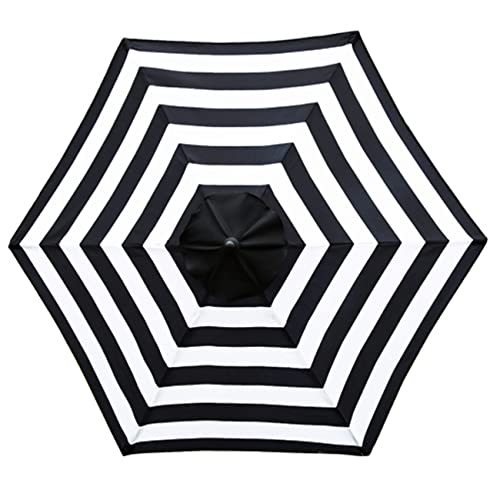
- Sunnyglade 7.5 ft Replacement Canopy (canopy only) — Check on Amazon
- Repel Windproof Travel Umbrella — Handheld mini umbrella — NOT a patio umbrella; search Amazon by the full product name to check price on Amazon
- Zippered Patio Umbrella Cover for 7–11 ft Market Umbrellas — Accessory — protective cover, NOT an umbrella; search Amazon by the full product name to check price on Amazon
- Cordless LED Patio Umbrella Pole Light (clamp-on) — Accessory — umbrella light, NOT an umbrella; search Amazon by the full product name to check price on Amazon
- Rhino BaseMate Umbrella Base Weight Bag (18 inch) — Accessory — base weight bag, NOT an umbrella and NOT a base; search Amazon by the full product name to check price on Amazon
- Balcony Rail Umbrella Clamp Mount — Accessory — rail clamp mount, NOT an umbrella and NOT a base; search Amazon by the full product name to check price on Amazon
Read the full guide ↓
Disclosure: As an Amazon Associate, dailyhomedecorating.com earns from qualifying purchases. Links to Amazon on this page are affiliate links; they cost you nothing extra. Listing details such as price and availability change often, so check the current Amazon listing before you buy.
If you searched for the best patio umbrella for apartments under $20, this guide owes you the truth in the first paragraph: there is no real patio umbrella at this price — not a small one, not a half one, not a flimsy one worth the name. A complete patio umbrella needs a pole, ribs, a lift mechanism and fabric engineered to survive outdoors, and that bill of materials does not exist at this tier from any maker we could verify. What does exist, and what this guide ranks honestly, is a set of genuinely useful umbrella-related purchases that fit the budget: replacement fabric for a frame you already own, protection and ballast that keep an existing umbrella alive and upright, evening light for it, a mount that frees balcony floor space, and one handheld mini umbrella that provides real personal shade while being labelled, clearly, as not a patio umbrella.
Why write a guide at all, then? Because apartment readers land on this search with a real problem — a west-facing balcony, a faded canopy, an umbrella that tips — and the worst outcome is not ‘no product’; it is a junk purchase: a toy-grade parasol with a plastic pole that snaps in its first gust, bought because a listing used the words ‘patio umbrella’ loosely. Every pick below states what it actually is in its first line. Two of the six are fabric or hardware for umbrellas you already own, three support an existing setup, and one is a handheld umbrella for one person. If you own no umbrella at all, the honest advice in this guide is to use this budget on the accessory your future umbrella will need anyway — a cover or ballast — and step up to the tier where complete small umbrellas actually exist, which the final section and the related guides point to.
Apartments add constraints that houses never see, and they shape every pick here. Floor space is rented by the square foot, so bases and footprints matter. Leases restrict what can be clamped, drilled or hung over a railing. Balconies funnel wind between buildings, so ballast matters more, not less, than in a sheltered yard. Storage is a closet corner, not a garage, so anything bulky must earn its place. And anything you buy will one day be carried down stairs or into a lift on moving day. Keep those five pressures in mind and the ranking below will make sense: at this budget, the winning moves are extending the life and safety of what you have, and buying personal shade that asks nothing of your landlord.
The $20 Reality Check for Apartment Balconies
Start with what a real small patio umbrella involves, because the gap explains the whole tier. Even the simplest complete 6 to 7.5 ft market umbrella is an aluminium or steel pole in two sections, six ribs, a crank or push-up lift, a tilt joint and several square metres of outdoor fabric — plus, critically, a base heavy enough to hold it, which is almost always sold separately. When a listing appears to offer all of that at a very low price, something has been quietly removed: the pole becomes thin plastic, the ribs become wire, the ‘canopy’ becomes decorative fabric that tears at the pockets, or the diameter shrinks to table-parasol size while the title still says patio. Those products shade a dollhouse. We excluded every one of them rather than pad this list.
There is also a safety record behind the caution. Patio umbrellas as a category have a documented recall and incident history — arms breaking at joints, offset umbrellas tipping and striking people, and, in the solar category, a very large recall of LED market umbrellas whose lithium battery pucks overheated. The pattern in the incident reports is consistent: the failures happen at mechanisms and at ballast, exactly the two places where ultra-cheap products save their money. A twenty-dollar complete umbrella would have to cheapen precisely the parts that keep a canopy from becoming a projectile on a high balcony. That is not a bargain; that is a liability with a parasol attached. Every pick in this guide was checked against the CPSC recall record, and the known recalled lines — including the warehouse-club solar LED umbrellas and the premium articulated-arm umbrellas recalled for arm breakage — are nowhere in it.
In this guide
Quick Picks
Six honest ways to spend this budget on an apartment balcony — one fabric revival, one personal-shade stopgap, and four pieces of support gear for an umbrella you already own. Nothing here is a complete patio umbrella, and each row says so.
| Pick | What it actually is | Best for | Amazon |
|---|---|---|---|
| Sunnyglade 7.5 ft Replacement Canopy (canopy only) | Accessory — replacement canopy, NOT a complete umbrella | Refreshing a faded 7.5 ft canopy on a sound frame | Check on Amazon |
| Repel Windproof Travel Umbrella | Handheld mini umbrella — NOT a patio umbrella | Personal shade on a balcony today, not someday | Prose-only — check price on Amazon |
| Zippered Patio Umbrella Cover for 7–11 ft Market Umbrellas | Accessory — protective cover, NOT an umbrella | Protecting the umbrella you already own | Prose-only — check price on Amazon |
| Cordless LED Patio Umbrella Pole Light (clamp-on) | Accessory — umbrella light, NOT an umbrella | Evening light under an existing umbrella | Prose-only — check price on Amazon |
| Rhino BaseMate Umbrella Base Weight Bag (18 inch) | Accessory — base weight bag, NOT an umbrella and NOT a base | Stabilising a base that is almost heavy enough | Prose-only — check price on Amazon |
| Balcony Rail Umbrella Clamp Mount | Accessory — rail clamp mount, NOT an umbrella and NOT a base | Ditching the floor base on a railed balcony | Prose-only — check price on Amazon |
How These Picks Were Chosen
The method for this guide started with a refusal: no product could be listed as a patio umbrella unless it actually was one — pole, ribs, lift and outdoor canopy, from a maker whose listing could be verified. At this tier, for apartments, nothing passed. Rather than lower the bar, we rebuilt the list around the question apartment readers are really asking, which is how to get more shade, safety and life out of a small balcony without wasting money. Candidates were umbrella accessories and substitutes with verifiable makers and specifications: replacement canopies matched to real frames, covers with stated size ranges, ballast with stated capacity, clamp lighting, rail mounts, and one established compact umbrella brand for the handheld slot.
Every candidate was then screened three ways. First, identity honesty: could we state in one sentence what it is without the word ‘umbrella’ doing dishonest work? Second, recall screening against the CPSC record, with the category’s known problem areas — tilt and crank mechanisms, cantilever arms, solar battery pucks — checked by brand and product type. Third, apartment fit: footprint, storage size, lease sensitivity and moving-day practicality. Products that failed any screen were dropped, which is why this list contains no complete umbrella and no solar model at all. Where a pick carries an Amazon link in this guide, its ASIN was confirmed through the site’s Amazon Creators API cross-check; picks listed prose-only are still being held to that same standard at final review and are identified by full product name so you can find them directly.
The 6 Best Patio Umbrella Buys for Apartments Under $20 — Honestly Labelled
1. Sunnyglade 7.5 ft Replacement Canopy (canopy only)
What it is: Accessory — replacement canopy, NOT a complete umbrella.
Replacement canopy for 7.5 ft, 6-rib patio umbrella frames, polyester fabric with a wind vent at the top. It is fabric only: no pole, no ribs, no crank, no base. It fits frames whose rib length and pocket style match the Sunnyglade 7.5 ft layout, and it will not rescue a frame whose ribs or tilt joint are already bent.
On an apartment balcony this is the classic renter scenario: the umbrella came with a furniture set, a previous tenant left it, or you bought it two summers ago and the sun has bleached and weakened the fabric while the aluminium frame underneath is still perfectly straight. Throwing the whole thing away because the cloth failed is how balconies eat money. A replacement canopy turns a weekend of shopping into twenty minutes with a step stool, and because it is only fabric, it is also the easiest umbrella-related purchase to store in a small apartment — it folds into a drawer.
Who it suits: you already own a 7.5 ft, 6-rib umbrella whose frame is straight but whose fabric is finished.
- Revives a sound frame whose fabric has faded, torn or gone mouldy, for far less material than a whole new umbrella
- Wind vent at the crown lets gusts spill instead of loading the ribs
- Standard 6-rib layout matches a large installed base of budget 7.5 ft frames
Honest limitation: It only works if your existing frame is straight and the crank still lifts cleanly. Measure rib length and count pockets before ordering; a canopy for the wrong rib count is money wasted.
Choose it if your frame is sound and only the fabric has failed — this is the smartest money in the whole guide. Skip it if your frame is bent, the crank slips, or you do not own an umbrella at all — fabric alone fixes nothing.
2. Repel Windproof Travel Umbrella
What it is: Handheld mini umbrella — NOT a patio umbrella.
A compact folding rain umbrella: 11.5 inches folded, under a pound, nine resin-reinforced fibreglass ribs, a double-vented canopy with a water-repellent coating, and one-button automatic open and close. It shades one person, handheld, for as long as someone is willing to hold it. It mounts to nothing and shades no table.
Apartments teach you to separate ‘shade for the space’ from ‘shade for me.’ A mounted umbrella shades the space; this shades you — on the balcony with a coffee, on the walk to the laundry room, at the bus stop when the afternoon turns. For a renter whose balcony faces due west and who mostly sits in one chair with a book, one-person shade honestly covers a large share of actual use, and it does so with zero footprint, zero landlord questions and zero storage problem in a home where storage is the whole game.
Who it suits: you want shade for yourself on the balcony this week and can accept that it is handheld and personal.
- Real, immediate personal shade and rain cover while you save for a proper patio umbrella
- Fibreglass ribs flex in gusts instead of snapping like cheap steel compacts
- Folds small enough for a balcony storage box, a tote or a car door pocket
Honest limitation: It is a rain umbrella, full stop. Coverage is one person, it ties up a hand, and it is not a substitute for mounted patio shade over furniture.
Choose it if you understand exactly what it is: a rain umbrella doing temporary shade duty for one person. Skip it if you need shade over a table or for two people; no handheld umbrella does that job.
Prose-only pick: search Amazon by the full product name above to check price on Amazon.
3. Zippered Patio Umbrella Cover for 7–11 ft Market Umbrellas
What it is: Accessory — protective cover, NOT an umbrella.
A waterproof Oxford-fabric storage cover sized for market umbrellas roughly 7 to 11 ft, with a zipper, a drawstring hem and, on many versions, a reach rod so you can pull it over a tall closed canopy without a step stool. It produces no shade at all; it protects the umbrella you already own from UV, rain and bird mess while it is closed.
The apartment maths here are brutal and simple: most budget umbrellas do not die from dramatic breakage, they die from being left open and uncovered on a balcony through a season of UV and rain. A zippered cover is the difference between replacing an umbrella every second summer and replacing it every fifth. For renters, who cannot build a storage shed and often have no garage, a cover that lives on the closed umbrella — with a reach rod so you are not climbing on a chair — is the only storage system that actually gets used.
Who it suits: you own any market umbrella and store it on the balcony year-round, uncovered, watching it fade.
- The single cheapest way to double the life of a budget canopy, which is where cheap umbrellas die first
- Zipper plus drawstring keeps it on in wind better than slip-on sleeves
- Fits a wide span of market sizes, so it survives an umbrella upgrade
Honest limitation: Useless if you do not already own an umbrella, and it must be put on a dry canopy — sealing in moisture invites mildew.
Choose it if you already own the umbrella it protects; as prevention it beats every other item here on value. Skip it if you own no umbrella yet; buy shade first and protection second.
Prose-only pick: search Amazon by the full product name above to check price on Amazon.
4. Cordless LED Patio Umbrella Pole Light (clamp-on)
What it is: Accessory — umbrella light, NOT an umbrella.
A round cordless LED light that clamps around a standard umbrella pole and shines down onto the table, typically with several brightness settings and battery or USB-rechargeable power. It adds evening light to an umbrella you already own. It casts no shade, blocks no sun and does nothing at noon.
Apartment balconies rarely come with usable outdoor power, and running an extension cord through a sliding door is both ugly and a lease grey area. A clamp-on cordless light sidesteps all of it: it borrows the umbrella pole you already have and turns a daytime shade spot into the place you actually eat dinner. In small apartments, where the balcony is effectively a second room for half the year, that doubling of usable hours is worth more than another piece of furniture competing for the same few square feet.
Who it suits: you eat or read outside after dark and your balcony has no outdoor outlet you are allowed to use.
- Turns an existing umbrella into evening infrastructure for dinners and card games
- Clamp fits most standard pole diameters and moves between umbrellas in seconds
- No wiring, no outlet hunt, no electrician — renter-safe by design
Honest limitation: Purely a night accessory. If your problem is afternoon sun, a light solves none of it, and batteries or charging become one more chore.
Choose it if your shade problem is solved and your remaining problem is darkness after 8 p.m. Skip it if your problem is midday sun; a light is an evening accessory only.
Prose-only pick: search Amazon by the full product name above to check price on Amazon.
5. Rhino BaseMate Umbrella Base Weight Bag (18 inch)
What it is: Accessory — base weight bag, NOT an umbrella and NOT a base.
An 18-inch weight bag in heavy 900D fabric with a side opening that slides around an existing umbrella base or pole, filled by you with sand (sand is not included). It adds ballast to a base that is almost heavy enough. It is not itself a base: with nothing underneath it, there is nothing for it to weight down.
Tipping is the apartment umbrella accident: a gust funnels between buildings, the canopy catches it like a sail, and a too-light base lets the whole thing go over — ideally onto your own balcony floor, worse onto railings, plants or the balcony below. If your umbrella already stands in a base that is nearly adequate, a fill-in-place weight bag is the honest fix at this budget. It is also renter-friendly ballast: it arrives flat, fills with sand from a hardware store, and empties again when you move out.
Who it suits: your umbrella stands but leans, rattles or has already tipped once in a moderate breeze.
- Fixes the most common budget-umbrella failure — a too-light base — without buying a new base
- Side opening means you fill it in place instead of lifting a full bag
- Ships and stores flat, unlike cast-iron or resin bases
Honest limitation: You supply the sand and the existing base. On its own it holds no umbrella upright, and a filled bag still will not make an undersized base safe in strong wind.
Choose it if you already own a base and an umbrella, and tipping — not shade — is your actual problem. Skip it if you have no base to weight down, or your umbrella lives in genuinely strong wind.
Prose-only pick: search Amazon by the full product name above to check price on Amazon.
6. Balcony Rail Umbrella Clamp Mount
What it is: Accessory — rail clamp mount, NOT an umbrella and NOT a base.
A heavy clamp that grips a balcony or deck railing and holds a small umbrella pole, replacing a floor base entirely. Jaw range and pole diameter vary by model, so both must be measured. It holds an umbrella you supply; by itself it shades nothing and includes no canopy.
Every apartment balcony has the same geometry problem: the base eats the exact floor area your chair needs. A rail clamp deletes the base from the floor entirely and puts the pole at the perimeter, where it was always going to stand anyway. For a narrow balcony this can be the difference between an umbrella that fits and one that cannot be opened at all. The conditions are real, though — the railing must be genuinely sturdy, and you must be allowed to clamp things to it.
Who it suits: your balcony has a sturdy railing, very little floor, and a lease that allows rail attachments.
- Reclaims the floor space a base would eat on a small balcony — often the whole ballast problem disappears
- No heavy base to haul up stairs or store in winter
- Works with the small umbrella you may already own
Honest limitation: Only as strong as the railing it grips, and many leases and building rules restrict anything clamped to or hanging over a rail. Check your rules before spending anything.
Choose it if your railing is structural, your building allows it, and floor space is your scarcest resource. Skip it if your lease forbids rail attachments or your railing is decorative rather than structural.
Prose-only pick: search Amazon by the full product name above to check price on Amazon.
Comparison Table
| Pick | Type | Provides shade? | Needs an existing umbrella? |
|---|---|---|---|
| Sunnyglade 7.5 ft Replacement Canopy (canopy only) | Accessory — replacement canopy, NOT a complete umbrella | No — fabric for an existing frame | Yes — a 7.5 ft 6-rib frame |
| Repel Windproof Travel Umbrella | Handheld mini umbrella — NOT a patio umbrella | One person, handheld | No |
| Zippered Patio Umbrella Cover for 7–11 ft Market Umbrellas | Accessory — protective cover, NOT an umbrella | No | Yes |
| Cordless LED Patio Umbrella Pole Light (clamp-on) | Accessory — umbrella light, NOT an umbrella | No | Yes |
| Rhino BaseMate Umbrella Base Weight Bag (18 inch) | Accessory — base weight bag, NOT an umbrella and NOT a base | No | Yes — umbrella plus base |
| Balcony Rail Umbrella Clamp Mount | Accessory — rail clamp mount, NOT an umbrella and NOT a base | No — mount only | Yes — an umbrella to mount |
Read the ‘Provides shade?’ column as the conscience of this guide: only one of the six — the handheld mini — shades anything by itself, and only one person. The canopy shades only when married to your existing frame. Everything else protects, lights, stabilises or mounts. That is not a failure of the list; it is an accurate map of what this budget can honestly do on a balcony.
Sequencing matters more than selection at this tier. If you own an umbrella: cover first, ballast second, fabric when the old canopy fails, light when evenings matter, clamp when floor space is the binding constraint. If you own nothing: the handheld buys you personal shade now, and the cover or weight bag buys down the total cost of the complete umbrella you step up to next — because that umbrella will need both from its first day.
How to Choose a Patio Umbrella Strategy for an Apartment When the Budget Is $20
Begin by naming your actual situation, because the right purchase is completely different in each branch. Situation one: you own an umbrella and it works, but it fades, tips or sits unused after dark — your money belongs in support gear, in the order cover, ballast, light. Situation two: you own an umbrella whose fabric has failed but whose frame is straight and whose crank still lifts smoothly — your money belongs in a matched replacement canopy, after you count the ribs and measure their length. Situation three: you own nothing — accept that this budget buys personal shade (the handheld) plus one accessory for the future, and that the complete umbrella itself lives at the next tiers up, where 6 to 7.5 ft models and wall-hugging half umbrellas genuinely exist.
Measure before you spend anything; balconies punish guesses. For a replacement canopy, count ribs (six is the budget standard), measure one rib from centre hub to tip, and photograph how the fabric pockets attach — replacement canopies are not universal. For a cover, measure your closed umbrella’s length and canopy size against the stated range. For ballast, read your base’s stated umbrella size rating and treat a weight bag as a supplement to a nearly adequate base, never as a substitute for one. For a rail clamp, measure both the railing’s thickness and your pole’s diameter, and check the clamp’s stated ranges against both numbers, not just one.
Finally, run the apartment checks that have nothing to do with products. Read your lease and building rules for anything about railings, overhanging items and balcony storage — a clamp or an over-rail planter-style mount can be a lease violation even when it is perfectly safe. Consider your floor height and exposure: the higher and more corner-exposed the balcony, the more conservative your ballast and closing discipline must be. And consider the exit: everything on a balcony must one day be carried through the apartment and down the stairs, which is one more reason the flat, light, fabric-and-accessory purchases in this guide suit renters better than cast-iron anything.
Balcony Wind, Ballast and the Discipline That Keeps Umbrellas Alive
Wind behaves differently on apartment balconies than in gardens, and understanding that difference is worth more than any single product in this guide. Buildings squeeze air: gusts accelerate around corners and between towers, and a balcony part-way up a façade can catch turbulent, direction-shifting wind that a ground-level patio never sees. An open umbrella canopy is a sail with a lever arm; the taller the pole and the larger the canopy, the greater the overturning force at the base. This is why umbrella incidents so often involve tipping rather than breakage, and why the ballast question — how much weight, spread how wide — is the real safety specification of any balcony setup.
The practical rules that follow from the physics are simple and non-negotiable. Match ballast to canopy size honestly: a 7.5 ft canopy needs substantially more base weight than it is usually sold with, and a half umbrella against a wall needs less than a full round canopy of the same width because its sail area and leverage are smaller. Close the umbrella when you are not under it — an unattended open umbrella is the common thread in incident reports — and always close it when wind picks up, before it feels dramatic; by the time a canopy is straining and the pole is flexing, the load on the base is already at its peak. Use the tie strap every time. A closed, tied, covered umbrella presents almost no sail area and can ride out weather that would destroy the same umbrella left open.
Mechanism care is the other half of longevity, and it costs nothing. Cranks and tilt joints fail from grit and corrosion more than from force: rinse sand and dust out of the hub, work the crank gently rather than forcing a stiff lift, and never force a tilt joint that resists — push-button tilts in this class have a documented pinch and breakage history across the category when manhandled. Store the canopy dry under its cover; mildew weakens pocket stitching, and pocket stitching is what holds fabric to ribs in a gust. None of this is glamorous, but on a balcony, where a failure can drop hardware several storeys, maintenance is not fussiness — it is the product working as intended.
A last word on neighbours and gravity, because apartment shade is never only about you. Anything on a balcony — canopy, cover, light, clamp — should be secured as if it will one day be tested by the worst gust of the year, because it will be. Check clamp torque after the first windy night and monthly after that. Keep the umbrella’s arc of possible fall inside your own balcony when choosing its position. If your building restricts balcony items, comply visibly and keep your shade solution inside the railing line. The cheapest shade in the world is expensive if it costs you a deposit, a lease warning or a neighbour’s trust.
Common Buying Mistakes
Buying a toy parasol because the title said ‘patio umbrella.’ Decorative mini parasols and photo-prop umbrellas flood the lowest tier. Check for a stated canopy diameter in feet, a metal pole and a real lift mechanism; if the listing will not state them, it is not an umbrella.
Forgetting the base exists. Even when you step up to a complete umbrella, the base is usually a separate purchase, and on a balcony it is the safety-critical one. Budget for ballast from the start — or buy the weight bag now and be ahead of the problem.
Leaving the umbrella open and uncovered all season. UV and rain destroy budget fabric faster than use does. A cover and a closing habit will out-perform any fabric upgrade at this price level.
Clamping to the railing before reading the lease. Rail attachments are the most common balcony lease restriction. The clamp is a good product in the wrong building; check first, buy second.
Forcing a stiff crank or tilt. Grit, not weakness, causes most stiffness. Rinse, dry, and work it gently. Forced tilt joints are where fingers get pinched and small parts snap.
Buying a solar umbrella on impulse. The category has a real battery-overheating recall history. If you ever buy solar, buy it slowly, from a verifiable maker, after checking the current recall record — never as the cheapest listing of the day.
Final Recommendation
For apartment readers, the honest headline stands: this budget does not buy a patio umbrella, and any guide that claims otherwise is selling you a toy. What it buys, used well, is a longer-lived, safer version of the umbrella you have — fresh fabric for a sound Sunnyglade frame, a cover that stops the fade cycle, ballast that stops the tipping, light that doubles your balcony’s hours, a clamp that gives you your floor back — or, if you have nothing, a genuinely good handheld umbrella that shades the person reading this while the real purchase is saved for.
When you are ready to step up, the complete-umbrella tier for apartments begins where this guide’s related links point: small 7.5 ft market umbrellas and, best of all for balconies, half umbrellas that sit flat against the wall. Buy the umbrella and its ballast as one decision, keep the cover and closing discipline from this guide, and the setup will serve for seasons instead of weekends.
Best Patio Umbrella for Apartments Under $20: A Season Plan for Renters
A budget this small works best as a plan rather than a purchase, so here is the season laid out the way experienced renters actually run it. In the first week, audit what you already have before spending anything: open the umbrella you own, crank it slowly, tilt it once in each direction, and look at the canopy against the light, because pinholes and thinning at the crown tell you whether fabric is this season’s problem or next season’s. Photograph the base rating plate or the listing you bought it from, note the canopy size, and write down your balcony’s depth and your railing’s thickness. That single page of notes is what turns the accessories in this guide from guesses into fits.
In the second week, fix safety before comfort. If the umbrella leans, rattles or has ever lifted in its base, the weight bag comes first, filled in place and checked after the first windy night. Walk the setup like an inspector: pole seated fully, base bolts or collars snug, tilt joint moving without force, crank cord unworn where it enters the housing. On a balcony several floors up, this half hour is not fussiness — everything on that railing line is your responsibility, and a setup you have personally stress-checked is the only kind worth sitting under with a clear conscience.
Through the middle of the season, run the habits that cost nothing and pay constantly. Open the umbrella when you go out and close it when you come in, until the motion is as automatic as locking the door. Tie it shut every time; an untied closed canopy can still bell open in a night gust and worry its own ribs loose. After rain, let the canopy dry open in a calm hour before closing it for storage, because mildew begins in damp folds and announces itself a month later as smell and weakened stitching. Once a month, work the crank through its full travel and rinse dust and grit from the hub with a gentle hose stream, then let it dry before the cover goes on.
When the season turns, the cover earns its money in a single afternoon. Wash the canopy with mild soap and water if city grime has built up, let it dry completely in the sun, and only then zip the cover on and snug the drawstring. Store any loose accessories — the light, the clamp, the handheld — in one labelled box in the closet, so next spring’s setup is a single trip rather than an archaeological dig. If the fabric failed this year despite everything, that is the moment the replacement canopy in this guide becomes next season’s first purchase, ordered against the rib count and measurements already in your notes.
Finally, keep the step-up fund honest. The complete apartment umbrella — most likely a half umbrella against the wall, bought with its base as one decision — lives at the tiers linked at the end of this guide. Every month this budget’s gear keeps your current setup safe and pleasant is a month that fund can grow instead of being raided for an emergency replacement. That is the real economics of the $20 tier for renters: not a cheap umbrella, but time — time bought safely, in the shade you already have, while the right purchase waits for the right moment.
The Apartment Umbrella Care Checklist
Weekly: close and tie the umbrella whenever the balcony empties; shake loose water off the canopy after rain before closing it for the night; glance at the base for any new lean or rattle and reseat the pole if the collar has loosened. These three habits take under two minutes combined and address the three ways apartment umbrellas actually fail — wind, water and slow loosening — before any of them becomes damage.
Monthly: run the crank through its full travel once, tilt the canopy gently in both directions, and rinse grit from the hub and collar with a soft stream of water. City balconies collect a surprising amount of abrasive dust, and mechanisms in this class die of grinding long before they die of force. If the crank has grown stiff, patience and water are the treatment; a forced crank is how a serviceable umbrella becomes a broken one in a single afternoon.
Each season: wash the canopy with mild soap, rinse it thoroughly, and dry it completely in the open air before the cover goes on. Inspect pocket stitching at every rib tip, because that stitching is the gust-critical seam, and check the cover’s own zipper and drawstring while you are at it. Photograph the setup once a year; the photo is next season’s reminder of the arrangement that worked, and evidence of condition if a landlord ever asks about the balcony.
Before any storm: close the umbrella early, tie it snugly, confirm the cover or strap is secure, and move anything light — including the handheld and the clamp light — indoors. Balconies several floors up meet weather that ground patios never see, and the time to prepare is when the forecast first mentions wind, not when the canopy starts to strain against its ribs.
At moving time: empty any sand or water ballast before carrying it through the building, collapse the pole sections, and wrap the canopy in its cover for the trip. The flat, light kit in this guide was chosen with this day in mind: nothing here needs a van of its own, stains a car boot, or leaves a deposit-threatening mark on a stairwell wall.
Frequently Asked Questions
Can you really not buy any patio umbrella under $20 for an apartment?
Not a real one that we could verify. Complete umbrellas require a metal pole, multiple ribs, a lift mechanism and outdoor fabric, and at this tier the listings that claim to be patio umbrellas are decorative parasols or toys with plastic poles and unstated dimensions. The honest purchases at this budget are accessories for an umbrella you own, or a handheld umbrella for personal shade.
What is the single best buy here if I already own an umbrella?
The zippered cover, for most owners: budget canopies die from UV and rain exposure while closed and stored, and a cover interrupts exactly that. If your umbrella’s problem is tipping rather than fading, the weight bag outranks it. Match the accessory to the failure you actually have.
Will a replacement canopy fit my umbrella?
Only if the rib count, rib length and pocket style match. Count your ribs, measure one from hub to tip, and compare against the canopy’s stated frame size before ordering. The Sunnyglade canopy in this guide fits 7.5 ft six-rib frames of that layout; the Abba canopy is made specifically for the Lyon frame.
Is a rail clamp safe on a high-rise balcony?
It can be, if the railing is structural, the clamp’s jaw and pole ranges match your measurements, and you re-check tightness after wind. It is not safe on decorative railings, and it may be prohibited by your lease or building rules regardless of safety. When in doubt, keep the umbrella inside the railing line on a weighted base.
How heavy should my balcony umbrella base be?
Heavier than the minimum usually bundled. Ballast needs rise with canopy size, pole height and exposure; a sheltered low balcony with a 7.5 ft canopy is the forgiving case, and an exposed high floor is the opposite. Treat any base as a starting point, add a weight bag if the umbrella leans or rattles, and close the canopy in wind no matter how heavy the base is.
What should I buy first when I step up to a complete umbrella?
For most apartments, a half umbrella that sits flat against the wall, or a 7.5 ft market umbrella — bought together with its base as a single decision. The related guides below cover the apartment tiers where those complete umbrellas actually exist.
Related Guides
When you are ready for a complete apartment umbrella — or planning the rest of the balcony — these guides pick up where this budget reality check leaves off:


