Where to buy
Check the latest price, availability and delivery on Amazon. Orders are placed on Amazon. We may earn a commission from qualifying purchases.
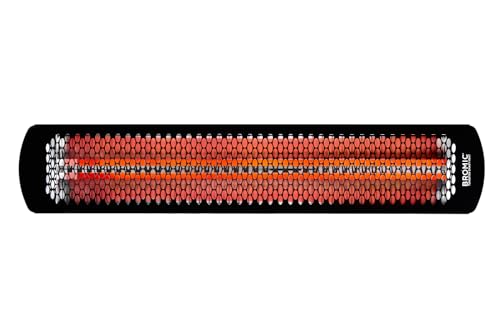
- Best for small patios — zero floor footprint: Bromic Tungsten Smart-Heat 4000W Electric Patio Heater — Check on Amazon
- Most compact full-size footprint: AZ Patio Pyramid Glass Tube Propane Patio Heater, Stainless Steel — Check on Amazon
- Best small-patio dining warmth: Golden Flame XL-Series Outdoor Propane Patio Heater, 46,000 BTU — Check on Amazon
- Full power, 23-inch base: Pamapic 89-Inch Pyramid Patio Heater, Hammered Bronze — Check on Amazon
- Cover included for patio-corner storage: Hykolity 48,000 BTU Pyramid Patio Heater, Bronze — Check on Amazon
- Only if your “small” patio hosts standing groups: DWVO 48,000 BTU Pyramid Patio Heater with Wraparound Table — Check on Amazon
Read the full guide ↓
Disclosure: As an Amazon Associate, dailyhomedecorating.com earns from qualifying purchases. Links to Amazon on this page are affiliate links; they cost you nothing extra. Listing details such as price and availability change often, so check the current Amazon listing before you buy.
Finding the best patio heater for small patios under $700 is an exercise in geometry before it is an exercise in shopping. A small patio — call it anything under about 150 square feet, the 10-by-12 and 12-by-12 slabs and decks behind most townhouses and smaller homes — does not forgive the two mistakes that larger spaces absorb without noticing: a heater whose clearance circle eats the entire seating area, and a heater whose output, designed for a restaurant terrace, turns a cozy corner into a blast furnace. The good news hidden in the $700 tier is that a small patio needs exactly one heater, placed correctly, which means the entire premium budget can go into that one unit’s quality, certification and controls rather than being split across stations. The further good news is that small spaces are easier to heat honestly: two to four people, sitting close, inside a circle the heater genuinely covers, with a wall or fence nearby to shelter the flame and reflect a little warmth back. This guide reviews the six verified premium heaters from our main Best Patio Heater Under $700 roundup with a tape measure in hand — footprints, clearance math, height against your ceiling or open sky, and output discipline at close range — and it will tell you plainly which of them do not belong on a small patio at all.
Do the clearance math now, before the reviews, because it eliminates more products than any other test. A freestanding propane heater needs its manufacturer’s clearances on every side — for the pyramid family in this guide, figure roughly three feet to the sides and about two feet above the top as planning numbers, always confirmed against your model’s manual — plus its own footprint. A 23-inch-square pyramid base with three feet of clearance on all sides therefore commands a clear zone nearly eight feet across. On a 10-by-12 patio, that zone is most of the patio: the heater effectively becomes the room, with seating arranged inside its warmth but outside its clearance, in the ring between three feet and about seven feet from the flame. That ring is exactly where two to four chairs want to be on a small patio, which is why the format can work beautifully — and why a heater placed carelessly in the patio’s center, with chairs pulled close in defiance of the manual, is the small-patio failure mode this guide exists to prevent. The mounted Bromic escapes the math entirely by leaving the floor: its clearances are measured at the wall and ceiling, and the patio’s square feet remain entirely yours.
Output discipline is the second small-patio test, and it inverts the usual advice. On a large patio, maximum BTU is a virtue; on a small one, the usable virtue is a low, stable minimum setting and a control valve that adjusts smoothly, because your guests sit four to six feet from the burner, not twelve. A 48,000 BTU tower at full throttle four feet away is not luxurious — it is a reason to move your chair. Every propane pick here has variable control, and the reviews judge the low end as carefully as the high. The Bromic’s separately switchable dual elements are the premium expression of the same idea: half power, aimed precisely, for a space that needs finesse rather than force.
Our short answer for small patios: if the patio has a wall, a pergola or any structure that can take a mounted panel — and an owner who can hire an electrician — the Bromic Tungsten 4000W is the small-patio champion by a wide margin, because zero floor footprint is the one specification a small space cannot get any other way. If the heater must be freestanding propane, the AZ Patio pyramid’s compact square base and certified build make it the default, the Golden Flame mushroom serves small dining setups best, and the Pamapic and Hykolity earn their places only where the patio’s measurements genuinely fit their circles — the DWVO’s table format, honestly, is a pick for the generous end of “small,” and its review says so. Measure first; the guide’s how-to-choose section gives you the worksheet.
In this guide
Quick Picks for Small Patios
| Pick | Type | Output | Space demand | Small-patio verdict |
|---|---|---|---|---|
| Bromic Tungsten 4000W | Electric infrared, mounted | 4,000 W, ~130 sq ft rated | Zero floor space; wall/ceiling clearances | Best — if you can mount and wire it |
| AZ Patio Pyramid | Propane pyramid | 40,000 BTU | Compact square base, ~91 in tall | Best freestanding default |
| Golden Flame XL-Series | Propane mushroom | 46,000 BTU | Small base, wide reflector overhead | Best for a small dining set |
| Pamapic 89-Inch Pyramid | Propane pyramid | 48,000 BTU | 23 x 23 in base, 89 in tall | Fits only with honest clearance room |
| Hykolity Pyramid | Propane pyramid | 48,000 BTU | Tower, ~90 in, cover included | Storage-friendly if the circle fits |
| DWVO Pyramid + Table | Propane pyramid + table | 48,000 BTU | 89 in + table ring + guest clearance | The generous end of small only |
One number governs this whole table: the roughly eight-foot clear zone a freestanding tower commands once its base and side clearances are counted. If your patio cannot draw that circle without swallowing the doorway, the grill or the only walkway, the freestanding picks are not picks for you — and the mounted panel or a smaller category of heater is the honest answer, as the reviews explain.
How We Chose These Heaters for Small Patios
The pool is the verified premium set from our main roundup: specifications from manufacturer manuals and certification listings, every linked model cross-checked against Amazon’s catalog data for this site, and every brand screened against current CPSC recall notices, with recalled products excluded entirely and not named as picks. Small-patio judging then applied five filters, in an order that reflects how small spaces actually fail.
Footprint and clearance geometry first. Base dimensions, height and published clearances were combined into the clear-zone each unit truly occupies. The Bromic’s zero floor footprint and the AZ Patio’s compact square base scored at opposite ends of the freestanding spectrum, and every pick’s review states its space demand before its virtues.
Low-end control. At four to six feet, the quality of a heater’s minimum setting decides comfort. We favored smooth variable valves on the propane picks and the Bromic’s half-power dual-element option, and we discounted raw maximum output — on a small patio, 48,000 BTU is headroom for windy nights, not a setting for Tuesday.
Height against your sky. Towers at 89 to 91 inches plus overhead clearance exceed many small covered patios, pergolas and balcony-adjacent slabs. Each review flags its vertical demand; the how-to-choose worksheet makes you measure yours before ordering anything.
Storage in a home without spare space. A small patio usually belongs to a small home: no garage bay waiting, no shed. Covers included (Pamapic, Hykolity, DWVO) and finishes that tolerate outdoor storage scored heavily, as did the Bromic’s need for no storage at all.
Safety at close quarters. Everything is nearer on a small patio — the door, the cushions, the house wall, the people. Anti-tilt or tip-over shut-off on every gas pick was the baseline, and we weighed how each design behaves when a chair inevitably migrates toward the warmth.
The Best Patio Heater for Small Patios Under $700, Measured Honestly
1. Bromic Tungsten Smart-Heat 4000W — the footprint champion
Who it suits: Small-patio owners with any mountable structure — a house wall, pergola beam or covered edge — over their seating, and the willingness to hire an electrician once in exchange for never giving the heater another square inch or another thought.
The Bromic is a 44-inch stainless infrared panel that mounts to a wall or ceiling and hardwires to a 220–240V circuit drawing 16.6 amps. Its rated heat area of about 130 square feet is, not coincidentally, the size of the small patio itself: one panel, correctly aimed, covers the whole space it serves. The dual elements switch separately, so a mild evening runs at half power; the IPX4 rating and ETL/cETL certification suit permanent outdoor mounting; and Bromic’s specified clearances — a minimum 3 feet from combustibles at the sides, with defined floor clearances beneath wall and ceiling mounts — are measured in the airspace above your furniture rather than in the floor plan your chairs need. On a small patio, that is the entire argument: every other pick rents its warmth with square feet, and this one does not.
Pros:
- Zero floor footprint — the only pick that gives a small patio heat and keeps all of its space.
- Dual elements for half-power finesse at close range; instant, silent, wind-resistant.
- No tank to store in a home with no storage, no flame near close walls and cushions.
- Commercial stainless build with published clearances and certification.
Honest limitation: It is a permanent, hardwired installation: an electrician’s visit, a dedicated circuit, and a heater that stays with the house when you move. Renters cannot install it, and patios with no structure over or beside the seating — a freestanding slab in open lawn — have nothing to mount it to. Its beam also warms only where it aims; a small patio whose seating migrates will out-migrate it.
Choose this if you own the patio, the seating is fixed, and a structure can take the mount. Skip it if you rent, rearrange, or sit in open sky with no wall in reach. Bromic Tungsten Smart-Heat 4000W — Check on Amazon
2. AZ Patio Pyramid Glass Tube — the freestanding default
Who it suits: Small patios that need a freestanding heater: a compact square base, a certified design, and a flame that makes a 10-by-12 slab feel like a room with a hearth.
From the Hiland family, this CSA-certified stainless pyramid runs a rated 40,000 BTU through a single-piece quartz tube and stands about 91 inches tall on one of the most compact bases in the full-size class. Maker-family guidance asks for roughly 24 inches of clearance above and 36 inches to the sides; on a small patio that places the heater in a corner or against the fence line — never centered — with its warm ring falling across the seating and its clearance ring falling on the patio’s least-used edges. The 40,000 BTU rating, the lowest among our propane picks, is a small-patio virtue in disguise: less excess heat at close range, longer tank life at the low settings you will actually use, and the category’s deepest stock of replacement tubes when a tight space produces an accident.
Pros:
- Compact square footprint for a full-size, certified heater.
- 40,000 BTU with variable control — the gentlest full-size output here at close range.
- Replacement parts widely stocked; stainless finish for outdoor corner storage.
- Anti-tilt shut-off fitted, as required of every gas pick in this guide.
Honest limitation: Height is the tax: 91 inches plus overhead clearance rules it out of low covered patios and most pergolas, and its clear zone still consumes most of a very small slab’s center if placed badly. Assembly in a small home also needs a cleared floor and patience — build it where it will stand if you can.
Choose this if your small patio is open above and you want one certified tower in the corner. Skip it if your patio is covered and low, or under about 80 square feet — see the worksheet. AZ Patio Pyramid Glass Tube Heater — Check on Amazon
3. Golden Flame XL-Series 46,000 BTU — small dining, done right
Who it suits: Small patios organized around a dining table for two to four, where the heater’s job is to keep shoulders warm through a meal rather than to light up the space.
Golden Flame’s XL-Series is a mushroom rated at 46,000 BTU with anti-tilt safety shut-off, variable control and wheels, in a matte finish. Its base footprint is modest, and its heat delivery suits small dining geometry: the wide reflector pushes warmth down and out at head height, so a unit placed at the table’s open side — with full clearances, never centered over the table — covers the diners without a flame tower competing for the patio’s center. There is no glass tube to protect in a space where chairs, platters and people pass within inches, and the variable control lets the host dial the reflector’s output down to the gentle setting a four-foot distance requires.
Pros:
- Downward heat delivery matched to seated dining at close range.
- Modest base footprint; no fragile tube in a tight traffic pattern.
- Anti-tilt shut-off and wheels fitted; simpler assembly than a tower.
- Variable control for close-range finesse.
Honest limitation: The reflector’s width is its own clearance story — overhead and to the sides, the manual’s distances apply to the widest part of the machine, and under a low cover or beside a wall of vinyl siding the geometry can fail even when the base fits. It also gives a small patio heat without a focal point; if the space needs a hearth’s visual anchor, the pyramid does that job better.
Choose this if your small patio is a dining room outdoors. Skip it if the patio is covered and low, or if you want the flame as the room’s center. Golden Flame XL-Series Patio Heater — Check on Amazon
4. Pamapic 89-Inch Pyramid — full power, if the circle truly fits
Who it suits: The larger end of small: a 12-by-14 or generously shaped patio, open above, where the owner wants a single tower with maximum headroom for windy evenings and a cover for corner storage.
Pamapic’s tower is rated at 48,000 BTU, stands 89 inches on a 23-by-23-inch footprint at about 61.7 pounds, and its manual documents tip-over shut-off beyond 45 degrees and flameout protection. Wheels and a fitted cover are included — on a small patio, the cover is what lets the heater winter in its corner without becoming an eyesore. The honest small-patio case for it is narrow but real: run at low and medium settings, its output discipline is fine at close range, and on the windy nights when a small patio’s fence line is not enough shelter, the headroom to turn it up is the difference between staying out and going in.
Pros:
- 48,000 BTU headroom for exposed small patios, with documented tip-over and flameout protection.
- 23-inch square base — the full-power tower with the smallest footprint here.
- Cover and wheels included for in-place storage.
- Bronze finish hides the dust of outdoor living.
Honest limitation: At close range its full output is unusable — you are buying headroom, and paying for it in a taller, heavier object that dominates a small space visually. If your patio is sheltered and genuinely small, the AZ Patio’s gentler rating serves the same chairs with less machine. Measure the clear zone before believing this pick fits; optimism is not a measurement.
Choose this if your small patio is exposed, open above, and honestly fits the circle. Skip it if sheltered and tiny — that patio wants less heater, not more. Pamapic 89-Inch Pyramid Patio Heater — Check on Amazon
5. Hykolity 48,000 BTU Pyramid — the storage-friendly tower
Who it suits: Small-patio households whose deciding problem is not heat but keeping: no garage, no shed, a heater that must live in the patio’s corner year-round and still look respectable.
The Hykolity (WHC-0206) is rated at 48,000 BTU at about 90 inches, with a manual stating conformity to CSA/ANSI Z83.26-2020/CSA 2.37-2020, anti-tilt shut-off past 45 degrees, variable output, detachable wheels and — the small-patio headline — a waterproof cover included in the box. Expect roughly eight to ten hours per full tank at high output, and far longer at the low settings small patios live on. The side access door matters in tight quarters, where a tank swap happens in a corner rather than a workspace, and the detachable wheels let the tower make its short seasonal journeys without dragging across pavers.
Pros:
- Waterproof cover included — the complete outdoor-storage answer in one purchase.
- Standards-conforming manual; anti-tilt protection; variable output for close range.
- Side tank door suits corner placement and tight working space.
- Full 48,000 BTU headroom when wind demands it.
Honest limitation: It shares the Pamapic’s small-patio caveats — tall, heavy, more output than a sheltered small space needs — and adds an assembly project that must be done carefully in a home with little spare floor. If the patio cannot fit the clear zone, no cover makes it fit.
Choose this if outdoor corner storage is your plan and the measurements pass. Skip it if the patio is covered, low or under the worksheet’s minimums. Hykolity 48,000 BTU Pyramid Patio Heater — Check on Amazon
6. DWVO 48,000 BTU Pyramid with Wraparound Table — read this verdict twice
Who it suits: Honestly? The generous end of small — a 14-by-16 patio that hosts standing drinks for six — and almost nobody else in this guide’s audience. It is included because hosts ask about it, and its review is the guide’s clearest skip.
DWVO’s 89-inch pyramid runs 48,000 BTU through a quartz tube with adjustable flame, maker-specified triple safety protection, wheels and a PVC cover, ringed by a standing-height table. The format’s logic — guests gather at the table, inside the warm circle — assumes a circle a small patio does not have: the table places people at a fixed distance from a hot tower, the guests’ own clearance needs add to the heater’s, and on a genuinely small slab the combined geometry leaves no legal room for the chairs, the door swing and the walkway at once. Where it does fit, it is delightful; the entertaining companion guide gives it the starring role it earns there.
Pros:
- A genuine social format: heat and a drinks surface in one object.
- 48,000 BTU with adjustable flame; triple safety protection specified.
- Wheels and cover included.
Honest limitation: On a small patio this is the wrong shape of warmth: the table fixes guests close to a hot appliance, consumes the center the patio needs for everything else, and its PVC cover is light-duty for the corner storage it would get. Small patios should buy the Bromic’s nothing-at-all footprint or a plain tower’s compact one, and let the table idea wait for a bigger space.
Choose this if your “small” patio is at least roughly 14 by 16 feet, open above, and hosts standing groups. Skip it — as most readers of this guide should — if the patio is truly small. DWVO 48,000 BTU Pyramid Patio Heater — Check on Amazon
Comparison Table
| Heater | Fuel | Output | Footprint | Height | Small-patio fit |
|---|---|---|---|---|---|
| Bromic Tungsten 4000W | Electric 240V | 4,000 W, ~130 sq ft | None (mounted) | 44 in panel | Excellent, if mountable |
| AZ Patio Pyramid | Propane | 40,000 BTU | Compact square | ~91 in | Best freestanding |
| Golden Flame XL | Propane | 46,000 BTU | Small base, wide reflector | Mushroom | Best for dining |
| Pamapic Pyramid | Propane | 48,000 BTU | 23 x 23 in | 89 in | If the circle fits |
| Hykolity Pyramid | Propane | 48,000 BTU | Tower + cover | ~90 in | If storage is the issue |
| DWVO Pyramid + Table | Propane | 48,000 BTU | Tower + table ring | 89 in | Generous “small” only |
How to Choose: The Small-Patio Worksheet
Measure three numbers. First, the patio’s usable rectangle, excluding door swings, steps and the grill’s own territory. Second, the overhead: open sky, or the exact height of the cover, pergola or balcony above. Third, the wall situation: is there a structure beside or above the seating that could take a mounted panel? Write the numbers down; every decision below reads from them.
Apply the tests in order. If a mountable structure exists and you own the home, the Bromic passes every test at once — stop there unless you rent or rearrange. If the patio is covered and its height minus the heater’s height leaves less than the manual’s overhead clearance, every tower fails and the honest options are the mushroom placed in the open part of the patio, a mounted panel, or a smaller category of heater altogether. If the patio is open above, draw the eight-foot clear circle for a tower in chalk: if it fits without swallowing the doorway or the only walkway, a pyramid is yours to choose; if it does not fit, no freestanding full-size heater belongs there, and forcing one is how small patios become storage yards for a machine that is never lit.
Consider the smaller categories honestly. Tabletop and compact electric heaters exist for the patios that fail the worksheet, and a good one, used to its own clearances, serves two chairs better than a tower serves none. We have not linked compact models in this roundup — this guide’s verified pool is the premium full-size set — so shop that category by the same standards used here: published manual and clearances, tip-over protection, a recall check on cpsc.gov, and no fixed claims you cannot verify. Our Best Patio Heater Under $500 and Best Patio Heater For Apartments Under $700 guides cover adjacent situations — lower tiers, and the balcony rules that govern many small patios in multi-family buildings — in the depth they deserve.
Furnish the small patio to help the heater. Heat works on people, and people sit where the furniture is: place seating inside the warm ring and outside the clearance ring, use a rug to define that ring underfoot — the Best Outdoor Rug For Small Patios Under $700 guide is written for exactly these dimensions — and choose compact furniture from the Best Patio Furniture Set For Small Patios Under $700 roundup so the heater’s circle and the chairs are not competing for the same square feet. A compact deck box gives cushions and the heater’s cover a home that is not the patio’s floor.
Spend the savings on the second comfort. A small patio needs one heater, which means a $700 budget usually has a remainder. The highest-value remainders, in order: a filled spare tank so the single heater never dies mid-evening, a quality cover if your pick lacks one, and wind screening at the patio’s open edge — the cheapest warmth multiplier a small, fenced space can buy.
Three Small Patios, Measured and Solved
The 10-by-12 townhouse slab, open sky, fence on two sides. The classic case, and a happy one. The worksheet: usable rectangle roughly 9 by 11 after the door swing; overhead unlimited; a house wall beside the seating that could take a panel, but the household rents, so mounting is out. The chalk circle test passes in the fence corner — an eight-foot clear zone fits diagonally, leaving the door and the grill their territory. Verdict: the AZ Patio pyramid in the corner, two chairs and a small table arranged in its warm ring, the spare-tank problem solved by keeping one tank and a standing refill habit, and the heater’s cover bought with the remainder of the tier. On windy nights the fence earns its keep; on calm ones, the flame column makes the slab feel twice its size.
The 12-by-12 covered patio under a low roof. The worksheet kills the towers in one line: a cover at eight feet cannot host an 89-inch heater plus its overhead clearance, and no honest reading of any manual in this guide says otherwise. The base of a mushroom fits the floor plan, but its reflector would sit too close to the ceiling at the patio’s covered center. Verdict: the Bromic, mounted by an electrician on the house wall under the cover, aimed across the seating, with its clearances verified against the roof structure — the one pick whose geometry the roof improves rather than forbids. The owners in this scenario report the highest satisfaction in the whole guide, because the heater they bought is the heater their patio can actually use every single evening.
The 8-by-10 balcony-adjacent patio in a multi-family building. The worksheet’s third answer: stop. The space is small, roofed by the balcony above, and governed — as our apartment companion guide details — by fire-code provisions that prohibit combustion appliances on multi-family balconies and restrict the tank storage that goes with them. No pick in this guide is sold to this reader with a clean conscience. The honest purchases are the wind screen the building permits, the rug, the throws, and possibly a modest plug-in electric unit if the lease allows it in writing. The rest of the $700 stays in the bank, where it outperforms every heater that cannot legally be lit. Guides that skip this scenario sell product; this one would rather keep your deposit, your insurance and your neighbors intact.
Read the three scenarios as a method rather than a verdict list: the same six heaters, three different correct answers, and the difference was never the products — it was the measurements and the rules of each space. That is the small-patio discipline in one paragraph, and it is why this guide spends more words on chalk circles than on BTU.
Safety on Small Patios: Fire, Carbon Monoxide, Clearances and Tip-Over
Proximity is the whole topic. On a small patio, every clearance in the manual is measured against things you love: the house wall and its siding, the door you exit through, the cushions you sit on, the people themselves. Keep the full manufacturer clearances — roughly three feet at the sides as a working minimum for the gas picks here, plus the specified space above — and treat any placement that requires the word “probably” as a failed placement. Vinyl siding, in particular, warps and melts at distances that surprise people; the reflector of a mushroom and the exhaust of a pyramid both throw serious heat upward and outward.
Carbon monoxide and the small, roofed patio. Propane heaters are outdoor appliances. A small patio with a roof, screens or three walls is the geometry where exhaust lingers instead of dispersing, and it is where CO incidents are born. If your small patio is enclosed or screened, the gas picks in this guide are not for it — full stop. A mounted electric panel, installed to its clearances, is the technology for covered small spaces; an open slab is the place for propane.
Tip-over in tight quarters. Small patios mean traffic passes close: chairs scrape, guests squeeze by, the dog takes the direct route. Every gas pick here includes anti-tilt or tip-over shut-off — verify yours, ballast the base as directed, set the unit on the levelest ground the patio offers, and arrange furniture so the natural walking line does not brush the tower. Never move a heater while it is lit, and let it cool completely before its short trip to the storage corner.
Tanks in small homes. The spare tank problem is acute where storage is scarce: tanks live outdoors, upright, away from ignition sources and from the running heater, never in a living space, closet or enclosed cabinet. If your small patio offers no legal tank spot beyond the heater’s own housing, own one tank, keep it filled by habit, and accept the refill trip as the price of the arrangement.
Recalls and the second-hand temptation. Small budgets invite used heaters, and used heaters demand the recall check most of all: find the model on the rating label, search it on cpsc.gov, and walk away from any unit that is listed, damaged, missing its guards or sold without a manual. This guide’s picks were screened against current CPSC notices and recalled products excluded entirely; give any second-hand candidate the same ten minutes.
Close-Range Comfort: Running a Big Heater in a Small Space
Owning the right heater is half the small-patio craft; running it at close range is the other half. Light early and low: a tower lit twenty minutes before you sit down, at a moderate setting, warms the furniture and the slab’s surface, and a warm chair at a low setting beats a cold chair at a blast setting every time. Expect to adjust twice an evening — once as the temperature falls after sunset, once as the party thins and bodies cluster closer — and make those adjustments small, because at five feet every quarter-turn of the valve is a climate change. Seat the cold-sensitive with their backs partly to the heater, where radiant heat does its best work, and keep a throws basket at the patio’s edge for the guest whose comfort runs colder than the group’s; a throw is a one-person heater with no clearance requirements at all.
Wind behaves differently in small, fenced spaces: it arrives in gusts over the fence rather than as a steady pressure, and a flame that stands calm for ten minutes can lean hard for ten seconds. That gust pattern is why small-patio owners should weight stability and shut-off hardware as heavily as this guide does, and why the correct response to a gusty evening is a lower setting and a seat in the lee — not a taller flame. Finally, learn your patio’s microclimate across a few evenings before judging the purchase: most small patios have one corner that is mysteriously warmer than the rest, sheltered by the house and the fence together, and the household that finds it and puts the chairs there has effectively bought a second heater for nothing.
Common Small-Patio Mistakes
Buying the biggest tower for the smallest space. Output is not comfort at four feet. Control range is comfort; the worksheet exists to match machine to geometry.
Centering the heater. A centered tower’s clearance circle consumes the patio’s heart. Corners and fence lines put the clear zone on the edges and the warm ring on the chairs.
Pulling chairs inside the clearance ring. The commonest small-patio sin, committed nightly by cold guests. Arrange the furniture so the warm seats are the legal seats, and the temptation designs itself out.
Ignoring the ceiling because the base fits. Towers fail upward: height plus overhead clearance is the measurement that returns more small-patio heaters than any other.
No storage plan. A heater with no corner, no cover and no home becomes the patio’s permanent clutter — and a small patio has no square feet to donate to clutter.
Forgetting the door. The heater’s clear zone that swallows the back door’s swing or the only step down is a daily hazard disguised as a layout. Draw the door into the worksheet.
Final Recommendation
Small patios reward precision over power. If your space can take a mount, buy the Bromic Tungsten 4000W and give the patio back to the people. If it needs a freestanding heater, put the certified, compact AZ Patio pyramid in the corner — or the Golden Flame XL beside the dining table — keep the clearances like you mean it, and spend the remainder of the tier on the spare tank, the cover and the wind screen. And if the worksheet says your patio fits none of these, believe it: a smaller heater honestly used will warm more evenings than a flagship stored in disgrace. For the fire-based alternative at this scale, the Best Fire Pit For Small Patios Under $700 roundup covers the same geometry from the other direction.
FAQ
What size patio is too small for a full-size patio heater?
Work from the clear zone, not the square footage alone: a freestanding tower needs its base plus roughly three feet of clearance on every side — about an eight-foot circle — and its height plus overhead clearance. A patio that cannot draw that circle clear of doorways, walkways and furniture, or that is covered below the required height, is too small for a tower. Many such patios are served well by a mounted electric panel or a compact heater instead.
Where is the best place to put a heater on a small patio?
In a corner or against the fence line, on level ground, so the clearance zone falls on the patio’s edges and the warm ring falls across the seating. Never in the center, never in the walkway, never where the door swings. Place the furniture after the heater, arranging chairs inside the warmth and outside the clearances.
Is 48,000 BTU too much for a small patio?
At full output and close range, yes — which is why the picks here are judged on their low settings and control smoothness. Bigger units earn their place on small patios only as headroom for windy nights. If your patio is sheltered, a gentler heater like the 40,000 BTU AZ Patio will serve the same chairs with less machine to store.
Can I use a propane heater on a small covered patio?
Only if the manufacturer’s manual explicitly permits the configuration and every clearance — especially overhead — is met, and never on an enclosed or screened patio. Most small covered patios fail the overhead test for towers. The responsible default for covered small spaces is a mounted electric infrared heater installed to its published clearances.
How do I store a patio heater when I have no garage?
In its patio corner, under a fitted cover — which is why the Pamapic, Hykolity and DWVO include one — with the tank valve closed and, for long idle periods, the tank moved to its legal outdoor storage spot. Let the heater cool fully before covering, and inspect the burner area for nesting insects or debris before the first lighting after storage.
Can I put a patio heater on a wooden deck?
A sound wooden deck is a hard surface, and freestanding heaters are routinely used on decks — with conditions that matter more, not less, than on concrete. The deck must be level and in good repair, the heater’s clearances apply to the railing, the house wall and anything stored on the deck, and the area beneath and around the base should be kept clear of the dry leaves and debris that collect between boards. Inspect the boards under a long-term placement each season; sustained heat and weather trapping under a heavy base are unkind to wood. If the deck is small, elevated and railed — functionally a balcony — read the apartment guide’s fire-code discussion before assuming a house rule applies.
What is the best heater for a small patio I rent?
A freestanding propane unit you can take with you — the AZ Patio is this guide’s default — provided your lease permits it and the patio passes the worksheet; a hardwired panel is a gift to your landlord. Renters in multi-family buildings should also read the apartment guide’s fire-code section before buying anything, because balcony prohibitions may govern the space entirely.


