Where to buy
Check the latest price, availability and delivery on Amazon. Orders are placed on Amazon. We may earn a commission from qualifying purchases.
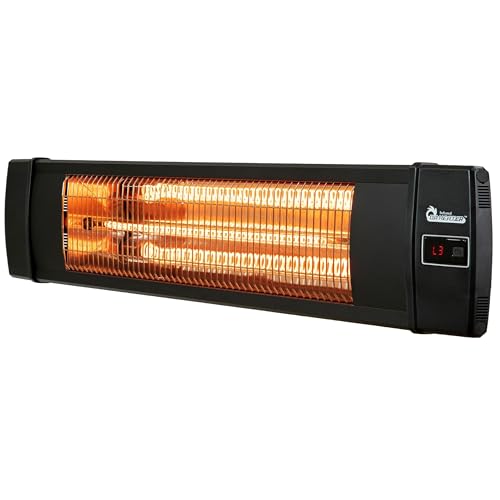
- Dr Infrared Portable Infrared Heater — Check on Amazon
- Fire Sense Tabletop 60262 — Check on Amazon
- Cuisinart COH-514 Tabletop — Check on Amazon
- Heat Storm Tradesman Tripod — Check on Amazon
See 2 more Amazon options
- SereneLife Portable Stand Heater — Check on Amazon
- Briza Infrared Patio Heater — Check on Amazon
Read the full guide ↓
Disclosure: As an Amazon Associate, dailyhomedecorating.com earns from qualifying purchases. Links to Amazon on this page are affiliate links; they cost you nothing extra. Listing details such as price and availability change often, so check the current Amazon listing before you buy.
A small patio rewrites the rules of this category, and the best patio heater for small patios under $500 is rarely the best patio heater of any other kind. The full-height propane heaters that top the other guides in this series stand over seven feet tall, demand several feet of clear space on every side and above, and warm a circle far wider than a small patio contains — on a compact terrace they are not merely oversized, they are frequently unusable within their own safety clearances. The good news is that smallness is also an advantage: a small space needs only a small amount of heat, delivered close. Every pick in this guide is a compact format — electric infrared units that warm the people in front of them, and tabletop propane units that warm the people around a table — and every one sits far below the $500 ceiling, most of them dramatically so. Check the current price on Amazon; on a small patio, the money you save is better spent on the chairs, the rug and the lighting that make the space.
The physics of small patios favour the buyer who thinks in pockets rather than areas. Infrared heat warms people directly within a few feet; on a small patio, a few feet is the whole territory, so a modest 1,500-watt unit that would disappoint on a deck can feel generous across a two-chair terrace. Tabletop propane plays the same trick with flame: 10,000–11,000 BTU is a trivial figure beside a mushroom heater’s rating, but at eighteen inches from your hands it is exactly enough. What small patios cannot forgive is footprint and clearance. A heater that eats a square metre of a six-square-metre patio has failed before it is lit, and a heater whose manual demands clearances the patio cannot provide is not a purchase, it is a hazard with a receipt.
So this guide selects on small-space criteria first: footprint, mounting options that return floor space, clearances a real small patio can honour, and storage — because on a small patio the heater’s winter home matters as much as its summer spot. The six picks divide into electric infrared models, which add the apartment virtues of no flame and no fuel, and two tabletop propane models for owners whose small patio is a private house terrace where gas is permitted and preferred. Renters and balcony users should read the apartment guide in this series too; its fire-code discussion applies to many small patios verbatim.
Every pick was verified against its maker’s specifications and cross-checked through Amazon’s Creators API, and every brand was checked against U.S. Consumer Product Safety Commission recall records, with recalled products excluded entirely. The reviews are honest about the shared limitation of the whole category — these are close-range heaters for small groups — because on a small patio that limitation, correctly matched, stops being one.
In this guide
Quick picks: best patio heater for small patios under $500
Four electric infrared heaters and two tabletop propane units, all chosen for footprint first. The table shows the format and the job; the reviews cover mounting, clearances and the honest reach of each.
| Pick | Type | Output | Best for | |
|---|---|---|---|---|
| Dr Infrared Portable Infrared Heater | Electric infrared heater | 1,500 W | most small patios — electric, flexible, renter-safe | Check on Amazon |
| Fire Sense Tabletop 60262 | Propane tabletop heater | 10,000 BTU | a table for four, warmed from its centre | Check on Amazon |
| Cuisinart COH-514 Tabletop | Propane tabletop heater | 11,000 BTU | a busy small table, with anti-tilt protection | Check on Amazon |
| Heat Storm Tradesman Tripod | Electric infrared heater | 1,500 W | zero-installation warmth that packs away | Check on Amazon |
| SereneLife Portable Stand Heater | Electric infrared heater | 1,500 W | a stand heater with serious weather sealing | Check on Amazon |
| Briza Infrared Patio Heater | Electric infrared heater | 1,500 W | one heater that stands or mounts as space allows | Check on Amazon |
Dr Infrared Portable Infrared Heater — best for most small patios — electric, flexible, renter-safe. The default small-patio pick: a 1,500 W infrared heater with a remote that stands or mounts, warming the two chairs it faces with no flame and no fuel.
Fire Sense Tabletop 60262 — best for a table for four, warmed from its centre. The table pick: a CSA-approved 10,000 BTU tabletop heater that lives in the middle of the dining table and stores in a cupboard.
Cuisinart COH-514 Tabletop — best for a busy small table, with anti-tilt protection. The family-table pick: 11,000 BTU with an anti-tilt switch and a burner guard, for tables where life happens at elbow height.
Heat Storm Tradesman Tripod — best for zero-installation warmth that packs away. The pack-away pick: a tripod infrared heater that appears when needed and folds into storage when the patio must be a patio again.
SereneLife Portable Stand Heater — best for a stand heater with serious weather sealing. The weather pick: a stand heater with IP65 sealing and a 360-degree tip-over switch, built to live on an exposed small patio.
Briza Infrared Patio Heater — best for one heater that stands or mounts as space allows. The adaptable pick: stand it this season, wall-mount it next — one heater that follows the patio’s rearrangements.
How these picks were chosen
Small-patio suitability was the first filter, applied before output or brand: any candidate whose footprint, height or clearance requirements could not honestly fit a compact terrace was excluded, which removed every full-height heater from contention regardless of quality. Surviving candidates were verified against their manufacturers’ published specifications — wattage or BTU output, dimensions, mounting options, weather ratings and safety switches — and cross-checked through Amazon’s Creators API, which confirmed the exact listing behind every link in this guide.
U.S. Consumer Product Safety Commission recall records were checked for every brand and model considered; any product with an active recall was excluded entirely and is not named here. Within the clean field, we required a safety shut-off appropriate to the format — tip-over protection on stand and tripod models, anti-tilt or auto-shutoff on the tabletop units — because small patios put heaters close to people, chair legs and passing elbows by definition. Weather ratings were read strictly: a small patio is often an exposed patio, and splash resistance was treated as the minimum, not a virtue.
We also weighed storage and multi-role value. A heater that folds, hangs or shelves away respects a small home’s arithmetic; a heater that can also serve a garage, workshop or the next, larger patio respects a budget’s. The $500 ceiling, finally, was treated as headroom rather than a target — the right small-patio heater costs what it costs, and every pick here leaves most of the budget unspent.
Safety first: fire, carbon monoxide and tip-over
No heater in this guide is safe on autopilot, and the safety rules are not fine print — they decide where a heater may stand, what it may stand near, and whether it may be used at all. Read this section before the reviews, and read your chosen model’s manual after them; where the two differ, the manual and your local fire code win.
Clearance from anything that can burn. Mushroom and pyramid propane heaters need generous clear space above and around them — as a working rule, keep at least 3 feet from walls, furniture, curtains, umbrellas and overhanging branches on every side, and several feet of open air above the reflector, following the greater distance whenever the manual demands more. Never run a full-height propane heater under a low roof, tent, gazebo canopy or patio umbrella unless the manual explicitly allows the configuration and the clearances still fit. Tabletop units need a stable, heat-tolerant table and open air above them. Electric infrared heaters need the clearance their manuals specify from ceilings, walls and soft furnishings — radiant elements run far hotter than they look.
Carbon monoxide. Every propane heater in this guide burns fuel and produces carbon monoxide. That is why they are outdoor-only appliances: never use one in a garage, tent, enclosed porch, sunroom or any space with a roof and walls that trap air, and never use one indoors for any reason. A covered patio with open sides is the grey zone — if air cannot move freely through the space, treat it as enclosed and choose an electric heater instead. Know the early signs of carbon monoxide exposure — headache, dizziness, nausea, unusual tiredness — and if anyone feels them near a running heater, turn it off if you can do so safely, move everyone to fresh air and seek help. A battery carbon monoxide alarm in any semi-enclosed outdoor room is cheap insurance.
Tip-over and stability. Full-height heaters are tall, top-heavy machines standing in weather. Fill water-ballast bases, use sand or weights where the design allows, stand the heater on level paving rather than grass or decking boards that rock, and move it out of forecast storm winds. Tip-over shut-off switches and anti-tilt valves are backstops, not permissions: they cut the gas when a heater falls, but a falling heater is already an accident in progress. Keep children and pets from leaning, climbing or playing around the pole, and never leave a running heater unattended.
Fuel discipline. Check the hose and regulator for cracks and the connections for leaks with soapy water whenever you change a tank — bubbles mean gas is escaping, and the heater stays off until the connection is fixed. Store spare propane cylinders outdoors, upright, away from the heater and from ignition sources, never indoors and never in a hot car. Turn the cylinder valve off first when you finish for the night, let the burner consume the line gas, then turn the control off. Electric heaters have their own discipline: plug directly into a properly rated outlet, never run one from a lightweight indoor extension cord, keep cords dry and out of walkways, and give a 1,500 W heater a circuit that is not already feeding another heavy load.
Small-patio safety: clearances in a space that barely has them
The main safety section’s rules do not shrink with the patio, and that is the central fact of small-space heating: a compact terrace must still provide the clearance each heater’s manual demands from walls, railings, curtains, furniture and anything overhead, or the heater does not belong there. Measure before you buy, with the furniture in place, and be brutally honest — the gap between a heater and a cushion that is ‘probably fine’ is exactly the gap in which small patios get into trouble. Tabletop units concentrate the question: they need a stable, heat-tolerant table, open air above them rather than a low umbrella canopy, and a table edge discipline that keeps the unit centred and out of elbow range.
Proximity is the second fact. On a small patio, people sit closer to heaters, pass closer, and store more things — bikes, planters, storage boxes, drying laundry — within the heater’s neighbourhood. Keep the heater’s zone genuinely clear, route electric cords flat along walls where feet do not travel, and never let a stand or tripod heater’s legs become the patio’s trip hazard in the dark. Carbon monoxide rules are unchanged for the two tabletop gas picks: outdoors in open air only, never in a screened or roofed enclosure that traps air, and never, under any circumstances, brought inside to finish the evening. If your small patio is a balcony in a multifamily building, the fire-code prohibitions discussed in this series’ apartment guide apply to the gas picks — choose an electric model from this list instead.
The six best patio heaters in detail
1. Dr Infrared Portable Infrared Heater
Who it suits. the classic small-patio household: two chairs, a side table, a free-standing spot in the corner and an outdoor outlet. It suits owners and renters alike who want warmth without flame, fuel or installation.
This portable infrared heater from Dr Infrared is the electric alternative that anchors the apartment and small-space lists in this series: a 1,500 W carbon infrared unit with a remote control that can be used freestanding or mounted, indoors or out, with no flame, no fuel and no exhaust. Infrared heat warms people and surfaces directly rather than the air, so it feels effective the moment it switches on, within a modest radius. On a standard household circuit it draws what a hair dryer draws, which means it shares badly with other big loads on the same breaker — a real planning point, covered in the how-to-choose section.
Ownership of the Dr Infrared is closer to owning a lamp than a heater: position it, plug it into a suitable outdoor-rated outlet, and use the remote. There is no tank to refill, no pilot to light and no exhaust to think about, which is why it anchors the apartment list. The discipline it does require is electrical — a dedicated-feeling circuit, a dry outlet, and a cord routed where nobody walks. Kept that way, it is the lowest-hassle warmth in this guide.
Pros
- No flame, no fuel and no carbon monoxide — the apartment-safe format
- Remote control and multiple mounting options
- Instant-on infrared warmth at close range
- Runs on a standard household circuit
Honest limitation. 1,500 W warms a small seating pocket, not a patio; wind strips infrared heat quickly, and it needs a properly rated outdoor outlet within cord reach.
Choose it if you want the proven electric default with a remote and mounting options. Skip it if you need to warm a group of five or more — beyond any compact heater’s honest reach.
2. Fire Sense Tabletop 60262
Who it suits. households whose small patio is organised around one dining table for four, used for meals rather than lounging. It suits cupboard-storage homes where the heater appears with the dinner things.
The Fire Sense 60262 is a tabletop propane heater: a compact 10,000 BTU unit designed to sit in the middle of an outdoor dining table and warm the people seated around it, rather than a whole patio. It carries CSA approval and an auto-shutoff valve, and its stainless steel body has been in the Fire Sense catalogue for years, which makes replacement parts and documentation easy to find. Output is deliberately modest — this is a shoulder-season, close-quarters heater for four people at a table, not a substitute for a full-height unit in mid-winter.
The 60262 lives on the table, so its ownership routine is tabletop-sized: it stores in a cupboard, comes out with the dinner things, and goes back inside afterwards. That portability is also its safety discipline — a tabletop heater should be set on a stable, heat-tolerant table, away from the table edge, and never under a low umbrella canopy. Within those rules it does one job beautifully: warm hands and faces across a dinner table on evenings that would otherwise end early.
Pros
- Sits on the table, warming faces and hands where people actually sit
- CSA approved with an auto-shutoff valve
- Compact enough to store on a shelf between uses
- Long-running model with easy-to-find documentation
Honest limitation. 10,000 BTU only works at table distance; it will not warm a seating area, and it must never be used under a low umbrella or canopy without the clearances in the manual.
Choose it if your patio life is dinner at one table and storage space is tight. Skip it if your patio is a multifamily balcony, where gas appliances are typically prohibited.
3. Cuisinart COH-514 Tabletop
Who it suits. families whose small table is a busy one — children, serving dishes, board games after dinner — and who want the anti-tilt switch standing guard over the format.
Cuisinart’s COH-514 is a tabletop propane heater rated at 11,000 BTU with an anti-tilt safety switch, an adjustable heat control and a burner screen guard, in a grey finish. The maker rates its useful range at about 30 square feet, which matches its real job: the centre of a four-to-six-person dining table on a cool evening. The anti-tilt switch cuts the gas if the unit is knocked, a meaningful feature on a table where elbows, serving dishes and children are all in motion. It is a current model from a major kitchen and outdoor brand, with the dealer and parts network that implies.
Cuisinart’s tabletop unit is built for the same table-centre role with a little more output and the reassurance of the anti-tilt switch. The burner screen guard keeps curious fingers and stray napkins off the hot element. It suits hosts who eat outside often in the shoulder seasons: set it in the middle of the table, light it before guests sit down, and let it take the edge off the evening rather than trying to defeat the season.
Pros
- Anti-tilt safety switch suits busy dining tables
- 11,000 BTU is strong for the tabletop class
- Adjustable heat with a burner screen guard
- Major-brand support and documentation
Honest limitation. Like every tabletop unit it heats a table, not a patio, and the table surface beneath it must be heat-tolerant and completely stable.
Choose it if your table is busy and you want anti-tilt protection on a tabletop flame. Skip it if you want lounging warmth rather than table warmth; an infrared pick serves chairs better.
4. Heat Storm Tradesman Tripod
Who it suits. small patios that must return to other duties — a workspace, a play space, a drying yard — where the heater cannot be a permanent resident. It suits renters and the storage-disciplined.
Heat Storm’s Tradesman pairs a 1,500 W infrared heater with a tripod stand and a remote control. The tripod is the feature: it sets up in minutes on any flat surface, folds away for storage, and points the heat where the people are rather than where a wall happens to be. Tradesman branding reflects its jobsite heritage, so the housing is built to be knocked about a little. For renters, students and anyone whose outdoor space is borrowed or temporary, a heater that needs no installation at all is often the only realistic option.
The Tradesman is the heater you lend to a neighbour: tripod out, plug in, warm. The tripod footprint is the thing to plan around — it needs a flat patch of ground and a cord route that does not cross a walkway. In return you get heat exactly where the group is, including places a fixed heater cannot reach, like a driveway gathering or a garage workshop session. It stores folded in remarkably little space.
Pros
- Tripod sets up anywhere with zero installation
- Folds flat for closet or garage storage
- Remote control included
- Rugged housing suits garages and workshops as well as patios
Honest limitation. Tripod legs have a wide footprint and can be tripped over in tight spaces; route the cord carefully and keep the legs out of walkways.
Choose it if the heater must pack away completely between uses. Skip it if floor space is too precious for tripod legs; choose a mounted or tabletop pick.
5. SereneLife Portable Stand Heater
Who it suits. exposed small patios in real weather, where the heater lives outside and needs sealing to match, with seating that rearranges often enough to value a movable stand.
SereneLife’s portable version puts a 1,500 W infrared element on a stand, with an IP65 rating, a remote control and a 360-degree tip-over safety switch that cuts power if the unit goes over in any direction. The stand format suits renters and small patios because nothing is installed and nothing is permanent: wheel it out, warm the chairs, wheel it back. The tip-over switch matters on small patios where the heater stands close to passing people, pets and chair legs.
The stand version of SereneLife’s infrared heater suits patios that reconfigure often: stand it behind the sofa for film night, move it to the dining end for dinner. The 360-degree tip-over switch is well judged for this roaming role. IP65 sealing means it can live under a covered patio without being ferried indoors after every use, though a cover still extends its life. Its warmth is a close-range tool; arrange the chairs first, then place the heater to serve them.
Pros
- Tip-over safety switch cuts power in any fall direction
- IP65 weather rating for exposed small patios
- Stand format needs no installation
- Remote control included
Honest limitation. A stand heater on a small patio competes for the same square feet as the furniture; measure the footprint before buying.
Choose it if the heater will live outdoors in weather and needs IP65 sealing. Skip it if you cannot give a stand heater its footprint; go mounted or tabletop.
6. Briza Infrared Patio Heater
Who it suits. rearrangers and future-movers: patios whose layout changes with the season, and owners who may wall-mount in the next home what stands in this one.
The Briza is a 1,500 W infrared heater sold with mounting flexibility as its headline: use it on its stand, or mount it to a wall or ceiling, indoors or out. That flexibility is exactly what renters and apartment dwellers need, because the right mounting position changes with the space — over a balcony railing line one season, on a stand by a reading chair the next. Heat is the usual honest 1,500 W story: a person-sized pocket of warmth at close range, delivered instantly, with no flame, no fuel storage and no exhaust to manage.
The Briza’s flexibility is its ownership story. On the stand it is a portable heater for a reading chair or a two-person balcony; wall-mounted over a small dining set it disappears into the background. Buyers should decide the primary position before purchase and buy any extra mounting hardware at the same time. As with all 1,500 W infrared units, satisfaction depends on honest expectations: it warms the people in front of it, not the postcode.
Pros
- Stand, wall or ceiling mounting in one product
- No flame, fuel or exhaust to store or manage
- Instant infrared warmth at close range
- Moves with you between homes and layouts
Honest limitation. At 1,500 W it is a one-or-two-person heater; groups need a second unit or a different format, and the stand takes floor space when used freestanding.
Choose it if you want stand-or-mount flexibility in a single purchase. Skip it if you need weather sealing for permanent exposure — the IP65 SereneLife stand pick is built for that.
Comparison table
On a small patio the comparison that matters is footprint against function: what each heater occupies, what it warms, and what it demands. Output figures here are deliberately modest — read them against the few feet of a small patio, not against a deck.
| Model | Type | Output | Standout feature | Main trade-off |
|---|---|---|---|---|
| Dr Infrared Portable Infrared Heater | Electric infrared heater | 1,500 W | Carbon infrared, remote, stand or mount | Close-range warmth only — a few feet |
| Fire Sense Tabletop 60262 | Propane tabletop heater | 10,000 BTU | CSA approved tabletop, auto-shutoff valve | One table only; gas rules apply |
| Cuisinart COH-514 Tabletop | Propane tabletop heater | 11,000 BTU | Anti-tilt switch, burner screen guard | One table only; needs a heat-tolerant table |
| Heat Storm Tradesman Tripod | Electric infrared heater | 1,500 W | Tripod folds away; zero installation | Tripod footprint and cord routing need care |
| SereneLife Portable Stand Heater | Electric infrared heater | 1,500 W | IP65 sealing, 360-degree tip-over switch | Stand competes for the patio’s square feet |
| Briza Infrared Patio Heater | Electric infrared heater | 1,500 W | Stand, wall or ceiling mounting | Stand mode takes floor space; 1,500 W reach |
How to choose: best patio heater for small patios under $500 explained
Step one: measure the patio, then the clearances. Write down the patio’s dimensions and the position of the furniture as it actually sits. Then, for any heater you fancy, take its manual’s clearances — from walls, railings, furniture, curtains and overhead structures — and test them against your measurements on paper. If a full-height heater’s clearances do not fit, they do not fit; that is the entire reason this guide contains compact formats. This ten-minute exercise eliminates most bad purchases in the category.
Step two: choose electric or tabletop gas. Electric infrared is the default for small patios: no flame, no fuel storage, no exhaust, and formats that hang, mount, stand or fold. It is also the only lawful choice on most multifamily balconies. Tabletop propane suits private house terraces where gas is permitted and the ritual of flame is wanted; it warms a dining table beautifully and stores in a cupboard. Decide by your rules and your table, not by output envy.
Step three: buy back the floor. On a small patio, mounting is a feature worth paying for. A heater on a wall, hanging overhead, or standing in the dead corner behind the chairs returns its footprint to the people. Tripods and stands earn their place only where the heater also packs away. Before buying, pace the footprint: stand where the heater will stand, and check that chairs still pull out, doors still swing and nobody’s walk to the kitchen threads past a hot element.
Step four: place heat at the people. Infrared warms what it faces; tabletop flames warm the table they sit on. Arrange the seating first, in the configuration you actually use, then place the heater to serve it at close range — a few feet for infrared, the table’s centre for tabletop. A heater placed for symmetry rather than for bodies is garden sculpture.
Step five: solve power and storage before the box arrives. Electric picks need an outdoor-rated, ground-fault-protected outlet within cord reach and a circuit without another heavy load; cords must run along walls, never across the walking line. Tabletop picks need a stable, heat-tolerant table and a cupboard shelf for winter. Every pick needs a home when it is not working — on a small patio, ‘somewhere’ is not an answer.
Step six: spend the change well. Every pick in this guide leaves most of the $500 ceiling unspent — check the current price on Amazon to see how much. The remainder buys what small patios actually lack: better chairs, an outdoor rug that defines the warm zone, a side table that keeps drinks off the floor, and the blanket basket that extends every evening by an hour. A small patio’s comfort is a system; the heater is one component, correctly sized at last.
Common mistakes to avoid
Buying the full-height heater anyway. It towers over the space, its clearances swallow the patio, and its heat circle covers the neighbours’ airspace while its base occupies your best corner. Small patios need compact formats; that is a geometry fact, not a taste.
Skipping the clearance measurement. ‘It will probably fit’ is how heaters end up six inches from a cushion. Measure the space, read the manual’s numbers, and let arithmetic decide.
Putting a tabletop heater under the umbrella. The umbrella canopy is overhead, combustible and low — precisely what a tabletop flame must not heat. Tabletop units need open air above them; if the table lives under a canopy, choose an electric pick and mount it as directed.
Treating the cord as an afterthought. A cord across a small patio’s only walking line will be tripped over, in the dark, beside a heater. Route along walls, keep connections dry and off the ground, and never run a cord through a door or window gap.
Warming the empty patio. Compact heaters warm people at close range, not spaces in advance. Switch on when you sit down — infrared is instant — rather than heating an empty terrace ‘to take the chill off’, which it cannot do and which wastes the evening’s fuel or electricity.
Forgetting where it sleeps. A small patio has no spare corner for a heater’s winter. If the model does not fold, hang, shelf or cover neatly within your storage reality, it will spend winter in the way — or in the weather. Choose the storage answer at purchase time.
Making a small patio feel bigger: heat as one part of the system
A small patio’s comfort is a system in which the heater is one component, and often not the most important one. The owners of the warmest small patios tend to have solved, in order: shelter, seating, surfaces, light — and then heat. Shelter first, because every heater in this guide performs in proportion to the stillness of the air around it: a fence panel, a hedge, a screen or even the house wall on the windward side can double the felt warmth of the same heater, and on a small patio a single panel is a weekend project rather than a landscaping campaign. If your patio takes the evening breeze full in the face, spend on the windbreak before you spend on watts or BTU; the heater you already own — or the cheapest pick in this guide — will feel like an upgrade the first still evening behind it.
Seating second, because compact heat is directional and the chairs decide where it must point. Arrange the seating as a fixed, honest configuration — the two chairs and table you actually use, at the distance from each other you actually sit — and only then choose the heater format that serves that arrangement: infrared facing it, hanging above it, or a tabletop flame in its middle. Small patios punish the alternative sequence. A heater bought first becomes the patio’s immovable object, and the furniture spends years arranged around an appliance’s convenience instead of yours.
Surfaces and light third, because they multiply the heater’s effect for very little money. An outdoor rug under the seating zone stops cold rising through feet and visually defines the warm territory; cushions and a stored basket of blankets extend every session; and warm-toned lighting — string lights, a lantern — makes a heated pocket feel like a room rather than a lit corner, which is the difference between a patio people linger on and one they step out to. None of this is decoration in the dismissive sense: perceived warmth is partly physical and partly the brain’s reading of the scene, and a small patio that looks like an outdoor room keeps its occupants outside longer than a bare slab with a stronger heater.
Heat last, and sized to the system rather than the catalogue. With shelter, seating and surfaces in place, the compact picks in this guide — most of them far below the $500 ceiling — are not the compromise choice but the correct one: close-range warmth for a defined pocket, in formats that fold, hang, mount or shelf away when the patio returns to its other duties. The small patio’s secret is that it never needed a big heater. It needed a still, well-arranged few square metres and a little heat placed exactly where the people are — which is what every pick in this guide, at every price in it, is for.
A final measurement habit ties the system together: before the season’s first cold evening, sit in the arranged seating at dusk with the heater on and a drink in hand, and stay for twenty minutes. That is the exact experience you are buying, and it will tell you — more honestly than any specification — whether the heater needs to move a foot closer, whether the windbreak wants one more panel, and whether the blanket basket belongs within arm’s reach. Small patios reward this kind of tuning disproportionately, because every element is close enough to matter. Tune once, and the smallest space in the garden becomes the one everybody chooses.
Final recommendation
For most small patios, buy the Dr Infrared portable infrared heater: close-range warmth, no flame, a remote, and the flexibility to stand or mount as the space allows. Dining-centred patios should warm the table itself — the Fire Sense tabletop for its proven, certified simplicity, or the Cuisinart COH-514 where the anti-tilt switch’s reassurance matters. Patios that must reset for other duties take the folding Heat Storm Tradesman; exposed patios take the IP65-sealed SereneLife stand heater; and the Briza serves anyone whose layout — or address — will change. Every pick sits far under the $500 ceiling, so check the current price on Amazon, spend the remainder on the chairs and the rug, and enjoy the discovery every small-patio owner makes: a little heat, placed exactly where you sit, is all the heat there is.
Frequently asked questions
Why are there no full-height propane heaters in this guide?
Because their own safety clearances disqualify them on most small patios. A mushroom heater needs several feet of clear space on every side and generous open air above its reflector; measured honestly, that circle is larger than a small patio. Forcing one in means violating the clearances that keep it safe. Compact electric and tabletop formats deliver their heat at the close range a small patio actually offers, within clearances the space can honour.
How much warmth will a 1,500 W infrared heater give a small patio?
A genuine pocket: the people seated within a few feet of the element feel comfortably warm on cool evenings, especially out of the wind. Infrared heats people rather than air, so it works instantly and locally. On a small patio that locality is a match, not a limitation — but it will not raise the temperature of the whole terrace, and deep-winter evenings will still need coats and blankets alongside it.
Can I use a tabletop propane heater on a balcony?
If the balcony belongs to a multifamily building, generally no: the fire-code provisions that prohibit open-flame gas devices on apartment balconies — International Fire Code section 308.1.4 and NFPA 1 — cover tabletop units just as they cover full-height ones, and most leases ban balcony gas appliances outright. On a private house terrace, a tabletop heater is a legitimate choice, used outdoors in open air with its clearances respected. When in doubt, take an electric pick from this guide.
Where should a heater go on a very small patio?
Where it serves the seating without entering the walking line: mounted on the wall above and behind the chairs, hung over the seating where structure allows, standing in the dead corner the chairs face, or — for tabletop models — in the centre of the table. Arrange the furniture first, in its real configuration, then fit the heater to the arrangement; never rearrange the patio around a heater’s convenience.
Do small patio heaters use much electricity or fuel?
Modestly, because they work briefly and locally. A 1,500 W electric heater run for an evening uses roughly what a hair dryer would over the same hours — noticeable, not alarming. Tabletop propane units sip fuel compared with full-height heaters, which is why their small cylinders suit dinner-length sessions. The expensive habit is heating empty space or whole evenings at maximum; heating seated people, when seated, is the economical pattern.
What is the best heater for a small patio that is also a workspace or play area?
One that disappears: the tripod model in this guide folds away in minutes, and wall-mounted or hanging models never occupy the floor at all. Permanent stand heaters suit patios with a single, fixed purpose. Match the heater’s storage answer to the patio’s other lives before buying — on a multi-use small patio, pack-away is a primary feature, not a bonus.


