Where to buy
Check the latest price, availability and delivery on Amazon. Orders are placed on Amazon. We may earn a commission from qualifying purchases.
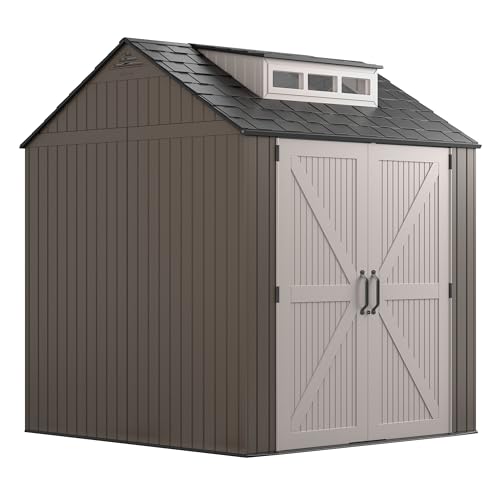
- Best anchor buy: Rubbermaid Large Resin Outdoor Storage Shed with Floor, 7 x 7 Ft — Check on Amazon
- Suncast 7′ x 4′ Vista Vertical Storage Shed — Check on Amazon
- Keter Factor 6×3 Outdoor Storage Shed Kit — Check on Amazon
- EAST OAK Outdoor Storage Box, 180 Gallon Deck Box — Check on Amazon
See 2 more Amazon options
- Suncast 200 Gallon Extra Large Deck Box, Dove Gray — Check on Amazon
- Keter Westwood 150 Gal Outdoor Storage Box — Check on Amazon
Read the full guide ↓
Disclosure: As an Amazon Associate, dailyhomedecorating.com earns from qualifying purchases. Links to Amazon on this page are affiliate links; they cost you nothing extra. Listing details such as price and availability change often, so check the current Amazon listing before you buy.
Shopping for the best outdoor storage box under $1500 starts with an honest surprise: at this budget, you are no longer really shopping for a box. A single deck box, even a very large one, uses only a fraction of a $1,500 allowance — the biggest resin deck boxes sold on Amazon sit in the lower bands of this budget, and the honest top of the single-box market ends well before the budget does. What $1,500 actually buys, and what this guide is organized around, is a complete outdoor storage system: one anchor piece with real doors and a floor — a resin shed or a tall vertical store — plus the deck boxes that handle the daily traffic of cushions, pool gear and garden tools at the point where you actually use them. Priced as a system, $1,500 is a serious, finish-the-job budget. Priced as a hunt for one heroic $1,500 box, it is a trap, because the listings that try to fill it are mostly ordinary sheds wearing premium price tags.
That distinction shapes every pick below. We verified each product against Amazon’s own catalog data through the Amazon Creators API while researching this guide, matching every model to its confirmed listing before it earned a link, and we checked the category against CPSC recall records as part of the same pass. The six picks that survived are the pieces a $1,500 system is genuinely built from: a 7 x 7 resin shed with a floor that swallows a riding mower, a tall 7 x 4 vertical shed for households whose yard is long rather than wide, a mid-size shed with a skylight for the garden-tool household, and three deck boxes at the sizes where deck boxes actually earn their keep — 200, 180 and 150 gallons. Mixed and matched, they cover everything from a full workshop’s worth of lawn equipment to the cushion mountain of a six-seat outdoor sofa, and most sensible combinations land comfortably inside the budget with room left for the padlocks, shelving and covers that finish a system properly.
For most households, the build starts with the Rubbermaid 7 x 7: it is the one pick here that changes what your garage and yard can be, because a floored, lockable, walk-in store ends the era of the mower living under a tarp. Households without room for a 49-square-foot footprint should start instead with the Suncast Vista, which puts 187 cubic feet behind double doors on a strip of ground along the house. And households that already have a shed — or are forbidden from adding one — should skip straight to the deck boxes, where the EAST OAK 180 and Suncast 200 split the work between tools and cushions. Below you will find the quick picks table, how the picks were chosen, detailed notes on all six, a side-by-side comparison, a system-planning guide for spending a four-figure storage budget in the right order, the mistakes that waste exactly this kind of money, and answers to the questions this tier always raises.
In this guide
Quick Picks
Short on time, or comparing several options at once? Each row below names a buyer type and the product that suits it, with a link to the listing.
| Buyer type | Pick | Why it stands out | Link |
|---|---|---|---|
| Best anchor buy | Rubbermaid Large Resin Outdoor Storage Shed with Floor, 7 x 7 Ft | A floored, walk-in 7 x 7 store with 180-degree doors and a roof built for snow load | Check on Amazon |
| Best slim full shed | Suncast 7′ x 4′ Vista Vertical Storage Shed | 187 cu. ft. behind double doors on a footprint that hugs the house wall | Check on Amazon |
| Best mid-size shed | Keter Factor 6×3 Outdoor Storage Shed Kit | 110 cu. ft., a skylight and ventilation in a footprint most side yards accept | Check on Amazon |
| Best large deck box | EAST OAK Outdoor Storage Box, 180 Gallon Deck Box | 180 gallons with a removable divider, hydraulic lid and reinforcing rods | Check on Amazon |
| Best cushion vault | Suncast 200 Gallon Extra Large Deck Box, Dove Gray | The largest deck box here, with a soft-close lid that will not slam | Check on Amazon |
| Best bench box | Keter Westwood 150 Gal Outdoor Storage Box | 150 gallons that seats two adults, with easy-lift pistons on the lid | Check on Amazon |
How These Picks Were Chosen
The budget filter at this tier works differently from every tier below it, and it is worth explaining plainly. Under $150 or $300, the filter is a ceiling that cuts products out. Under $1,500, almost nothing in the category is cut by price — the filter that matters is the opposite one: does this product deserve a place in a guide for someone holding a four-figure budget, or is it an ordinary product whose listing price has simply been dressed up to meet the budget halfway? Resin storage is a category with heavy discounting and wide price swings between sellers, and a high sticker on a mid-range shed is a marketing decision, not a specification. So every pick below had to justify its place with checkable substance: cubic feet behind real doors, a floor included rather than sold separately, metal reinforcement where the maker’s own listing claims it, a lid mechanism you can name, and a listing history substantial enough to verify at all.
Verification was mechanical, not impressionistic. Each product in this guide was cross-checked through the Amazon Creators API — the catalog data Amazon itself serves — and the model name, brand and capacity in this article are the ones the API returned for that exact listing. Products whose API records did not match the product we set out to research were dropped, however good they looked in search results. We also screened the category against CPSC recall records; no pick in this guide is a recalled product. Prices move constantly in this category — sheds especially swing with seasonal promotions — so this guide prints no static product prices. Where a pick’s position matters, we describe it in words (the anchor of the budget, the mid band, the value end) and tell you to check the current price on Amazon, which is the only number that will be true when you read it.
We did not assemble these sheds and boxes ourselves. We read maker listings and specification data and compared the numbers that decide whether outdoor storage works in a real yard: interior cubic feet rather than exterior marketing gallons where both exist, door opening width, floor inclusion, roof load claims, lid mechanisms, and the footprint in inches — because a shed that fits the budget but not the only flat corner of the yard is not a pick, it is a return shipment. Fit and honesty about fit decided the borderline cases throughout, and the system framing decided the rest: a guide at this tier owes you pieces that combine, not six rival answers to the same question.
Best Outdoor Storage Box Under $1500: The 6 Picks in Detail
Rubbermaid Large Resin Outdoor Storage Shed with Floor, 7 x 7 Ft
Who it suits: Homeowners whose storage problem is genuinely large — a riding or push mower, large trash cans, bikes and a patio set’s worth of seasonal gear — and who have one reasonably level 7 x 7 patch of yard, patio or driveway edge to give it.
This is the anchor of the guide, and the only pick that spends like it. A 7 x 7 footprint with a floor included is the threshold where outdoor storage stops being a container and becomes a small building: you walk in, you stand up, you park the mower instead of wrestling it sideways through a lid. Rubbermaid’s own listing leads with the use cases that define this size — riding and push mowers, patio and garden equipment, large trash cans — and the details that matter at this scale are the unglamorous ones. The doors open a full 180 degrees, which is what makes the difference between rolling a mower straight in and scraping its deck on a door edge twice a week for a decade. The roof is the reinforced design Rubbermaid rates to withstand snow loads up to 15 pounds per square foot — the maker positions it as substantially stronger than its earlier 7 x 7 roofs — and an integrated rain gutter manages the water that a roof this size collects, instead of sheeting it down the door seam. Ventilation is increased over the earlier models as well, which matters more than it sounds: a sealed resin box of this volume in summer sun becomes an oven that cooks fuel cans, batteries and cushion foam, and airflow is the whole fix.
Its position in the budget deserves a plain statement. This shed is the premium end of the guide — check the current price on Amazon — and it consumes the majority of a $1,500 budget on its own, though it does not consume all of it: paired with the Westwood bench box below, the two-piece system of walk-in store plus daily-use deck box still lands inside the budget, which is exactly the build we recommend in the final section. What the money buys over the cheaper sheds is not decoration. It is the floor (sold separately or absent entirely further down the market, and the single most skipped cost in shed shopping), the door swing, the roof rating, and a size that ends the storage conversation for most suburban households permanently. Assembly is a real project — a two-person, most-of-a-day build on a prepared, level base — and that is the honest trade: this is the least portable, most committed pick in the guide, and the one that returns the most.
- 7 x 7 ft footprint with floor included — a genuine walk-in store for mowers, bikes and cans.
- Doors open a full 180 degrees, so wide equipment rolls straight in without scraping.
- Reinforced roof rated by the maker for snow loads up to 15 lb per sq. ft., with an integrated rain gutter.
Honest limitation: It needs a level, prepared base and a two-person assembly day, it is the least renter-friendly object imaginable, and its price leaves only the smaller half of the budget for everything else in the system.
Choose it if your storage problem is equipment-sized and permanent, and you want the one purchase that ends it. Skip it if your yard cannot offer a level 7 x 7, your lease forbids structures, or your problem is cushions rather than machinery — the deck boxes below solve that for a fraction of the spend.
Suncast 7′ x 4′ Vista Vertical Storage Shed, with Floor
Who it suits: Households with a long, narrow strip of usable ground — the side of the house, the garage wall, the fence line — who need real shed capacity for ladders, long-handled tools and planters without surrendering a square of open yard.
The Vista is the shape most yards actually have room for, stretched tall and thin instead of square. Seven feet wide and four deep, it holds 187 cubic feet — more honest volume than many nominally larger sheds, because vertical space behind full-height double doors is usable space in a way that the sloped corners of a wide, low shed never are. Ladders stand upright. Long-handled tools hang in a row instead of leaning in a tangled fan. Planters, bags of soil and the garden’s tall awkward miscellany go in standing up, which is how they want to be stored and how no deck box on earth will take them. The construction is metal-reinforced, multi-wall resin with a reinforced resin floor included, water resistance and UV protection, and a pad-lockable metal hasp on the doors (padlock itself not included, as usual in this category). Suncast’s IllumiVent system is the thoughtful detail: it circulates air to reduce the humidity and heat build-up that vertical resin stores are prone to, while admitting natural light so you can see the back row without a flashlight — a small thing that changes daily use more than another cubic foot would.
Positioned in the upper band of this budget — check price on Amazon — the Vista is the pick for buyers who want the shed experience without the shed footprint, and it pairs naturally with a deck box: the Vista takes the tall and the dirty, the box by the seating takes the soft and the daily. In a full $1,500 system it leaves meaningful room for that second piece, which the 7 x 7 anchor does not. Its shingle-style roof panels and architectural detailing are also doing quiet work for households under HOA or spousal scrutiny: of all the full sheds here, this is the one that reads most like a deliberate garden structure and least like a plastic box that got big. Readers whose yards are small in every dimension rather than merely narrow should compare it against Best Outdoor Storage Box For Small Patios Under $1500, where the same wall-hugging logic is applied at patio scale.
- 187 cu. ft. of tall, fully usable volume on a 7 x 4 footprint that hugs a wall or fence.
- Metal-reinforced multi-wall resin with floor included and a pad-lockable metal hasp.
- IllumiVent system circulates air and admits light — less heat, less humidity, no flashlight.
Honest limitation: Four feet of depth will not take a riding mower or a bike fleet stored flat; it is a store for things that stand, lean and hang, and wide equipment belongs in the Rubbermaid above.
Choose it if your available ground is a strip rather than a square and your gear is tall. Skip it if you need to park wheeled machinery — that is the anchor pick’s job.
Keter Factor 6×3 Outdoor Storage Shed Kit
Who it suits: The garden-tool household — mower, trimmer, tools, beach chairs and a push mower’s worth of equipment — with a side-yard or patio-edge spot roughly six feet by three, who wants a real shed at the middle of the budget rather than the top.
The Factor 6×3 is the sensible shed: 110 cubic feet inside external dimensions of about 70 inches wide, 44.5 deep and 82 tall, which makes it the smallest true shed in this guide and, for a great many households, the right-sized one. Its interior height — about 78.5 inches — means an adult stands inside it properly, and the capacity swallows the standard suburban inventory: patio furniture off-season, garden tools, bike accessories, beach chairs and a push mower, which is the exact list Keter itself leads with. Construction is polypropylene resin reinforced with steel, weather-resistant and UV protected, with the category’s standard virtues — no peeling, rotting or rusting, and never any painting — and two details lift it above the anonymous mid-market. The first is a skylight, which sounds like garnish and is not: a windowless resin shed is a cave, and a cave is where tools go to be forgotten and then bought twice. The second is venting for air circulation, the same heat-and-humidity management the bigger sheds advertise, present here at half their footprint.
In budget terms the Factor sits in the middle band of this guide — check the current price on Amazon — and that positioning is its argument. A system built on the Factor leaves the majority of a $1,500 budget for the rest of the yard’s storage: a 180-gallon deck box by the patio, a horizontal bin store by the gate, padlocks and shelving, and money still unspent. Buyers cross-shopping the tier below will find the same logic at smaller numbers in Best Outdoor Storage Box Under $700, and buyers who only need the shed should compare it honestly against the Vista: the Vista holds roughly seventy percent more volume, the Factor costs meaningfully less of the budget and fits where the Vista’s extra foot of depth will not. Neither answer is wrong; the tape measure decides. What the Factor will not do is grow with you into riding-mower ownership — its door and depth are push-mower scale, and pretending otherwise is how sheds get returned.
- 110 cu. ft. with about 78.5 in. of interior height — a stand-up shed on a 6 x 3 footprint.
- Skylight and ventilation: you can see your tools, and they do not bake.
- Steel-reinforced resin that never needs painting, sealing or rust care.
Honest limitation: Push-mower scale only — riding mowers and bulky equipment do not fit — and the skylight that makes it pleasant also makes it the wrong choice where contents must stay invisible for security.
Choose it if you want a real, stand-up shed and a system budget left over. Skip it if your equipment is wide, or your only spot is narrower than three feet of depth.
EAST OAK Outdoor Storage Box, 180 Gallon Deck Box
Who it suits: Patio households whose storage is wide rather than tall — full cushion sets from a deep-seating sofa, sports equipment, pool supplies — and who want one large box, properly built, instead of two medium ones.
At 180 gallons and roughly 61 inches long, 28.4 wide and 29 high, this is the deck box as furniture-scale equipment, and EAST OAK has specified it like it. The interior takes the loads that defeat ordinary boxes: a full set of large deep-seating cushions, the family’s sports equipment, pool supplies in bulk. A detachable internal partition lets you split that volume into zones — dry cushions one side, damp pool gear the other — which is the difference between a box and a system at the scale where everything otherwise lands in one tangled stratum. The lid runs on a hydraulic lever design, so it opens without snatching and closes without the finger-pinching slam that is the classic deck box injury; four built-in reinforcing rods keep the structure from bending or warping under load, and the flat top doubles as a patio seat or table surface when the party outgrows the furniture. Side handles on both ends mean two people can actually move it loaded-adjacent, and the lid is lockable for the households whose patio is also a thoroughfare.
Its band in this guide is the upper-middle — check price on Amazon — above the commodity deck boxes, below the sheds, which is precisely where a serious box should sit in a $1,500 system: it is the natural second piece behind the Factor or Vista, and a legitimate first piece for households whose storage is all soft goods. The resin is waterproof and fade-resistant, and EAST OAK’s smaller boxes in this same line (the 60-gallon appears in our apartment guide) share the snap-together assembly approach that makes this brand the low-friction option for buyers who dread flat-pack. Readers deciding between this and the Suncast 200 below should decide by shape, not size: the EAST OAK’s partition and seat-table top suit mixed loads and entertaining, the Suncast’s extra twenty gallons and soft-close lid suit a single mountain of cushions. Households building the full system will find the natural partners mapped in Best Deck Box Under $1500.
- 180 gallons at about 61 in. long, with a detachable partition for zoning mixed loads.
- Hydraulic lid — no slamming, no pinched fingers — over four reinforcing rods.
- Flat top works as extra seating or a table; handles both ends; lockable lid.
Honest limitation: At five feet long it needs a real wall run or deck edge, the partition is a divider rather than a seal between wet and dry zones, and like every deck box it stores nothing taller than its own lid.
Choose it if your load is wide, mixed and daily. Skip it if your gear is tall — tools and ladders belong in a vertical shed — or your patio run is under five feet.
Suncast 200 Gallon Extra Large Deck Box, Dove Gray
Who it suits: Cushion maximalists — the deep sectional, the six dining chairs, the chaise pair — plus pool households, who need the single largest box in this guide and want it to look like patio furniture rather than equipment.
Two hundred gallons is the top of the mainstream deck box market, and this Suncast is the category’s full-size answer: a multi-wall resin box in a contemporary Dove Gray profile that is deliberately styled to sit beside patio furniture without reading as a storage appliance. The capacity is the headline and it is real — this is the box that takes an entire outdoor room’s soft goods in one place, cushions, pillows and throws together, instead of distributing them between a box, a garage shelf and a guest-room closet, which is the three-location system that guarantees one set is always in the wrong place. The lid is the detail Suncast got right for this size: soft-close, so two hundred gallons of lid lowers gently instead of guillotining, and pad-lockable via a hasp (lock not included) for poolside households where the contents include things children should not fish out unsupervised. The lid is rated by the maker to hold up to 300 pounds, which makes the closed box overflow seating in a pinch — not a bench by design like the Westwood below, but a surface that will not punish a guest who sits on it.
It sits in the middle band of this budget — check the current price on Amazon — and in a $1,500 system it is the pick that most often replaces a shed entirely for patio-focused households: box for the soft goods, a horizontal bin store for the cans, done. Made in the USA, multi-wall resin with water resistance and UV protection, assembly with minimal tools and a wipe-clean surface — the ownership story is the low-maintenance one this category promises at its best. Its natural comparison in this guide is the EAST OAK 180: twenty more gallons here, a partition and seat-table top there. Our honest read is that cushion-dominant households should take the gallons and the soft-close lid, and mixed-load households should take the partition. Backyard households planning the full two-piece build should also read Best Outdoor Storage Box For Backyards Under $1500, where this box is paired with full sheds at the same budget.
- 200 gallons — the largest deck box in this guide, sized for a whole outdoor room’s cushions.
- Soft-close, pad-lockable lid; lid rated by the maker to hold up to 300 lb.
- Multi-wall resin, water-resistant and UV protected, in a furniture-like Dove Gray profile.
Honest limitation: Its footprint is the largest of the boxes here, soft-close hardware is one more mechanism to keep clean of grit, and 200 gallons of resin box still stores nothing that must stand upright.
Choose it if cushions are your storage problem and you want them all in one handsome place. Skip it if your loads are mixed and need zoning — take the partitioned EAST OAK — or your patio cannot spare the run.
Keter Westwood 150 Gal Outdoor Storage Box, Brown
Who it suits: Entertainers and everyday patio users who want the box to disappear into the furniture plan — storage that seats two adults, in a wood-plank look that matches a deck rather than interrupting it.
The Westwood is the deck box perfected as furniture. One hundred and fifty gallons is the size where a box holds a full cushion set for a sofa and chairs while staying proportionate as a bench, and Keter leans into the dual role: the wood-plank-look resin reads as a garden bench, the capacity seats two adults, and the lid runs on easy-lift pistons so it opens with a fingertip and closes quietly instead of dropping. Inside, it takes the standard large load — furniture cushions, pool floats and accessories — and the lockable lid keeps it all secured between uses. All-weather resin construction means the bench half of its life costs nothing in maintenance: no sanding, no sealing, no rust, no peeling, a hose-down in spring and it is furniture again. In this guide’s system logic, the Westwood is the universal second piece: behind the Rubbermaid anchor it is the daily box by the seating; behind the Factor it is the patio half of a two-zone system; on its own, for apartment and condo patios, it is often the entire system and a perfectly rational stopping point.
It sits at the accessible end of this guide’s pricing — check the current price on Amazon — and that is worth stating in a $1,500 guide without embarrassment: the Westwood is proof that the last dollars of a big budget are not automatically the best-spent ones. The gap between this box and the premium sheds buys doors, floors and cubic feet, which are transformative if you need them and pure waste if your storage problem is cushions and pool gear. Households whose entertaining runs large should read Best Outdoor Storage Box For Outdoor Entertaining Under $1500 alongside this pick, where the Westwood’s bench logic is developed across a full guide. And households who discover, reading this far, that their problem was never shed-sized at all will find the whole category mapped at lower budgets in Best Outdoor Storage Shed Under $1500 for the building-scale alternative — or should simply buy this box and keep the change.
- 150 gallons with seating for two adults — storage that earns its patio space twice.
- Easy-lift piston lid: fingertip open, quiet close, lockable.
- Wood-plank-look resin — all-weather, no painting, no rust, no peeling.
Honest limitation: As a bench it is deep and firm rather than lounge-comfortable, 150 gallons will not take a deep sectional’s full cushion set plus pool gear at once, and the wood look is a texture, not timber — close inspection tells.
Choose it if you want one handsome box that seats guests and swallows cushions. Skip it if you need maximum raw capacity (the Suncast 200) or a partitioned interior (the EAST OAK 180).

Comparison Table
| Product | Type | Best use | Link |
|---|---|---|---|
| Rubbermaid 7 x 7 Resin Shed | Walk-in shed with floor, 7 x 7 ft | Mowers, bikes, cans — the anchor of a full system | Check on Amazon |
| Suncast Vista 7 x 4 Vertical Shed | Vertical shed with floor, 187 cu. ft. | Tall gear on a narrow strip along the house | Check on Amazon |
| Keter Factor 6×3 Shed | Mid-size shed, 110 cu. ft., skylight | Garden tools and a push mower, mid-budget | Check on Amazon |
| EAST OAK 180 Gallon Deck Box | Deck box with divider, hydraulic lid | Mixed wide loads: cushions, sports and pool gear | Check on Amazon |
| Suncast 200 Gallon Deck Box | Deck box, soft-close lid, 200 gal | A whole outdoor room’s cushions in one box | Check on Amazon |
| Keter Westwood 150 Gallon | Bench deck box, piston lid | Cushions plus seating for two, furniture look | Check on Amazon |
How to Choose: Spending a $1,500 Storage Budget in the Right Order
Start with the inventory, not the catalog. Walk your home and list everything that must live outside, grouped by shape rather than by room, because shape is what storage actually constrains. The four shapes are: wheeled and wide (mowers, bikes, large cans), tall and thin (ladders, long-handled tools, umbrellas, planters), soft and bulky (cushions, pillows, throws, pool floats), and small and daily (tools, toys, hoses, chemicals). Every failed storage purchase is a shape mismatch — a beautiful deck box bought for a tall problem, a shed bought for a soft problem at ten times the necessary price. With the four lists in hand, the budget allocates itself: wide-and-wheeled demands the anchor shed; tall demands a vertical store; soft demands gallons at the point of use; daily demands a small box or bin store where the activity happens.
Second, measure the ground before you fall for a footprint. Shed dimensions in listings are external; door openings are smaller; and the ground itself must be level and prepared — a resin shed on a slope assembles into a parallelogram whose doors will never align, which is the single most common cause of angry shed reviews in this category. Budget the base as part of the system: gravel, pavers or a simple platform, plus the padlocks every listing leaves out, plus shelving for whichever shed you choose, because a shed without shelves wastes its top half. In a $1,500 system these finishing costs are a real line item, and planning them is the difference between a finished project and a shed-shaped object surrounded by the same clutter it was bought to hide.
Third, respect the access pattern. Storage you use daily must be within a few steps of where the activity happens and must open one-handed — that is the deck boxes’ whole case. Storage you use monthly can live at the yard’s edge behind double doors. Storage you use twice a year can be the awkward corner of the shed. Buyers who reverse this — shed for the cushions, box for the mower deck — end up leaving the daily things out in the rain next to the storage they bought for them, which is the most expensive outcome of all. Finally, check the rules before the order: HOA covenants, municipal setback and size limits, and lease terms all have opinions about 49-square-foot structures, and the time to learn them is before a freight pallet arrives, not after.
Common Mistakes at This Budget
The signature mistake of the $1,500 tier is spending it on one box. Shoppers search the budget, find listings priced to meet it, and assume price maps to capacity or quality. In resin storage it mostly maps to seller strategy: the same shed appears at widely separated prices across listings and seasons. Buy the specification — cubic feet, floor, doors, reinforcement — and let the price be whatever the current listing says when you check it on Amazon. The second mistake is buying the shed and skipping the base, then blaming the doors. The third is measuring the yard but not the gate: a 7 x 7 shed’s panels must physically reach the yard, and more than one has wintered in a driveway because a side gate was four inches too narrow.
Fourth: storing by room instead of by shape, covered above, and fifth: forgetting that resin storage is water-resistant, not a submarine. Every pick here sheds weather admirably and none is a sealed vault; cushions stored bone-dry stay dry, cushions stored damp stay damp, and ventilation — the vents and systems the better picks advertise — is a feature to value, not a garnish. Sixth, and specific to big budgets: buying for the inventory you wish you had. A $1,500 system sized for a riding mower you plan to buy next year is a year of payments-in-kind for storage you do not use; buy for this season’s inventory and let next year’s budget handle next year’s mower.
Final Recommendation
For most homeowners, the build is the Rubbermaid 7 x 7 plus the Keter Westwood: the walk-in anchor takes everything wide, tall and wheeled, the bench box takes the daily soft goods at the seating, and the pair lands inside the budget with the base and padlocks planned rather than improvised. Households without the 49 square feet should build on the Suncast Vista instead, adding the EAST OAK 180 if the cushion load is large. Households whose inventory is entirely soft and daily should resist the sheds altogether: the Suncast 200 or the EAST OAK 180, a horizontal bin store for the cans, and the discipline to keep the remaining majority of the budget for the rest of the yard. That restraint is not a consolation prize — at this tier, it is frequently the correct answer, and this guide would rather tell you so than sell you a building.
Assembly and Ownership: What the First Year Actually Looks Like
A system at this budget is a project before it is a convenience, and planning the project is part of spending the money well. The sheds are two-person builds: the Rubbermaid and the Vista each want a full day with a helper, a level base prepared in advance, and the discipline to stop and re-level rather than force panels into a slope’s geometry. The deck boxes are the opposite experience — the EAST OAK and its peers snap together in minutes — which is why we advise assembling in system order: base first, shed second (on a fresh morning, not at dusk after the base work), boxes last, because the boxes are the reward that makes the shed day feel finished. Keep every manual, photograph the assembled interiors before you load them, and register the products whose makers offer it; the large makers in this guide run real support operations, and a photographed, registered shed is a warranty claim that succeeds.
Ownership thereafter is the low-maintenance story resin promises, with three honest footnotes. First, mechanisms want a minute of care: piston, hydraulic and soft-close hardware across the deck boxes stays gentle if its tracks and hinges get a hose-off and a wipe each season, and stiffens with grit if they do not. Second, interiors want air: even ventilated sheds concentrate humidity in still, hot weeks, so the habit of opening doors on dry days — and never sealing damp cushions, fuel or chemicals into a hot box — is the difference between storage that preserves and storage that ferments. Third, snow and storm country should take the roof ratings seriously in both directions: a rated roof is permission, not invincibility, and clearing exceptional loads is cheaper than testing them. None of this is burdensome. It is the small print of a ten-year system, and it is exactly what a four-figure budget is buying over the disposable tier: objects that reward a little care with a decade of indifference to the weather.
FAQ
Is there really a single outdoor storage box that costs $1,500? Effectively no, and any listing implying otherwise deserves suspicion. The largest mainstream resin deck boxes sit far below this budget; what reaches toward $1,500 is a floored resin shed, which is a small building rather than a box. Treat $1,500 as a system budget — one anchor piece plus deck boxes and finishing costs — and it becomes a generous, finish-the-job allowance.
How much of the budget should the anchor shed take? As a rule, no more than about two-thirds to three-quarters, so the base, padlocks, shelving and a daily-use deck box are funded rather than improvised. The exception is the household whose entire problem is equipment: for them the anchor plus base is the whole job, and a deck box can wait for a later budget.
Do resin sheds need a foundation? They need a level, stable surface — pavers, gravel or a platform — and they punish shortcuts with doors that will not align. The floor included with picks like the Rubbermaid and the Vista is a floor panel, not a foundation; it still wants level ground beneath it.
Are these boxes and sheds waterproof? They are weather-resistant and water-resistant by design — rain sheds off, interiors stay dry in normal weather — but they are not sealed vaults, and wind-driven rain at seams plus condensation are real. Store soft goods dry, value ventilation, and do not store anything that must stay hermetically dry, like paperwork or unprotected electronics.
Can a deck box really be used as seating? The ones designed for it, yes — the Westwood is built to seat two adults, the EAST OAK’s flat top serves as a seat or table, and the Suncast 200’s lid carries a maker-stated load rating. A box not designed as seating should not be promoted to it; lid plastic that was never reinforced will eventually announce the difference.
What should I check before ordering a 7 x 7 shed? Four things: the level ground and its preparation, the gate and path the panels must travel, local rules and HOA covenants on structures of that size, and a second person for assembly day. Then check the current price on Amazon, because shed pricing swings seasonally by amounts that would buy the deck box.