Where to buy
Check the latest price, availability and delivery on Amazon. Orders are placed on Amazon. We may earn a commission from qualifying purchases.
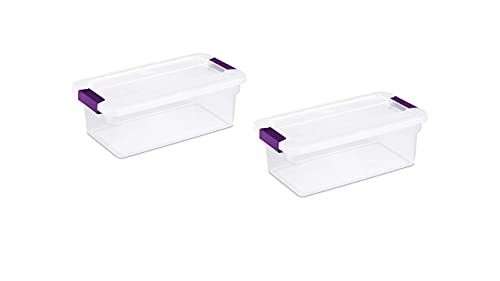
- Best small hard box: Sterilite 6 Quart ClearView Latch Box, Pack of 2 — Check on Amazon
- ArtBin Essentials Lift-Out Tray Craft Box with Handle — Check on Amazon
- HEETA Dry Bag Waterproof Backpack, 5L — Check on Amazon
- Superio Clear Plastic Storage Bin with Lid, 3.5 Quart — Check on Amazon
- EocuSun Large Mesh Beach Bag Tote — Check on Amazon
One honest note before the picks: even the smallest true deck box would take a small patio’s best seat, and it costs more than this budget besides. The linked picks are small boxes, a caddy and bags that store vertically, stack or hang — and the genuine deck box is prose-only, so you can see exactly what you are trading away and why.
Read the full guide ↓
Disclosure: As an Amazon Associate, dailyhomedecorating.com earns from qualifying purchases. Links to Amazon on this page are affiliate links; they cost you nothing extra. Listing details such as price and availability change often, so check the current Amazon listing before you buy.
The best outdoor storage box for small patios under $20 has to survive two audits that bigger spaces never face. The budget audit rules out every genuine deck box, as it does across this series — small resin chests start above twenty dollars. But the space audit is stricter still: on a small patio, every storage product is also a piece of furniture competing with the chair, the table and the plant for the same few square feet. A box that stores six gallons and costs you a seat has stored nothing; it has traded. This guide only recommends storage that pays no floor-space rent, or pays it in pennies.
That filter turns out to clarify everything. Small-patio clutter is small — plant care bits, light clips, candles, a trowel, the dog’s towel, pool and beach gear in transit — and small clutter has excellent cheap storage: latching boxes that stack in a corner, a caddy that lives indoors and visits, dry bags that hang from the rail, mesh that hangs from a hook and flattens to nothing. None of these is a deck box, and this guide labels each by its true format. What they are is better than a deck box for this space: storage whose footprint is measured in inches or in nothing at all.
Read the picks with your patio’s map in mind — its one sheltered corner, its rail, its door hook, the dead space under the table. Each pick below is assigned to one of those micro-locations, because on a small patio, storage is not bought by the gallon. It is placed by the inch.
In this guide
Quick Picks
Six picks mapped to a small patio’s micro-locations: five linked, all hanging, stacking or carrying formats, plus the real deck box as a prose-only measure of what this space — and this budget — rightly refuses.
| Pick | What it actually is | Best for | Amazon |
|---|---|---|---|
| Sterilite 6 Quart ClearView Latch Box, Pack of 2 | Small latching box (not a deck box) | Best small hard box | Check on Amazon |
| ArtBin Essentials Lift-Out Tray Craft Box with Handle | Handled accessory box (not a deck box) | Best carry-to-the-job box | Check on Amazon |
| HEETA Dry Bag Waterproof Backpack, 5L | Waterproof dry bag (soft storage, not a box) | Best waterproof pick for small gear | Check on Amazon |
| Superio Clear Plastic Storage Bin with Lid, 3.5 Quart | Extra-small clear bin (not a deck box) | Best tiny-space bin | Check on Amazon |
| EocuSun Large Mesh Beach Bag Tote | Mesh tote bag (not a box) | Best grab-and-go mesh tote | Check on Amazon |
| Keter City 30 Gallon Outdoor Storage Box | Real resin deck box — above this budget | The honest step-up | Prose-only — see review below |
How These Picks Were Chosen
Small-patio shortlisting used a single ruthless metric: storage gained per square inch of floor surrendered. Any candidate that could hang, hook, stack vertically or live indoors between jobs scored at the top; any candidate that simply sat on the ground had to justify its footprint against a chair leg, and almost none could. We also mapped each pick to a real micro-location — rail, hook, corner stack, under-table, indoor cupboard — and cut any pick whose location we could not name on a typical small patio.
Verification matched the rest of the series: every linked pick’s brand, model, dimensions and format were cross-checked against its Amazon listing data, because small storage is where listing photographs lie hardest — a three-quart bin photographed alone looks like patio furniture. The dimensions printed in the reviews are the listing’s, and each pick is labelled with its true format: box, caddy, dry bag or mesh tote.
The budget boundary is drawn in the open. The smallest genuine deck box exceeds this price cap, so it appears prose-only with no purchase link, as a reference point for readers whose patios are bigger than their budgets assume. Every linked pick was also checked against category recall listings before inclusion, with the check recorded in this guide’s sourcing notes.
Best Outdoor Storage Box for Small Patios Under $20: The 6 Picks in Detail
Each review names the micro-location the pick is for. If you cannot picture the location on your own patio, the pick is not for you — that discipline, more than any capacity figure, is what keeps a small patio feeling like a room instead of a store cupboard.
1. Sterilite 6 Quart ClearView Latch Box, Pack of 2
What it actually is: Small latching box (not a deck box). Best for: Best small hard box.
This is the closest thing to a traditional storage box that honestly fits this budget: a rigid, clear plastic box with a proper lid that latches shut at both ends. You get two 6-quart boxes in the pack, and the clear walls matter more outdoors than you would expect, because you can see at a glance whether the box holds the furniture-touch-up kit, the string-light clips or the spare hose washers without popping the lid in the rain. The latches give it a real, positive close rather than a friction-fit lid that lifts off in the first gust of wind, and the boxes stack neatly on a shelf, in a closet corner or under a bench. Treat it as what it is — a small latching box for accessories and small gear — and it is genuinely useful. Expect it to swallow gloves, trowels, seed packets, citronella refills, a coiled extension lead and similar small clutter, not cushions or a folded lounger.
The corner stack is this pick’s home: two latching boxes, one atop the other, in the patio’s sheltered corner or under the side table, holding the whole small-parts economy of the space in a footprint smaller than a plant pot’s. Because the pack contains two, the stack can split — one box in the corner, one just inside the door — which on a small patio is often the smarter map. Start here; it is the only pick that behaves like the box in the search, at a size the space can afford.
Who it suits: anyone whose outdoor clutter is small, varied and currently homeless — the glove-and-trowel-and-spare-parts crowd.
Pros:
- A real latching lid, not a friction-fit cover that lifts in wind
- Clear walls make contents visible without opening it
- Two boxes in the pack, so one can live in two different spots
- Stacks neatly with other boxes on a shelf or in a cupboard
Honest limitation: Six quarts is small. It will not take a cushion, a folded chair or a family-size anything, and the plastic is splash-resistant rather than gasket-sealed, so it belongs under cover, not out in open rain.
Choose it if your clutter is small accessories and you want a rigid box with a lid that genuinely closes. Skip it if you need weatherproof, cushion-scale storage — that product does not exist at this budget.
| Format | Rigid latching box, sold as a pack of 2 |
|---|---|
| Capacity | 6 quarts per box |
| Body | Clear plastic with contrasting latch handles |
| Closure | Two end latches |
| Best for | Small accessories, tools and refills |
2. ArtBin Essentials Lift-Out Tray Craft Box with Handle
What it actually is: Handled accessory box (not a deck box). Best for: Best carry-to-the-job box.
The ArtBin Essentials box solves a different problem from everything else here: carrying small things to where you are working. It is a clear, handled caddy, roughly thirteen inches long, with a lift-out tray that keeps small pieces — screws, wall plugs, plant ties, spare bulbs, touch-up paint pens — above a deeper well for bulkier bits. Originally designed for craft supplies, it turns out to be an excellent patio accessory box, because outdoor maintenance is mostly small-parts work: re-hanging a light string, swapping a hose washer, tightening a chair glide. The handle makes it a grab-and-go kit rather than a box that lives in one place, and the clear body and tray mean you open it once, not three times. It is splash-resistant at best, not a sealed outdoor box, so it should live indoors or under deep cover and travel out when you need it.
The caddy’s radical feature is that it does not live on the patio at all. It lives in a cupboard, fully loaded with the small-parts kit — clips, ties, screws, touch-up bits — and visits the patio when a job needs doing. Small patios cannot spare permanent homes for occasional tools, and they do not have to: a handled box turns storage into a commute of thirty seconds. For a small space, the best storage location is frequently another room.
Who it suits: anyone who does small outdoor jobs — hanging lights, fixing furniture, repotting — and wants the small parts to travel with them.
Pros:
- Lift-out tray separates small parts from bulkier bits
- Carry handle makes it a true grab-and-go kit
- Clear body shows what is inside before you open it
- Latched lid stays shut in transit
Honest limitation: It is an accessory caddy, not outdoor storage furniture: it is not sealed against weather and should live indoors or under deep cover between jobs.
Choose it if your storage problem is really a small-parts organisation problem. Skip it if you want a box that lives outside permanently in the rain.
| Format | Handled caddy with lift-out tray |
|---|---|
| Size | About 13 x 6 x 5.6 inches |
| Body | Clear durable plastic, aqua accents |
| Closure | Latched lid with carry handle |
| Best for | Small-parts kits you carry to the task |
3. HEETA Dry Bag Waterproof Backpack, 5L
What it actually is: Waterproof dry bag (soft storage, not a box). Best for: Best waterproof pick for small gear.
A dry bag is not a box, and this guide will not call it one — but if the thing you actually need to protect is small and hates water, a 5-litre roll-top dry bag protects it better than any rigid box at this price. The HEETA 5L is a lightweight roll-top bag with backpack-style straps and a bonus waterproof phone case, in a transparent blue that makes contents easy to spot. Roll the top down, clip it shut, and rain, splashes and damp ground stop being a threat to torches, batteries, matches, a first-aid pouch, remotes for outdoor lights and anything else small and water-sensitive. It hangs from a hook, a rail or a chair back, taking up zero floor space, and it flattens empty. What it cannot do is protect anything crushable or hold rigid, awkward shapes — soft storage is a specialist, and this is the small-gear specialist.
The rail is the small patio’s free shelving, and the dry bag is how you use it. Hung from a rail hook, the HEETA holds the water-sensitive small gear — remotes, torch, matches, speaker cable — in the one genuinely waterproof format in this guide, at a floor cost of exactly zero. On a patio where every inch is argued over, a pick that argues for none of them has an advantage no capacity figure can match.
Who it suits: anyone with small, water-sensitive gear — torches, batteries, remotes, a first-aid pouch — and a hook to hang it on.
Pros:
- Genuinely waterproof when rolled and clipped correctly
- Hangs from a hook or rail, using zero floor space
- Includes a separate waterproof phone case
- Flattens to nothing when empty
Honest limitation: Five litres is a pouch, not a cupboard: soft, small loads only. There is no crush protection, so fragile or rigid items need a hard box instead.
Choose it if keeping small things dry matters more than keeping them filed. Skip it if your gear is rigid, fragile or bigger than a rolled hand towel.
| Format | Roll-top dry bag with straps |
|---|---|
| Capacity | 5 litres |
| Body | Lightweight waterproof fabric, transparent blue |
| Extras | Waterproof phone case included |
| Best for | Small items that must stay truly dry |
4. Superio Clear Plastic Storage Bin with Lid, 3.5 Quart
What it actually is: Extra-small clear bin (not a deck box). Best for: Best tiny-space bin.
At three and a half quarts, this is the smallest hard box in the guide, and that is exactly its job. The Superio 3.5-quart bin is made from BPA-free, odour-free clear plastic with a fitted lid, and it is sized for the handful of things that get lost first: deck screws, furniture-foot pads, lighter and matches in a dry corner, spare sprinkler heads, plant clips. In a small space, one tiny box you can see into beats a big box you have to excavate. It stacks with its larger 4.5-quart sibling, so a short stack of two or three builds a miniature storage wall on a shelf, a windowsill-side cabinet or the floor of a storage bench you already own. It is not weatherproof in the gasket sense and it will not survive being left full of water, but under a lid, under cover, it keeps small gear clean, dry-ish and findable.
This bin is for the patio’s smallest shelf, the windowsill-side ledge, the top of the corner stack — the three-inch-deep places other storage cannot use. Its job is the handful of tiny things that otherwise live loose on the table and make the whole space look untidy: plant clips, furniture pads, the lighter, spare batteries. A small patio reads as cluttered or calm based on exactly these items, which makes this smallest pick disproportionately powerful.
Who it suits: anyone with a very small storage footprint and a very specific handful of small, losable things to protect.
Pros:
- Smallest footprint of any hard box in this guide
- Clear BPA-free plastic — contents visible at a glance
- Stacks with the larger Superio bin for a matched set
- Cheap enough to dedicate one bin to one job
Honest limitation: Three and a half quarts fills up fast — a couple of tools and it is done. The lid is not sealed, so this is dust protection, not weatherproofing.
Choose it if your storage spot is tiny and your clutter is tinier. Skip it if you have more than a handful of items, or need any real rain protection.
| Format | Rigid clear bin with fitted lid |
|---|---|
| Capacity | 3.5 quarts |
| Body | BPA-free clear plastic |
| Closure | Snap-on lid (not gasket-sealed) |
| Best for | The smallest, most-losable accessories |
5. EocuSun Large Mesh Beach Bag Tote
What it actually is: Mesh tote bag (not a box). Best for: Best grab-and-go mesh tote.
The EocuSun is the simplest idea in this guide and one of the most used: a large mesh tote that doubles as a drawstring backpack, built so sand and water fall straight through instead of coming home with you. As storage, it corrals the awkward light stuff — pool toys, beach toys, balls, water guns, spare flip-flops — into one breathable bundle that can hang on a hook by the door or the fence. Mesh means nothing marinates: wet toys dry in the bag instead of mildewing in a sealed box, which is a genuine storage advantage for anything that lives wet. It is the cheapest pick here by a wide margin, and the limits match: no structure, no weather protection beyond drainage, no security, and sharp-edged tools will poke through. Used for what it is — a breathable corral for light, wet, bulky things — it earns its place in every version of this guide.
Wet and bulky is the small patio’s hardest load, because there is no spare corner to drip in. The mesh tote answers by hanging: on the door hook or the rail end, it takes the dog’s towel, the swim kit and the beach toys, lets them drain and dry in the open air, and flattens to nothing when the season turns. It is the only pick that adds storage while adding literally no object to the patio when empty.
Who it suits: anyone corralling wet, light, bulky toys and beach gear that needs to drain and dry, not be sealed away.
Pros:
- Mesh drains and breathes, so wet gear dries in storage
- Works as a tote and a drawstring backpack for carrying
- Hangs on a single hook by the door or fence
- Lowest-cost pick in this guide by a wide margin
Honest limitation: No structure, no weather sealing, no security, and sharp edges will poke through mesh. It corrals; it does not protect.
Choose it if your gear is wet, light and bulky, and mildew is a bigger enemy than rain. Skip it if you need protection, structure or theft resistance of any kind.
| Format | Mesh tote / drawstring backpack |
|---|---|
| Body | Sand-away breathable mesh |
| Closure | Drawstring top |
| Colour | Blue |
| Best for | Wet toys and light bulky gear that must breathe |
6. Keter City 30 Gallon Outdoor Storage Box
What it actually is: Real resin deck box — above this budget. Best for: The honest step-up.
Every version of this guide ends with the same honest paragraph, because every reader deserves to see what the real thing costs. The Keter City is a genuine small deck box: roughly thirty gallons of lockable resin storage that doubles as a patio side table, weather-resistant, wipe-clean and big enough for a couple of cushions, a hose reel or a modest stack of outdoor gear. It is the smallest, cheapest format that deserves the name deck box — and it sits above this guide’s twenty-dollar cap, which is why it appears here as a prose-only recommendation with no purchase link in the picks above. If your storage problem is genuinely cushion-sized, this is the class of product to save toward, and our higher-budget guides cover it properly. If your problem is accessory-sized, the picks above solve it today, honestly, for less.
Put the tape measure on this one before the heart gets involved: a thirty-gallon box is a side table, and on a small patio the side table’s spot is usually the second chair’s. A few generous patios could host it and gain real cushion storage — if yours is one, it is a legitimate save-up goal. For the typical small patio, though, it fails the space audit before the budget audit, and the five picks above will store more of what you own in the space you actually have.
Who it suits: readers who came looking for a true deck box and would rather hear the truth now than buy the wrong thing twice.
Pros:
- A genuine deck box: rigid, lockable and weather-resistant
- Doubles as a side table, so it earns its footprint
- Capacity is in a different league from every other pick here
- Resin wipes clean and will not rust or rot
Honest limitation: It costs more than this guide’s entire budget cap — that is precisely the point of including it. Assembly is required, and thirty gallons still will not swallow a full set of large cushions.
Choose it if you can stretch the budget and truly need cushion-scale, lockable storage. Skip it if your budget is firm — in that case, pick the alternative above that matches your actual load.
| Format | Resin deck box / side table |
|---|---|
| Capacity | About 30 gallons |
| Body | Weather-resistant resin |
| Closure | Lockable lid (lock not included) |
| Best for | Readers who truly need cushion-scale storage |
Prose-only pick: this one sits above the budget cap for this guide, so there is no purchase link — it is here so you can judge the honest step-up for yourself.
Comparison Table
Read this table from the right: the floor-space column is the small patio’s whole argument. Every linked pick is at or near zero — the formats were chosen backwards from that column.
| Pick | Format | Rain protection | Crush protection | Floor space used |
|---|---|---|---|---|
| Sterilite 6 Quart ClearView Latch Box, Pack of 2 | Rigid latching box | Splash-resistant under cover | Yes — rigid walls | None if shelved; small footprint on the ground |
| ArtBin Essentials Lift-Out Tray Craft Box with Handle | Handled caddy | Splash only — store under cover | Yes — rigid walls | None; lives indoors or on a shelf |
| HEETA Dry Bag Waterproof Backpack, 5L | Roll-top dry bag | Fully waterproof when rolled and clipped | No — soft walls | None; hangs from a hook |
| Superio Clear Plastic Storage Bin with Lid, 3.5 Quart | Rigid clear bin | Dust and splash only | Yes — rigid walls | None if shelved; tiny footprint |
| EocuSun Large Mesh Beach Bag Tote | Mesh tote | None — drains by design | No — soft mesh | None; hangs on a hook |
| Keter City 30 Gallon Outdoor Storage Box | Resin deck box | Weather-resistant | Yes — rigid resin | Yes — a side-table-sized footprint |
Vertical thinking explains the whole list. A rail, a hook and a corner stack give a small patio three storage locations that cost no seating, and the picks divide those locations between them. If your patio lacks a rail, the door hook and the corner stack still carry the system; if it lacks all three, the caddy’s indoor home becomes the primary location and the patio keeps only the corner stack.
Rain exposure is the second sort. Small patios often have one sheltered strip and one open edge, and the table assigns the hard boxes to the strip and the dry bag to anywhere. Placing a snap-lid box on the open edge is the commonest way these picks get misused — the product is fine, the postcode is wrong.
Small Patio, Full Life: Making a Few Square Feet Behave Like a Room
The room test: what guests see, and what they never should
Stand in your patio doorway and take the photograph a guest would take. Everything storage-shaped in that frame is a failure of placement, whatever it cost: the room reads as a store cupboard with chairs. Now move each item one step — the bags to the far rail end, the boxes into the corner’s shadow, the caddy indoors — and take the photograph again. The patio has not gained a square inch, but it has gained its room back. This is why this guide treats placement as a specification equal to capacity: on a small patio, unseen storage is not a preference, it is the product.
The room test has a daily version, too. A small patio lives or dies by its table: if the table holds the day’s coffee, it is a room; if it holds the clips, the lighter, the plant food and the dog’s lead, it is a shelf with chairs around it. The tiny bin in this guide exists to defend the table — three and a half quarts of defence, placed where the hand naturally sets things down. Defend the table and the room defends itself.
Growth without sprawl: adding storage the small-patio way
Small patios accumulate storage the way boats accumulate barnacles — one reasonable addition at a time, until the whole thing sails badly. The discipline that prevents it is substitution, not addition: a new container may arrive only when it replaces a location, not when it creates one. The rail, the hook, the corner stack and the cupboard are the patio’s four locations for life; containers may rotate through them as loads change with the seasons, but a fifth location is the beginning of the end. When a new need appears — a grill kit, a yoga mat, a child’s outdoor toys — ask which location it inherits, and what currently there moves indoors or moves on.
That discipline is also why this guide’s ceiling is five linked picks, not ten. A small patio does not need more products; it needs the right format in each of its few locations, honestly labelled and correctly placed. Readers who finish this guide with three purchases and one tape-measured plan have understood it better than readers who buy all five. The best small-patio storage system is the smallest one that passes the room test in every season.
Care in a Small Space: Little Routines, Long Life
Small-patio storage lives close to its owners, which cuts both ways: it is seen daily, so it gets cared for — and it is seen daily, so it must be worth seeing. The care routine is sized to the space. The corner stack wants a monthly wipe, because a dusty stack in the sightline makes the whole patio feel stored rather than lived in. The dry bag wants airing open on its rail after wet duty, ten minutes of sun being enough to keep it sweet. The mesh wants a shake each week in leaf season, because a small patio has no room for a leaf trap wearing a storage costume. None of this is housework; it is the patio equivalent of making the bed — small, frequent, and transformative out of all proportion to effort.
Longevity on a small patio has one special enemy: ultraviolet in a sun-trap. Small patios are often suntraps by design, and clear plastic clouds and brittles fastest exactly where the sun is best. Keep the clear bins in the stack’s shaded layer or under the table, rotate the stack’s top box down a level each season, and the set will age evenly instead of sacrificing its top member annually. When a box does finally crack or a latch tires, replace that single piece — the virtue of a system of small, standard, inexpensive parts is that maintenance is a purchase of one, not a rebuild of everything. That, in the end, is the small patio’s whole philosophy: nothing big, everything replaceable, the room intact.
One Basket, Whole Patio: The Starter Combination
The small-patio starter basket is deliberately the smallest in this series: the latching two-pack for the corner stack, the five-litre dry bag for the rail, and nothing else until both have lived on the patio for a month. Small spaces punish speculative buying faster than any other, because every wrong purchase is visible from every seat. A month of use will identify the patio’s true third need — for most, the door-hook mesh for wet things; for keen maintainers, the caddy; for the table-scatter households, the tiny bin. Buy that third piece with evidence, and the system is complete at three locations, three formats, zero floor.
Excluded from the basket, by the patio’s own law: anything that sits on open floor, anything photographed holding cushions, and anything whose lid is also advertised as a seat. A small patio’s budget and its floor space are the same resource wearing two names, and the starter basket spends both on storage that disappears. That disappearance — storage you never see from the chair — is the entire luxury this guide is selling, and it costs less than twenty dollars.
A Note on Sizes, Photographs and Trust
On a small patio, a sizing error has nowhere to hide — the wrong box is visible from every seat, forever. So the discipline this guide ends with matters most here: dimensions come from listing data, printed beside every pick, and they should be checked against the patio’s real measurements taken with the furniture out and a person seated. Photograph the corner, the rail and the door swing with your phone, tape in frame, before ordering anything. If a pick fits those three photographs, it fits your life; if it only fits the listing’s empty studio patio, it belongs to the studio. The tape measure is the small patio’s best friend, and it costs less than every pick in this guide.
How to Choose Small Patio Outdoor Storage Under $20
Audit the micro-locations first
Before choosing products, list your patio’s storage locations in order of cost: rail hooks and door hooks (free), the dead space under the table and chairs (nearly free), one corner stack (a plant pot’s worth), a shelf or bench interior if you have one (already paid for), and open floor (a chair’s worth — refuse it). Buy only for the first four. The picks in this guide were selected to fill exactly those slots, one format per slot.
Measure the sheltered strip while auditing. Hard boxes must live where rain cannot drive straight at their lids — under the overhang, behind the door swing, beneath the table. If a location is not sheltered, only the dry bag may live there. This single rule prevents nearly every disappointment small-patio storage ever causes.
Think in inches and items, not gallons
List the actual items, then match them to the smallest format that holds them: tiny hard items to the small bins, the job kit to the caddy, water-sensitive smalls to the dry bag, wet and bulky to the mesh. Gallon-chasing is how small patios end up with one box that is too big for the space and too small for the load. Item-matching is how they end up calm.
Leave headroom in every container. A box filled to the lid is a box that gets left open, then rained in, then blamed. Small patios punish overflow instantly because there is nowhere for it to overflow to. If a pick is nearly full on day one, the answer is a second format for a different load type — not a bigger box.
Protect the room feeling
A small patio succeeds when it reads as a room: a place to sit, with things put away invisibly. Closed, neutral, low storage preserves that; open piles and visible clutter destroy it at any budget. Prefer lidded boxes for anything on view, hang bags on the patio’s far edge or behind the door, and keep the table’s surface sacred — the table is where the room feeling lives.
Finally, season-proof the system. In winter the mesh flattens into a drawer, the dry bag hangs in a cupboard, and the corner stack shrinks to one box. A small patio’s storage should be able to leave for the season in one trip, because the space will be reclaimed by weather, covers and firewood — and storage that cannot move becomes the clutter it was bought to cure.
Common Buying Mistakes
The one-box compromise. A single medium box is the classic small-patio error: too big for the corner, too small for the load, wrong for half its contents. Small spaces need several small, specialised containers in different micro-locations, not one generalist. The picks here are cheap precisely so the system can be plural.
Storing on open floor. Every object on a small patio’s floor is a chair, a plant or a footpath evicted. If a storage purchase lands on open floor, return it and buy the hanging or stacking equivalent. The floor is the room; storage lives on the room’s edges or not at all.
Putting a snap-lid box on the open edge. Small patios concentrate weather: drips from the overhang, splash-back from the paving, driven rain at the edge. A lidded box in the splash zone will take water no matter how good its latch is. Sheltered strip or dry bag — there is no third honest option at this price.
Sealing wet things in the corner stack. The dog’s towel in a sealed box will perfume the whole patio corner within days, and on a small patio every smell is close. Wet loads hang in mesh until dry. Sealed storage is a reward for dry things, not a treatment for wet ones.
Measuring the patio empty. Patios are measured by estate agents and furnished by optimists. Measure yours with the chairs out, the table open and a person seated, then find the storage space in what remains. That remainder — a corner, a rail, a hook — is your true storage budget, and it is enough if you spend it on the right formats.
Final Recommendation
Build the system in this order: the Sterilite corner stack for the hard small things, the HEETA on the rail for the things rain would kill, and the mesh tote on the door hook for everything wet. Those three picks, at three free locations, give a small patio a complete storage system with the floor entirely untouched. Add the ArtBin if you maintain the space yourself, and the tiny Superio for the table-top scatter that decides whether the patio looks calm.
And let the deck box go without a fight. On a small patio it would store your cushions by evicting your chair — a trade that only makes sense in a listing photograph. If the patio ever grows, the step-up will be there; until then, this is the rare guide where the cheaper answer is also the better one.
Frequently Asked Questions
What is the best storage for a very small patio?
Storage that uses no floor: a waterproof dry bag on the rail for small gear, a mesh tote on a hook for wet items, and one small stack of latching boxes in the sheltered corner for hard accessories. That trio covers nearly everything a small patio owns, and the floor stays a floor.
Can a small patio fit a deck box at all?
Only if it can spare a side table’s footprint without losing a seat — most cannot. Measure with the furniture out and someone sitting down. If the box’s footprint is where a chair goes, the box is too big for the patio regardless of price, and the hanging and stacking picks here will store more of your real clutter.
Where do I put storage when there is no shed or garage?
On the patio’s edges: rail hooks, the door hook, the corner stack and the under-table dead space. Small-patio storage was designed in this guide to need no outbuilding at all. The one indoor favour worth asking is a cupboard shelf for the caddy — and even that can live at the stack’s base if it must.
How do I keep a small patio from looking cluttered?
Close every container, hang every bag out of the main sightline, and keep the table surface empty by giving its usual scatter — clips, lighters, pads — a tiny dedicated bin. Clutter on a small patio is a surface problem, not a volume problem; the smallest pick in this guide often does the most for it.
Will these picks cope with winter on the patio?
The dry bag will; the mesh drains and tolerates exposure; the hard boxes should move to the most sheltered spot or come indoors, since their lids resist splashes rather than sealing out a season. The whole system is deliberately portable enough to relocate in one trip when the weather turns.
What if my patio is small but I have cushions to store?
That is the one job this guide cannot honestly do: cushion-scale, weatherproof storage starts above this budget and at a footprint most small patios cannot spare. Store cushions indoors if you can; if you cannot, save toward the smallest genuine deck box and measure twice — the step-up section above explains the trade honestly.
Related Guides
Small patios connect to the rest of the home’s outdoor life. These guides cover the neighbouring cases:


