Where to buy
Check the latest price, availability and delivery on Amazon. Orders are placed on Amazon. We may earn a commission from qualifying purchases.
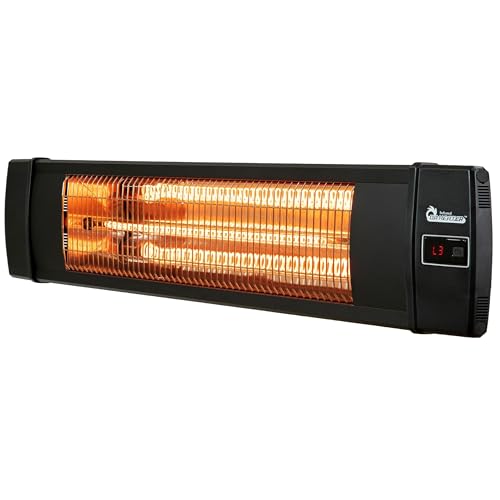
- Best where flame is banned: Dr. Infrared Heater DR-238 Carbon Infrared Heater, 1,500W — Check on Amazon
- Best tabletop for a private ground patio: Cuisinart Portable Tabletop Patio Heater, 11,000 BTU (COH-500) — Check on Amazon
- Best tower for a private patio or townhouse yard: EAST OAK 48,000 BTU Patio Heater with Round Table Design — Check on Amazon
- Best value tower where propane is allowed: Amazon Basics 46,000 BTU Outdoor Propane Patio Heater with Wheels — Check on Amazon
See 2 more options
- Dimplex DLW Series 1,500W Radiant Heater (DLW1500B12) — covered in prose below; we could not verify an Amazon ASIN for this model at checking time, so it appears without a link.
- Infratech W-Series Single-Element Infrared Heater — covered in prose below; this line is sold through dealers rather than Amazon, so it appears without a link.
Read the full guide ↓
Disclosure: As an Amazon Associate, dailyhomedecorating.com earns from qualifying purchases. Links to Amazon on this page are affiliate links; they cost you nothing extra. Listing details such as price and availability change often, so check the current Amazon listing before you buy.
Searching for the best outdoor heater for apartments under $700 comes with a catch that no product specification can fix, and this guide will state it before it recommends anything: in a great many apartment buildings, the heater you are allowed to use is decided by your lease, your HOA rules and your local fire code — not by your budget. Fuel-burning heaters are prohibited on the balconies of many multi-family buildings, sometimes by the lease, sometimes by a fire code provision restricting open flames and fuel storage on balconies, sometimes by the building’s insurance. A $700 budget does not override any of that, and no heater in this guide should be bought to break a rule that exists to keep a whole building safe. What the budget can do — once you know which category of heater your building permits — is buy the best version of that category, instead of the flimsy version renters usually end up with.
So this guide is organised by permission first and product second. It starts with the electric heaters that are the only realistic option on most balconies, then covers the propane options honestly labelled for the situations where they are genuinely allowed: a ground-floor private patio, a townhouse yard, a rented house. Every pick was checked against manufacturer specifications and screened against U.S. Consumer Product Safety Commission recall notices; heaters with open recalls were excluded entirely and are not named in this guide. Four picks have verified Amazon listings at or under the ceiling and are linked so you can check price on Amazon. Two are covered in prose only, with the reason stated, because one could not be verified with an Amazon ASIN and the other is a dealer-sold line.
Before the picks, do the three checks that decide everything. First, read your lease and any balcony or patio rules your building issues — look for the words heater, open flame, propane, fuel storage and grill, because heater rules often live inside grill rules. Second, if the documents are silent, ask management in writing; an email answer protects you in a way a hallway conversation does not. Third, check your local fire code or fire department guidance for multi-family dwellings, because in some jurisdictions the prohibition is legal, not just contractual, and a lease that forgets to mention it does not make it permitted. If your space turns out to be a ground-floor patio with no restrictions, the wider tier picture in our Best Outdoor Heater Under $700 guide applies to you as well; if your budget is smaller than this tier, see the Best Outdoor Heater For Apartments Under $300 guide for the step-down electric options.
In this guide
Quick Picks
| Pick | Best for | Type / fuel | Output | Apartment reality |
|---|---|---|---|---|
| Dr. Infrared Heater DR-238 | Best where flame is banned | Electric carbon infrared, 120V | 1,500W | Check price on Amazon |
| Dimplex DLW1500B12 | Best zero-glare wall mount | Electric radiant, 120V | 1,500W | Prose only — no ASIN verified |
| Cuisinart COH-500 | Best tabletop, private patio only | Propane tabletop | 11,000 BTU | Check price on Amazon |
| EAST OAK 48,000 BTU | Best tower, private patio/yard only | Propane tower with table | 48,000 BTU | Check price on Amazon |
| Amazon Basics 46,000 BTU | Best value, private yard only | Propane tower | 46,000 BTU | Check price on Amazon |
| Infratech W-Series | Best hardwired, with written permission | Electric, hardwired | Model-dependent | Prose only — dealer channel |
How These Picks Were Chosen
The first filter for this guide was not performance; it was permissibility. We divided the apartment world into three real situations and required every pick to be the right answer for at least one of them. Situation one is the typical balcony: elevated, bounded by railings and neighbours above and below, governed by a lease. For that situation only electric heaters were considered, because they produce no flame, no exhaust and no stored fuel — the three things balcony rules actually target. Situation two is the private ground-floor patio or townhouse yard, where propane may be allowed subject to clearances from the building wall and any overhang. Situation three is the long-term rental or owned condo with a permanent covered space, where a hardwired electric installation becomes possible — but only with written landlord or HOA permission and licensed electrical work, so it is presented as a project, not a purchase.
Within each situation we applied the same verification standards as the rest of this series. A pick earned a link only with a verified Amazon listing for the exact model and a recent price sighting at or under $700. Specifications — output, dimensions, weather ratings, safety shutoffs — had to be confirmable from the manufacturer or a major retailer. Every candidate was screened against CPSC recall records for fire, burn, carbon monoxide and tip-over hazards, and any model with an open recall was removed completely. Size and storage were weighted far more heavily than in our general guide, because apartment outdoor space is measured in single square metres and winter storage is a closet, not a garage: a heater that cannot be stored is a heater that becomes a year-round obstacle. Finally, we weighted honest zone size. Apartment seating is usually two to four people in a defined arrangement, which is exactly the geometry directional infrared serves well and exactly the geometry a 91-inch tower serves badly — a mismatch this guide refuses to hide.
Best Outdoor Heater for Apartments Under $700: The 6 Picks, Reviewed in Detail
Dr. Infrared Heater DR-238 Carbon Infrared Heater — Best Where Flame Is Banned
Who it suits: The majority of apartment readers: anyone on a balcony or in a building where propane, open flame or fuel storage is prohibited, and anyone whose lease is silent but whose building is clearly not designed for combustion appliances near siding and railings.
The DR-238 is a 1,500W carbon infrared heater on a standard 120V plug, with three heat levels, a remote control, a timer and an IP55 weather rating. It stands on its own feet or mounts to a wall, and that mounting option is what makes it the strongest balcony pick in this guide: fixed above head height on the wall behind your seating, aimed down at the chairs, it occupies zero floor space — the scarcest resource on a balcony — and removes every trip and contact hazard a freestanding unit creates. Infrared heat warms people and surfaces directly rather than heating air, so on a small balcony the effect is immediate and personal: two people in two chairs inside the beam are genuinely warm, with no warm-up wait and no smell, no exhaust and no tank stored against the railing. The remote and timer matter more in apartment life than they sound; heat you can switch from the chair, and that switches itself off after you go in, is heat you will actually use on a Tuesday, not just at a party.
Pros: No flame, no fuel and no carbon monoxide, so it survives the prohibitions that eliminate every propane pick; wall mounting frees the entire balcony floor; IP55 rating suits an exposed balcony better than indoor-rated heaters; silent; the low purchase price leaves most of an under-$700 budget for the seating and storage an apartment actually needs — a compact Best Deck Box For Apartments Under $700 solves the cushion problem that balconies always have.
Honest limitation: It warms a beam, not a balcony. Two to four seated people inside the beam is the realistic zone; a guest perched outside it will feel little. It needs a proper outdoor outlet within reach of its cord — plan the outlet, because running a heater on a light extension cord through a sliding door is both a fire risk and a lease problem. And if your balcony has no exterior wall suitable for mounting, the freestanding feet work but return the floor-space cost.
Choose it if your rules ban flame or you simply do not want fuel on a balcony. Skip it if your “apartment” space is really a large private yard — you have room for the tower options below and they warm a bigger circle.
Check on Amazon — check price on Amazon; a silver-finish variant exists under a separate listing.
Dimplex DLW Series Radiant Heater (DLW1500B12) — Best Zero-Glare Wall Mount (Prose Only)
Who it suits: Apartment dwellers with a covered balcony or loggia who find the orange glow of a typical infrared bar ugly or distracting, and who want the heater to disappear visually into the architecture.
The Dimplex DLW is a 1,500W, 120V radiant panel — model DLW1500B12 in black — that mounts to a wall or ceiling and produces long-wave infrared heat with no visible glare: the panel warms up, the people below warm up, and nothing glows. The manufacturer’s own coverage figures are refreshingly modest and therefore believable: roughly 40 square feet indoors, about 32 square feet in an enclosed outdoor space and about 26 square feet in an exposed one. That honesty tells you exactly what this heater is — a personal-zone heater for a small seating arrangement, executed with better industrial design than the plug-in bars it competes with. It is weatherproofed for outdoor mounting, weighs about 11 pounds, and draws 12.5 amps, which is a real consideration on an older balcony circuit shared with interior loads.
Pros: Zero-glare heat suits covered balconies where a glowing bar would dominate the space; the maker’s published coverage is conservative and zone-appropriate; wall or ceiling mounting keeps it entirely out of the living footprint; no flame or fuel, so it passes the same prohibitions as any electric pick.
Honest limitation: It is prose-only in this guide because we could not verify an Amazon ASIN for it at checking time — it is sold through electrical and heating retailers, and you should buy it through one of those channels rather than a marketplace listing you cannot verify. Its modest coverage is also a hard ceiling: this is a heater for a two-person balcony arrangement, not for entertaining six.
Choose it if aesthetics and a covered space make the zero-glare panel worth shopping through a dealer channel. Skip it if you want to order everything from one Amazon basket, or your seating group is larger than its honest zone.
This pick is prose-only: no Amazon link is provided because no ASIN could be verified at checking time. The model number above is the one to search at heating retailers.
Cuisinart Portable Tabletop Patio Heater (COH-500) — Private Ground Patios Only
Who it suits: Apartment households whose outdoor space is a private ground-floor patio — not a balcony — in a building whose rules permit propane, and whose outdoor life centres on a small dining table.
The COH-500 is an 11,000 BTU tabletop propane heater with an anti-tilt auto shut-off and a burner screen guard, running on a 1-lb cylinder or, with an adapter hose, a 20-lb tank. At table distance its modest output is well aimed: faces, hands and the table surface sit inside its warm zone in a way that makes long dinners comfortable. It is also the easiest pick in this guide to store — it comes indoors to a closet shelf in a way no tower ever will — and the easiest to take with you when you move, which is a real apartment consideration: nothing here is a fixture you abandon at the end of a lease.
Pros: Heat placed exactly at the seated group; anti-tilt shutoff and burner guard are fitted, which matters at elbow distance; stores on a shelf; the 20-lb adapter option cuts fuel cost dramatically for regular use; fully portable between homes.
Honest limitation: It is a propane flame appliance, and everything said in this guide’s introduction applies: on most balconies it is prohibited, and even on a ground patio it needs its manual’s clearances from walls, overhangs and furniture, which a small patio may not honestly provide. On 1-lb cylinders its runtime is short and its fuel cost per hour is the highest in this guide. It warms a table — stand up and step away, and you have left the heat.
Choose it if you have a genuinely private ground patio, written clarity that propane is allowed, and table-centred evenings. Skip it if you are on any elevated balcony, if your lease mentions fuel or flame restrictions, or if your patio is so small that the clearances only work on paper.
Check on Amazon — check price on Amazon, and budget for the adapter hose if you will use it weekly.
EAST OAK 48,000 BTU Patio Heater — Private Patios and Townhouse Yards Only
Who it suits: Renters and condo owners whose outdoor space is a real ground-level patio or small yard with open sky above it, no prohibitions on propane, and room for a tower’s full clearance circle.
Where it is allowed, the EAST OAK is the strongest tower in this series: 48,000 BTU of propane heat, a round table surface around the column that apartment patios — chronically short of surfaces — genuinely benefit from, wheels for repositioning, and tip-over plus flame-failure protection fitted as standard. For a townhouse yard where four to six people gather, it does the whole job with one appliance, and the table ring means the heater is not purely an obstacle the rest of the week.
Pros: Strongest single-unit warmth in this guide; the table surface earns its footprint in small spaces; wheeled, so it can be rolled to the patio’s edge — respecting clearance from the building wall — when in use and back for storage; standard safety shutoffs fitted.
Honest limitation: It is roughly 91 inches of propane tower, and that sentence disqualifies it from most apartment situations by itself: it needs open sky or very high cover, a clearance circle small patios rarely have, and a storage plan for the off-season. It is included because “apartment” includes ground-floor homes with real yards — not as a suggestion for anyone’s balcony.
Choose it if your space is a private ground patio or yard, your rules allow propane, and your clearance measurements honestly work. Skip it if any of those three conditions fails — the electric picks above exist precisely for you.
Check on Amazon — check price on Amazon before ordering, and measure your space first.
Amazon Basics 46,000 BTU Patio Heater — Best Value Where Propane Is Allowed
Who it suits: The same private-patio households as the EAST OAK, but with the budget spread wider: a proven tower here, and money left for seating, a cover and the tank.
The Amazon Basics tower delivers 46,000 BTU with a published 9-foot heating radius, a water- or sand-filled base reservoir, piezo ignition, a tip-over shut-off valve and wheels, in powder-coated finishes including the Havana Bronze listing linked here. For an apartment patio it has one specific virtue beyond price: it is the most ordinary, most widely owned heater in the category, so when a lease ends and the heater moves with you — or is sold locally in an afternoon — nothing about it is exotic, unsupported or hard to explain.
Pros: Proven format with generic, inexpensive parts; honestly stated coverage radius; weighted base adds stability on a hard patio surface; leaves most of the budget for the rest of the space, such as the seating in our Best Adirondack Chair For Apartments Under $700 guide.
Honest limitation: Every apartment caveat from the EAST OAK applies unchanged — propane, height, clearances, storage — plus one of its own: the powder-coated finish needs more care than stainless in wet climates, and the base must actually be filled or the tower feels unstable.
Choose it if propane is allowed in your private ground space and value leads. Skip it if you are on a balcony, under low cover, or anywhere your rules restrict flame or fuel.
Check on Amazon — check price on Amazon; confirm the finish on the listing you open.
Infratech W-Series Single-Element Infrared Heater — The Permissioned Project (Prose Only)
Who it suits: Long-term renters with a cooperative landlord, and condo owners with HOA approval, who have a permanent covered patio and want installed, switch-controlled heat with nothing stored, wheeled or refilled.
Infratech’s W-Series single-element fixtures are the dealer-channel benchmark for residential infrared: quartz-element heaters, hardwired, mounted on wall or ceiling at the heights the manufacturer specifies, sized to the space by the dealer who sells them. Installed over apartment seating, the effect is the most civilised in this guide — silent, invisible, instant, and entirely out of the way. The reason this pick is a project rather than a product is everything around the fixture: it needs a dedicated circuit, licensed installation, and — the step renters most often skip — written permission from the landlord or HOA before any of that, because you are modifying the building’s electrical system and its exterior appearance.
Pros: The best finished result of any pick here; no floor space, no fuel, no storage; dealer sizing means the wattage and mounting height are chosen for your actual space; built for a decade of service.
Honest limitation: It is sold through dealers, not Amazon, so it is prose-only here — and the fixture is only part of the cost, with electrical work on top. Without written permission it is not a grey area; it is a lease violation that can cost a deposit. It also stays with the building when you leave.
Choose it if you have years in the home, a covered permanent space, and permission in writing. Skip it if you rent short-term or cannot get that permission — the DR-238 delivers the same flameless idea as a plug-in you can take with you.
This pick is prose-only: the W-Series is a dealer-sold line with no Amazon listing to link. Get installed quotes, including electrical work, before budgeting.
Comparison Table
| Heater | Fuel | Output | Balcony? | Storage | Link status |
|---|---|---|---|---|---|
| Dr. Infrared DR-238 | Electric, 120V plug-in | 1,500W | Yes — the default balcony answer | Wall-mounted or closet | Linked — check price on Amazon |
| Dimplex DLW1500B12 | Electric, 120V | 1,500W | Yes — covered balconies especially | Stays mounted | Prose only — no ASIN verified |
| Cuisinart COH-500 | Propane tabletop | 11,000 BTU | No — private ground patio only | Closet shelf | Linked — check price on Amazon |
| EAST OAK 48,000 BTU | Propane tower | 48,000 BTU | No — private patio/yard only | Needs a storage plan | Linked — check price on Amazon |
| Amazon Basics 46,000 BTU | Propane tower | 46,000 BTU | No — private yard only | Needs a storage plan | Linked — check price on Amazon |
| Infratech W-Series | Electric, hardwired | Model-dependent | Covered spaces, with written permission | Stays with the building | Prose only — dealer channel |
How to Choose an Outdoor Heater for an Apartment
Step one is paperwork, and it is not optional. Read the lease, the HOA or condo rules, and any building notices about balconies, grills or fuel storage. Then check your local fire code’s treatment of multi-family dwellings: many jurisdictions restrict open-flame appliances and propane storage on balconies above the ground floor regardless of what a lease says. If the documents prohibit fuel-burning heaters, your decision is already made — electric is your category, and the rest of this section is about choosing within it. If the documents are silent, get management’s answer in writing before spending anything. A $700 budget buys a lot of heater; it buys no protection at all in a dispute about a prohibited appliance, and it does not transfer to the fine, the violation notice or the neighbour’s complaint.
Step two is geometry. Measure the space honestly: the seating arrangement, the wall you could mount to, the distance to the railing, the door swing, the neighbour’s balcony above. On a typical balcony, a wall-mounted infrared bar above the seating is the only configuration that warms people without consuming the floor or crowding the railing clearance. On a ground patio, check the tower clearances against reality: the manual’s distance from the building wall, from furniture and from any overhang, all at once, with people able to pass without squeezing by a hot reflector.
Step three is power. Electric heaters draw real current — 12.5 amps for a 1,500W unit — so confirm the balcony or patio outlet exists, is outdoor-rated and protected, and is not already sharing its circuit with the living room’s everything. Never solve a missing outlet with a light extension cord run under a door; that is how heaters cause the fires that get them banned from buildings. If the outlet situation fails, the honest options are an electrician (with permission) or, where allowed, a tabletop propane unit on a ground patio.
Step four is the budget, spent in the right order. Under $700 tempts apartment buyers toward the biggest appliance the money allows, which is backwards in a small space. Spend first on the permitted category’s quality — a well-made electric bar with a real weather rating rather than the cheapest glowing tube — then on the installation details that make it work nightly: the right mounting bracket, a properly rated outdoor outlet if one must be added with permission, a timer. Spend what remains on the space, not the heater: in a four-square-metre balcony, better chairs change more evenings than a second heat level does. The scenarios below show this order applied three different ways, and in none of them does the winning household spend the whole budget on the heater itself.
Step five is the exit plan. Apartments end. Prefer heaters that store in a closet, mount without trace, or sell easily. This is the quiet reason plug-in electric wins so often in this guide: it is the only category that is simultaneously permitted, effective at apartment scale, and fully portable to the next home. Spend the remainder of the budget accordingly — on the seating, lighting and storage that make the space, at sizes an apartment can hold; our Best Outdoor Heater For Apartments Under $1500 guide shows what changes if the budget grows, and for most balconies the honest answer is: less than you would expect.
Safety: Fire, Carbon Monoxide and Neighbours
Apartment heater safety has a dimension house safety does not: your mistake does not stay in your home. A propane heater produces carbon monoxide and must run only in open outdoor air — never indoors, never in a garage or storage unit, and never in an enclosed or screened balcony where exhaust can accumulate or drift into the unit above. If anyone near a running propane heater feels headache, dizziness or nausea, turn it off and move to fresh air. Fuel storage is part of the same discipline: spare propane belongs outdoors, upright, away from ignition sources — and in many buildings, storing a 20-lb tank on a balcony is itself prohibited, which is another reason the tank question belongs in your written check with management, not in an assumption.
Clearances on a balcony are measured against other people’s property as much as your own: the railing, the neighbour’s plants and furniture on the other side of a divider, the underside of the balcony above. Keep any heater at least the manual’s specified distance from all of them — treat three feet as a common minimum, not a guarantee — and never run a heater where someone must pass within arm’s reach of a hot surface. Electric heaters remove the flame and exhaust risks but keep the electrical ones: outdoor-rated outlets only, dry connections, no damaged cords, and a heater switched off when you go in. The tip-over shutoff fitted to the propane picks and the timers on the electric picks are backstops. The plan is placement, permission and attention — in that order.
Three Apartment Scenarios, Worked Through
Scenario one: a fifth-floor balcony, lease silent, HOA rules unknown. This is the most common situation behind this search, and the honest answer is the least exciting one: buy nothing until the paperwork answers. The realistic outcome, once the HOA documents are read, is a prohibition on fuel-burning appliances — at which point the DR-238, wall-mounted above the two chairs the balcony actually holds, is the whole solution, at a small fraction of this budget. The remainder is better spent on the balcony itself: seating sized to the space, a small storage box for cushions, lighting. Notice what the $700 did here: it removed price as a constraint on the permitted category, which is all a budget can ever do. A reader who skipped the paperwork and ordered a pyramid heater for this balcony would own a prohibited appliance, a strained relationship with management, and a return they may not be able to make.
Scenario two: a ground-floor condo patio, propane explicitly allowed, low fence, neighbours close. Permission exists, so the decision becomes geometry and courtesy. The patio’s clearances rule out a full tower placed against the building wall — the manual’s distance from siding and the overhang above both fail — but a tabletop Cuisinart at the dining table works, with its anti-tilt shutoff and its heat aimed at the seated group rather than at the fence line. The courtesy dimension is real: propane exhaust and a glowing flame column are visible and smell-able to the neighbours on both sides, and a heater that is legal can still be antisocial if it runs nightly at the boundary. In this scenario the tabletop’s small scale is not a compromise; it is the fit.
Scenario three: a rented townhouse with a private yard, two-year lease, landlord responsive. Here the full menu genuinely opens. A tower — EAST OAK for strength, Amazon Basics for value — placed on the yard’s paving with its full clearance circle serves real gatherings, and the two-year horizon justifies the tank, the cover and the storage corner. The hardwired Infratech still does not fit: two years is not long enough to donate an electrical installation to a landlord, permission or not. What fits is everything portable, everything removable, and a written note to the landlord mentioning the propane storage arrangement — a five-minute email that keeps a good tenancy good. When the lease ends, the heater, the tank and the habit of eating outside in October all move to the next home.
Read across the three scenarios and the pattern is the guide in miniature: the budget stayed constant at under $700, and the right heater changed completely each time — an electric bar, a tabletop, a tower — because the space and the rules changed. That is why this guide refuses to crown a single winner for apartments, and why any guide that does should be read with suspicion.
Asking Management: What to Put in Writing
Because this guide keeps returning to written permission, it is worth being concrete about the exchange itself. The email to management or the HOA needs four things: the exact appliance (type, fuel, model), the exact location (which balcony or patio, mounted or freestanding), the fuel storage arrangement if propane is involved, and a direct question — is this permitted under the lease and building rules? Vague questions get vague answers that protect no one; a specific question about a named electric wall-mounted heater, or about a tabletop propane unit on a named ground-floor patio, gets an answer you can rely on and forward to an insurer if the worst ever happens. Keep the reply with your lease documents, not in an inbox you will lose at the next phone change.
Three outcomes are possible, and each has a plan. A clear yes means buy within the terms given — if the yes was for electric, it was not a yes for propane. A clear no means the electric category is your whole market, and this guide’s first two picks are where your budget belongs. Silence — the most common outcome — is not a yes: send one follow-up, and if it too goes unanswered, treat the restrictive reading as the safe one and choose electric, because the cost of being wrong about a prohibition is a violation process, while the cost of being wrong about permission is merely a different, still excellent heater. Apartment heating rewards the tenant whose paperwork is boring. Be that tenant, and then enjoy the balcony.
One more practical note belongs here, because apartment readers ask it constantly: insurance. A prohibited heater that contributes to a fire is not merely a lease problem; it can complicate or void the coverage that would otherwise respond, and it exposes the tenant to liability toward neighbours in a way a householder’s accident does not. This is not a scare tactic — it is the financial form of the same point this guide has made throughout. The permitted electric heater is not the timid choice. It is the choice whose worst case is a cold evening, rather than a building’s worst day.
Common Buying Mistakes
Buying the tower first and reading the lease second. The single most common apartment heater mistake. The order in this guide — permission, geometry, power, product — exists because reversing it ends with an unreturnable heater and a violation notice.
Assuming silence means permission. A lease that never mentions heaters may still incorporate building rules, HOA documents or the local fire code by reference. Silence is a reason to ask in writing, not a reason to light a flame.
Sizing for a party instead of a Tuesday. Apartment outdoor life is two to four people, most evenings. A directional electric heater sized to that reality gets used constantly; an oversized tower bought for one annual gathering spends the year as storage you walk around.
Storing the tank “just inside” the door. Propane tanks do not belong indoors, in hallways or in storage cages against the building unless the building explicitly provides a compliant outdoor store. If compliant storage does not exist, that is the building telling you propane is not your fuel.
Running a cord under the sliding door. It pinches the cord, defeats the door’s seal, and puts a continuous 12-amp load on a cable never rated for it. Use the outdoor outlet, get one installed with permission, or change heater type.
Forgetting the move. A hardwired fixture, a 91-inch tower and a dealer installation all assume you stay. If your horizon is one lease term, buy the heater that fits in a closet and leaves with you.
Final Recommendation
For most apartment readers, the answer is the Dr. Infrared DR-238, wall-mounted above the seating: it is permitted where propane is not, it warms the two-to-four-person zone apartment life actually consists of, it stores or moves without drama, and it leaves most of an under-$700 budget for making the rest of the small space good. Choose the Dimplex DLW through a heating retailer if your balcony is covered and the zero-glare panel suits it better. Choose the Cuisinart tabletop only if your space is a private ground patio with propane clearly allowed. Choose the EAST OAK or Amazon Basics towers only for private ground patios and yards where the clearances honestly work — and choose the Infratech only as a permissioned, long-term installation. The through-line of this guide is deliberate: in an apartment, the best heater is the one you are allowed to use, in the place you are allowed to use it, every ordinary evening — not the most powerful one you can buy. Readers whose space turns out to be a full private patio may also want the broader comparison in our Best Outdoor Heater Under $700 guide, and those working with less room and less money will find the same permission-first logic applied in our Best Outdoor Heater For Apartments Under $500 guide.
Frequently Asked Questions
Are propane heaters allowed on apartment balconies?
Very often, no. Many leases and HOA rulebooks prohibit open-flame appliances and fuel storage on balconies, and many local fire codes restrict them in multi-family buildings regardless of the lease. The rules vary by building and jurisdiction, which is why this guide insists on checking your own documents and local code — and getting management’s position in writing — before buying any fuel-burning heater.
What is the best heater type for a small balcony?
A wall-mounted electric infrared heater. It produces no flame, exhaust or stored fuel, occupies no floor space, and its directional heat matches the small, fixed seating arrangement a balcony holds. A 1,500W unit on a standard outlet is the practical size for almost every balcony.
Can I use a patio heater on a covered balcony?
Electric infrared, mounted with the manufacturer’s clearances, is the usual answer. Propane towers almost never fit a covered balcony: their height plus required overhead clearance exceeds typical balcony ceilings, and exhaust must never accumulate under a cover. Treat any covered balcony as electric-only unless a professional tells you otherwise in writing.
Will a 1,500W heater trip my breaker?
It draws about 12.5 amps, which is most of a 15-amp circuit. If the balcony outlet shares a circuit with interior outlets running other loads, tripping is possible. Run the heater on a circuit with headroom, avoid sharing with other high-draw appliances, and never use a light-duty extension cord to reach a different outlet.
Is a tabletop propane heater safer for apartments?
It is smaller, and its anti-tilt shutoff is a real protection, but it is still an open-flame, fuel-burning appliance: the same lease, HOA and fire-code restrictions apply to it as to a full-size tower. Smaller does not mean exempt. On a private ground patio where propane is allowed, it is a good pick; on a balcony, it usually is not a permitted one.
My lease allows a heater, but what if neighbours complain?
Legality and peace are different tests. A permitted heater can still generate complaints if it runs late, glows into a neighbour’s windows, or sends exhaust across a divider — and a management company that receives repeated complaints may tighten the rules for everyone. The practical defences are placement (heat your seating, not the boundary), timing (off at a reasonable hour), and type: a wall-mounted electric bar is the least intrusive heater that exists, which is one more reason it leads this guide. If you entertain often in close quarters, telling neighbours ahead of a gathering costs nothing and prevents most friction.
What should I do with a heater when I move out?
Plug-in electric heaters and tabletop units move with you — one reason this guide favours them for renters. Towers can be sold locally or moved if you have transport and storage. Hardwired installations stay with the property, which is why they only make sense with a long horizon and written permission from whoever owns the walls.


