Where to buy
Check the latest price, availability and delivery on Amazon. Orders are placed on Amazon. We may earn a commission from qualifying purchases.
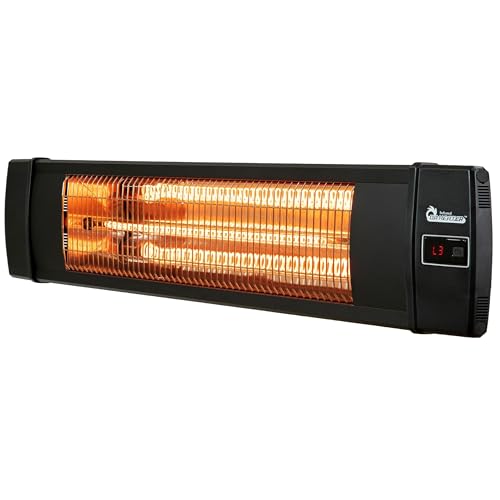
- Best for most apartments: Dr Infrared Heater DR-238 Carbon Infrared Patio Heater, 1500W, Wall or Ceiling Mount — Check on Amazon
- EAST OAK 50,000 BTU Patio Heater with Round Table Design, Bronze — Check on Amazon
- Amazon Basics 46,000 BTU Outdoor Propane Patio Heater with Wheels, Slate Gray — Check on Amazon
- Pamapic 89-Inch Pyramid Patio Heater, 48,000 BTU Quartz Glass Tube, with Wheels and Cover — Check on Amazon
See 2 more options reviewed in full below
- Hiland HLDS01-SSHST 48,000 BTU Propane Patio Heater with Wheels and Adjustable Table — reviewed below as a prose-only pick (see the sources note for why there is no link)
- Fire Sense Pyramid Flame Patio Heater, 40,000 BTU, Stainless Steel — reviewed below as a prose-only pick (see the sources note for why there is no link)
Read the full guide ↓
Disclosure: As an Amazon Associate, dailyhomedecorating.com earns from qualifying purchases. Links to Amazon on this page are affiliate links; they cost you nothing extra. Listing details such as price and availability change often, so check the current Amazon listing before you buy.
Shopping for the best outdoor heater for apartments under $500 starts with a question no other heater guide has to ask first: not which heater is strongest, but which heater you are actually allowed to use. Apartment outdoor space usually means a balcony or a small patio attached to a multi-family building, and that setting layers three kinds of rules on top of the physics — your lease, your building or HOA rules, and your local fire code. Those rules, in most US jurisdictions and most standard leases, prohibit fuel-burning heaters on balconies: open-flame devices are commonly banned on combustible balconies and within a set distance of combustible construction in multi-family buildings unless the building is sprinklered, propane cylinders are frequently barred from balconies and from being carried through interior hallways and elevators at all, and many leases ban grills and heaters on balconies in a single sentence. A $500 budget does not override any of that. No heater in this guide — or anywhere — is worth a lease violation, a fine, or the fire risk that made the rules exist.
So this guide is organized the way an apartment dweller’s decision actually works. First, the pick that is legal and sensible in the widest range of apartments: an electric infrared heater, the Dr Infrared DR-238, which produces no flame, no exhaust and no carbon monoxide, mounts on a wall or ceiling so it consumes none of your scarce floor space, and plugs into a standard outlet. For many balcony and patio situations it is not just the safest choice, it is the only choice, and this guide says so plainly rather than pretending otherwise. Then, for the minority of apartment situations where fuel-burning heaters genuinely are permitted — typically a ground-floor private patio or terrace of a townhome-style unit, on a non-combustible surface, with the clearances the manual requires and written permission where your lease demands it — we review the same verified propane towers and pyramids from our main guide, reframed for small-space reality: footprints, storage, ceiling height, and what happens when the season ends and the heater has to live somewhere in a home without a garage.
Read the rules section before the reviews. If your lease or fire code closes the door on propane — and for most balconies it does — your shortlist is the electric pick plus the discipline of checking that even an electric appliance is permitted and that your balcony outlet is a proper weather-protected GFCI outlet. If your situation is the ground-floor exception, the propane reviews will tell you which verified heaters fit small patios honestly, including which ones are simply too tall, too heavy or too clearance-hungry for apartment life. Either way, everything here sits inside the $500 ceiling, and most of it sits far inside it: in this category the constraint was never really the money.
In this guide
Quick Picks: The Best Outdoor Heater for Apartments Under $500, by Situation
Start from your situation, not from the product list. Each row names the apartment scenario and the heater that honestly fits it.
| Your situation | Pick | Why it fits | Link |
|---|---|---|---|
| Typical balcony or patio, rules unknown or strict | Dr Infrared Heater DR-238 Carbon Infrared Patio Heater | No flame, no fuel, no CO; wall or ceiling mounted; the only pick most leases and fire codes leave open | Check on Amazon |
| Ground-floor private patio, propane confirmed permitted | EAST OAK 50,000 BTU Patio Heater, Bronze | The strongest verified tower, with ballast built into the base — important where you cannot anchor anything | Check on Amazon |
| Ground-floor patio on a tight total budget | Amazon Basics 46,000 BTU Outdoor Propane Patio Heater, Slate Gray | The proven tower formula at the value end, leaving budget for the cover you will need without a garage | Check on Amazon |
| Terrace entertaining, propane confirmed permitted | Pamapic 89-Inch Pyramid Patio Heater, 48,000 BTU | A visible flame guests gather around, with a 45-degree tip-over cutoff and a cover included | Check on Amazon |
| Standing gatherings on a private patio | Hiland HLDS01-SSHST 48,000 BTU Patio Heater with Adjustable Table | The adjustable table ring suits drinks-in-hand hosting | Prose-only pick — see review |
| A permanent design feature on a private terrace | Fire Sense Pyramid Flame Patio Heater, Stainless Steel | Full stainless pyramid from a specialist maker | Prose-only pick — see review |
First, the rules: leases, HOAs and fire codes
This section is the most important part of this guide, and it is deliberately blunt. Model fire codes used across the US — the International Fire Code and NFPA 1 — restrict open-flame devices on the balconies of multi-family buildings: the common formulation prohibits open flames on combustible balconies and within ten feet of combustible construction unless the building and balcony are protected by sprinklers, and many cities adopt stricter local versions that ban balcony grills and heaters outright. Layered on top, standard apartment leases and HOA rules frequently prohibit propane storage and use on balconies entirely, and fire codes separately restrict carrying larger propane cylinders through interior common areas. The details vary by city and by building, which is exactly why the only responsible advice is procedural: read your lease’s balcony and storage clauses, ask your property manager in writing, and check your local fire department’s published guidance for your building type. Keep the answer. If any layer says no to fuel-burning heaters, the answer is no — and a bigger budget, a smaller heater or a promise to be careful does not change it.
Electric heaters sit under a different, lighter set of constraints, but not under none. A wall- or ceiling-mounted infrared heater still needs the mounting clearances in its manual, a suitable circuit, and — on a balcony — an outdoor-rated, GFCI-protected outlet; running an extension cord through a sliding door is not an installation, it is a trip hazard, a cord-damage hazard and a code problem in one. Some strict buildings regulate even electric appliances on balconies, so the written-permission step applies here too. And a practical point renters overlook: mounting means screws into a wall or ceiling structure. If your lease forbids drilling into the balcony structure, talk to your manager about the mounting before ordering; a heater you cannot mount is a heater you cannot use as designed.
Ground-floor units are the real exception, and this guide’s propane reviews are written for them: a private, non-combustible patio at grade, ideally with direct outdoor access for the tank, enough ceiling-free sky or a high enough cover to meet the manual’s overhead clearance, and three feet of genuinely empty space around the heater on every side. If your patio is small, covered by the balcony above, or shared, measure against those requirements honestly — most apartment patios fail at least one of them, which is why the electric pick leads this guide and why we would rather talk an apartment reader out of a propane tower than sell them one.
How the picks were chosen
The product research behind this guide is the same verification process as our main outdoor heater guide: every linked pick has an Amazon listing whose model, output and features we confirmed through independent sources, with a price sighted inside this budget during research; picks we could verify as products but not price or list cleanly on Amazon — the Hiland table tower and the Fire Sense pyramid — appear in prose without links, with the reasons documented in the sources note. We checked the CPSC recall record for the category and excluded any recalled brand entirely. On top of that shared base, this variant applies an apartment filter with four tests: Is it lawful to use in a typical multi-family setting? Does it fit a small footprint without eating the whole patio? Can it be stored in a home with no garage and no storage unit? And does its safety hardware — tip-over shut-off, flame-failure valve, ballast — suit a space where neighbors are close and a knocked-over heater is a building problem, not just a personal one? The DR-238 passes all four tests for the widest range of apartments. The propane picks pass them only inside the ground-floor exception described above, and their reviews say exactly where each one stops fitting.
The six heaters, reviewed for apartment reality
1. Dr Infrared Heater DR-238 Carbon Infrared Patio Heater — the apartment default
Who it suits. Most apartment dwellers reading this guide: balcony and patio owners whose rules forbid flame, renters who cannot store a propane cylinder, and anyone whose outdoor space is small enough that a floor-standing tower would consume it.
The DR-238 is a carbon infrared bar, rated at 1,500 watts maximum on a standard 120-volt circuit, with three power levels (900, 1,200 and 1,500 watts), a remote control and a shutoff timer. It mounts on a wall or ceiling with included brackets, which is the feature that makes it an apartment product rather than merely an electric one: a balcony’s scarcest resource is floor area, and this heater uses none of it. Infrared heat radiates directly onto people and surfaces, so it feels immediate in a way air-heating appliances do not, and it is indifferent to the breezes that swirl around balconies and strip a propane tower’s warmth away. There is no flame, no combustion, no carbon monoxide and no fuel to store — which is why, in building after building, this is the category of heater that survives the lease test when propane does not.
Pros. The only pick here that is lawful in most apartment settings; zero floor footprint once mounted; instant, silent heat with a remote and timer; no tanks to buy, store, swap or carry through the building; running cost per hour is a small fraction of a propane refill’s.
Honest limitation. Infrared warms the people in its beam, not the balcony. One bar comfortably covers a two-to-three-person seating nook, not a dinner party, and at full power it draws close to a standard circuit’s comfortable capacity, so it wants a circuit that is not already feeding other loads. The listing’s weather rating appears in two forms (IP55 in the bullets, a lower splash rating in the detail modules), so treat it as splash-protected under a covered balcony rather than an appliance for open rain. And the mounting caveat is real: you need a wall or structure you are permitted to fix to, at the height and clearances the manual specifies.
Choose it if you live in a typical apartment — which is to say, choose it unless you have confirmed in writing that you are the ground-floor exception. Skip it only if your permitted space is a large private terrace with several seating groups, where one directional bar cannot cover the gathering and a permitted propane tower does the job better. Check on Amazon.
2. EAST OAK 50,000 BTU Patio Heater with Round Table — for permitted ground-floor patios
Who it suits. Apartment and townhome residents with a private ground-floor patio where propane is confirmed permitted, who want the strongest verified tower and need stability without anchoring anything into a landlord’s slab.
Read the rules section again before this review: everything in it assumes written permission and a non-combustible, clearance-compliant patio. Within that frame, the EAST OAK is the tower we would choose for an apartment patio, for one specific reason: stability you do not have to install. Its conical base accepts a sand box and a fillable water tank, so the ballast that keeps a tall tower upright in wind comes from the box, not from bolts into concrete you do not own. The heater itself is the strongest in this guide — a 50,000 BTU maximum through a double-layer stainless burner, with a triple protection system covering tip-over and flame failure, wheels for the short moves a small patio requires, and a round stainless table on the tank housing that earns its place in a space too small for a separate side table. The maker claims heat spread up to a 20-foot diameter; on a real patio, plan your chairs inside the comfortable inner zone and expect wind to shrink it.
Pros. Highest verified output in the guide; ballast-based stability with no fixings; table built in, which matters where floor space is rationed; full protection system; wheels sized for patio-scale repositioning.
Honest limitation. It is a full-size tower — about seven and a half feet of heater that needs full overhead clearance, so a patio roofed by the balcony above will usually disqualify it on clearance alone, before the lease is even consulted. It also needs off-season storage you may not have, and a 20 lb tank stored in compliance with your building’s rules, which for many buildings means not on the premises at all.
Choose it if you are the confirmed ground-floor exception and your patio is open-topped. Skip it if your patio sits under another balcony, your lease is silent or negative on propane, or storage is already a problem — the DR-238 exists for exactly your situation. Check on Amazon.
3. Amazon Basics 46,000 BTU Outdoor Propane Patio Heater — the value tower, same conditions
Who it suits. Ground-floor patio residents inside the permitted exception who want the proven tower formula for the least money — especially renters who would rather not sink premium money into a home they do not own.
The Amazon Basics tower offers 46,000 BTU with an adjustable knob and one-touch ignition, a published heat radius of up to nine feet that makes small-patio seating math unusually easy, a water box in the base for ballast, a chain to secure the 20 lb tank, and wheels. In slate gray powder coat it is visually quiet against most patio furniture. For an apartment patio, its virtues are practical: it is the least expensive verified route to a real circle of warmth, it assembles without drama, and if a move is on your horizon, it is the tower whose loss or resale hurts least. Its limits are the class limits, sharpened by apartment scale: at roughly 91 inches it needs the same overhead clearance as the EAST OAK, its powder coat wants a cover through the wet season — budget for one, since a renter’s patio has no garage to retreat to — and owner experience across the value tier says the piezo igniter is the part to expect to service first.
Pros. Published heat radius for honest planning; lowest cost of the verified towers; water-box ballast and tank chain included; quiet finish; leaves most of the budget for the cover and tank your situation requires.
Honest limitation. Everything said about propane permission, overhead clearance and tank storage for the EAST OAK applies here word for word — a cheaper heater is not a more permitted one. The powder-coated finish is also less forgiving of year-round uncovered life than stainless.
Choose it if you are permitted, open-topped and value-led. Skip it if any rule, roof or storage fact says no — and skip every propane pick with it. Check on Amazon.
4. Pamapic 89-Inch Pyramid Patio Heater — terrace entertaining, with conditions
Who it suits. Residents of townhome-style units with a genuinely private terrace, confirmed propane permission, and a social life that happens outdoors — the pyramid is the entertaining pick, and apartments that can host it are the exception, not the rule.
The Pamapic puts a real flame inside a quartz glass tube at the center of an 89-inch pyramid, rated at 48,000 BTU in its manual, radiating warmth along the tube so seated guests feel it at torso height while the flame does the atmospheric work no tower can. Its safety specification is the most complete we verified: a valve that cuts the gas if the unit tilts beyond 45 degrees, flameout protection, overheat protection. A fitted cover is included — a bigger deal in an apartment, where the heater will live outdoors because there is nowhere else for it to live. The footprint is about 23 inches square and the weight roughly 62 pounds, on wheels. For a terrace, that footprint is honest: it is a piece of furniture, and you plan the seating around it.
Pros. A real flame as a gathering point; the strongest published safety package in this guide; cover included; heat radiated at seated height around the full circle.
Honest limitation. In an apartment context the pyramid’s demands stack up fast: 89 inches of height plus overhead clearance rules out any terrace roofed by a balcony above; a glass tube within reach of every guest, child and dog needs a household that can keep the clearance zone respected; and 62 pounds is a lot to wheel through a garden gate at season’s end to a storage locker. None of these is a defect — they are the reasons this pick sits fourth, behind the heater most apartments can actually use.
Choose it if your terrace is private, open-topped, permitted and social. Skip it if any one of those four adjectives fails. Check on Amazon.
5. Hiland HLDS01-SSHST 48,000 BTU Patio Heater with Adjustable Table — prose-only pick
Who it suits. Permitted ground-floor hosts whose gatherings stand rather than sit: the Hiland’s adjustable table ring around the pole is made for drinks-in-hand evenings on a private patio.
Hiland’s HLDS01 line, sold by AZ Patio Heaters, is one of the longest-running designs in residential patio heating: 48,000 BTU per its Amazon listing, variable control, a thermocouple and anti-tilt safety devices, wheels, a burner cover and regulator, and a CSA-approved design around a standard 20 lb tank. The table ring adjusts in height, which on a small patio doubles as the drinks surface you do not have floor space for. The mature parts channel behind the model is a genuine renter-relevant virtue: covers, valves and tubes are obtainable, so a heater you may own across two or three addresses stays serviceable. It appears without a link because, although we verified the listing and specifications, we could not capture a current Amazon price inside this budget during research — only older retail references — and this guide does not link what it cannot stand behind. Check the listing directly as your final step.
Pros. Adjustable table for standing gatherings; stainless in the weather-exposed parts; deep parts availability; full safety baseline.
Honest limitation. Every apartment condition from the propane picks above applies, plus the price-verification caveat: confirm the live listing price fits your budget before planning around it.
Choose it if the table format is the point and your patio clears the rules. Skip it if you want a fully verified in-guide purchase — the EAST OAK offers the table idea with a verified listing.
6. Fire Sense Pyramid Flame Patio Heater, Stainless Steel — prose-only pick
Who it suits. Design-led residents of larger private terraces who want the pyramid flame as a permanent fixture and are comfortable buying through general retail.
Fire Sense’s pyramid is the specialist’s version of the form: 40,000 BTU, stainless burners and heating grid inside a full stainless pyramid, wheels, and a tip-over safety switch, from the maker most associated with popularizing the design. We verified its specifications and a retail price inside this budget at a national chain during research, but we could not verify a current Amazon ASIN for the exact model, so it is reviewed in prose rather than linked on a guess. For an apartment terrace its case is permanence: stainless tolerates living outdoors under a cover, and the silhouette reads as furniture. Its cautions are the pyramid cautions — height plus clearance, a glass tube to protect, the lowest output of the full-size picks here — compounded by apartment math: it only makes sense where the terrace is large, private, open-topped and permitted, which is a short list of apartments.
Pros. Full stainless construction; specialist maker with a deep parts catalog; permanent-fixture looks.
Honest limitation. No verified Amazon listing to link; 40,000 BTU warms a tighter circle than the Pamapic; every propane rule and clearance condition in this guide applies in full.
Choose it if your terrace genuinely fits it and retail buying suits you. Skip it if you want the pyramid with a verified listing and a cover in the box — the Pamapic — or if your apartment is the typical case, where the DR-238 is the whole answer.
Comparison table
| Pick | Type | Output | Apartment fit | Watch out for |
|---|---|---|---|---|
| Dr Infrared DR-238 | Electric carbon infrared bar | 900 / 1,200 / 1,500 W | Best — no flame or fuel; wall/ceiling mount uses no floor space | Heats a small group in its beam; needs a permitted mounting surface and a GFCI outlet |
| EAST OAK 50,000 BTU with Table | Propane mushroom tower | 50,000 BTU | Ground-floor private patios only, with written permission | Full overhead clearance needed; tank storage rules may still bar it |
| Amazon Basics 46,000 BTU | Propane mushroom tower | 46,000 BTU | Ground-floor private patios only, value-led | Same permission and clearance conditions; buy the cover |
| Pamapic 89-Inch Pyramid | Propane glass-tube pyramid | 48,000 BTU | Private open-topped terraces only | 89 in plus clearance; glass tube; 62 lb to store |
| Hiland HLDS01-SSHST (prose-only) | Propane tower with table | 48,000 BTU (listing) | Private patios, standing gatherings | Current Amazon price not verified in this research |
| Fire Sense Pyramid Flame (prose-only) | Propane glass-tube pyramid | 40,000 BTU | Large private terraces only | Amazon ASIN not verified; lowest output here |
Safety first: fire, carbon monoxide and your neighbors
Apartment heating carries every risk of ordinary patio heating, plus one more: proximity. Your clearance zone is measured not only against your own furniture but against the building itself — siding, balcony rails, the ceiling above, a neighbor’s plants and curtains through an open window. Carbon monoxide discipline is absolute: a propane heater is an outdoor appliance, and a covered balcony with a ceiling and three walls is not outdoors in the sense the rule means; CO is colorless and odorless, it drifts, and in a multi-family building it does not stay your problem alone. The CPSC record for this category includes tabletop propane heaters recalled for dangerous CO emissions and, currently, a recall of certain natural-gas patio heaters sold online whose components could release gas — that brand appears nowhere in this guide. Check any model you consider, including ours, against the CPSC recall database by exact brand and model before you buy.
Fire clearance in an apartment has a detail homeowners miss: the balcony above you is a combustible ceiling at close range. A full-size tower’s manual typically demands two to three feet of clearance above the reflector and about three feet to the sides; a tower lit under a low balcony soffit can violate the overhead figure while looking perfectly reasonable from ground level. Measure upward before you measure anything else. Tip-over protection matters more, not less, in small spaces: fill the ballast the maker provides, keep the heater on the level non-combustible surface the manual requires, and treat the tip-over switch — the Pamapic’s, for example, cuts gas at 45 degrees of tilt — as the backup it is, not as permission to site the heater on a slope or a rug. For the electric pick, the disciplines are electrical: a GFCI-protected outdoor outlet, no extension cord draped through a door as a permanent installation, mounting hardware into structure at the manual’s height, and nothing combustible within the stated clearance of the element. Finally, the neighbor rules that are not in any manual: smoke, odor and radiant heat all cross property lines at balcony distance, which is one more reason the flameless, exhaust-free pick leads this guide.
How to choose, in apartment order
Step one: permission. Lease, property manager in writing, local fire guidance. This step eliminates most products for most apartments and takes less time than any other part of the purchase. Do it first and let it shrink the list honestly.
Step two: the ceiling test. If anything solid sits above your outdoor space — a balcony, a soffit, a pergola roof — measure its height. Below the manual’s clearance for a tall tower, propane towers and pyramids are out, and the wall-mounted electric bar, sited per its own manual, is the design that fits under real apartment architecture.
Step three: footprint and storage. Pace out the patio with the heater’s footprint and its three-foot clearance circle drawn in. If the circle swallows the seating, the heater is too big for the home regardless of budget. Then answer the January question: where does it live in the off-season, and where does the tank live — in compliance with your building’s rules — every day?
Step four: the circuit and the outlet. For the electric route, confirm a GFCI outdoor outlet within the heater’s cord reach of a permitted mounting position, on a circuit with capacity to spare at 1,500 watts. If the outlet situation fails, that is a conversation with your property manager, not a reason to improvise with cords.
Step five: spend what is left on livability. Inside a $500 ceiling, the apartment-specific extras are a fitted cover (your heater will live outdoors), a second tank only if your building permits storing it, and — for the electric pick — nothing at all, which is rather the point.
Common mistakes to avoid
Assuming a small heater is a permitted heater. Rules ban fuel and flame, not size. A tabletop propane heater on a prohibited balcony is exactly as prohibited as a tower — and tabletop propane models carry their own CO recall history.
Buying first and asking the property manager later. The sequence matters because the answer is often no, and a 60-pound heater is an expensive thing to have to return, resell or store unused.
Believing the budget overrides the rules. It does not. The $500 in this keyword buys the best heater your situation allows; it cannot buy permission, clearance or a sprinkler system.
Storing the tank indoors “just for winter.” Propane cylinders belong outdoors, upright, per code and every lease ever written. If your building offers no compliant storage, that is the building telling you propane is not your fuel.
Running the electric heater on an extension cord through the door. A pinched, weather-exposed cord is a fire and trip hazard and voids the appliance’s intended installation. No proper outlet means no installation yet.
Forgetting the neighbors. Heat, glow and exhaust cross balcony lines. The heater that keeps the peace is usually the flameless one — another reason the DR-238 leads here.
The five-minute balcony audit
Before any purchase, run this audit on your own space — it takes five minutes and it decides the shortlist more reliably than any review, including ours. First, the paper test: open your lease and search it for “balcony,” “patio,” “grill,” “propane” and “heater.” Note what is banned, what needs permission, and what is silent — silence is not permission, it is a question for the property manager. Second, the building test: look at your balcony’s construction. A combustible (wood or composite) balcony in a multi-family building is exactly the configuration model fire codes restrict for open-flame devices; a concrete balcony on a sprinklered building is the configuration most likely to leave room — room that your lease may still close. Third, the geometry test: measure the ceiling height above the space and pace the largest empty circle you can honestly keep clear. A full-size tower needs its overhead clearance plus roughly three feet on every side; most balconies fail one of those numbers, and failing either ends the propane conversation. Fourth, the services test: find the outdoor outlet. Is it GFCI-protected, weather-covered, and within cord reach of a wall or structure you may fix to? That answer decides whether the electric pick is a Saturday project or a negotiation. Fifth, the storage test: name the lawful place a propane cylinder would live in your building, in January, in writing from your manager — not the place it would physically fit. If you cannot name it, propane has failed its final test.
Run honestly, the audit sorts most apartment readers in one direction: the mounted electric bar, possibly after a short written exchange with the property manager about the fixing. That is not a consolation outcome. The balcony the audit describes — small, covered, close to the building — is precisely the space the DR-238 was ranked first for, and the audit’s real product is certainty: you will order once, install once, and never have the conversation that starts with a neighbor’s complaint or a manager’s knock.
When the answer is no: warmth without a heater
Some apartments fail every test — no flame, no fixing, no suitable outlet, a manager who says no to all of it. That answer deserves a useful paragraph rather than a shrug, because a renter’s cold balcony is not a lost cause. Start with the building’s own heat: a balcony used in the hour after sunset holds the day’s warmth in its walls and floor, and scheduling around that costs nothing. Add wind control before heat — an outdoor curtain, a privacy screen or a planter line on the windward rail changes perceived temperature more than renters expect, because moving air, not cold air, is what makes a balcony feel hostile. Layer the seating: outdoor cushions and throws insulate the contact points where cold actually reaches people, and a rug underfoot breaks the slab’s chill. Serve the warmth — hot drinks are a heating technology older than propane. And if the building permits nothing else, remember that an indoor-rated electric heater used indoors, with the balcony door open for a gathering that flows between the rooms, is a lawful pattern in a way that the same appliance dragged outside is not. None of this replaces a heater where a heater is allowed; all of it beats a violation where one is not.
Moving in, moving out: the apartment lifecycle
An apartment heater should be bought with the lease’s whole lifecycle in mind, because apartments end. The DR-238’s lifecycle is the gentlest imaginable: four to six screws out, a spackle-and-paint touch-up negotiated with the manager like any picture hook writ large, and the heater travels to the next home in a tote bag. Nothing about it strands value in a place you are leaving, and nothing about it complicates the deposit conversation beyond the mounting you already agreed in writing. The propane picks live harder lives at moving time. A tower is an awkward, top-heavy object that wants two people and a clear path; its tank cannot travel in a moving truck’s enclosed box under any sane reading of the rules, so the tank is given away, exchanged locally, or left for the next tenant by arrangement — never shipped, never stored in the unit during the vacancy, never abandoned in a way that becomes the landlord’s problem and then yours. The pyramid adds its glass tube to the logistics: it moves in its original packaging or not at all, and a renter without the box should photograph that fact into the purchase decision in October, not discover it the following June.
None of this argues against propane for the confirmed ground-floor exception — a townhome patio you will occupy for years amortizes all of it. It argues for buying the apartment heater as a renter, with the exit priced in. The electric pick’s exit costs an afternoon; the propane picks’ exits cost planning. Readers who know which lease they are actually on will choose correctly between them, and readers who are honest that their lease is a one-year document will notice that the guide’s ranking already made that assumption for them.
Final recommendation
For the typical apartment, the answer is the Dr Infrared DR-238: it is the heater your lease, your fire code and your floor plan can all agree on, it mounts out of the way, and it warms the two or three people an apartment balcony actually holds. If — and only if — you have confirmed in writing that your ground-floor private patio permits propane and it passes the ceiling and clearance tests, the EAST OAK 50,000 BTU is the tower to buy, with the Amazon Basics as the value alternative and the Pamapic as the entertainer. Everything else is a variation on those two honest answers, and both sit comfortably under $500.
Frequently asked questions
Can I use a propane patio heater on my apartment balcony? In most cases, no. Model fire codes restrict open-flame devices on balconies of multi-family buildings, many local codes are stricter, and most leases and HOA rules ban propane on balconies outright — including storing the cylinder there. Check your lease, ask your property manager in writing, and check local fire guidance. If any layer prohibits it, use an electric infrared heater instead.
Does a $500 budget change what is allowed? No. Permission comes from your lease, your building and your fire code, and none of them has a price tier. The budget buys quality within the rules; it never buys an exception to them.
Are electric patio heaters allowed where propane is banned? Usually, because the bans target fuel and open flame — but “usually” is doing work in that sentence. Some buildings regulate all balcony appliances, and you still need a GFCI outdoor outlet and a permitted mounting. Confirm in writing, as with propane.
What about a small tabletop propane heater for a balcony? It is still a fuel-burning open-flame appliance, so the same prohibitions apply — and tabletop propane heaters have a specific CPSC recall history involving carbon monoxide. Small is not a loophole.
Can I store a propane tank inside my apartment or on the balcony? No to indoors, under any circumstances. Balcony storage is also prohibited by many leases and local codes. If your building provides no compliant outdoor storage, propane is not a workable fuel for your home.
How much space does the electric heater actually warm? A 1,500-watt infrared bar warms the people directly in front of it — a loveseat or a pair of chairs — immediately and pleasantly, including in a breeze. It does not warm the whole balcony’s air, and it is not sized for a party; for apartment scale, that focused warmth is usually exactly the requirement.
My property manager said yes verbally. Is that enough? Get it in writing — an email reply counts. Balcony rules are enforced by whoever inspects after a complaint or an incident, and a verbal yes from a manager who has since changed jobs protects no one. The written answer also pins down the conditions (fuel type, mounting, storage) so your installation matches the permission you actually received.
Related guides
For the full research behind the propane picks, see the Best Outdoor Heater Under $500; for the same rules-first treatment at a lower tier, see the Best Outdoor Heater For Apartments Under $300. Apartment-safe ambiance alternatives live in the Best Fire Pit For Apartments Under $500 guide — read its rules section too — and seating for the space is covered by the Best Outdoor Sectional For Apartments Under $500 and the Best Patio Heater For Apartments Under $500.


