Where to buy
Check the latest price, availability and delivery on Amazon. Orders are placed on Amazon. We may earn a commission from qualifying purchases.
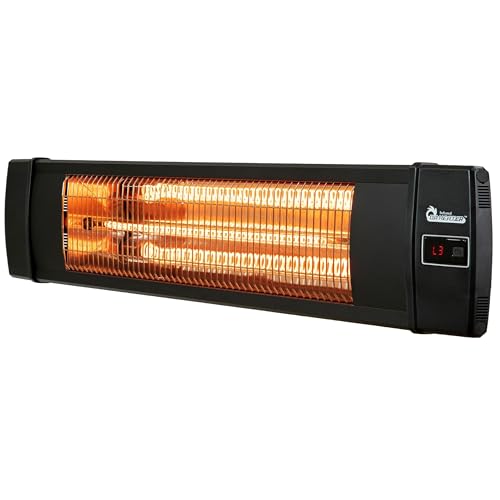
- Best for most apartments (where mounting is allowed): Dr. Infrared Heater DR-238 Carbon Infrared Heater — Check on Amazon
- Best tabletop, where propane is permitted: Cuisinart Portable Tabletop Patio Heater, 11,000 BTU (COH-500) — Check on Amazon
- Smallest footprint: Mr. Heater Little Buddy MH4B, 3,800 BTU — Check on Amazon
- Most warmth in a portable, where propane is permitted: Mr. Heater Portable Buddy MH9BX, 4,000–9,000 BTU — Check on Amazon
See 2 more options
- Only for unusually large private terraces: EAST OAK 48,000 BTU Patio Heater with Round Table Design — Check on Amazon
- Amazon Basics 46,000 BTU Outdoor Propane Patio Heater — covered in prose below; recent listings have drifted above this guide’s ceiling, and its full-size tower format rarely suits an apartment balcony in any case.
Read the full guide ↓
Disclosure: As an Amazon Associate, dailyhomedecorating.com earns from qualifying purchases. Links to Amazon on this page are affiliate links; they cost you nothing extra. Listing details such as price and availability change often, so check the current Amazon listing before you buy.
The search for the best outdoor heater for apartments under $150 has to start with the rulebook, not the product list, because in an apartment the first question is not “which heater is warmest?” but “which heater am I actually allowed to use out there?” Apartment balconies and patios sit inside layers of rules that a house patio never meets: your lease, your building’s or HOA’s regulations, your local fire code, and the heater manufacturer’s own clearance requirements. A heater that breaks any one of those four layers is not a bargain at any price — it is a lease violation, a fine, a voided insurance position, or a fire risk in a building full of neighbors.
Here is the honest picture. Many leases and HOA rulebooks ban fuel-burning appliances — propane heaters included — on balconies outright, and many local fire codes restrict open-flame devices on balconies of multi-family buildings, particularly balconies with combustible construction or another balcony overhead. Propane storage is often restricted too: the amount of LP gas you may keep at a multi-family residence can be limited by code, and spare cylinders in a hallway closet are a problem everywhere. None of that makes apartment outdoor heating impossible. It means the shortlist has to be led by the formats that can comply: an electric infrared heater with no flame and no fuel, and — only where your lease, building rules and fire code clearly permit propane and the balcony is genuinely open-air — compact propane units used at small scale with full clearances.
This guide therefore ranks six verified heaters through an apartment lens. The electric Dr. Infrared DR-238 leads, because it removes fuel and flame from the equation entirely. The compact Cuisinart tabletop and the two Mr. Heater portables follow, clearly labeled as propane options for permitted, open-air apartment patios only. The two full-size towers are included at the end with an honest verdict: they are good heaters that almost never belong on an apartment balcony, and one of them is also currently priced above this guide’s ceiling. Every pick was verified against manufacturer specifications and screened against current U.S. Consumer Product Safety Commission recall notices; recalled models were excluded completely. Read the rules section before the reviews — in this guide, it is the most important part.
In this guide
Quick Picks
| Pick | Apartment verdict | Type / fuel | Output | Where to check |
|---|---|---|---|---|
| Dr. Infrared Heater DR-238 | Best for most apartments (mounting permission needed) | Wall/ceiling mount / electric | 1,500 W (900/1,200/1,500 W settings) | Check on Amazon |
| Cuisinart Tabletop Patio Heater (COH-500) | Best tabletop — propane-permitted patios only | Tabletop / propane, 1 lb cylinder | 11,000 BTU | Check on Amazon |
| Mr. Heater Little Buddy (MH4B) | Smallest footprint — propane-permitted patios only | Portable radiant / propane, 1 lb cylinder | 3,800 BTU | Check on Amazon |
| Mr. Heater Portable Buddy (MH9BX) | Most portable warmth — propane-permitted patios only | Portable radiant / propane, 1 lb cylinder | 4,000 or 9,000 BTU | Check on Amazon |
| EAST OAK 48,000 BTU Patio Heater (UR48BN1) | Only for very large private terraces | Freestanding tower / propane, 20 lb tank | 48,000 BTU | Check on Amazon |
| Amazon Basics 46,000 BTU Patio Heater | Not recommended for apartments (prose only) | Freestanding tower / propane, 20 lb tank | 46,000 BTU | Check price on Amazon — recently listed above this guide’s ceiling |
How These Picks Were Chosen
Apartment suitability was the first filter, applied before price or power. We asked of each candidate: can this format physically and legally work on a typical apartment balcony or small patio? Full-size towers failed that test for most balconies — they need clearance on all sides and overhead, a 20 lb propane tank, and open sky — so they sit at the bottom of this ranking with clear warnings rather than being quietly recommended. Compact, controllable, low-footprint formats rose to the top.
Price came second, under the same rule as the rest of this series: a heater is linked only if we verified a current or recent listing sighting at or under $150. Five picks passed. The Amazon Basics tower did not — its recent listings sit above the ceiling — so it appears in prose without a link, and in this guide it would not be the apartment recommendation even at a lower price.
Specifications were verified from manufacturer product pages, manuals and the listings themselves: output, fuel, dimensions, safety shutoffs and ratings. Safety screening used U.S. Consumer Product Safety Commission recall records for patio and portable heaters; any model under an open recall for fire, burn, gas-leak or carbon monoxide hazards was excluded entirely. For apartment use we additionally weighted controllable output (multiple settings beat one roaring setting in a small space), automatic shutoffs, and whether the heater produces carbon monoxide at all — the electric pick does not, which is a decisive advantage one floor up from the street with neighbors on every side.
The Rules Come First: Leases, HOAs, Fire Codes and Balconies
Your lease. Many apartment leases prohibit “open flame devices,” “fuel-burning appliances” or specifically propane heaters on balconies and patios, and many prohibit storing propane cylinders anywhere in the unit. If your lease says no, that is the end of the propane conversation for your home — no guide, review or neighbor’s example overrides a signed lease, and a violation can cost you your deposit or your tenancy. If the lease is silent, ask your landlord or property manager in writing before buying a fuel-burning heater; an email answer protects you in a way a hallway conversation does not.
Building and HOA rules. Condominium and HOA documents frequently go further than leases, banning grills and heaters on balconies, restricting what may be stored or mounted on exterior walls, and requiring approval for anything attached to the building — which includes the wall-mounted electric pick in this guide. Mounting a heater with screws into an exterior wall or ceiling is exactly the kind of alteration that needs written permission in most rental and HOA settings. The electric route removes the fire-code problem, not the permission problem.
Fire code. Many jurisdictions restrict open-flame appliances on balconies of multi-family buildings — commonly where the balcony is combustible, where another balcony or roof overhangs yours, or within a set distance of the building. Rules vary by city and building type, which is why this guide will not tell you your balcony is compliant: only your local code and your building’s rules can. What is universal is the manufacturer’s clearance requirement: propane heaters need open space around and above them (plan on at least three feet in every direction as a working minimum and follow the manual), and a balcony that cannot provide it cannot host the heater, whatever the lease says.
Carbon monoxide and your neighbors. Propane heaters produce carbon monoxide and are outdoor-only appliances. A balcony is outdoors — but a balcony enclosed with screens, plastic sheeting or glass panels for winter stops behaving like outdoors, and CO can accumulate and drift into your unit and your neighbors’. Never run a propane heater on an enclosed or weather-sealed balcony, never run one while sleeping, and keep a CO alarm inside your home on each level. If a heater makes anyone feel headachy, dizzy or nauseous, it goes off and everyone goes inside to fresh air.
What this means for the picks. If propane is banned or clearances cannot be met: the electric DR-238 is your only candidate here, and only with mounting permission (or used on a stand arrangement the maker allows, on a ground-floor patio). If propane is clearly permitted and your balcony or patio is open-air with room for clearances: the tabletop and portable picks become real options, at the small scale they were chosen for. If neither condition holds, the honest recommendation is no heater at all — a warm throw and a hot drink beat a lease violation or a fire risk every time.
Best Outdoor Heater for Apartments Under $150: All 6 Picks, Reviewed
Dr. Infrared Heater DR-238 Carbon Infrared Heater — Best for Most Apartments
Who it suits: apartment dwellers with a balcony or covered patio where fuel-burning appliances are banned, impractical or simply unwanted — which, given typical lease and fire-code language, is most apartment dwellers.
The DR-238 is a 1,500-watt carbon infrared heater bar that mounts on a wall or ceiling with included brackets and plugs into a standard 120-volt outlet. It has three settings (900, 1,200 and 1,500 watts), a remote control, and an IP55 weather rating in an anodized aluminum housing. For an apartment, its virtues are structural: there is no flame, no propane cylinder to store (a storage problem in itself under many leases and codes), no carbon monoxide produced by the heater, no hot tower to knock over, and no floor space consumed — on a small balcony, the floor space point alone can be decisive. Infrared output also suits balconies well: it warms the people in its beam directly instead of heating air that slides off the balcony edge, and its lowest setting is genuinely gentle, which matters when the seating is two feet away rather than ten.
Pros:
- No flame, no fuel storage, no heater-produced CO — sidesteps the bans that stop propane picks in most buildings.
- Mounts overhead or on a wall: zero floor footprint, nothing to tip over, nothing at ankle level to trip over in the dark.
- Three power settings and a remote — easy to keep heat modest in a small space.
- IP55 weather rating for life outdoors under a balcony ceiling or eave.
Honest limitation: mounting usually means screws into the building, which most renters need written permission for, and some HOAs restrict exterior fixtures regardless; it also needs an outdoor outlet within reach, heats only the zone in front of it, and if your building bans even electric heaters or all balcony fixtures, it is off the table too — check first.
Choose it if propane is banned or unwanted and you can get mounting permission. Skip it if you cannot mount anything and have no suitable outlet — a freestanding electric is a different product category from this wall/ceiling bar.
Cuisinart Portable Tabletop Patio Heater, 11,000 BTU (COH-500) — Best Tabletop, Where Propane Is Permitted
Who it suits: apartment households whose lease, building rules and local code clearly allow propane on an open-air patio or balcony, and whose outdoor setup is a small table with two to four chairs.
The COH-500 is a tabletop propane heater rated at 11,000 BTU with an adjustable control, a reflector top plate, and a burner screen guard, rated by the maker for about 30 square feet — a realistic figure that matches one small apartment table. It runs on a 1 lb propane cylinder, weighs about 8.5 pounds, and carries a safety tilt switch that shuts it down if it is knocked. For apartment use, its scale is the point: it sits at the center of the table, warms faces and hands, stores on a shelf afterward, and never asks you to house a 20 lb tank — a meaningful advantage where cylinder storage is restricted, though even 1 lb cylinders must be stored as your lease and local rules require, never in a living space.
Pros:
- Right-sized heat for a small apartment table, with an adjustable dial instead of one fixed blast.
- Tilt safety switch and burner screen guard.
- Compact and light — stores indoors (heater only, never fuel) in a closet between uses.
- No 20 lb tank required; optional adapter exists if you later move somewhere a tank makes sense.
Honest limitation: it is still an open-flame propane appliance — banned on many balconies, unusable on enclosed ones, and it needs clearance above and around it that a small balcony with an overhanging balcony above may not provide; runtime per 1 lb cylinder is also short, roughly a couple of hours at full output.
Choose it if propane is permitted, your table setup is open-air, and clearances check out. Skip it the moment any layer of your rules says no fuel-burning appliances — the electric pick above exists for exactly that situation.
Mr. Heater Little Buddy, 3,800 BTU (MH4B) — Smallest Footprint, Where Propane Is Permitted
Who it suits: solo apartment residents and couples on small, open-air, propane-permitted patios who want personal warmth for morning coffee or an evening drink, and who have almost no storage space.
The Little Buddy is a 3,800 BTU radiant propane heater that mounts directly on a 1 lb cylinder, runs up to about 5.6 hours per cylinder, and is rated for spaces up to roughly 95 square feet — on a balcony, read that as “the two chairs right in front of it.” It carries an oxygen depletion sensor and an accidental tip-over shutoff, an unusually complete safety set at this size. Its apartment appeal is minimalism: no assembly, no tank, no storage footprint beyond a shoebox-sized corner of a closet (again, the heater only — cylinders are stored per your building’s rules, outdoors where required).
Pros:
- Tiny footprint on the floor and in storage — the easiest heater in this guide to own in a small apartment.
- Oxygen depletion sensor plus tip-over shutoff.
- Long runtime per cylinder at its single, modest setting.
- Directional radiant heat suits two chairs on a small patio.
Honest limitation: like every propane pick here it is prohibited wherever fuel-burning appliances are banned, it cannot be used on an enclosed balcony, its single setting and low output warm only the people immediately in front of it, and its ground-level burner needs a clear, stable spot away from feet, blankets and balcony clutter.
Choose it if propane is permitted and your group is one or two people. Skip it if you host groups, or if your balcony rules are ambiguous — ambiguity resolves to no.
Mr. Heater Portable Buddy, 4,000–9,000 BTU (MH9BX) — Most Portable Warmth, Where Propane Is Permitted
Who it suits: apartment households with a larger open-air patio (ground-floor patios especially) where propane is clearly permitted, who want one heater that also travels — to a friend’s yard, a campsite, a tailgate — instead of living permanently on the patio.
The Portable Buddy offers two settings, 4,000 and 9,000 BTU, a maker-rated coverage of up to about 225 square feet, and runtimes of roughly 5.4 hours on low and 2.4 hours on high per 1 lb cylinder, with an optional hose path to a 20 lb tank where storing one is allowed. It weighs about 7.1 pounds with a fold-down handle, lights with a piezo igniter, and carries the line’s signature safety pair: an oxygen depletion sensor and an accidental tip-over shutoff. On an apartment patio, run it on the low setting first — in a small space, 4,000 BTU aimed at two or three chairs is usually the right amount of heat, and the high setting is for open, larger areas.
Pros:
- Two settings let you match output to a small space instead of enduring one fixed level.
- Best safety package among the portables: oxygen depletion sensor plus tip-over shutoff.
- Carries in one hand and stores in a closet; doubles as a camping and emergency heater (used per its manual).
- Runs on widely available 1 lb cylinders.
Honest limitation: it remains a propane appliance with all the apartment restrictions that implies; on high it burns through cylinders quickly; and as a ground-level directional heater it needs a clear, flat, traffic-free spot that small cluttered balconies may not offer.
Choose it if propane is permitted and you want maximum flexibility from one purchase. Skip it if your patio is tiny and fixed — the tabletop or electric formats fit that life better.
EAST OAK 48,000 BTU Patio Heater (UR48BN1) — Only for Very Large Private Terraces
Who it suits: the small minority of apartment residents with a genuinely large private terrace — rooftop or penthouse-style spaces with open sky, room for full clearances in every direction, and explicit written permission for a full-size propane appliance.
As a heater, this is the strongest tower we verified in the tier: 48,000 BTU, a double-layer stainless steel burner, a built-in round table surface, wheels, a bronze finish, and a safety protection system with tip-over shutoff, running on a 20 lb tank in its base at about 86.6 inches tall. As an apartment product, the caveats dominate: it needs roughly three feet of clearance on all sides and far more overhead than a stacked balcony provides, its 20 lb tank triggers the storage and use restrictions many buildings impose, its reflector will radiate heat toward the building wall and any balcony above, and its size overwhelms a standard balcony physically before rules even enter the discussion.
Pros:
- Full tower output and build for the rare apartment outdoor space that is really a terrace.
- Tip-over protection, wheels, and a useful built-in table ring.
Honest limitation: on a typical apartment balcony it fails on size, clearance, tank storage and usually on the lease itself — buying it for a standard balcony is buying a return, or worse, a violation.
Choose it if your “apartment patio” is honestly a large private terrace and every rule layer says yes in writing. Skip it for any standard balcony, full stop.
Amazon Basics 46,000 BTU Outdoor Propane Patio Heater — Not Recommended for Apartments (Prose Only)
Who it suits: realistically, house patio owners who find it back under the ceiling — it is included here so apartment shoppers know why the obvious big-brand tower is not their answer.
This heater appears without a link for two independent reasons. First, price: recent listings sat above this guide’s $150 ceiling, and this series only links picks with a verified in-tier sighting. Second, fit: it is a full-size freestanding tower, about 91.3 inches tall, rated at 46,000 BTU with a claimed 9-foot heating radius, running on a 20 lb tank, with a tilt auto-shutoff valve and a fillable water-box base. Everything said about the EAST OAK tower’s apartment problems applies here with equal force — clearance, overhead balconies, tank storage, lease language — with no apartment-specific advantage to offset them.
Pros:
- A competent full-size tower format with tilt shutoff and a stabilizing fillable base, for the house patios it was designed for.
Honest limitation: wrong format for apartment balconies on every axis that matters, and not currently verifiable as an under-$150 purchase.
Choose it if you are actually shopping for a house patio and find it back in tier. Skip it for apartment use regardless of price.
Prose-only pick: no link, because no current price sighting at or under $150 could be verified.
Comparison Table
| Heater | Format | Fuel | Output | Key safety features | Apartment fit |
|---|---|---|---|---|---|
| Dr. Infrared DR-238 | Wall/ceiling mount bar | Electric, 120 V | 900/1,200/1,500 W | No flame or fuel; IP55 housing | Best — with mounting permission |
| Cuisinart COH-500 | Tabletop | Propane, 1 lb cylinder | 11,000 BTU | Tilt switch, burner screen guard | Good — propane-permitted patios only |
| Mr. Heater Little Buddy MH4B | Portable radiant, cylinder-mounted | Propane, 1 lb cylinder | 3,800 BTU | Oxygen depletion sensor, tip-over shutoff | Good for 1–2 people — permitted patios only |
| Mr. Heater Portable Buddy MH9BX | Portable radiant | Propane, 1 lb cylinder | 4,000 / 9,000 BTU | Oxygen depletion sensor, tip-over shutoff | Good on larger patios — permitted only |
| EAST OAK UR48BN1 | Freestanding tower, ~86.6 in | Propane, 20 lb tank | 48,000 BTU | Tip-over shutoff, safety protection system | Large terraces only |
| Amazon Basics 46,000 BTU (prose only) | Freestanding tower, ~91.3 in | Propane, 20 lb tank | 46,000 BTU | Tilt auto-shutoff valve, fillable base | Not recommended for apartments |
How to Choose an Outdoor Heater for an Apartment
Step one is documents, not products. Read your lease’s clauses on balconies, open flames and fuel storage. Read your building or HOA rules on exterior fixtures and alterations. If either document bans fuel-burning appliances, your decision is already made: electric or nothing. If both are silent, get written permission from your landlord or manager before buying propane, and keep the reply. If you are in a multi-family building, assume your local fire code may also restrict balcony open flames and check the city’s published guidance or call the fire marshal’s office — a two-minute check that settles the question properly.
Step two is measuring clearances. With the heater’s manual clearances in hand (plan around three feet on all sides for propane as a working minimum, plus the manual’s overhead requirement), measure your balcony honestly, including the balcony or roof above you, the railing, and where people and furniture actually sit. If the numbers do not fit, the format does not fit — and this is where most apartment tower purchases fail. Electric infrared needs its own version of the same check: mounting surface, outlet location, and a beam path that lands on your chairs rather than the railing.
Step three is matching scale to the space. Apartment outdoor spaces seat two to four people in a tight cluster. That is tabletop, portable-radiant or infrared-bar territory. Output you cannot turn down is a liability at two feet of distance; prefer multiple settings (the DR-238’s three wattages, the Buddy’s two BTU levels) over single-setting maximums. And think about the off-season on day one: where will this heater live in July? The picks at the top of this guide store in a closet or stay mounted overhead; a tower stores in a garage you may not have.
Step four is the neighbor test. Your heater’s heat, light, exhaust and fuel storage all happen feet from other people’s homes. Run propane only in genuinely open air, never when wind pushes exhaust toward open windows — yours or theirs — keep runtimes sociable, and let the heater cool fully before covering or storing it. Being the neighbor whose balcony setup is visibly careful and rule-abiding is what keeps the permission you were given.
Common Buying Mistakes
Buying first and reading the lease second. The most expensive apartment heater is the one confiscated by building management or returned after a violation notice. Documents first, products second — every time.
Assuming a small propane heater is exempt from the rules. Bans on fuel-burning appliances rarely contain a “small ones are fine” clause. A 3,800 BTU heater burns propane and produces carbon monoxide exactly like a big one; if the rule says no, it means this one too.
Enclosing the balcony for winter and keeping the propane heater. Screens, curtains and plastic panels turn a balcony into a room, and a room is where propane heaters must never run. If you enclose the space, the propane heater leaves it — the electric format is the only one to even discuss with your landlord for a semi-enclosed setup, and only within its own manual’s terms.
Storing cylinders in the apartment. Spare propane cylinders in a closet, under a bed or in an indoor storage cage violate most leases and many codes, and they are a real hazard in a fire. Store fuel exactly as your building and local rules require — commonly outdoors — or choose the electric format and delete the problem.
Mounting without permission. Drilling into exterior walls or balcony ceilings is an alteration; in rentals and HOAs it typically needs written approval, and unapproved holes are a classic deposit deduction. Get the email first, mount second.
Living With the Heater: Storage, Neighbors and Moving Day
An apartment heater has to fit your life on the 350 days a year it is not the subject of an article. Storage is the first test. The DR-238 never needs storing at all — it lives where it is mounted, which is a decisive advantage in a home without a garage. The tabletop and the two portables store in a closet, on a shelf or in a storage tote, provided they are fully cool and the cylinders are removed and stored wherever your building’s rules require fuel to be kept — commonly an outdoor, ventilated spot, never a bedroom closet. The towers fail this test in most apartments: they need a storage footprint almost as large as their working footprint, and “behind the sofa” is not a plan that survives a winter.
Neighbors are the second test, and they are closer than in any house. Heat from a balcony heater rises to the balcony above; exhaust from a propane appliance drifts with the evening air toward open windows that are not yours. Run propane only in genuinely open air, be conservative on breezy nights when exhaust travels, and keep sessions to sociable hours and lengths. A heater that your upstairs neighbor experiences as a warm ceiling and a faint smell is a complaint in progress, and complaints are how informal permissions get revoked — another reason the flameless, exhaust-free electric pick leads this guide.
Moving day is the third test, and renters move. Everything at the top of this ranking packs into a car in minutes and works in the next home, whatever its rules turn out to be — the portables and tabletop are rule-portable in a way no tower is, and even the mounted DR-238 unmounts with a screwdriver (and a dab of filler where permission terms require holes to be made good). Buy for the apartment you have, but let the tie break in favor of the heater that can follow you to the next one.
If No Heater Is Allowed: Honest Alternatives
Some buildings ban every format in this guide — no propane, no mounted fixtures, sometimes no balcony appliances at all. If your documents say that, believe them; the correct purchase is no heater, and no review’s enthusiasm changes a lease. The warmth problem still has partial answers that no rulebook bans: an outdoor rug underfoot, which changes how cold a balcony feels more than most people expect; seating out of the wind line, even if that means rearranging the balcony’s whole layout; insulated throws kept in a deck box for exactly this purpose; hot drinks in insulated mugs; and scheduling — a balcony that catches late sun can be genuinely pleasant at six in the evening in a month when it is bleak at nine. None of these is a heater. All of them are legal in every apartment, and together they recover a surprising share of the season.
Four Apartment Balconies, Four Answers
The high-rise balcony with a strict lease. The lease bans fuel-burning appliances and the HOA controls exterior fixtures. The answer is the DR-238 with written mounting permission — or, if permission is refused, no heater and the alternatives in the section above. What the answer is not: a small propane heater bought quietly. “Small” appears in no ban’s exceptions, and a high-rise balcony, with a balcony above and neighbors on both sides, is the last place to test a rule’s enforcement.
The garden-level patio in a small complex. Ground-floor patios often sit outside the balcony-specific clauses, and many leases treat them like small yards. If your documents and local code genuinely permit propane here, the full compact range opens: the Cuisinart for the patio table, the Little Buddy for two chairs, the Portable Buddy if the patio is generous. Verify rather than assume — ground floor changes the fire-code picture in many places, but the lease still speaks first.
The condo you own, with an HOA. Ownership removes the landlord, not the rulebook. HOA architectural rules commonly govern anything mounted or visible from outside, and fuel rules in the CC&Rs bind owners exactly as leases bind renters. The process is better, though: an architectural request for the DR-238, or a written clarification on propane, produces a durable answer you can rely on for years — worth the paperwork for a home you will keep.
The duplex or townhouse patio. Fewer layers — often just a lease and the local code — and a patio that behaves like a small yard. This is the apartment scenario where the compact propane picks are most often legitimately usable, and even here the routine is identical: read the lease, check the code, measure the clearances, and let the documents pick the format before the heart does.
Notice what all four scenarios share: the heater decision is the last step, not the first. Apartment shoppers who start with the product list end up returning heaters or breaking rules; shoppers who start with their documents end up with the warmest balcony on their floor — the one that is allowed to be warm.
Before You Buy: A Ten-Minute Apartment Checklist
Work through this list in order, with your lease open beside you. One: find the lease clauses on balconies, open flames, fuel storage and alterations, and highlight what they actually say — not what a neighbor told you they say. Two: find the building or HOA rules on exterior fixtures and do the same. Three: if propane survives both documents, check your city or fire department’s published guidance on balcony appliances for multi-family buildings. Four: measure your balcony’s clearances against the manual of the specific model you are considering — sides, above, and the balcony overhead. Five: decide where fuel would be stored, in writing, in a way both documents allow; if no compliant spot exists, the propane decision has been made for you. Six: if the electric bar is your candidate, locate the outlet, plan the cord route so it crosses no walkway and stays dry, and draft the mounting-permission email. Seven: send that email, or the propane clarification email, and wait for the reply before money moves. Eight: only now open the listings, check price on Amazon, and buy the heater your home has already approved. Ten minutes of documents, in exchange for a heater you will never have to hide, return or apologize for — the best trade in this entire guide.
The Permission Conversation: What to Actually Ask
Many renters stall at the email, unsure what a landlord needs to hear. A good permission request is short, specific and safety-literate. Name the exact appliance and format (“a wall-mounted electric infrared heater” lands very differently from “a patio heater”). State where it will be mounted or used, and by whom it will be installed. Name the safety facts that matter: no open flame for the electric pick, its weather rating, that it plugs into the existing outdoor outlet rather than requiring new wiring. Offer the manual’s specification sheet as an attachment, offer to make good the mounting holes at move-out, and ask for a reply you can keep on file. Landlords approve specific, reversible, well-documented requests at a rate that vague ones never achieve — and if the answer is no, you have learned it before spending money, which was the entire point of asking. The same structure works for an HOA architectural request: exact product, exact location, exact installation method, reversibility stated up front.
Final Recommendation
For most apartment residents, the best outdoor heater for apartments under $150 is the Dr. Infrared DR-238: it is the only pick that avoids the propane bans written into so many leases and fire codes, it uses no floor space, it cannot be knocked over, and its three settings suit small-space distances — provided you secure mounting permission and have an outlet in reach. Where propane is clearly permitted on an open-air patio, the Cuisinart COH-500 tabletop is the warmest fit for a small table, and the Mr. Heater Little Buddy and Portable Buddy cover one-person and flexible use respectively, with the strongest portable safety systems available. The two towers in this guide are good machines for houses and for the rare true terrace — they are not balcony heaters, and this guide will not pretend otherwise. Check your documents, check price on Amazon, and buy only the heater your home actually allows.
A Note on Insurance and Liability
One more document deserves a sentence in an apartment guide: your renter’s insurance policy. Using an appliance your lease prohibits can complicate a claim if anything ever goes wrong — insurers and landlords both ask whether the loss involved a rule violation — while using a permitted appliance, installed and operated per its manual, keeps you in the ordinary, covered world. This is not legal advice and policies differ; it is one more reason the sequence in this guide runs documents first, purchase second. If you take nothing else from these pages, take that order of operations: it costs an afternoon at most, and it is the difference between a heater that warms your home and one that endangers your tenancy, your deposit and your coverage at the same time.
A Last Word on Balcony Etiquette
Rules tell you what is allowed; etiquette tells you what is welcome, and on a balcony the two overlap more than anywhere else in this series. Keep sessions reasonable in length and hour, let the heater cool in place rather than clattering it indoors hot, and if a neighbor ever mentions the heat, the light or the exhaust, treat the conversation as information rather than conflict — adjusting a setting or an angle costs nothing and buys years of goodwill. The warmest balcony in any building should also be the most considerate one; in practice, they are usually the same balcony, run by the same careful person who read their lease before they read the listings.
Frequently Asked Questions
Are propane heaters allowed on apartment balconies?
Often not. Many leases, HOA rulebooks and local fire codes ban or restrict fuel-burning and open-flame appliances on balconies of multi-family buildings, and propane storage is commonly restricted as well. The answer for your home lives in your lease, your building rules and your local code — check all three, in writing where you can, before buying any propane heater.
What is the safest outdoor heater type for an apartment?
Electric infrared, because it has no flame, stores no fuel and produces no carbon monoxide. It still needs mounting permission in most rentals, a suitable outdoor outlet, and placement per its manual. Where even electric fixtures are banned or mounting is refused, the safe answer is no heater.
Can I use a propane heater on a screened or enclosed balcony?
No. Enclosing a balcony defeats the ventilation that makes outdoor propane use acceptable and creates a carbon monoxide risk for you and your neighbors. Propane heaters in this guide are for genuinely open-air use only.
Where should I store propane cylinders in an apartment?
Exactly where your lease and local code say — which is commonly outdoors, upright and ventilated, and commonly never inside the living space. If your building provides no compliant storage option, that is another sign the electric format is the right choice for your home.
Do I need permission to mount an electric heater on my balcony?
In most rentals and HOAs, yes — drilling into exterior walls or ceilings is an alteration that requires written landlord or HOA approval. Get it before you buy, and keep the approval with your lease documents.
Will a small heater really warm a balcony?
Yes, at balcony scale. Two to four people sit within a few feet of the heater, well inside the effective zone of a tabletop, portable radiant or infrared heater. What small heaters will not do is warm a large open patio — which is not the problem an apartment asks them to solve.
Related Guides
- Working with a smaller budget? See Best Outdoor Heater For Apartments Under $75 and Best Outdoor Heater For Apartments Under $50.
- Comparing against the general list: Best Outdoor Heater Under $150.
- More apartment patio kit: Best Outdoor Cooler For Apartments Under $150 and Best Outdoor Wall Light For Apartments Under $100.


