Where to buy
Check the latest price, availability and delivery on Amazon. Orders are placed on Amazon. We may earn a commission from qualifying purchases.
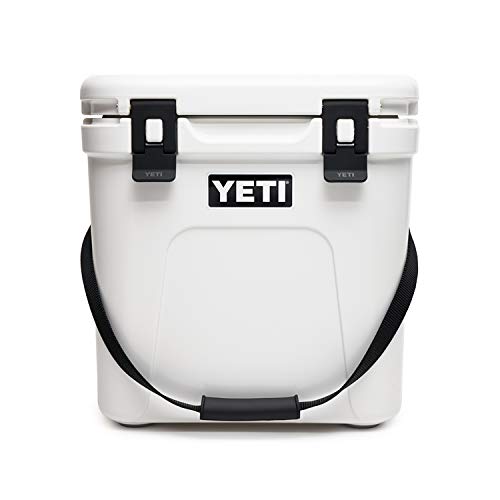
- Best for small patios overall: YETI Roadie 24 Hard Cooler — Check on Amazon
- Best powered for small patios: EcoFlow GLACIER Classic 35L Portable Fridge Freezer — Check on Amazon
- Best if you host bigger groups: RTIC 45 QT Ultra-Tough Cooler — Check on Amazon
- Best occasional big capacity: Lifetime 55 Quart High Performance Cooler (90820) — Check on Amazon
- Best serving-table double duty: Coleman Classic Series 65-Quart Wheeled Cooler — Check on Amazon
- The flagship to skip: Dometic CFX3 75DZ — reviewed in prose below, honestly, so you can see why it does not belong on most small patios
Disclosure: As an Amazon Associate, dailyhomedecorating.com earns from qualifying purchases. Links to Amazon on this page are affiliate links; they cost you nothing extra. Listing details such as price and availability change often, so check the current Amazon listing before you buy.
Let us be direct about the best outdoor cooler for small patios under $1500: a small patio is the last place that needs a $1500 cooler, and this guide will not pretend otherwise. No single cooler comes close to that price, the biggest flagships would swallow a small patio whole, and the hosts who get the most from this tier are the ones who spend a fraction of it on a compact, tall, movable cooler that doubles as furniture — then put the rest of the budget into shade, seating and light, which is where small patios are actually won. What follows is an honest ranking for tight spaces: two compact leads (one premium ice chest, one powered fridge) that fit small patios beautifully, three larger options graded frankly by whether your space and storage can absorb them, and one famous flagship reviewed in prose precisely so we can advise most readers to skip it. Every linked pick is a real, verified product sighted well under the ceiling; every size claim is an external dimension, because on a small patio the outside of the box is what you live with.
Small-patio cooling has its own physics. Floor area is the scarcest resource, so footprint beats capacity; vertical formats beat wide ones; and a cooler that cannot double as a seat, a side table or a plant stand is spending your space on a single job. Heat behaves differently too: small patios are often sun traps bounded by walls that radiate the day back at the cooler, so shade and placement matter even more than insulation class. And storage is the silent killer — a cooler that fits the party but not the closet will spend its life as an obstacle. The picks, the sizing advice and the mistakes section below are all graded on those three currencies: footprint, shade and storage.
In this guide
Quick Picks: Best Outdoor Cooler for Small Patios Under $1500
Short on time? Each row names a small-patio situation and the cooler that fits it. Prices move, so linked picks say “check price on Amazon”; the prose-only flagship is explained in its review.
| Small-patio situation | Pick | Why it stands out | Link |
|---|---|---|---|
| Best overall | YETI Roadie 24 | Tall, slim rotomolded box — bottles upright, corner-friendly, doubles as a seat — check price on Amazon | Check on Amazon |
| Best powered | EcoFlow GLACIER Classic 35L | Fridge-freezer with optional battery — no ice, no meltwater, modest footprint — check price on Amazon | Check on Amazon |
| Bigger groups | RTIC 45 QT Ultra-Tough | Real rotomolded capacity — the practical ceiling for most small patios — check price on Amazon | Check on Amazon |
| Occasional capacity | Lifetime 55 (90820) | 55 quarts at a budget price — if storage elsewhere exists — check price on Amazon | Check on Amazon |
| Serving table | Coleman Classic 65 Wheeled | Big, light, wheeled, cup holders in the lid — a station and a table in one — check price on Amazon | Check on Amazon |
| Skip for most | Dometic CFX3 75DZ | Superb dual-zone machine that is simply too large for this guide’s spaces | See review below |
How These Picks Were Chosen
The series budget rule applies unchanged: a pick earns a purchase link only if its Amazon listing has been sighted at or under $1500 in recent price records — a bar every linked pick here clears by an enormous margin, which is itself the finding of this guide. The Dometic CFX3 75DZ is covered in prose only: its list price sits near the ceiling, its current Amazon listing could not be verified tightly enough to link responsibly, and its dimensions make it the wrong advice for nearly every reader of a small-patios guide. It appears so that shoppers who meet it elsewhere get a straight, sourced assessment rather than silence.
Specifications — external dimensions first, then capacity, weight and power figures — come from manufacturer datasheets and retailer listings, cross-checked against independent coverage. Maker can counts are treated as size classes, not promises. Score and count figures are deliberately omitted because they change constantly. Safety screening checked every candidate against U.S. Consumer Product Safety Commission cooler recalls: a major rolling-cooler line from another brand is under a large CPSC recall over a handle hazard, and nothing from that brand appears in this guide. None of the six picks has a CPSC recall on record as of writing.
Ranking privileged small-patio currencies — footprint, vertical format, double-duty furniture value, one-person handling, storage size — over raw ice performance, which is why the order here differs sharply from the base guide. Readers at a tighter spend will find the same logic in the Best Outdoor Cooler For Small Patios Under $300 guide, and readers whose small outdoor space belongs to a flat should cross-check the Best Outdoor Cooler For Apartments Under $1500 guide, which grades the same boxes by storage and stairs.
Detailed Reviews
1. YETI Roadie 24 — the small-patio benchmark
Who it suits: Small-patio hosts serving two to six people who want one premium cooler that fits the space, works as furniture, and stores in a corner without negotiation.
The Roadie 24 is YETI’s tall, slim rotomolded cooler, and its format is the whole story: where ordinary coolers sprawl wide, the Roadie goes up, taking wine and two-litre bottles upright and presenting a footprint that tucks against a wall, beside a chair, or at the end of a bench. The build is full YETI — rotomolded shell, PermaFrost insulation, a freezer-style gasket and the QuickLatch one-handed opening that matters when your other hand holds a plate. Ice retention covers a long day into evening easily and a weekend with disciplined packing. Between parties it is a seat, a side table and a step, which on a small patio is not a bonus but the rent it pays for its square footage. It has been sighted on sale well under this guide’s ceiling — check price on Amazon — and it is the pick we would buy first with this budget, pocketing the large remainder for the patio itself.
Pros: The best footprint-to-usefulness ratio here; premium build; upright bottle storage; genuine furniture double-duty. Honest limitation: Capacity caps out at small-group scale — a party of ten will outdrink it by mid-afternoon — and the price per quart is premium, buying format and build rather than volume.
Choose it if your patio hosts small groups often. Skip it if your gatherings regularly exceed eight — pair a bigger box kept in storage with this one’s daily convenience instead.
YETI Roadie 24 Hard Cooler — Check on Amazon
2. EcoFlow GLACIER Classic 35L — powered cooling without the ice problem
Who it suits: Small-patio hosts whose freezer is tiny and whose patience for ice runs is gone — powered cooling in a footprint a small patio can spare.
The GLACIER Classic 35L is a 37-quart compressor fridge freezer, roughly 27.8 × 15.9 × 15.8 inches and about 45 pounds, powered by an outlet, a vehicle socket, solar input or EcoFlow’s optional 298Wh plug-in battery, rated at up to 43 hours at fridge temperature under the maker’s test conditions. On a small patio its virtues multiply: no ice to store in a small freezer, no meltwater to drain across nice decking, exact temperatures for food across a long evening, and a box that can live in its corner all season as the patio’s quiet appliance. EcoFlow publishes a fridge-mode draw of 0.57 amp-hours per hour, the unit is splash resistant (IPX4), and app control means the temperature check happens from the sofa. It freezes, too — a small patio that can produce ice cream at dessert has no need of a bigger anything.
Pros: No ice logistics; exact temperatures; modest footprint; battery freedom from the outlet; quiet, efficient compressor. Honest limitation: Single zone only, so fridge or freezer, not both at once; the battery costs extra on the battery-free listing; and it needs its vents clear, which on a crowded small patio requires a deliberate corner rather than a shove into the crowd.
Choose it if you host often and hate ice. Skip it if your patio has no reachable power and no appetite for the battery add-on — the Roadie above asks nothing of anyone.
EcoFlow GLACIER Classic 35L — Check on Amazon
3. RTIC 45 QT Ultra-Tough — the practical size ceiling
Who it suits: Small patios that host bigger groups — the largest cooler most tight spaces can justify, for hosts with a storage plan.
The Ultra-Tough 45 delivers genuine rotomolded performance — up to three inches of insulation, freezer-style gasket, heavy-duty latches — at a mid-tier price sighted far below the benchmark brand. On a small patio it is a commitment: it will occupy a real corner, serve as a bench and a serving surface, and handle a ten-person afternoon that would swamp the Roadie. The honesty requirement cuts the other way too: at roughly 29 pounds empty it is a two-hand carry loaded, and if the patio cannot spare its footprint permanently, it will live in storage and be fetched — a pattern that works only if the storage is genuinely close.
Pros: Real rotomolded ice life at a mid-tier price; doubles as bench and table; the capacity ceiling most small patios can use. Honest limitation: Footprint and loaded weight are at the edge of small-patio practicality; measure both the party spot and the storage spot before ordering.
Choose it if headcount regularly beats the Roadie’s capacity. Skip it if it would have to live in the walkway — no cooler earns that rent.
RTIC 45 QT Ultra-Tough Cooler — Check on Amazon
4. Lifetime 55 Quart High Performance (90820) — big capacity, if storage lives elsewhere
Who it suits: Small-patio hosts with a garage, shed or storage unit nearby, who need serious capacity a few times a year and refuse to pay premium prices for a box that mostly waits.
The 90820 packs 55 quarts, maker-claimed ice retention up to seven days and an IGBC bear-resistant certification into the lowest price tier in this guide. Its small-patio logic is seasonal: it does not live on the patio at all. It visits for the big weekends — carried or rolled from storage, parked as the party’s main station and occasional table, then drained and returned. Judged as a resident it fails the footprint test; judged as a visiting workhorse it is the best value in the article, and its built-in bottle opener will not go unused.
Pros: Maximum capacity per dollar; tough certified build; long ice claims. Honest limitation: Too large to live on a small patio, full stop — buy it only with a real storage home and a short carry.
Choose it if storage exists off-patio and big events are real. Skip it if it would reside on the patio; choose the Roadie and be happier every day between parties.
Lifetime 55 Quart High Performance Cooler (90820) — Check on Amazon
5. Coleman Classic Series 65-Quart Wheeled — the serving-table station
Who it suits: Small patios that host standing, drinks-centred gatherings, where one big, light station that doubles as a table beats two small boxes competing for floor.
Coleman’s Classic 65-quart wheeled cooler weighs only about 14.5 pounds empty, claims up to four days of ice at 90°F in retailer specifications, and moulds cup holders into a lid that — with a board or tray across it — becomes the patio’s serving table. On a small patio that double duty is the argument: one footprint doing two jobs, rolled out for the party and rolled back to storage after. It is the largest box in this guide and still, paradoxically, one of the most small-patio-practical, because it arrives and leaves on wheels and works as furniture while it stays.
Pros: Biggest capacity here at the lowest weight and price; wheels suit small-space shuffling; lid earns its keep as a table. Honest limitation: Thin-wall insulation trails the premium picks across long events, and 65 quarts is a large storage footprint — it needs its off-patio home as much as the Lifetime does.
Choose it if your parties stand, mingle and self-serve. Skip it if you need multi-day ice or a resident box — the RTIC and Roadie cover those briefs.
Coleman Classic Series 65-Quart Wheeled Cooler — Check on Amazon
6. Dometic CFX3 75DZ — the flagship to skip, honestly (prose only)
Who it suits: Almost nobody reading a small-patios guide — and saying so plainly is this review’s job. It suits the rare “small patio” that is actually the terrace of a large home with a covered, powered outdoor kitchen corner, where the machine can live as a fixture.
As engineering, it is the best cooler in this article: a 74-litre (about 65 usable) dual-zone compressor fridge freezer, independent temperatures per zone, a VMSO3 compressor, app control, ExoFrame toughness, and a published draw of about 1.43 amp-hours per hour at 12V with both zones chilling. As small-patio advice, the dimensions end the discussion: roughly 35 × 19 × 19 inches and about 61 pounds empty — on a genuinely small patio it is not a cooler, it is the furniture plan. It is also unlinked here because its list price sits near the ceiling and its current Amazon listing could not be verified tightly enough; readers with the rare space that fits it should buy through authorised dealers after checking the current listing.
Pros: Unmatched capability — fridge and freezer, exact temperatures, no ice. Honest limitation: Size, weight, price and power needs are all wrong for small patios; this is a skip for the overwhelming majority of this guide’s readers.
Choose it if your “small patio” has a covered powered corner begging for a fixture. Skip it if you measured your patio in single-digit feet — the EcoFlow gives you powered cooling at half the footprint, and the Roadie gives you premium ice with none.
Comparison Table
| Pick | Type | Capacity | Footprint character | Small-patio verdict |
|---|---|---|---|---|
| YETI Roadie 24 | Rotomolded ice chest | 24-class, tall | Slim, vertical | Best resident cooler |
| EcoFlow GLACIER Classic 35L | Compressor fridge freezer | 35 L (37 qt) | Compact appliance | Best powered resident |
| RTIC 45 Ultra-Tough | Rotomolded ice chest | 45 qt | Full corner | Ceiling for resident size |
| Lifetime 55 (90820) | High-performance ice chest | 55 qt | Large | Visitor from storage only |
| Coleman Classic 65 Wheeled | Wheeled ice chest | 65 qt | Large but mobile | Party-day station and table |
| Dometic CFX3 75DZ | Dual-zone fridge freezer | 74 L gross | Fixture-sized | Skip for nearly all small patios |
How to Choose a Cooler for a Small Patio
Measure the patio with the furniture in it. The cooler’s spot must survive the arrival of chairs, people and a grill. Tape the footprint on the floor and live with the tape for a day; if the taped box annoys you, the real one will too. Keep a walkway — a cooler that blocks the door or the grill path will be cursed at every party.
Buy vertical and double-duty. Tall formats store bottles upright and take wall-hugging spots wide boxes cannot. Then demand a second job: seat, side table, serving surface, plant stand in the off-season. On a small patio, single-purpose objects are a luxury tax.
Decide resident versus visitor. A resident cooler lives on the patio and must be compact — the Roadie or the EcoFlow class. A visitor arrives from storage for big days and can be as large as the Coleman or Lifetime, provided the storage and the route are real. Most small-patio regret comes from buying a visitor and forcing it to reside.
Solve shade before insulation. Small patios trap heat between walls. A cooler under a Best Patio Umbrella Under $1500 or in the building’s shadow outperforms a premium box baking in a sun trap; position is a specification. Light-coloured lids help at the margin.
Spend the rest of the budget where small patios are won. The right cooler here costs a fraction of $1500. The remainder does its best work on a defining Best Outdoor Rug Under $1500, real seating such as the chairs in the Best Adirondack Chair Under $300 guide scaled to your space, shade, and the Best Outdoor String Lights Under $300 that turn a small slab into an evening room. That is not a consolation prize; it is the correct allocation, and guests will feel it.
Common Mistakes
Importing backyard sizes. Advice written for lawns produces coolers that evict the hosts. If the box needs its own chair’s worth of floor, it is too big to reside.
Forgetting storage. The party lasts hours; storage lasts all year. Name the cooler’s January home before buying its June debut.
Blocking the flow. A cooler in the doorway, the grill path or the only shade creates friction at every gathering. Placement is a feature; test it with tape.
Ignoring the sun trap. Walls radiate, dark floors bake, and a cooler in the trap can lose half its ice advantage. Shade and position first, premium walls second.
Buying capacity for the biggest imaginable party. The twelve-person day happens twice a year; the four-person evening happens forty times. Size for the forty, and let a visitor box or borrowed capacity cover the two.
Spending the whole budget because the search said $1500. The number in the keyword is a ceiling, not a target. On a small patio, the unspent remainder — redirected to shade, seating and light — is the smartest purchase in this guide.
Layout Patterns for Small Patios
Three arrangements consistently work. The corner resident: the Roadie or EcoFlow lives in the least useful corner — the one no chair fits — with its lid serving as the drinks table, and the party arranges itself around it. The wall run: a resident cooler against the wall between seating and door, close enough to the kitchen run to refill without crossing the guests. The visitor plan: the patio keeps only its furniture day to day, and on party days the wheeled Coleman rolls in as station and table, then rolls out, returning the patio to its calm weekday self. Each pattern protects the same two things — the walkway and the seating — and treats the cooler as a supporting actor. Choose the pattern before the product and the product choice becomes almost obvious.
Small Patio, Big Evening: Scaling Up for One Night
Every small-patio host eventually faces the evening that does not fit: ten people, a birthday, a holiday. The system answer is not a bigger resident cooler; it is a temporary expansion with a plan. Borrow or fetch the visitor box — this is the entire reason the Coleman and Lifetime are in this guide — and station it outside the patio’s core if you must: a hallway, a garage doorway, a landing, with the resident cooler holding the patio’s own service. Pre-chill ruthlessly, because a small space has no slack for warm drinks cooling down in the box. Move one piece of furniture out for the night rather than letting the cooler evict the seating permanently. And plan the exit: the visitor drains and leaves the same night, while it is still cold and the party’s energy lasts, so the patio wakes up as itself. Hosts who run this pattern discover the pleasant truth that a small patio can host a big evening beautifully — it just cannot store one, and confusing those two facts is where oversized purchases come from.
Care and the Off-Season in a Tight Space
Small patios punish neglected gear faster than big yards do, because the cooler lives closer to daily life — its mildew, scuffs and smells are not out in a shed but beside the morning coffee. The routine is short and absolute: after each event, empty, wash, and dry the box fully before closing it; store it with the lid cracked so the gasket rests and air moves; wipe the exterior monthly if it resides outdoors, because patio dust and pollen work into seals and latches. A cover is worth its small cost for a resident cooler, both against weather and against the visual clutter that makes a small space feel smaller. Powered residents need their vents vacuumed occasionally and their corner kept honest — the moment the EcoFlow’s corner becomes general storage, its airflow and your access both suffer. In winter, the resident cooler earns its keep as the patio’s storage box for cushions’ smaller companions or as an indoor overflow for holiday food, provided it is clean; a premium cooler that works twelve months a year justifies its footprint in a way a party-only box never quite does. That year-round usefulness, in the end, is the real small-patio test: the right cooler is the one you are glad is there on an ordinary Tuesday, not only on the Saturday it was bought for.
Where the Rest of the Budget Goes on a Small Patio
Since the right cooler here costs a fraction of the ceiling, the remainder deserves a sentence of strategy rather than silence. Spend first on shade, because it improves every hour on the patio and quietly upgrades the cooler’s performance too. Spend second on the seat count — small patios host best when everyone can sit — and third on light, which doubles the patio’s usable hours. A rug that defines the zone and a small side surface complete the room. Ordered this way, the $1500 builds a place, with a cooler in it; ordered cooler-first, it builds a storage problem with drinks in it. The keyword’s number is generous; the patio is not; let the patio win.
Measuring a Small Patio for a Cooler: A Five-Minute Method
Before any product is chosen, spend five minutes with a tape and painter’s tape. First, mark the seating as it will actually be arranged, with chairs pulled out as if occupied — small patios shrink when people sit down. Second, mark the non-negotiables: the door swing, the grill’s working zone with its heat clearance, and the walkway between door and seating, which should stay at least wide enough to carry a tray through. Third, tape the footprint of your leading candidate in the best remaining corner and live with it through one real evening — cook, sit, move around it. The tape test fails more purchases than any review can, and it costs nothing. Fourth, measure the storage home with the same honesty, including the route: door widths, the turn at the hallway, the shelf depth. Fifth, check the sun: note where direct sun falls on the candidate’s spot at the hours you actually host, and if the spot is a sun trap at four o’clock, plan the umbrella or choose the shaded corner even if it is two steps further from the door. Five measurements, one evening of tape — after that, the choice between the Roadie class, the EcoFlow class and a visitor box usually makes itself, and it stays made.
Borrowing, Renting and the Big-Day Question
A word in defence of not owning: for the two biggest evenings of the year, capacity can be borrowed, rented or improvised more cheaply than it can be stored. Neighbours lend coolers gladly when asked before the week of the party; party-rental companies supply large ice chests by the weekend; and a clean, lined storage tote with bagged ice serves drinks honourably for one night. The small-patio system’s elegance is that it is designed for the forty ordinary evenings and merely prepared for the two extraordinary ones — the visitor pattern, the borrowed box, the pre-chilled everything. Buying a resident giant for those two nights inverts the logic and taxes the other 363 days. If, after a season of hosting, the big evenings turn out to be monthly rather than annual, that is new information: upgrade then, with evidence, and let the compact resident become the satellite it was always ready to be.
Final Recommendation
Buy the YETI Roadie 24 if you want one premium resident cooler that fits small-patio life perfectly, or the EcoFlow GLACIER Classic 35L if you host often and want powered, ice-free cooling in a compact footprint. Treat the RTIC 45 as the largest resident you should consider, keep the Lifetime 55 and Coleman 65 in the visitor class with real storage behind them, and let the Dometic flagship go — magnificent machine, wrong guide. Then spend the substantial remainder of the $1500 on shade, seating, a rug and light. On a small patio, that allocation is not settling; it is the whole art.
Footprint Versus Capacity: Reading Each Pick Honestly
On a small patio, every cooler is really two purchases: the litres it holds and the floor it takes. The honest way to compare the picks in this guide is footprint per usable litre — how much of your scarce square footage each litre of cold costs you — together with what the box weighs when it is full and where it will live in February. Read the six picks that way and the ranking explains itself.
YETI Roadie 24. This is the footprint champion of the guide, and it wins by shape rather than by smallness alone: a tall, narrow rotomolded body that stands in the dead corners of a patio — beside the door, at the end of a bench, in the angle where two walls meet — instead of squatting in the middle of the floor like a wide chest. The tall format fits wine bottles upright, which on a small patio matters disproportionately, because bottles are what balcony and patio hosts actually serve. QuickLatch opening is one-handed, a real virtue when the other hand holds a plate and there is no spare surface to set it on. Loaded, it remains a one-person carry over the short distances a small patio involves, and its cleaning story is the easiest of any ice chest here: small enough for a bath or shower tray, quick to dry, and stored cracked open in a cupboard corner. Its capacity is honestly modest — it is a drinks-and-essentials box for two to six people — but on a small patio, the cooler that fits the life you have beats the cooler that fits the party you imagine.
EcoFlow GLACIER Classic 35L. The footprint is 27.8 × 15.9 × 15.8 inches and the weight 45.1 lb, and the capacity is 35 litres that need no ice at all — which changes the footprint maths completely. In an ice chest, a third or more of the interior is ice; here, all 35 litres are food and drink, held at one exact temperature down to −4°F if freezing is asked of it. The published fridge-mode draw of 0.57 Ah/h and the optional 298Wh battery rated by the maker at up to 43 hours at fridge temperature solve the small patio’s other scarcity — the outdoor socket — by making the box placeable anywhere for an evening, and IPX4 splash resistance covers the hose and the spilled drink. The costs are placement permanence (at 45.1 lb empty, you position it before you fill it) and the February question: it stores indoors like a small appliance, which on a patio-only storage plan is a genuine commitment. For hosts who entertain often, the absence of ice runs, meltwater and drainage on a small slab is worth that commitment; the guide’s detailed review explains why it is the powered pick here.
RTIC 45 QT Ultra-Tough. Forty-five quarts, roughly 29 lb, up to 3 inches of insulation, a 48-can maker rating: this is the practical ceiling of patio-resident size, and the guide calls it that deliberately. Thick walls mean the exterior is generous relative to the interior, so measure both — the inside against your trays and bottles, the outside against the corner you intend. One person can carry it loaded the length of a patio; nobody should carry it loaded up stairs for fun. It earns resident status only if it has a defined home — a corner that is also its serving position — because a 45-quart box that must be moved for every use, in a space with nowhere to move it to, becomes furniture you resent. Cleaned in a bath or on the patio itself with a bucket, dried in the sun it will sit in, it is the set-and-stay ice chest of this line-up.
Lifetime 55 Quart High Performance (90820). The maker rates up to 7 days of ice and the build is IGBC bear-resistant certified, and none of that changes the small-patio verdict: at 55 quarts this box does not live on a small patio, it visits one. That is a legitimate pattern — stored in a garage, locker or indoor cupboard, deployed for the big evening, returned afterwards — and for hosts whose small patio hosts occasional large parties, visiting capacity beats resident inadequacy. Just buy it with open eyes: the rent it charges is storage space elsewhere, and the carry in and out is a two-stage job (empty box first, load in place, empty before it leaves). Hosts without that elsewhere should let this pick go and put its share of the budget into the patio itself, as the budget section of this guide argues.
Coleman Classic Series 65-Quart Wheeled (316 Series). The paradox pick: the largest capacity here, at roughly 14.5 lb empty — by far the lightest — on wheels, with lid cup holders that make its top a serving table. On a small patio its role is theatrical and temporary: rolled in as the drinks station and side table for the evening, rolled out to storage when the party ends. Retailer specifications credit up to 4 days of ice at 90°F, more than any single evening asks. The catch is the same as the Lifetime’s, squared: 65 quarts must live somewhere, and on a patio-only plan that somewhere does not exist. Where a storage locker, hallway cupboard or parking cage exists, this is the highest-capacity evening a small patio can host; where it does not, it is a wonderful cooler for somebody else’s floor plan.
Dometic CFX3 75DZ (prose only). Included for honesty about the ceiling of the market and skipped for nearly every small patio, for reasons of pure geometry: 892 × 495 × 472 mm and 27.8 kg, holding 65 litres usable across two zones, is an appliance that would dominate a small patio’s floor, its storage and its sightlines simultaneously. Its published draws — about 1.43 Ah/h at 12V with both zones at 4°C in 32°C ambient, rising to about 3.04 Ah/h with a freezer zone at −15°C — describe a machine built for expeditions and outdoor kitchens. A small patio is neither, and a guide that pretended otherwise would be selling, not advising.
Heat, Shade and the Small-Patio Microclimate
Small patios are heat traps by construction. Walls radiate the afternoon back, slabs store it, and the corner that feels pleasant at seven can be the warmest square metre of the property at four. Cooler placement on a small patio is therefore a microclimate decision before it is a furniture decision. The building’s own shadow is the first asset: a cooler parked where the wall shades it from mid-afternoon will outlast a premium box in full sun, whatever the insulation gap between them. The second asset is elevation and air: a box sitting directly on a sun-baked slab conducts heat through its base all evening, while the same box on a mat, a low stand or even a folded outdoor rug gains a still-air gap that slows the transfer. Our guide to the Best Outdoor Rug Under $1500 is relevant here for more than looks — the rug layer is insulation you walk on.
The third asset is the parasol, and it should be aimed at the cooler as deliberately as at the guests. Shade that covers the seating but leaves the cooler at the sunny edge is a common small-patio error, because the cooler is the one guest who never moves into the shade on its own. Where a Best Patio Umbrella Under $1500 cannot cover both, prioritise the cooler in the early evening — guests can chase the shade; the ice cannot — and let the gathering migrate as the sun drops. Light-coloured lids help at the margin, and a pale throw or cover over a dark lid during the worst hour is an unfashionable trick that works.
Powered coolers read the microclimate through their vents. A compressor box wedged into the hottest corner, vents against a sun-warmed wall, will work harder, draw more and cycle louder than the same box given a hand’s width of moving air — the published 0.57 Ah/h fridge-mode figure for the EcoFlow pick assumes it can breathe. On a small patio, “where does it breathe?” belongs on the placement checklist beside “where does it fit?”, and the honest answer sometimes rearranges the whole layout for the better.
One Cooler, Three Jobs: Drinks, Food and the Occasional Extra Seat
Small patios reward objects that multitask, and a cooler is three objects in rotation. As a drinks station it wants to be reachable without crossing the cook, openable one-handed, and tall enough — like the Roadie 24 — to take bottles standing rather than lying in meltwater. As a food box it wants the opposite temperament: shut, shaded, opened rarely, with food sealed and zoned away from the drinks traffic, which is why hosts with one box should zone internally — drinks on top in the traffic layer, food below in sealed containers, raw meat lowest and double-contained — and accept the compromise knowingly rather than discovering it at dessert.
The third job is furniture. A flat-lidded cooler is a side table by day and, for the sturdier rotomolded boxes, an extra seat at the moment a small patio runs out of chairs — a role the guide mentions because every small-patio host discovers it, with the caution that lids used as tables collect the rings and spills that gaskets then have to seal against, so wipe the rim before the lid closes for storage. Even the serving-table trick has a cooler-specific version: the Coleman pick’s moulded lid cup holders exist precisely because its designers knew its top would become a table. Embrace the multitasking, but assign the jobs in order — cold first, surfaces second — and the box will do all three without failing at the first.
FAQ
What is the best cooler size for a small patio?
For a resident cooler, 24–37 quarts in a tall or compact format serves most small patios: enough for a small group’s evening, small enough to double as furniture. Larger boxes belong in the visitor class, stored off-patio and fetched for big days.
Is a powered cooler practical on a small patio?
Yes — often more practical than at a big property, because it removes ice storage and meltwater from a tight space. It needs an outlet within reach or the battery add-on, plus a corner where its vents stay clear.
How do I store a cooler when the patio is my only outdoor space?
Resident compact coolers store in their corner under a cover, clean, dry and cracked open. Anything larger needs an indoor closet, a storage unit or a garage — if none exists, that is the answer: buy the compact class.
Why not buy the biggest cooler the budget allows?
Because on a small patio the cost is not money, it is floor area, flow and storage — paid every day, for capacity used twice a year. The budget’s best use is one right-sized cooler plus the shade, seating and light that make the space work.
Can a cooler double as patio furniture?
Rotomolded lids are built to be sat on and make sturdy side tables and serving surfaces. Powered coolers should not be sat on and need their vents clear, but their lids still serve as a light-duty surface for a tray. Double duty is a genuine buying criterion at this scale.
How do I keep a cooler cold in a sunny small patio?
Shade it — building shadow, umbrella, or a light cover — pre-chill everything, fill gaps with frozen bottles, and open the drinks supply rather than the food. In a sun trap, placement routinely matters more than the difference between good coolers.
Is a wheeled cooler a good idea on a small patio?
Yes, in the visitor role: wheels let one person bring a large station in and out without a carry, which protects both the host and the patio’s tight corners. As a resident, a wheeled box’s size usually costs more space than its mobility saves — residents should be compact and put.
What if my patio is really just a balcony?
Then the apartment rules apply even more strongly: the Roadie 24 or the EcoFlow, measured storage, drainage into a container rather than over the rail, and a check of your building’s balcony rules before anything is bought. The apartments variant of this guide covers that ground in full.
Can I keep the cooler on the patio permanently if I buy a cover?
A rotomolded ice chest under a cover, in shade, stored clean and dry with the lid cracked, tolerates permanent patio life well — that hardiness is part of its price. A powered cooler under a cover still wants its vents breathing and its feet out of standing water, and it will age more gracefully stored under a roof; treat “permanent outside” as an ice-chest privilege and a powered-cooler compromise.
What if guests are coming and my one cooler is too small?
Overflow gracefully instead of buying big. Chill everything in the house fridge first, run the cooler as the drinks station, and stage a simple tub or sink of ice indoors for the least temperature-sensitive bottles. Capacity borrowed from the fridge for one evening is free; capacity bought for one evening charges storage rent all year.


