Where to buy
Check the latest price, availability and delivery on Amazon. Orders are placed on Amazon. We may earn a commission from qualifying purchases.
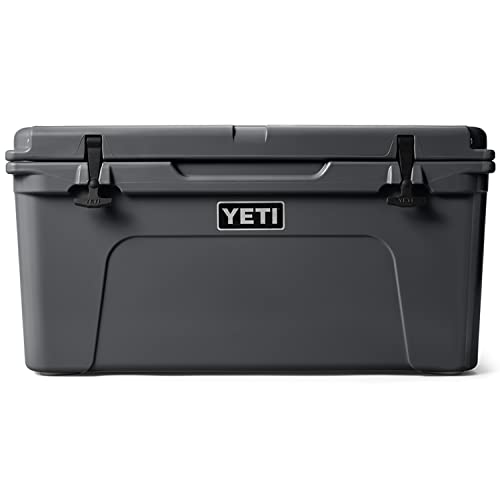
- Best overall: YETI Tundra 65 Hard Cooler (Charcoal) — Check on Amazon
- Best for the longest ice retention claim: Engel 65 High Performance Hard Cooler (ENG65) — Check on Amazon
- Best wheeled rotomolded: YETI Tundra Haul Portable Wheeled Cooler (Navy) — Check on Amazon
- Best for parties and dry food storage: Ninja FrostVault 65QT Cooler with Wheels and Dry Zone Drawer (FB265GY) — Check on Amazon
- Best electric cooler, no ice needed: BougeRV CRPRO 30QT 12V Portable Refrigerator — Check on Amazon
One more option we rate, sold above this budget: the Dometic CFX3 45 compressor fridge-freezer is reviewed in full below as a prose-only pick — its street price currently sits above the $700 ceiling of this guide, so it carries no purchase link here.
Read the full guide ↓
Disclosure: As an Amazon Associate, dailyhomedecorating.com earns from qualifying purchases. Links to Amazon on this page are affiliate links; they cost you nothing extra. Listing details such as price and availability change often, so check the current Amazon listing before you buy.
Seven hundred dollars is flagship money in the cooler world, and it changes the question completely. At lower budgets you ask which compromises you can live with. When you shop for the best outdoor cooler under $700, you are instead choosing between the strongest versions of three different ideas: a rotomolded ice chest built like a piece of expedition equipment, a wheeled cooler engineered to move a full load without a second pair of hands, and a compressor fridge that deletes ice from the equation entirely. Every cooler in this guide is a product we could verify — real model, real specifications from the manufacturer, and a real Amazon listing whose price we have seen at or below this budget. Nothing here is padded out with lookalike boxes or invented model numbers.
Start with what $700 actually buys in insulation. The top rotomolded coolers in this roundup carry two to three inches of foam insulation on every side, freezer-style lid gaskets, and latches that pull the lid down into compression. That is the hardware behind multi-day ice retention: a long weekend is easy for all of them, and the best of them talk in terms of a week or more under good conditions. It also buys build details that cheaper coolers skip — rotomolded one-piece shells with no seams to split, hinges that are molded in or pinned with metal, tie-down slots that let you strap the cooler down without blocking the lid, and drain systems that do not leak in the back of a car. And at this tier, wheels stop being a wobbly afterthought: two of our picks roll on solid, puncture-proof wheels with handles designed to pull a genuinely heavy load.
The electric option deserves a serious look at this budget, because $700 is where compressor fridges stop being toys. A good 12V fridge holds a set temperature indefinitely while it has power — no ice runs, no meltwater soaking the sandwiches, no guessing whether the chicken is still cold on day three. For a patio with an outdoor outlet, or a vehicle that lives near where you entertain, that is arguably a better use of flagship money than another inch of foam. Our short answer: buy the YETI Tundra 65 if you want one cooler that does everything well for a decade. Buy the Engel 65 if your trips are long and ice stops are not an option. Buy the BougeRV if your “outdoor” is mostly a patio, a boat dock or the back of an SUV and you are done buying ice. The full reasoning, including the premium fridge we deliberately left unlinked because it breaks this budget, is below.
In this guide
Quick Picks
In a hurry? This table matches each cooler to the job it does best at this budget.
| Buyer type | Pick | Why it stands out | Link |
|---|---|---|---|
| Best overall | YETI Tundra 65 | The benchmark rotomolded cooler: thick insulation, bombproof build, huge accessory ecosystem | Check on Amazon |
| Longest ice retention claim | Engel 65 (ENG65) | Two inches of insulation on all sides and a manufacturer rating of up to 10 days | Check on Amazon |
| Best wheeled | YETI Tundra Haul | Rotomolded toughness on solid NeverFlat wheels with a proper pulling handle | Check on Amazon |
| Best for parties | Ninja FrostVault 65QT | Wheeled 65-quart box with a separate fridge-temperature dry storage drawer | Check on Amazon |
| Best electric | BougeRV CRPRO 30QT | Compressor fridge-freezer that runs on 12V or mains power and never needs ice | Check on Amazon |
| Premium splurge (over budget) | Dometic CFX3 45 | The overlanding benchmark fridge — superb, but it currently sells above $700, so no link | Prose-only pick |
How we chose the best outdoor cooler under $700
A $700 ceiling is high enough to include almost every serious consumer cooler on sale, which means the choosing matters more, not less. We applied four filters. First, verification: every pick is a real, current model whose specifications we could confirm from the manufacturer or the Amazon listing itself, and whose Amazon price we have actually seen at or below $700. Two excellent products failed that second test on price — they are covered honestly as prose-only picks rather than linked as if they fit the budget. Second, recall status: we checked the CPSC recall database for cooler recalls, and any model under an active recall was excluded outright, along with the product line it belongs to. Third, category honesty: a cooler had to earn its place as an outdoor cooler — patio, backyard, campsite, boat, tailgate — not as a novelty gadget. Fourth, diversity of approach: at this budget, a list of six near-identical rotomolded boxes would waste your money, so the final six span fixed rotomolded, wheeled rotomolded, a wheeled party cooler with dry storage, and compressor electrics.
Within those filters we weighed insulation and real ice-retention design (wall thickness, gasket quality, latch compression), capacity honesty — note that one pick, the Engel, is named “65” but rated at 58 quarts, and we say so wherever it matters — carry and wheel design, drain and cleaning practicality, and the small things that decide whether a cooler is still pleasant in year five: replaceable latches, available spare parts, and a warranty from a company that answers. Manufacturer ice-retention figures are quoted as claims, not test results, because every brand measures differently; what we can compare fairly is the hardware that produces retention, and that is what the reviews below concentrate on.
The six best outdoor coolers under $700, reviewed
1. YETI Tundra 65 — best overall
Who it suits: Anyone who wants to buy one serious cooler and stop thinking about coolers. Campers, anglers, boat owners, tailgaters and backyard hosts who need a 65-quart-class box that keeps ice across a long weekend and shrugs off being stood on, sat on and strapped to a truck bed.
The Tundra 65 is the cooler the modern rotomolded category is measured against. Its one-piece rotomolded shell carries up to three inches of pressure-injected insulation in the walls, a freezer-style gasket that seals the lid all the way around, and rubber T-latches that pull the lid down tight and stay shut when the cooler is dragged, dropped or used as a casting platform. With padlocks fitted through the lid corners it is certified bear-resistant, which tells you something about the structural intent even if bears are not your problem. Inside, a dry goods basket keeps food out of the meltwater, the drain plug is tethered and hose-compatible, and the non-slip feet genuinely do not slide around a boat deck or truck bed. It is heavy — just under thirty pounds before you add a single cube of ice — and that weight is the honest price of the insulation and shell thickness that make it work.
- Pros: Benchmark ice retention for its size; exceptionally tough one-piece shell; huge ecosystem of baskets, dividers, cushions and tie-downs; parts and support from an established brand.
- Honest limitation: No wheels, and a loaded Tundra 65 is a two-person carry. If your cooler travels more than a few yards from the car, the wheeled picks below exist precisely because of this.
Choose it if you want the default flagship recommendation and your cooler mostly moves between a vehicle, a campsite and a patio. Skip it if you routinely haul drinks any distance on foot, or if you want dry food storage separated from ice — look at the Tundra Haul or the Ninja instead.
2. Engel 65 (ENG65) — longest ice retention claim
Who it suits: Hunters, anglers and off-grid campers whose trips run five days or longer, and anyone whose cooler lives in serious heat. Engel built its name in marine and expedition refrigeration, and the ENG65 is its old-school ice chest expression of that heritage.
The specification that matters here is insulation geometry: the Engel carries two inches of high-density polyurethane insulation on all sides — walls, lid and floor — where many rivals thin out the lid and base. Engel rates the cooler for up to ten days of ice retention, the longest manufacturer claim in this roundup, and pairs it with a silicone airtight gasket and recessed compression latches that sit flush so they do not snag on boat rails or tear car upholstery. It is certified bear-resistant, compatible with dry ice, and covered by a ten-year warranty, which is the strongest warranty signal in this guide. One naming warning that matters for capacity planning: despite the “65” in the name, the ENG65 is a 58-quart cooler, holding roughly seventy cans. Judge it as a big 58, not a true 65, and it is also one of the lighter rotomolded boxes here at about twenty-six pounds empty.
- Pros: Longest manufacturer ice-retention claim in the group; insulation in the lid and floor, not just the walls; ten-year warranty; relatively light for a rotomolded cooler.
- Honest limitation: The name overstates the capacity — 58 quarts, not 65 — and the utilitarian styling and flush latches feel workmanlike next to the YETI’s polish. No wheels.
Choose it if your priority is maximum days between ice stops and you value the warranty. Skip it if you genuinely need every one of 65 quarts, or if you want wheels and a party-friendly layout.
3. YETI Tundra Haul — best wheeled rotomolded
Who it suits: Anyone whose cooler has to travel: across a park to a picnic shelter, down a dock, from a parking lot to a tailgate, or from the garage to the far end of a backyard. If you entertain away from the house, this is the flagship to look at first.
The Tundra Haul takes the Tundra formula — rotomolded shell, thick insulation, freezer gasket, T-latches — and mounts it on solid, puncture-proof NeverFlat wheels with a welded aluminum StrongArm handle shaped to keep the load’s weight over the axle and off your wrist. It is in roughly the 45-quart class for capacity, which is the deliberate trade: you give up some volume versus the Tundra 65 and gain a cooler one person can move fully loaded over grass, gravel and pavement without a second pair of hands or a bad back the next day. The handle folds and locks for storage, the wheels are wide enough not to plough through soft ground as badly as the skinny wheels on cheap rolling coolers, and the whole thing keeps the Tundra’s sit-on-it, stand-on-it toughness. For outdoor entertaining at any distance from a vehicle, that mobility is worth more than the lost quarts.
- Pros: True rotomolded build that actually rolls well; solid wheels cannot puncture; handle ergonomics are the best in this guide; same gasket-and-latch cold performance as the fixed Tundras.
- Honest limitation: Smaller inside than its footprint suggests — the wheel and handle hardware costs capacity, and it costs flagship money for a mid-size box.
Choose it if your cooler regularly travels more than a few steps from where it is loaded. Skip it if it will live in one spot on a patio — the Tundra 65 gives you more cold storage for similar money.
4. Ninja FrostVault 65QT — best for parties, with dry storage
Who it suits: Hosts. If your outdoor life is backyard parties, pool days, sports tournaments and big family gatherings where the cooler is a serving station as much as a storage box, the FrostVault’s layout solves a problem the rotomolded boxes ignore: where the food goes.
Every ice chest has the same flaw — anything you put in it swims. The FrostVault 65QT answers with a separate Dry Zone drawer beneath the main compartment that draws cold from the ice above and holds food at fridge-like temperatures while keeping it dry: cheese, sandwich trays, salads and desserts stay cold without getting soggy, and guests can raid the drawer without digging through the drinks. The main 65-quart compartment above is a conventional, well-insulated ice chest with premium foam insulation, the whole unit rides on all-terrain wheels with a proper handle, and the lid and body feel a clear class above big-box-store coolers. Ice retention is multi-day rather than expedition-grade — this is a party cooler first — but for the two-to-three-day rhythm of real entertaining it is entirely sufficient, and the drawer changes how you actually use it.
- Pros: The dry storage drawer is a genuine functional advantage for food; wheeled and easy to position; big, guest-friendly capacity; strong build for a non-rotomolded design.
- Honest limitation: It is not rotomolded, so it will not match the Tundra or Engel for a week in the backcountry, and the drawer mechanism is one more thing to keep clean.
Choose it if your cooler serves crowds and carries as much food as drink. Skip it if your trips are long, rough and far from resupply — that is Engel and YETI territory.
5. BougeRV CRPRO 30QT — best electric, no ice at all
Who it suits: Patio owners with an outdoor outlet, road-trippers, boaters and anyone who has quietly hated buying ice for years. If your outdoor cooling happens within reach of power — a wall socket, a vehicle, or a portable power station — a compressor fridge is the smartest money in this guide.
The CRPRO is a true compressor refrigerator-freezer, not a thermoelectric box: it cools to well below freezing (its range runs from −8°F to 50°F), holds the temperature you set on the digital display, and runs from 12/24V vehicle power or mains electricity with the included adapters. Thirty quarts is smaller than the big ice chests here, but every quart is usable — there is no ice taking up a third of the box — so in practice it carries food and drink for a weekend for two, or a full day of drinks for a patio gathering, and it doubles as overflow fridge space at home the rest of the year. It runs quietly at roughly room-conversation level or below, sips power in ECO mode, and its three-stage battery protection stops it draining a vehicle battery flat. The honest trade is dependence: no power, no cooling, and on a patio that means planning where it lives and how the cable runs.
- Pros: No ice, ever; precise set-and-forget temperature, fridge or freezer; all of its 30 quarts are usable space; quiet and efficient enough for vehicle and power-station use.
- Honest limitation: Needs a power source, so it is not a cooler for truly off-grid spots without a battery plan, and 30 quarts will not cater a big party alone.
Choose it if your outdoor life happens near power and you are done with meltwater. Skip it if your trips go off-grid for days — take the Engel — or if you need maximum party capacity.
6. Dometic CFX3 45 — the premium benchmark (prose-only, over this budget)
Who it suits: Buyers who came to this guide ready to spend the whole $700 on the best electric cooler made, and are willing to stretch. We include the CFX3 45 because any honest flagship roundup has to acknowledge it — and we leave it unlinked because, at the time of writing, it sells above this guide’s $700 ceiling. Pretending otherwise would break the budget promise in the title.
Dometic’s CFX3 line is the reference point for portable refrigeration: a 45-liter fridge-freezer that cools to −7°F, built on a rugged exoframe designed for vehicle life, with an efficient variable-speed compressor, a clear display, app control over Wi-Fi and Bluetooth, and a five-year limited warranty that no budget brand matches. Overlanders run these for years in the back of trucks in desert heat. If your use is vehicle-based camping, a boat, or a patio where it will live semi-permanently on mains power, it is the electric cooler to beat, and the smaller CFX3 models occasionally dip closer to this budget. But “occasionally dips” is not “under $700”, so our linked electric recommendation stays the BougeRV, which delivers most of the everyday benefit for a fraction of the flagship money.
- Pros: Best-in-class build, efficiency and warranty among portable fridges; true freezer capability; app control; designed for years of vehicle use.
- Honest limitation: It currently costs more than this guide’s entire budget ceiling — that is the whole reason it has no link here.
Choose it if you find it on a genuine promotion within reach and electric cooling is your priority. Skip it if $700 is a hard ceiling — the BougeRV covers the same patio and road-trip jobs for far less.
Prose-only pick: no purchase link, because we could not verify a price at or under $700 for this model.
Comparison table
| Cooler | Type | Capacity | Wheels | Standout feature | Best for |
|---|---|---|---|---|---|
| YETI Tundra 65 | Rotomolded ice chest | 65 qt class | No | Up to 3 in insulation, bear-resistant shell | One flagship for everything |
| Engel 65 (ENG65) | Rotomolded ice chest | 58 qt (named 65) | No | Up to 10-day manufacturer ice claim, 10-year warranty | Long off-grid trips |
| YETI Tundra Haul | Rotomolded, wheeled | ~45 qt class | Yes, solid | Rotomolded build that one person can move loaded | Tailgates, docks, parks |
| Ninja FrostVault 65QT | Insulated wheeled chest | 65 qt | Yes | Fridge-temperature dry storage drawer | Parties and food service |
| BougeRV CRPRO 30QT | Compressor fridge-freezer | 30 qt, all usable | No | −8°F to 50°F set temperature, 12V and mains | Patios and road trips near power |
| Dometic CFX3 45 | Compressor fridge-freezer | 45 L | No | Benchmark build and 5-year warranty | Splurge pick — currently over $700 |
How to choose an outdoor cooler when the budget is $700
Decide ice versus electric first. This is the fork in the road at flagship money. Ice chests work anywhere, ask for nothing, and at this tier keep ice for many days — but they need ice, they produce meltwater, and their temperature is “cold” rather than a number. Compressor fridges hold an exact temperature forever near power and use every inch of their capacity, but they are appliances: they need a socket, a vehicle or a battery budget. Patios, boats with shore power and road-trip vehicles point electric. Off-grid campsites, beaches and hunting trips point rotomolded. Many households honestly need one of each eventually; if you are buying one now, buy for where the cooler will spend most of its hours.
Size by cans and days, not by the biggest number. A 65-quart-class chest carries a long weekend for a family or a serious party’s worth of drinks, but it is a large, heavy object to store and to move. Count what you actually chill: drinks for twelve at a party, food for four for three days, a day’s catch. Then check the manufacturer’s true capacity rather than the model name — as the Engel shows, a “65” can be a 58 — and remember that in an ice chest, a third of the volume is ice. In an electric, none of it is.
Wheels are a feature you feel every single use. A loaded 65-quart cooler can weigh as much as a person. If there is any distance, slope, gravel or grass between storage and serving, wheels stop being a luxury. Judge them properly: solid or pneumatic tires over skinny hard plastic, a handle that lets the load ride over the axle, and hardware that does not eat the whole interior. If the cooler will live beside the grill and never move, skip wheels and take the extra capacity instead.
Read retention claims as marketing, hardware as fact. Every brand’s “days of ice” is measured in its own test. What transfers across brands is physics: insulation thickness on all six sides, a gasket that seals, latches that compress, a lid that does not flex, and light colors in the sun. Pre-chilling the cooler, using a two-to-one ice-to-contents ratio and keeping the lid shut matter more than the difference between two good brands.
Spend the leftover budget on the system, not a bigger box. Almost nobody needs to spend all $700 on the cooler itself. The money left over after a mid-priced pick buys the things that make the cooler better every day: a second basket or divider, a cushion lid for seating, tie-downs for the truck, a quality ice pack set, or — for an electric — a small power station that untethers it. Our other tier guides can help you plan that spend: readers comparing budgets often start with the Best Outdoor Cooler Under $300 roundup and the Best Outdoor Cooler Under $500 shortlist before committing flagship money.
What the flagship tier actually adds
It is reasonable to ask what separates the coolers in this guide from the perfectly decent ones in our lower-tier roundups, because it is not a single dramatic feature. It is an accumulation. Walls get thicker and, just as importantly, lids and floors stop being the thin spots. Gaskets become continuous freezer-style seals instead of a foam strip that gives up at the corners. Latches stop being brittle plastic catches and become rubber or metal mechanisms that actively compress the lid — and that you can buy replacements for. Hinges are molded into the body or pinned in metal rather than screwed into thin plastic. Drains get tethered plugs, hose threads and seals that survive being kicked. Wheels, where fitted, become load-bearing components with real bearings and solid tires instead of the casters off a suitcase.
None of that shows up in a showroom, and all of it shows up in year four. The mid-tier cooler that delighted you in its first summer is, by its fourth, often a box with a warped lid, a perished seal and a broken latch that cannot be replaced — a box that still looks like a cooler but performs like a bucket. The flagship picks here are engineered specifically against that arc: every wear part is either overbuilt or replaceable, and the warranties — up to ten years on one pick — are written by companies that expect the product to still be in service. That, more than any single day of extra ice retention, is what $700 buys.
There is also a quieter flagship benefit: honesty of capacity and specification. At this tier, manufacturers publish real internal volumes, real insulation construction and real temperature ranges for electrics, because their buyers check. We verified every specification quoted in this guide against the manufacturer’s own material or the Amazon listing, and where a name and a number disagreed — the Engel’s “65” that is really 58 quarts — we used the number. If you shop beyond this guide, apply the same rule and you will rarely be misled.
Ice chest or electric? The $700 decision in detail
Because this budget admits both technologies at their best, it is worth slowing down on the choice, because the two kinds of cooler fail in opposite ways. An ice chest fails gradually and predictably: the ice melts a little faster on a hot, frequently opened day, and the remedy is a bag of ice. An electric cooler does not fail gradually at all — it holds its set temperature perfectly until the moment it has no power, and then it is a very expensive insulated box. Everything about choosing between them follows from where your cooling happens and what “no power” would mean there.
Consider the patio first, since it is the home base for most readers of this site. A compressor fridge parked under cover near an outdoor outlet is, in daily life, indistinguishable from a small outdoor refrigerator: drinks are always at drinking temperature, leftovers go straight in after a barbecue, and there is no Sunday-night ritual of draining meltwater and propping the lid open to dry. The BougeRV in this guide does that job for a fraction of the budget, which is why the honest advice for a patio-first buyer is often “buy the electric, and spend the change on the rest of the setup.” The catch is placement discipline: compressor vents need a few inches of air, the unit should live out of direct rain and midday sun, and the cable run needs to be planned so it is not a trip line across the deck.
Now consider the cooler that travels. In a vehicle, an electric fridge is superb while the engine or a healthy battery budget supports it — road trips, overlanding with a dual-battery setup, boats with house batteries. But the moment the itinerary includes a beach blanket, a picnic meadow, a rental cabin with the cooler on the porch, or a power cut, the ice chest’s independence wins. Rotomolded boxes also tolerate a life electrics cannot: being dropped off a tailgate, lashed to a roof rack, hosed out with fish slime, left in a hot garage for a month. There is no compressor to protect and no vent to keep clear.
The hybrid answer many flagship buyers land on is sequencing: the rotomolded chest first, because it works everywhere including everywhere the electric cannot, then an electric later as the patio-and-vehicle specialist. If you are sequencing the other way — electric first because ninety percent of your cooling is at home — that is equally rational, and the Best Outdoor Cooler Under $500 guide shows how far the same logic stretches at a lower ceiling. What we would not do with $700 is split it down the middle on two mediocre products; one excellent cooler beats two compromised ones at every tier we have ever tested or researched.
Getting the most from a flagship cooler
Pre-chill before it matters. A rotomolded cooler starts life at room temperature, and its thick walls will absorb a meaningful share of your first load of ice just cooling themselves down. A sacrificial bag of ice, or a night in a cool garage with the lid closed and a couple of frozen bottles inside, the evening before a trip is the single cheapest ice-retention upgrade there is. Electrics have the mirror-image habit: run them on mains power for a few hours before loading them into a vehicle, so the compressor is maintaining temperature rather than fighting down from warm.
Respect the ice ratio and the air gaps. The two-to-one ice-to-contents ratio that manufacturers assume is not a suggestion for long trips; air is the enemy, because every opening exchanges cold air for warm. Fill voids with extra ice, ice packs or even a towel, keep drinks you will want first on top so the lid is open for seconds rather than minutes, and drain meltwater only when it starts bathing food — the cold water itself insulates better than the air that would replace it. In an electric, the same logic applies in reverse: a full fridge cycles less than an empty one, so a few frozen water bottles stabilize temperature on short unplugged moves.
Load in the shade, serve in the shade. A dark cooler in direct sun on a 95-degree patio is fighting physics that no wall thickness fully beats. Light colors help, shade helps more, and a simple habit — parking the cooler where it will be shaded at 3 p.m., not where it is shaded at 9 a.m. — routinely adds a day to an ice load. For electrics, shade is battery life: every degree of ambient heat the compressor does not have to fight is power saved for the night.
Maintain the boring parts. Gaskets want to be clean and dry in storage, with the lid cracked so they do not take a set or grow mildew. Latches and hinges on the premium picks are replaceable by design — that is part of what the money buys — so a cooler that gets harder to close in year three usually needs a gasket or latch, not a replacement. Electric fridges want their vents vacuumed occasionally and their interiors wiped dry before storage. Ten minutes twice a year is the entire maintenance budget of a flagship cooler, and it is why the good ones genuinely last a decade.
Common mistakes at this budget
Buying capacity you cannot move. The most common flagship regret is a giant cooler that is perfect twice a year and a burden the other fifty weekends. If you cannot lift it loaded, or it does not fit your vehicle or storage corner, it is the wrong cooler regardless of its ice retention.
Trusting the model name instead of the rated capacity. Names are marketing. At least one cooler in this guide is named for a size it is not. Always plan food and drink around the manufacturer’s stated quarts or liters.
Paying flagship money for a shape, not a use case. A rotomolded expedition chest is a poor patio drink station if guests fight a heavy gasketed lid all afternoon, and a party cooler with a serving drawer is a poor week-long hunting cooler. Match the design to the dominant use, not the toughest imaginable use.
Ignoring the power plan for an electric cooler. A compressor fridge on a patio needs a reachable, weather-appropriate outlet and a cable route nobody trips over; in a vehicle it needs a battery-protection setting you actually configure. Five minutes of planning prevents the only real downside electrics have.
Skipping the recall check. Coolers are recalled like any other product — a major rolling-cooler recall in 2025 covered more than a million units over a handle hazard. Before buying any cooler, new or secondhand, it takes one minute to check the model against the CPSC database. Every pick in this guide passed that check; anything that had not would have been removed, and one popular product family was excluded from this roundup for exactly that reason.
Final recommendation
One last framing before the verdict: at this tier you are not really buying ice retention by the day, you are buying a decade of not thinking about coolers — no broken latches, no warped lids, no mid-trip ice emergencies — and every pick below was chosen to deliver exactly that.
For most buyers with $700 to spend, the YETI Tundra 65 is the cooler we would buy once and keep: it does everything well, its build quality justifies flagship money, and its accessory and parts support means it will still be serviceable in a decade. If your trips run long and remote, the Engel 65’s insulation and warranty make it the specialist’s choice. If your cooler travels, the Tundra Haul; if it entertains, the FrostVault 65QT; if it lives near a socket, the BougeRV CRPRO delivers the no-ice life for far less than the full budget. And if you came here determined to own the Dometic CFX3 45, we understand — just know it currently sits above this ceiling, and either wait for a promotion or shop it with open eyes. Readers whose real budget is smaller will find the same pick logic applied at lower prices in our Best Outdoor Cooler Under $150 guide, while hosts planning around a yard should also see the Best Outdoor Cooler For Backyards Under $700 edition of this roundup and the Best Outdoor Cooler For Outdoor Entertaining Under $700 party-focused version.
FAQ
Is a $700 cooler really better than a $300 one? In ice retention, modestly; in durability, wheels, gaskets, hardware and warranty, substantially. You are paying for a cooler that survives a decade of being stood on, strapped down and left in the sun, and for details — drains that seal, latches you can replace, feet that grip — that cheaper boxes get wrong. If your cooler lives a gentle patio life, a mid-budget pick plus accessories is often the smarter spend, which is why this guide includes strong options well under the ceiling.
How long will these coolers actually keep ice? Under real conditions — pre-chilled cooler, good ice ratio, lid opened a few times an hour — expect several days from the rotomolded picks, with the Engel’s design and ten-day manufacturer claim putting it at the long end. Party use with constant opening shortens any ice chest’s run; electric coolers simply hold their set temperature as long as they have power.
Rotomolded or electric for a patio? If the patio has a convenient outlet, electric is hard to beat: no ice runs, exact temperatures, and it doubles as a spare fridge. If the cooler must move around the yard, serve far from the house, or work during power cuts, a wheeled rotomolded or the FrostVault is the better tool.
What size cooler do I need for a party of twenty? Plan roughly a quart of capacity per guest for drinks on ice in a chest, more in serious heat — so a 65-quart-class cooler is the right anchor, ideally with the dry drawer or a second smaller box for food. The FrostVault 65QT was designed for exactly this brief.
Are wheeled coolers safe to buy after the big rolling cooler recall? The 2025 recall concerned specific models from one brand with a particular tow-handle design; it does not indict wheeled coolers generally. Check any model you buy against the CPSC list — we did for every pick here — and prefer designs, like the Tundra Haul and Roadie-style handles, without a pinching tow-handle mechanism.
Should I buy one flagship cooler or a big one plus a small one? If your outdoor life has two distinct shapes — say, family camping weekends and weekday patio drinks — a flagship in the 45-to-65-quart class plus an inexpensive small cooler for daily use is a combination many households end up happier with than a single giant box. The big cooler stays loaded-ready in the garage instead of being dragged out for six cans, and the small one absorbs the daily wear. The picks in this guide anchor the flagship half of that pairing; size the second box to your car and your staircase, not to your biggest party.
Do electric coolers work during a power cut or off-grid? Only for as long as their insulation holds the cold — a few hours if the lid stays shut — unless you pair them with a battery. A mid-size portable power station can run an efficient 12V fridge like the BougeRV through a night or a weekend day, and the fridge’s battery-protection settings guard a vehicle battery if you run it from the car instead. If multi-day off-grid cooling with zero infrastructure is the requirement, that is precisely the rotomolded picks’ home ground, and no battery maths is needed.
Can I leave a premium cooler outside all summer? The rotomolded picks will shrug it off physically, though any cooler keeps ice longer in shade, and gaskets last longer stored clean and dry with the lid cracked. Electric coolers should live under cover, out of direct rain, with ventilation around the compressor vents.