Where to buy
Check the latest price, availability and delivery on Amazon. Orders are placed on Amazon. We may earn a commission from qualifying purchases.
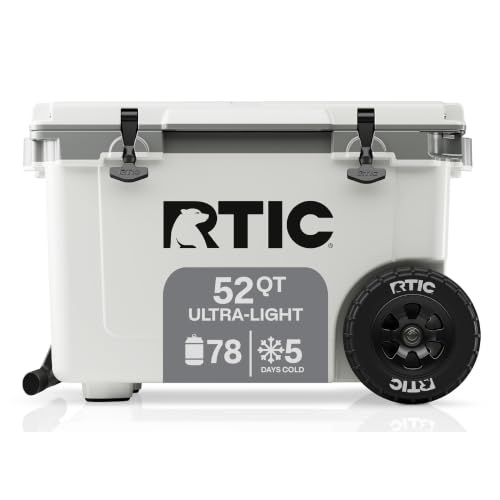
- Best overall for entertaining: RTIC 52 Quart Ultra-Light Wheeled Cooler — Check on Amazon
- Best drinks and wine station: YETI Roadie 24 Hard Cooler — Check on Amazon
- Best crowd tub on a budget: Coleman Classic Series 65-Quart Wheeled Cooler — Check on Amazon
- Best sealed food box: Lifetime 55 Quart High Performance Cooler (90820) — Check on Amazon
- Best premium main cooler: RTIC 45 QT Ultra-Tough Cooler — Check on Amazon
One further pick, the YETI Tundra 45, is reviewed in prose below: its current pricing sits above this guide’s ceiling often enough that we do not link it as an under-$300 buy. Read the full guide ↓
Disclosure: As an Amazon Associate, dailyhomedecorating.com earns from qualifying purchases. Links to Amazon on this page are affiliate links; they cost you nothing extra. Listing details such as price and availability change often, so check the current Amazon listing before you buy.
The best outdoor cooler for outdoor entertaining under $300 is not really a cooler purchase — it is a hosting system purchase, and it should be judged the way guests will judge it: Are the drinks cold at hour four? Can a guest with a plate in one hand get a bottle open and out with the other? Does the wine stand upright instead of swimming? Does the food stay sealed and safe while the drinks get churned? And does the whole arrangement look like a station a host designed, rather than a box somebody dropped? Entertaining rearranges cooler priorities completely. Ice retention measured in days matters less than ice that survives an evening of sixty lid openings. Capacity matters less than flow — the right drinks, visible, reachable, at the right station. And the lid stops being a lid: it is a serving surface, a side table, a seat for the guest who arrives after the chairs run out.
This guide is built around the pattern every caterer and every seasoned host converges on: two coolers, two jobs. A drinks station that guests can raid freely — visible bottles, one-handed access, wheels to place it where the party actually gathers — and a food cooler that stays shut, cold and safe until serving. The six picks below fill those roles at every scale: RTIC’s wheeled Ultra-Light 52 as the mobile drinks-and-everything station, YETI’s Roadie 24 as the wine-and-cocktail specialist, Coleman’s wheeled 65 as the crowd tub, Lifetime’s 55 as the sealed food vault, RTIC’s rotomolded Ultra-Tough 45 as the premium main box, and the YETI Tundra 45 in prose as the famous benchmark currently priced over this ceiling. Hosts working with less will find the honest version of this system in Best Outdoor Cooler For Outdoor Entertaining Under $150; this tier buys the flow, the build and the looks that make entertaining feel effortless.
In this guide
Quick Picks
Short on time, or comparing several options at once? Each row below names an entertaining job and the cooler that suits it, with a link to the listing.
| Entertaining job | Pick | Why it stands out | Link |
|---|---|---|---|
| Best overall | RTIC 52 Quart Ultra-Light Wheeled Cooler | A full party station that rolls to wherever the party gathers | Check on Amazon |
| Best drinks & wine station | YETI Roadie 24 Hard Cooler | Wine bottles upright, one-handed latch, premium looks at the table | Check on Amazon |
| Best crowd tub | Coleman Classic Series 65-Quart Wheeled Cooler | 65 quarts on wheels with cup holders in the lid — at a budget tier | Check on Amazon |
| Best food box | Lifetime 55 Quart High Performance Cooler | Big, sealed, bear-certified vault that keeps food cold while drinks get churned — check price on Amazon | Check on Amazon |
| Best premium main | RTIC 45 QT Ultra-Tough Cooler | Rotomolded build and a lid that serves as bench, step and spare surface | Check on Amazon |
| Benchmark (prose only) | YETI Tundra 45 | The name guests recognize — currently priced above this ceiling, so no link | See review below |
How These Picks Were Chosen
Entertaining fitness came first, and it is a different checklist from camping fitness. We weighted: one-handed and guest-proof access (latches a stranger can work while holding a plate), bottle geometry (wine and 2-liters upright, labels visible, no swimming), placement mobility (wheels and handles, because the party moves and the cooler should follow), lid utility (flat, strong, and on one pick, cup holders), and appearance — a cooler at an entertaining station is visible all evening, and this tier’s buyers are allowed to care how it looks. Classic cooler virtues still applied: a freezer-style gasket to survive constant opening, honest capacity at a stated ice ratio, and a drain that ends cleanup quickly.
The budget discipline was the same as our other guides: a pick earns a link only with recent Amazon sightings at or under $300, cross-checked against a price-history tracker, the maker’s store or a second retailer in November 2026. The YETI Tundra 45 fails on current pricing — its list price has moved above the ceiling even though sale colors dip below it — so it is reviewed in prose and left unlinked, with the full reasoning in its review. No fixed price is printed for any product here; check price on Amazon before you buy. Safety screening was identical too: we checked CPSC cooler recall records, found the major 2025 recall of a 90-quart rolling line from another brand, and excluded that line entirely — it is not named or used anywhere in this guide — and no pick listed here had a CPSC recall we could find as of writing. We did not purchase or test these coolers; reviews are built from manufacturer specifications, retailer listings and independent coverage, with maker claims labeled as maker claims.
A word about the two-cooler doctrine, since it organizes everything below. Drinks and food have opposite needs: drinks want access, food wants isolation. Every hour, a combined cooler loses cold to drink traffic and warms the food a little more. Splitting the jobs — even into a premium box and a budget tub — is the single highest-value move in outdoor entertaining, worth more than any tier jump. The picks below are written to be paired, and the how-to-choose section plans the pairings by party size. The rest of the entertaining station is covered by the neighboring guides: Best Patio Dining Set For Outdoor Entertaining Under $300 for the table the coolers serve, and Best Outdoor String Lights For Outdoor Entertaining Under $300 for keeping the party outside after dark.
Best Outdoor Cooler for Outdoor Entertaining Under $300: The 6 Picks in Detail
RTIC 52 Quart Ultra-Light Wheeled Cooler
Who it suits: Hosts whose parties move — cocktails on the patio, dinner on the lawn, dessert by the fire — and who want one full-size station that follows the evening instead of anchoring it.
Entertaining is logistics wearing a party dress, and this cooler is the logistics solved. The Ultra-Light Wheeled carries a maker-rated 78 cans in a 52-quart shell that RTIC rates as more than 30 percent lighter than rotomolded coolers of the same size, on heavy-duty wheels behind a telescoping handle. That combination changes hosting physics: the drinks station starts at the kitchen door for loading, rolls to the patio for cocktails, repositions to the shade when the sun swings, and ends the night beside the grill — each move one-handed, mid-conversation, without recruiting a guest into furniture removal. Independent testing credits the Ultra-Light line with multi-day ice retention, which in entertaining terms means ice loaded at noon is still working at midnight, through every opening the party can throw at it.
The hosting details hold up under guests. The freezer-style gasket reseals positively under its latches even when closed one-handed and distracted. The flat lid serves as the station’s overflow surface — the platter, the bowl of limes, the stack of cups — and seats a guest without complaint. The drain turns the worst job of the night into ninety seconds. Its debits are the known Ultra-Light trades: an injection-molded shell that is tough but not rotomolded armor, and a price near the top of this budget — check price on Amazon. For a host, the arithmetic is simple: this is the cooler that makes the two-cooler system effortless, because the big box can always be exactly where it should be.
- 52 quarts (maker-rated 78 cans) that roll to the party, not the other way round.
- Shell about 30% lighter than rotomolded rivals; telescoping handle, treaded wheels.
- Freezer-style gasket survives an evening of constant guest openings.
- Flat, seat-strength lid doubles as the station’s serving surface — check price on Amazon.
Honest limitation: Injection-molded rather than rotomolded, so it trades expedition toughness for lightness, and the wheeled version commands a premium over its own non-wheeled sibling.
Choose it if your parties move around the property or your station placement changes with the sun. Skip it if your entertaining happens at one fixed table — the Lifetime below anchors a fixed station for far less.
YETI Roadie 24 Hard Cooler
Who it suits: Hosts who serve wine, cocktails and bottled drinks — and who want the drinks station to look as considered as the table it stands beside.
Every entertaining guide eventually admits that most coolers are designed for cans and camping, while parties run on bottles. The Roadie 24 is the exception that proves the rule: a tall rotomolded body that takes wine bottles and 2-liters upright, so labels show, necks stay out of the meltwater, and a guest can find the bottle they want without an ice bath up to the elbow. The QuickLatch opens one-handed — the defining gesture of the drinks station, performed a hundred times a night by people holding plates, glasses and conversations. The ColdLock gasket seals like a fridge door. And the whole object, in YETI’s considered colors, reads as part of the entertaining furniture rather than equipment that wandered in from a fishing trip.
Its role is the inner-circle station: wine, mixers, the good bottles, parked at the table or the grill while a bigger tub handles volume at the yard’s edge. YETI rates it around 18 cans at a 2:1 ice ratio; think of it as a dozen bottles with ice, perfectly cold, all evening. The build is the full YETI standard — PermaFrost insulation, NeverFail hinge, tie-down slots, five-year warranty — and the original version linked here has no drain plug, which at a drinks station is nearly a virtue: no plug to weep onto the deck, and a box this size tips clean in one motion at night’s end. (Many current listings are the 2.0, which adds a drain and shoulder strap.) Check price on Amazon — its list price sits inside this budget, with seasonal colors discounted regularly.
- Tall interior: wine and 2-liters upright, labels visible, no swimming.
- One-handed QuickLatch — the drinks-station gesture, perfected.
- Rotomolded YETI build and finish that belongs beside the table.
- Five-year warranty; compact footprint for patios and decks — check price on Amazon.
Honest limitation: It is a specialist: around 18 cans with ice will not hydrate a crowd, and per quart it is the most expensive storage in the guide.
Choose it if bottles matter to your parties and the station is part of the presentation. Skip it if your entertaining is twenty people and a keg’s worth of cans — volume picks sit below.
Coleman Classic Series 65-Quart Wheeled Cooler
Who it suits: Hosts of big gatherings — the twelve-plus guest cookouts, team parties and holiday crowds — who need a drinks ocean that rolls, serves as a table, and costs less than the ice and drinks it will hold across a season.
The Coleman is the entertaining pick that cooler snobbery keeps missing. At 65 quarts it is the largest tub in this guide; it rides on wheels behind a telescoping tow handle; it weighs about 14.5 pounds empty, so positioning it is a one-finger decision; and its lid carries four molded cup holders, which at a real party makes it the most useful side table in the yard — guests set drinks on the cooler, the cooler becomes furniture, and the traffic pattern organizes itself around the drinks, exactly as a host would design it. Coleman rates its insulated lid and body to keep ice up to four days in 90-degree heat as a maker claim; a party asks for six hours, and the margin is not close. The price is a small fraction of this budget — check price on Amazon — which reframes the purchase entirely: this is not the cooler you protect, it is the cooler you deploy.
Its entertaining role is the crowd drinks tub, and it should be bought with that job description printed on the receipt. Guests will churn it, kids will sit on it, it will be lent to a neighbor for their party and come back with a story. The thin-wall construction and functional hardware are not flaws at this job; they are the reason the job is affordable. What it must not be asked to do is be the food cooler for a weekend or the heirloom — the Lifetime below and the RTICs around it cover those roles. Bought as the volume half of a two-cooler system, the Coleman is the highest-value entertaining purchase in this guide, and the one your guests will actually interact with most.
- 65 quarts on wheels — the crowd drinks tub.
- Four cup holders molded into the lid: the cooler becomes the side table.
- About 14.5 lb empty; maker-rated ice up to four days in 90°F heat.
- A fraction of this budget — check price on Amazon.
Honest limitation: Thin-wall build and party-grade hinges and latches; it is deployable infrastructure, not a decade-long heirloom or a food-safety vault for long weekends.
Choose it if headcount is your recurring problem. Skip it if your parties are six people and a cheese board — the Roadie above is your station.
Lifetime 55 Quart High Performance Cooler (90820)
Who it suits: Hosts who cook seriously for guests — marinating meats, chilled salads, desserts that must hold — and need a food cooler that stays sealed, cold and safe while the drinks chaos happens elsewhere.
The food half of the two-cooler system has one job: do not open. Every virtue of the Lifetime serves it. The 55-quart body swallows hotel pans, platters and a day’s prep with room for the ice that keeps it all at temperature; the maker claims up to seven days of ice retention, and independent coverage has found its real-world performance competitive with rotomolded coolers at twice the price; the build is certified bear-resistant, which in a backyard translates to a lid and latch set that seals positively and stays sealed under a stack of serving boards. Rope handles with foam grips move it from kitchen to station, the stainless hinge shrugs off a season of Sundays, and the built-in bottle opener will, inevitably, make it a guest magnet anyway — position it accordingly.
The price completes the case: its long price history sits far below this guide’s ceiling, so check price on Amazon and expect the value end of the tier — the food vault costs less than the drinks station, which is exactly backwards from how most hosts spend and exactly right. Two honest notes. It has no wheels, so its station is chosen at loading and kept; plan the spot — shade, near the grill, out of the guest traffic line — before the ice goes in. And its blow-molded, utilitarian looks are equipment-grade; if the food cooler must also be decor, that is the RTIC Ultra-Tough’s argument below. As pure function per dollar in the entertaining system, nothing in this guide touches it.
- 55 quarts of sealed food storage; up to 7-day ice as a maker claim.
- Bear-certified build: a lid and latch set that stays sealed under party pressure.
- Tall shape takes platters, pans and upright bottles.
- Price history far below the ceiling — check price on Amazon.
Honest limitation: Wheel-less and heavy when loaded, so its station is fixed at setup; styling is utilitarian next to the premium picks.
Choose it if food is the serious half of your entertaining. Skip it if you need the food box to double as visible furniture — take the rotomolded RTIC below.
RTIC 45 QT Ultra-Tough Cooler
Who it suits: Hosts who want one premium cooler to anchor the station — drinks for a mid-size party, or the food vault with furniture-grade presence — and to keep doing it for a decade of seasons.
The Ultra-Tough is the entertaining system’s premium anchor. Its one-piece rotomolded shell, up to three inches of insulation and freezer-style gasket are the classic formula, but at a party its virtues are social: the lid is a bench for two, a step for hanging lights, a landing surface for the platter that has nowhere else to go; the heavy T-latches close with a finality guests trust; the non-slip feet keep it planted when the deck gets wet and the dancing starts; and the rapid-flow drain makes its owner the only host on the street whose cleanup takes minutes. RTIC rates it for 48 cans plus ice — a mid-size party’s drinks, or a big party’s food, in one box. Check price on Amazon, where it sits mid-tier in this budget.
As a single-cooler household’s entertaining answer, it is the balanced choice: big enough for eight to ten guests’ drinks with disciplined ice, tough enough to be lent a decade of abuse, and equally happy leaving the yard for the campsite — the only pick here that truly lives both lives at full standard. Its limits are the rotomolded constants: roughly 29 pounds empty, no wheels, so its station is set at setup like the Lifetime’s; and at the largest gatherings it becomes one half of a system whether you planned it or not, with a borrowed tub beside it. Buy it as the anchor, add the Coleman when the guest list grows, and the system is complete. Hosts seating the crowd it feeds will find its partners in Best Adirondack Chair For Outdoor Entertaining Under $300.
- Rotomolded shell, freezer gasket, T-latches — the premium anchor.
- Lid works as bench, step and serving surface all evening.
- 45 quarts (maker-rated 48 cans plus ice); rapid-flow drain.
- Mid-tier price in this budget — check price on Amazon.
Honest limitation: Heavy and wheel-less, so placement is a setup decision; 45 quarts needs a partner tub at the biggest gatherings.
Choose it if one premium cooler must anchor home entertaining and travel too. Skip it if your station must move mid-party — the wheeled RTIC leads this guide for that life.
YETI Tundra 45 (Prose Only — Currently Above the Ceiling)
Who it suits: Hosts who want the cooler guests recognize on sight — the original benchmark as a piece of entertaining furniture — and who catch it on sale or accept the stretch.
There is a social fact about the Tundra that no spec sheet captures: guests read it as a signal that the host takes the evening seriously, the way a certain pan or a certain knife reads in a kitchen. The substance behind the signal is real — rotomolded walls with up to three inches of PermaFrost insulation, a certified bear-resistant build when padlocked, T-Rex latches, a Vortex drain, a dry-goods basket in the box, and a five-year warranty. YETI rates it for 26 cans at a 2:1 ice ratio, a reminder that its true interior is smaller than the 45 name suggests beside the RTIC and Lifetime above; as an entertaining station it is a mid-size party’s drinks or a large party’s food, presented impeccably.
It is prose-only for the reason this guide has stated in every case: its list price has moved above $300, and while Amazon’s sale events dip seasonal colors below the line, the standard colors at ordinary times sit over it. A guide that links it as an under-$300 pick would be lying on the days it matters. Caught under the ceiling, it is a superb entertaining cooler and this is its review. At full list, the RTIC Ultra-Tough directly above delivers the same formula with a bigger interior inside budget — which is why the benchmark stands in prose and the RTIC stands in the buy box. Hosts who decide to shop the tier above deliberately will find it mapped in Best Outdoor Cooler For Outdoor Entertaining Under $500.
- The original benchmark: PermaFrost insulation, bear-resistant when locked.
- T-Rex latches, Vortex drain, dry-goods basket, five-year warranty.
- True capacity about 26 cans at a 2:1 ratio — smaller than the name implies.
- Prose only: current list price sits above this guide’s ceiling.
Honest limitation: Price drift aside, you pay a brand premium that buys warranty, resale and recognition rather than extra ice or extra room.
Choose it if a sale puts it under the line, or the badge is part of the brief. Skip it if the ceiling is firm — the system above covers every entertaining job within it.
Comparison Table
| Product | Capacity | Wheels | Entertaining role | Link |
|---|---|---|---|---|
| RTIC 52 Ultra-Light Wheeled | 52 qt | Yes | The mobile station | Check on Amazon |
| YETI Roadie 24 | 24 qt class | No | Wine & drinks specialist | Check on Amazon |
| Coleman Classic 65 Wheeled | 65 qt | Yes | The crowd tub / side table | Check on Amazon |
| Lifetime 55 High Performance | 55 qt | No | The sealed food vault | Check on Amazon |
| RTIC 45 Ultra-Tough | 45 qt | No | The premium anchor | Check on Amazon |
| YETI Tundra 45 | ~26 cans at 2:1 | No | The benchmark — over ceiling | Prose only |
How to Choose a Cooler for Outdoor Entertaining
Split drinks from food before you spend anything. This is the doctrine the whole guide hangs on. Drinks want traffic; food wants isolation. One combined cooler serves both badly: the food warms with every soda run, and the drinks bury under the potato salad. Assign the jobs first — a drinks station and a food vault — then buy the cheapest competent tool for each. Most hosts should spend more on the station guests touch and less on the vault they never open.
Size the station to the guest list you actually host. Four to six guests: the Roadie class is a complete station. Eight to twelve: a 45–52 quart main cooler carries drinks with disciplined ice. Beyond twelve: volume wins — a 65-quart drinks tub plus your existing cooler as the food box beats any single premium purchase. Remember that ice claims a third to a half of the interior at a 2:1 ratio, so maker can ratings, not model numbers, are the honest comparison.
Design the guest’s thirty seconds. Stand where a guest stands: plate in one hand, wanting a cold bottle. Can they open the cooler one-handed? See what is inside without digging? Find a bottle opener without asking? Set the drink down somewhere? The picks in this guide were chosen against those thirty seconds — one-handed latches, upright bottles, a lid that takes a glass, an opener built in or tethered to the handle. Test any cooler against the same thirty seconds before buying.
Place for shade and flow, then buy the mobility to match. The station belongs in shade, at the edge of the gathering rather than its center, out of the grill’s heat and the kitchen door’s swing. If that spot is fixed, a fixed cooler is fine and cheaper. If your shade moves across the afternoon — most yards’ does — wheels stop being a feature and become the difference between a station in the shade and a station in the sun.
Budget the ice, not just the cooler. Entertaining ice is a consumable with a technique: pre-chill the cooler with frozen bottles while you prep, load drinks refrigerator-cold, fill every void with ice rather than air, and keep a reserve bag in the freezer for the hour-three top-up. Frozen water bottles in the drinks station prevent the meltwater swim and become drinking water by dessert. These habits, all nearly free, decide whether the drinks are cold at hour four far more than the cooler’s tier does.
Rehearse the station with one guest in mind. Before the season’s first party, run the thirty-second test from this section with a family member playing the guest: plate in hand, no instructions, no help. Watch where they hesitate — the latch they cannot read, the opener they cannot find, the drink they have nowhere to set down. Every hesitation is a design flaw you can fix for almost nothing before it matters: a tethered opener, a towel hook, a small side surface, the station moved two feet toward the light. Hosts who rehearse once entertain all season on the results; the cooler you choose should make the rehearsal boring.
Let looks count — once, at the end. A cooler at an entertaining station is furniture for the evening, and at this budget it is legitimate to prefer the one that suits your patio. But buy the system first: roles, sizes, access, mobility. The handsome cooler in the wrong role is decor that serves warm drinks.
Common Mistakes Hosts Make With Coolers
One giant cooler for everything. The classic. Food and drinks in one box means warm food by hour three and drinks buried under it. Split the jobs; the second cooler can be the cheapest tub in this guide and the system still wins.
Setting the station in the sun for the photo. The arrangement looks best in the sunny spot and performs worst there. Shade is a feature; arrange the furniture for the light at 4 p.m., not at noon, and let wheels move the station as the shade moves.
Warm drinks, warm cooler, party in an hour. A cooler stored in a hot garage, loaded with warm cans at start time, will serve lukewarm drinks at hour two no matter what it cost. Pre-chill, load cold, and let the freezer do the work the cooler cannot.
No opener, no plan. A station without a tethered opener produces a line of guests holding bottles and looking for you. Two of this guide’s picks build the opener in; for the rest, tie one to the handle tonight, before the season starts.
Draining the drinks tub mid-party. The meltwater around the remaining ice is cold mass that keeps the next round cold. Drain at cleanup. The exception is presentation: bottles standing in fresh ice look better than bottles swimming — top up with fresh ice instead of draining, and let the water stay.
Forgetting the end of the night. A cooler that takes twenty minutes to empty, drain and rinse is a cooler that gets left until morning, full of grey water and regret. Rapid drains, tip-clean small boxes and a hose-length to the garden bed are entertaining features. Buy them like they matter, because at 11 p.m. they are the only ones that do.
The Host’s Timeline: Cooler Work From Morning Prep to Midnight Cleanup
Morning: chill the boxes before anything goes in them. The entertaining day starts with the coolers empty and cold-bound. Set frozen water bottles — your freezer’s standing fleet — inside both the drinks station and the food vault while you prep, lids closed. This sacrificial chill is the least glamorous and most consequential step of the day: a cooler that starts cold spends its ice on your food and drinks, while a cooler that starts at garage temperature spends its first bag becoming cold itself. If you skipped freezing bottles, a bag of ice per cooler does the same job and becomes the base layer. Either way, nothing warm ever enters a cooler today.
Midday: load in the order the evening will unfold. Food vault first, because it closes and stays closed: raw proteins lowest and sealed, then produce, then the ready-to-serve items on top, with ice worked into every void and a clean towel as the final layer if space remains. Mark its lid — a strip of tape that says FOOD, or simply the household rule that this box opens only for serving — because guests cannot respect a boundary they cannot see. The drinks station loads last and loads for visibility: the first round’s drinks on top, bottles upright with labels out, cans grouped by type, mixers and garnishes at the station rather than buried. Reserve one unopened bag of ice in the freezer; hour three is coming, and it always asks.
An hour before guests: place the stations, then stop touching them. Drinks station in shade at the gathering’s edge, food vault near the grill or kitchen door but out of the guest flow, a towel and a tethered opener at each handle, cups and a small bin within arm’s reach of the drinks lid. Then close both lids and leave them closed. The hour before a party is when hosts sabotage themselves by checking — every check is an opening, and openings are the currency ice is paid in. Trust the morning’s work. A cooler system loaded cold and left shut will be colder at guest arrival than a fussed-over one, every time.
During the party: work the system, not the coolers. Your jobs reduce to three. Watch the drinks station’s ice line and deploy the reserve bag at the top-up moment — poured over the top, never stirred in, so the cold settles down through the load. Guard the food vault’s boundary cheerfully: when a guest reaches for it, hand them what they need from the drinks station instead, and let the vault open only at serving, once, decisively. And when you serve from the vault, serve completely — everything out in one opening, onto platters, lid shut — rather than in six grazing trips. Hosts who run this discipline serve food that is still properly cold at hour five and drinks that never warm; guests experience it simply as a party where everything is cold, which is the entire point.
The food-safety line, stated plainly. Perishable food belongs below 40°F, and the two-hour rule — one hour in serious heat — governs anything that has been served and left standing. The two-cooler system exists partly to make this easy: unserved food stays in the sealed vault at temperature while served food is a small, timed batch on the table. When in doubt at midnight, throw it out; no leftover is worth the alternative, and a host’s reputation is built on nobody ever wondering. Ice that has held raw meat never migrates to drinks. These are not cooler features; they are the practices the right coolers make effortless.
Midnight: the fifteen-minute reset. Drain both coolers to the garden or the sink — the wheeled and rapid-drain picks here turn this into minutes — rinse, and leave lids open to dry overnight in a safe spot. In the morning, a baking-soda wipe for the food vault, a full dry, lids cracked for storage, and the system is ready for the next invitation. Hosts who do the reset the same night keep coolers that smell like nothing for a decade; hosts who leave grey water until Sunday buy new coolers and blame the brands. The timeline, end to end, is the real product this guide is recommending — the six coolers are simply the ones that make it easy to keep.
Final Recommendation
Build the system. For most hosts, the RTIC 52 Ultra-Light Wheeled is the station: it rolls to the shade, serves a dozen guests, and cleans up in minutes — check price on Amazon and make it the first purchase. Add the Roadie 24 when wine and presentation matter, and your drinks service is better than most caterers’. Big guest lists should start with the Coleman as the crowd tub and pair it with the Lifetime as the sealed food vault — the complete system for well under this budget’s ceiling. Hosts who want one premium anchor instead should take the RTIC Ultra-Tough and let it anchor for a decade. The Tundra 45 remains the famous name: catch it on sale under the ceiling and enjoy it; at list price, the system above entertains better for the same money. Cold drinks at hour four, food that stayed safe, a station guests could work without you — that is the whole brief, and every pick here was chosen to deliver it.
Frequently Asked Questions
How many coolers do I need for outdoor entertaining?
Two, ideally: a drinks station guests can open freely, and a food cooler that stays sealed until serving. For small gatherings one cooler can do both if you load food at the bottom under a divider or tray and accept the compromise. The two-cooler split is the single biggest quality jump available to a host, and it costs less than one tier of cooler.
What size cooler do I need for a party of 12?
A 45–52 quart drinks cooler with proper ice covers drinks for twelve across an evening, especially with a reserve ice bag in the freezer. Add a separate food cooler sized to your menu — 45–55 quarts handles most cookout spreads. Beyond twelve guests, step the drinks side up to a 65-quart tub rather than buying a second premium cooler.
How do I keep drinks cold through a whole party?
Pre-chill the cooler, load everything refrigerator-cold, fill voids with ice, station the cooler in shade, and do not drain meltwater during the event. Frozen water bottles among the drinks prevent swimming and add cold mass. A reserve bag of ice for a mid-party top-up is the professional’s insurance — the cooler matters less than these five habits combined.
Why keep food and drinks in separate coolers?
Food safety and drink quality point the same way. A drinks cooler opens sixty times an evening, and every opening warms what is inside; food held in that traffic spends hours drifting toward the temperature danger zone. A sealed food cooler opened six times stays safely cold all day — and the drinks stay unburied and easy to find.
Is a wheeled cooler worth it for entertaining?
If your entertaining space and your storage or kitchen are more than a few steps apart, or your shade moves during the event, yes. Wheels let one person place a full station exactly right and move it as the evening evolves. For a fixed station beside a door, wheels add cost without benefit — the fixed picks in this guide cover that life for less.
Why is the YETI Tundra 45 not linked in this guide?
Its current list price sits above $300, though sale colors on Amazon dip below the line during events. This guide links only picks with recent in-budget sightings and reviews the rest in prose. If you find it under the ceiling, it is an excellent entertaining cooler — the review above gives the full picture, including its smaller-than-named true capacity.
How do I make a cooler station look good?
Choose one station spot in shade, keep the cooler closed and wiped, stand bottles upright with labels out, put a small towel and a tethered opener at the handle, and let the lid serve as the surface for cups and a small bowl of citrus. The premium picks here were chosen partly for how they present — but arrangement, not branding, is what guests actually notice.
What drinks setup works best for a mixed crowd?
Assume three audiences: drinkers of alcohol, drinkers of everything else, and kids — and make each audience’s drinks findable without excavation. Bottles upright in the specialist station, grouped with the good ice; cans and soft drinks in the big tub where volume lives; a clearly separate, lower or clearly marked spot for kids’ drinks so small hands are not fishing through the cocktail ice. Frozen water bottles at the top of each cooler serve everyone: they chill, they label the cold zone by feel, and by dessert they are the water somebody inevitably wants. The setup takes ten minutes at loading and saves the host a hundred questions.


