Where to buy
Check the latest price, availability and delivery on Amazon. Orders are placed on Amazon. We may earn a commission from qualifying purchases.
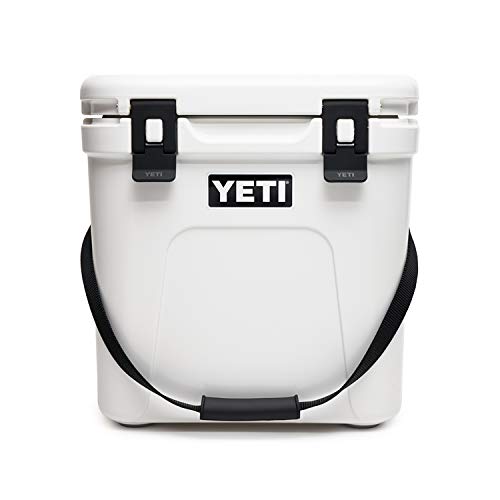
- Best for most apartments: YETI Roadie 24 Hard Cooler — Check on Amazon
- Best buy-once all-rounder: RTIC 45 QT Ultra-Tough Cooler — Check on Amazon
- Best value if you have the storage: Lifetime 55 Quart High Performance Cooler (90820) — Check on Amazon
- Best for elevator buildings: RTIC 52 Quart Ultra-Light Wheeled Cooler — Check on Amazon
- Best for rooftop and courtyard parties: Coleman Classic Series 65-Quart Wheeled Cooler — Check on Amazon
One further pick, the YETI Tundra 35, is reviewed in prose below: its pricing hugs this guide’s ceiling too closely to link as an under-$300 buy. Read the full guide ↓
Disclosure: As an Amazon Associate, dailyhomedecorating.com earns from qualifying purchases. Links to Amazon on this page are affiliate links; they cost you nothing extra. Listing details such as price and availability change often, so check the current Amazon listing before you buy.
Shopping for the best outdoor cooler for apartments under $300 starts with an honest admission most cooler guides will not make: for a lot of apartment households, the correct cooler in this budget is a small one, and the $300 ceiling is permission to buy quality rather than size. An apartment cooler lives a particular life. It stores in a closet, a hallway corner or the dead space beside the fridge, not in a garage. It travels by elevator, by stairs, or down a long corridor before it ever sees a balcony, a rooftop deck or the park across the street. It serves two to six people far more often than it serves twenty. And on a balcony measured in single-digit feet, every inch of footprint it occupies is an inch of your outdoor room gone. A 65-quart rotomolded tank answers none of those constraints well, however magnificent its ice retention is.
So this guide ranks apartment fitness first: footprint and storage shape, loaded weight and how it moves through a building, capacity matched to small-group reality, and only then the usual cooler virtues of insulation, gasket and hardware. The YETI Roadie 24 leads because it is the rare premium cooler designed around exactly this life — tall, narrow, car- and closet-friendly, with room for wine bottles upright. The RTIC 45 QT Ultra-Tough is here for apartment dwellers who also camp and want one serious cooler for both lives. The Lifetime 55 is the value pick for those with a storage unit or a generous closet. The two wheeled picks — RTIC’s 52 Ultra-Light and Coleman’s big Classic 65 — solve the corridor-and-elevator problem in opposite price directions. And the YETI Tundra 35 appears in prose as the mid-size benchmark whose price straddles this ceiling. If your real budget is smaller, Best Outdoor Cooler For Apartments Under $150 covers the tier where most apartment coolers honestly live; this guide is for buyers who have decided to spend up and want to spend it on the right things.
In this guide
Quick Picks
Short on time, or comparing several options at once? Each row below names an apartment situation and the cooler that suits it, with a link to the listing.
| Apartment situation | Pick | Why it stands out | Link |
|---|---|---|---|
| Best for most apartments | YETI Roadie 24 Hard Cooler | Tall, narrow rotomolded cooler that fits closets, cars and wine bottles alike | Check on Amazon |
| Best buy-once all-rounder | RTIC 45 QT Ultra-Tough Cooler | Full rotomolded performance for balcony parties and camping trips alike — check price on Amazon | Check on Amazon |
| Best value, if storage allows | Lifetime 55 Quart High Performance Cooler | 55 quarts and bear-certified build at the lowest tier in this guide | Check on Amazon |
| Best for elevator buildings | RTIC 52 Quart Ultra-Light Wheeled Cooler | Big capacity that rolls down corridors in a shell about 30% lighter than rotomolded | Check on Amazon |
| Best for rooftop parties | Coleman Classic Series 65-Quart Wheeled Cooler | The biggest tub here, on wheels, at a budget tier — buy it for the building’s party, not the balcony | Check on Amazon |
| Benchmark (prose only) | YETI Tundra 35 | The mid-size YETI — priced too close to this ceiling to link honestly | See review below |
How These Picks Were Chosen
Three apartment-specific filters shaped this list before any cooler virtues were considered. First, storage geometry: we favored coolers whose exterior dimensions fit a standard closet depth, stand flat against a wall, or ride in a car footwell, and we list real exterior considerations in each review rather than nominal quarts. Second, the building journey: a cooler that cannot be moved by one person, loaded, from a third-floor flat to a courtyard is a cooler that will be left behind, so weight, handles and wheels were weighted as heavily as ice retention. Third, honest capacity: apartment gatherings are small, so a cooler that serves four brilliantly outranks a cooler that serves twenty awkwardly.
The budget filter worked the same way as in our other guides: a pick earns a purchase link only if its Amazon listing has recent sightings at or under $300 in price records, cross-checked against a second source — a price-history tracker, the maker’s store or another retailer. The YETI Tundra 35 fails that test narrowly and interestingly: its list price sits inside the budget, but current sightings cluster right at the ceiling, so it is reviewed in prose and left unlinked. Every price in this category moves, so no fixed figure is printed for any cooler; check price on Amazon before you buy. We also checked CPSC recall records for coolers: a major rolling-cooler line from a big brand was recalled in 2025 over a handle hazard, no model from that line appears here, and no pick in this guide had a CPSC recall we could find as of November 2026. We did not buy or test these coolers ourselves; the reviews below are built from manufacturer specifications, retailer listings and independent review coverage, with maker claims labeled as maker claims.
One more piece of honesty belongs in this section. Many apartment readers will be best served by spending well under this ceiling, and this guide will not pretend otherwise: the Roadie 24 leads precisely because it converts budget into build quality at apartment scale. The larger picks earn their places for specific apartment lives — the camper, the storage-unit owner, the rooftop host — and each review says plainly who should skip it. Readers furnishing a small outdoor space end-to-end will also want Best Adirondack Chair For Apartments Under $300 and Best Outdoor Rug For Apartments Under $300, which solve the same footprint puzzle for the rest of the balcony.
Best Outdoor Cooler for Apartments Under $300: The 6 Picks in Detail
YETI Roadie 24 Hard Cooler
Who it suits: Most apartment households, full stop — couples and small groups whose cooler stores in a closet, rides in a car, and works balconies, picnics and weekend trips in rotation.
The Roadie 24 is what happens when a premium cooler maker designs for proportion instead of scale. It is rotomolded, with pressure-injected PermaFrost insulation and a freezer-style ColdLock gasket, but its shape is the story: tall and narrow rather than wide and squat, with exterior dimensions around 16.5 by 14.5 by 17.5 inches. That footprint slides into a closet corner, stands behind a car seat, and parks on a balcony without evicting a chair. The height is functional, not styling — it takes a standard wine bottle or 2-liter upright, which makes it a genuine drinks cooler for a dinner-party balcony rather than a can-only box. YETI rates it around 18 cans at a 2:1 ice ratio, which translates to drinks and lunch for two to four people across a day that stretches, on ice, comfortably into a second.
The apartment details continue in the hardware. The QuickLatch opens one-handed — the hand that is not holding a plate or a toddler — and the lid seals with a fridge-door finality that keeps cold in through an evening of constant opening. There is no drain on the original version, which sounds like a flaw and is, in an apartment, nearly a feature: no plug to leak in a car footwell or onto a balcony, and a cooler this size empties with one tip into a bathtub or utility sink. (Many current listings are the 2.0 version, which adds a drain plug and a shoulder strap; the listing linked here is the long-running original with the deep in-budget price record.) It weighs about thirteen pounds empty — carryable up stairs loaded, by one person, without choreography. Check price on Amazon: its list price sits comfortably inside this budget, and seasonal colors discount regularly.
- Tall, narrow footprint (about 16.5 × 14.5 × 17.5 in) fits closets, cars and balconies.
- Wine bottles and 2-liters stand upright — a real drinks cooler, not a can box.
- Rotomolded build, PermaFrost insulation, ColdLock gasket, one-handed QuickLatch.
- About 13 lb empty: one person, one trip, stairs included — check price on Amazon.
Honest limitation: Capacity is the ceiling — roughly 18 cans with proper ice will not cater a party — and the original version’s lack of a drain plug means tipping to empty, easy at this size but worth knowing.
Choose it if your group is two to four, your storage is a closet, and you want the premium build at the size your life actually is. Skip it if you regularly host eight or more — you need a bigger tub, below — or if your budget is really a third of this guide’s ceiling.
RTIC 45 QT Ultra-Tough Cooler
Who it suits: Apartment dwellers with a double life — balcony hosts on Friday, campers and tailgaters on Saturday — who want one serious rotomolded cooler and have a storage spot that can take it.
Nothing about the Ultra-Tough is apartment-sized, and this review will not pretend otherwise: it is a 45-quart rotomolded box, roughly 29 pounds empty, that will occupy a serious slice of a closet or a storage cage. What it offers in exchange is the end of cooler shopping. The one-piece rotomolded shell carries up to three inches of insulation, a freezer-style gasket and heavy rubber T-latches; RTIC rates it for 48 cans plus ice; the lid seats an adult or stands as a step; the rapid-flow drain empties it without tipping. Loaded for a camping weekend it keeps ice for days. Loaded for a balcony party it is, frankly, more cooler than the party needs — which is exactly the point for the buyer whose cooler must do both lives without compromise in either.
The apartment math to do before buying is storage and stairs. Measure the spot: if the cooler lives in a storage unit, a parking-space cage or a wide hall closet, the math works. If it must be hauled up two flights every time it is used, the math does not, and the Roadie above or the wheeled RTIC below is your cooler. Carrying it loaded is a two-hand, plan-ahead job — rope handles with foam grips help, but physics is physics. Check price on Amazon, where it sits mid-tier in this budget rather than at the ceiling, leaving room in the $300 for the ice, the drinks and the food it will carry.
- True rotomolded build with up to 3 inches of insulation and a freezer-style gasket.
- 45 quarts (maker-rated 48 cans plus ice): the one-cooler answer for home and camp.
- Lid doubles as seat or step; rapid-flow drain; non-slip feet for balcony decks.
- Mid-tier pricing in this budget — check price on Amazon.
Honest limitation: At roughly 29 pounds empty and 60-plus loaded, with no wheels, it is the hardest pick here to live with in a walk-up building, and its footprint will dominate a small storage closet.
Choose it if you camp as much as you host and have ground-level or storage-unit space for it. Skip it if stairs stand between storage and use, or your gatherings never leave the balcony — the Roadie does that life better for less.
Lifetime 55 Quart High Performance Cooler (90820)
Who it suits: Apartment hosts with real storage — a storage unit, a parking cage, a deep utility closet — who host the biggest gatherings in their friend group and want maximum cooler per dollar.
The Lifetime 55 is the value outlier of the premium cooler world: a 55-quart, blow-molded cooler with up to seven days of ice retention as a maker claim, certified bear-resistant construction (an Interagency Grizzly Bear Committee certification that costs real engineering), rope handles with foam grips, a stainless hinge rod and a built-in bottle opener, priced — by its long price history — far below this guide’s ceiling. Check price on Amazon and expect the value end of the tier. Independent review coverage has repeatedly found its real-world ice life competitive with rotomolded coolers at twice the price, which is why it anchors value lists like this one year after year.
For an apartment, the case is specific. Its tall, rectangular shape stores flatter against a wall than squat rotomolded designs, and its capacity makes it the building’s party cooler: the one that comes out for the rooftop barbecue and the courtyard movie night, then goes back to the storage cage. What it is not is a balcony resident — at 55 quarts it will eat a small balcony’s floor plan, and loaded it is a two-person or a dolly move through a building. Buy it as shared infrastructure for a hosting life, store it where big things live, and it will repay you every gathering for years. Pair it with the Roadie for the classic apartment two-cooler system: food stays sealed in the Lifetime, drinks churn in the Roadie, and both fit the storage you actually have between them.
- 55 quarts with up to 7-day ice retention as a maker claim.
- Certified bear-resistant build — unheard of at this tier.
- Tall rectangular shape stores flat against a storage-unit or closet wall.
- Price history far below this ceiling — check price on Amazon.
Honest limitation: It is a storage commitment and a heavy loaded move through a building, and blow-molded walls scuff more readily than rotomolded shells over years of use.
Choose it if you are your building’s host and you have somewhere big to keep it. Skip it if it would have to live on the balcony — it will become the balcony’s biggest piece of furniture.
RTIC 52 Quart Ultra-Light Wheeled Cooler
Who it suits: Apartment hosts in elevator buildings, and anyone whose cooler journey is corridor, elevator, lobby, car — a route where wheels convert an ordeal into an errand.
Start with the building, not the cooler. A loaded 52-quart cooler weighs 60 to 80 pounds. Carried, that is a two-person job down a corridor and an argument in a stairwell. Rolled, it is one person, one hand, elevator down, across the lobby, into the courtyard or the car. The RTIC Ultra-Light Wheeled is built for exactly that journey: an injection-molded, foam-insulated shell that RTIC rates as more than 30 percent lighter than rotomolded coolers of the same size, a maker-rated 78-can capacity, heavy-duty wheels, a telescoping handle, a freezer-style gasket and multi-day ice performance in independent testing. The lighter shell costs roughly a day of ice against the best rotomolded boxes in extreme heat — a cost that apartment use, measured in evenings and weekends, will rarely collect.
Storage is the honest counterweight: at about 27 by 17 by 17 inches it is a full-size footprint, and it needs a closet end, a storage cage or a hallway wall to call home. In return it becomes the most-used big cooler an apartment host can own, precisely because using it is easy. The lid seats a guest or serves as a step, the drain ends the party cleanup in minutes, and the wheels are treaded widely enough for courtyard grass, not just lobby tile. It sits near the top of this budget — check price on Amazon — and what the premium buys is the difference between a cooler that gets used and a cooler that gets apologized for.
- 52 quarts (maker-rated 78 cans) that one person rolls through a building.
- Shell about 30% lighter than rotomolded rivals; heavy-duty wheels, telescoping handle.
- Multi-day ice in independent testing; freezer-style gasket; seat-strength lid.
- The elevator-building pick — check price on Amazon.
Honest limitation: Full-size storage footprint, a price near the ceiling, and an injection-molded shell that trades expedition armor for lightness — do not buy it to be dropped off tailgates for a decade.
Choose it if your building has an elevator and your parties happen in shared spaces or parks. Skip it if you live in a walk-up (wheels do not climb stairs) or your storage is a single narrow closet.
Coleman Classic Series 65-Quart Wheeled Cooler
Who it suits: The social hub of an apartment building — the host of rooftop, courtyard and parking-lot gatherings — who needs the biggest possible drinks tub on wheels and would rather spend the budget on the party.
Let us place this cooler honestly: at 65 quarts it does not belong on a small balcony, and this guide is not suggesting it does. It belongs to the apartment building rather than the apartment — the cooler that lives in a storage room or a corner of a parking space and rolls out when the rooftop opens for the season. For that life it is close to perfect. It weighs about 14.5 pounds empty (half the RTIC Ultra-Tough, in a bigger box), rolls on wheels behind a telescoping tow handle, carries four cup holders molded into its lid so it moonlights as the party’s side table, and is insulated well enough that Coleman rates it to keep ice up to four days in 90-degree heat as a maker claim — far more than a party day asks. And it costs a small fraction of this budget: check price on Amazon.
The thin-wall trade is the honest paragraph. This is not a rotomolded heirloom; hinges and latches are functional, insulation is party-grade rather than expedition-grade, and a long weekend in direct sun will defeat it. But apartment math favors it more than cooler snobbery admits: it is cheap enough to be genuinely shared infrastructure, light enough that the elevator trip is nothing, and big enough that nobody’s drinks get warm at the gathering that matters. For hosts whose calendar includes a few big shared-space events a year, it earns its storage corner more honestly than a premium tank that never leaves the closet. Evening events on the roof run longer with Best Outdoor String Lights For Apartments Under $300 strung overhead, and local rules permitting, Best Fire Pit For Apartments Under $300 covers the after-dark hours.
- 65 quarts on wheels at a budget tier — the building-party cooler.
- About 14.5 lb empty; telescoping tow handle; four lid cup holders.
- Maker-rated to keep ice up to four days in 90°F heat.
- Costs a fraction of this budget — check price on Amazon.
Honest limitation: Thin-wall build and party-grade hardware; it is shared infrastructure, not a buy-it-for-life cooler, and it is far too big to live on a balcony.
Choose it if your hosting happens in shared spaces a few times a year and storage is a storage room, not a closet shelf. Skip it if every gathering is on your own small balcony — that is Roadie territory.
YETI Tundra 35 (Prose Only — Priced at the Ceiling)
Who it suits: Apartment buyers drawn to the classic YETI mid-size — bigger than the Roadie, smaller than the 45 — who find it on sale or decide the brand is worth the ceiling.
The Tundra 35 is the original rotomolded formula at its most apartment-plausible size: up to three inches of PermaFrost insulation, a certified bear-resistant build when padlocked, T-Rex latches, a Vortex drain, a dry-goods basket in the box, and about 20 pounds empty. It holds drinks for a small group with real multi-day ice, seats a person, and carries YETI’s five-year warranty. For a car-camping apartment household it is a legitimate one-cooler answer, and on a balcony it reads as a side table with ambitions.
It is prose-only here for a narrow, specific reason: its pricing lives exactly on this guide’s border. The list price sits inside $300, but recent Amazon sightings cluster right at the ceiling and third-party listings drift above it, so on any given shopping day it may or may not be an under-$300 cooler. This guide links only picks with clear in-budget sightings. If you find the Tundra 35 under the line — sale colors do dip — it is a fine buy and this is its review. If it is over, the RTIC Ultra-Tough gives you more interior for less money, and the Roadie gives you the YETI build at a size and price that fit apartment life better. Readers who decide to shop above the ceiling deliberately will find the landscape in Best Outdoor Cooler For Apartments Under $500.
- Classic Tundra build at the most apartment-plausible Tundra size.
- PermaFrost insulation, bear-resistant when locked, five-year warranty.
- About 20 lb empty — the carryable end of the Tundra line.
- Prose only: sightings cluster at or above this guide’s ceiling.
Honest limitation: Beyond the borderline price, its true interior is modest for its footprint — thick walls are the tax — and per quart it is expensive cold storage.
Choose it if you catch it under the ceiling and want the badge with the build. Skip it if you are price-shopping on a normal day — two picks above do its jobs better within budget.
Comparison Table
| Product | Capacity | Empty weight | Wheels | Apartment verdict | Link |
|---|---|---|---|---|---|
| YETI Roadie 24 | 24 qt class | ~13 lb | No | The default apartment cooler | Check on Amazon |
| RTIC 45 Ultra-Tough | 45 qt | ~29 lb | No | For campers with storage | Check on Amazon |
| Lifetime 55 High Performance | 55 qt | ~25 lb class | No | Value pick for storage-unit hosts | Check on Amazon |
| RTIC 52 Ultra-Light Wheeled | 52 qt | Lighter shell | Yes | The elevator-building pick | Check on Amazon |
| Coleman Classic 65 Wheeled | 65 qt | ~14.5 lb | Yes | Rooftop and courtyard parties | Check on Amazon |
| YETI Tundra 35 | 35 qt class | ~20 lb | No | Benchmark — priced at the ceiling | Prose only |
How to Choose an Outdoor Cooler for an Apartment
Measure the storage spot before anything else. In an apartment, a cooler is furniture you store 350 days a year and use fifteen. Its exterior dimensions against your actual closet, hallway or storage cage decide whether it is equipment or clutter. Measure depth as carefully as length: standard closets swallow the Roadie’s narrow footprint whole, while a 45-quart rotomolded box needs a planned home. If no honest spot exists, the cooler is too big, whatever its ice retention.
Walk the journey in your head. Kitchen to balcony is ten feet. Kitchen to courtyard is a corridor, an elevator and a lobby. Kitchen to the park is all that plus a car. Each journey has a right cooler: carried and compact for the balcony, wheeled for the building, tall and car-shaped for the park. Buy for the journey you actually make most, not the one you imagine.
Size to your real headcount. Two to four people need the 24-quart class with room to spare. Six to eight regular guests justify 45–52 quarts. Beyond that, you are not buying a balcony cooler at all — you are buying building-party infrastructure, and the wheeled budget pick in this guide does that job for a fraction of the ceiling. Ice takes a third to a half of any cooler’s interior at the recommended 2:1 ice-to-contents ratio, so read maker can ratings, not model numbers.
Respect the balcony’s weight and floor. Balconies have load limits and downstairs neighbors. A cooler is one of the denser objects you will put out there — a loaded 55-quart box can exceed 80 pounds in a four-square-foot footprint. Keep big coolers to party hours, store them inside, and let the compact pick be the balcony’s resident. Shade matters too: a balcony cooler in afternoon sun fights the sky, while the same cooler in the balcony’s shadow corner gains hours of ice for free.
Plan the meltwater. Apartment coolers drain into bathtubs, utility sinks and balcony scuppers, not onto lawns. A rapid-flow drain you can aim into a sink is worth real money; a cooler without a drain must be small enough to tip, which is one more argument for the compact class as the resident pick. Never let meltwater pool on a balcony floor — it finds the neighbor below.
Check the lid height against your balcony furniture. An apartment cooler spends its working life beside a chair or a small table, and its lid becomes the surface for glasses, phones and the book you are pretending to read. Lids in the side-table height band — roughly the height of your chair’s arm — integrate into the balcony’s furniture plan; a lid that is much lower becomes a trip hazard with a drink on it, and one much higher becomes a wall. The Roadie’s tall format wins this test by design, and it is worth checking the dimension on any pick, because catalog photos never show the chair next door.
Spend the ceiling on build, not bulk. The strategic insight of this whole guide: at apartment scale, $300 buys the best-made small cooler on the market with money left over, or a mid-tier giant. The first purchase serves you weekly; the second serves you twice a year and stores badly. Unless your life includes camping or building parties, let the budget buy quality at your size.
Common Mistakes Apartment Cooler Buyers Make
Buying the cooler for the party of the decade. The one rooftop event with twenty guests writes the shopping list, and a 65-quart box then occupies the closet for five years. Rent, borrow or buy the budget wheeled pick for the big event; buy your resident cooler for your real life.
Forgetting the stairs. Wheels do not climb stairs, and a loaded mid-size cooler is a two-person carry that three flights turn into a hazard. Walk-up residents should weight compact and carryable above every other virtue in this guide.
Storing it on the balcony year-round. Sun degrades shells and gaskets, winter freeze-thaw works on standing water in drains, and the balcony loses its best corner permanently. Store coolers indoors, dry, with the lid cracked — a damp sealed cooler stored in a closet becomes a mildew farm by spring.
Ignoring building rules. Some buildings restrict what balconies and shared spaces can host, and rooftop gatherings may need booking. A two-minute check of your building’s rules beats a cooler that cannot go where the party is.
Loading it warm, in a warm room, at noon. Apartment kitchens are small and coolers stored in warm closets start hot. Pre-chill with frozen bottles while you prep, load everything fridge-cold, and carry it out last. The habit is worth more ice than a tier of price.
Draining meltwater onto the balcony. Beyond the neighbor problem, standing meltwater on balcony surfaces stains and slicks. Keep the meltwater in the cooler during the event — it insulates the remaining ice anyway — and drain it into a sink afterwards.
Living With a Cooler in an Apartment: Storage, Stairs and Neighbors
The storage audit comes first. Before any cooler in this guide earns your money, it must pass the audit of your actual apartment: the hall closet’s deepest shelf, the dead space beside the refrigerator, the top of the wardrobe, the parking-space cage, the storage unit you keep meaning to organize. Measure the winning spot — length, width and, the one everyone forgets, the height clearance to slide the cooler in without a wrestling match. Then check the listing’s exterior dimensions against it, not the model number. A cooler that fits its home gets used for a decade. A cooler that almost fits becomes a hallway obstacle with a warranty, and hallway obstacles get sold, donated or resented, in that order.
Make the cooler earn its storage footprint. A stored cooler is a rigid, lidded, rodent-proof box, and in a small apartment that is a resource, not a dead zone. Off-season, the picks in this guide store the things apartments drown in: the guest towels and the spare bedding set, the board games, the winter hats and gloves, the picnic kit that is, functionally, the cooler’s own support staff. Store it clean, dry and with the lid cracked — never sealed damp, or the mildew will introduce itself at the worst moment — and the cooler stops being stored furniture and becomes storage furniture. This single reframing is the difference between a big cooler being an apartment mistake and an apartment asset.
The journey deserves a rehearsal. However the cooler will travel — corridor, elevator, stairwell, lobby, car park — walk that route once with the empty cooler before the first real event. You will learn the door that needs a free hand, the elevator that needs a reservation for weekend moves, the stairwell turn where a 45-quart box will not pivot and a tall narrow one will. Apartment buildings have their own logistics: freight elevators, loading dock hours, carts you can borrow from the super. Thirty seconds of building knowledge is worth more on party day than a tier of insulation. If your building has a shared cart, reserve it; a loaded cooler on a cart is a one-person, one-trip, no-drama move at any size in this guide.
Neighbors are a design constraint, not an afterthought. Balcony meltwater drips onto the balcony below; balcony parties carry further than their hosts think; a cooler dragged across a wooden deck at midnight announces itself downstairs. The mitigations are cheap and total: drain into your own sink, never over the rail; keep the cooler on a mat or its own feet rather than dragging it; mind the building’s quiet hours for the rooftop as you would for a stereo. Hosts who handle these details are the hosts whose buildings keep saying yes to the next gathering — and whose cooler keeps getting invited.
Ice logistics in a small freezer are a solvable puzzle. Apartment freezers do not hold three bags of ice and a week’s food, so buy ice the day of the event — it is the one ingredient that improves by being bought last — and bridge the gap with your own frozen fleet: water bottles frozen through the week, which chill the cooler during prep, ride inside it during the party without adding meltwater, and end the night as drinking water. Pre-chilling with those bottles while you cook means the purchased ice goes in last, on top of cold contents in a cold box, which is the entire science of cooler performance compressed into one apartment-sized habit.
Know when to let the building own the big cooler. Some apartment lives genuinely include a shared courtyard, a bookable roof deck and a storage room — and in those lives the budget wheeled tub in this guide works best as shared infrastructure, bought once, stored communally, and used by whoever is hosting. If your building or your friend group has that culture, the most rational apartment cooler purchase may be a compact premium resident for your own balcony plus a contribution to the shared tub. The guide’s picks were chosen to compose exactly that way.
Final Recommendation
For most apartments, buy the YETI Roadie 24 and stop shopping: it is the premium build at the size apartment life actually is, it stores like luggage and carries like a grocery run, and it leaves most of this budget unspent — check price on Amazon. If your cooler must also camp, the RTIC Ultra-Tough is the buy-once answer, provided you have measured its home. Storage-rich hosts should take the Lifetime 55’s absurd value; elevator-building hosts should take the wheeled RTIC Ultra-Light; and the building’s party calendar belongs to the Coleman, bought cheap and shared freely. The Tundra 35 is a fine cooler priced on the wrong side of this guide’s honesty line — catch it on sale or let it go. The apartment rule underneath every pick: the best cooler is the one that fits your storage, your stairs and your headcount, in that order.
Frequently Asked Questions
What size cooler is right for an apartment balcony?
For most balconies, the 24-quart class is the resident size: drinks for two to four, a footprint a closet can swallow, and a weight one person carries loaded. Larger coolers should visit the balcony for parties and store elsewhere. Measure your balcony’s usable corner and your storage spot, and let those two numbers, not a sale, pick the size.
Is a $300 cooler overkill for an apartment?
The ceiling is, for most households — which is why this guide’s lead pick costs well under it. What $300 buys an apartment shopper is not size but build: a rotomolded small cooler with a five-year warranty that ends cooler shopping for a decade. If your gatherings are occasional and small, the under-$150 tier linked in this guide is the honest recommendation.
How do I store a cooler in a small apartment?
Washed, fully dried, and with the lid cracked or propped so air circulates — a sealed damp cooler mildews. Good homes: the top shelf of a hall closet, the dead space beside a fridge, a storage cage, or inside a deck box on the balcony if the building allows it. Store it empty and it doubles as emergency storage for linens or off-season gear.
Wheeled or carried cooler for an apartment building?
Elevator building: wheeled, and the corridor-to-courtyard journey becomes one-handed. Walk-up: carried and compact, because wheels add weight you will lift on every flight. The deciding question is whether anything with a staircase stands between your storage and your party.
Can a cooler live on the balcony permanently?
It can, but it should not. Sun, standing water and freeze-thaw all shorten a cooler’s life, and building rules sometimes prohibit balcony storage outright. Bring it in, dry it, and store it inside; the balcony keeps its corner and the cooler keeps its gasket.
Why is the YETI Tundra 35 reviewed but not linked?
Its list price sits inside this budget but current Amazon sightings cluster at or just above the $300 ceiling, so it is not reliably an under-$300 buy today. This guide links only picks with clear in-budget sightings and reviews borderline cases in prose. On sale, it is a genuinely good cooler — the review above is the full picture.
How do I keep drinks cold longer on a small balcony?
Pre-chill the cooler with frozen bottles, load everything cold, park the cooler in the balcony’s shade rather than its sun patch, and keep the lid closed between rounds — a drinks tub opened every four minutes loses more cold to discipline than to insulation. Frozen water bottles beat loose ice in small coolers: no meltwater sloshing, and they become drinking water as they thaw.
What if my apartment has no storage space at all?
Then the cooler must earn a daily job or live a double life. The compact resident pick in this guide stores in a closet’s top shelf or beside a fridge; if even that is impossible, choose the cooler that works as furniture — a flat-lidded box that serves as the balcony’s side table year-round — or keep a smaller cooler inside a deck box on the balcony where building rules allow. The one option that never works is the big cooler with no home: it will migrate from corner to corner, gathering resentment, until it leaves. Measure first, and let the measurement, not the sale, decide.


