Where to buy
Check the latest price, availability and delivery on Amazon. Orders are placed on Amazon. We may earn a commission from qualifying purchases.
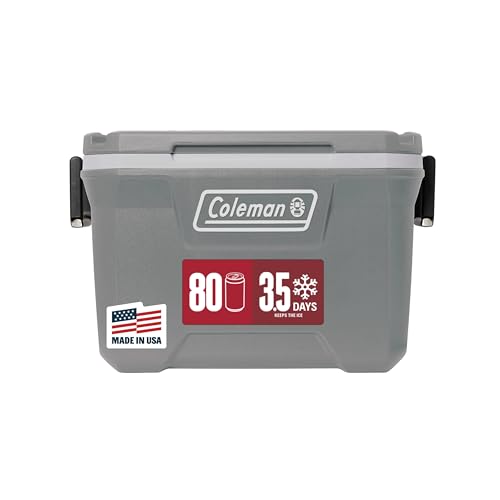
- Best for most apartments: Coleman 316 Series 52-Quart Cooler — Check on Amazon
- Best for balconies that take weather: Igloo BMX 52-Quart Cooler — Check on Amazon
- Best with wheels for elevator buildings: Coleman 316 Series 65-Quart Wheeled Cooler — Check on Amazon
- Best if you have a storage cage or large closet: Coleman 316 Series 70-Quart Cooler — Check on Amazon
- Only for rooftop-party hosts with storage: Coleman 316 Series 100-Quart Wheeled Cooler — Check on Amazon
- Step-up pick (prose-only, sits above this budget at most retailers): RTIC 52 QT Ultra-Light Cooler — see the review below.
Disclosure: As an Amazon Associate, dailyhomedecorating.com earns from qualifying purchases. Links to Amazon on this page are affiliate links; they cost you nothing extra. Listing details such as price and availability change often, so check the current Amazon listing before you buy.
Choosing the best outdoor cooler for apartments under $150 is a different problem from choosing a cooler for a house, and most buying guides never notice. In a house, a cooler lives in a garage and travels by car. In an apartment, a cooler lives in the same square footage you do: it competes for closet space with your vacuum and your winter coats, it rides elevators, it gets carried up stairs, it sits on a balcony that may be only a few feet deep, and when the trip is over you wash it in a bathtub because there is no garden hose. Every one of those facts changes which cooler is “best.” A 100-quart party chest that is perfect for a suburban garage is a genuine burden in a fourth-floor walk-up, while a compact 52-quart chest that a house-dweller might dismiss becomes the cooler you actually use every single week — for rooftop evenings, park picnics, beach days, and the unglamorous but essential job of keeping a big grocery shop cold on a hot ride home.
So this guide judges the proven under-$150 field through an apartment lens: footprint first, then weight, then how the cooler moves through a building, then how it drains and cleans in a small home, and only then raw capacity. Ice retention still matters — apartment coolers do the same camping and road-trip duty as any other — but it matters inside a size class your home can absorb. Our headline answer is the Coleman 316 Series 52-Quart: the smallest mainstream chest that still behaves like a real cooler, light enough to carry loaded down a hallway, and slim enough to disappear into a closet or under a bed frame between trips. The Igloo BMX 52 is the pick for balconies that live outdoors in all weather. The wheeled Coleman 65 is the surprise apartment winner for elevator buildings, because wheels turn a loaded cooler into luggage. The 70- and 100-quart models appear with honest warnings: both are excellent coolers, and both will punish you if your storage is a single hallway closet. The RTIC closes the list as a prose-only step-up for readers whose budget, unlike their floor space, is flexible.
There is also a social dimension to apartment cooling that house guides never mention. Apartment entertaining happens in shared sightlines — balconies overlook each other, rooftops are communal, courtyards echo. A cooler that looks tidy, closes quietly and does not leak meltwater across shared paving is not a superficial preference; it is how you stay the neighbour everyone is glad to see setting up. The picks below were chosen with that in mind as well: clean lines, controlled drains, lids that shut with a soft thunk rather than a plastic clatter. Small things, but apartment life is made of small things repeated daily.
A note on measuring before you buy, because apartment buyers get caught by this more than anyone:
measure three things — the storage spot (closet depth, under-bed clearance, balcony corner), the route (door widths are rarely the problem; tight stairwell turns and small elevator cabs are), and your own carrying reality. A cooler that is two inches too long for the closet does not become a smaller cooler; it becomes furniture. The dimensions and weights in each review below are there so you can rule picks in or out with a tape measure rather than a return label. And if your outdoor space is truly tiny, our guide to Best Outdoor Cooler For Small Patios Under $150 goes even deeper on footprint-first picks, while Best Outdoor Cooler Under $150 is the general roundup this apartment guide is drawn from.
In this guide
Quick picks: the best outdoor cooler for apartments under $150 at a glance
| Pick | Capacity | Wheels | Apartment strength | Link |
|---|---|---|---|---|
| Coleman 316 Series 52-Quart | 52 qt | No | Smallest footprint; closet-friendly | Check on Amazon |
| Igloo BMX 52 | 52 qt | No | Lives on a balcony in all weather | Check on Amazon |
| Coleman 316 Series 65-Quart Wheeled | 65 qt | Yes | Rolls like luggage in elevator buildings | Check on Amazon |
| Coleman 316 Series 70-Quart | 70 qt | No | Big capacity if you have storage | Check on Amazon |
| Coleman 316 Series 100-Quart Wheeled | 100 qt | Yes | Rooftop parties — storage permitting | Check on Amazon |
| RTIC 52 QT Ultra-Light | 52 qt | No | Prose-only: premium step-up above this budget | See review |
How we chose these coolers for apartment life
We started from the same verified under-$150 field as our general cooler roundup, then re-scored every model against apartment-specific criteria. Footprint and storage came first: exterior dimensions, whether the shape stacks or slides into standard storage, and whether handles or wheels stick out and snag closet doors. Weight came second — not just empty weight, but the honest loaded weight one person faces on stairs, because in a walk-up building the carry is part of the product. Third was movement through buildings: wheels that work on lobby tile and elevator thresholds, handles that do not bang shins in a narrow hallway, and a profile that turns stairwell corners without a wrestling match.
Fourth, drainage and cleaning without a garden. Apartment coolers get emptied into bathtubs, kitchen sinks and balcony drains, so we favoured drains that empty in a controlled stream rather than a tipped flood, and interiors that wipe clean and dry fast in a small bathroom. Fifth, balcony suitability: a cooler that lives outside a small flat must tolerate sun, rain and temperature swings without its lid warping or its body going brittle, and it must earn its balcony space by doubling as a side table or an extra seat. Sixth, the usual fundamentals still applied — honest ice retention for weekend trips, lids and latches that seal, and prices verified at or below this guide’s ceiling at major retailers. As with the main roundup, we screened the CPSC recall database and excluded recalled models outright; if you already own an older rolling cooler, a two-minute check of its model number on the CPSC site is worth doing before summer.
Pricing follows the same honesty rule as the rest of our cooler coverage: prices in this category swing with the season, so the article prints no fixed product price. Each linked pick has been sighted within this budget at a major retailer; check the live Amazon listing through the links before you buy, because a printed figure would be stale within weeks.
The best apartment coolers under $150, reviewed in detail
1. Coleman 316 Series 52-Quart Cooler — best for most apartments
Who it suits. The typical flat-dweller: a household of one to three, a balcony or a park as the “outdoors,” a closet or an under-bed void as the storage, and a strong preference for gear that disappears when it is not being used. If you want one cooler that fits apartment life without negotiation, this is it.
The 52-quart 316 is the compact end of Coleman’s mainstream series, and compact is precisely its virtue. Coleman rates it to hold up to 80 cans — a day of drinks and food for a small group, a weekend of drinks for two — and rates this size for up to three days of ice retention, which matches how apartment coolers are actually used: Friday-night rooftop drinks, a Saturday picnic, a Sunday beach run, a camping overnight. It is light enough that one person can carry it loaded from kitchen to car without planning the trip like a furniture move, and its tidy, recessed-lid profile slides into the places apartment storage actually offers: the top of a wardrobe, the end of a hallway closet, beside the suitcases. Between trips it doubles as the cold overflow every small kitchen needs at holidays, when the fridge fills and the balcony — weather permitting — becomes the second fridge with this chest as its door.
Cleaning suits small homes too. The interior is a simple, smooth box: rinse it in the tub or shower, wipe the corners, stand it on its end on a towel to dry. There are no wheel housings or handle mechanisms trapping meltwater and grime, which matters when the “hose it down in the yard” step of cooler care is not available to you.
Pros. Smallest footprint of any full-feature hard cooler in the tier; light enough for stairs when loaded; honest multi-day ice performance for weekends; simple interior that cleans in a bathtub; doubles as holiday fridge overflow; the most affordable route into the proven 316 Series.
Honest limitation. Fifty-two quarts is a ceiling you will feel when hosting: a balcony party for eight will outgrow it, and a four-day camping trip asks more of its insulation than this size is built to give. Apartment hosts should read the wheeled 65 review below before deciding.
Choose it if storage is tight and trips are short. Skip it if you regularly host big groups at home — the 65-quart wheeled model is your pick. Check on Amazon for the current price.
2. Igloo BMX 52-Quart Cooler — best for balconies that live outdoors
Who it suits. Apartment dwellers whose cooler will live on the balcony full-time — as drinks fridge, side table and extra seat — and take sun, rain and knocks year-round. If your storage plan is “it stays outside,” the cooler has to be built like outdoor furniture, and this is the one in the tier that is.
The BMX is Igloo’s heavy-duty line: thick blow-molded walls with extra insulation, rubberized T-latches that pull the lid down onto its seal, a raised Cool Riser base that keeps the body off hot balcony boards and out of rain puddles, and tie-down points if you ever take it boating or camping. Igloo rates it for up to five days of ice retention; independent testing in summer heat lands at a strong three to four days, which for balcony duty means a Friday fill still serves cold drinks on Sunday. At 52 quarts it holds 83 cans by Igloo’s measure — plenty for balcony entertaining — and at roughly 16 pounds empty and about 26 inches long, it fits the end of most balconies while leaving room for two chairs and a human. The flat, rigid lid earns its rent as a side table and an extra seat, which on a small balcony is not a bonus feature; it is the difference between a cooler that fits your life and one that crowds it.
The threaded drain is quietly apartment-friendly: it is garden-hose compatible, which in a flat translates to draining in a controlled stream into a bucket or the tub rather than tipping a sloshing chest over a balcony rail — something your downstairs neighbours will appreciate.
Pros. Toughest build in the tier, made to live outdoors; latching lid seals properly and keeps weather out as well as cold in; raised base handles balcony puddles and hot boards; doubles as table and seat; controlled threaded drainage; strong real-world ice retention for long weekends.
Honest limitation. No wheels, and at 16 pounds empty it is the heaviest 52-quart here — carrying it loaded up stairs is a two-trip or two-person job. If your cooler must commute rather than reside, the Coleman 52 above is the kinder carry.
Choose it if the cooler will live on your balcony. Skip it if you will carry it loaded, often, over distance. Check on Amazon for the current price and colour options.
3. Coleman 316 Series 65-Quart Wheeled Cooler — best for elevator buildings
Who it suits. Apartment households in lift buildings who host, camp, or do big weekly shops — anyone whose cooler journey is lobby, elevator, car park, in that order. Wheels sound like a camping feature; in an apartment building they are a lifestyle feature, because a wheeled cooler is luggage, and luggage is the one heavy thing apartment life is already designed around.
The 65-quart 316 pairs the series’ fully insulated lid and body — Coleman rates it to keep ice up to five days, with a realistic long weekend in normal use — with a wheeled chassis and tow handle that roll happily on tile, concrete and asphalt. Sixty-five quarts covers a family weekend away or drinks for a serious rooftop gathering, and the leak-resistant channel drain empties meltwater in a controlled way over a tub or a balcony drain. Loaded, it is heavy — all big coolers are — but you will never carry that weight further than the distance from your door to the lift, and that changes how often you will actually use it. It is also, not coincidentally, the best grocery tool on this list: load it in the car boot on a hot day and a big shop rides home properly cold.
Storage is the honest trade. At 65 quarts it needs a real home: the bottom of a wardrobe, a storage cage, or a balcony corner where the BMX-style outdoor life is softened by the fact that this is a mainstream plastic chest — it will tolerate a covered balcony far better than an exposed one.
Pros. Wheels turn a loaded cooler into luggage — ideal for lifts and lobbies; family-weekend capacity; strong multi-day ice retention; channel drain suits indoor emptying; the best big-shop and hosting option for flat-dwellers.
Honest limitation. In a walk-up building the wheels stop helping at the stairwell door, and a loaded 65-quart carry up three flights is nobody’s idea of fun — walk-up readers should take the 52. It also needs a dedicated storage spot; it will not vanish under a bed.
Choose it if your building has a lift and your cooler will host or travel. Skip it if you live up stairs without one. Check on Amazon for the current price and availability.
4. Coleman 316 Series 70-Quart Cooler — best if you have real storage
Who it suits. The apartment minority with a storage cage, a parking-space storage box, or a genuinely large closet — and a social life that needs the capacity. Also duplex and townhouse readers whose “apartment” comes with a garage corner. For everyone else, this review is a measuring exercise.
You get the most usable volume of any non-wheeled pick here: 70 quarts in a clean rectangular chest, roughly 31 inches long, 15.75 inches wide and 17.5 inches tall, with the 316 Series’ insulated lid and body and no wheels eating the corners — food containers pack into it beautifully. For a rooftop or courtyard party it is the ideal static drinks-and-food hub: carry it up empty or half-loaded with help, fill it in place, and let it work for two days. Between events it stores flat and stackable, with nothing protruding — in a storage cage, that tidiness is worth real money, because cages charge by the cubic metre of chaos.
There is one more apartment job this size does surprisingly well: the seasonal bulk shop. Households that shop monthly at warehouse stores, split bulk buys with neighbours, or batch-cook for the freezer run into the same problem — a small apartment fridge cannot absorb a bulk haul on a hot day. A 70-quart chest staged in the kitchen for an afternoon is the buffer that makes bulk buying work in a small home, and unlike a second fridge it draws no power, needs no outlet and goes back to the cage when the shop is put away. It is a niche argument, but for the households it fits, it alone can justify the storage.
Pros. Maximum packable volume per dollar in the tier; clean rectangular interior; stacks neatly in storage cages; simple and light for its size with nothing to break; excellent static party cooler; doubles as a bulk-shopping buffer for small kitchens.
Honest limitation. Loaded, it is a two-person carry, and in a flat that carry includes corridors, doors and possibly stairs. If you cannot honestly picture where it sleeps in February, do not buy it in July.
Choose it if you have the storage and the social calendar. Skip it if either is missing. Check on Amazon for the current price.
5. Coleman 316 Series 100-Quart Wheeled Cooler — rooftop parties only
Who it suits. A narrow but real apartment tribe: hosts with access to a shared rooftop, courtyard or terrace, plus the storage to keep a nearly three-foot-long chest the other 350 days a year. If that is not you, this pick is here so you can rule it out with confidence rather than curiosity.
The case for it is capacity economics. One hundred quarts — rated by Coleman for up to five days of ice, around 21 pounds empty and about 37.5 inches long — swallows the drinks and ice for a gathering that would defeat two mid-size coolers, and the wheels mean it travels from storage to rooftop by lift like an oversized suitcase. For a building-party host, it replaces the borrow-three-coolers ritual permanently. The case against is everything else about apartment life: it will not fit a standard closet, it turns small elevator cabs into puzzles, and it is absurd overkill for a household’s weekly needs.
Pros. Party capacity nothing else in the tier touches; wheels make it movable by one person on flat routes; excellent cost per quart; doubles as overflow cold storage during power cuts.
Honest limitation. Storage, storage, storage. Measure your cage or closet before even thinking about it — and if the route involves stairs, the wheels will not save you.
Choose it if you host rooftop-scale gatherings and have the storage. Skip it if you are buying for ordinary household use. Check on Amazon for the current price and delivery options.
6. RTIC 52 QT Ultra-Light Cooler — the step-up pick (prose-only)
Who it suits. Apartment readers with premium taste and a firm 52-quart footprint: the RTIC Ultra-Light brings heavy-duty, premium-style construction and top-class tested ice retention in the same size class as our top two picks, and it is unusually light for its category — a real virtue when every loaded pound faces a hallway.
It is prose-only for the same honest reason as in our general roundup: at the retailers we checked, it sat above this guide’s budget ceiling, and it is sold mainly through RTIC’s own store rather than at a verifiable in-tier Amazon price. We describe it instead of linking it: a mid-range premium cooler, priced above the linked picks here and below the flagship brands. If your budget stretches and your storage does not, it is the one upgrade that does not demand more space — only more money.
Pros. Premium-class build and sealing in an apartment-friendly size; excellent tested ice retention; light for a heavy-duty cooler.
Honest limitation. It breaks the budget, which is why it carries no link. Inside the tier, the BMX delivers the same live-on-the-balcony toughness for less.
Choose it if money is flexible and space is not. Skip it if the ceiling is firm.
Side-by-side comparison for apartment buyers
| Cooler | Capacity | Wheels | Storage character | Best apartment role |
|---|---|---|---|---|
| Coleman 316 52-Qt | 52 qt | No | Closet / under-bed friendly | Everyday default |
| Igloo BMX 52 | 52 qt | No | Lives on the balcony | Outdoor-resident cooler |
| Coleman 316 65-Qt Wheeled | 65 qt | Yes | Wardrobe floor / cage | Lift-building all-rounder |
| Coleman 316 70-Qt | 70 qt | No | Storage cage, stacks flat | Static party hub |
| Coleman 316 100-Qt Wheeled | 100 qt | Yes | Needs a cage or garage corner | Rooftop parties |
| RTIC 52 QT Ultra-Light (prose-only) | 52 qt | No | Same footprint as the 52s | Premium step-up |
How to choose an apartment cooler under $150
Measure the storage spot before the cooler. In apartment buying, the order of operations is reversed: find where the cooler will live for the 300 days a year it is not in use, measure that space honestly, and let the measurement choose the size class. Closet depth, under-bed clearance, the balcony corner behind the door swing — one of these is your real budget, and it is measured in inches, not dollars. Every pick in this guide lists the dimensions or size character you need; use them.
Walk the route with your eyes. Picture the cooler loaded, travelling from your kitchen to your car or your rooftop. Count the stairs, the tight turns, the doors you must hold open with your hip. If the route is flat and lift-served, wheels are a gift. If it involves two flights of stairs, a loaded cooler’s weight is the spec that matters, and the honest answer is a smaller cooler or two trips with a mid-size one. There is no shame in the 52-quart choice; there is only shame in the 100-quart choice abandoned in a hallway.
Plan the emptying, not just the filling. Meltwater has to go somewhere, and in a flat that somewhere is a tub, a sink or a bucket brigade to the balcony drain. Prefer drains that release in a controlled stream — channel drains and threaded plugs — over coolers that must be tipped. If your pick must be tipped, empty it in the bathtub, not over the balcony: your neighbours below did not consent to a waterfall, and many leases have something to say about it.
Make the cooler earn its space twice. Apartment gear that does one job is a luxury; gear that does three is a bargain. A flat-lidded cooler is a side table, an extra seat, a footrest, a plant stand and a step (briefly, carefully) as well as a cold box. The BMX and the Coleman 52 both live this double life well. If a cooler can sit on your balcony as furniture, its footprint stops being a cost and becomes part of the room.
Respect the building. A few apartment-specific courtesies double as practical rules. Check your lease or building rules before a cooler takes up permanent balcony residence — most buildings care about weight, drainage and appearance rather than coolers as such, but it is cheaper to know than to argue. Keep balcony loads sensible: a filled 65-quart cooler is a heavy object, and older balconies have load limits that a row of planters plus a party plus a big cooler can approach more easily than people expect. And if your building has shared spaces — rooftop, courtyard, laundry-room freezers — the cooler that travels well and cleans easily is the one that keeps you popular in all of them.
Keep ice technique small-space smart. Freeze water bottles at home instead of buying bagged ice you must store; they double as drinks, keep food dry, and refreeze for the next outing. Pre-chill drinks in the fridge so the cooler only maintains cold. And keep the cooler out of the balcony’s direct afternoon sun — on a small balcony, moving it two feet into the shade is the cheapest ice-retention upgrade there is. Readers setting up a small outdoor space from scratch will also find the footprint-first thinking in Best Outdoor Cooler For Small Patios Under $150 useful, and balcony shade pairs naturally with the picks in Best Patio Umbrella Under $150.
Consider the two-cooler system, apartment edition. House guides recommend a big chest plus a small day cooler; the apartment version of that wisdom is a resident plus a traveller. The resident — a BMX or a 52 on the balcony — handles home duty and never moves. The traveller is whatever you already own that is light: a soft cooler, a small hard chest, even a sturdy insulated tote for park days. Many flat-dwellers find this split serves them better than one mid-size compromise, because the cooler that lives outside and the cooler that rides in a backpack were never really the same product. If budget forces one purchase, buy the resident first — it will be used weekly — and let the traveller be the cheap, light thing it honestly needs to be.
Common apartment cooler mistakes
Buying the party size for everyday life. The cooler you need twice a year is not the cooler you should store 363 days a year. If big gatherings are rare, buy the everyday size and borrow or rent capacity for the party.
Forgetting the loaded weight on stairs. Ice and drinks are heavy, and they are heaviest at the top of the third flight. Empty weight plus a full load is the number your arms care about; if the total frightens you, it should.
Draining over the balcony rail. Meltwater carries food residue and worse. Drain into the tub or a bucket, every time — your downstairs neighbours and your lease will both thank you.
Storing it sealed and damp in a closet. A cooler put away wet will perfume the whole closet by spring. Wash, dry fully with the lid open, and store with the lid ajar.
Leaving a mainstream cooler in harsh sun all summer. Balcony sun is brutal and constant. If your cooler lives outside, choose the heavy-duty build (the BMX) or give a mainstream chest shade and a cover; UV and heat age plastic quietly and then all at once.
Skipping the recall check on a hand-me-down. Apartment coolers change hands constantly through building giveaways and second-hand sales. Older rolling coolers have been subject to safety recalls in recent years — check any used cooler’s model on the CPSC database before it joins your home.
Final recommendation
Most apartment readers should buy the Coleman 316 Series 52-Quart and stop thinking about coolers: it fits the closet, the car and the weekend. If your cooler will live on the balcony, buy the Igloo BMX 52 instead and let it work as furniture that happens to keep drinks cold. In a lift building with hosting ambitions, the wheeled Coleman 65 is the joyful pick — luggage logic beats lifting logic every time. The 70 and the 100 are excellent coolers for the minority with real storage, and the RTIC is the upgrade that respects your footprint while ignoring your budget. Measure first, buy once, and let the cooler disappear into your home between adventures.
Three apartment scenarios, matched to picks
The studio dweller with a fire-escape-sized balcony. Your outdoor space fits two chairs and a plant, your storage is one closet, and your trips are park days and the occasional overnight. Buy the Coleman 52 and keep it in the closet with a frozen bottle rotation in the freezer. On balcony evenings it comes out as the drinks table between the chairs; on park days it carries lunch for four friends without complaint. Every larger pick in this guide would cost you either the closet or the balcony’s second chair, and neither price is worth paying for capacity you will use twice a year.
The two-bedroom share house that hosts. Four adults, a decent balcony, a group chat that organises rooftop birthdays and courtyard barbecues, and a storage cage downstairs that everyone pretends is organised. Your answer is the wheeled Coleman 65: it lives in the cage, rides the lift like luggage, feeds a party’s drinks without a refill panic, and goes car-camping on the weekends someone borrows a vehicle. The wheels matter more than the extra quarts — in a share house, the cooler that one person can move alone is the cooler that actually gets used, while the cooler that needs a volunteer becomes a source of low-grade resentment.
The balcony gardener with a south-facing terrace. Your cooler is not going on trips; it is moving in. It will sit in full sun beside the tomato pots from May to September, holding drinks for every evening you spend out there, and serving as the table your book and glass rest on. Buy the BMX. Its thick walls hold ice through a hot weekend without a refill run, its latching lid keeps wind-blown grit and curious weather out, its raised base stands clear of the watering puddles, and its build treats a summer of UV and knocks as a normal working environment rather than slow damage. A mainstream chest would survive a season or two of this life; the BMX is the one that will still be doing it in year five.
Notice what all three scenarios share: the right answer was decided by the home, not the spec sheet. Capacity, insulation and price were the same in every case — what changed was the storage, the route and the daily role. That is the real lesson of apartment cooler buying, and it is why this guide ranks a humble 52-quart chest above party-sized flagships: in a small home, the best cooler is the one that fits your life so well you forget it is there until the moment you need it cold.
Frequently asked questions
What is the best cooler size for an apartment?
For most flats, 52 quarts is the sweet spot: a weekend of drinks and food for a small household, in a chest one person can carry loaded and store in a closet. Step to 65 quarts only if you have a lift and a storage spot; treat 70 quarts and above as storage-cage purchases.
Can I keep a cooler on my balcony all year?
A heavy-duty model like the BMX is built for it. Mainstream plastic chests survive balcony life far better with shade and a cover, and in very hot climates bringing the cooler indoors during the worst months extends its life. Also check your building’s rules — some leases restrict what can be stored on balconies.
How do I empty a cooler without a garden hose or yard?
Use the drain over a bathtub or large sink, or drain in stages into a bucket. Threaded and channel drains release a controlled stream, which is why this guide favours them for flats. Never tip meltwater over a balcony rail.
Are wheels useful in an apartment building?
In lift buildings, extremely — the route from flat to car is exactly the flat, hard surface wheels are made for. In walk-ups, wheels help only until the stairs; there, a lighter carry cooler wins.
How long will ice last in these coolers on a trip?
Expect up to about three days from the 52-quart Coleman in normal use, a strong three to four from the BMX, and a long weekend from the wheeled 65 — always longer if you pre-chill, load cold contents, and keep the cooler shaded and closed.
Can a cooler double as balcony furniture?
Yes — a flat, rigid lid makes a serviceable side table and extra seat, and it is one of the best reasons to keep a 52-quart chest on a small balcony. Choose a sturdy build for the job, and avoid standing on any cooler lid as a habit.
Would a soft cooler or a mini fridge be better for an apartment?
They solve different problems. A soft cooler is lighter and stores in a drawer, but holds ice for hours rather than days and suits picnics, not weekends. A plug-in mini fridge is wonderful on a balcony with an outlet, but it cannot travel, and many buildings restrict appliances on balconies. A hard cooler is the only one of the three that does balcony evenings, park days, camping and power cuts — which is why it is the default recommendation here.
How do I keep a balcony cooler from bothering neighbours?
Keep it on your own boards, drain meltwater into your tub rather than over the rail, and avoid dragging a wheeled cooler across a wooden balcony late at night — wheels on boards carry further than you think. A rubber mat under the cooler quietens it and protects the deck surface at the same time.
What if my cooler arrives and does not fit the storage spot?
Measure again before unboxing fully, and compare against the dimensions in the listing — if it truly does not fit, exchange down a size class rather than living with a cooler that colonises your hallway. A cooler stored in the middle of your living space will be resented daily, and resented gear stops being used, which defeats the entire purchase.
Cooler care when your home is small
Apartment cooler care is a logistics exercise before it is a cleaning one. The wash happens in the bathtub or the shower stall, because that is the only basin in the home that fits a 52-quart chest — put a towel underneath to protect the tub, fill with warm water and a little mild detergent, wash, rinse with the shower head, and stand the cooler on end on the towel to drain. The whole job takes ten minutes, and doing it the day you come home, rather than the day before the next trip, is the single habit that keeps a cooler fresh for years. Dry it with the lid open in the bathroom with the fan running, or on the balcony in moving air; a cooler stored even slightly damp in a closed closet will announce itself to the entire flat within a month.
Storage deserves the same deliberateness. Measure the spot, then commit to it: the end of the hallway closet, the top shelf of the wardrobe, the balcony corner, the storage cage. Store the cooler clean, dry and with the lid ajar — a folded hand towel laid across the rim keeps the lid from sealing while it rests. If it lives on the balcony, a simple cover or even an old light-coloured sheet over the top keeps the worst of the sun off the lid and noticeably slows the plastic’s ageing; if it lives in a cage, a label with your flat number is cheap insurance in a shared space. Once a season, give the working parts ten seconds of attention: hinges flexing freely, drain plug threading smoothly, latches on the BMX still pulling the lid down tight, wheels on the wheeled models spinning clean. Mainstream makers sell these small parts individually, so a worn hinge is a minor order, not a new cooler.
Ice strategy in a flat is about the freezer you already own. Most apartment freezers cannot spare room for bagged ice, so freeze your cold in forms that earn their space: water bottles that become drinks, flat gel packs that slide along the cooler walls, and one or two food containers of ice for long trips, which melt slowly and keep food out of the meltwater. Freeze them in rotation during the week before a trip and the cooler leaves home properly armed without a single purchase. Load drinks from the fridge, never warm, and put a frozen bottle on top of everything as the last thing in — cold air sinks, and the top layer is where a cooler loses its chill first. These habits cost nothing but freezer space, and in a small home, habits that cost nothing but attention are the whole game.


