Where to buy
Check the latest price, availability and delivery on Amazon. Orders are placed on Amazon. We may earn a commission from qualifying purchases.
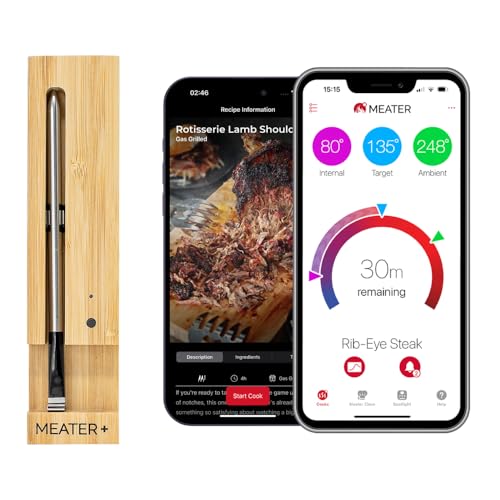
- Best zero-footprint monitoring: MEATER Plus Smart Wireless Meat Thermometer — check price on Amazon
- Best small-space flagship: ThermoWorks Thermapen ONE — check price on Amazon
- Best dual-duty surface: Lodge Double Play Reversible Cast Iron Grill/Griddle LDP3 — check price on Amazon
- Best safe cleaning pick: Kona Safe/Clean Bristle-Free Grill Brush — check price on Amazon
- Best compact fire starter: Weber Compact Rapidfire Chimney Starter 7447 — check price on Amazon
- Best sear upgrade for a small grill: GrillGrate Interlocking Grill Grates, 4-Panel Set — check price on Amazon
The full-size Keter Unity XL prep cabinet is discussed in prose only in this guide — not because it failed verification, but because it fails most small patios, and this guide will not pretend otherwise. Read the full guide ↓
Disclosure: As an Amazon Associate, dailyhomedecorating.com earns from qualifying purchases. Links to Amazon on this page are affiliate links; they cost you nothing extra. Listing details such as price and availability change often, so check the current Amazon listing before you buy.
Small patios invert the usual shopping logic, so let us set the terms before the products: the best grill accessories for small patios under $1500 are not a shrunken version of a big-yard system, and the $1500 is not a target to reach. On a small patio, space is the real budget — money is merely the other one. A flagship accessory that eats your only side surface has cost you more than its price, and a modest tool that lives in a kitchen drawer and performs like a flagship has cost you nothing but its price. This guide therefore spends the money where money actually buys performance in a small space — temperature instrumentation, cooking surfaces that double indoors, safe cleaning — and refuses to spend it on square footage you do not have. As in every variant of this series, the framing is stated openly: no single home grill accessory legitimately costs near $1500, the tier is a total system budget, and on a small patio the correct outcome is a complete system that lands well under it, with the difference kept for your grill, its cover and your sanity.
Think about what a small patio actually constrains. Footprint: the grill, one chair’s worth of standing room, perhaps a bistro set — every stored object displaces a lived moment. Landing space: there is no counter, so trays travel between kitchen and grill in your hands, and any accessory that demands a surface to work on is quietly demanding a room you do not have. Smoke: your neighbours are close, their windows are open, and your grill’s manners are a social fact, not a private one. And storage: the patio cannot be the warehouse, so the kit’s winter home is a closet, a cabinet, the space under a bench — volume you must be able to picture before you buy, not after the boxes arrive.
The picks below were chosen against those constraints, one by one. The thermometer system is wire-free and drawer-sized. The instant-read is the same flagship a competition cook would carry, because small spaces deserve full-size accuracy. The cast-iron plate is the system’s square-footage genius: it grills on the patio and griddles on the stove, so its storage is justified by two kitchens, not one. The chimney is the compact model, sized for the small kettles small patios actually run. The sear panels are sized to cover a cooking zone rather than a whole imaginary grill. And the brush is bristle-free, because the safety story of 2026 — the CPSC recalling over three million Weber wire-bristle brushes in February and over ten million Nexgrill brushes in March, after bristles were swallowed and required medical treatment — applies with extra force where guests eat within arm’s reach of the grill and neighbours’ patios share the fallout zone.
One famous product is handled differently here, deliberately. The big prep cabinet that anchors our general and backyard systems appears in prose only, with its measurements and an honest verdict: it is an excellent product that most small patios should not buy. A guide that linked it anyway, trusting you not to measure, would be spending your return postage for its commission. Below: quick picks, method, detailed reviews with the footprint of everything stated, a comparison table, a measuring-first how-to-choose, the small-patio mistakes that waste this tier, and a FAQ.
In this guide
Quick Picks: The Best Grill Accessories for Small Patios Under $1500, Measured First
Six linked picks, every one of which stores in a drawer, a cabinet or a closet corner. If a pick cannot tell you where it lives, it is not on this list.
| Small-patio need | Pick | Where it lives / why it fits | Link |
|---|---|---|---|
| Leave-in monitoring | MEATER Plus Smart Wireless Meat Thermometer | Lives in a kitchen drawer; no cables, no base unit competing for your one side shelf | Check on Amazon |
| Instant verification | ThermoWorks Thermapen ONE | Flagship accuracy in a folding tool — the best performance-per-inch in the guide | Check on Amazon |
| Flat-top + grill surface | Lodge Double Play Reversible Cast Iron Grill/Griddle LDP3 | Stores vertically like a baking sheet; works on the stove all winter | Check on Amazon |
| Safe cleaning | Kona Safe/Clean Bristle-Free Grill Brush | Hangs on a hook; coil head sheds nothing near neighbours or guests | Check on Amazon |
| Charcoal lighting | Weber Compact Rapidfire Chimney Starter 7447 | The compact chimney for compact kettles — sized for the grills small patios run | Check on Amazon |
| Sear + flare-up control | GrillGrate Interlocking Grill Grates, 4-Panel Set | Cover the main zone of a small grill; less flare-up means less smoke for close neighbours | Check on Amazon |
How These Picks Were Chosen
The first filter was a tape measure. Every candidate had to answer three questions with numbers: What is its footprint in use? Where does it store, and what volume does it take there? Does using it require a work surface a small patio does not provide? Products that failed — full-size prep cabinets, full-size chimneys, multi-part systems with bases, docks and cases — were excluded or demoted to prose regardless of quality, because on a small patio an unusable excellent product is worse than a usable good one: it consumes the space and then the goodwill.
The second filter was performance without compromise. Small-space guides often quietly downgrade the tools, as if a small patio implied a small appetite for doing things properly. This one does not: the instant-read is the category’s reference flagship, the leave-in probe is the established wire-free standard, the cast iron is the same plate recommended at every patio size. Where a compact version exists and is genuinely the right tool — the compact chimney — we chose it; where compact versions are toys, we kept the real tool and found its storage answer instead.
The third filter was verification, under the series rule: a linked pick is a real Amazon listing, confirmed against manufacturer information, with a genuine price sighting for that exact product recorded during research and documented in the notes accompanying this article. The prep cabinet discussed in prose actually passes that test — it is excluded from the linked picks on fit grounds alone, and the guide says so, because the reason matters: readers with a genuinely large “small patio” deserve to know it was a measurement decision, not a quality verdict.
The fourth filter was neighbourliness, which on a small patio is a technical specification. Flare-ups and dripping-fat smoke are the two things that turn close neighbours into complainants, so the sear panels — which catch drippings in valleys instead of letting them hit the heat source — score here as smoke control, not just sear quality. The bristle-free brush belongs to the same logic: after the 2026 CPSC recalls of Weber and Nexgrill wire-bristle brushes, no brush that can shed a metal fragment belongs on a patio where fragments travel — to your table, to the balcony below, to a shared courtyard grill.
Finally, the budget was handled the small-patio way: spent fully on quality, partially in total. At the prices sighted during research, the six linked picks together use a distinctly modest share of the $1500 ceiling. The remainder is not a shortfall to be fixed with filler; it is the budget for the compact grill itself if yours is still to come, a fitted cover, a storage bench that doubles as seating, and the reserve that keeps a small space uncluttered by desperation purchases. In a small patio, unspent money is visible as empty, usable space — the most luxurious thing the budget can buy.
Detailed Reviews: Every Inch Accounted For
1. MEATER Plus Smart Wireless Meat Thermometer — Monitoring With No Footprint
Who it suits: The small-patio cook whose grill has no side shelf to spare, whose prep happens in the kitchen, and whose patio fits the cook or the audience — not both hovering over the lid.
The MEATER Plus is a single wire-free probe with a bamboo charging block that doubles as a Bluetooth repeater. On a small patio, the absence in this design is the feature: no probe cables crossing the lid seal, no receiver unit asking for the square foot of shelf your tongs already claimed, no display to mount. The probe rides in the food, the block sits by the door extending the signal, and your phone — in your pocket, in the kitchen — carries the readings and the finish-time estimate. You season inside, carry one tray out, close the lid, and go back to your guests or your sofa until the app calls you. For a space that cannot host a hovering cook, monitoring that removes the hover is the whole game.
Pros: Zero patio footprint; stores in a kitchen drawer. Works in the oven identically, so it earns its drawer all winter. Alerts end lid-lifting, which on a small grill means heat loss you cannot afford and smoke in your face at close quarters. Dishwasher-safe probe, no cable tangle in a small storage bin.
Honest limitation: One probe means one monitored cut; a mixed grill leans on the instant-read for the rest. Wire-free probes have ambient temperature ceilings and are not for direct searing duty. Range depends on your walls and layout — keep the repeater block near the patio door, and expect thick masonry to tax any wireless system.
Choose it if you cook whole cuts — chickens, roasts, thick steaks — on your small grill. Skip it if your menu is burgers and sausages only; the Thermapen covers that alone.
2. ThermoWorks Thermapen ONE — Flagship Accuracy, Drawer Storage
Who it suits: Every small-patio cook, including those whose “patio grill” is partly a stovetop plan. If the system shrinks to one premium tool, this is the one.
Full readings in about a second, professional accuracy, auto-rotating backlit display, folding probe: the Thermapen ONE is the reference instant-read, and its small-patio virtue is that excellence here costs no space at all. A small grill cooks a small number of pieces, which means each piece matters — there is no spare burger to sacrifice to a guess. One-second checks let you verify every thigh and every patty in the time a lesser thermometer spends waking up, then fold the tool into a drawer beside the stove, where it spends the winter verifying roasts and reheats with the same authority.
Pros: The best performance-per-cubic-inch in this guide, and it is not close. Speed makes complete verification realistic on a small load. Backlit display suits the evening cooking small patios specialize in. Universality — every heat source you own, indoors and out — collapses its cost per use.
Honest limitation: It monitors nothing unattended; that is the MEATER’s job, and the pairing is deliberate. The price is premium for a single-function tool. ThermoWorks sells mainly direct and warns that marketplace sellers are not authorized dealers; the linked listing is the one verified during our research, but check the seller on the page, or buy from the maker.
Choose it if you do not already own a fast, accurate instant-read. Skip it only if you do.
3. Lodge Double Play Reversible Cast Iron Grill/Griddle LDP3 — Two Kitchens, One Plate
Who it suits: The small-patio cook who needs every stored object to hold two jobs: this is the grill accessory that is also a stovetop staple, and in a small home that double identity is what earns its cabinet space.
The LDP3 is pre-seasoned cast iron, about sixteen and three-quarter by nine and a half inches, flat on one side and ribbed on the other. Outside, it sits across a small grill’s grates and turns part of it into a flat top — smash burgers with real crust, onions in the drippings, peppers and halloumi that would fall through bars. Inside, it spans two burners as a griddle and grill pan, which means its storage — slid vertically into a cabinet like a baking sheet — is justified twelve months a year. Small patios attached to small kitchens cannot afford seasonal, single-scene tools; this plate is the opposite of one.
Pros: Dual-scene value unmatched in the system. Cast iron’s thermal mass suits small grills, whose thin grates lose heat the moment food lands. No coating to degrade, nothing electronic to store carefully. Effectively a lifetime object at the smallest share of the budget.
Honest limitation: It weighs over nine pounds and stores like it — check that your cabinet or shelf is happy, and check your stove maker’s guidance if you have a glass cooktop. It needs cast-iron manners: dry after washing, light oil, no soaking. On the smallest grills it may cover most of the grate, so plan cooks as either grate cooks or plate cooks, not both at once.
Choose it if flat-top food or indoor grilling is even a monthly habit. Skip it if you already own a heavy griddle you use and love.
4. Kona Safe/Clean Bristle-Free Grill Brush — Small Space, Shared Air, Zero Shed
Who it suits: Anyone cleaning a grill on a small patio — where “away” is a neighbour’s balcony, a shared courtyard, or the chair your guest is about to sit in.
The Kona cleans with continuous stainless-steel coils: dip in water, scrub the hot grate, let steam do the lifting. It contains no individual bristles, and in 2026 that design stopped being a preference and became the standard: the CPSC recalled over three million Weber wire-bristle brushes in February and over ten million Nexgrill brushes in March, because detached bristles stick to grates and food, get swallowed, and have required medical treatment and surgery. On a detached-house patio a shed bristle endangers one table; in dense housing it can travel — onto a neighbour’s grill below, into a shared space, into food eaten two feet from the grate by someone who trusts you. The coil design removes the failure mode, works on porcelain, ceramic, steel and cast iron, and the brush itself hangs on a single hook, asking nothing of your storage.
Pros: Eliminates a federally recalled hazard class at the smallest price in the guide. Coil heads outlast bristle heads and never demand the quiet replacement cycle bristle brushes do. The steam method cleans in the minute before cooking — vital when your whole cook happens in a small window of patio time. Hangs anywhere; stores in nothing.
Honest limitation: Baked-on carbon takes a touch more patience than a bristle scour once did; do a deeper clean on a cool grate periodically rather than forcing the hot steam pass to do everything. Inspect the coils each season and replace the brush if one is ever damaged.
Choose it if you clean any grill in shared airspace. Skip it only if a bristle-free system already hangs by your grill — and retire any wire-bristle brush today.
5. Weber Compact Rapidfire Chimney Starter 7447 — The Right Size of Fire
Who it suits: Small-patio charcoal cooks running compact kettles — and only readers whose building or house rules permit charcoal in the first place; check before the chimney, not after.
The Compact Rapidfire is Weber’s smaller chimney, proportioned for compact kettles and modest coal loads: a starter cube underneath, a column of briquettes lit evenly, ready to pour in well under half an hour, no lighter fluid involved. Small-patio charcoal is a game of proportion — a full-size chimney lights more coal than a small kettle can use and then needs somewhere safe to cool in a space that has no spare corners. The compact model matches the fuel load to the grill, stores in a fraction of the volume, and keeps the fluid-free standard that matters doubly where accelerant fumes drift straight into three neighbours’ windows.
Pros: Sized honestly for small kettles and small storage. Even, fluid-free lighting — no chemical taste, no accelerant stored on a small patio. Inexpensive and durable. Contains the lighting fire in a column, which is easier to supervise in tight quarters than an open pile.
Honest limitation: It is still a column of intense heat: it needs a non-combustible spot while lighting and cooling, and some small patios — wooden decks, tight balcony corners — genuinely lack one, in which case charcoal itself is the wrong call for that space. If your grill is gas or electric, this pick simply does not apply; reallocate its small share.
Choose it if charcoal is permitted and your kettle is compact. Skip it if either condition fails — no accessory fixes a permission problem.
6. GrillGrate Interlocking Grill Grates, 4-Panel Set — Sear Power, Smoke Manners
Who it suits: The small-grill owner whose cooking is limited by flare-ups and uneven heat — which on a small grill means the whole surface, since there is no cool corner to escape to.
These hard-anodized aluminium panels — raised rails over dripping-catching valleys, interlocking in sections — can cover the main cooking zone of a compact grill rather than pretending to re-grate a banquet. The aluminium spreads a small grill’s fierce hot spot into an even surface; the valleys intercept the fat that would otherwise hit the burner or coals and come back as flare and smoke. Read that second property as the small-patio headline: flare-up control is smoke control, and smoke control is how a small patio keeps its neighbours, its lease and its welcome. The sear marks — the visible upgrade — are almost the bonus.
Pros: Transforms a small grill’s manners and sear in one move. Panels lift out for sink cleaning — the only cleaning station a small patio has. Interlocking sections let you cover the zone you use instead of buying coverage you cannot fit. Transferable to the next grill and the next home.
Honest limitation: Measure your grill’s depth before ordering — panel sizing is the whole ballgame, and on the tiniest grills even a zone’s worth must be confirmed. Valleys need periodic cleaning to keep the flare-up benefit. If your small grill is an even-heating electric with gentle manners already, the gain narrows to sear quality alone.
Choose it if flare-ups, smoke or weak sear limit your small grill. Skip it if your grill already behaves — small budgets of space should not buy redundant behaviour.
7. Keter Unity XL Prep Cabinet — Prose-Only, Because It Does Not Fit (Probably)
In our general and backyard guides this stainless-topped storage cabinet is the anchor pick, and its quality is not in question here: it is verified, priced in our research, and genuinely excellent where it fits. The problem is the fitting. At roughly four and a half feet wide, plus the working clearance a grill demands, the Unity XL consumes the entire functional area of a typical small patio — the space where the cook stands, the chair sits, the door swings. Some readers’ “small patio” is a generous terrace in disguise; if your measurements honestly give the cabinet a home with clearance to spare, it will serve you exactly as it serves backyard readers, and you should buy it with our blessing. Everyone else: the small-patio substitute is a tray-based workflow — prep on a tray in the kitchen, carry once, cook, carry back — plus storage that doubles as furniture, like a bench with a lidded interior. Do not buy square footage you have not measured. That restraint, at this tier, is the purchase.
Comparison Table
| Pick | Small-patio role | Key verified spec | Storage answer |
|---|---|---|---|
| MEATER Plus | Leave-in monitoring | Wire-free probe; repeater block; 165 ft class range | Kitchen drawer |
| Thermapen ONE | Instant verification | ~1-second readings; backlit rotating display | Kitchen drawer |
| Lodge LDP3 | Flat-top + grill pan | 16.75 x 9.5 in cast iron, reversible, pre-seasoned | Vertical, like a baking sheet |
| Kona Safe/Clean | Safe cleaning | Bristle-free coil head; steam method | One hook |
| Weber Compact Chimney | Charcoal lighting | Compact chimney, model 7447, for small kettles | Closet / storage bench |
| GrillGrate set | Sear + smoke manners | Anodized aluminium rails and valleys | On the grill, or flat in cabinet |
| Keter Unity XL (prose) | Anchor — if it fits | Stainless top; 78 gal storage per maker | It is the storage — measure first |
How to Choose Small-Patio Grill Accessories: Measure, Then Spend
Measure three things before opening a single listing. The grill’s cooking depth (for panels and plates), the patio’s clear floor area with the door swing included, and the storage volume you are actually offering the kit — a named drawer, shelf or bench interior, measured, not gestured at. Every pick in this guide passed those three measurements for a typical small patio; your patio is the specific one that counts.
Apply the two-job test to everything. In a small home, an object earns its volume by working in two scenes, two seasons or two roles. The cast-iron plate: grill and stove. The thermometers: patio and oven. The storage bench you may buy with the leftover budget: seat and warehouse. Single-scene objects must be small, cheap or extraordinary — preferably all three, like the brush.
Sequence by what removes a trip. Small-patio cooking is a shuttle run between kitchen and grill. Buy first what ends trips: monitoring that lets you stay inside, a tray discipline supported by tools that live where they are used, storage that keeps the brush and chimney at the point of need without colonizing the patio.
Specify smoke behaviour, not just cooking behaviour. Ask of any grill or accessory: where does the fat go, and what does it become? Valleys that catch drippings, lids that stay closed because a probe is watching, a clean grate that does not smoke off last week’s residue — these are your neighbour relations, engineered. After the 2026 wire-brush recalls, add the cleaning corollary: bristle-free only, because fragments travel in dense housing.
Keep the system carry-able. Small patios belong to renters and movers disproportionately. The whole kit in this guide fits in a drawer, a cabinet and one storage bench — a deliberate property. If a candidate purchase would need its own furniture, it has failed the small-patio test even if it fits today.
Let the budget stay partly unspent, on purpose. Spend fully on the quality of each role; spend partially in total. The remainder buys the fitted cover, the storage bench, the compact grill’s next iteration — or simply remains the empty square foot your patio feels like luxury for having.
Common Mistakes on Small Patios at This Budget
Buying the backyard system at patio scale-blindness. The anchor cabinet, the four-probe dock, the full-size chimney: excellent products, wrong address. Transplanting them is how a small patio becomes a storage unit with a grill in it.
Confusing “compact” marketing with measured fit. Compact is an adjective; your tape measure deals in numbers. Panels, plates and cabinets all publish dimensions — the mistake is never reading them against your own.
Storing the kit on the patio by default. Weather, leases and simple visual calm all argue for indoor storage. If it cannot live inside, question whether it belongs in the system at all.
Keeping the wire-bristle brush because it is small. Size is not the hazard; shedding is. The 2026 CPSC recalls — Weber in February, Nexgrill in March, millions of brushes — were about bristles in food, and dense housing multiplies the directions a bristle can travel. The bristle-free replacement is the smallest, cheapest fix in the guide.
Spending the leftover on filler. A complete small system under budget tempts a victory lap of gadgets. Each one costs volume forever to save money once. Resist: the empty space is the reward.
Ignoring the door swing and the cook’s elbows. Layouts are rehearsed in chairs and trays, not in floor plans. Stand in the space with a tray in both hands before any furniture-scale purchase — including the prose-only cabinet some readers will be tempted by.
Final Recommendation
The small-patio version of this budget is a study in refusal: flagship where flagship matters — a MEATER Plus watching the cook while you stay inside, a Thermapen ONE verifying every piece in a second — dual-duty where volume is scarce, in the Lodge plate that grills outside and griddles in, compact where compact is real, in the small chimney, mannerly where neighbours are close, in sear panels that turn fat into flavour instead of smoke, and safe where it is non-negotiable, in a bristle-free brush that cannot shed into anyone’s dinner. The big cabinet stays prose, the leftover stays unspent, and the patio stays a patio. That is not the budget failing to reach $1500. That is the budget understanding the assignment.
Frequently Asked Questions
Why does this system cost so much less than $1500? Because small patios need fewer, better things. At the prices sighted during research, the six linked picks use a modest share of the ceiling; the rest belongs to your grill, cover, storage furniture and reserve. Spending it all would mean buying volume you do not have.
Is there a prep-station option that does fit a small patio? The honest answer is workflow before furniture: a tray system from the kitchen outperforms a squeezed-in cabinet. If your measurements genuinely fit the full-size cabinet discussed in prose — with grill clearance — it is an excellent product; most small patios will not pass that measurement, and the guide respects the tape.
Which pick helps a small grill most? The sear panels, for most owners: they even out a small grill’s hot spot and tame the flare-ups that produce neighbour-bound smoke. If your grill already sears evenly and behaves, the MEATER Plus takes the title by removing the cook from the patio entirely between checks.
Can I use the compact chimney on a balcony? Only where charcoal is explicitly permitted by your lease or house rules and local code, and only with a non-combustible place for it to sit while hot. When in doubt, the answer is no — see our apartments variant of this guide for the permission-first approach.
Why is the brush such a big deal in every variant? Because regulators made it one: in 2026 the CPSC recalled over three million Weber wire-bristle brushes and over ten million Nexgrill brushes after bristles were swallowed and required medical treatment. Bristle-free coil brushes cost the least in this guide and remove the risk entirely — on a small patio, where everything is close to everything, that is the easiest decision on the page.
What should I buy first? The bristle-free brush and the Thermapen — safety and certainty, both drawer-sized. Then the MEATER Plus, the Lodge plate, the panels, and the chimney if charcoal is your permitted fuel.
A Worked Example: One Small Patio, Start to Finish
Abstract restraint is easy to preach, so here is the system installed in a concrete case: a patio roughly eight by ten feet, a compact kettle or small gas grill, a bistro set for two, one kitchen cabinet and one drawer offered to the kit, and a storage bench that seats a guest and hides the gear. Watch where everything goes — that, more than any product claim, is the review.
The grill lives in the corner that keeps its heat away from the door swing and its smoke a decision rather than an accident. Its fitted cover — bought from the reserve — means it lives there in all weathers without apology. The storage bench sits along the railing: inside it, the compact chimney (if charcoal is this home’s permitted fuel), the brush on top where a hand finds it first, gloves, starter cubes and a small bag of fuel. Nothing else goes in the bench, because a storage space that becomes a junk space has failed at its one job.
The kitchen holds the precision half of the system. The MEATER block and the Thermapen share a drawer with the stove tools, because they are stove tools — the probe spends as many evenings in an oven roast as on the patio, which is precisely why it was bought at flagship level. The Lodge plate stands vertically in the pan cabinet, out for Tuesday’s smash burgers as readily as for Saturday’s patio session. The GrillGrate panels live on the grill itself, which is the small-space trick worth stealing: a cooking surface’s best storage is installed, and the panels only visit the sink for their periodic cleaning.
Now run a cook on it. Prep happens in the kitchen on a single tray — protein, probe already in it, tools, oil, seasoning — because the tray is the small patio’s counter. One trip out: tray down on the bench’s clear end, lid up, food on, lid down, cook back inside with the empty tray and a drink. The app watches. The Thermapen rides in a pocket for the final pass. Cooked food returns on the same tray, now lined, and the patio is clear again within a minute of serving — the bistro set back to being a bistro set, the evening back to being an evening. Total patio footprint consumed by the “system” between cooks: the grill, the bench, and nothing else. Total performance surrendered versus a yard-sized setup: none that the food would notice. That is the entire argument of this guide, demonstrated at eight by ten feet.
When a Small Patio Should Break Its Own Rules
Honest guides admit their exceptions. There are three circumstances where this variant’s restraint should be renegotiated. The first is the disguised terrace: if your measured “small patio” genuinely fits the prose-only cabinet with working clearance — tape-measured, door swing included — then the anchor logic from our backyard guide applies to you in full, and the cabinet’s two-shift working life will repay its footprint every week. The rule was never “small patios may not have anchors”; it was “anchors must pass the tape.” The second exception is the serious smoker: a small patio whose cook’s whole identity is long, monitored cooks may fairly promote the four-probe hub over the single probe — its block still stores in a drawer, and footprint, not price, was ever the objection. The third is the household that entertains at scale despite the space: batch throughput then outranks storage elegance, and a second Lodge plate or full panel coverage earns its volume by feeding people rather than by fitting neatly.
Notice what all three exceptions share: each is triggered by a measured fact about your space or your cooking, not by a feeling at the point of sale. The small-patio discipline is not minimalism as a taste; it is the insistence that square footage be spent by evidence. Keep that insistence and the exceptions take care of themselves — they become the same rule, applied to a patio that turned out to have more to give.
Seasonal Rotation: The Small-Patio Kit Across the Year
A small patio’s kit has one advantage no yard system can match: most of it never really goes away for winter, because most of it was never exclusively outdoor. Tracing the year shows why the dual-use discipline in this guide is not frugality — it is the reason the system’s cost per cook keeps falling while a yard system’s sits idle under a cover.
Spring is the audit season: the brush’s coils inspected before the first cook — the moment to retire any brush, and the moment to remember that the wire-bristle brushes recalled by the CPSC in February and March of 2026 were at their most dangerous exactly here, fatigued by a winter of damp. The probe and the instant-read get fresh batteries and a moment’s comparison against each other in a glass of ice water. The panels come off for their deep clean in the kitchen sink, the plate gets a light re-seasoning if winter was unkind, and the storage bench is emptied, wiped and repacked in working order — chimney and fire kit first if charcoal is your permitted fuel, brush where the hand lands.
Summer is the patio’s working season, and the system’s smallness becomes its social virtue: the full kit deploys in one tray trip and clears in one tray trip, so the patio spends its evenings as a room rather than a workstation. This is also when the smoke manners engineered into the picks — the panels catching drippings, the probe keeping the lid closed, the grate cleaned hot and bristle-free before every cook — do their diplomatic work with the neighbours who share your summer air.
Autumn and winter are where the small-patio system quietly laps the yard systems. The grill goes under its fitted cover; the chimney and brush retire to the bench; and the precision half of the system — both thermometers and the cast-iron plate — simply continues, indoors, at full duty: roasts monitored, stovetop grilling on the ribbed side of the plate, holiday cooking verified to the degree. Nothing is mothballed, nothing is re-bought in spring, and the cost-per-use arithmetic that justified flagship tools in a small space completes its argument. A system that works in February is not a seasonal purchase at all. It is kitchen equipment that happens to throw wonderful parties on a small patio in July — which is the most honest description of what this budget was for.
If You Only Buy Three Things
Budgets and moving dates being what they are, here is the system compressed to its irreducible core — the three purchases that deliver most of the outcome for a fraction of the money and essentially none of the volume. First, the bristle-free brush, because safety is not a tier: it is the cheapest object in the guide and the only one whose absence carries a recalled, documented risk. Second, the Thermapen ONE, because certainty about doneness is the difference between grilling and hoping, and it occupies a drawer corner while doing it. Third, the Lodge plate, because it doubles the cooking methods available to a small home — grill surface outside, griddle inside — in a single vertical slice of cabinet. Monitoring, surfaces and panels can follow as the cooking proves it wants them; the chimney joins only where charcoal is permitted; the cabinet stays a measurement away. Three objects, one drawer, one cabinet slot, one hook — and a small patio that already cooks better than most big ones. Everything else in this guide is the argument for what to add when, and only when, the food asks for it.
A Note on Noise, Light and the Small Hours
Two small-patio courtesies deserve a sentence each because the system supports both. Light: small patios cook after dark as often as yards do, and the backlit displays on both thermometers in this system were chosen partly so the cook is not the person waving a phone torch over the food — add a single warm light source at the serving spot from the reserve and the whole evening softens. Noise and timing: a small patio’s sounds carry exactly as far as its smoke does, so the same discipline applies — long, loud, smoky cooks belong to generous hours, and the monitoring picks in this system are what make a considerate schedule possible, because food that announces its own readiness never needs a shouted negotiation across a courtyard. Small spaces reward the cook who plans; every pick in this guide is, in the end, a planning tool wearing a product’s clothes.
Related Guides
- Best Grill Accessories For Small Patios Under $150
- Best Gas Grill For Small Patios Under $1500
- Best Charcoal Grill For Small Patios Under $1500
- Best Outdoor Storage Shed For Small Yards Under $1500
- Best Grill Accessories Under $150


