Where to buy
Check the latest price, availability and delivery on Amazon. Orders are placed on Amazon. We may earn a commission from qualifying purchases.
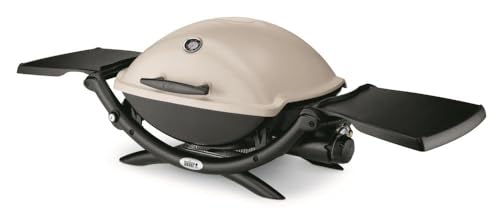
- Best overall for small patios: Weber Q2200 Liquid Propane Grill, Gray — check price on Amazon
- Best compact cabinet grill: Charbroil Performance Series 2-Burner Gas Grill Cabinet, Stainless Steel — check price on Amazon
- Best quality small cart: Weber Spirit E-210 Gas Grill, 2-Burner, Black — check price on Amazon
- Best folding stand-up grill: Coleman RoadTrip 285 Portable Stand-Up Propane Grill, 3 Burners, Blue — check price on Amazon
- Best for a generous small patio: Weber Spirit E-310 Gas Grill, 3-Burner, Black — check price on Amazon
- Also consider (prose only): Weber Traveler Portable Gas Grill — a cart grill that folds flat for storage; verify the current listing before buying
Read the full guide ↓
Disclosure: As an Amazon Associate, dailyhomedecorating.com earns from qualifying purchases. Links to Amazon on this page are affiliate links; they cost you nothing extra. Listing details such as price and availability change often, so check the current Amazon listing before you buy.
A small patio punishes the wrong grill twice: once when it eats the space you were supposed to live in, and again every time you squeeze past it with a tray. That is why the best gas grill for small patios under $500 is not the smallest grill in the budget — it is the grill whose footprint, storage story and cooking capacity are in honest proportion to a compact outdoor room. Some small patios are best served by a tabletop portable that vanishes into a closet. Some can carry a narrow cabinet cart that stands in the corner like a piece of furniture and cooks for four without apology. A few — the generous small patios, the wide townhouse terraces — can even hold a three-burner grill if the cook is disciplined about what else shares the slab. This guide sorts those cases properly, with the actual widths and storage footprints that decide them, and every linked pick verified against its Amazon listing inside the under $500 ceiling at research time.
Two honest notes before the picks. First, “small patio” in this guide means a ground-level patio, terrace or deck where a gas grill is permitted — if your small outdoor space is an apartment balcony, the rules are different and stricter, and our apartment guide in this series explains the lease and fire-code checks that come before any purchase; a compact grill does not exempt anyone from them. Second, small-space grilling rewards quality over area more than any other kind. On a small patio you will use your grill constantly and store it visibly, so grate material, ignition reliability and a body that still looks decent in year three matter more than an extra burner you have no room to stand in front of. The picks below reflect that: Weber’s cast-iron-grated portables and Spirits lead, Char-Broil’s compact cabinet carries the value flag, Coleman’s folding RoadTrip solves the storage problem outright, and the Weber Traveler appears in prose as the folding-cart idea whose Amazon pricing could not be verified inside the tier — the explanation is in its review, because a guide that hides that is not a guide worth trusting.
In this guide
Quick Picks
Short on time? Each row names a small-patio situation and the grill that serves it best inside this budget. Every linked pick was verified against its current Amazon listing — check price on Amazon for the live figure on each.
| Small-patio situation | Pick | Why it stands out | Link |
|---|---|---|---|
| Best overall | Weber Q2200 | Tabletop footprint, cast-iron grates, stores on a shelf | Check on Amazon |
| Best compact cabinet | Charbroil Performance Series 2-Burner Cabinet | A full cabinet cart at about 43 inches wide | Check on Amazon |
| Best quality small cart | Weber Spirit E-210, 2-Burner, Black | 360 sq in of cast-iron grate in the narrowest quality cart | Check on Amazon |
| Best folding stand-up | Coleman RoadTrip 285, Blue | Three burners that fold flat and wheel away after cooking | Check on Amazon |
| Generous small patios | Weber Spirit E-310, 3-Burner, Black | Three zones where the slab can honestly hold them | Check on Amazon |
| Folding cart (prose only) | Weber Traveler | Cart height when cooking, a fraction of the space when stored | Check the current listing |
How These Picks Were Chosen
The first filter was the budget, applied to the exact listing linked: each linked pick was checked on Amazon.com in the United States during research and sat inside the under $500 ceiling. The Spirit E-310 sits close to that ceiling and is flagged in its review. The Weber Traveler is deliberately unlinked: at research time its Amazon offers ranged by seller from its usual positioning to far above the ceiling, so it is discussed honestly in prose rather than recommended through a price we could not verify. The second filter was measured space, not marketing space. For each pick we weighed the working footprint — width with side tables in use, depth with the lid’s swing, and the standing room a cook needs in front of it — and, just as heavily, the stored footprint, because on a small patio a grill is stored in the same room it cooks in. That double test is why portables and a 43-inch cabinet lead this list, why no four-burner grill appears in it, and why folding and tabletop designs outrank raw cooking area throughout.
We also discounted a seductive small-patio trap: the oversized grill bought at a seasonal discount “because it was a deal.” A grill’s price is paid once; its footprint is paid every day, in the chair that no longer fits, the door that no longer clears, the guest who squeezes. Several excellent four-burner grills in this budget were excluded from this guide on exactly that ground — they star in our backyard and entertaining guides, where their size is an asset. Here, restraint is the recommendation, and every pick below can be stood in front of, cooked on and stored without rearranging your life around it.
The third filter was small-space livability. A grill on a small patio sits close to seating, siding and people, so we favored lids that contain heat and smoke, grease systems that are front-access and genuinely used, ignition that lights first time without a smoky false start, and bodies — cast aluminum, enameled steel — that look respectable a few feet from your only outdoor chair. The fourth filter was cooking honesty: small patios host small households, so 280 to 360 square inches of primary grate, properly zoned, was treated as the working range, and any pick had to cook a real dinner for four without batching gymnastics. Finally, every model was checked against the U.S. Consumer Product Safety Commission recall database; none of the grills here is subject to a CPSC recall. Two category recalls involve different products — electric patio grills and wire bristle brushes — and the brush recall matters on small patios too: clean with a coiled-wire or brush-free tool, especially where food and seating are close together.
Detailed Reviews
1. Weber Q2200 — Best Overall for Small Patios
Best for: Patios where the grill must share the room — or leave it entirely between cooks. See the Weber Q2200 on Amazon — check price on Amazon.
The Q2200 wins small patios by refusing to be furniture. It is a tabletop grill: a cast-aluminum lid and body, two folding side tables, and a footprint that lives on a sturdy table, a purpose-built stand or Weber’s optional portable cart while it cooks — and on a shelf, in a closet or in the corner of a storage nook when it does not. At about 42 pounds, one person moves it without planning the move. Under the lid, the specification is not a toy’s: a single stainless burner at 12,000 BTU and 280 square inches of porcelain-enameled cast-iron grate, the same grate material as Weber’s full-size Spirits. That is why it sears like a big grill and roasts credibly with the lid down and its built-in thermometer — the small-patio cook gives up area, not quality.
Capacity surprises everyone who has not cooked on one: a whole spatchcocked chicken, burgers for four, a full load of skewers and vegetables. For the one- and two-person households that own most small patios, this is not the compromise pick; it is the correctly sized one, with Weber’s parts catalog behind it for the long term. It runs on disposable propane cylinders, which suits small spaces twice over — no full-size tank to house, and fuel that stores in a small ventilated spot. An optional adapter hose connects a standard tank if your patio has a proper home for one. Set it up, cook, let it cool, wipe the tray, put it away: the patio returns to being a patio, which on a small slab is the entire point.
Honest limitation: One burner means one temperature zone, managed by position and lid rather than by a second burner. And its price per square inch is the highest in this guide — you are paying for cast aluminum, cast iron and disappearance, not for area.
A word on the table it sits on, because small-patio owners ask: use a sturdy, stable, heat-tolerant surface at a comfortable working height, on level ground, with the grill’s feet fully supported — never a wobbling side table, a plastic folding table that heat can soften, or a railing. Weber’s own portable cart exists precisely to answer this, and if the Q2200 will live on your patio full-time, the cart converts it into a standing grill that still folds the whole station slimmer than any fixed cart here. Either way, the setup takes minutes and undoes in minutes, which is the rhythm small patios run on.
Choose it if your patio is genuinely small, doubles as your living space, or the grill must store indoors. Skip it if you cook for five-plus weekly and have the slab for a cart — the Spirit E-210 below will serve that life without batches.
2. Char-Broil Performance Series 2-Burner Cabinet — Best Compact Cabinet Grill
Best for: Small patios that can hold one permanent, tidy grill in the corner. See the Char-Broil Performance 2-Burner on Amazon — check price on Amazon.
If your patio can spare one corner permanently, this is the most grill that corner can honestly hold. At about 43 inches wide, the Performance 2-Burner is a true cabinet cart — two stainless burners at 24,000 BTU, 300 square inches of primary cooking space, a swing-away warming rack — with the propane tank hidden inside a stainless cabinet. That enclosure is the small-patio feature: the grill reads as one neat object rather than a frame with a tank and tools hanging off it, and a small outdoor room stays looking like a room. The footprint leaves a walkway on most patios that a four-burner cart would consume entirely, and at roughly 82 pounds it can be shifted by one person when the patio needs rearranging.
Cooking is capable two-burner work — a hot zone and a cool zone, fast preheats from the modest firebox, and enough grate for dinner for three or four without batching. The porcelain-coated grates ask for a full preheat and a touch more patience than cast iron; in exchange the grill sits at the friendliest positioning in this guide, which for small-space owners also furnishing a tiny patio is a real consideration. Char-Broil stocks Performance parts widely, so burners and heat tents are replaceable when their seasons accumulate. Buy the fitted cover immediately: on an exposed small patio, the cover is the garage.
Honest limitation: The lightest build and shortest warranty in this guide — a good years-long grill, not a decade-long one. It also needs a permanent, permitted spot with proper clearances; it does not fold or travel.
Choose it if you want a real cart grill, a tidy cabinet and the lowest spend here. Skip it if the patio cannot spare a permanent corner — that is the Q2200’s and RoadTrip’s whole reason to exist.
3. Weber Spirit E-210 — Best Quality Small Cart
Best for: Small patios owned by frequent grillers who want the best construction that fits. See the Weber Spirit E-210 on Amazon — check price on Amazon.
The E-210 is the quality ceiling of small-patio carts. It runs two stainless burners at 26,500 BTU under the same cookbox as Weber’s three-burner Spirit: 360 square inches of porcelain-enameled cast-iron primary grate plus a warming rack, about 450 square inches in total — the most primary cooking space of any cart in this guide, in a narrower frame than the four-burner crowd. Snap-Jet ignition lights each burner from its own knob, Flavorizer bars protect the burners and flavor the food, the grease tray slides out from the front (a small mercy you will appreciate weekly, inches from your seating), and the enclosed cabinet hides the tank. Weber Works side rails add snap-on storage for the tools a small patio has nowhere else to put.
The case over the Char-Broil above is time and touch: heavier grates that sear harder, burners and bars backed by a deep parts catalog, and the Spirit line’s ten-year warranty coverage — the strongest here. On a small patio, where the grill is also a visual object you sit beside, the Weber’s fit and finish age gracefully in a way lighter carts do not. Two burners give the hot-side/cool-side control that covers weeknight cooking completely, and the warming rack handles the rest. If your patio can hold a cart and you grill three nights a week, this is the one to hold.
Honest limitation: The current model’s side tables do not fold down, so the working width is the stored width — measure your slab with the tables counted, and leave the cook standing room in front. Two zones also means two zones: three-temperature cooking is beyond it.
Choose it if quality and longevity lead your brief and the patio fits a narrow cart. Skip it if every inch must be reclaimable — take the Q2200 or the folding RoadTrip instead.
4. Coleman RoadTrip 285 — Best Folding Stand-Up Grill
Best for: Small patios where the grill must stand at full height to cook and lie flat to store. See the Coleman RoadTrip 285 on Amazon — check price on Amazon.
The RoadTrip 285 is the small-patio cheat code: a standing grill when you cook, a flat package when you do not. Its scissor legs fold in seconds, wheels on one end roll the folded grill to a closet, a storage bench or the patio’s edge, and open it stands at proper grilling height with 285 square inches of porcelain-enameled cast-iron grate over three adjustable burners making up to 20,000 BTU. Three burners in a portable is a genuine distinction — it allows a real two-zone cook, searing over two burners while food rests over the third turned low, which neither single-burner portable here can do. Push-button ignition, a contained drip system and interchangeable cooktops (a griddle or stove grate, sold separately) round out a design that has been the small-space standard for years.
It runs on disposable cylinders, so there is no tank to house — the fuel question that sinks many small-patio plans — with an optional hose and adapter for a standard tank when a longer cook justifies it. At roughly 49 pounds it is not light, but the wheels do the moving and the fold does the storing, and for a patio that must convert between grilling mode and living mode in minutes, nothing else in this guide converts faster. Coleman’s parts support for the line is established, and the design’s habits are well documented by a large owner base.
Honest limitation: The folding stand trades a little planted rigidity for its mobility, and painted components want dry storage to stay ahead of rust. Open, with side shelves out, it is wider than its tabletop rivals — measure the working position, not just the folded one.
Choose it if you want standing height, three burners and flat storage in one object. Skip it if stairs are part of every cook — the lighter Q2200 is kinder to carry.
5. Weber Spirit E-310 — Best for a Generous Small Patio
Best for: Wide terraces and generous small patios whose owners cook for five to seven and refuse to batch. See the Weber Spirit E-310 on Amazon — check price on Amazon.
Some “small” patios are only small by suburban standards — a wide townhouse terrace, a deep deck — and for those, stepping up to three burners is legitimate. The E-310 brings the full Spirit formula: three stainless burners under 360 square inches of cast-iron primary grate plus a warming rack, Snap-Jet ignition, Flavorizer bars, front-access grease management, Weber Works rails and an enclosed cabinet, with the parts catalog and warranty coverage that make it a decade-scale purchase. Three zones transform small-patio cooking for a crowd: a sear zone, a working zone and an indirect zone mean a whole dinner for six comes off one grill in one flow, without the batching a two-burner demands — valuable when your guests are sitting four feet away and dinner is also the entertainment.
The discipline this pick requires is spatial honesty. The E-310 needs its full working footprint plus the manufacturer’s clearances plus room for the cook, and on a truly small slab that arithmetic fails — which is why it is fifth here, not first. Measure before you fall in love: if the terrace holds it with a walkway and seating intact, it is the best grill in this guide outright. If the tape measure says otherwise, believe the tape measure and take the E-210, which shares its cookbox and construction in a narrower cart.
Honest limitation: Its list positioning sits right at this budget’s ceiling — verify the live listing is inside before ordering, as it is discounted on a seasonal rhythm. It is also a permanent cart: no folding, no travel, no disappearing.
Choose it if your small patio is generous and your headcount is real. Skip it if the slab is truly tight — an oversized grill on a small patio is the mistake this entire guide exists to prevent.
6. Weber Traveler — Folding Cart Option (Prose Only)
Best for: Small patios that need cart height and a real side table, with storage that rules out a fixed cart.
The Traveler is the design small-patio owners describe when they invent their ideal grill: a proper cart — one burner, 320 square inches of porcelain-enameled cast-iron grate, a side table, standing height — that folds down with one hand, stands on its own for storage, and rolls away on large wheels. Cooking, it behaves like a small cart grill for two to four people. Stored, it takes a fraction of a fixed cart’s floor space, tucked against a wall or into a deep closet. It runs on disposable cylinders and accepts a standard tank through an optional adapter hose.
It is prose-only here for one transparent reason: at research time, Amazon pricing for this model depended heavily on the seller, with offers ranging from its usual positioning to well above this guide’s ceiling. Linking it under an under-$500 headline without a verifiable in-tier price would break the rule every other pick in this guide was held to. The product is recommendable; the listing is what you must verify. Found in budget from a reputable seller, it may be the single best small-patio answer here. Found only at a markup, the Q2200 delivers verified value today.
Honest limitation: One burner, one zone; a folding mechanism that rewards rinsing and dry storage; and the pricing diligence described above.
Choose it if you find it in budget and the fold solves your storage math. Skip it if offers are inflated — patience or the Q2200 beats overpaying for a fold.
Comparison Table
For small patios, the stored footprint matters as much as the cooking area — both are shown. Primary area is the main grate only.
| Grill | Burners | Primary area | Working width | Stored footprint |
|---|---|---|---|---|
| Weber Q2200 | 1 (12,000 BTU) | 280 sq in | Tabletop; tables fold | Shelf or closet |
| Char-Broil Performance 2-Burner | 2 (24,000 BTU) | 300 sq in | ~43 in | Fixed cart corner |
| Weber Spirit E-210 | 2 (26,500 BTU) | 360 sq in | Narrow cart, tables fixed | Fixed cart corner |
| Coleman RoadTrip 285 | 3 (20,000 BTU) | 285 sq in | Standing, shelves out | Folds flat; wheels away |
| Weber Spirit E-310 | 3 | 360 sq in | Full cart width | Fixed cart; generous patios only |
| Weber Traveler (prose only) | 1 (13,000 BTU) | 320 sq in | Cart width, table out | Folds; stands folded |
How to Choose the Best Gas Grill for Small Patios Under $500
Measure three footprints, not one. A small-patio grill has a working footprint (tables out, lid open, cook standing in front), a stored footprint (folded, covered, or in its corner), and a clearance footprint (the manufacturer’s required distances from siding, railings, furniture and anything combustible, in every direction). The grill must fit all three on your actual slab. Shoppers who measure only the first buy grills that technically fit and practically ruin the patio. Take the tape measure outside before you open a single listing, and write the three numbers down — they are your real buying spec, more decisive than any burner count.
Decide whether the grill lives out or puts away. This is the fork that organizes the whole guide. If the patio can surrender one corner permanently, a compact cabinet cart (the Char-Broil, or the E-210 for quality) gives you tank storage, a tidy look and zero setup friction — you will grill more because the grill is always ready. If the patio must stay whole, the grill must disappear: tabletop (Q2200), folding stand (RoadTrip) or folding cart (Traveler). Be honest about which patio you own; the wrong branch of this fork is the most common small-space buying regret.
Match fuel to your storage reality. Cart grills need a full-size propane tank, housed in the cabinet while connected — fine on a ground patio with a permanent corner, a problem where tanks are restricted or storage is shared. Cylinder-fed portables trade cheaper fuel for freedom: no tank to house, cylinders stored small and ventilated, and a grill that can also leave for the park. On a small patio the fuel question is a space question, so answer it with the tape measure and, where relevant, your building’s rules — and remember that if your small space is a balcony, permission checks come before any of this, as our apartment guide details.
Protect the room’s other job. A small patio is also your coffee spot, your reading chair, your only outdoors. Prefer grills whose smoke behavior is civilized — lids that seal, grease systems that do not smoke off old residue because they are easy to clean — and place the grill so its smoke drifts away from your seating and your neighbor’s windows. Keep the cook’s lane clear of the door swing and the chair legs. A grill that respects the room gets used weekly; a grill at war with the room gets used monthly, then sold.
Spend on grate and ignition before area. In a small space you will cook close, often and visibly, so the quality of the sear and the certainty of the light matter more than an extra hundred square inches you cannot stand in front of. Porcelain-enameled cast iron and a reliable per-burner or electronic ignition — the Q2200’s and Spirits’ formula — are where this budget should go first. Area beyond your household’s real headcount is the least useful thing a small patio can buy.
Three Small Patios, Three Right Answers
The narrow townhouse terrace. Picture a terrace wide enough for a bistro table, two chairs and a strip of planters — the classic urban outdoor room. A fixed cart here consumes the walking line and turns every cook into a sideways shuffle, so the terrace’s right answer is the Q2200 on a sturdy side table or its folding cart, stored in the outdoor storage box or a hall closet between cooks. Dinner for two to four comes off its cast-iron grate at full quality, the terrace keeps its table, and winter costs the grill zero patio. If the household entertains six occasionally, the RoadTrip is the alternative: it stands in the terrace’s end for the evening and folds behind the storage box by nightfall.
The ground-floor garden patio. A slab off the kitchen with room for a table for four, a couple of loungers and a grill corner — this is the Char-Broil Performance 2-Burner’s natural home, or the Spirit E-210’s for the household that grills constantly. The cabinet corner becomes a tiny outdoor kitchen: tank hidden, tools in the cabinet, cover on between cooks. The patio keeps its dining set, the cook gets a permanent, always-ready station, and the only discipline required is the walkway — place the cart so its front faces the open slab, not the table, and the room works at full occupancy. This is the layout where a fitted cover and a small heat-resistant mat under the grill earn their keep protecting the slab and the furniture arrangement alike.
The deep deck that calls itself small. Some decks are small only in comparison to the yard beyond them: deep enough for zones of their own — seating at one end, dining in the middle, and a grill station at the far end near the steps. That deck can hold the E-310 honestly, with its clearances, its cook’s lane and its smoke drifting past the railing instead of through the seating. The three burners then do what they are for: a full dinner for six in one flow while the guests sit within talking distance but outside the smoke path. The lesson generalizes: “small patio” is not a dimension, it is a relationship between the grill, the furniture and the people — which is why this guide insists on your tape measure over anyone’s category labels, including ours.
Care and Cleaning in a Small Space
Small-patio grills live close to their owners, which raises the standard for cleanliness — grease smells that a big yard disperses become a small patio’s ambient scent. The good news is that every pick here was chosen partly for a grease path you can actually maintain: front-access trays on the Spirits, contained drip systems on the portables, and fireboxes that scrape clean without disassembly. Build the two-minute habit — scrape the hot grate after cooking with a brush-free tool, glance at the tray weekly, wipe the exterior when it is cool — and a small patio stays a pleasant room instead of slowly becoming a grill shed. Store cylinders and any spare fuel in a ventilated spot away from the seating and the sun’s worst heat, keep the cover or the storage spot dry, and give folding mechanisms on the RoadTrip and Traveler an occasional rinse and wipe so grit does not grind the joints. None of this is burdensome; all of it is the difference between a grill that shares your smallest room gracefully and one that gradually takes it over.
Common Mistakes
Measuring the grill but not the cook. A cart that fits the slab with six inches to spare leaves nowhere to stand with a tray. Always add your own working depth in front of the grill to the footprint before deciding it fits.
Forgetting the lid swing and the heat. Lids open up and back; heat rises to whatever is above — an awning, a balcony floor, a string of lights. Check the open-lid height and the manufacturer’s overhead clearance, not just the floor plan.
Letting the grill colonize the patio by inches. First the grill, then the tank beside it, then the tools, then the cover draped over the chair. Small patios die by accumulation. Choose a grill with enclosed storage or a put-away design, and give every accessory a home that is not the seating.
Skipping the cover because the patio is sheltered. Sheltered is not sealed. Rain finds small patios sideways, and a grill stored outdoors without a cover ages in dog years. If your grill puts away indoors, you may skip the cover — one of the quiet financial benefits of the portable picks.
Cleaning with a shedding wire brush in a living space. Bristles that detach can end up in food — the hazard behind a major category recall — and on a small patio the food, the seating and the grill are all within a step of each other. Use a coiled-wire or brush-free tool and inspect any brush before use.
Accessories That Earn Their Space
On a small patio, every accessory must justify its footprint, so here is the short list that does. A fitted cover — for any grill that lives outdoors, it is not optional equipment but the second half of the purchase; choose the maker’s own cover or a heavy vented one in the exact size, because a flapping, ill-fit cover on a small patio is a noise and nuisance of its own. An instant-read thermometer takes no space at all and ends the guesswork that small grills, with their quicker temperature swings, punish most. One pair of long tongs and one wide spatula — not a boxed set of six tools looking for a rail to hang from. A nesting tray pair, one for raw and one for cooked food, that stacks in the cabinet or closet with the grill’s other kit. A brush-free grate cleaning tool, for the safety reasons given earlier and because it stores flat. And if your grill is a portable, a second fuel cylinder, stored ventilated and out of the sun — because the mid-cook run to the store is a small patio’s most preventable ritual. What does not earn its space: bulky tool sets, side shelves bought for a grill that already has tables, and any accessory whose storage plan is “on the chair.”
Notice what this list does to the budget: it is short, cheap and mostly storage-neutral, which is precisely why the picks in this guide leave room for it. A small patio rewards a complete, compact kit over a big grill with nothing to run it. Buy the grill that fits, kit it with these few things, and the setup is finished — there is no phase two, no expansion, just cooking.
Finally, a note about winter, because small patios feel it first. When the season ends, the portable owners in this guide win a quiet victory: their grill comes inside, and the patio becomes a winter room again — a chair, a light, a place for coffee in a coat — instead of a storage yard for a covered cart. Cart owners should claim the same spirit within their constraints: deep-clean before the cover goes on, angle the cart to its least intrusive corner, and let the rest of the patio live its winter life uncluttered. A small patio that works in every season is worth more than a slightly larger grill, which is, in one sentence, the philosophy of every ranking in this guide.
Final Recommendation
For most small patios, the Weber Q2200 is the best gas grill for small patios under $500: full Weber cooking quality that stores on a shelf and leaves the patio yours. If one corner can be permanent, the Char-Broil Performance 2-Burner is the tidy value cart and the Spirit E-210 the quality one; if you need standing height with flat storage, the RoadTrip 285 folds the problem away; and generous terraces can honestly hold the E-310. Measure your three footprints, choose the branch that matches your patio, and the smallest room in your home becomes the one you cook in all summer — proof, if any were still needed, that in grilling the right fit beats raw size every single time, in every season, for every household that cooks outside.
Frequently Asked Questions
What size grill is right for a small patio?
For most small patios, 280 to 360 square inches of primary grate is the working range — enough for dinner for four without batching, in footprints that leave the patio usable. Judge size by your household’s headcount and the grill’s measured footprint together; a 300-square-inch grill you can stand in front of beats a 450-square-inch grill you cannot.
Can I put a gas grill on a small balcony instead of a patio?
That is a different and stricter question. Many leases, HOA rules and local fire codes prohibit gas grills on balconies regardless of the grill’s size, and propane storage is often restricted as well. Check your documents and local code before buying — our apartment guide in this series walks through the checks. A compact grill solves space; it never solves permission.
Tabletop or cart for a small patio?
Tabletop if the grill must store away or the patio is truly tight; cart if one corner can be permanently the grill’s, because a ready grill gets used more. The folding RoadTrip and Traveler split the difference — cart posture when cooking, near-tabletop storage when not.
How much clearance does a small-patio grill need?
Follow the manual for your exact model — clearances to siding, railings, overhead structures and combustibles are specified there and are minimums, not suggestions. As a planning habit, keep the grill on a level, noncombustible surface, away from the seating’s smoke path, and never under a low overhang.
How do I keep grill smoke away from my seating and neighbors?
Position the grill so the prevailing breeze carries smoke away from chairs and windows, cook with the lid down, and keep the grease system clean — most lingering smoke is old grease, not tonight’s dinner. Avoid very fatty loads on the highest heat when guests are seated close, and finish delicate items over gentler burners. A well-placed grill on a small patio is nearly smoke-free at the table; a dirty one announces itself to the whole street.
What is the best first meal to cook on a small-patio grill?
Cook something forgiving that teaches you the heat map: chicken thighs or sausages, with vegetables in a basket, rather than expensive steaks on day one. Run the classic bread test first if you want the map immediately — slices of white bread across the preheated grate toast in a pattern that shows you the hot and cool zones. Two or three cooks in, you will know exactly where everything belongs on your grill.
Where should a small-patio grill be stored in winter?
Portables win winter: cleaned, cooled and dry, they store in a closet, storage bench or garage shelf, with cylinders kept separately in a cool, ventilated spot. Cart grills stay out under a fitted cover on their hard surface, tank valve closed — or in a garage corner if you have one. Either way, a clean grill going into winter is a working grill in spring.
Is a two-burner grill enough for a family of four?
Yes — it is the size this guide recommends most for small patios. Two burners give a hot and a cool zone, and 300 to 360 square inches cooks a family dinner in one load. What two burners will not do is three temperatures at once or a twelve-person party in a single wave; if that is your life, look at the E-310 and a generous tape measure.
Keep Planning Your Patio
Small-space guides from the same series, sized to match:


