Where to buy
Check the latest price, availability and delivery on Amazon. Orders are placed on Amazon. We may earn a commission from qualifying purchases.
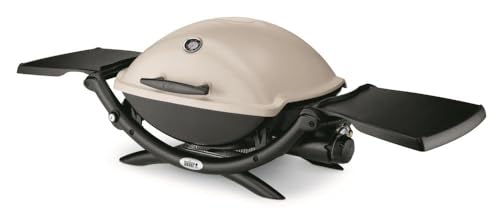
- Best if your lease allows it: Weber Q2200 Liquid Propane Grill, Gray — check price on Amazon
- Best folding stand-up grill: Coleman RoadTrip 285 Portable Stand-Up Propane Grill, 3 Burners, Blue — check price on Amazon
- Best compact cabinet grill: Charbroil Performance Series 2-Burner Gas Grill Cabinet, Stainless Steel — check price on Amazon
- Best for townhouse patios: Weber Spirit E-210 Gas Grill, 2-Burner, Black — check price on Amazon
- Best for ground-floor yards: Weber Spirit E-310 Gas Grill, 3-Burner, Black — check price on Amazon
- Also consider (prose only): Weber Traveler Portable Gas Grill — a folding cart grill discussed below; check the current listing carefully before buying
Read the full guide ↓
Disclosure: As an Amazon Associate, dailyhomedecorating.com earns from qualifying purchases. Links to Amazon on this page are affiliate links; they cost you nothing extra. Listing details such as price and availability change often, so check the current Amazon listing before you buy.
Finding the best gas grill for apartments under $500 starts with a question most grill guides skip: are you actually allowed to use one where you live? For a large share of apartment residents, the honest answer for a balcony is no — and this guide will not pretend otherwise. Many leases and HOA rulebooks prohibit gas grills on balconies outright. Many local fire codes, following the model fire codes used across the United States, prohibit open-flame cooking devices on combustible balconies and within a set distance of combustible construction in multi-family buildings, with narrow exceptions that rarely cover an ordinary rental balcony. Propane storage is restricted too: full-size tanks are commonly barred from being stored inside a dwelling or on certain balconies at all. None of that makes this guide pointless. It makes it specific. If you have a ground-floor patio, a townhouse terrace, a duplex yard, or a building with a designated outdoor cooking area where gas grills are permitted, there are excellent grills under $500 that fit apartment life: compact, easy to store, quick to clean, and sized for the way apartment households actually cook. If your situation is a high-rise balcony with a no-grill lease, the right purchase is no gas grill at all — and we say plainly below what to do instead.
So this guide is organized differently from a standard roundup. It begins with the rules, in plain language, because the rules decide which picks are even relevant to you. Then it recommends five linked grills and one prose-only option, each matched to a real apartment scenario: the tabletop portable that stores in a closet and travels to the park, the folding stand-up grill that wheels out and disappears again, the compact cabinet grill for a permitted ground-floor patio, and the two Weber Spirits for renters with townhouse or house-share space. Every pick was verified against its Amazon listing and sat inside the under $500 ceiling at research time; the Weber Spirit E-310 sits close to that ceiling and is flagged as such. Read the rules section first. It takes three minutes, and it is the difference between a grill you enjoy for years and an expensive lease violation with a propane tank attached.
First, the Rules: What Apartment Grillers Must Check
Your lease and HOA rules come first. Most apartment leases address grills directly, and many prohibit them — on balconies, on patios, sometimes anywhere on the property except designated areas. HOA communities have parallel rules with fines attached. If your documents prohibit gas grills, that is the end of the decision: no guide, review or neighbor’s example overrides your lease, and “everyone on my floor does it” is not protection when something goes wrong or when management enforces the rule selectively at renewal time. If the documents are silent or unclear, ask your property manager in writing and keep the answer. A two-line email now is worth more than any argument later.
Local fire code is the second gate. Fire codes adopted in many U.S. jurisdictions restrict open-flame cooking in multi-family dwellings: a common pattern, drawn from the International Fire Code, is that charcoal burners and other open-flame cooking devices may not be operated on combustible balconies or within 10 feet of combustible construction, with exceptions that typically involve sprinkler protection or noncombustible balcony construction — details that vary by city and building. Propane (LP gas) storage rules commonly limit the size and number of cylinders kept in or near living spaces, and full-size tanks are frequently barred from indoor storage entirely. Your local fire marshal’s office or your city’s municipal code website will tell you the rule where you live; it takes one search, and it is the authoritative answer — not this page, and not a product listing.
Your building’s physical layout is the third gate. Even where a grill is permitted — a ground-floor patio, a townhouse terrace — the manufacturer’s clearance requirements still apply: distance from siding, railings, overhangs and anything combustible, exactly as the manual specifies. A grill that technically fits a small patio but sits a foot from vinyl siding is not a fit. Add the practical questions: where will the tank live, where does smoke go (your upstairs neighbor’s open window is the classic apartment grilling conflict), and where does the grill store in winter? The picks below were chosen with those questions in mind, which is why portables and compact two-burners dominate this list and the big four-burner carts from our general guide are absent.
Insurance is the quiet fourth consideration. Renters insurance policies generally assume you follow your lease and local law; a fire caused by a prohibited grill is the scenario most likely to leave you personally exposed for damage to the building and to neighbors’ property, on top of losing your deposit and your home. Even where grilling is permitted, tell your insurer you grill if the policy asks about it, and never let a guest operate the grill in a way you would not defend in writing. This is not legal advice — it is the practical reason the permission checks above come before a single product recommendation in this guide. Three minutes of verification protects the entire purchase.
If a gas grill is not allowed, your options are still good. Many buildings that ban fuel grills permit electric grills, because there is no open flame and no propane — check your lease wording, since some prohibit all grills regardless of fuel. Community grill stations, where provided, are usually charcoal or gas and are maintained by the property. And a portable grill like the Q2200 or RoadTrip below remains a legitimate purchase for the life you live outside your unit — parks, campsites, tailgates, friends’ houses — as long as it is never fired up where your lease or local code forbids it. Buy for the use you are allowed, not the use you wish you had.
In this guide
Quick Picks
Short on time? Each row names an apartment scenario and the grill that serves it best — assuming your lease and local code permit a gas grill in that space. Every linked pick was verified against its current Amazon listing — check price on Amazon for the live figure on each.
| Scenario | Pick | Why it stands out | Link |
|---|---|---|---|
| Best overall for permitted spaces | Weber Q2200 | Tabletop size, cast-iron grates, stores in a closet, travels anywhere | Check on Amazon |
| Best folding stand-up | Coleman RoadTrip 285, Blue | Three burners on a quick-fold stand with wheels; packs flat | Check on Amazon |
| Best compact cabinet | Charbroil Performance Series 2-Burner Cabinet | A real cabinet cart at about 43 inches wide for ground-floor patios | Check on Amazon |
| Best for townhouses | Weber Spirit E-210, 2-Burner, Black | Weber build and grates on a standard tank, sized for small terraces | Check on Amazon |
| Best for ground-floor yards | Weber Spirit E-310, 3-Burner, Black | Three zones for renters with a yard or large private patio | Check on Amazon |
| Folding cart option (prose only) | Weber Traveler | A full cart grill that folds for storage — see the note in its review | Check the current listing |
How These Picks Were Chosen
The first filter was permission-aware sizing. A grill earns a place in an apartment guide only if a realistic apartment scenario exists for it: storage in a closet or storage unit, a footprint that leaves a small patio usable, and a fuel setup that does not require keeping a large tank where tanks are commonly prohibited. That is why this list leads with portables that run on small disposable cylinders and why the largest grill here, the Spirit E-310, is explicitly framed for ground-floor and townhouse renters rather than balcony cooks. The second filter was the budget, applied to the exact listing linked: each linked pick was checked on Amazon.com in the United States during research and sat inside the under $500 ceiling. The Spirit E-310 sits close to the ceiling and is flagged wherever it appears. The Weber Traveler is the deliberate exception that proves the process: its Amazon pricing at research time swung wildly by seller, with some offers far above its usual positioning, so it appears as a prose-only discussion with no link rather than a recommendation we could not price honestly.
The third filter was construction. Apartment grills live harder lives than suburban ones — they are moved, stored, uncovered and re-lit constantly — so cast aluminum bodies, porcelain-enameled cast-iron grates and stainless burners mattered more here than raw cooking area. The fourth filter was cleanup: grease management you can reach from the front, drip systems that do not leak onto a patio you do not own, and surfaces that wipe down fast, because a grill that is annoying to clean in a small space becomes a grill that is never cleaned, and a dirty grill is both a fire risk and a deposit risk. Finally, every model was checked against the U.S. Consumer Product Safety Commission recall database; none of the grills in this guide is subject to a CPSC recall. Two category recalls involve different products — a line of electric patio grills and a set of wire bristle grill brushes — and the brush recall in particular is worth knowing about, because the safe move for any griller is a coiled-wire or brush-free cleaning tool.
Detailed Reviews
1. Weber Q2200 — Best If Your Lease Allows It
Best for: Renters with a permitted patio, a designated cooking area, or a portable-grill life that happens at parks and campsites. See the Weber Q2200 on Amazon — check price on Amazon.
The Q2200 is the grill this guide is built around, because it is the one whose storage story actually works in an apartment. It is a tabletop portable: about 42 pounds, with a cast-aluminum lid and body, folding side tables, and a footprint that sits on a sturdy table or an optional portable cart when in use and on a closet shelf or in a storage cage when it is not. Under the lid is a single stainless steel burner at 12,000 BTU and 280 square inches of porcelain-enameled cast-iron grate — the same grate material as Weber’s full-size Spirits, which is why this little grill sears like a big one. The cast-aluminum body holds heat evenly, the lid thermometer is genuinely useful for roasting, and electronic ignition has the burner lit in seconds. It runs on disposable propane cylinders, which matters in apartment life for two reasons: there is no full-size tank to store, and a cylinder is easy to keep in a ventilated outdoor spot where your building allows fuel storage at all.
Cooking capacity is the pleasant surprise. Two hundred eighty square inches handles a whole spatchcocked chicken, burgers for four, or a mixed load of skewers and vegetables without the shuffling a smaller portable forces. For a couple or a small household, it is not a compromise grill; it is simply the right size, with build quality that owners keep in service for many years and a full Weber parts catalog behind it. Set it up where grilling is permitted, let it cool, wipe the grease tray, and it disappears — no patio permanently surrendered to a cart, no cover flapping in the wind all winter, no awkward conversation about whose grill is rusting by the stairs.
Honest limitation: One burner means one heat zone, so indirect cooking is a matter of the coolest edge and lid management rather than a second burner left off. And to repeat the point that governs this whole guide: tabletop size does not make it balcony-legal. If your lease or fire code prohibits gas grills on your balcony, the Q2200’s lawful home is your storage space between trips, not your railing.
Choose it if you have any permitted place to grill — a ground-floor patio, a community area that allows personal grills, or a regular park and camping life. Skip it if your only outdoor space is a prohibited balcony; in that case, read the electric-grill wording of your lease and buy accordingly, or wait until your housing changes.
2. Coleman RoadTrip 285 — Best Folding Stand-Up Grill
Best for: Renters who want a standing grill that folds away flat and wheels into storage after every cook. See the Coleman RoadTrip 285 on Amazon — check price on Amazon.
The RoadTrip 285 answers the storage question differently from the Q2200: instead of a tabletop box, it is a full standing grill whose scissor legs fold flat in seconds, with wheels on one end so the folded grill rolls into a closet, a storage unit or the corner of a garage like a piece of luggage. Open, it stands at proper grilling height with 285 square inches of cooking area and three adjustable burners producing up to 20,000 BTU — more burner control than any other portable in this guide, which makes genuine two-zone cooking possible: sear over two burners, rest food over the third turned low. The grates are porcelain-enameled cast iron, the ignition is push-button, and interchangeable cooktops (sold separately) let the same base run a griddle or a stove grate, which apartment cooks who entertain on patios genuinely use for breakfast cooks and side dishes.
It runs on the same small disposable cylinders as the Q2200, with an optional hose and adapter available for a standard tank where one is permitted and practical. At roughly 49 pounds it is heavier than the Weber portable, and you feel that on stairs — but the wheels do the flat-ground work, and the fold is genuinely quick rather than a ten-minute puzzle. For renters whose permitted grilling happens on a driveway, a townhouse patio or at a tailgate, the RoadTrip’s combination of standing height, three burners and flat storage is unmatched at its positioning in this budget. Coleman’s parts support for the RoadTrip line is well established, and the design has been in production long enough that its habits — keep the drip tray clean, mind the latch when folding — are well documented by owners.
One practical note for renters: the RoadTrip’s interchangeable cooktops make it the best dinner-party trick in this guide for small spaces. Grill the mains, swap in the griddle top for breakfast the next morning on the same patio, and the whole kit still folds into the same storage footprint. Apartment cooking rewards equipment that does two jobs in one footprint, and this is the only pick here that genuinely does.
Honest limitation: The folding mechanism and stand trade some rigidity for portability; it is sturdy in use but does not have the planted feel of a cabinet cart, and the painted steel components want a dry storage spot to stay ahead of rust. It is also the widest portable here when open, so measure your permitted spot with the side shelves in play.
Choose it if you want standing-height, multi-burner cooking that stores flat. Skip it if you will carry your grill up several flights often — the lighter, simpler Q2200 is the kinder companion for stairs.
3. Char-Broil Performance Series 2-Burner Cabinet — Best Compact Cabinet Grill
Best for: Ground-floor apartment and condo patios where a small permanent grill is permitted. See the Char-Broil Performance 2-Burner on Amazon — check price on Amazon.
Some apartment homes do come with a real patio — ground-floor units, garden-style complexes, condos with private terraces — and where a cart grill is allowed, this is the one sized for it. At about 43 inches wide, the Performance 2-Burner is a genuine cabinet cart: two stainless burners at 24,000 BTU under 300 square inches of primary cooking space, a swing-away warming rack, and an enclosed stainless cabinet that hides the standard propane tank and keeps the whole setup looking like furniture rather than equipment. That tidiness matters in a small space you also live in — the patio stays a patio, with the grill as one neat object in the corner instead of a frame, a hanging tank and a tangle of tools.
Cooking is honest two-burner work: a hot zone and a cool zone, quick preheats thanks to the modest firebox, and enough grate for dinner for three or four without batching. The porcelain-coated grates ask for a full preheat and a little patience compared with cast iron, and in return the whole grill sits at the friendliest positioning in this guide — the budget pick that still looks and works like a real grill. Char-Broil’s Performance parts are widely stocked, so burners and heat tents are replaceable wear items rather than end-of-life events. Add a fitted cover from day one; in a small exposed patio the cover is doing the work a garage does for suburban grills.
Honest limitation: This is a tank-fed cart grill, which means it belongs only where both the grill and a full-size propane tank are permitted — typically a ground-floor patio, not a balcony, and never with the tank stored indoors. The build is the lightest in this guide and the warranty the shortest, so buy it as a good years-long grill, not a decade-long one.
Choose it if you have a permitted ground-floor patio and want a tidy, affordable, full-time grill. Skip it if your space or your lease rules out a tank — the cylinder-fed portables above exist precisely for you.
4. Weber Spirit E-210 — Best for Townhouse Patios
Best for: Townhouse, duplex and house-share renters with a private terrace or small yard where a cart grill is allowed. See the Weber Spirit E-210 on Amazon — check price on Amazon.
A large slice of “apartment” living is not a tower balcony at all — it is a townhouse with a terrace, a duplex with a slab, or a rented house with roommates. For those homes, the Spirit E-210 is the apartment pick with no asterisks beyond the usual clearance rules. Two stainless burners at 26,500 BTU sit under 360 square inches of porcelain-enameled cast-iron grate, with a warming rack bringing the total to about 450 square inches — the same cookbox as Weber’s three-burner Spirit, in a narrower cart that leaves a small terrace usable. Snap-Jet ignition lights each burner from its own knob, Flavorizer bars protect the burners and flavor the food, the grease tray slides out from the front for painless cleaning, and the enclosed cabinet hides the tank.
What you are buying over the Char-Broil above is construction and time: heavier grates that sear harder and last longer, burners and bars backed by Weber’s deep parts catalog, and the Spirit line’s ten-year warranty coverage. For a renter who grills three nights a week and expects to carry this grill to the next home — and the one after — that longevity is the entire argument, and it is a strong one. The two-burner layout gives you a hot side and a cool side, which covers weeknight cooking completely; the warming rack holds finished food while the last items catch up.
Honest limitation: It is a fixed cart on a standard tank, so it needs a permitted, permanent spot with proper clearances — it does not fold, stash or travel. The current model’s side tables do not fold down, so measure the full working width against your terrace before ordering.
Choose it if your rental has a real patio or yard and you want the longest-lived grill in this guide. Skip it if your space is a balcony of any size — no cart grill belongs on one unless your lease and local code explicitly say otherwise, which is rare.
5. Weber Spirit E-310 — Best for Ground-Floor Yards
Best for: Renters with a ground-floor yard or large private patio who cook for five or more and are permitted a full cart grill. See the Weber Spirit E-310 on Amazon — check price on Amazon.
The E-310 is here for one specific apartment scenario: the ground-floor unit with a genuine yard, the end-unit townhouse, the rented house. In those spaces the constraint that shapes the rest of this list relaxes, and what you want is the best grill in the budget, full stop. Three stainless burners under 360 square inches of cast-iron primary grate plus a warming rack give you true three-zone cooking — a sear zone, a working zone and an indirect zone — which is the setup for whole chickens, ribs and mixed loads for a crowd of friends who all seem to end up at the renter-with-a-yard’s place. Everything from the E-210’s review applies, scaled: Snap-Jet ignition, Flavorizer bars, front-access grease management, Weber Works side rails, enclosed cabinet, and the parts support that makes a grill a ten-year appliance.
Honest limitation: Two flags. First, price: the E-310’s list positioning sits right at this guide’s ceiling, and while it is frequently discounted, confirm the live listing is inside your budget before you commit. Second, permission: a yard makes a grill physically easy, not automatically permitted — confirm your lease allows it and keep the manufacturer’s clearances from fences, siding and overhangs.
Choose it if you have the space, the permission and the headcount to use three burners weekly. Skip it if any of those three is missing — the E-210 or the portables will fit your actual life better.
6. Weber Traveler — Folding Cart Option (Prose Only)
Best for: Renters who want one grill that works at standing height at home and folds into a closet or car trunk.
The Traveler is the cleverest storage idea in gas grilling: a full cart grill — one burner, 320 square inches of porcelain-enameled cast-iron grate, a side table, and a proper lid — mounted on a folding frame that collapses with one hand and stands on its own for storage, rolling on large wheels like a suitcase. At home on a permitted patio it cooks like a real grill for two to four people; folded, it takes a fraction of the floor space of any cart in this guide, which is why apartment readers ask about it constantly. It runs on disposable cylinders and accepts a standard tank with an optional adapter hose.
Why is there no buy link? Because at research time, Amazon pricing for this model depended heavily on which seller had stock, and offers ranged from its usual positioning to far above this guide’s ceiling. Linking it under an under-$500 headline would have been exactly the kind of stale-price recommendation this site refuses to make. The grill itself is recommendable; the current listing is the thing to verify. If you find it from a reputable seller inside the budget, it is a genuinely good apartment answer where grilling is permitted. If every offer is inflated, the Q2200 above delivers the same brand’s portable quality with pricing we could verify.
Honest limitation: Beyond the pricing volatility, one burner means one zone, and the folding frame’s moving parts want a rinse and a dry storage spot to stay smooth. As with every pick here, it changes nothing about balcony rules.
Choose it if you find it in budget from a solid seller and the fold-away cart solves your storage problem. Skip it if the only offers are marked up — patience or the Q2200 beats overpaying.
Comparison Table
Primary area is the main grate only. “Fuel” notes the out-of-box setup, which matters where tank storage is restricted.
| Grill | Burners | Primary area | Fuel out of the box | Storage story |
|---|---|---|---|---|
| Weber Q2200 | 1 (12,000 BTU) | 280 sq in | Disposable cylinders | Tabletop; closet shelf |
| Coleman RoadTrip 285 | 3 (20,000 BTU) | 285 sq in | Disposable cylinders | Folds flat; wheels to storage |
| Char-Broil Performance 2-Burner | 2 (24,000 BTU) | 300 sq in | Standard tank in cabinet | Compact cart, ~43 in wide |
| Weber Spirit E-210 | 2 (26,500 BTU) | 360 sq in | Standard tank in cabinet | Narrow cart; permanent spot |
| Weber Spirit E-310 | 3 | 360 sq in | Standard tank in cabinet | Full cart; yard or large patio |
| Weber Traveler (prose only) | 1 (13,000 BTU) | 320 sq in | Disposable cylinders | Folding cart; stands folded |
How to Choose the Best Gas Grill for Apartments Under $500
Step one is permission, not product. Before any other criterion: read your lease’s grill clause, check HOA rules if they apply, and confirm your local fire code’s position on open-flame cooking and propane storage in multi-family buildings. If a gas grill is prohibited in your space, the correct outcome of this guide is a decision not to buy one for that space — full stop. If grilling is permitted in a designated area or on a ground-floor patio, note exactly what is allowed (fuel type, tank size, distance from the building) and let those terms drive the choice below. Keep any written approval from your landlord or property manager.
Match the fuel to the rules and the storage. Cart grills run on standard refillable tanks, which are the most economical fuel and the most commonly restricted item in apartment rules — many properties that tolerate a small grill still prohibit storing a full-size tank on a balcony or indoors. Cylinder-fed portables sidestep the tank question and store their fuel in small quantities in a ventilated outdoor spot where allowed, but cost more per cook in fuel. Neither is “better” in the abstract; the right answer is the one your lease permits and your storage can hold safely.
Size for the space you must keep living in. An apartment patio is also your morning-coffee seat and your only outdoor room. Measure it, then measure the grill’s working footprint — including the open lid’s swing and the side tables — and insist on keeping a walkway. This is why the portables and the 43-inch Char-Broil lead this guide: they leave the space usable. If a grill would consume the patio, it will also consume your goodwill toward it, and it will be used less every month until it is patio furniture you resent.
Prioritize cleanup and cool-down. In shared buildings, smoke and grease are neighbor issues, not just maintenance issues. Prefer grills with front-access grease trays you will actually empty, drip systems that contain flare-ups, and bodies that cool quickly enough to store the same evening. Cook with the lid down to cut smoke, keep a spray bottle for flare-ups within the maker’s guidance, and never leave a grill unattended — in a multi-family building that is not courtesy, it is the core safety obligation that keeps grilling permitted for everyone.
Think about the exit. Apartment life is mobile life. A grill you can carry, fold or roll is a grill that moves with you to the next home, the park or a friend’s yard; a grill that needs two people and a truck is a grill you will sell cheap at moving time. The portables in this guide hold their usefulness across housing changes in a way no cart can — one more reason they anchor an apartment list even for readers whose current patio could fit more.
Living With a Grill in a Shared Building
Permission gets you the grill; etiquette keeps it welcome. Smoke is the number one friction point in apartment grilling, and it is manageable. Cook with the lid down — it is better technique anyway — and you cut visible smoke dramatically, because flare-ups and fat smoke happen mostly when the lid is open and oxygen floods the firebox. Keep the grease tray and catch pan clean; most lingering smoke and nearly all bad smells come from old grease burning off, not from tonight’s food. Time your cooks with a little neighbor awareness: a long, smoky session under open windows on a still evening is legal where you are permitted to grill and still a fast way to generate the complaint that gets the rule tightened for everyone. A quick word with the neighbors most affected — or an extra burger delivered without being asked — has preserved more grilling privileges than any lease clause.
Storage discipline is the other half. Let the grill cool completely before it comes inside or gets covered; a warm grill in a storage closet is a hazard and a smell that soaks into everything stored with it. Disconnect cylinders when the grill goes into storage, cap the connections, and store fuel separately in a ventilated spot your building allows — never in the same closed closet as the grill if the space is inside the dwelling. Wipe the exterior before storing, because grease residue is what attracts pests to storage areas, and in a shared building your storage habits are your neighbors’ business in a way a homeowner’s never are. Finally, keep the paperwork together: your written permission, the manual with its clearance specifications, and your purchase record. If a question ever arises — from management, from a new neighbor, from an insurer — the renter who can produce the documents is the renter who keeps grilling.
Common Mistakes
Assuming a small grill is exempt from the rules. Fire codes and leases regulate the flame and the fuel, not the square inches. A tabletop grill on a prohibited balcony is a violation exactly like a cart grill — and propane storage limits apply to the fuel regardless of the grill’s size. Size solves storage and fit; it never solves permission.
Storing a full-size propane tank indoors. Tanks belong outdoors in a ventilated spot, upright, away from heat and ignition sources, and only where your property allows them at all. A tank in a living room, bedroom closet or enclosed storage cage is a hazard and, in many places, a code violation. If your situation has no lawful place for a tank, cylinder-fed portables or an electric grill are your answers.
Grilling under an overhang or against the railing. Clearances in the manual exist because heat and flare-ups rise. Keep the grill away from siding, railings, eaves and anything combustible by at least the distance the manufacturer specifies, on a stable, level, noncombustible surface — and never on a surface the building prohibits, which in many complexes means the balcony question has already been answered for you.
Buying for the balcony you wish you had. The saddest apartment grill is the full cart bought for a space where it cannot be used, cannot be stored and cannot be sold for half its price. Buy for your documented, permitted reality; a portable you use weekly at the park beats a cart you use never.
Skipping the leak test because the grill is new or small. Every cylinder or tank connection, every time it is changed: soapy water on the fittings, valve open, look for bubbles. Portables get connected and disconnected constantly, which makes the habit more important for apartment grillers, not less.
One last scenario deserves a sentence, because readers ask about it constantly: the rented house with roommates and a yard. That is not really an apartment problem at all — it is a small-household one — and the answer is the Spirit E-210 or, for a group that cooks together weekly, the E-310, provided the lease permits a grill and the yard gives it proper clearances. The apartment-specific traps in this guide are about balconies, shared walls and shared rules; where none of those apply, buy the grill your cooking wants.
Final Recommendation
If your lease and local code give you a permitted place to grill, the Weber Q2200 is the best gas grill for apartments under $500 for most renters: real cast-iron cooking, cylinder fuel, closet storage and a decade of Weber parts behind it. If you want standing height and more burner control with flat storage, take the Coleman RoadTrip 285. Ground-floor patios belong to the Char-Broil Performance 2-Burner, townhouses to the Spirit E-210, and renters with yards to the Spirit E-310. And if your documents say no gas grill, believe them: put the budget toward an electric grill your lease allows, or toward the portable you will use everywhere grilling is welcome. The right apartment grill is the one you are allowed to light.
Frequently Asked Questions
Can I use a gas grill on my apartment balcony?
In many cases, no. Leases and HOA rules frequently prohibit it, and local fire codes in many jurisdictions prohibit open-flame cooking devices on combustible balconies and near combustible construction in multi-family buildings. The answer for your specific balcony lives in your lease and your city or fire marshal’s published code — check both before buying anything, and get any permission in writing.
Are electric grills a good alternative if gas is banned?
Often, yes. Electric grills have no open flame and no propane, so many buildings that ban fuel grills permit them — but read your lease carefully, because some prohibit all grills regardless of fuel. A good electric grill on a permitted balcony will serve you far better than a gas grill you cannot legally use.
Can I store a propane tank inside my apartment?
No. Propane tanks should never be stored inside a dwelling. Store them outdoors, upright and ventilated, away from heat — and only where your property’s rules allow tank storage at all. Small disposable cylinders should also be kept in a cool, ventilated spot away from ignition sources, never in a hot car or next to the grill while it runs beyond the connected one in use.
What is the smallest grill here that still cooks for four?
The Weber Q2200 and Coleman RoadTrip 285 both cook for four comfortably — a load of burgers, or a chicken with vegetables — despite their portable size. The Q2200 stores smaller; the RoadTrip gives you three burners and standing height. Either is a better apartment answer than a cart grill that eats your patio.
Does a tabletop grill get around a balcony ban?
No. Balcony prohibitions in leases and fire codes are written around open flames and fuel, not around grill size or whether the grill has legs. A tabletop portable is subject to exactly the same rules as a full cart. What a portable does give you is lawful flexibility everywhere else — parks, campsites, designated areas — plus storage that fits apartment life.
What should I ask my landlord before buying?
Ask three things, in writing: whether gas grills are permitted anywhere on the property and exactly where; whether there are fuel or tank-size restrictions; and whether there are conditions such as distance from the building, a required mat or surface, or designated hours. If the answer is yes with conditions, those conditions become your buying spec — and you keep the reply with your lease.
My building has a shared grill area. Should I still buy my own?
Only if the rules allow personal grills there or you will use a portable elsewhere. Many residents find the shared station covers weeknight needs, and a personal portable earns its place for trips, parks and gatherings away from home. If you do buy, the folding and tabletop picks in this guide are the ones that store gracefully between uses.
Keep Planning Your Space
More guides from the same series for small outdoor spaces and the patios that go with them:


