Where to buy
Check the latest price, availability and delivery on Amazon. Orders are placed on Amazon. We may earn a commission from qualifying purchases.
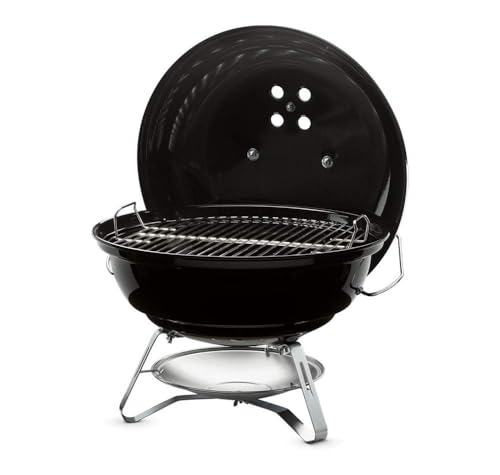
- Best for apartment life overall: Weber Jumbo Joe Charcoal Grill, 18-Inch, Black — Check on Amazon
- Best for storage-starved units: Weber Go-Anywhere Charcoal Grill — Check on Amazon
- Best enclosed-fire option: Char-Griller AKORN Jr. Portable Kamado Charcoal Grill and Smoker, Ash — Check on Amazon
- Best for a shared courtyard or designated grill area: Oklahoma Joe’s Rambler Portable Tabletop Charcoal Grill — Check on Amazon
- Best for a ground-floor patio where grilling is allowed: Weber Original Kettle Charcoal Grill, 22-Inch, Black — Check on Amazon
- Best for complexes with a communal grill zone: Royal Gourmet CD1824AC 24-Inch Charcoal Grill with Cover — Check on Amazon
Read the full guide ↓
Disclosure: As an Amazon Associate, dailyhomedecorating.com earns from qualifying purchases. Links to Amazon on this page are affiliate links; they cost you nothing extra. Listing details such as price and availability change often, so check the current Amazon listing before you buy.
Searching for the best charcoal grill for apartments under $200 usually starts with flavor and ends with a lease — and this guide will be honest with you from the first paragraph, because the most important fact about apartment charcoal grilling is not which grill to buy. It is whether you are allowed to use one at all. Many apartment complexes prohibit charcoal grills on balconies entirely, and many city and county fire codes restrict open-flame cooking on the balconies of multi-unit buildings and within a set distance of the structure. Charcoal is the fuel those rules most often name, because it produces embers, it stays hot for hours after the cooking ends, and a knocked-over bowl of coals on a wooden balcony is a genuinely dangerous thing. No grill in this guide — and no grill anywhere — makes a prohibited cookout legal, and we are not going to pretend a smaller grill sneaks around a rule that exists for fire-safety reasons.
So read this guide in two parts. Part one is the permission check, and it comes before any purchase: read your lease’s grill clause, look for your building’s own rules (which can be stricter than the city’s), and check your local fire code or ask the leasing office in writing. If charcoal is banned on your balcony but your complex has a designated grill area by the pool or the courtyard, you are a portable-grill buyer, and the first four picks below were chosen for exactly that life. If you have a ground-floor patio and written permission, the last two picks open up. And if charcoal is banned everywhere in your building, the honest recommendation is to stop here and look at what the same budget buys in an allowed fuel — our guide to Best Gas Grill For Apartments Under $200 is the closest equivalent — rather than risk your deposit, your lease, or your neighbors’ safety. With that said plainly: for the large number of renters who do have a legal place to light charcoal, here is how to choose well under $200.
Every pick below was judged on apartment-specific criteria that a general roundup would never weigh: how small it stores, because a renter’s grill lives in a closet, a storage cage or a car trunk between cooks; how contained its fire is, because embers and ash near a building are the whole ballgame; how fast it cools and how cleanly the ash comes out, because you will carry it through shared hallways; and how much smoke it makes relative to its size, because your smoke is your upstairs neighbor’s smoke. The parent guide, Best Charcoal Grill Under $200, ranks these same grills for a general buyer — this page re-ranks them for renter reality, and the order is genuinely different.
In this guide
Quick Picks: The Best Charcoal Grill for Apartments Under $200 at a Glance
Match your living situation to a row. Every pick links to its Amazon listing so you can confirm the live price and dimensions — measure your storage space before you order, not after.
| Renter situation | Pick | Why it stands out | Link |
|---|---|---|---|
| Best overall for renters | Weber Jumbo Joe Charcoal Grill, 18-Inch, Black | A real 240 sq. in. kettle that locks shut, carries by one handle and stores in a closet corner | Check on Amazon |
| Tightest storage | Weber Go-Anywhere Charcoal Grill | A flat rectangular box whose legs fold up to lock the lid — stores like a small suitcase | Check on Amazon |
| Most contained fire | Char-Griller AKORN Jr. Portable Kamado Charcoal Grill and Smoker, Ash | An insulated, lidded cooker that uses little charcoal and keeps the fire enclosed | Check on Amazon |
| Shared grill areas | Oklahoma Joe’s Rambler Portable Tabletop Charcoal Grill | Heavy steel and cast iron grates for the complex’s picnic tables — if you can carry it | Check on Amazon |
| Ground-floor patios | Weber Original Kettle Charcoal Grill, 22-Inch, Black | The full-size kettle for renters with a real patio and written permission | Check on Amazon |
| Communal grill zones | Royal Gourmet CD1824AC 24-Inch Charcoal Grill with Cover | The big cart grill for complexes that provide a shared grilling pad — with management’s agreement | Check on Amazon |
Before You Buy: The Apartment Permission Checklist
Read the lease first, not the reviews. Most leases and community rulebooks address grills directly, and charcoal is usually treated more strictly than gas or electric because of the ember and ash problem. If the documents ban charcoal on balconies and patios, that is the answer for your balcony and patio — full stop. What may still be open to you is a designated common grilling area, which many complexes maintain precisely so residents can cook with fire safely away from the building.
Check the local fire code as well. In many jurisdictions, fire codes restrict open-flame cooking devices on balconies of multi-family buildings and require a minimum distance from combustible structures when they are used at ground level. The exact distances and exceptions vary by city and by building type, and your local fire department’s non-emergency line or website is the authority — not a product page, and not this guide. Ground-floor units are treated differently from upper balconies in many codes, which is why the two biggest picks in this guide are framed for ground-floor patios and designated areas only.
Get permission in writing when it is ambiguous. A two-line email from the leasing office saying charcoal is permitted on your ground-floor patio, or in the courtyard grill area, protects your deposit and ends arguments with neighbors before they start. Verbal shrugs from a maintenance tech do not.
Plan the unglamorous logistics. Where will the coals cool completely — for a full day, not an hour — before disposal, and where does the ash go? Never into a plastic bin, never into the dumpster while warm, and never left in the grill on a wooden deck surface. Where will the grill live between cooks so it is not a balcony fixture your lease forbids storing there? And what sits under it: a grill mat or a metal tray on any surface you do not own is cheap insurance. The picks below were chosen with these questions in mind, and the reviews call out which grill makes each answer easy or hard. Renters who split time between a small home patio and the complex’s shared space may also want our small-space ranking in Best Charcoal Grill For Small Patios Under $200, which judges the same grills purely on footprint.
How These Picks Were Chosen
The price gate matches our other guides: a verifiable Amazon listing in the United States with a price sighting inside the under $200 tier. Prices move, so the article prints none — check price on Amazon for the live figure. Within that gate, apartment life rewrote the criteria.
Storage footprint came first. A renter’s grill spends most of its life stored, so we measured each pick by how it packs: does the lid lock, do the legs fold, does it fit a standard closet depth or a car trunk without disassembly? Two picks here are genuine carry-away portables, one is a compact kamado that stores upright in a corner, and the two big grills only made the list for renters who have a patio or a communal area where a standing grill is actually permitted.
Fire containment came second. Lidded cooking, a locking lid for transport, an ash catcher that keeps embers corralled, and a firebox design that does not shed sparks all matter more next to a building than they do in a big backyard. No charcoal grill is ember-proof, and we say so in the reviews — but there is a real difference between a sealed kamado and an open bowl, and renters should choose with eyes open.
Cooldown and cleanup came third. You will carry this grill through shared spaces and store it indoors, so it has to cool fully, empty cleanly and not drip grease down the stairwell. Ash systems, removable pans and catchers were weighted heavily; a grill you have to tip upside down to empty lost ground.
Smoke realism came fourth. All charcoal smokes, especially at light-up. Compact grills that use less charcoal per cook produce shorter smoke events, which is one more reason the efficient kamado and the small portables rank where they do. If smoke drifting to a neighbor’s window would be a genuine problem even where grilling is allowed, that is a sign to choose the smallest pick that does your job — or to use the complex’s designated area, which exists partly to solve exactly that.
The Six Picks in Detail
1. Weber Jumbo Joe Charcoal Grill, 18-Inch, Black — Best Overall for Renters
Who it suits: The renter with a legal place to grill — a designated complex grill area, a ground-floor patio with permission, or regular trips to parks and campsites — who wants real kettle cooking in a package that lives in a closet. The Jumbo Joe is an 18-inch porcelain-enameled kettle with 240 square inches of cooking area, which is a family-size batch of burgers, not a token portable grate.
What stands out for apartment life: The Tuck-N-Carry lid lock is the renter feature. It clamps the lid to the bowl so the whole grill carries one-handed by its handle with the grates and ash contained inside, down the stairs and across the parking lot to the grill area without a trail of charcoal dust. At home it stands in a closet corner taking up less floor than a laundry basket. The ash catcher under the bowl keeps the underside tidy, the enamel finish does not rust in a storage cage the way painted portables do, and because it cooks exactly like a full-size kettle, everything you learn on it transfers if you later move to a house with the 22-inch version.
Pros:
- 240 sq. in. of cooking area — the most of any carry-away grill in this guide
- Lid locks shut for clean, one-hand carries through shared spaces
- Porcelain-enamel bowl and lid resist rust in storage
- Ash catcher keeps embers and ash contained under the bowl
- Compact stored footprint for a grill that cooks this much
Honest limitation: It sits low, on short legs, so at a grill area you will cook on a picnic table or bend — there is no stand in the box. It is also still an open-bowl charcoal grill when the lid is off: it belongs only where charcoal is permitted, and its 18-inch bowl makes more smoke at light-up than the smaller picks. Renters whose only legal option is a tiny designated pad should look at the Go-Anywhere first.
Choose it if you have a permitted spot and want the most real grilling per closet inch. Skip it if carrying anything downstairs is a dealbreaker (the next pick is lighter and flatter) or if your complex bans charcoal everywhere — no grill fixes that.
Check on Amazon — check price on Amazon and confirm the dimensions against your storage space.
2. Weber Go-Anywhere Charcoal Grill — Best for Storage-Starved Units
Who it suits: The studio and one-bedroom renter whose storage is a single closet, and the renter whose grilling happens at the park, the beach or the complex’s picnic pad rather than at home. The Go-Anywhere is a rectangular steel box of a grill whose legs pivot up and lock the lid, turning the whole thing into a flat package that slides under a bed or stands in a closet like a small suitcase.
What stands out for apartment life: Storage is the entire argument, and this grill wins it outright. Nothing else in this guide disappears as completely. The 160-square-inch rectangular grate is a smarter shape than a small round one for the food renters actually grill — skewers, corn, sausages, a couple of chicken breasts and vegetables in a row — and the porcelain-enameled lid and base shrug off the knocks of being carried through doorways and stored against bicycles. Two dampers give real heat control for a grill this small, and the whole thing weighs about as much as a full grocery bag, which matters when your grill area is two flights down and across the courtyard.
Pros:
- Flattest, neatest stored package in this guide — legs fold and lock the lid
- Light enough for genuinely easy carries to a shared grill area
- Rectangular grate suits skewers and long foods well
- Enamel construction tolerates storage and transport abuse
- Simple design with almost nothing to break or lose
Honest limitation: There is no real ash system: you let it cool completely — completely, which takes patience — and tip the ash out into a metal container. At a picnic site that is fine; it is the messiest cleanup here, and it means this grill should cool where it cooked, not be carried warm under any circumstances. The grate cooks for two or three, not a group, and tabletop height is the only height.
Choose it if storage space is your binding constraint and your cooks are small. Skip it if you regularly cook for four or more, or if the tip-out ash routine would slowly drive you back to the oven.
Check on Amazon — check price on Amazon; Weber has refreshed this model over the years, so confirm the listing configuration matches the description here.
3. Char-Griller AKORN Jr. Portable Kamado Charcoal Grill and Smoker — Best Enclosed-Fire Option
Who it suits: The renter-cook: the one who wants to smoke ribs on a Saturday and sear steaks on a Tuesday from a ground-floor patio or a permitted grill pad, and who values a contained, efficient fire. The AKORN Jr. is an insulated triple-wall steel kamado with a 155-square-inch cast iron grate and a lid that locks down.
What stands out for apartment life: A kamado is the most enclosed form of charcoal cooking there is. The fire lives inside an insulated, lidded body with controlled vents, which means less stray heat, less charcoal burned per cook, and shorter, smaller smoke events than an open kettle of similar cooking power — all things your neighbors will appreciate. It also sips fuel, so a bag of charcoal lasts longer and stores smaller, a real consideration when storage is a closet. The locking lid makes it movable between a storage corner and a patio, and its upright footprint is compact for the cooking it does. On a ground-floor patio where charcoal is permitted, it is the most capable cooker in this guide, full stop.
Pros:
- Enclosed, insulated firebox — the most contained charcoal cooking here
- Uses noticeably less charcoal per cook; smaller, shorter smoke output
- Holds low smoking temperatures for hours and sears very hot
- Cast iron grate and locking lid; compact upright storage footprint
- Efficient in wind, where open portable grills struggle
Honest limitation: Contained is not the same as permitted. A kamado is still a charcoal fire with live embers inside, and if your lease or fire code bans charcoal on your balcony, this grill is banned on your balcony too — its place is a permitted ground-floor patio or grill area. It is also the heaviest of the three compact picks, so it is a two-hand carry, and steel needs cover-and-ash discipline to stay rust-free in storage.
Choose it if you have a permitted spot and want real smoking and searing from one compact cooker. Skip it if you need the lightest possible carry or your only space is a balcony where charcoal is prohibited.
Check on Amazon — check price on Amazon; this model is sold in more than one color, each its own listing, and its street price moves around more than most.
4. Oklahoma Joe’s Rambler Portable Tabletop Charcoal Grill — Best for a Shared Grill Area
Who it suits: The renter whose complex has a proper communal grilling area with sturdy picnic tables — and who has the arms for the arrangement. The Rambler is a heavy-duty steel tabletop with cast iron grates and a height-adjustable charcoal tray, and at a shared grill pad it cooks better than anything else in this guide.
What stands out for apartment life: The adjustable charcoal tray lets you crank the coal bed up for a hard sear and drop it for gentler cooking, a level of control the kettles cannot match, and the cast iron grates hold the heat to use it. The ash pan removes and empties cleanly, which matters when you are packing up a shared space and leaving it spotless for the next resident — the fastest way to keep a complex’s grill area open to everyone is to be the person who leaves it cleaner than they found it. The lid gauge helps you cook without lifting the lid and smoking out the courtyard.
Pros:
- Best cooking performance at a grill pad: cast iron, thick steel, adjustable coal tray
- Removable ash pan makes shared-space cleanup quick and complete
- 218 sq. in. cooks for a small group of neighbors or friends
- Lid temperature gauge for closed-lid cooking with less smoke drift
Honest limitation: It weighs close to fifty pounds. From a third-floor walk-up, that is not a portable grill; it is a workout with a destination. It also needs a genuinely sturdy, heat-safe table — the complex’s picnic table yes, a plastic folding table absolutely not. And its list price sits above this tier, so it earns its place here on street pricing: check price on Amazon, and if it has drifted above budget, take the Jumbo Joe instead.
Choose it if your grill area is close, the tables are sturdy and cooking quality is your priority. Skip it if your route to the grill involves stairs, distance, or both.
Check on Amazon — check price on Amazon for the current offer.
5. Weber Original Kettle Charcoal Grill, 22-Inch, Black — Best for a Ground-Floor Patio With Permission
Who it suits: The renter in a ground-floor unit, a duplex or a townhouse-style rental with a real patio, a safe distance from the building, and permission in writing. For that renter, the apartment discount on grilling disappears: this is simply the best all-around charcoal grill under $200, with 363 square inches of cooking area and the deepest accessory ecosystem in charcoal.
What stands out for apartment life: The One-Touch cleaning system sweeps ash into a closed catcher, which is the tidiest ash handling here — no open pan of ash to carry through a gate or past a neighbor’s door. The enamel bowl shrugs off patio weather, the wheels let one person roll it against the wall or into a storage corner after it has fully cooled, and the lid hooks on the bowl so you never need to set a hot lid on a rented patio surface. It is the grill to buy if your rental situation is stable and permitted and you cook for four to six regularly.
Pros:
- 363 sq. in. — full family-size cooking for permitted patios
- Closed ash catcher is the cleanest ash handling in this guide
- Enamel build, wheels and a lid hook suit patio life
- Unmatched accessories and replacement parts
Honest limitation: It is a full-size grill, and it does not shrink. If your patio is a Juliet balcony, your storage is a hallway, or your permission is a guess, this is the wrong pick no matter how good it is — and it is only for ground-level, code-compliant placement with real clearance from the building and anything combustible. It also has no lid thermometer in base form, so budget for a probe thermometer.
Choose it if you have the patio, the permission and the headcount. Skip it if any one of those three is a “probably.”
Check on Amazon — check price on Amazon for the current listing.
6. Royal Gourmet CD1824AC 24-Inch Charcoal Grill with Cover — For Complexes With a Communal Grill Zone
Who it suits: A narrower case than the others, and we will frame it narrowly: the renter — or the small group of neighboring renters — whose complex provides a designated grilling pad and whose management agrees a resident-owned cart grill can live there, or the ground-floor renter with a genuinely large patio. In that setting, the Royal Gourmet’s 587 square inches of total cooking area, warming rack and adjustable charcoal pan make it the cookout grill, and the included cover matters because it will live outdoors.
What stands out for apartment life: Honestly, what stands out is capacity per dollar and the front charcoal door, which lets you refuel during a long communal cookout without lifting the grate. The adjustable pan gives heat control, the side shelf gives you a landing zone, and the cover in the box saves a second purchase. For a building’s grill night or a big ground-floor patio gathering, nothing else in this tier cooks this much food at once.
Pros:
- Largest cooking area in this guide, with a warming rack for cookout pacing
- Adjustable charcoal pan and front fuel door suit long, social cooks
- Cover included — essential for a grill that lives outdoors
- Cart format stays put in a designated area; no carrying at all
Honest limitation: For most renters, this is simply too much grill in the wrong way: painted steel that needs its cover, the longest assembly here, a footprint that eats a small patio, and zero portability. Do not buy it hoping a balcony will work out, and do not install it in a shared area without management’s explicit agreement — an unapproved grill in a common area is the kind of thing that gets grill areas closed for everyone.
Choose it if you have a designated area, written agreement and crowds to feed. Skip it if you are a typical renter — the four compact picks above exist for you.
Check on Amazon — check price on Amazon and confirm the listing is the with-cover configuration.
Comparison Table
| Pick | Format | Cooking area | Stores how | Best renter use | Watch out for |
|---|---|---|---|---|---|
| Weber Jumbo Joe 18-Inch | Portable kettle | 240 sq. in. | Closet corner, lid locked | Grill areas and permitted patios | Low height, no stand |
| Weber Go-Anywhere | Portable box | 160 sq. in. | Flat, like a suitcase | Tightest storage, park cooking | Tip-out ash, cooks for 2–3 |
| Char-Griller AKORN Jr. | Kamado | 155 sq. in. | Upright in a corner | Permitted ground-floor patios | Still banned where charcoal is banned |
| Oklahoma Joe’s Rambler | Tabletop | 218 sq. in. | Storage cage or closet shelf | Sturdy communal grill tables | Close to 50 lb to carry |
| Weber Original Kettle 22-Inch | Full-size kettle | 363 sq. in. | Patio corner, on wheels | Ground-floor patios with permission | Does not shrink; needs clearance |
| Royal Gourmet CD1824AC | Cart grill | 587 sq. in. total | Lives in a designated area | Communal cookouts | Needs management agreement |
How to Choose as a Renter
Permission decides the category before preference decides the model. Balcony with a charcoal ban: no pick on this page is for your balcony, and the right move is an allowed fuel or the building’s grill area. Designated grill area: you are choosing between the Jumbo Joe, the Go-Anywhere and the Rambler, based on carry distance and headcount. Ground-floor patio with written permission: the AKORN Jr. and the 22-inch kettle join the menu, and the choice becomes about cooking style. Communal pad with management’s blessing: the Royal Gourmet is back on the table.
Then measure the carry honestly. Walk your route to the grill area empty-handed and count stairs, doors and distance. Under one flight and a short walk, the Rambler’s weight is a fair trade for its cooking. Anything more, and the Jumbo Joe’s one-hand carry or the Go-Anywhere’s light flat package will decide whether grilling happens weekly or twice a summer. A grill that is a chore to deploy is a grill that stays in the closet.
Then measure the storage. The Go-Anywhere fits where nothing else does. The Jumbo Joe needs a closet corner. The AKORN Jr. needs a corner with a little more height and a stable floor. If the only storage is the balcony itself, check whether your lease allows storing a grill there even where using one is restricted — rules differ, and assuming is how deposits disappear.
Finally, plan ash and cooldown like a renter, not a homeowner. You need a metal container with a lid for ash, a full day of cooling before disposal, and a surface plan — a grill mat or tray — for any spot you do not own. The small accessories that make rental grilling work are covered in Best Grill Accessories For Apartments Under $75, and the carry-focused alternatives are ranked in Best Portable Grill For Apartments Under $200.
Common Apartment Grilling Mistakes
Assuming a small grill is exempt from the rules. Bans are written about fuel and flame, not grill diameter. A 14-inch charcoal grill on a prohibited balcony is exactly as prohibited as a 22-inch one.
Grilling first and checking the lease after a complaint. The complaint is the expensive way to learn the rule, and it can cost the deposit or the lease renewal. The email to the leasing office takes five minutes and costs nothing.
Dumping ash too soon. Charcoal ash can hide live embers for many hours. Ash goes into a metal container, cools for a full day, and only then into the trash — never warm into a dumpster or a plastic bin.
Storing the grill on the balcony because it fits. Storage and use are regulated separately in many leases. A stored grill can draw a violation even if you only ever cook at the grill area.
Buying for the cookout instead of the Tuesday. Renters grill for two far more often than for ten. The compact pick you use weekly beats the cart grill you use twice — and the communal cookout can always be two portables working side by side.
The Considerate Renter’s Cookout Playbook
Timing is a courtesy. Charcoal smokes most in the first fifteen minutes, while the chimney is lighting and the coals are catching. If your neighbors’ windows are open and the grill area sits under them, a little schedule awareness — lighting up while people are out, or on the earlier side of the evening rather than at bedtime — costs you nothing and buys goodwill that lasts all summer. The efficient picks help here too: the AKORN Jr. and the small portables burn small fuel loads, so their smoke events are short by design.
Light it cleanly. A chimney starter lit with a cube or a twist of newspaper produces a brief, honest puff of smoke and then clean heat. Lighter fluid produces a longer chemical-smelling cloud, can flavor the food if it has not burned off completely, and is one more flammable liquid to store in a small unit. There is no version of apartment grilling where fluid is the better choice.
Cook with the lid down. Lid-down cooking is faster, uses less charcoal, tastes better — and sends up far less smoke and stray ember risk than open-grate cooking, because the lid contains both. It is also how every pick in this guide was designed to be used. The grill that smokes out a courtyard is almost always a grill being cooked on with its lid leaning against a fence.
Leave the shared space better than you found it. Wipe the table, take every bit of trash with you, and once your grill has cooled — fully cooled, on the spot where it cooked — carry it home rather than leaving it in the common area, where it becomes clutter, a target for complaints and, in many complexes, a lease issue of its own. The residents who follow this routine are the reason management keeps the grill area open; the routine takes ten minutes.
Store it like you mean it. Indoors, a cooled, emptied grill with its lid locked stores cleanly and does not scent the closet if the ash is out and the grate was brushed warm after the last cook. Keep the charcoal bag sealed and dry — a small lidded bin is ideal in a storage cage — and keep any starter cubes with the grill, not in a kitchen drawer. A renter’s grill setup that packs into one closet corner, grill plus fuel plus tools, is a setup that survives moves, and every compact pick in this guide was chosen to make that one-corner system possible.
Storing Charcoal Life in a Small Unit
The one-corner system. Apartment grilling works when the whole kit — grill, charcoal, chimney, gloves, ash can — lives in one defined place and packs away in minutes. The compact picks were chosen to make that possible: the Go-Anywhere flat against a closet wall with the chimney inside it, the Jumbo Joe in a corner with its lid locked and the charcoal bag in a small lidded bin beside it, the AKORN Jr. upright with its cover on. If your setup sprawls across three rooms, you will grill half as often as the person whose setup is one corner and a routine.
Charcoal storage has rules in a small home. Keep charcoal sealed, dry and off the floor — a lidded plastic bin in the storage cage or closet is ideal — and never store it next to anything that smells, because charcoal absorbs odors the way it absorbs moisture. Keep lighter cubes or starters with the grill kit, out of the kitchen, and skip lighter fluid entirely: it is one more flammable bottle a small unit does not need, and a chimney makes it unnecessary.
The ash can is not optional. A small metal can with a tight-fitting lid — the kind sold for fireplace ash — is the piece of apartment grilling gear nobody photographs and everybody needs. Ash goes from the cooled grill into the can, the can sits on a non-combustible surface for a full day, and only then does the ash get bagged for the trash. Renters who skip the can end up improvising with cardboard and plastic, which is how completely preventable fires start. Buy the can the same week you buy the grill.
Moving house with a grill. One more renter reality: you will move, probably sooner than a homeowner would. The portables in this guide move like luggage and ask nothing of a moving truck. The kettle rolls into a friend’s pickup in one piece. The AKORN Jr. is a two-person lift but compact. The Royal Gourmet is the only pick that makes a move genuinely harder — one more reason it is framed in this guide for communal areas and stable, spacious rentals rather than the typical apartment chapter of life.
The Grill-Area Trip, Packed Properly
One trip, everything included. The renter who grills weekly at a shared area has a system: the grill in one hand or on a small hand truck, and a single tote that lives packed — chimney starter, a measured portion of charcoal in a sealed container, starter cubes, tongs, spatula, gloves, a small metal ash can with its lid, and a trash bag. When the kit lives packed, grilling is a decision, not a project, and nothing essential gets forgotten in the unit three floors up.
Cool where you cooked. The non-negotiable rule of the shared-area cook: the grill cools completely on the spot where it cooked, vents closed, before it travels anywhere. That means building cooldown into the evening — finish cooking, close everything down, eat at the picnic table while the grill loses its heat, and carry a cold grill home. A warm grill carried through a stairwell is how burns, spills and building bans happen, and it is the one mistake in this guide we will call genuinely reckless rather than merely unwise.
Leave the area ready for the next resident. Ash into the metal can, trash out with you, the table wiped, the grill gone. Complexes keep grill areas open because residents treat them well, and the fastest route to a locked gate and a new rule is a season of ash piles and grease. Be the reason the amenity survives.
Final Recommendation
Start with permission, and let it choose your category. For the largest number of renters — a legal grill area or a permitted ground-floor patio, a household of one to four, a closet for storage — the pick is the Weber Jumbo Joe: a real kettle that locks, carries and stores like a portable and cooks like a grill twice its stored size. If storage is tighter than that, the Weber Go-Anywhere disappears into spaces no other grill fits. And if you have a permitted ground-floor patio and a cook’s ambitions, the Char-Griller AKORN Jr. brings genuine kamado cooking — contained, efficient and neighbor-considerate — into renter reach.
Whichever you choose, choose it after the lease check, keep the ash discipline, and leave every shared space cleaner than you found it. Renters who grill considerately are the reason grill areas stay open. Check price on Amazon before you order, and cook well — where you’re allowed to.
FAQ
Can I use a charcoal grill on my apartment balcony?
Only if both your lease and your local fire code allow it — and in many buildings and jurisdictions, the answer for charcoal on balconies is no, because of ember and ash risk. Check the lease, the community rules and the local code, and get permission in writing if there is any doubt. This guide does not recommend using charcoal anywhere it is prohibited.
What if my complex bans charcoal but has a grill area?
Then you are the portable buyer this guide was written for. Choose by carry route and headcount: the Go-Anywhere for the lightest, flattest package, the Jumbo Joe for the most cooking area you can carry one-handed, and the Rambler if the area is close and the tables are sturdy.
Which of these grills makes the least smoke?
None is smokeless — all charcoal smokes most at light-up. The AKORN Jr. generally produces the shortest smoke events because its insulated body burns less charcoal per cook, and the small portables use small fuel loads. Cooking with the lid down and avoiding lighter fluid also helps. If smoke itself would be a problem for close neighbors, use the designated grill area even if your patio is permitted.
How do I dispose of ash in an apartment?
Let the grill cool completely with the vents closed, move the ash to a metal container with a tight lid, let it sit for at least a full day away from anything combustible, and only then bag it for the trash. Never put warm ash in a dumpster, a plastic bin or a cardboard box.
My lease bans charcoal everywhere. What is the closest alternative?
An electric or small gas grill that your lease does allow will get you outdoor cooking without the ember problem, though the flavor profile differs from charcoal. Our apartment gas guide, linked at the top of this page, covers the same budget in an allowed fuel for many buildings — and if you move to a place with a permitted patio later, the Jumbo Joe will be waiting.


