Where to buy
Check the latest price, availability and delivery on Amazon. Orders are placed on Amazon. We may earn a commission from qualifying purchases.
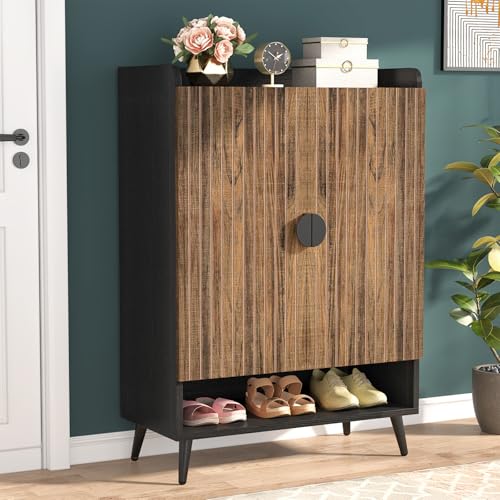
- Best overall closed cabinet: Tribesigns Shoe Cabinet with Doors, 7-Tier (Rustic Brown) — Check on Amazon
- VASAGLE LIRY Collection Shoe Cabinet with 3 Flip Drawers (Rustic White, UHSC301W02) — Check on Amazon
- Nicetree Shoe Storage Cabinet with 2 Flip Drawers (White) — Check on Amazon
See 3 more Amazon options
- Maupvit Shoe Storage Cabinet with 3 Flip Louvered Doors (Noble Blue Gray) — Check on Amazon
- YIKEHOME Shoe Cabinet with 2 Rattan Flip Drawers — Check on Amazon
- VASAGLE 10-Tier Shoe Storage Cabinet (White, ULBS273T14) — open-tier format — Check on Amazon
Read the full guide ↓
Disclosure: As an Amazon Associate, dailyhomedecorating.com earns from qualifying purchases. Links to Amazon on this page are affiliate links; they cost you nothing extra. Listing details such as price and availability change often, so check price on Amazon before you buy.
The best shoe cabinet for families under $400 has to survive a different life from the one in the product photos. A family entryway processes a small mountain of footwear every day: school shoes kicked off at speed, trainers that come home wet, wellies, football boots, one ballet slipper that is always missing, and the adults’ shoes buried somewhere underneath. Capacity matters, but the family tests are harsher than capacity — can a seven-year-old open it and close it without trapping fingers or toppling it, can it be anchored so a toddler pulling up on it is safe, can it swallow odd shapes from tiny kids’ shoes to a teenager’s size-13 trainers, and will the finish forgive muddy soles and daily scuffs? The six picks below were judged against exactly those tests, with format honesty kept front and centre: five closed cabinets that hide the family pile, and one open-tier organizer, clearly labelled, for the garage or utility room where speed matters more than looks.
Two family rules shape this whole guide. The first is anchoring: every tall cabinet in a house with children gets fixed to the wall, no exceptions, and picks that include an anti-tip kit scored accordingly — a flip drawer pulled by a climbing toddler is precisely the load case these kits exist for. The second is zoning: families do not need one perfect cabinet, they need a system — daily shoes in the entryway cabinet, outgrown and seasonal pairs exiled to a closet organizer, wellies by the back door. Read the picks with that system in mind and you will buy once instead of twice. Pair counts below are translated into family reality throughout: makers count small shoes packed tight, and a household mixing toddler shoes with adult trainers should plan on roughly two-thirds of any headline figure.
Budget honesty matters too. Under $400 is a generous ceiling for this category — enough for real doors, metal hinges and adjustable shelves — and nothing in this guide needs you to spend near it to serve a family well. What the extra money buys over the cheapest cabinets is durability where families actually wear furniture out: hinge hardware, drawer pivots, finishes that wipe clean. The reviews flag those details specifically, including the honest limitations — which cabinets will frustrate a household with big teenage feet, which fronts need gentle treatment a busy family may not give, and which formats turn the morning school run into a bottleneck instead of a routine.
In this guide
Quick picks: best shoe cabinet for families under $400 at a glance
Six picks, five genuinely closed cabinets and one honestly labelled open organizer. Prices are not printed in this guide — check price on Amazon for the live figure in the finish you choose.
| Pick | Best for | Key specs | Price |
|---|---|---|---|
| Tribesigns Shoe Cabinet with Doors, 7-Tier (Rustic Brown) | Best overall closed cabinet | Closed hinged doors; 7 tiers with adjustable shelves; engineered wood; freestanding floor cabinet; raised metal legs keep the base off damp floors; top surface usable for keys, bags and decor. | Check price on Amazon |
| VASAGLE LIRY Collection Shoe Cabinet with 3 Flip Drawers (Rustic White, UHSC301W02) | Best flip-drawer cabinet | 3 tilt-out flip drawers; farmhouse rustic white finish; interior shelves adjust between 3 positions; fits 18 to 24 pairs and shoes up to US size 14 per the maker; anti-tip kit included; freestanding. | Check price on Amazon |
| Nicetree Shoe Storage Cabinet with 2 Flip Drawers (White) | Best for very narrow hallways | Only 9.45 inches deep; 2 flip drawers with adjustable panels; metal legs; anti-tipping design; freestanding; maker describes capacity of 24 to 32 pairs across the two double-layer drawers. | Check price on Amazon |
| Maupvit Shoe Storage Cabinet with 3 Flip Louvered Doors (Noble Blue Gray) | Best ventilated flip cabinet | 3 flip drawers with louvered fronts for airflow; third drawer extended to 15.75 inches for larger shoes; metal flip hinges; 9.35 inches deep; anti-tipping device included; maker describes 24 to 32 pairs across three double-layer drawers. | Check price on Amazon |
| YIKEHOME Shoe Cabinet with 2 Rattan Flip Drawers | Best rattan / natural-texture pick | 2 rattan-front flip drawers; adjustable shelves inside the drawers; woven rattan panels allow airflow; engineered wood frame; freestanding entryway cabinet. | Check price on Amazon |
| VASAGLE 10-Tier Shoe Storage Cabinet (White, ULBS273T14) — open-tier format | Best open-tier tall organizer (not a closed cabinet) | 10 open tiers; 12.6 x 24.8 x 73.6 inches; holds up to 30 pairs per the maker; anti-tip kit included; freestanding; open shelves — shoes remain visible. | Check price on Amazon |
One more design deserves a mention without a link: the IKEA BISSA-style two-compartment tilt-out cabinet is a long-running small-entry favourite sold through IKEA’s own stores and site. No verified Amazon US listing could be confirmed for it at the time of writing, so it appears here as prose only — if you have an IKEA nearby it is worth a look as a budget-tier, mid-range-positioned alternative, and if you do not, every pick above is orderable today.
How the picks were chosen
Family judging weighted five things. Safety first: anti-tip hardware included or expected, stable bases, and fronts a child can operate without a slamming door or a heavy lid. Capacity second, but measured honestly — adjustable shelves that let tiny shoes and adult boots share one cabinet beat a bigger fixed box. Third, hardware durability: metal flip hinges and solid pivots outrank pretty fronts, because a family cabinet cycles dozens of times a day. Fourth, cleanability: wipe-down finishes and raised legs that let you mop underneath scored over delicate surfaces. Fifth, verified identity: every linked pick is a real model from a named maker, checked against its listing for dimensions, drawer counts and included hardware before earning a link; unverifiable designs were left as prose only. Prices are deliberately not printed — check the current listing on Amazon, because family budgets deserve the live number, not a stale one.
One rule ran through every decision in this guide: no invented numbers. There are no star ratings and no review counts anywhere in these reviews, because those figures change constantly on Amazon and printing them would mislead you within weeks. There are no static product prices either, for the same reason. What you get instead is what does not change: the format, the dimensions the maker publishes, the adjustability, the hardware, and an honest account of who each cabinet suits and who it will frustrate.
Detailed reviews
Tribesigns Shoe Cabinet with Doors, 7-Tier (Rustic Brown)
Who it suits: Best overall closed cabinet. Maker positions it as a large-capacity 7-tier cabinet; the matching wood-and-gold version is rated by the maker for up to 30 pairs.
This is the pick that behaves most like a real piece of entryway furniture rather than a rack with a cover on it. Two hinged doors close over seven tiers, so the whole shoe pile disappears behind a flat, calm front, and the shelves inside adjust, which matters more than the tier count suggests: one shelf comes out and a pair of ankle boots stands upright instead of lying crushed under a fixed divider. The raised legs lift the cabinet off the floor, so mop water and entryway slush do not wick straight into the bottom panel, and the space underneath swallows a pair of slippers or the shoes you kicked off ten seconds ago. The top is a genuine landing strip — wide enough for a key bowl, a plant and the bag you always put down in the same place. Assembly is flat-pack work with a lot of panels, so budget an unhurried hour and a second pair of hands for the door-hanging step, and anchor it to the wall if children or large dogs will lean on it.
For families, the adjustable shelves are the headline: set one tier tall for wellies and boots, keep the rest shallow for the small-shoe majority, and reconfigure as feet grow.
Pros:
- Fully closed doors hide the entire shoe pile
- Adjustable shelves adapt to boots and heels, not just flats
- Raised legs protect the base from wet entryway floors
- Usable top surface works as a console
Honest limitation: The honest limitation is assembly and material: it is engineered wood, not solid timber, and the door alignment takes patience — a slightly rushed build shows up as a door gap you will see every day.
Choose it if: Choose it if you want one cabinet that ends the entryway shoe problem in a single purchase and looks like furniture doing it.
Skip it if: Skip it if your entryway is narrower than the cabinet is deep with the doors open, or if you need boot storage for tall winter boots in every tier.
VASAGLE LIRY Collection Shoe Cabinet with 3 Flip Drawers (Rustic White, UHSC301W02)
Who it suits: Best flip-drawer cabinet. Maker-rated for 18 to 24 pairs, up to US size 14.
Flip drawers solve a different problem than doors do. A hinged door needs swing clearance and shows you every shelf at once; a flip drawer tilts toward you, presents two rows of shoes, and closes with a push, so the cabinet can be genuinely slim without feeling flimsy. VASAGLE’s LIRY version leans farmhouse — rustic white panels, simple metal handles — and the working details are right: the divider inside each drawer moves between three positions, so one drawer can be all sneakers while another swallows ankle boots with the divider removed. The maker rates it for shoes up to US size 14, which is unusually honest sizing for this category, where many slim cabinets quietly stop fitting at a men’s 10. The top surface is narrow but real, enough for keys and mail, and an open bottom slot takes slippers. An anti-tip kit is in the box and it is not optional decoration on a tall, narrow, front-heavy piece like this — use it.
Flip drawers are the most child-manageable format here — a push opens, a push closes, nothing swings into the hallway — and the US size 14 rating covers the teenage years.
Pros:
- Slim tilt-out design needs almost no swing clearance
- Adjustable dividers handle boots as well as flats
- Maker-rated up to US size 14 shoes
- Anti-tip kit included and genuinely needed
Honest limitation: The honest limitation is depth physics: very bulky high-tops and chunky trainers can stop a flip drawer closing flush, so the biggest shoes in the house may still live elsewhere.
Choose it if: Choose it if your hallway is narrow, your style leans farmhouse, and you want shoes hidden without giving up floor depth.
Skip it if: Skip it if most of your footwear is oversized trail shoes or work boots — a deeper shelved cabinet will serve you better.
Nicetree Shoe Storage Cabinet with 2 Flip Drawers (White)
Who it suits: Best for very narrow hallways. Maker describes 24 to 32 pairs across two double-layer flip drawers — treat the top of that range as smaller shoe sizes.
At 9.45 inches deep, this is the cabinet for the hallway where every other cabinet is a trip hazard. Most shoe cabinets run 13 to 15 inches deep; the Nicetree gives back nearly half a foot of passage while still hiding shoes behind two flip fronts, each with two layers of storage and an adjustable panel you can move or remove for heels and ankle boots. The metal legs raise it enough that a robot vacuum can pass underneath and mopping does not mean moving furniture. Because it is tall, slim and front-loaded, the anti-tip fitting matters — the maker builds anti-tipping into the design, and you should still fix it to the wall as instructed, especially in a rental hallway where a falling cabinet would take paint with it. The white farmhouse front is deliberately plain, which is the point in a small space: it reads as wall, not as storage, and the eye slides past it.
In a family home this is the hallway-width saver, but check the biggest teenage trainers against its slim layers before committing the whole household to it.
Pros:
- Shallowest footprint here at 9.45 inches deep
- Double-layer flip drawers keep capacity respectable despite the slim depth
- Raised on metal legs for cleaning underneath
- Plain front visually disappears in tight spaces
Honest limitation: The honest limitation is shoe size: slim flip cabinets trade depth for fit, and large men’s shoes sit at an angle or not at all in the tighter layer — measure your biggest pair before ordering.
Choose it if: Choose it if your hallway or apartment entry is genuinely narrow and every inch of passage matters.
Skip it if: Skip it if you wear larger than about a US men’s 11 in bulky styles, or if you need open quick-grab storage for daily runners.
Maupvit Shoe Storage Cabinet with 3 Flip Louvered Doors (Noble Blue Gray)
Who it suits: Best ventilated flip cabinet. Maker describes 24 to 32 pairs; the extended third drawer is the one sized for larger shoes.
Most closed shoe cabinets have an unspoken flaw: they seal shoes in a box. The Maupvit’s louvered flip fronts are the fix — the slats let air move through the cabinet, so the pair you wore in the rain does not spend the week fermenting in a sealed compartment. There are three flip drawers, each double-layered, and the detail that earns this cabinet its place is the extended third drawer, which reaches 15.75 inches so larger shoes get a home instead of being exiled to the floor beside the cabinet. The flip hinges are metal rather than plastic, which is the part of a flip cabinet that actually wears out, and the whole unit is only 9.35 inches deep, so it belongs to the same slim family as the Nicetree. The noble blue gray finish is a deliberate colour rather than a safe white or brown, and in the right hallway that is a feature: it reads as a painted furniture piece, not as storage apologising for itself. An anti-tipping device is included — fit it.
For families this is the sports-kit answer: louvered fronts let football boots and wet trainers breathe instead of perfuming a sealed box.
Pros:
- Louvered fronts ventilate shoes instead of sealing in odour
- Extended third drawer fits larger shoes that defeat other slim cabinets
- Metal flip hinges outlast plastic pivots
- Slim 9.35-inch depth suits narrow entries
Honest limitation: The honest limitation is the colour commitment and the louvers themselves: slatted fronts show dust in the grooves and need a brush-down now and then, and blue gray does not blend into every scheme.
Choose it if: Choose it if damp-climate shoes, gym trainers or work footwear make ventilation a real requirement, not a nicety.
Skip it if: Skip it if you want the lowest-maintenance front possible — flat doors wipe clean faster than louvers.
YIKEHOME Shoe Cabinet with 2 Rattan Flip Drawers
Who it suits: Best rattan / natural-texture pick. Two double-duty flip drawers sized for everyday family footwear; adjustable shelves let one drawer convert for taller shoes.
Rattan is doing two jobs in this cabinet. Visually, the woven fronts warm up an entryway in a way flat laminate never does — this is the pick that suits boho, coastal and Scandinavian-leaning rooms, and it photographs like decor rather than storage. Functionally, woven rattan breathes: air passes through the front, so shoes dry instead of stewing, the same ventilation argument as the louvered Maupvit but delivered with texture instead of slats. Inside, each flip drawer carries adjustable shelving, so the divider comes out for ankle boots and goes back in for two rows of flats. The frame is engineered wood with a wood-look finish, and the cabinet is sized as an entryway piece rather than a whole-house shoe warehouse — think the daily rotation for a household, with overflow living in bedroom closets. Treat the rattan kindly: it is a natural woven material, and dragging gritty soles across the inside of the front will fray it faster than the frame will ever wear out.
In a family setting be honest about the rattan: beautiful in a calm front hall, but it is the front most likely to suffer from gritty soles and toy collisions.
Pros:
- Woven rattan fronts add real texture and warmth
- Natural airflow through the fronts helps shoes dry
- Adjustable drawer shelves convert for boots
- Looks like decor, not storage furniture
Honest limitation: The honest limitation is capacity and delicacy: two drawers will not swallow a large collection, and woven rattan needs gentler handling than a flat laminate door.
Choose it if: Choose it if the entryway is on show — open-plan living, guests arriving through the front door — and you want storage that earns its place visually.
Skip it if: Skip it if you need maximum pairs per dollar, or if muddy boots are the main cargo.
VASAGLE 10-Tier Shoe Storage Cabinet (White, ULBS273T14) — open-tier format
Who it suits: Best open-tier tall organizer (not a closed cabinet). Maker-rated for up to 30 pairs across 10 tiers.
This pick is included deliberately as the honest contrast, and it is labelled as what it is: an open-tier organizer, not a closed cabinet. Ten shelves stack up to 73.6 inches tall on a footprint just 24.8 inches wide, holding up to 30 pairs with every pair visible and grabbable in one motion — no drawer to tilt, no door to swing, nothing between you and the shoes on a rushed morning. Taller shelves in the stack take boots and high-tops that defeat slim flip drawers. What you give up is exactly what the other five picks exist to provide: concealment and dust protection. Shoes on open tiers are on display, they gather dust, and a muddy pair looks muddy. So the right home for this unit is a closet, a bedroom corner or a utility space where access speed beats appearance — or a household that has made peace with seeing its shoes. An anti-tip kit is included; at over six feet tall, anchoring is mandatory, not advisory.
For families this belongs in the garage, utility room or a big closet — the overflow and sports-shoe station — not in the front entryway show zone.
Pros:
- Fastest access of any pick — everything visible at a glance
- Tall tiers accept boots that slim cabinets reject
- Narrow 24.8-inch width uses vertical space well
- Simple, sturdy, easy assembly
Honest limitation: The honest limitation is fundamental: it hides nothing. If your goal is a calm, closed entryway, this is the wrong format no matter how good the shelves are.
Choose it if: Choose it for a closet, bedroom or back hallway where speed and capacity matter more than concealment.
Skip it if: Skip it for a front entryway you want to look tidy for guests — pick any of the five closed designs instead.
Comparison table
| Pick | Best for | Format and key specs |
|---|---|---|
| Tribesigns Shoe Cabinet with Doors, 7-Tier (Rustic Brown) | Best overall closed cabinet | Closed hinged doors; 7 tiers with adjustable shelves; engineered wood; freestanding floor cabinet; raised metal legs keep the base off damp floors; top surface usable for keys, bags and decor. |
| VASAGLE LIRY Collection Shoe Cabinet with 3 Flip Drawers (Rustic White, UHSC301W02) | Best flip-drawer cabinet | 3 tilt-out flip drawers; farmhouse rustic white finish; interior shelves adjust between 3 positions; fits 18 to 24 pairs and shoes up to US size 14 per the maker; anti-tip kit included; freestanding. |
| Nicetree Shoe Storage Cabinet with 2 Flip Drawers (White) | Best for very narrow hallways | Only 9.45 inches deep; 2 flip drawers with adjustable panels; metal legs; anti-tipping design; freestanding; maker describes capacity of 24 to 32 pairs across the two double-layer drawers. |
| Maupvit Shoe Storage Cabinet with 3 Flip Louvered Doors (Noble Blue Gray) | Best ventilated flip cabinet | 3 flip drawers with louvered fronts for airflow; third drawer extended to 15.75 inches for larger shoes; metal flip hinges; 9.35 inches deep; anti-tipping device included; maker describes 24 to 32 pairs across three double-layer drawers. |
| YIKEHOME Shoe Cabinet with 2 Rattan Flip Drawers | Best rattan / natural-texture pick | 2 rattan-front flip drawers; adjustable shelves inside the drawers; woven rattan panels allow airflow; engineered wood frame; freestanding entryway cabinet. |
| VASAGLE 10-Tier Shoe Storage Cabinet (White, ULBS273T14) — open-tier format | Best open-tier tall organizer (not a closed cabinet) | 10 open tiers; 12.6 x 24.8 x 73.6 inches; holds up to 30 pairs per the maker; anti-tip kit included; freestanding; open shelves — shoes remain visible. |
Read the format column carefully: five of these six designs close fully, and one — the tall VASAGLE — is open shelving. That single distinction predicts satisfaction better than any capacity figure.
How to choose the right shoe cabinet for your home
Zone the system before you buy the cabinet
Decide what actually lives at the front door: one or two daily pairs per person, no more. Everything else — out-of-season shoes, outgrown-but-kept pairs, party heels — belongs in a closet or utility organizer like the open-tier pick in this guide. A family that zones ruthlessly can buy a smaller, better entryway cabinet; a family that tries to store everything at the door needs the deepest cabinet here and will still overflow by October.
Fit for the feet you have now — and next year
Measure the largest shoes in the house today, then add headroom: children’s feet grow a size a year, and the cabinet should serve the teenager your ten-year-old becomes. Prioritise adjustable shelves and at least one tall compartment for wellies and boots. In flip cabinets, check the maker’s maximum shoe size — the VASAGLE here is rated to US 14, while slimmer designs quietly cap out much lower.
Safety is a feature, not an accessory
Anchor the cabinet to the wall the day it is built. Choose formats small children can use safely: flip drawers that tilt rather than doors that swing, no heavy lids, no step-stool tops. Raised legs should be high enough to retrieve the toy cars that will inevitably roll underneath, and finishes should wipe clean, because they will be wiped, weekly, with whatever cloth is nearest.
Assign ownership or accept chaos
The cabinet that works is the one with a shelf or drawer per person — or per two small people — labelled if necessary. Adjustable interiors make this possible: dedicate the tall compartment to boots, a drawer per child, the top tier to adults. Five minutes of zoning at setup saves the daily excavation that makes families abandon cabinets and return to the floor pile.
Common mistakes to avoid
- Storing every shoe the family owns at the front door. The entryway cabinet should hold daily pairs only; overflow at the door guarantees overflow onto the floor.
- Skipping the wall anchor in a house with toddlers. A loaded flip drawer pulled open is a lever; the included anti-tip kit exists for exactly this and takes minutes to fit.
- Buying for today’s shoe sizes. The cabinet sized perfectly for a six-year-old’s shoes fails the same child at twelve. Adjustable shelves and a tall compartment are the future-proofing.
- Choosing a delicate front for a high-traffic hall. Rattan and fine finishes are lovely, but muddy soles, scooter wheels and daily scuffs argue for wipe-clean fronts in the busiest spot in the house.
- One shared jumble shelf for everyone. Without per-person zones, children dig, shoes migrate, and the cabinet becomes a slower version of the floor pile it replaced.
Final recommendation
For most families the Tribesigns 7-tier is the anchor purchase: adjustable shelves that grow with your children’s feet, real doors that hide the pile before guests arrive, and a top that catches the keys-and-homework clutter. Add the Maupvit where sports shoes live, for its ventilated fronts, and exile overflow to the open VASAGLE 10-tier in a closet or garage. The VASAGLE flip cabinet is the best single alternative if your hallway is narrow, and the Nicetree solves the narrowest halls of all. Anchor whatever you buy, zone it per person on day one, and the school-run shoe mountain becomes a thirty-second routine.
Frequently asked questions
How big a shoe cabinet does a family of four need?
For daily pairs only — two pairs per person at the door — a cabinet honestly holding 16 to 24 mixed pairs is enough, which means a maker rating around 24 to 32 pairs. Store seasonal and outgrown shoes elsewhere and even a mid-size cabinet feels generous.
Are flip drawers safe for young children?
They are among the safer formats: no swinging door, no heavy lid, and a push closes them. The non-negotiable is wall anchoring — a child pulling an open drawer can tip any tall cabinet, which is why every pick here includes or expects an anti-tip kit.
Can one cabinet fit both toddler shoes and adult boots?
Yes, if the shelves adjust. Set one compartment tall for boots and wellies and keep the rest shallow for small shoes. Fixed-shelf cabinets force a compromise; adjustable ones — most picks here — do not.
Where should the family shoe cabinet go?
At the door the family actually uses, which is often the back or side door, not the formal front. Put the pretty cabinet where guests arrive and the workhorse where the school run happens, if your home gives you both options.
How do we stop the cabinet smelling of sports shoes?
Choose a ventilated front — louvered or rattan — for the cabinet that holds sports kit, dry wet shoes on a mat before storing, and keep a small open spot by the door for today’s wet pair instead of sealing it in.
A family entryway system that survives the school run
A cabinet alone does not fix a family entryway; a cabinet inside a system does. The system that works in real houses has four parts. The cabinet holds the daily rotation, zoned per person as described earlier. A washable mat lives in front of it, sized for the two wettest pairs, because the fastest way to ruin a cabinet’s interior is to make it the drying rack. A small basket or tray on top catches the non-shoe cargo — keys, permission slips, the hair tie economy — before it colonises the cabinet’s shelves. And a back-door or garage station, even just the open organizer in a utility corner, takes the sports kit and the wellies that should never have been in the front hall’s airspace to begin with. Families who set up all four parts stop thinking about shoe storage entirely, which is the actual goal.
Routines beat rules with children. The workable routine is thirty seconds long: shoes off on the mat, today’s pair into your drawer or shelf, tomorrow’s pair stays by the mat if the weather demands it. It works because it is shorter than the argument it replaces. Label the zones for the first month — painter’s tape and a marker are enough — and remove the labels once the geography is habit. When a child outgrows a shelf arrangement, re-zone on a rainy Sunday rather than letting the system decay: adjustable shelves, the feature this guide kept recommending, exist precisely for that ten-minute reconfiguration as feet and seasons change.
Durability notes for high-cycle family use
Family cabinets cycle open and shut more in a month than a single person’s cabinet does in a year, so judge construction by its moving parts. Metal flip hinges and solid drawer pivots are the difference between a five-year cabinet and a two-year one; plastic pivots develop play, play becomes misalignment, and misalignment becomes the drawer a child has to slam — after which the countdown is short. Finishes face a different assault: muddy soles are abrasive, scooter wheels and school bags scuff fronts, and the lower third of any family cabinet lives a hard life. Wipe-clean laminate and painted fronts forgive all of it; woven rattan, lovely as it is, should serve in the calmest spot in the house rather than at the epicentre of the school run.
Finally, plan the succession. A cabinet bought for toddlers will serve teenagers if its shelves adjust and at least one compartment takes boots; a cabinet bought small and fixed will be replaced at the first growth spurt of footwear. The picks in this guide were chosen to be bought once — anchor them properly, re-zone them yearly, and they will still be doing unglamorous daily service when the children whose shoes they first held are borrowing the car.
The pre-purchase checklist for parents
Before ordering, run the family version of the standard checks. One: measure the space at the door your family actually uses, including the swing of that door and the arc of small people falling through it with school bags. Two: measure the largest shoes in the house — usually a teenager’s or a parent’s trainers — and the tallest wellies or boots. Three: count the daily rotation per person and multiply honestly; that number, not the maker’s pair claim, sizes your cabinet. Four: confirm at least one compartment can be made tall, for boots and the inevitable odd-shaped items — ice skates, riding boots, the football bag’s spare boots. Five: confirm the anti-tip kit is in the box and identify the stud you will fix it to before the cabinet arrives. Six: check the front’s cleanability against your reality — if the hallway hosts muddy sports kit daily, choose wipe-clean over woven. Seven: check the live price on Amazon in your chosen finish. Eight: plan zoning on paper — who gets which shelf or drawer — so setup day ends with a system, not just a cabinet.
What family money buys inside the ceiling
Within the under-$400 framing, family spending should follow the wear. The lower tier buys the format — slim flip cabinets that solve the hallway — with hardware that will serve a few years of family cycling. The middle tier is the family sweet spot: metal hinges and pivots, adjustable interiors that re-zone as children grow, finishes that survive weekly wiping, and legs that let you clean underneath without moving the piece. The upper tier buys size and furniture presence — the big door cabinet that swallows a whole household’s rotation and looks calm doing it before guests. What no tier buys is immunity from the two family failure modes: an unanchored cabinet and an un-zoned one. Both are free to fix and expensive to skip, which is why this guide mentions them more often than any product feature.
Think in cost per school year if it helps the decision: a mid-range cabinet anchored and zoned once will typically outlast three changes of school, several growth spurts of footwear and one house move. A cheaper cabinet with plastic pivots in a busy hall may not finish the second year. The difference between those outcomes is smaller than the cost of one replacement — buy the hardware, and let the cabinet become invisible infrastructure, which is the highest praise family furniture can earn.
Decision shortcuts for busy parents
If time is short — and for the audience of this guide it always is — decide by your family’s loudest problem. If the problem is sheer volume at the door, take the Tribesigns, zone it per person the day it is built, and exile everything non-daily to a closet. If the problem is the hallway itself — narrow, contested, a daily obstacle course — take the VASAGLE flip cabinet, whose drawers children can work without swinging anything into the traffic, or the Nicetree where even that is too deep. If the problem is smell — sports kit, wet trainers, the football bag ecosystem — take the Maupvit and give the kit a ventilated home of its own. If the problem is a front hall that must double as the guest entrance, the YIKEHOME is the pretty answer, placed in the calmest spot and defended from the muddiest traffic. And if the problem is overflow that no entry cabinet could honestly hold, the answer is the system, not a bigger box: entry cabinet for the rotation, open VASAGLE tower in the garage or closet for everything else.
The tie-breakers for families are safety and hardware, in that order. Between two cabinets that fit, choose the one you will anchor more easily and the one with metal where the moving parts are — because a family cabinet’s life is measured in thousands of small cycles, administered by small hands with big enthusiasm. Everything else — finish, colour, even capacity within reason — is negotiable, and the adjustable interiors in this guide mean a good-enough choice today can be re-zoned into the right choice next year. Buy it, anchor it, label it for a month, and get on with the school run: the cabinet’s job is to disappear into the routine, and every pick above, honestly matched to its problem, will do exactly that.
Care and cleaning by front type
Flat laminate and painted fronts — most of the cabinets in this guide — want the least: a damp cloth for the outside, a dry brush for interior grit, and no abrasive pads anywhere near the finish. Louvered fronts collect dust in their grooves, so add a monthly pass with a soft brush or the vacuum’s brush attachment; the slats that ventilate your shoes will otherwise slowly fur with household dust. Rattan wants to stay dry — dust it with a soft brush, wipe spills immediately, and never soak it, because natural fibres swell and stain in ways engineered finishes do not. Flip pivots and door hinges across every design benefit from a twice-yearly check: open each drawer and door fully, confirm the movement is smooth, and tighten any screw that has worked a quarter-turn loose before the looseness becomes wear. The floor beneath and behind the cabinet deserves the same rhythm — grit migrates, and a cabinet standing in its own dust line ages faster at the base than anywhere else. None of this takes more than ten minutes a month, and it is the entire difference between a cabinet that looks bought last year and one that looks bought last decade.
One last habit protects every format equally: never store a genuinely wet pair inside a closed cabinet overnight. Use the mat, let the pair dry in the open, and file it away dry the next morning. Closed storage is for dry shoes; treat that as the constitution of the entryway and odour, mildew and finish damage simply never get started — whatever cabinet, at whatever tier, you chose from this guide.
When should we re-zone the family cabinet?
Twice a year, timed with the seasonal changeover, and whenever a child’s feet jump a size. Re-zoning is a ten-minute job on an adjustable cabinet: tallest compartment to the current boot owner, drawers reassigned by height of child rather than age, outgrown pairs moved out the same day rather than stored in hope. Families who keep that rhythm find the cabinet never silently fails — the slow drift from system to jumble is caught while it is still a shelf adjustment, not a weekend project.


