Where to buy
Check the latest price, availability and delivery on Amazon. Orders are placed on Amazon. We may earn a commission from qualifying purchases.
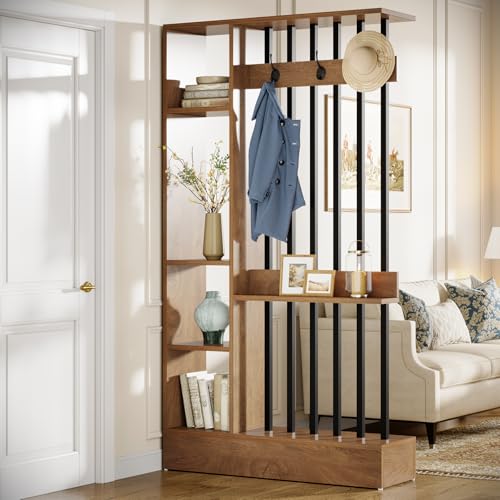
- Best overall for families: Tribesigns Wall Room Divider Bookcase with Shelves & Coat Hooks, 71 in, Brown — Check on Amazon
- Versare MP10S Portable Folding Wall Partition, 5 Panel, Canvas — Check on Amazon
- HOMCOM Room Divider, 8 Panel Folding Privacy Screen, 5.6 ft Tall, Nature Wood — Check on Amazon
- Bonnlo Wood Room Divider Privacy Screen, 6 Panel, Natural, 5.9 ft Tall — Check on Amazon
- Premium Home 4-Panel Room Divider, Barnwood Brown, K Pattern — Check on Amazon
- Pottery Barn Cubed Acacia Multipanel Room Divider — sold direct by the maker; see the review below for positioning (prose-only pick, no Amazon listing)
Read the full guide ↓
Disclosure: As an Amazon Associate, dailyhomedecorating.com earns from qualifying purchases. Links to Amazon on this page are affiliate links; they cost you nothing extra. Listing details such as price and availability change often, so check the current Amazon listing before you buy.
Finding the best room divider for families under $2000 is a different search from finding a divider for a quiet household of adults, and the difference is not style — it is physics and laundry. A family divider gets leaned on, crashed into, draped with costumes, used as a fort wall and a puppet theatre, and asked to hide a playroom’s worth of plastic from the living room before guests arrive. It has to stand up — literally — to toddlers who pull, children who run, and teenagers who slam. At a $2000 ceiling, families can buy the category’s genuinely sturdy end: furniture-weight bookcase dividers, commercial portable walls, solid wood screens and design-store pieces. This guide ranks six of them by the criteria that matter when children are part of the specification: stability first, then cleanability, then honest privacy, then looks.
The honest headline for parents is the same one this lot’s base guide leads with: you do not need to spend anywhere near $2000. The verified center of the family divider market — heavy bookcase units, solid wood screens, wide woven panels — sits in the lower and middle bands of this budget on Amazon, and the premium band is represented here by a single design-store pick, the Pottery Barn Cubed Acacia divider, included as a prose-only pick because Pottery Barn sells direct and there is no Amazon listing to link. What the family budget should buy, above all, is mass and engineering: a divider that weighs more than the child who bumps it, hinges that do not pinch-trap, feet that do not scratch, and surfaces that survive a wipe-down. Every pick below was verified on its Amazon.com listing — panel counts, dimensions, materials and construction come from the makers’ own specification fields — and each review names the family trade-off plainly, including the picks we would not put between a toddler and a nap.
Our family-first recommendation is the Tribesigns bookcase divider, and the reason is unglamorous: at 88.2 pounds with an 11.81-inch-deep footprint, it is the only pick here a child cannot casually move, fold or topple, and its 10 shelves and 5 coat hooks give the toys, books and school bags a home on the boundary itself. If your family’s problem is a room that changes jobs — playroom by day, guest room or study by night — the Versare MP10S portable wall is the engineered answer, rolling in and out on locking casters. And where the brief is gentler — zoning a shared kids’ room while keeping its light — the HOMCOM’s eight woven panels do it at the friendliest positioning in the guide. Below: quick picks, how the list was built, detailed family-focused reviews of all six, a comparison table, a safety-led buying checklist, the mistakes parents make in this category, and the questions families actually ask.
In this guide
Quick Picks
Family-first ranking: stability, pinch and tip behaviour, cleanability and honest privacy outrank looks here. Every linked pick was verified on its Amazon listing — check price on Amazon for the current figure on your exact configuration.
| Buyer type | Pick | Why it stands out | Link |
|---|---|---|---|
| Best overall for families | Tribesigns Bookcase Divider, 71 in | 88.2 pounds of bookcase with 10 shelves and 5 coat hooks — the divider that absorbs family clutter instead of adding to it — check price on Amazon | Check on Amazon |
| Best for rooms that change jobs | Versare MP10S, 5 Panel | A real wall on locking casters for the playroom-by-day, guest-room-by-night problem — check price on Amazon | Check on Amazon |
| Best light-friendly zoning | HOMCOM 8-Panel Screen | Eight woven panels that zone the chaos while keeping daylight in both halves — check price on Amazon | Check on Amazon |
| Best solid wood privacy | Bonnlo 6-Panel Paulownia Screen | Solid paulownia slats, true sight-line privacy for a parent working or a teen studying — check price on Amazon | Check on Amazon |
| Best character for family rooms | Premium Home Barn Door 4-Panel | Warm barn-door wood with detachable legs, sized for corners and nooks rather than whole rooms — check price on Amazon | Check on Amazon |
| Best premium design-store pick (prose-only) | Pottery Barn Cubed Acacia Divider | Acacia three-panel design piece from Pottery Barn — sold direct, positioned in the premium band of this budget | Sold direct — see review |
How These Picks Were Chosen
Family criteria came first, and they reordered the category. Stability was weighted above everything: we looked for mass, depth, end panels, feet and locking casters in the makers’ specifications, and we say plainly in each review where a pick’s lightness is a feature for adults and a risk around small children. The Tribesigns’ 88.2-pound furniture stance and the Versare’s full-size end panels earned their top rankings here; the folding screens were ranked with their zigzag discipline stated honestly — a screen angled deeply stands well, a screen stretched nearly flat in a playroom traffic lane is a domino waiting for a running start.
The second filter was verification, identical to the rest of this series. Every linked pick was checked on its Amazon.com listing in the United States: ASIN, panel count, dimensions, frame material and construction from the maker’s specification fields, cross-checked against a second retailer where one exists — Best Buy carries the Tribesigns model, Target and Overstock the HOMCOM. The Pottery Barn pick is prose-only by design: it is a genuine under-$2000 family-relevant design piece, sold direct by Pottery Barn, and this series never fabricates an Amazon link for a product Amazon does not carry. Its positioning in the premium band of the budget comes from a dated retailer-roundup sighting recorded in this article’s sources file.
The third filter was family livability: cleanability, pinch behaviour and repairability. Canvas and synthetic weave wipe down; solid wood can be sanded and touched up; engineered wood cannot be refinished once its surface chips, and each review says so. Double hinges — fitted to the Bonnlo and the Premium Home — fold both ways, which matters for storage, and like all folding screens they deserve a household rule about little fingers at hinge lines, stated in the checklist below. We did not test these dividers with our own children. We read maker listings and specifications, compared stability strategies across the category, and favoured dividers whose family virtues you can point at in the specification fields: weight, depth, feet, caster locks, wipeable surfaces.
The 6 Best Room Dividers for Families Under $2000
Tribesigns Wall Room Divider Bookcase with Shelves & Coat Hooks, 71 in, Brown
Who it suits: Families in open-plan homes where the living room doubles as playroom, homework station and coat drop — and the divider needs to swallow the evidence.
The Tribesigns wins the family ranking on the two properties children test daily: it cannot be casually moved, and it tidies as it divides. It is a freestanding bookcase divider, 70.87 inches wide, 70.87 inches tall and 11.81 inches deep, in engineered wood with a metal frame, weighing 88.2 pounds (ASIN B0G63CB6MP). Ten open shelves in varied sizes take board books, baskets of toys, and the rotating gallery of school art; five coat hooks take the bags and jackets that otherwise colonize chair backs; and the slatted section zones the room while letting light and supervision sight lines pass — a parent cooking can still see the play side, which no solid screen in this guide allows. Retailer offers place it in the lower-middle band of this budget — check price on Amazon for the current figure.
The family fine print matters as much as the headline. Eighty-eight pounds is stability, and it is also a commitment: assembly is a two-adult project, the unit should be built where it will live, and — the rule for every tall bookcase in a home with climbers — it should be anchored to a wall if a child might ever pull up or climb on it, exactly as you would a nursery bookcase. Load discipline is the second rule: heavy items low, baskets rather than loose small objects on the high shelves, and nothing perched where a ball strike turns it into a projectile. Treated with ordinary bookcase sense, this is the divider that most improves daily family life per inch of floor it occupies, because the boundary itself becomes the storage the room was missing. For households where the same unit must also fit a tighter footprint, the stricter ranking in Best Room Divider For Small Spaces Under $2000 judges it by depth first.
- Furniture-grade stability: 88.2 pounds and an 11.81-inch-deep footprint a child cannot casually shift.
- 10 shelves, a display shelf and 5 coat hooks turn the boundary into the family’s storage solution.
- Open slatted section preserves light and parental sight lines into the play zone.
Honest limitation: Anchor it like any tall bookcase if you have climbers, and load heavy items low. Assembly is a genuine two-person project, and engineered wood cannot be refinished if a corner chips.
Choose it if your open-plan room needs a boundary that also stores the family’s daily overflow. Skip it if you need a divider that moves for movie night or folds away for guests — that is the Versare’s job, below.
Versare MP10S Portable Folding Wall Partition, 5 Panel, Canvas
Who it suits: Families whose rooms change jobs on a schedule: the playroom that becomes a guest room, the living room that hosts a parent’s workday, the siblings’ shared room that needs a wall for exam week.
The Versare MP10S is a portable wall from the commercial partition world (ASIN B097CNS72F), and for families its superpower is scheduling. Five canvas panels on patented 360-degree hinges roll on wheels with locking casters, fold into L or C shapes or a straight line, and store in under four square feet — so the wall exists during homework hours and vanishes for the weekend. Full-size end panels keep the open wall properly vertical, the frame is steel tubing, and sizes run to 10 feet wide and 6 feet 10 inches tall, with pricing in the middle band of this budget for the larger configurations — check price on Amazon for your exact size. A wall that can divide a living room into a quiet study corner while a parent works, then open the whole room back up for family evening, solves the problem most family divider shoppers actually have.
Now the honest family limits, because canvas is not joinery. The panels give complete visual privacy and no acoustic privacy — a video call on one side is audible on the other, and a determined toddler can push against canvas in a way they cannot push against the Tribesigns. The locking casters genuinely lock, but the household rule should be that the wall is placed and locked by an adult, and children are not to ride, hang or race it — it is equipment, and treated as equipment it is superbly safe and useful equipment. The canvas wipes clean of the fingerprints and felt-tip incidents of family life better than any wood finish here, and individual panels are replaceable in the maker’s ecosystem, which is more than any folding screen offers after an accident. Buy it for flexibility, store it without guilt, and do not ask it to be a safety gate.
- A real, full-height wall that rolls away: locking casters, 360-degree hinges, under 4 square feet stored.
- Canvas panels wipe clean and shrug off scuffs that would scar wood finishes.
- Sizes to 10 feet wide and 6 feet 10 inches tall — covers spans no folding screen here can.
Honest limitation: Canvas blocks sight, not sound, and yields to a pushing toddler — it is a visual wall, not a barrier. It must be placed and locked by an adults-only rule in a family home.
Choose it if your family’s rooms change jobs weekly and the divider must deploy and disappear on demand. Skip it if you need a fixed, climb-proof boundary for very young children — the Tribesigns’ mass is the safer answer.
HOMCOM Room Divider, 8 Panel Folding Privacy Screen, 5.6 ft Tall, Nature Wood
Who it suits: Families zoning a shared space gently: siblings sharing a room, a play corner carved from a living room, a reading nook that should stay connected to the family’s light and life.
The HOMCOM (model 830-814V02ND, ASIN B0D1TZ2LW2) is an eight-panel folding screen, 5.6 feet tall, with a paulownia wood frame and a woven polypropylene panel surface under arched tops. For families, its defining virtue is gentleness: the weave filters and diffuses daylight, so a window on one side still serves both sides — no child exiled to a gloomy half-room — and the eight panels zigzag deeply, which is both the stability strategy and the reason it can make a play corner feel like a place rather than a partition. Retailer offers for this model sit at the accessible end of this guide — check price on Amazon — leaving most of a family budget for the things children actually wear out.
The family trade-offs are plain. At 5.6 feet it screens seated children completely and standing adults only partially — fine for zoning, wrong for hiding a mess from standing guests at the door. The woven surface is polypropylene, not natural rattan: that is a practical blessing in a family home (it wipes clean, ignores juice humidity, and does not fray into sharp plant-fiber ends) and an aesthetic compromise adults should choose with open eyes. The light build that makes it easy for a parent to move also means it is a screen to place out of the main running lane, angled deeply, and never as the wall of a fort that will be leaned on. Given a corner and a calm brief — a reading nook, a dress-up corner, a baby’s sleep zone in a shared room while the household is awake and nearby — it is the kindest divider here. Families dividing a small apartment rather than a house should compare the ranking in Best Room Divider For Small Apartments Under $2000.
- Woven panels diffuse daylight — both halves of a divided kids’ room stay bright.
- Eight panels zigzag deeply for stability and make rounded, friendly corners.
- Synthetic weave wipes clean and will not fray; accessible positioning in this tier.
Honest limitation: Only 5.6 feet tall and lightly built: a zoning screen, not a barrier, and not for the middle of a running lane. Standing-height privacy is partial.
Choose it if you are zoning a shared or play space and keeping its light matters more than sealing it. Skip it if you need full privacy or toddler-proof mass — the Bonnlo and Tribesigns answer those briefs.
Bonnlo Wood Room Divider Privacy Screen, 6 Panel, Natural, 5.9 ft Tall
Who it suits: Families with older children and teens: a parent working from home within earshot, a teenager studying in a shared room, a guest corner that needs genuine privacy in a house full of family.
The Bonnlo is a six-panel folding screen in solid paulownia wood, 108 inches wide laid flat and 71 inches tall, with slatted panels that cannot be seen through, double two-way hinges, protective leg pieces and no assembly required (ASIN B0BRMHX9XN). In a family with older children, its virtue is respect: the slats give a teenager a genuinely private study zone inside a shared room, and give a parent on calls a visual wall that says ‘at work’ more convincingly than a door left ajar. Solid wood at roughly 27 pounds is light enough for a parent to redeploy in a minute and substantial enough to feel like furniture rather than a prop, and its positioning sits in the middle band of this budget — check price on Amazon.
The family caveats are about age-matching. Double hinges fold both ways — wonderful for storage, and a reason for the household rule that small fingers stay out of hinge lines when the screen is being moved; set it up with adults, then leave it. The slats block light as completely as sight, so the study side needs its own lamp — budget one, or the teen migrates back to the kitchen table. And a lightweight solid screen is not a toddler product: it stands well angled in a calm corner and poorly as a playroom wall. Matched to the right ages, it is the family pick that treats privacy as a feature children grow into needing — and the only solid-wood screen here that does it at full 71-inch height with zero assembly.
- Solid paulownia slats: complete sight-line privacy at a full 71 inches tall.
- No assembly, roughly 27 pounds — a parent can redeploy it between rooms in minutes.
- Protective leg pieces guard floors; water-based finish wipes down after family incidents.
Honest limitation: Hinges need a fingers-out rule for younger children, and the light build is wrong for toddler zones. Slats darken the far side — plan a lamp for the study corner.
Choose it if your children are old enough to respect a screen and genuinely need privacy within shared rooms. Skip it if your household is in the toddler years — start with the Tribesigns and revisit the Bonnlo later.
Premium Home 4-Panel Room Divider, Barnwood Brown, K Pattern
Who it suits: Family rooms with a rustic or farmhouse character, where the divider’s job is a dressing corner, a reading nook or a toy-hiding screen that grandparents will compliment.
The Premium Home is a four-panel wood screen, 72 inches wide and 67 inches tall, in a distressed barnwood-brown finish with a patented barn-door K pattern (US design patent D963352), two-way hinges, detachable legs for sturdiness and no installation out of the box (ASIN B07WSRY1WK). In a family room it plays a specific, useful role: it is the screen that hides the toy corner before guests arrive, makes a dressing nook in a shared kids’ room, or gives a reading chair a wall of its own — at 23.7 pounds, light enough for a parent to move one-handed while carrying a child with the other, which is a real family specification nobody prints. Its positioning sits in the lower-middle band of this budget — check price on Amazon.
Scope is the honest limit: four panels span about 50–58 inches standing, the smallest coverage here, so this is a corner tool, not a room splitter — families needing a whole playroom wall should look to the Versare or a pair of screens. The distressed finish is, happily, the most forgiving surface in this guide for family wear: the dings and scuffs of daily life blend into a finish that was artfully pre-dinged at the factory. The detachable legs earn their mention in a family guide — fitted, they widen the stance and steady the screen against casual bumps — and the two-way hinges carry the same fingers-out rule as every folding screen here. Buy it for character and corners, and it will be the divider visitors ask about.
- Distressed barn-door finish hides family wear better than any smooth finish here.
- Detachable legs widen the stance; 23.7 pounds is a one-handed move for a busy parent.
- Patented K-pattern design — the family-room divider with genuine character.
Honest limitation: Smallest standing span in the guide (about 50–58 inches) — a corner and nook tool only. Two-way hinges need the household fingers-out rule when it is moved.
Choose it if you need a characterful screen for a corner, nook or guest-arrival toy hiding in a rustic family room. Skip it if you need to divide a whole room — the Versare’s ten feet or two Bonnlos are the honest tools.
Pottery Barn Cubed Acacia Multipanel Room Divider
Who it suits: Design-conscious families furnishing a living room for the long term, who want a divider that reads as architecture and will still be in the house when the children are grown.
The Pottery Barn Cubed Acacia Multipanel Room Divider is this guide’s premium, prose-only pick: a three-panel divider in acacia wood with an open, cubed geometric design and a warm mid-century character, sold direct by Pottery Barn. A dated sighting in a national design roundup placed it in the premium band of this budget — comfortably under the $2000 ceiling — and it is included because families shopping at this level will meet it in every design store, and deserve a straight account of it. There is no Amazon listing for it, so it carries no Amazon link here; the maker’s own store is the place to check its current price and availability.
For a family, the cubed design’s openness is its defining trait: the open geometric panels zone a room — screening a play corner, backing a reading chair — while passing light and sight lines almost freely, so it separates without isolating, which suits living rooms where supervision matters more than privacy. Acacia is a dense, durable hardwood with a rich grain, and a three-panel hardwood piece of this kind is a buy-once object that tolerates family decades better than a seasonal screen. The honest costs: open panels provide almost no visual privacy and no hiding of clutter, three panels span a modest width, and a design-store purchase means design-store delivery timelines and return logistics rather than Amazon convenience. Choose it as furniture for a living room you are furnishing deliberately, not as a problem-solver for a playroom.
- Acacia hardwood in an open cubed design — zones a living room while keeping light and sight lines.
- A buy-once furniture piece with mid-century character that outlasts family phases.
- Premium band of this budget with headroom to spare under the ceiling.
Honest limitation: Open panels give zoning, not privacy — clutter and children remain gloriously visible. Sold direct only: no Amazon convenience, and delivery and returns follow the maker’s policies.
Choose it if you are furnishing a family living room deliberately and want the divider to be lasting furniture. Skip it if you need privacy, clutter-hiding or next-day delivery — the linked picks above serve those briefs better.
Sold direct by the maker — there is no Amazon listing for this pick, so it carries no Amazon link in this guide.
Comparison Table
| Product | Type | Best use | Link |
|---|---|---|---|
| Tribesigns Bookcase Divider, 71 in | Engineered wood & metal bookcase divider, 10 open shelves, 5 coat hooks | Open-plan family zoning plus storage | Check on Amazon |
| Versare MP10S, 5 Panel | Canvas panels on steel tube frame, 360-degree hinges, locking casters | Playroom/guest room and work-from-home walls | Check on Amazon |
| HOMCOM 8-Panel Screen | Paulownia frame with woven polypropylene panels, arched tops | Gentle zoning that keeps daylight | Check on Amazon |
| Bonnlo 6-Panel Paulownia Screen | Solid paulownia wood slatted screen, double-hinged, no assembly | Privacy for teens, study and work corners | Check on Amazon |
| Premium Home Barn Door 4-Panel | Wood barn-door screen, distressed finish, two-way hinges | Corners, nooks and toy-hiding with character | Check on Amazon |
| Pottery Barn Cubed Acacia Divider | Acacia wood, three-panel cubed open design — sold direct by Pottery Barn (prose-only) | Living-room zoning as lasting furniture (prose-only) | Sold direct — see review |
How to Choose the Best Room Divider for Families Under $2000
- Rank stability by your youngest child. Under-threes need mass or a wall: the Tribesigns’ 88.2 pounds or an anchored placement. School-age children can live safely with a deeply angled folding screen. Teenagers need privacy more than protection. Match the pick to the youngest person who will touch it, not the oldest.
- Anchor tall furniture, always. Any tall bookcase-style divider in a home with climbers gets a wall anchor, exactly like a nursery bookcase — the Tribesigns included. It takes minutes and converts the family’s heaviest divider into its safest.
- Set a hinge rule for folding screens. Double hinges fold both ways and store beautifully; they also deserve a household rule — adults move screens, little fingers stay clear of hinge lines. Teach it once, like the oven rule.
- Choose surfaces by your cleaning reality. Canvas and synthetic weave wipe down after juice and felt-tip. Solid wood can be sanded and touched up. Engineered wood looks smart and cannot be refinished — price in a furniture marker and low expectations for corner chips.
- Protect the supervision sight line. In family zoning, seeing the children is often the point. Open slats (Tribesigns), woven diffusion (HOMCOM) and open design-store panels keep a parent visually connected; solid slats (Bonnlo) deliberately break the line — right for teens, wrong for toddlers.
- Measure standing span, then add margin. A folding screen spans roughly two-thirds to three-quarters of its flat width once angled. For a family room opening, buy wider than the gap and angle deeper — the deeper zigzag is also the more child-stable geometry.
- Plan the dark side. Any screen that blocks sight blocks light. A study or reading corner behind a solid screen needs its own lamp in the budget from day one, or the corner will be abandoned by Friday.
- Check the live price on your exact configuration. Panel counts and finishes move prices in this category more than most. Check the current price on Amazon on the exact model you intend to order before comparing picks.
What a Family Budget Buys — and What It Shouldn’t
The most useful thing a $2000 family budget buys is not luxury; it is the right category of divider for each family problem. Storage problems want furniture (the Tribesigns). Schedule problems — rooms changing jobs — want engineering (the Versare). Privacy problems for older children want solid wood (the Bonnlo). Light problems want weave (the HOMCOM). A family that names its problem first will spend in the lower or middle band of this budget and solve it completely; a family that spends toward the ceiling first usually discovers it has bought a beautiful screen for a problem it does not have.
The second useful purchase is time. Dividers at the verified center of this guide arrive ready or nearly ready, stand up to daily repositioning by adults, and survive the wipe-downs of family life — and the money not spent toward the ceiling is the money that buys the lamp for the dark corner, the baskets that make the bookcase divider work, and the anchor kit that makes it safe. If the family problem turns out to be bigger than a divider — siblings who genuinely need separate bedrooms, a work call schedule that needs a door — say so honestly and treat the divider as the bridge it is, not the destination. The wider shortlist logic is set out in Best Room Divider Under $2000, and the previous tier’s family ranking lives at Best Room Divider For Families Under $1000.
Dividing a Shared Kids’ Room, Step by Step
Most family divider questions are really one question — how do two children share one room without the room becoming a negotiation — so here is the sequence that works with the picks in this guide, in the order that matters. First, divide by light before you divide by furniture. Work out which child is the early riser and which is the night reader, and give the window side to the child whose sleep the light will not shorten; a woven or open divider (the HOMCOM, the Tribesigns’ slatted section) then shares that light fairly instead of awarding it to one side. Second, place the divider on the room’s natural seam — the line where the floor or rug already changes, or the midpoint between the two beds — because a boundary that follows the room’s own geometry gets respected by children far longer than one imposed at an angle. Third, give each side its own light and its own surface: a lamp and a small shelf or the Tribesigns’ shelves on each face, so the divider is a resource both children use rather than a wall one of them lost to.
Fourth, set the household rules while the divider is new and interesting, not after the first incident: screens are placed by adults, nothing is hung from a folding screen’s top edge, hinge lines are finger-free zones, and the divider is never a fort wall, a climbing frame or a goalpost. Children accept rules attached to a new object’s arrival as part of its nature; rules invented after a topple feel like punishment and get tested. Fifth, revisit the division every year or so. The zoning that suits a five-year-old (open, supervised, light-shared) is wrong for a twelve-year-old, who needs the Bonnlo’s genuine visual privacy and a lamp of their own — the family divider is one of the few purchases that should be expected to change jobs as the household grows, and buying a pick that can move rooms (a folding screen) rather than only fit this one is how that evolution stays cheap.
One worked example ties it together. In a shared room of two school-age children, the Tribesigns placed mid-room, anchored, loaded low with baskets and books, gives each child shelves of their own on their own side and keeps a parent’s sight line open over the slatted section from the door. Add the HOMCOM later — not as a second wall, but as a curved reading corner inside one child’s zone — and the room gains a third place without gaining a third wall. That layering, furniture first and screens second, is the pattern that survives contact with real family life, and it is achievable entirely inside this budget with room to spare for the lamps that make each zone feel owned.
One more family scenario deserves naming, because it arrives in almost every household eventually: the divider as a backdrop for the family’s digital life. A parent on a video call from a shared room needs a background that says ‘office’ and hides a living room that says ‘Tuesday’. The Bonnlo’s slats make the most convincing backdrop in this guide — textured, warm, and completely opaque to the laundry pile behind them — while the Versare’s flat canvas wall is the neutral, full-height alternative when the call is formal. Position either so the light falls on the speaker’s face rather than behind the screen, because a backlit divider turns its user into a silhouette; a lamp on the desk side solves it for less than the cost of the family’s weekly snacks. It is a small use, but in a work-from-home decade it is the use that justifies the purchase to the household member who was skeptical — and it asks nothing of the divider that the family brief had not already demanded: opacity, stability, and a surface that forgives the household behind it.
Common Buying Mistakes
- Putting a lightweight folding screen in a toddler’s running lane and calling the inevitable topple a product defect.
- Skipping the wall anchor on a tall bookcase divider in a home with a climber.
- Buying a solid screen for a shared kids’ room and creating a dark half that neither child will use.
- Assuming a canvas or screen divider gives sound privacy for work calls — children hear everything, and so does the call.
- Letting children fold and unfold double-hinged screens unsupervised, fingers at the hinge lines.
- Loading a bookcase divider’s top shelves with the heaviest toys and books.
- Choosing a white or pale finish for the playroom boundary in a house with felt-tip artists.
- Measuring the opening against a screen’s flat width and coming up a foot short on delivery day.
Final Recommendation
- Most families, open plan first: Tribesigns Wall Room Divider Bookcase, 71 in.
- Rooms that change jobs: Versare MP10S Portable Folding Wall Partition.
- Keep the daylight, zone the play: HOMCOM 8 Panel Folding Privacy Screen.
- Privacy for older kids and working parents: Bonnlo Wood Room Divider, 6 Panel.
- Character for corners: Premium Home 4-Panel Room Divider, Barnwood Brown.
- Furnishing for the long term: Pottery Barn Cubed Acacia Multipanel Room Divider (sold direct).
Our top two for families are the Tribesigns — the only pick whose mass, storage and open sight lines are all family features at once, at a positioning well inside this budget; anchor it, load it low, and it will organize the boundary it creates — check price on Amazon — and the Versare MP10S, because the defining family problem is a room with two jobs, and a wall that rolls away is the only divider that respects both of them. Between those poles: the HOMCOM where light is scarce and children are young, the Bonnlo where children are older and privacy is the point, the Premium Home where a corner needs character, and the Pottery Barn where the living room is being furnished for the decade. Name your youngest child’s needs first, your room’s real problem second, and the style third — in that order, every pick in this guide is the right answer for somebody’s family.
Frequently Asked Questions
What is the safest type of room divider around toddlers?
Mass and anchoring are what make a divider toddler-safe, not any single product type. A heavy bookcase divider like the Tribesigns (88.2 pounds, deep footprint), anchored to a wall like any tall bookcase, is the most stable option here. Lightweight folding screens should be kept out of toddler traffic lanes entirely, and no divider of any kind should be treated as a safety gate or climbing frame.
Can a room divider give my teenager real privacy in a shared room?
Visual privacy, yes — the Bonnlo’s solid slats at 71 inches block sight lines completely, which is what makes a study corner feel private. Sound privacy, no: conversation and music carry over any freestanding screen. For siblings sharing a room, a solid screen plus a household quiet-hours agreement achieves most of what families actually need.
Will a divider help separate a play area without making it dark?
Yes, if you choose a light-passing design. The HOMCOM’s woven panels diffuse daylight to both sides, the Tribesigns’ open slatted section passes light and sight lines, and open design-store panels like the Pottery Barn’s barely interrupt light at all. Solid and slatted screens are the ones that darken — plan a lamp behind them if you choose one.
How do I stop a folding screen falling over?
Angle it more deeply. A screen’s stability lives in its zigzag: the deeper the folds, the wider its effective stance. Keep it out of running lanes, fit any supplied legs or feet (the Premium Home’s detachable legs genuinely help), never stretch a screen nearly flat to cover a wider opening, and store it folded when children are using the room as a gymnasium.
Are these dividers easy to clean after children?
The wipeable picks are the Versare’s canvas panels and the HOMCOM’s synthetic weave — both tolerate a damp cloth and mild cleaner. Solid wood (the Bonnlo) wipes down and can be touched up. Engineered wood (the Tribesigns) wipes clean on its surfaces but cannot be refinished if a corner chips, so treat its edges with a little respect and keep a furniture marker in the drawer.
Is it worth spending near $2000 on a family room divider?
Rarely on a screen — the verified family picks in this guide sit in the lower and middle bands of the budget. Spending more makes sense only when the divider is also lasting furniture for a room you are furnishing deliberately, like the Pottery Barn acacia piece. For most families, the wiser spend is a mid-band divider plus the lamp, baskets and anchor kit that make it work.


