Where to buy
Check the latest price, availability and delivery on Amazon. Orders are placed on Amazon. We may earn a commission from qualifying purchases.
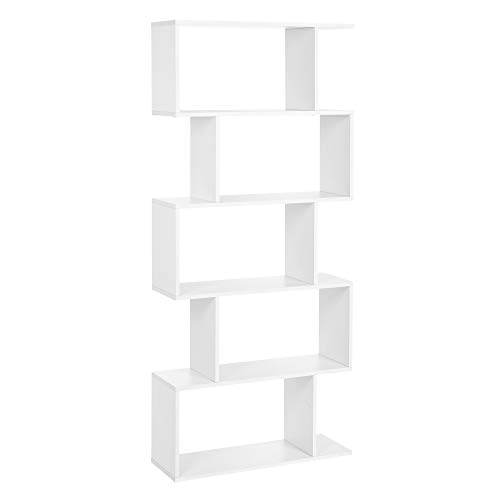
- Best for small spaces overall: VASAGLE 5-Tier Bookcase and Room Divider, White, ULBC62WT — Check on Amazon
- Aletheiawu 4-Panel Hand-Woven Rattan Room Divider, Natural — Check on Amazon
- Coaster Roberto 4-Panel Shoji Room Divider, Black, 4624 — Check on Amazon
- RANTILA 3-Panel Fabric Room Divider, Grey, 102 in Wide — Check on Amazon
- MyGift 6-Panel Artwork Room Divider, Black Wood Frame, 94.6 in Wide — Check on Amazon
- YATINEY 4-Panel Room Divider with Storage Shelves, Rustic Brown and Black — prose-only pick, see the review below for why
Read the full guide ↓
Disclosure: As an Amazon Associate, dailyhomedecorating.com earns from qualifying purchases. Links to Amazon on this page are affiliate links; they cost you nothing extra. Listing details such as price and availability change often, so check the current Amazon listing before you buy.
The best room divider for small spaces under $400 is chosen by a stricter arithmetic than any other divider in this series, because a small space — a box room, a landing nook, the end of a hallway, a corner that must become an office — has no surplus to spend. Every inch a divider takes, it takes from somewhere named: the walking line, the door swing, the light path, the only wall a desk fits against. And yet small spaces are exactly where dividers earn most, because a small space with a boundary becomes a place — a work nook with a door-like edge, a reading corner that feels held, a guest bed that is a room for the night — while a small space without one remains a corridor other rooms pass through. The art is to buy the boundary and refuse the bulk: dividers that stand shallow, fold slimmer, zone at partial height, or pay for their footprint with storage.
This guide judges the under-$400 field by small-space rules. Depth counts before width, because a divider’s zigzag projects into the room’s working floor. Folded thickness counts, because small spaces have small storage. Partial solutions are honoured rather than apologised for: in a small space, a 62-inch bookcase line or a woven screen that zones without sealing often beats a full wall that turns a nook into a cupboard. And storage is weighted heavily, since the surest way to make a small space feel bigger is to give its contents a designed home. For most small spaces we would start with the VASAGLE bookcase below — five shelves on a footprint 27.6 inches wide and 9.4 inches deep is the best exchange rate in this guide — with the Aletheiawu’s slim-folding weave the answer where the boundary must stay soft and movable. The wide walls close the list with their warnings intact: small spaces are not all the same shape, and a long, thin one may need exactly what a square one cannot forgive. If your small space is a whole apartment, our companion guide to the Best Room Divider For Small Apartments Under $400 covers that larger version of the same problem.
In this guide
Quick Picks
Short on time, or comparing several options at once? Each row below names a small-space need and the product that suits it, with a link to the listing where one is verified for this tier.
| Small-space need | Pick | Why it stands out | Link |
|---|---|---|---|
| Best for small spaces overall | VASAGLE 5-Tier Bookcase and Room Divider, White, ULBC62WT | Five shelves on a 27.6 x 9.4 in footprint — the boundary pays for itself — check price on Amazon | Check on Amazon |
| Best movable zoning | Aletheiawu 4-Panel Hand-Woven Rattan Room Divider, Natural | Zones softly and folds to a 4.52 in stack for tight storage — check price on Amazon | Check on Amazon |
| Best daylit screen | Coaster Roberto 4-Panel Shoji Room Divider, Black, 4624 | Blocks the view while the nook keeps its borrowed light — check price on Amazon | Check on Amazon |
| Best for long thin spaces | RANTILA 3-Panel Fabric Room Divider, Grey | 102 in of complete block that folds flat when the space reopens — check price on Amazon | Check on Amazon |
| Best for tall small rooms | MyGift 6-Panel Artwork Room Divider, Black Wood Frame | Uses height and span as décor in rooms with ceilings to spare — check price on Amazon | Check on Amazon |
| Best shelf-screen hybrid | YATINEY 4-Panel Room Divider with Storage Shelves, Rustic Brown and Black | Hinged panels plus an attached five-shelf unit — prose-only, see review | See review |
How These Picks Were Chosen
The budget filter came first: the divider, in the configuration reviewed, must sit at or under $400 and arrive complete and usable. Every linked pick is a real Amazon listing whose identity and specifications we verified against the listing and maker or retailer records — check the current price on Amazon before you buy, because prices move. One pick, the YATINEY shelf-screen, appears in prose only because we could not confirm a current price sighting for its exact configuration; it is fully described, with the reason stated in its review, rather than linked on a guess.
On top of the budget we applied four small-space filters. The depth filter measured what a divider projects into the room: a bookcase spends a fixed 9.4 inches and buys shelves with it; a screen spends only its zigzag, and we favoured screens whose coverage does not demand a deep fold. The disappearance filter measured the folded stack against the storage small spaces actually have — a gap beside furniture, a closet’s spare inches, the space under a bed. The proportionality filter checked height against the low ceilings and short sightlines of small rooms, favouring dividers that zone at 62 to 67 inches where a 71-inch wall would loom. The usefulness filter asked what else the divider does: in a small space, a boundary that also stores, displays or decorates is worth two that merely stand. Stability and construction were checked as in every guide in this series — stance, weight, hinges, and the bookcase’s included anti-tip kit.
We also refused to pretend that small spaces are one problem. A box room that must become an office, a landing that must become a dressing area, and a living-room corner that must become a guest bed need three different boundaries, and the list keeps a spread — storage line, soft weave, daylit screen, full fabric wall, tall artwork — so each reader can find their shape. What we excluded: dividers with no verifiable listing or published dimensions, models only available above this budget, and fixed partitions whose depth and permanence a small space cannot absorb.
The 6 Best Room Dividers for Small Spaces Under $400
VASAGLE 5-Tier Bookcase and Room Divider, White, ULBC62WT
Who it suits: Small spaces where the boundary must earn its floor — a work nook in a box room, a library line in a living-room corner, storage where a wall of nothing stood before.
The VASAGLE leads the small-space list because it reverses the usual bargain. A screen spends floor to buy a boundary and gives nothing back; this five-tier open bookcase spends 27.6 inches of width and 9.4 inches of depth and gives back five shelves, each maker-rated at 33 pounds, on which a small space can park the clutter that was making it feel small. Stood perpendicular to the wall, it draws the line that turns a corner into a nook — desk on one side, sofa on the other — and at 62.6 inches tall it zones at exactly the height small rooms prefer: above a seated sightline, below the point where a boundary starts to loom and steal the ceiling. The S-shaped shelf profile keeps it from reading as a storage slab, the white finish borrows the wall’s colour, and at 43.1 pounds it has the planted permanence that lets a small space feel designed rather than improvised. The objects on its shelves become the nook’s décor, which in a small space is décor you did not have to find wall for.
The conditions are the honest ones. Assembly is required. The anti-tip kit in the box must be fitted exactly as VASAGLE instructs — a freestanding shelf in a tight space gets brushed past daily, and anchoring is what makes that a non-event. And once loaded, the divider does not fold or roam: it commits the layout. In a small space, commit deliberately — live with the line marked in tape for a few days first — because a well-placed bookcase divider is the single most transformative purchase in this guide, and a badly placed one is the most immovable. If your storage hunger is bigger than your dividing need, our guide to the Best Bookcase Under $400 takes the same logic further.
Pros: Boundary and five shelves on one small footprint; zoning height ideal for low rooms; anti-tip kit included; substantial, permanent feel; display serves both sides.
Honest limitation: Fixed once loaded; zones rather than conceals, screening only as much as its contents do; the 9.4 in depth is real floor in the smallest rooms.
Choose it if your small space needs storage as much as separation. Skip it if the boundary must move weekly or disappear for guests. Check on Amazon for finishes and the current listing. Full listing: VASAGLE bookcase divider on Amazon.
Aletheiawu 4-Panel Hand-Woven Rattan Room Divider, Natural
Who it suits: Small spaces that need a movable, soft boundary — a reading corner, a dressing edge, a calm zone in a room that must stay one room.
Where the VASAGLE commits, the Aletheiawu negotiates — and many small spaces need negotiation more than commitment. Four panels of hand-woven rattan in a solid wood frame span 63.39 inches wide by 66.92 inches tall, zoning a corner while light, air and the sense of the whole room pass through the weave. That softness is a small-space virtue: a hard wall across a box room makes a smaller box, while a woven boundary makes a place inside the room, which is usually the actual goal. The decisive number for tight homes is the folded stack — about 19.86 inches wide and 4.52 inches thick — which slides into the gaps small spaces actually offer: beside a wardrobe, behind a door, under a bed. At 19.4 pounds in the natural four-panel configuration it is a comfortable one-person carry, and double hinges let it fold either way, curve gently, or wrap a corner that a rigid partition could not follow.
The maker states the weave gives partial privacy, roughly a half-screening effect, and in small-space use that is a specification to embrace rather than excuse: this is the divider for declaring a territory, screening a chair, giving a guest corner a sense of enclosure. It will not conceal a dressing area or split a shared room — the Coaster and RANTILA below exist for those jobs — and its weave gathers dust that wants a brush or vacuum rather than a wipe. Choose it where the boundary should feel like a held breath, not a closed door.
Pros: Slimmest folded stack here at 4.52 in; genuine hand-woven rattan and solid wood; keeps small rooms feeling whole; one-person weight; folds either way and wraps corners.
Honest limitation: Partial privacy only, by the maker’s own description; weave collects dust; too soft for concealment jobs.
Choose it if your small space needs a place made, not a room split. Skip it if you need a true visual block. Check on Amazon for colours and the current listing. Full listing: Aletheiawu rattan divider on Amazon.
Coaster Roberto 4-Panel Shoji Room Divider, Black, 4624
Who it suits: Small spaces that borrow their light — a nook away from the window, a box room with one small window, a corner that must be screened without being darkened.
Small spaces rarely own their light; they borrow it from the room’s one window or the doorway’s spill. The Coaster is the divider that respects the loan. Its solid pine frame carries shoji-style translucent panels across 69.5 inches by 70.25 inches tall: the view is properly blocked — a dressing corner, a work nook, a guest bed all genuinely screened — while daylight passes through the panels, so the small zone behind the screen stays a place you can read in rather than a cupboard you sit in. In a box room that combination is the whole game, and it is why a century of small Japanese rooms used exactly this device. Four panels on two-way hinges zigzag, wrap or fold flat against the wall, the screen arrives with no assembly required, and at 12.1 pounds it is the lightest carry in this guide — one person, one hand, up the stairs and into the nook.
The cautions sharpen at small scale. The black grid is a strong note in a small room and will be its accent; choose it as one. The light build that makes it portable makes it shiftable, and small spaces concentrate traffic, so stand it out of the main passing line where the room allows. And the paper-style panels dislike hard contact — a small space generates contact, so place it where elbows and chair backs are not its daily weather. For a nook that needs screening with its borrowed light kept, nothing else in this guide does the job as elegantly.
Pros: Full visual block that transmits daylight; solid pine frame; no assembly; folds flat; lightest carry here at 12.1 lb.
Honest limitation: Light and panel-delicate in high-traffic tight spaces; the black grid dominates very small rooms if not intended as the accent.
Choose it if your small space must be screened and stay bright. Skip it if a soft zone suffices or the screen will stand in the room’s main traffic line. Check on Amazon for the current listing. Full listing: Coaster Roberto on Amazon.
RANTILA 3-Panel Fabric Room Divider, Grey, 102 in Wide
Who it suits: Long, thin small spaces — a narrow room that must become two, a hallway-wide studio end, a shared box room — where the split must be complete.
Small spaces come in two shapes, and this pick is for the other one. Where a square nook needs softness, a long thin room needs a wall: a complete, gap-free end to the space. The RANTILA’s three wide panels span 102 inches by 71 inches tall in high-density 180g polyethylene fabric on a steel frame — the only pick here that can close a room’s whole width with an opaque, hinge-tight block, turning the end of a long room into a sleep zone, a study or a guest room that is private in fact. The fabric is waterproof and wipes clean, support feet steady the run, and the whole wall folds flat, so the split can be a nightly event rather than a permanent surrender of the room’s length.
The warnings are proportionate to the tool. In a small square space, 102 inches is a liability: the panels fold so deep that the zigzag eats the floor the divider was meant to organise, and you pay for width you cannot use. The opaque fabric also ends the light argument — the far side gets none — so in a one-window thin room, plan the lamp with the wall. And the look is functional: a calm grey plane, closer to architecture than furniture, which in a small space can be a mercy — it does not add visual noise to a room that has no room for noise. Buy it for length and completeness, not for charm.
Pros: Only complete room-width block here; waterproof, wipe-clean fabric; steel frame with support feet; folds flat despite its span; visually quiet in grey.
Honest limitation: Overwhelms small square spaces and folds deep; blocks all light to the far zone; a functional rather than decorative presence.
Choose it if your small space is long and needs a true split. Skip it if your space is square, low and one-windowed — the Coaster or the rattan will treat it kinder. Check on Amazon for colours and sizes. Full listing: RANTILA 3-panel divider on Amazon.
MyGift 6-Panel Artwork Room Divider, Black Wood Frame, 94.6 in Wide
Who it suits: Small spaces with height to spare — a tall box room, a mezzanine edge, a small room in an old house with high ceilings — where the divider can spend vertical drama instead of floor.
Most small-space advice is about shrinking, but some small rooms are small only in footprint. A tall, narrow room — high ceiling, short walls — can take a divider that a low wide one cannot, and the MyGift is built for that exchange. Six panels span 94.6 inches flat at 68.9 inches tall, framed in black wood and carrying a dual-sided printed design — a vintage Asian water-village scene in brushed ink on this version — so the screen uses the room’s height as décor, drawing the eye up and giving a small floor a sense of occasion. The folding maths surprises in its favour: the whole span collapses to a single stack 15.5 inches wide and 4.7 inches thick, so its storage footprint is smaller than many four-panel screens, and six panels hold a stable zigzag without standing flat.
The cautions are the mirror of the virtues. In a low-ceilinged small room this much printed screen is a crowd: nearly eight feet of imagery, on both faces, in a space with nowhere for the eye to rest from it. It also stores nothing, in the home category that can least afford decorative-only objects — if your small space is short of shelves, the VASAGLE and the hybrid below work harder for the same floor. Choose the MyGift where the room’s problem is plainness and height, not storage and lowness, and it will be the piece the small space is remembered by.
Pros: Turns height into décor in tall small rooms; artwork on both faces; wide, stable coverage; folds to a slim 4.7 in stack; solid wood frame.
Honest limitation: Dominates low or compact rooms; the printed scene is a fixed commitment; no storage offered.
Choose it if your small space is tall and plain. Skip it if it is low, busy or storage-short. Check on Amazon for design options. Full listing: MyGift 6-panel divider on Amazon.
YATINEY 4-Panel Room Divider with Storage Shelves, Rustic Brown and Black
Who it suits: Small spaces that cannot decide between a screen and shelves — because the right answer is a run that is partly both.
The YATINEY is the hybrid this category keeps asking for: four hinged panels in engineered wood with a black metal frame, in a rustic brown and black industrial finish, spanning 76.4 inches wide by 66.9 inches tall, with a five-shelf storage unit attached to the run. In a small space the logic is sharp — the shelved section stands where the boundary crosses the room’s storage need, the screened sections fold where the boundary crosses its walking need, and one purchase covers both. At 34.6 pounds it stands with authority, and the wood-look panels screen more completely than the VASAGLE’s open shelves, which matters where the nook behind the boundary is a bed rather than a desk.
We cover it in prose only, without a purchase link, for a stated reason: the listing is recent — first available in December 2025 per the listing — and while its specifications are published and verified, we could not confirm a current price sighting for the exact configuration when this guide was written. Rather than link on a guess, we describe it fully: search the model — YATINEY room divider with storage, model 01BR Storage Shelf — and judge the live listing yourself. One small-space note if you do: the shelf section fixes part of the run’s shape, so measure your nook for the hybrid as it is, not for the fully folding screen it partly resembles.
Pros: Screen and shelving in one hinged run; wide 76.4 in span; substantial build; panels screen more fully than open shelves.
Honest limitation: Prose-only here because its current price could not be verified — check the live listing carefully. The shelf section folds less freely than a plain screen.
Choose it if you find it live under budget and your small space needs both functions in one run. Skip it if you prefer a long-established listing — the VASAGLE or the Aletheiawu.
Comparison Table
| Pick | Type | Flat width | Height | Small-space strength |
|---|---|---|---|---|
| VASAGLE ULBC62WT | 5-tier bookcase divider | 27.6 in | 62.6 in | Storage pays for the footprint; low zoning height |
| Aletheiawu Rattan | Hand-woven rattan screen | 63.39 in | 66.92 in | Slimmest fold (4.52 in); soft, movable zoning |
| Coaster Roberto 4624 | Shoji screen, solid pine | 69.5 in | 70.25 in | Screens while borrowed light passes through |
| RANTILA 3-Panel | Fabric screen, steel frame | 102 in | 71 in | Complete split for long thin spaces |
| MyGift 6-Panel Artwork | Printed artwork screen, wood frame | 94.6 in | 68.9 in | Height and décor for tall small rooms |
| YATINEY with Shelves | Hinged screen plus 5-shelf unit | 76.4 in | 66.9 in | Hybrid screen and shelves (prose-only) |
How to Choose the Best Room Divider for Small Spaces Under $400
Measure the space’s scarcities, not just its opening. A small space is short of several things at once — floor, light, storage, height, calm — and the right divider is the one that spends the scarcity you have and relieves the one you feel. If floor is scarcest, buy folded thinness and shallow stance: the rattan’s 4.52-inch stack, a screen whose zigzag stays shallow. If storage is scarcest, buy the bookcase exchange rate and let the boundary hold your things. If light is scarcest, buy transmission — shoji — or pattern — rattan — and refuse opacity. If the space is long rather than small in every direction, buy width and completeness, which is the RANTILA’s whole argument.
Then run the standard checks at small scale. A hinged screen delivers roughly four fifths of its flat width once it stands in a stable zigzag, and that zigzag’s depth is floor you will walk around daily, so in a small space prefer coverage achieved in fewer, wider panels over coverage achieved by folding many panels deep. Check height against the ceiling and the sightline together: zone a seated area at 62 to 67 inches, screen a standing one at 69 to 71, and never let a divider strain at a low ceiling. Check the weight against the person who will move it, in the space it will move through — a screen that cannot pass the doorway folded is a screen that lives where it first stood. And decide the divider’s day off: in a small space, where it goes when it is not dividing is not a detail, it is half the purchase.
Finally, place by sightline, not by geometry. Sit and stand where the space is used and mark what the divider must interrupt; small spaces reward a divider placed across a view — door to bed, desk to door, sofa to kitchen — far more than one placed across the room’s literal middle. Families working in small spaces should also read our guide to the Best Room Divider For Families Under $400, where stability and cleanability re-rank this same budget.
Common Mistakes to Avoid
The first small-space mistake is importing a big-room divider: a deep-folding, wide, tall screen that was designed for a loft, stood in a box room, where its zigzag eats the walking line and its height eats the ceiling. Scale is not a preference in a small space; it is the product. The second mistake is sealing a borrowed-light nook behind an opaque wall and creating a cupboard with a chair in it — if the space’s light arrives from elsewhere, the divider must transmit or pattern it. The third is forgetting the door: small spaces concentrate swings and paths, and a divider that a door clips or a daily route squeezes past will be moved, resented and finally stored forever.
Fourth, shoppers buy a divider and no home for it — no measured gap for the folded stack — so the screen lives half-open against a wall, which in a small space is a permanent resident, not a tool. Fifth, bookcase dividers get placed without their anti-tip kit fitted because the unit ‘fits snugly’; snug is not anchored, and the kit takes minutes. Fit it. Finally, do not ask a divider to fix a space’s storage, light and privacy crises simultaneously at maximum strength — no single product here does all three, and the honest purchase picks the crisis that matters most and solves it properly.
Small-Space Placements That Work
The desk nook. Stand the bookcase or a two-panel wrap at the end of the room’s shortest wall, desk inside the boundary, camera facing the divider rather than the room. The nook gains a backdrop, a boundary and — with the VASAGLE — its own shelving, in a footprint a wardrobe would envy. The reading corner. A woven screen curved gently around a chair and a lamp makes the smallest complete place in this guide: one seat, one boundary, no renovation. The guest end. In a living room, keep the fabric wall folded behind the sofa and stand it across the room’s end on guest nights; the space is a room by day and two by night, which is the most a small space can honestly promise. The dressing edge. A shoji beside the wardrobe gives a small bedroom a changing screen that glows rather than looms — the oldest small-space trick in this entire guide, and still the prettiest.
The Small-Space Divider Audit: Five Checks in Five Minutes
Before any divider earns a place in a small space, walk it through the audit. Check one, the doorway: can the folded or assembled piece physically enter the room and reach its spot, turning every corner on the way? Screens fold and pass easily; the bookcase arrives flat and builds in place, which is its quiet advantage in tight stairwells. Check two, the swing: open every door and drawer the divider will live near and confirm nothing clips anything — small spaces fail at interfaces, not in middles. Check three, the path: walk the room’s daily route — door to kitchen, bed to bathroom — with the divider mentally in place, and refuse any placement that taxes the route, because a tax paid twenty times a day becomes a grievance by the weekend. Check four, the light: stand at the divider’s line at the brightest hour and look at both sides; if the far side goes dull, change the grade of divider, not the bulb. Check five, the exit: where does it fold to, and can one person put it there alone? A divider that passes all five checks will be used daily and kept for years. A divider that fails one will be worked around, then stored, then sold — and the audit costs five minutes against that whole story.
Why Partial Height Wins in Small Spaces
There is a reason two of this guide’s top picks stop near five feet while the full-height screens sit lower in the ranking. In a small room, a divider that stops at 62 to 67 inches divides the seated world completely — desks, chairs, beds and sofas all live below that line — while leaving the room’s upper volume, its ceiling and its light, undivided. The space keeps its sense of one room; the people in it gain their places. Full height earns its cost only where a standing sightline must break: a dressing area, a guest conversion, a shared room’s split. Small-space shoppers routinely overbuy height because tall reads as thorough in a listing, then live in a room that feels like a corridor system. Buy the height the sightline needs, bank the air above it, and the small space stays a room that contains places, rather than a set of boxes that contain furniture.
Care in a Small Space
Small-space dividers live within arm’s reach of daily life, and their care is a matter of little and often. Dust settles visibly on a screen’s top edge in a small room — there is no distance to forgive it — so a monthly pass with a dry cloth on shoji and printed panels, a brush-attachment vacuum on rattan, and a wipe on fabric keeps the boundary looking like furniture rather than equipment. Hinges collect the grit that small, busy floors generate; shake the screen out whenever it is folded for storage and the joints will stay quiet and true for years. Bookcase dividers in tight spaces get brushed past daily, so add a seasonal check to the calendar: anti-tip fixing still tight, heavy load still low, shelves re-edited before they slump into storage chaos — in a small space, a divider’s shelves are always on display, and their tidiness is the room’s tidiness. Store folding screens flat and dry, never leaning at an angle for a season, which warps panels and twists hinges; a screen stored properly disappears, and in a small space a disappeared tool is worth as much as a working one. None of this takes more than minutes a month, and all of it is the difference between a divider that serves one small room and one that serves the next three homes as well.
Final Recommendation
For most small spaces, the VASAGLE is the right first divider at this budget: a boundary that pays for its footprint in shelves, at a height small rooms welcome. Choose the Aletheiawu when the boundary must stay soft, movable and slim-storing, the Coaster when the space borrows its light and needs it kept, the RANTILA when the space is long and the split must be total, and the MyGift when the room is tall and plain rather than low and busy. Keep the YATINEY in view if its live listing sits under budget. In a small space, buy the scarcity you feel — floor, light, storage or calm — and check the current listing before you buy.
Frequently Asked Questions
What type of divider takes up the least room?
A folding screen, stood in a shallow zigzag and stored flat — in this guide the Aletheiawu, whose folded stack is about 4.52 inches thick. A bookcase divider takes a fixed footprint but returns it as shelving, so ‘least room’ depends on whether your space is shorter of floor or of storage.
Will a divider make a small space feel bigger or smaller?
Either, depending on the grade. A daylit or woven boundary gives a small space addresses — a nook, a corner, a zone — and addresses feel bigger than one undifferentiated box. A tall opaque wall in a low, one-window space does the opposite. Match the divider’s light behaviour to the space’s light supply and the effect runs in your favour.
How tall should a divider be in a small room?
Zone seated areas at 62 to 67 inches; screen standing sightlines at 69 to 71 inches. Avoid anything that strains toward a low ceiling — a divider should read as furniture in the room’s volume, not as a wall that failed to arrive.
Can a divider create a home office in a small space?
Yes — it is the classic small-space job. A bookcase line or a two-panel wrap gives the desk a boundary and the camera a backdrop, and the VASAGLE adds the office’s shelving to the same footprint. It will not block household sound, so pair it with a household agreement about the boundary it marks. For the budget judged purely on family-proofing, see our Best Room Divider Under $300 guide for the step down.
Can a divider work in a hallway or landing?
Yes, and landings are underrated small spaces: a screen at a hallway’s end can make a dressing area, a homework perch or a linen-and-luggage zone out of pure passage. Choose a slim-folding screen — the traffic must keep flowing — and a grade that suits the job: woven for a soft boundary that keeps the landing’s light, shoji where the nook needs real screening. Keep the walking line sacred and the divider out of every door swing, and the landing becomes the smallest room in the house.
What is the best divider for a tiny home office nook?
A short boundary with a backdrop: the bookcase if the nook needs shelving — it gives the desk a wall, the camera a composed background and the office its storage in one footprint — or a two-panel wrap of a folding screen if the nook must dissolve after hours. Height near 62 to 67 inches is enough for seated work; the boundary’s consistency, standing in the same place daily, is what teaches the household that the nook is a workplace.
Do dividers help with draughts in small spaces?
Incidentally, yes — a screen across a draught line between a door and a window will calm the air at a desk or a bed, which is a genuine small-space comfort, since small rooms concentrate draughts. Do not buy a divider for this alone, and do not stand one where a heater’s heat needs to travel; but as a side effect of a well-placed boundary, a calmer corner is a common and pleasant surprise.
Can a divider be too big for a small space even if it fits?
Yes — fitting is a tape-measure question, and comfort is an eye question. A divider can stand in the room and still overwhelm it: too tall for the ceiling, too wide for the wall, too dark for the light. If you can measure it in but cannot imagine the room relaxing around it, it is too big in the way that matters, and a lower, slimmer or more translucent pick will serve the same boundary better.
Should I choose a screen or a bookcase for a very small room?
Ask what the room is shorter of. If it is shorter of floor and flexibility — the boundary must move, fold or vanish — choose the screen, and let the rattan’s slim stack be your benchmark. If it is shorter of storage and the layout is settled, choose the bookcase, anchor it, and let one footprint do two jobs. If it is shorter of both, the hybrid logic of the YATINEY exists precisely for you — shelve part of the run, screen the rest — provided its live listing sits within budget when you shop. The wrong answer is the one bought for a different room’s shortage.
How do I keep a small space feeling calm with a divider in it?
Let the divider be the room’s one strong line and keep everything it creates simple: a chair, a lamp, a surface kept clear. Match its colour to something already in the room — the wall, the floor, the window frames — so it reads as part of the architecture rather than an arrival. And keep its shelves, if it has them, edited like a display: in a small space there is no such thing as hidden clutter on an open shelf, only clutter with an audience.
Where do I store a divider in a small space?
Folded flat in the gaps small homes already have: behind the sofa, beside the wardrobe, under a bed with clearance. Measure the gap first and compare it with the folded stacks in the reviews — the slimmest here are under five inches thick, thinner than the space most furniture already wastes against a wall.
Still weighing the shape of the job? Our general guide to the Best Room Divider Under $400 ranks this budget without the size constraint, and may help you decide whether your space is truly small — or simply honest about it. One last encouragement for the small-space shopper: the rooms that benefit most from a divider are rarely the large ones, which have space to waste on separation. They are rooms like yours, where a single well-chosen boundary converts passage into place — and where five feet of shelving, weave or glowing grid can be the difference between a space you pass through and a space you live in.