Where to buy
Check the latest price, availability and delivery on Amazon. Orders are placed on Amazon. We may earn a commission from qualifying purchases.
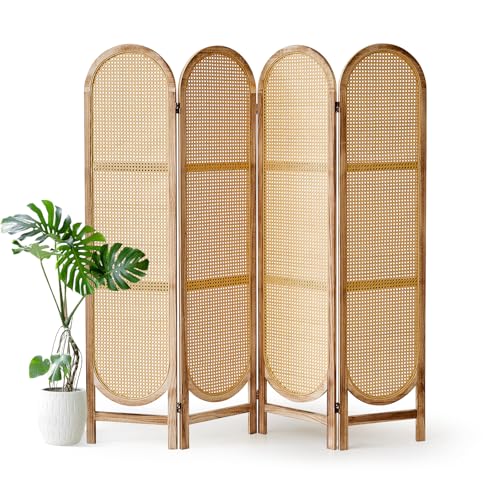
- Best for small apartments overall: Aletheiawu 4-Panel Hand-Woven Rattan Room Divider, Natural — Check on Amazon
- Coaster Roberto 4-Panel Shoji Room Divider, Black, 4624 — Check on Amazon
- VASAGLE 5-Tier Bookcase and Room Divider, White, ULBC62WT — Check on Amazon
- RANTILA 3-Panel Fabric Room Divider, Grey, 102 in Wide — Check on Amazon
- MyGift 6-Panel Artwork Room Divider, Black Wood Frame, 94.6 in Wide — Check on Amazon
- YATINEY 4-Panel Room Divider with Storage Shelves, Rustic Brown and Black — prose-only pick, see the review below for why
Read the full guide ↓
Disclosure: As an Amazon Associate, dailyhomedecorating.com earns from qualifying purchases. Links to Amazon on this page are affiliate links; they cost you nothing extra. Listing details such as price and availability change often, so check the current Amazon listing before you buy.
The best room divider for small apartments under $400 is not simply a smaller version of a big-room divider, because a small apartment changes what a divider is for. In a studio or a one-bedroom, one room must be bedroom, living room, office and dining room in rotation, and the divider is the only wall that rotation has. It must divide without darkening — small apartments usually have one or two windows, and both sides of the division need them. It must divide without shrinking — a boundary that eats floor depth, blocks the walking line or looms over a low ceiling makes the home smaller in exchange for making it tidier. And it must be able to disappear: folded flat behind a sofa, slid into the gap beside a wardrobe, stood in a closet — because in a small apartment, a divider that cannot get out of the way is a permanent tax on the scarcest thing you own, which is space.
This guide re-judges the under-$400 field by apartment rules. Folded thickness counts as much as flat width. Weight counts, because apartment dividers get moved by one person, often weekly. Light transmission counts double, for the window reason above. And storage earns a premium it earns nowhere else: a divider that also shelves is, in a small home, not a compromise but a multiplication of the floor it stands on. For most small apartments we would start with the Aletheiawu rattan screen below — it folds to the slimmest stack in this guide, zones without sealing, and keeps a studio breathing. The Coaster shoji follows for apartments that need a fuller visual block with the daylight kept, and the VASAGLE bookcase is the pick where storage is the real shortage. The two wide walls at the end of the list are included honestly, with their scale warnings stated in full: in the right small apartment — a long studio, a lofted one-bed — width can still be the answer. Renters should note that every folding pick here stands without a single fixing, which is why dividers are the small-apartment tool in the first place. For the same budget judged without the size constraint, see our general guide to the Best Room Divider Under $400.
In this guide
Quick Picks
Short on time, or comparing several options at once? Each row below names a small-apartment need and the product that suits it, with a link to the listing where one is verified for this tier.
| Small-apartment need | Pick | Why it stands out | Link |
|---|---|---|---|
| Best for small apartments overall | Aletheiawu 4-Panel Hand-Woven Rattan Room Divider, Natural | Folds to a 4.52 in thick stack and zones without sealing off light or air — check price on Amazon | Check on Amazon |
| Best daylit block | Coaster Roberto 4-Panel Shoji Room Divider, Black, 4624 | Blocks the view, keeps the window shared, folds flat — check price on Amazon | Check on Amazon |
| Best where storage is short | VASAGLE 5-Tier Bookcase and Room Divider, White, ULBC62WT | Five shelves on a 27.6 in footprint that divide and store at once — check price on Amazon | Check on Amazon |
| Best for long studios | RANTILA 3-Panel Fabric Room Divider, Grey | 102 in of complete block that still folds flat behind a door — check price on Amazon | Check on Amazon |
| Best for lofted one-beds | MyGift 6-Panel Artwork Room Divider, Black Wood Frame | 94.6 in span with artwork on both faces, folds to one slim stack — check price on Amazon | Check on Amazon |
| Best shelf-screen hybrid | YATINEY 4-Panel Room Divider with Storage Shelves, Rustic Brown and Black | Hinged panels plus an attached five-shelf unit — prose-only, see review | See review |
How These Picks Were Chosen
The budget filter came first: the divider, in the configuration reviewed, must sit at or under $400 and arrive complete and usable. Every linked pick is a real Amazon listing whose identity and specifications we verified against the listing and maker or retailer records — check the current price on Amazon before you buy, because prices move. One pick, the YATINEY shelf-screen, appears in prose only because we could not confirm a current price sighting for its exact configuration; it is fully described, with the reason stated in its review, rather than linked on a guess.
On top of the budget, we applied four apartment filters. The disappearance filter measured the folded state, not the open one: how thick is the stack, how heavy is the carry, and does the folded divider fit the storage a small apartment actually has — behind a sofa, beside a wardrobe, under a bed? The light filter favoured dividers that transmit or pattern daylight over ones that swallow it, because a small apartment’s windows are shared resources. The footprint filter counted depth as well as width: a bookcase divider spends 9.4 inches of floor depth to buy five shelves, a screen spends almost none, and in a small home that arithmetic decides purchases. The rental filter confirmed that every folding pick stands with no drilling, adhesive or fixing — a divider a landlord could object to is no divider at all for most apartment dwellers. Stability and construction were checked as in every guide in this series: stance, zigzag depth, weight, hinges, and the bookcase’s included anti-tip kit.
We kept two wide picks in the list deliberately, against the obvious instinct, because small apartments are not all small in the same way. A long, narrow studio may need width more than it needs anything else, and a lofted one-bedroom may have the ceiling and the span for a statement screen. Their reviews carry the scale warnings plainly, so a reader in a compact square studio can skip them in seconds. What we excluded: dividers with no verifiable listing or published dimensions, models only available above this budget, and heavy fixed partitions that a small apartment cannot store, move or forgive.
The 6 Best Room Dividers for Small Apartments Under $400
Aletheiawu 4-Panel Hand-Woven Rattan Room Divider, Natural
Who it suits: Most small apartments — studios and one-beds that need a sleep zone, a work corner or a dressing edge without losing light, air or the feeling of one room.
The Aletheiawu leads the apartment list on the strength of two numbers and one quality. The numbers are its folded stack — about 19.86 inches wide and just 4.52 inches thick — and its open span of 63.39 inches wide by 66.92 inches tall, which is enough to screen a bed corner or a desk from a studio’s main sightline without spanning so wide that the folds eat the room. A stack under five inches thick slides behind a sofa, into the dead gap beside a wardrobe, or under a bed frame; in a small apartment, that is the difference between a divider you own and a divider you trip over. The quality is the weave itself: hand-woven rattan in a solid wood frame, which zones a space the way a curtain of light would — the boundary is unmistakable, and yet air, daylight and a sense of the whole room pass through it. A studio divided this way still feels like a studio, just one with manners.
The maker’s honesty defines the use: Aletheiawu describes the weave as providing partial privacy, roughly a half-screening effect. In a small apartment that is usually the correct amount — you live alone or as a couple, and the divider’s job is to separate activities, not people: the bed should not be the backdrop to the work call, the desk should not be the view from the pillow. For those jobs a soft boundary beats a hard one, because a hard one makes two cramped rooms out of one decent one. Where the apartment is shared with a roommate and real concealment is the job, skip to the Coaster or the RANTILA. At 19.4 pounds in the natural four-panel configuration the screen is a comfortable one-person carry, double hinges fold it either way, and the natural finish suits the pale, plant-friendly schemes small apartments favour because they make space feel larger.
Pros: Slimmest folded stack in this guide at 4.52 in thick; genuine hand-woven rattan and solid wood; keeps light and air shared between zones; one-person weight; double hinges fold either way.
Honest limitation: Partial privacy only, by the maker’s own description — a zoning screen, not a concealment wall. The weave also gathers dust and wants a brush or vacuum rather than a wipe.
Choose it if your apartment needs zones, not rooms. Skip it if you share with a roommate and need a true visual block. Check on Amazon for colours and the current listing. Full listing: Aletheiawu rattan divider on Amazon.
Coaster Roberto 4-Panel Shoji Room Divider, Black, 4624
Who it suits: Small apartments that need the fuller block — a bed screened from the door, a work corner hidden from the sofa — without surrendering the window to either side.
The Roberto is the apartment divider for households where the soft boundary is not enough. Its solid pine frame carries shoji-style grid panels across 69.5 inches by 70.25 inches tall: the view is properly blocked, silhouettes included, while daylight passes through the translucent panels so neither zone goes dark. In a one-window studio that combination is close to magic — the bed corner becomes private and the living corner keeps its light, and the room’s single window is, in effect, shared by both. Four panels on two-way hinges zigzag for stability, wrap a desk, or fold flat against a wall, and the screen arrives with no assembly required, which in a small apartment also means no afternoon spent building furniture in the only open patch of floor. At 12.1 pounds it is the easiest carry in this guide — a genuine one-handed move when the apartment changes shifts from work to evening.
The cautions are the familiar ones, sharpened by small space. A light screen in a small apartment stands in traffic by definition — every path crosses every other path — so expect to re-stand it occasionally and keep it out of the direct line between door and kitchen if you can. The paper-style panels dislike hard contact, and small apartments generate contact. And the black grid is a strong graphic note in a small room: in a pale studio it will be the accent, which most owners come to like, but it should be chosen as an accent, not discovered as one. For roommate-shared apartments needing still more block, the RANTILA below is the heavier tool; for most solo and couple studios, the Coaster is the complete answer.
Pros: Full visual block that keeps daylight shared; solid pine frame; no assembly; folds flat; lightest carry in this guide at 12.1 lb.
Honest limitation: Light and panel-delicate for high-traffic small spaces; the black grid is a bold note at apartment scale.
Choose it if you need real screening with the light kept. Skip it if a soft zone suffices — the Aletheiawu keeps the room feeling bigger — or if the screen will be knocked daily. Check on Amazon for the current listing. Full listing: Coaster Roberto on Amazon.
VASAGLE 5-Tier Bookcase and Room Divider, White, ULBC62WT
Who it suits: Small apartments where the shortage is storage as much as separation — the divider that pays rent on its own footprint.
Every other pick in this guide spends floor space to buy a boundary. The VASAGLE buys the boundary and five shelves with the same floor. It is a five-tier open bookcase, 27.6 inches wide, 9.4 inches deep and 62.6 inches tall, in particleboard with a melamine finish, stood perpendicular to the wall at the point where a studio’s sleep zone should begin. The shelves — maker-rated at 33 pounds each — take the books, baskets, folded clothes and kitchen overflow that small apartments otherwise store on the floor, and a loaded bookcase is the most convincing boundary in this guide: guests read it as furniture, not as a partition, so the studio feels furnished rather than subdivided. At 62.6 inches it also respects small-apartment ceilings and sightlines, zoning the room without walling it, and the white finish borrows the wall’s colour so the piece adds storage without adding visual bulk. At 43.1 pounds assembled, it stays exactly where the plan puts it.
The disciplines are real. Assembly is required; the anti-tip kit in the box should be fitted exactly as VASAGLE instructs, which matters doubly in a small apartment where the bookcase stands free rather than in a corner; and once loaded, the divider does not fold, move or disappear — it is a commitment to one layout. In a small home that commitment should be made deliberately: live with the layout marked in tape for a week before you build. If the tape test passes, few purchases at this budget will change a small apartment more. Readers whose storage need outgrows even this should compare our guide to the Best Bookcase Under $400.
Pros: Divides and stores on one 27.6 in footprint; five tiers with a real load rating; low, sightline-friendly height for small rooms; anti-tip kit included; white finish adds no visual bulk.
Honest limitation: Fixed once loaded — no folding, no disappearing for guests — and it zones rather than conceals, screening only as much as its contents do.
Choose it if storage is your apartment’s true shortage. Skip it if your layout changes with guests or seasons. Check on Amazon for finishes and the current listing. Full listing: VASAGLE bookcase divider on Amazon.
RANTILA 3-Panel Fabric Room Divider, Grey, 102 in Wide
Who it suits: Long, narrow small apartments and shared studios — the layouts where the problem is not a corner but a whole room that must become two.
Most small-apartment advice assumes the division is a corner. Sometimes it is a canyon: a long studio where the bed sits in full view of the door, or a shared apartment room that must split between two people with different hours. For those layouts the RANTILA is the honest tool. Three wide panels on a steel frame span 102 inches by 71 inches tall in high-density 180g polyethylene fabric — a complete, gap-free, opaque wall that folds flat behind a door when it is not standing. In a long apartment it can close the sleeping end entirely, giving a studio something like a bedroom and a shared room something like fairness. The fabric is waterproof and wipes clean, support feet steady the run, and one person can stand, move and store it, which matters when the person is you and the storage is a closet already full.
The warnings are about proportion. One hundred and two inches is a lot of divider: in a compact, squarish studio it must fold so deeply that you pay for width you cannot use, and its zigzag will project into floor you do not have. It also blocks light completely, and in a one-window apartment the far side of a RANTILA wall is a dark side — plan the lamp before you plan the wall. Judged in the right apartment, though, it solves the hardest small-space problem in this guide, and it solves it while still folding flat, which no comparably complete partition does.
Pros: The only complete, room-splitting block here; waterproof, wipe-clean fabric; steel frame with support feet; folds flat despite its size; one-person handling.
Honest limitation: Too wide and too deep-folding for compact square studios; blocks all light to the far zone; a functional look rather than a decorative one.
Choose it if your small apartment is long, shared, or needs a true split. Skip it if your studio is compact and one-windowed — the Coaster divides it more kindly. Check on Amazon for colours and sizes. Full listing: RANTILA 3-panel divider on Amazon.
MyGift 6-Panel Artwork Room Divider, Black Wood Frame, 94.6 in Wide
Who it suits: Lofted and larger small apartments — high ceilings, a long wall, a one-bed with an open plan — where a divider can be the room’s artwork instead of another appliance.
Small apartments are told to keep everything pale, low and quiet, and mostly that is right. But a lofted one-bed or a long studio can take one generous gesture, and the MyGift is the generous gesture that also divides. Six panels span 94.6 inches flat at 68.9 inches tall, in a black wood frame carrying a dual-sided printed design — a vintage Asian water-village scene in brushed ink on this version — so the screen is a folding artwork that happens to create a sleep zone, a work bay or a dining end. The apartment-specific surprise is the storage: for all its span, it folds to a single stack 15.5 inches wide and 4.7 inches thick, thinner against a wall than many four-panel screens. Six panels also mean a stable zigzag across a wide opening without standing the screen flat and fragile.
The scale warning is real and should be taken literally: in a compact studio this much printed divider will be the room — its image, its black frame, its eight feet of presence — and if that is not the room you want, choose smaller and quieter. It is also a screen, not storage, in a home category where storage is precious; the VASAGLE will serve a clutter-short apartment harder. But where the apartment has the wall and the ceiling for it, the MyGift turns the necessary division into the decorative centre of the home, and small homes benefit from objects that do two jobs beautifully as much as from objects that do two jobs practically.
Pros: Wide, stable coverage with artwork on both faces; folds to a surprisingly slim 4.7 in stack; solid wood frame; divider and décor in one purchase.
Honest limitation: Dominates compact rooms; the printed scene is a fixed commitment; offers no storage in a home type that usually needs it.
Choose it if your apartment is lofted, long or high-ceilinged and wants a focal point. Skip it if your studio is compact or your storage is short. Check on Amazon for design options. Full listing: MyGift 6-panel divider on Amazon.
YATINEY 4-Panel Room Divider with Storage Shelves, Rustic Brown and Black
Who it suits: Small-apartment dwellers torn between the screen and the bookcase — a hinged divider whose run includes a five-shelf storage unit.
The YATINEY splits the difference that defines small-apartment shopping. Four hinged panels in engineered wood with a black metal frame, in a rustic brown and black industrial finish, span 76.4 inches wide by 66.9 inches tall, with a five-shelf storage unit attached to the run — so part of your boundary folds like a screen and part of it shelves like the VASAGLE. At 34.6 pounds it stands with authority, and the wood-look panels screen more completely than open shelves do. In a studio, a run like this can put shelving exactly where the zones change — books and a lamp at the bed’s head, a screen across the rest of the sightline — which is a genuinely clever use of a boundary’s length.
We cover it in prose only, without a purchase link, for a stated reason: the listing is recent — first available in December 2025 per the listing — and while its specifications are published and verified, we could not confirm a current price sighting for the exact configuration when this guide was written. Rather than link on a guess, we describe it fully: search the model — YATINEY room divider with storage, model 01BR Storage Shelf — and judge the live listing yourself. One apartment note if you do: the shelf section fixes part of the run’s shape, so measure your layout for the hybrid you are actually buying, not the fully folding screen you might imagine.
Pros: Screen and shelving in one hinged run; wide 76.4 in span; substantial build; panels screen more fully than open shelves.
Honest limitation: Prose-only here because its current price could not be verified — check the live listing carefully. The shelf section folds less freely than a plain screen.
Choose it if you find it live under budget and want both functions in one run. Skip it if you prefer a long-established listing — the VASAGLE or the Aletheiawu.
Comparison Table
| Pick | Type | Flat width | Height | Apartment strength |
|---|---|---|---|---|
| Aletheiawu Rattan | Hand-woven rattan screen | 63.39 in | 66.92 in | Slimmest fold (4.52 in); zones without sealing |
| Coaster Roberto 4624 | Shoji screen, solid pine | 69.5 in | 70.25 in | Full block that keeps the window shared |
| VASAGLE ULBC62WT | 5-tier bookcase divider | 27.6 in | 62.6 in | Storage that pays rent on its footprint |
| RANTILA 3-Panel | Fabric screen, steel frame | 102 in | 71 in | Complete split for long or shared layouts |
| MyGift 6-Panel Artwork | Printed artwork screen, wood frame | 94.6 in | 68.9 in | Statement span for lofted one-beds; slim fold |
| YATINEY with Shelves | Hinged screen plus 5-shelf unit | 76.4 in | 66.9 in | Hybrid screen and shelves (prose-only) |
How to Choose the Best Room Divider for Small Apartments Under $400
Start with the folded divider, not the open one. In a small apartment the question ‘where does it go on its day off?’ eliminates more candidates than any other: measure the gap behind your sofa, the space beside the wardrobe, the closet’s spare inches, and only then look at screens whose folded stack fits one of them. The Aletheiawu’s stack is under five inches thick; the MyGift’s, for all its width, is thinner still per panel; a divider with no home when folded will live in your way permanently, and in a small apartment ‘in the way’ means ‘in the only way there is’.
Next, protect the light. Count your windows and be honest about which zones they serve. A transmitting screen like the Coaster’s shoji or a patterning one like the rattan lets one window serve two zones; an opaque wall like the RANTILA’s makes the far zone a lamp zone, which is fine for sleeping and poor for working. Small apartments rarely have light to waste, so grade your need before you grade the products: zoning (rattan), screening with light (shoji), or full split (fabric), in that order of light cost.
Then do the apartment arithmetic. Measure the opening and subtract roughly a fifth of a hinged screen’s flat width for the stabilising zigzag — in a small room, that zigzag’s depth is floor you walk around, so screens that reach their coverage in fewer, wider panels often fit better than many-panel ones folded deep. Check the weight against your own carrying, upstairs and alone. And if storage is the shortage, run the bookcase numbers: 9.4 inches of depth buying five shelves is, in most small apartments, the best trade in this entire guide. Households that are small in rooms rather than in square footage should also read our companion guide to the Best Room Divider For Small Spaces Under $400, which applies the same discipline beyond apartments.
Common Mistakes to Avoid
The first apartment mistake is buying the divider for the room you wish you had: the eight-foot statement screen in a ten-foot studio, the deep bookcase in a room with one walking line. Measure the apartment that exists, including the folded storage, before admiring anything. The second is sealing a one-window room with an opaque screen and then wondering why the bed corner feels like a cupboard; light is a small apartment’s scarcest luxury after space itself, and it should be spent deliberately. The third is standing a screen across the only draught line — between door and window — where it will sway, creak and eventually loosen; small apartments concentrate draughts exactly as they concentrate everything else.
Fourth, renters forget to check the bookcase question: a storage divider wants its anti-tip kit fitted to a wall, and if your lease forbids fixings entirely, the folding screens in this guide are your honest options. Fifth, apartment dividers get bought for guests rather than for Tuesdays — the occasional visitor matters less than the daily rotation of sleep, work and rest that the divider will actually serve. Buy for the rotation. Finally, do not expect sound privacy: in a small apartment you will hear everything on the other side of any screen, and a divider’s gift is visual and territorial, which — when the bed is no longer the backdrop to your work call — turns out to be most of what you wanted.
Studio Layout Notes
Three placements cover most small apartments. The bed screen: stand the divider across the sightline between the door and the bed, not necessarily at the bed’s edge — the eye enters from the door, and a screen that interrupts that first view gives the whole studio a sense of arrival and the bed a sense of privacy disproportionate to its size. The desk wrap: angle two panels around the work corner so the camera sees a boundary, not a bed; a partial wrap beats a full wall here because the desk keeps the room’s light. The living line: in a one-bed with an open plan, stand the bookcase or a screen at the room’s waist to give the sofa a back and the dining table a territory — the apartment gains two addresses without gaining a wall. In all three, leave the walking line sacred: a divider that saves a zone by taxing the path between door, kitchen and bathroom will be resented by Friday.
Renting Rules, Roommates and Moving Day
Apartments come with paperwork, and a good divider respects all of it. The folding screens in this guide need no fixings, no adhesive and no permission — they are furniture, and landlords regulate furniture hardly at all. The bookcase is the one partial exception, because its anti-tip kit is designed to fix to a wall; many leases allow picture-hook scale fixings, some do not, and the time to read yours is before the bookcase is built, not after. If the lease forbids it, the honest apartment answer is a screen, stood well, rather than a bookcase stood unanchored.
Roommates change the privacy maths. A couple in a studio needs zoning; two roommates in a shared room need concealment, and concealment means the opaque end of this guide — the RANTILA’s full wall or the Coaster’s daylit block — with the rattan honestly retired to the living area. Agree the boundary’s placement together and treat it as shared infrastructure: a divider one roommate keeps moving is a negotiation, not a wall. Finally, moving day: apartment dividers are bought by people who will move again, and the folding picks here are the rare furniture that moves for free — flat, light, one trip in the car, no van space, no stairwell drama. The bookcase moves like furniture because it is furniture. If your lease has under a year to run, weight that difference honestly; a divider you can carry out alone is worth a premium in an apartment life.
Measuring a Small Apartment for a Divider
Measure four things, in this order. The sightline: sit where you sit — sofa, desk, bed — and note what you actually want not to see; the divider belongs across that line, which is often diagonal to the room and shorter than the room’s width. The opening: the length of run needed along that line, remembering that a hinged screen delivers roughly four fifths of its flat width once it zigzags. The fold: the depth the zigzag will project into your walking space, checked against the path between door, kitchen and bathroom, which in a small apartment is a public highway. And the home: the folded stack’s destination, measured in inches, behind the sofa or beside the wardrobe. A divider bought against those four measurements fits the first evening. A divider bought against a product photograph fits eventually, after returns.
Care in a Small Home
Apartment dividers live close to their owners, and closeness shows: fingerprints at hand height, dust along the top edge, scuffs at the base where the vacuum passes. The good news is that small dividers are quick to keep. Shoji-style panels dust with a dry cloth and should never be soaked; a marked panel catches the light, so a monthly pass keeps the glow even. Rattan vacuums with a brush attachment — two minutes, monthly, and the weave stays the colour it arrived. Printed artwork panels wipe gently with a dry or barely damp cloth; anything stronger risks the image. The RANTILA’s fabric is the forgiving one and wipes clean outright, one reason it suits shared and high-traffic small homes. Hinges deserve a shake-out whenever the screen is folded for storage, because apartment floors generate grit and grit in a hinge is wear you can hear. Store every screen folded flat and dry, upright behind the sofa or flat under the bed — never leaning at an angle for a season, which warps panels and twists hinges out of true. A screen stored properly in a small home is invisible; a screen stored badly is a daily obstacle, which in a small home is the same as a daily argument.
Final Recommendation
For most small apartments, the Aletheiawu is the right first divider at this budget: it zones without sealing, folds to the slimmest stack here, and keeps a small home feeling like one good room. Choose the Coaster Roberto when you need the fuller block with the daylight kept, the VASAGLE when storage is the true shortage, the RANTILA when your apartment is long or shared and needs a real split, and the MyGift when a lofted plan wants its one generous gesture. Keep the YATINEY in view if its live listing sits under budget. Above all, buy the folded size and the light grade before the look — in a small apartment, those are the look. Check the current listing before you buy.
Frequently Asked Questions
What is the best divider for a studio apartment?
One that zones without sealing: a light-transmitting or woven screen around five and a half feet wide, folded slim, light enough to move weekly. In this guide that is the Aletheiawu for soft zoning and the Coaster where the bed needs a fuller screen. Both keep the studio’s window working for the whole room.
Will a divider make my small apartment feel smaller?
A partial or daylit screen will not — the eye still reads one volume, now with addresses. A tall opaque wall can make the far zone feel like a small separate room, which is sometimes the goal and sometimes the mistake. Match the grade to the job, and keep the walking line clear either way.
Where do I store a divider in a small apartment?
Folded flat: behind the sofa, beside the wardrobe, under a bed with clearance, or in the closet’s dead inch. Measure that space before you buy and compare it with the folded stack in each review — the slimmest stacks here are under five inches thick, which fits gaps most apartments already have.
Can a renter use a room divider?
Yes — freestanding screens are the renter’s wall: no drilling, no adhesive, no trace at move-out. Every folding pick in this guide qualifies. Only the bookcase asks for a wall fixing for its anti-tip kit, so check your lease before choosing that route. Our Best Room Divider For Families Under $400 guide covers the same budget where children, rather than square footage, set the rules.
How do I divide a studio without losing the feeling of space?
Divide the sightlines, not the volume. Use a partial or daylit screen, place it across the view from the door rather than across the room’s middle, and keep the floor’s walking line and the window’s light path open. The studio then reads as a home with a bedroom in it, instead of a room with a wall in it — which is the entire art of studio living, and the reason the soft end of this guide outsells the hard end in small homes.
How tall should a divider be in a small apartment?
Tall enough to break the sightline it serves, short enough to respect the ceiling. For zoning a seated area, the 63 to 67 inch band — rattan, bookcase, hybrid — is plenty and keeps a small room feeling open above the boundary. For screening a bed from a doorway or a standing figure from a sofa, look to the 69 to 71 inch band of the shoji, artwork and fabric picks. In a low-ceilinged apartment, resist anything taller: a divider straining at the ceiling makes the whole home feel like a corridor with ambitions.
Can a divider help a small apartment feel bigger?
Counterintuitively, yes — when it is the right kind. A room with no zones reads as one undifferentiated box, and boxes feel smaller than addresses. A daylit or woven screen that gives the bed, the desk and the sofa their own territories makes the same square footage read as a small home rather than a large room, provided it keeps the light moving and the walking line clear. An opaque wall in the wrong place does the opposite, which is why this guide grades light as carefully as size.
How much should I spend on a divider for a rental apartment?
Spend for the years you will carry it, not the lease you are on. A well-built folding screen at this tier moves with you for free and serves three apartments as easily as one, which makes the under-$400 construction grade — solid frames, real weave, honest shelving — better value in a renting life than a bargain screen replaced at every move. If you know the apartment is a six-month stop, the lower tiers in our other guides are the honest buy; if it is home for years, buy once, at this level.
What if my apartment has sloped ceilings or odd corners?
Hinged screens are the forgiving option: panels fold to fit bays, angles and alcoves that no rigid partition would, and a zigzag can turn a corner a bookcase cannot. Stand the screen, adjust the folds until it sits level on the floor it has — not the floor the listing imagined — and let the geometry do the fitting. It is one more reason folding screens, rather than fixed panels, dominate apartment dividing.
Can a divider reduce noise between zones in an apartment?
No — not meaningfully. Screens block sight, not sound, and in a small apartment you will hear the other zone clearly. Treat the divider as a visual and territorial tool, soften noise with rugs, curtains and upholstered furniture, and set expectations with roommates accordingly: the boundary is real, but it is a boundary for eyes.
Is a bookcase divider worth it in a studio?
Where storage is short, it is often the highest-value purchase in this guide: one footprint buys a boundary and five shelves. It asks for a settled layout and its anti-tip kit fitted. If your studio rearranges for guests monthly, a folding screen will serve the same boundary with none of the commitment — see the step-down options in our Best Room Divider Under $300 guide if the budget is also tight.


