Where to buy
Check the latest price, availability and delivery on Amazon. Orders are placed on Amazon. We may earn a commission from qualifying purchases.
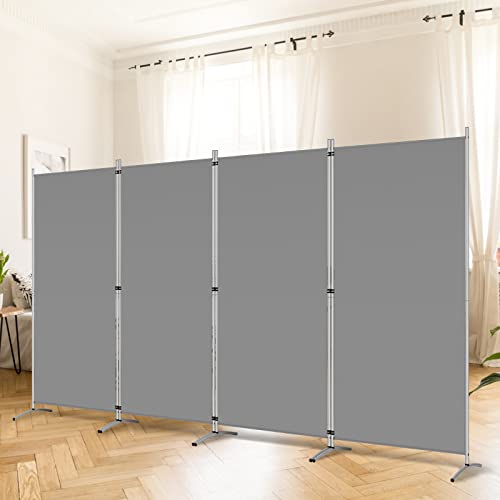
- Best overall fabric divider: RANTILA 4 Panel Room Divider, Grey Fabric — Check on Amazon
- Best with storage shelves: FDW Room Divider with Removable Storage Shelves, Brown, 4 Panel — Check on Amazon
- Best natural wood look: Wooden Folding Room Divider, 4 Panel, Natural — Check on Amazon
- Best for stability on its feet: Kecreque Portable Room Divider, 4 Panel, Grey — Check on Amazon
See 2 more options
- GOFLAME Japanese Style 4 Panel Shoji Screen with Plum Blossom Design — reviewed in prose below (no verified in-budget listing at check time)
- Bonnlo Wood Room Divider Privacy Screen, 6 Panel, Natural Paulownia — reviewed in prose below (no verified in-budget listing at check time)
Read the full guide ↓
Disclosure: As an Amazon Associate, dailyhomedecorating.com earns from qualifying purchases. Links to Amazon on this page are affiliate links; they cost you nothing extra. Listing details such as price and availability change often, so check the current Amazon listing before you buy.
Finding the best room divider for small spaces under $150 means sorting honest, full-height screens from the flimsy panels that crowd this category — and doing it without paying furniture-store money. A divider has one job, to turn one room into two useful places, and at this budget you can buy real wood, opaque fabric and even shelf-equipped designs that do that job properly.
Small spaces ask a divider to do something paradoxical: add a wall without adding bulk. A box room that must hold a desk as well as a bed, a corner of a bedroom that needs to become a dressing area, a hallway alcove pressed into service as a study — these are divisions measured in inches, where a standard screen can overwhelm the very space it is meant to organise. The best room divider for small spaces under $150 is chosen differently from a living-room screen: folded footprint, shallow configurations, light behaviour and one-person handling all outrank raw span, because in a small space the divider is always in the way of something — the question is whether it earns that inconvenience.
This small-spaces edition re-ranks the under-$150 field accordingly. Four-panel screens dominate, and we are explicit about the geometry: a folding screen needs its zigzag, the zigzag needs depth, and in a tight room that depth is a real cost — which is why the footed fabric picks, able to stand in a shallow curve or near-straight line, score so well here. Light matters even more than in big rooms: a solid panel in a small, one-window space does not just shade a corner, it can take the whole nook’s daylight, so woven and shoji options are assessed as seriously as the opaque ones.
Our shortlist in one line: the RANTILA for a fold-away privacy corner that stores in a gap, the Kecreque where a shallow straight run is the only geometry that fits, the woven FDW where a small nook needs to stay bright, and two prose-only picks — a light-sharing shoji and a six-panel wooden screen that we include mainly to warn small-space buyers off width they cannot use.
In this guide
Quick Picks: The Best Room Divider for Small Spaces Under $150 Shortlist
Short on time? Each row names a buyer type and the divider that suits it. Linked picks were verified inside the budget at research time — check price on Amazon for the current figure. Two picks are prose-only, for reasons stated openly in their reviews.
| Buyer type | Pick | Why it stands out | Link |
|---|---|---|---|
| Best overall fabric divider | RANTILA 4 Panel Room Divider, Grey Fabric | Four fabric panels on a metal frame, about 71 inches tall, freestanding with wide feet, folds for storage, grey finish. | Check on Amazon |
| Best with storage shelves | FDW Room Divider with Removable Storage Shelves, Brown, 4 Panel | Four wooden panels, about 70.9 inches tall, wood frame with metal hinges, two removable display/storage shelves, brown finish, roughly 17 pounds. | Check on Amazon |
| Best natural wood look | Wooden Folding Room Divider, 4 Panel, Natural | Four wooden panels, 72 inches high, each panel about 17.7 inches wide, freestanding folding design, natural finish. | Check on Amazon |
| Best for stability on its feet | Kecreque Portable Room Divider, 4 Panel, Grey | Four fabric panels, 6 feet tall, eight curved metal feet, freestanding temporary-wall design, grey finish. | Check on Amazon |
| Best shoji style (prose-only) | GOFLAME Japanese Style 4 Panel Shoji Screen with Plum Blossom Design | Four panels, solid wood frame, unfolded about 72 x 71 inches, folded about 18 x 3 x 71 inches, shoji-style panels with plum blossom design. | Prose-only — see review |
| Widest coverage (prose-only) | Bonnlo Wood Room Divider Privacy Screen, 6 Panel, Natural Paulownia | Six panels, solid paulownia wood with water-based paint finish, about 108 x 71 inches overall, no assembly required. | Prose-only — see review |
How the picks were chosen
The small-space filter kept the basics — freestanding, around six feet tall, honestly priced — and added the constraints tight rooms impose. Configuration depth: how shallow can the screen stand while staying stable? Folded footprint: does it store in a gap a small home actually has? Light behaviour: does it block, filter or share the light the nook depends on? And handling: can one person move it in a room where there is barely space to turn around with it?
Four picks verified inside the under-$150 budget at research time and are linked. The GOFLAME shoji screen and the six-panel Bonnlo showed no featured offer when checked, so their live prices could not be confirmed within budget; they are reviewed in prose only. The Bonnlo stays in the guide as an honest negative example for this lens — its width is a genuine asset in big rooms and a genuine liability here — because knowing what not to buy is half of a buying guide’s job.
One rule governed everything: no invented numbers. Specifications come from manufacturer and retailer listings, prices were sighted at research time and are never printed as static figures in this guide — the budget in the title is the ceiling we checked against, and the listing you open is the price that counts. Where verification failed, the pick lost its link rather than gaining a guess.
Detailed reviews: every best room divider for small spaces under $150 contender
RANTILA 4 Panel Room Divider, Grey Fabric
Best for: Best overall fabric divider. Key specs: Four fabric panels on a metal frame, about 71 inches tall, freestanding with wide feet, folds for storage, grey finish.
The RANTILA is the divider most households should look at first, because it solves the actual problem — a see-through gap in a room — without asking you to assemble furniture or drill into anything. The panels are opaque fabric stretched over a metal frame, so unlike woven wood screens it does not leak sightlines through a mesh. You cannot see shapes through it in normal room light, which is the whole point when the zone behind the screen is a bed, a desk on a video call, or a changing corner. The wide feet matter more than the marketing suggests: fabric panels act like sails, and a narrow-footed fabric screen rocks every time a door closes. This one stands planted, and the panels fold together so the whole thing leans in a closet when guests arrive.
Setup is genuinely close to zero. The frame sections connect, the fabric is already fitted, and most people have it standing within minutes of opening the box. Because it is fabric and metal rather than solid wood, one person can carry it between rooms without planning the trip, and that portability changes how you use it — it becomes a tool you deploy for a work call, a nap, or a visiting relative, rather than a permanent piece you arrange the room around. The grey reads neutral against most wall colours and does not fight patterned rugs or upholstery for attention.
The honest limitation is texture and light. Fabric gives you privacy but no sound dampening worth mentioning, and a bright window directly behind it can silhouette shapes at night with a lamp close to the panel. It is also a plain, functional object — it will not be mistaken for a piece of crafted furniture, and in a formal living room it can look temporary. Treat it as the reliable workhorse of this price tier: not the prettiest screen here, but the one whose privacy claim you can take at face value.
Pros
- Fully opaque fabric — real visual privacy, not a mesh suggestion of it
- Wide feet keep a tall fabric screen steady when doors slam
- Folds flat and light enough for one person to move room to room
- No tools and almost no assembly
Honest limitation
- Plain, utilitarian look next to wood screens
- No meaningful sound reduction
- Strong backlight can silhouette shapes at night
Choose it if its strengths match your room as described above; skip it if its limitation hits your main use case — another pick in this guide will fit better. Check on Amazon
FDW Room Divider with Removable Storage Shelves, Brown, 4 Panel
Best for: Best with storage shelves. Key specs: Four wooden panels, about 70.9 inches tall, wood frame with metal hinges, two removable display/storage shelves, brown finish, roughly 17 pounds.
Most dividers only subtract — they take floor space and give back a wall. The FDW is the rare budget screen that gives something back, because two removable shelves ride on its wooden panels and turn dead partition surface into display and storage. A plant, a router, a stack of paperbacks, the remotes that otherwise colonise the sofa: the shelves swallow the small clutter that makes a divided room still feel chaotic. The frame is wood with a woven panel design, so it reads as furniture rather than equipment, and the brown finish sits comfortably in traditional and transitional rooms where a grey fabric panel would look like office surplus.
Structurally it follows the classic folding-screen pattern: four equal panels on metal hinges, arranged in a zigzag so the screen stands on its own, then folded completely flat for storage. At roughly seventeen pounds it is movable by one adult without drama, though the shelves should come off before you carry it any distance. The woven panels filter light rather than blocking it entirely, which keeps a divided living room from developing a dark, dead corner — the zone behind the screen stays usable for reading and working in daylight.
That woven openness is also the honest limitation: this is a visual softener, not a blackout privacy wall. Held against bright light you can make out movement behind it, so it is the wrong choice for a changing area in a shared room. The shelves, useful as they are, hold light objects only — treat them as display ledges, not bookcase shelving, and keep heavy items and anything a toddler can pull down off them. Within those limits, it is the most furniture-like value in this guide.
Pros
- Removable shelves turn a partition into useful display storage
- Wood frame and woven panels read as furniture, not equipment
- Folds completely flat; one person can move it
- Lets filtered light through so divided rooms stay bright
Honest limitation
- Woven panels are semi-private — movement shows against bright light
- Shelves suit light display items only
- Shelves should be removed before moving the screen
Choose it if its strengths match your room as described above; skip it if its limitation hits your main use case — another pick in this guide will fit better. Check on Amazon
Wooden Folding Room Divider, 4 Panel, Natural
Best for: Best natural wood look. Key specs: Four wooden panels, 72 inches high, each panel about 17.7 inches wide, freestanding folding design, natural finish.
If the fabric and woven options feel too soft for your room, this wooden four-panel screen is the straightforward traditional answer: solid-feeling wooden panels, a natural finish, and a full 72 inches of height — the tallest stance in this guide alongside the shoji pick. That extra height is not a spec-sheet vanity. Privacy is a geometry problem, and a screen that clears standing eye level when you are seated, and most sightlines when you are not, simply works in more situations than a shorter one. The natural wood tone warms up rooms that have drifted too grey, and it pairs naturally with oak floors, rattan, linen and the other textures most homes already own.
Each panel is about 17.7 inches wide, so the screen spans roughly six feet fully opened — though, like every folding screen, it should live in a gentle zigzag rather than stretched ruler-straight, which is what keeps it stable. Folded, it stacks into a slim slab that slides behind a door or into the gap beside a wardrobe. There is no assembly to speak of; you stand it up and arrange the folds. The wooden construction shrugs off the bumps that dent fabric frames, and a damp cloth handles dust and fingerprints.
The trade-offs are weight and light. Wood panels make this one of the heavier picks to reposition, and solid panels block light completely, so the corner behind it will be noticeably dimmer — plan a lamp for a desk or reading chair placed behind it. The natural finish also shows variation between panels, which reads as character to most eyes but will bother buyers who want a perfectly uniform manufactured look. For a durable, good-looking, genuinely private screen, it earns its place.
Pros
- Full 72-inch height clears most seated and standing sightlines
- Solid wood panels give complete visual privacy
- Natural finish suits most existing furniture
- No assembly; folds flat for storage
Honest limitation
- Heavier to move than fabric options
- Solid panels darken the zone behind the screen
- Natural wood tone varies slightly panel to panel
Choose it if its strengths match your room as described above; skip it if its limitation hits your main use case — another pick in this guide will fit better. Check on Amazon
Kecreque Portable Room Divider, 4 Panel, Grey
Best for: Best for stability on its feet. Key specs: Four fabric panels, 6 feet tall, eight curved metal feet, freestanding temporary-wall design, grey finish.
The Kecreque attacks the weakest point of every cheap fabric divider: the feet. Instead of asking a zigzag fold to do all the stabilising, it stands its four fabric panels on eight curved metal feet, which spreads the footprint and keeps the screen upright on hard floors where folding screens like to skate. If your divider will live on laminate, tile or polished wood — and if it will be brushed past daily by people, laundry baskets and the family dog — that grounded stance is worth more than any decorative pattern. The fabric is opaque in normal use, so the privacy is real, and the grey finish is the same easy neutral as the RANTILA.
Because the panels do not depend on a deep zigzag to stand, you can run the Kecreque in a shallower curve or a near-straight line across a room, which makes it better than hinged wood screens at dividing a space along a planned line — across the end of a studio, for example, rather than around a corner. It is sold as a temporary wall, and that is the right mental model: a straight, stable, movable partition for as long as you need it, then unbolted from its feet and stored when you do not. Assembly is more involved than the unfold-and-done wood screens, but it is still basic frame-and-feet work with no wall fixings.
The limitations follow from the design. The feet are functional metal, and they look it — this is the most obviously temporary-looking pick here alongside the RANTILA, and the feet project far enough that you will catch a toe on one in the first week if you place it in a walkway. Breaking it down for storage is a small project rather than a ten-second fold. Buy it when stability and a straight run matter more than looks or instant folding.
Pros
- Eight curved metal feet — the steadiest stance here on hard floors
- Can run near-straight, unlike screens that need a deep zigzag
- Opaque fabric gives genuine privacy
- Designed as a temporary wall for studios and shared rooms
Honest limitation
- Feet project into walkways and can catch toes
- Breakdown for storage takes longer than a folding screen
- Industrial look will not suit formal rooms
Choose it if its strengths match your room as described above; skip it if its limitation hits your main use case — another pick in this guide will fit better. Check on Amazon
GOFLAME Japanese Style 4 Panel Shoji Screen with Plum Blossom Design
Best for: Best shoji style (prose-only). Key specs: Four panels, solid wood frame, unfolded about 72 x 71 inches, folded about 18 x 3 x 71 inches, shoji-style panels with plum blossom design.
The GOFLAME is the pick for people who want the divider itself to be a decorative object. It is a Japanese-style shoji screen: a solid wood frame holding translucent panels, finished with a plum blossom design that turns a plain partition into the thing guests ask about. Unfolded it spans about 72 inches at 71 inches tall, and it folds down to a slab roughly 18 inches wide, so it stores as neatly as anything here. Shoji panels do something none of the opaque picks can — they pass soft, diffused light. A room divided by a shoji screen keeps its daylight and its sense of air; the separated zone glows rather than going dark, which is why this style has survived for centuries in small Japanese homes.
We are presenting this pick in prose only, without a purchase link, for an honest reason: at the time of checking, its Amazon listing showed no featured offer, so we could not verify a current selling price inside the under-$150 budget. The model, dimensions and construction are verified; the live price is not, and this guide does not print prices it cannot stand behind. If you find it listed within budget when you shop, judge it on the criteria in this guide like any other pick — and if it is listed well above budget, the wooden Dopinmin pick above gives you the same folding format in a plainer, verified package.
Even at the right price, know what shoji is and is not. The translucent panels give visual separation and privacy for dressing or sleeping in ordinary light, but they are not opaque: a lamp close behind the screen will silhouette the person behind it, and the panel material is more delicate than wood or fabric — it wants a home without flying toys or boisterous large dogs. It also offers no sound privacy at all. As a light-sharing, beautiful divider for a calm room, though, nothing else in this guide does its particular job.
Pros
- Translucent shoji panels share daylight instead of blocking it
- Plum blossom design makes the divider a decorative feature
- Solid wood frame; folds to about 18 inches wide
- Full standing height at 71 inches
Honest limitation
- Translucent — silhouettes show with a lamp close behind it
- Panel material is more delicate than wood or fabric
- Listed here without a link because its current price could not be verified within budget
Choose it if you find it listed within the under-$150 budget and its strengths match your room; skip it if the listing price has moved above budget — the linked picks above cover the same ground with verified pricing.
Bonnlo Wood Room Divider Privacy Screen, 6 Panel, Natural Paulownia
Best for: Widest coverage (prose-only). Key specs: Six panels, solid paulownia wood with water-based paint finish, about 108 x 71 inches overall, no assembly required.
Every other pick here has four panels; the Bonnlo has six, and that changes the maths of a big room. At roughly 108 inches wide and 71 inches tall, it can cross a wide living room, wrap a corner in an L, or curve around a bed in a shared space without leaving the awkward uncovered gap that four-panel screens leave in larger floor plans. It is built from solid paulownia wood — a notably light timber — finished with water-based paint, so despite the extra panels it stays movable, and it arrives needing no assembly: unfold it and arrange the shape. The slatted wooden construction gives real visual privacy while still feeling like a piece of furniture rather than a temporary fix.
Like the shoji pick, we are keeping the Bonnlo prose-only: when we checked, its Amazon listing showed no featured offer, so we could not verify a current price inside the under-$150 budget, and this guide will not guess. The product itself — panel count, paulownia construction, dimensions and no-assembly design — is verified from the listing and independent coverage. Six-panel wooden screens in this class commonly sell around this budget, but commonly is not verified, so treat the listing price you find as the deciding fact and measure it against the same criteria used throughout this guide.
If the price you find fits, the limitations are these. Six panels need six panels’ worth of storage: folded, it is a thicker, heavier slab than the four-panel picks, and in a small flat that folded footprint matters. Paulownia is light because it is relatively soft, so it dents more readily than denser woods if it is knocked against door frames while being moved. And its width is wasted in a small room — a six-panel screen forced into a tight zigzag eats floor space. In a large, open room, though, it is the only pick here sized for the job.
Pros
- Six panels span about 108 inches — the widest coverage here
- Solid paulownia wood is light for its size
- No assembly required
- Can run straight, L-shaped or curved around a zone
Honest limitation
- Bulkiest folded footprint of the six picks
- Paulownia is soft and dents if knocked while moving
- Oversized for small rooms; listed without a link because its current price could not be verified within budget
Choose it if you find it listed within the under-$150 budget and its strengths match your room; skip it if the listing price has moved above budget — the linked picks above cover the same ground with verified pricing.
Small-space jobs, measured in inches
The desk alcove is the signature small-space job: a recess, a landing or the end of a bedroom asked to become a workplace. The divider’s role here is modest and crucial — it closes the alcove’s open side so the desk feels like a destination rather than a spill. Depth is the battleground: a deep zigzag can consume the very floor the chair needs, which is why footed fabric dividers, standing in a shallow curve, lead this guide’s small-space ranking. Measure the alcove, then measure it again with the chair pulled out and a person sitting in it; the divider must fit the occupied room, not the empty one.
The dressing corner is the second job, usually a bedroom corner near the wardrobe. Here the divider works at close quarters and at close range: its finish is seen from eighteen inches, its panels are brushed daily, and its privacy is tested by a partner sitting on the bed directly opposite. Opacity is non-negotiable and height can be a little less absolute — sightlines in a small bedroom are short and mostly seated — but surface quality matters more than in any other use. Smooth wood and clean fabric pass; anything that snags clothing or sheds fibres against your one good coat fails.
The third job is the borrowed corner: the box room that is also the guest room, the hallway end that becomes a nursery nook, the living-room corner that hosts a hobby. These spaces share a trait — the divider is temporary by design, deployed for a season of life and then gone. Folded storage is therefore not a convenience but the entire point, and the honest test is brutal: if you cannot name, right now, the exact gap the folded screen will live in for the other eleven months, the correct purchase is the flattest-folding pick or no purchase at all. Small homes are ruined less by small rooms than by unstored solutions.
The fourth job is visual editing. Small spaces show everything at once, and a divider that hides the vacuum, the drying rack or the recycling stack removes whole categories of visual noise from a room you cannot otherwise enlarge. For pure concealment, choose by looks alone — the screen is the visible object, the clutter is not — and let the woven FDW or even the shoji do decorative duty. It is the one job where the prose-only shoji’s beauty can outrank the linked picks’ practicality, provided its price behaves.
Fitting, folding and the geometry of tight rooms
Every folding screen is a negotiation between coverage and depth. Fully flat it covers the most and stands the worst; deeply folded it stands like a rock and covers a disappointing strip. In a large room you split the difference without thinking. In a small space the negotiation is the whole decision, and it should be made with a tape measure on the actual floor: mark the gap, mark the depth you can spare, and check the shortlist against both numbers. The comparison table’s panel counts become real here — four panels at roughly eighteen inches each is about six feet of flat width, which in a stable small-space fold delivers about four and a half to five feet of coverage on twelve to fifteen inches of depth.
Footed dividers change the geometry entirely, trading the fold for a footprint. Their depth is the feet’s depth — often under a foot — and their line can be straight, which in a tight room can be the difference between a divider that fits and one that merely visits. Their cost is paid at storage time, when feet and frame must be broken down rather than folded. Small-space buyers should decide which currency they are rich in: floor depth while the screen is up, or patience while it is being put away. There is no wrong answer, but there is a wrong purchase — the one made without knowing the question existed.
Doors and drawers complete the survey. A divider that blocks a wardrobe door’s swing or a chest’s drawers has not divided a room; it has disabled it. Live with tape on the floor for a day, opening everything that opens, before any box is ordered. It is the least glamorous advice in this guide and the advice most likely to be thanked later — small spaces forgive nothing, but they reward measurement like nowhere else in the home.
Judging value when space is the scarce currency
In small spaces, price is the second budget; footprint is the first. A free divider that eats a foot of depth you do not have is expensive, and a $150 divider that stands in six inches and folds into a gap is cheap at the price. That inversion should govern how this shortlist is read: the fabric picks lead not because they are the finest objects here, but because their space cost — shallow stance, flat fold, easy carry — is the lowest, and in a small room space cost is paid daily, in bruised shins and blocked drawers, long after the purchase price is forgotten.
The budget still matters, and under $150 buys competence across the board: no pick in this guide is flimsy, and the differences are of geometry and material rather than basic quality. Where the money shows is in the details a small space exposes — hinges that hold a shallow angle without drifting, feet that grip rather than skate, fabric that stays taut instead of sagging into the room’s sightlines at close range. You will see your divider from eighteen inches away, daily, for years. At that distance, taut, straight and clean beats large, ornate and almost-fitting every time.
Buy, then, for the room’s measurements rather than the room’s aspirations. The tape measure is the most honest advisor a small space has: gap width, spare depth, folded gap, doorway turn. A divider chosen by those four numbers will feel inevitable — as if the room had always had a wall there. A divider chosen by photographs will feel like a guest who never leaves. Small spaces do not need much, but everything they contain must be exactly right, and a room divider is entirely capable of being exactly right at this price.
Comparison table
| Pick | Panels | Material | Privacy | Light | Link |
|---|---|---|---|---|---|
| RANTILA 4 Panel | 4 | Fabric / metal | Full | Blocks | Check on Amazon |
| FDW with Shelves | 4 | Wood, woven | Partial | Filters | Check on Amazon |
| Wooden Folding, Natural | 4 | Wood | Full | Blocks | Check on Amazon |
| Kecreque Portable | 4 | Fabric / metal feet | Full | Blocks | Check on Amazon |
| GOFLAME Shoji | 4 | Wood / shoji panel | Partial | Shares | Prose-only |
| Bonnlo 6 Panel | 6 | Paulownia wood | Full | Blocks | Prose-only |
How to choose the best room divider for small spaces under $150 for your room
In a small space, plan the divider’s three states before buying: open, folded, and being carried through the room. Open, measure not just the gap’s width but the depth the configuration needs — a zigzag’s folds project into the room, and in a nook that projection may block a drawer, a door swing or the only chair. If depth is what you lack, choose a footed fabric divider that stands in a shallow curve. Folded, the slab needs a named home: behind a door, beside a wardrobe, under a bed with clearance. Carried, it needs to pass your narrowest doorway turn without a wrestling match.
Light is the second plan. Put the divider’s line on the floor with tape and live with it for a day: if the nook goes gloomy by afternoon, switch the plan to a woven or shoji panel, or rotate the run so light passes its end. Height, finally, can relax slightly in small spaces — the sightlines are shorter and usually seated — but around six feet remains the safe default, and it keeps the screen useful if you move to a larger home.
There is also the matter of the room’s other furniture, which in a small space is never far away. A divider placed beside a bookshelf borrows its stability visually and can share its line; a divider ending mid-wall with nothing to answer it looks lost. Where possible, end the screen’s run at something — a shelf’s edge, a door frame, a change of flooring — so the eye reads a decision rather than an interruption. And if the nook’s purpose changes, as small-space purposes constantly do, let the screen change with it rather than defending its first position out of habit. The picks in this guide were chosen to be re-decided easily: light enough to move on a whim, flat enough to store on a doubt, and honest enough in their privacy claims that whichever corner they end up dividing, they divide it properly.
Common mistakes
Buying width you cannot open
The classic small-space error. A six-panel screen in a nine-foot room becomes a folded obstacle, not a divider. Panel count should match the gap, with a quarter to spare — no more.
Ignoring configuration depth
A zigzag screen projects into the room. In tight spaces that projection blocks drawers, doors and knees. Footed designs that stand shallow exist precisely for this problem.
Turning a nook into a cave
Solid panels in a one-window nook steal its daylight. Tape the line on the floor for a day before buying, and choose light-filtering panels if the corner goes dark.
No folded home
In a small space an unstored divider is just relocated clutter. If the folded slab has no gap to live in, choose the flattest-folding pick or reconsider the purchase.
Before you order: measure like a small-space native
Four numbers decide everything. The gap’s width. The depth you can surrender, in inches, without disabling a door, a drawer or a chair. The folded slab’s exact home, measured in the gap it will occupy. And the narrowest turn on the carry route between the front door and the screen’s post. Write the four numbers down and hold every pick in this guide against them; the right screen is the one that fits all four with a little to spare, and in a small space ‘a little to spare’ is the difference between furniture and obstacle.
Live with tape on the floor for one full day before ordering — the line where the screen will stand, walked around, sat behind, opened and closed against every door and drawer it neighbours. It is a day of mild inconvenience that prevents a season of it. Small spaces reward this discipline disproportionately, because they have no slack to absorb a mistake. Choose by the numbers, and the divider will feel less like something you bought and more like something the room was always missing.
Final recommendation
In small spaces, the divider that wins is the one that disappears best — into a shallow line, a flat fold, a gap beside the wardrobe. That makes the RANTILA and the Kecreque the natural first choices here: one folds away to nothing, the other stands where a zigzag cannot. Let the FDW keep a bright nook feeling furnished, let the shoji share light where light is scarce if you find it in budget, and let the six-panel Bonnlo go to a bigger room that can use its width. Measure the depth, tape the line, plan the fold — small rooms reward dividers that were chosen on purpose.
A word about returns, because small-space fit is binary in a way few purchases are: the screen either threads your doorway turn, clears your drawer and folds into its gap, or it does not, and no amount of liking its finish changes the geometry. Test all three in the first weekend, with the packaging kept, and be ruthless — a screen returned for the next size down is a success story in this category, not a failure. The shortlist is deliberately ordered so that each pick answers a different geometry, which means the right one for your four numbers is in this guide; the weekend test simply confirms which. Measure, test, and let the room itself cast the final vote.
FAQ
What is the best divider for a really small room?
A 4-panel fabric divider on feet, like the Kecreque for shallow straight runs or the RANTILA for a fold-away corner. Both stand without a deep zigzag and store flat.
How much floor space does a folding screen take up?
In a stable zigzag, a 4-panel screen’s footprint is roughly its covered width by 12 to 18 inches of depth. Footed fabric dividers need less depth — often under a foot.
Can a divider work in a box room or alcove?
Yes — dividing a sleeping corner or a desk alcove is the classic small-space use. Choose light-filtering panels if the alcove depends on borrowed light.
Is a taller divider better in a small space?
Around six feet is the sweet spot. Taller screens feel oppressive in low-ceilinged small rooms and rarely add useful privacy at seated sightlines.
Should I avoid wooden screens in small spaces?
Not avoid — but weigh the carry and the light. Wood is heavier to move in tight quarters and blocks light fully; fabric and woven options are usually kinder to small rooms.
Related guides
Keep planning your room with these guides from our living-room furniture series: Best Bookshelf For Small Spaces Under $150 Best Room Divider Under $100 Best Accent Chair For Small Spaces Under $150 Best Floating Shelves For Small Rooms Under $100 Best Desk Lamp For Small Rooms Under $100