Where to buy
Check the latest price, availability and delivery on Amazon. Orders are placed on Amazon. We may earn a commission from qualifying purchases.
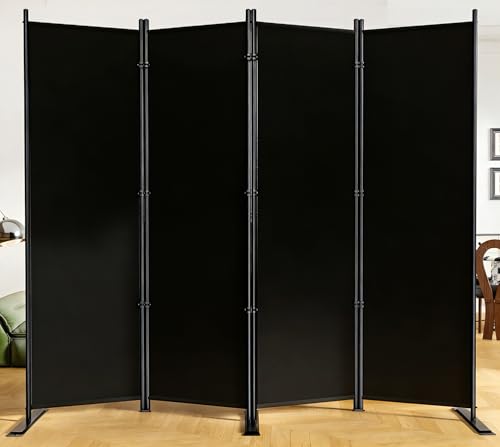
- Best overall for modern homes: SUNALLY 4-Panel Fabric Room Divider, Black — Check on Amazon
- NICETOWN Room Divider Curtain Panel, Grey, 100 x 84 in — Check on Amazon
- Goovilla Tension Rod Room Divider, Black, 28–70 in — Check on Amazon
- HORSE SECRET Tension Rod Room Divider, Black, 28–70 in — Check on Amazon
- VEVOR 4-Panel Fabric Room Divider, Grey — prose-only pick, see the review below for why
- Giantex Single Panel Room Divider with Wheels, Beige — prose-only pick, see the review below for why
Read the full guide ↓
Disclosure: As an Amazon Associate, dailyhomedecorating.com earns from qualifying purchases. Links to Amazon on this page are affiliate links; they cost you nothing extra. Listing details such as price and availability change often, so check the current Amazon listing before you buy.
The search for the best room divider for modern homes under $50 runs into its contradiction immediately, and this guide will not pretend otherwise: the dividers that define modern interiors in photographs — slatted timber screens, fluted wood panels, blackened-steel and glass partitions — cost many times this budget, and no honest guide can sell you one for under $50. What this tier offers instead is the other half of modern design, the half that is arguably more faithful to it: clean planes, honest materials, nothing ornamental. A flat black fabric screen, a floor-to-ceiling grey curtain wall, a single rolling panel in a warm neutral — these are dividers reduced to a surface and a line, which is exactly the language modern rooms speak. Chosen in the right color and given the right placement, they do not look like budget substitutes. They look like decisions. This guide is about making them look like decisions: which formats read as minimal rather than makeshift, which colors disappear into a contemporary palette, and where the line sits between a divider that elevates an open-plan room and one that cheapens it.
Modern homes also divide for modern reasons. The open-plan layout that looked so good at the viewing needs a work zone that can vanish at dinner. The primary bedroom needs a dressing screen that does not fight the furniture. The living room needs the exercise equipment, the laundry rack and the home-office overflow to stop being part of the view. Each job below is matched to a pick judged on design criteria first — plane, color, hardware finish, visual weight — with the practical tests (opacity, stability, complete cost) applied just as strictly as in the base guide, Best Room Divider Under $50. For most modern rooms we would begin with the SUNALLY in black: four flat panels, a matte frame, no pattern, no fuss — the closest thing at this price to a piece of architecture. Where the room wants softness instead, the NICETOWN grey curtain wall is the interior-design answer, and it is the one the following reviews build toward.
In this guide
Quick Picks
Short on time, or comparing several options at once? Each row below names a modern-home situation and the product that suits it, with a link to the listing where one is verified for this tier.
| Modern-home situation | Pick | Why it stands out | Link |
|---|---|---|---|
| Best overall for modern homes | SUNALLY 4-Panel Fabric Room Divider, Black | Four flat matte planes — the most architectural screen at this price — check price on Amazon | Check on Amazon |
| Best soft modern look | NICETOWN Room Divider Curtain Panel, Grey | A full-height grey curtain wall that reads as part of the room — check price on Amazon | Check on Amazon |
| Best invisible hardware | Goovilla Tension Rod Room Divider, Black | Slim black poles that disappear against a curtain — check price on Amazon | Check on Amazon |
| Best budget frame | HORSE SECRET Tension Rod Room Divider, Black | The same clean system at the lowest verified cost — check price on Amazon | Check on Amazon |
| Best wide grey plane | VEVOR 4-Panel Fabric Room Divider, Grey | The widest flat grey screen here — prose-only, see review | See review |
| Best warm minimal panel | Giantex Single Panel Room Divider with Wheels, Beige | One warm-neutral plane that doubles as a backdrop — prose-only, see review | See review |
How These Picks Were Chosen
The budget filter is unchanged: every linked product is a real Amazon listing with a recorded price sighting at or under $50 for the exact configuration named, two picks whose exact-variant pricing could not be confirmed in-tier are prose-only without links, and you should check the current price on Amazon before buying because prices move. Both tension frames need a curtain that is not in the box; the reviews say so before they praise anything.
The design filter is what makes this guide different, and it had four tests. First, plane: modern rooms reward flat, uninterrupted surfaces, so patterned, tufted and faux-rustic finishes were excluded entirely — every pick here is a solid color on a flat plane. Second, palette discipline: black, grey and warm beige are the colors that sit inside contemporary schemes without shouting, so those are the variants named, even where a listing offers brighter colors we would not choose. Third, hardware honesty: visible frames and poles were judged as design elements — slim, matte and dark reads as intentional; chunky or shiny reads as equipment. Fourth, visual weight: a divider in a modern room should either disappear or commit, and the reviews mark which picks do which, because the half-hearted middle — a divider you notice but do not enjoy — is the only real failure mode at this price. We did not use these dividers ourselves; we worked from maker listings, specifications and measurements, and where a listing was vague about finish or dimension, the review says so rather than styling around the gap.
A final honesty note on materials: everything here is polyester fabric over steel or iron. No pick imitates wood grain, stone or rattan, and that restraint is deliberate. In a modern room, an honest fabric plane looks considered; a printed imitation of an expensive material looks like a compromise. This tier’s design case rests on that distinction.
Best Room Divider for Modern Homes Under $50: The 6 Picks in Detail
SUNALLY 4-Panel Fabric Room Divider, Black
Who it suits: Modern living rooms and studios that need a work zone, a dressing screen or a clutter boundary with the visual discipline of a built-in.
In black, the SUNALLY stops looking like a product and starts looking like a plane. Four fabric panels on a powder-coated steel frame unfold to about 88 inches wide and 6 feet tall; the fabric is a high-density coated polyester the listing describes as non-see-through, and the widened feet keep the stance clean. The design move is to use its zigzag deliberately: set at a shallow, regular fold, the screen catches light in alternating planes like a piece of studio equipment in the best sense — think photography backdrop or gallery partition — and in a room of flat-fronted furniture and a restrained palette, that rhythm belongs. Black is the committing choice: it anchors a corner, gives a video-call backdrop with genuine depth, and makes the laundry rack behind it cease to exist.
The cautions are aesthetic as much as practical. Black shows dust and lint more honestly than any other color, so this pick suits households that will give it a lint roller monthly; in a sun-flooded white room, the same screen in a lighter variant from the listing family may sit better, though you should confirm that variant’s price fits this tier before switching. The screen blocks sight, not sound, and its straight-line coverage is less than its flat width once folded. Assembly is tubes and connectors, about half an hour. None of that changes the verdict: as a flat, matte, architectural plane under $50, this is the divider modern rooms have been waiting for this tier to produce, and it is the first one we would place.
- Flat matte black planes: the most architectural object in this guide at any color.
- Coated opaque fabric — a true visual wall for clutter, cables and work zones.
- A regular shallow fold turns a necessity into a deliberate light-and-shadow rhythm.
Honest limitation: Black shows dust and lint, and the screen divides sight only — plan a monthly lint pass in bright rooms.
Choose it if your palette can carry a black plane and you want the divider to read as design. Skip it if your room is all pale tones and sunlight — the grey curtain wall below will sit softer.
NICETOWN Room Divider Curtain Panel, Grey, 100 x 84 in
Who it suits: Open-plan modern homes that want the divide to feel like part of the architecture — a soft wall that opens completely — and bedrooms that need darkness with their division.
Interior designers reach for curtains when a modern room needs dividing, and the NICETOWN shows why at this price. One panel, 100 inches wide by 84 inches long, in triple-weave blackout polyester with a grommet top: hung full-height on a slim rod or ceiling track, it becomes a grey textile wall with a gentle, regular fall — the same visual language as the full-height drapes in every contemporary hotel and gallery apartment. Grey is the diplomat of modern palettes, sitting with white, oak, black and chrome without arguing with any of them, and the blackout weave means the wall also darkens, which in a modern primary bedroom or a media corner is half the point. When the divide is not needed, the whole wall slides to a soft stack at one side and the room is whole again — no folding screen achieves that disappearance.
The design risks are in the hanging. A curtain wall is only as clean as its hardware: pair it with the slim black tension frame below or a minimal ceiling track, keep the drop long enough to just clear the floor, and iron or steam the panel before its first week is judged — a creased curtain reads as storage, a smooth one reads as architecture. Remember it is the curtain only, so the complete cost includes its frame, and the pairing still fits this budget. It sways slightly and gaps if the drop is short; measure like a tailor. For modern homes that think in soft architecture, this is the most convincing divider in the guide.
- A full-height textile wall in the palette’s most versatile grey.
- Blackout weave adds darkness to division — media corners and modern bedrooms benefit twice.
- Disappears completely when open: the only pick that returns the whole room.
Honest limitation: Curtain only — its elegance depends on slim hardware and a correctly measured, steamed drop.
Choose it if you want the divide to feel designed-in and fully reversible. Skip it if you cannot hang anything at all — the freestanding SUNALLY asks nothing of your ceiling.
Goovilla Tension Rod Room Divider, Black, 28–70 in
Who it suits: Design-conscious renters in modern apartments who want a curtain wall with hardware that disappears — no track screwed into a pristine ceiling, no frame competing with the furniture.
The Goovilla’s design credential is restraint. Two slim vertical iron poles in black, a single cross rod, floor-to-ceiling tension with no drilling: installed behind the NICETOWN grey panel above, the hardware all but vanishes, leaving a clean textile plane floating in the room — the effect modern interiors pay carpenters to achieve, reached here with tension and patience. The frame adjusts from 4 to 10 feet high and, in the version linked here, 28 to 70 inches wide, with a wider sibling in the same family for broader spans. Curtains are not included, and the pairing with the panel above is the intended purchase; together they still fit this budget.
For a modern room, setup quality is design quality. Tension the poles truly plumb — a curtain wall leaning two degrees reads as accident, not architecture — pad the ceiling contacts to protect a clean ceiling finish, and keep the span in the frame’s comfortable middle so the rod stays level under a blackout panel’s weight. Re-check tension after the first week. Do that, and this is the most finished-looking no-drill system in the guide: the frame a modern renter buys when the room’s design matters as much as the divide. Households dividing purely for children should compare the family guide, Best Room Divider For Families Under $50, where this same frame is judged on tugs rather than lines.
- Slim matte-black hardware that disappears behind a curtain — design by subtraction.
- No drilling: a floor-to-ceiling wall that respects a modern rental’s finishes.
- The sturdier tension frame here, holding a level line under blackout fabric.
Honest limitation: Frame only, and its clean look depends on careful, plumb installation — a careless setup reads as makeshift.
Choose it if hardware invisibility is the priority and you will install it like you mean it. Skip it if you want zero setup — the freestanding screens are standing in minutes.
HORSE SECRET Tension Rod Room Divider, Black, 28–70 in
Who it suits: Modern-home renters on the tightest budget, and anyone prototyping a curtain wall — testing placement and fabric before committing to pricier hardware.
The HORSE SECRET offers the same visual proposition as the Goovilla — slim black floor-to-ceiling poles, 4 to 10 feet of height, 28 to 70 inches of width in this version, curtains not included — at the lowest verified price for this kind of system, with coverage noting it can hold up to 40 pounds of curtain. In design terms it is the sketch before the drawing: hang the NICETOWN panel or a curtain you own, live with the wall for a month, and learn where your room actually wants its divide. Modern rooms reward that prototyping, because the difference between a curtain wall that transforms a space and one that merely crosses it is usually twelve inches of placement — and a frame at this price forgives experiments.
The design compromise is margin, which shows as line quality: run near maximum width under a heavy panel and a budget rod can bow almost imperceptibly — imperceptible, that is, to everyone except the modern eye that bought it. Keep spans mid-range, curtains honest in weight, and the line stays true. Pad ceiling contacts, especially on the smooth pale ceilings modern apartments favor, where a tension mark reads like a scratch on a phone screen. As a permanent installation in a design-led room, the Goovilla above is the safer finish; as a first wall, a seasonal wall or a budget wall, this frame’s clean black minimalism is entirely respectable.
- The clean black tension system at the lowest verified cost — prototype a curtain wall cheaply.
- Matte, minimal hardware that suits modern palettes as well as its pricier sibling.
- Comes down without trace when the experiment — or the lease — ends.
Honest limitation: Less span margin than the Goovilla; wide, heavy hangs can bow the line a design eye will notice.
Choose it if budget leads or you are testing a curtain wall’s placement. Skip it if this is a permanent, wide, blackout-weighted installation — the Goovilla holds the cleaner line.
VEVOR 4-Panel Fabric Room Divider, Grey
Who it suits: Modern open-plan rooms needing a wide, quiet grey plane — zoning a living area from a work area without a visual exclamation point.
If the SUNALLY in black is the committing choice, the VEVOR in grey is the disappearing one. Independently measured at about 89.8 inches wide and 67.9 inches tall and roughly 17.4 lb, with 180 g coated polyester on a steel frame, it presents the widest flat grey surface in this guide — a low-contrast plane that recedes against pale walls and lets furniture hold the eye. That recession is a genuine modern skill: most dividers announce themselves, while this one simply ends the room earlier, which is exactly what a work zone in an open-plan living space needs. Its coated fabric wipes clean and blocks sight fully.
It is prose-only because, although its listings and specifications are verified, no current price at or under $50 could be confirmed for the exact grey four-panel variant at research time — so there is no link, and if you pursue it you should confirm the variant and live price on the listing itself. Design buyers should also weigh its presence honestly: the same substance that makes it recede visually makes it the most equipment-like object here when folded and parked, so it suits rooms with a real storage slot. If its live price sits above this tier, it belongs in Best Room Divider Under $100; inside the tier, it is the wide grey wall modern minimalists will reach for.
- The widest flat grey plane here — a divider that recedes instead of announcing itself.
- Coated, opaque, wipe-clean fabric with a substantial, planted stance.
- Pairs naturally with pale modern palettes where a black screen would shout.
Honest limitation: No verified in-tier price for the exact variant, hence no link — and it is the bulkiest pick to park when folded.
Choose it if you find the exact variant in-budget and want width without visual weight. Skip it if storage is tight — the SUNALLY folds to a slimmer household citizen.
Prose-only pick — no Amazon link, for the pricing reason stated above.
Giantex Single Panel Room Divider with Wheels, Beige, 73 x 73 in
Who it suits: Warm-minimal and Japandi-leaning rooms that want one soft neutral plane — and content creators, callers and photographers who need a backdrop that rolls.
The Giantex is a single fabric panel, about 73 inches wide by 73 inches tall, in beige on a wheeled base with lockable casters. In a modern room its design argument is singularity: one uninterrupted warm-neutral plane, no folds, no rhythm, just a quiet surface — the divider equivalent of a limewash wall. Beige is doing real work here; against white and oak it reads warm rather than stark, and as a backdrop for calls, portraits or product shots it flatters skin and objects alike in a way grey cannot. It rolls between roles in seconds: dressing screen in the morning, backdrop at noon, cinema wall’s edge by evening.
It is prose-only on pricing certainty: deal coverage has shown a Giantex single-panel divider at an in-budget price at Amazon, but the brand sells several single-panel variants and that sighting could not be tied to this exact wheeled 73 x 73 variant, so it is described without a link — verify size, base and live price on the listing if you pursue it. The design cautions are honest ones: a single flat panel is a sail in a drafty room and wants its locks engaged and a level floor, and beige, like all pale neutrals, shows marks that black hides — keep it out of the snack-and-shoe traffic line. Placed with intent, it is the warmest object in this guide and the one most likely to be mistaken for a deliberate studio piece.
- One uninterrupted warm-neutral plane — the softest modern statement here.
- The best backdrop in the guide for calls, portraits and product photography.
- Rolls between roles in seconds; no fold geometry to arrange or disguise.
Honest limitation: Prose-only on pricing certainty — and pale beige shows marks, while the flat panel wants locks set and level floors.
Choose it if your modern palette runs warm and a backdrop earns its floor space. Skip it if the room is high-traffic or all cool tones — the black SUNALLY will look intentional where beige looks lost.
Prose-only pick — no Amazon link, for the pricing reason stated above.
Comparison Table
| Product | Type | Best modern use | Link |
|---|---|---|---|
| SUNALLY 4-Panel Fabric Divider, Black | Freestanding fabric screen, 88 in x 6 ft | Architectural black plane for work zones | Check on Amazon |
| NICETOWN Curtain Panel, Grey | Hanging blackout curtain, 100 x 84 in | Soft full-height wall that opens completely | Check on Amazon |
| Goovilla Tension Rod Divider | No-drill tension frame, curtain not included | Invisible hardware for a designed curtain wall | Check on Amazon |
| HORSE SECRET Tension Rod Divider | No-drill tension frame, curtain not included | Budget prototype of the same clean system | Check on Amazon |
| VEVOR 4-Panel Fabric Divider, Grey | Freestanding fabric screen, ~90 in wide | Wide grey plane that recedes — verify live price | See review |
| Giantex Single Panel, Beige | Rolling single panel, 73 x 73 in | Warm backdrop panel — verify live price | See review |
How to Choose a Room Divider for a Modern Home
- Decide disappear or commit — then buy accordingly. Grey planes and curtain walls recede; a black screen anchors. The failed modern divider is the one in between that you notice without enjoying.
- Hold the palette to solids. Black, grey and warm beige sit inside contemporary schemes. Patterns, faux textures and printed wood grain read as imitation at this price and date a room instantly.
- Treat hardware as design. Slim, matte, dark poles and frames disappear; shiny or chunky hardware reads as equipment. If the frame will show, its finish is a decor decision.
- Measure the drop like a tailor. A curtain wall’s elegance is its length: just clearing the floor, steamed smooth, gathered slightly for fullness. Short or creased reads as storage, not architecture.
- Use folds deliberately. A folding screen at a regular shallow zigzag creates a calm light rhythm; a random fold looks parked. Set the geometry once, symmetrically, and leave it.
- Cost the complete wall. Tension frames exclude curtains. The designed result is frame plus panel plus the minutes to install it plumb — budget all three before comparing with a freestanding screen.
- Plan the open state. Modern rooms are judged by how they look when the divider is not dividing: a curtain’s stack, a screen’s parking slot, a panel’s corner. Solve that view first.
- Check opacity at night. A fabric that is private at noon can silhouette at night with a lamp behind it. Coated, non-see-through fabric is the modern bedroom’s non-negotiable.
- Keep the packaging for a week. Color against your actual palette is only testable in your light. Returns are painless with the box intact.
Styling Notes: Making a Budget Divider Look Designed
Three placements elevate everything in this guide. The first is the perpendicular work wall: a screen set at a true right angle to the room’s main wall, aligned with a rug edge or a furniture line, reads as planning; the same screen at a casual angle reads as storage. The second is the curtain wall with breathing room — a textile plane hung a few inches inside the room’s line, with a plant or a floor lamp layered in front, gains the depth that separates interiors from partitions. The third is the backdrop discipline: a single panel or screen placed with nothing leaning, hanging or parked against its face stays a plane; the moment it becomes a shelf, it becomes clutter with good posture. Modern rooms forgive budget materials readily. They do not forgive visual noise, and every styling rule here is really that one rule restated.
Color pairing deserves its own paragraph because it decides most purchases in this guide. Black screens earn their place in rooms that already contain black — frames, fixtures, a media unit — and look stranded in rooms that do not. Grey curtains are the universal donor, pairing with every palette in this guide including the warm one, provided the grey’s undertone matches: blue-greys with cool rooms, warm greys with oak and beige. The beige Giantex belongs to warm minimalism specifically; in a cool white-and-chrome room it reads as a stain’s cousin. When in doubt, order the grey, live with it under your own light for the packaging week, and let the room vote. Apartment-specific layouts are worked through in Best Room Divider For Small Apartments Under $50, and tight-room geometry in Best Room Divider For Small Spaces Under $50, where these same products are judged on footprint first and finish second.
Open-Plan Zoning Patterns for Modern Rooms
Modern open-plan rooms fail in predictable ways, and each failure has a divider pattern that answers it. The first failure is the visible workday: the desk, the cables and the chair that keep the living room in office mode all evening. The pattern is the perpendicular screen — the black SUNALLY set at a right angle behind the work zone, aligned with the rug’s edge — which hides the workday from the sofa’s sightline while leaving the room’s plan untouched. The second failure is the sleepless studio: bed and living space in one visual field, so the room never fully becomes either. The pattern is the curtain wall across the sleeping end, grey NICETOWN on the Goovilla frame, which gives the bed a soft fourth wall and the evening a closing ritual — drawing the curtain is the studio’s equivalent of shutting a bedroom door, and rituals are what make one room live as two.
The third failure is the guest-room improvisation: visitors sleeping in the living room’s full exposure, hosts tiptoeing past at dawn. The pattern is the temporary plane — the Giantex rolled out to give the sofa bed a wall, or the screen unfolded for the visit’s duration and returned to its slot after — and its modern virtue is that it leaves no evidence; the room’s design survives its hospitality. The fourth failure is the backdrop problem, now permanent in modern working life: the video call framed against a bed, a rack or a hallway. The pattern is the dedicated backdrop panel, placed once and left — a flat black screen or the warm beige panel — turning the least designed corner of the room into the most composed rectangle anyone sees of it. Notice what all four patterns share: none of them divides the room in the middle, all of them work at edges and ends, and each treats the divider as a sightline instrument rather than a wall substitute. That is the modern understanding this whole guide is built on — in a contemporary room, you are not building walls, you are editing views, and a flat, disciplined plane under $50 edits as well as joinery ten times its price when the edit is well chosen.
Light and Sightlines: The Night Test Every Modern Divider Must Pass
Modern rooms are designed in daylight and lived in after dark, and dividers are where that difference shows. A fabric screen that is a calm grey plane at noon can become a shadow theatre at nine in the evening, when a lamp behind it prints the silhouettes of everything the divider was bought to hide. This is why the coating question runs through every review in this guide: non-see-through, light-blocking fabric is not a premium extra in a modern bedroom or media room, it is the product. Before committing to any pick, run the night test during the packaging week — lamp on behind the divider, viewer in the room’s main seat — and judge the result as a guest would. The NICETOWN’s blackout weave passes by construction; the SUNALLY’s coated fabric is specified for it; uncoated fabrics anywhere else should be presumed to fail until they prove otherwise in your own light.
Sightlines deserve the same deliberateness in the other direction. A modern room’s divider is seen from one primary seat more than from anywhere else — the sofa, the bed, the desk chair — and it should be composed for that view: fold geometry symmetrical from the sofa, curtain fall steamed from the bed, backdrop panel squared to the camera rather than to the wall. Designers call this designing for the money view, and it costs nothing but attention. It also explains why this guide keeps returning to placement rituals — the right angle aligned with a rug, the curtain hung with breathing room, the panel kept empty of hanging clutter. A modern divider is a picture the room looks at daily. Compose it once, properly, and it pays that attention back for years; place it carelessly and no price tier would have saved it, because the failure was never in the fabric.
Renting Modern: Full Style Without a Single Screw
A large share of modern homes are rentals, and the modern renter’s constraint — no drilling into design-conscious finishes — is exactly the constraint this tier was accidentally built for. Every linked pick here installs without penetration: screens stand, tension frames brace, curtains hang from pressure or from rods the renter supplies. That tracelessness has a design dividend beyond the deposit. A divide that can move is a divide that can be art-directed — shifted a foot when the furniture changes, swapped from black screen to grey curtain when the room’s season changes, removed entirely when the open plan deserves to be itself again for a gathering. Permanent partitions freeze a room’s first idea of itself; these picks let a modern room keep editing, which is closer to how contemporary interiors actually evolve.
The renter’s discipline is finish protection, and it is brief: pad tension contacts, keep screen feet on pads over delicate floors if the listing’s feet are bare metal, and store the packaging-week photographs of walls and ceilings alongside the lease. Do that, and a renter can run the full modern program in this guide — architectural black plane, grey curtain wall, warm backdrop panel — across a tenancy, then carry all of it to the next home in one trip. Modern style was never really about owning expensive objects. It is about the confidence to use simple ones exactly, and a tenant with a tape measure and this tier’s palette has everything that confidence requires.
Common Buying Mistakes
- Buying a printed faux-wood or patterned screen for a modern room and discovering imitation is louder than plain fabric.
- Choosing black for a room with no other black in it, then wondering why the screen looks stranded.
- Hanging a curtain wall short, creased or on shiny hardware and blaming the curtain for the result.
- Running a budget tension rod at full width under a heavy panel until the line bows.
- Forgetting the open state: no parking plan for the screen, no stack space for the curtain.
- Expecting a fabric divider to behave like a slatted timber screen in photographs — different material, different beauty.
- Skipping the night-opacity check and finding silhouettes through an uncoated fabric after dark.
- Letting the divider become storage — coats, bags and laundry hung on a plane that only works empty.
- Chasing a headline price onto a different color or size variant than the one the price belonged to.
Final Recommendation
- Most modern homes: SUNALLY 4-Panel Fabric Room Divider in black — the architectural plane.
- Soft modern and open-plan: NICETOWN Curtain Panel in grey on slim hardware.
- Invisible hardware, permanent feel: Goovilla Tension Rod Room Divider plus the NICETOWN panel.
- Budget or prototype curtain wall: HORSE SECRET Tension Rod Room Divider plus a curtain.
- Wide, quiet, pale rooms: VEVOR 4-Panel Fabric Room Divider in grey — only if the live price fits this tier.
- Warm minimalism and backdrops: Giantex Single Panel in beige — verify size and price on the listing.
Our top two for modern homes are the black SUNALLY for rooms that can carry a committing plane and the grey NICETOWN curtain wall for rooms that want the divide to disappear, because modern design is mostly the art of choosing between those two gestures. If you finished this guide realizing your room truly wants timber slats and joinery, believe it — that world begins honestly at higher tiers, and Best Room Divider Under $100 is the next step. What this tier proves is that a modern room does not need an expensive divider; it needs a disciplined one — solid color, clean line, honest material — and every pick above, placed with intent, is exactly that.
Frequently Asked Questions
Can a room divider under $50 really suit a modern interior?
Yes, if you choose plane over imitation. Solid-color fabric screens and full-height curtain walls in black, grey or warm beige share modern design’s own language — flat surfaces, honest materials, no ornament. What dates a room is printed faux-wood and pattern, not price. Every pick in this guide was filtered on exactly that distinction.
Which color divider works with the most modern palettes?
Grey, and it is not close. A mid-grey curtain or screen sits with white, oak, black and chrome without arguing, and recedes rather than anchors. Black is the stronger statement where the room already contains black; warm beige belongs specifically to warm, wood-led minimalism. Match a grey’s undertone to your room’s temperature and it will look chosen.
Are curtain dividers more modern than folding screens?
They read differently rather than better. A full-height curtain wall is soft architecture — the hotel and gallery look — and disappears completely when open. A flat folding screen is an object: calmer, more graphic, better where a defined plane should stay visible. Modern rooms use both; choose by whether the divide should be a surface or a gesture.
How do I stop a budget divider looking cheap?
Placement and discipline. Set screens at deliberate angles aligned with the room’s lines, hang curtains plumb, long and steamed, keep every face empty of hanging clutter, and give the divider a planned parking position when open. A budget divider treated as architecture looks designed; an expensive one treated as storage looks cheap.
Do fabric dividers work in a modern primary bedroom?
Yes — choose coated, opaque fabric or the blackout curtain, because bedroom privacy is tested at night with lamps behind the divider. The NICETOWN panel adds darkness for sleep; the black SUNALLY adds a dressing-screen plane with real presence. Neither blocks sound, so set expectations at visual privacy and light control.
How do I divide an open-plan room without making it feel smaller?
Divide at the edges, keep the middle whole, and let the divider be either full-height or clearly furniture — the two scales that read as intentional. A curtain wall across one end shortens the room on paper but lengthens it in experience, because each zone gains a back wall to arrange against. A screen placed mid-room at half-commitment does the opposite. Choose one gesture, execute it cleanly with the picks above, and leave the rest of the plan open; modern rooms feel larger when their divisions look decided, not when they are merely absent.
When should a modern home spend above this tier?
When the divider is a permanent design feature — slatted timber, fluted panels, steel and glass — that the room’s architecture will be judged by for a decade. Those begin honestly at higher tiers. For zoning, backdrops and reversible divides, this tier’s disciplined planes do the design job completely.


