Where to buy
Check the latest price, availability and delivery on Amazon. Orders are placed on Amazon. We may earn a commission from qualifying purchases.
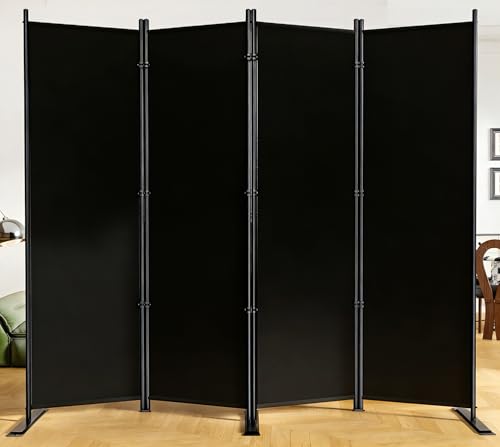
- Best overall for families: SUNALLY 4-Panel Fabric Room Divider, Black — Check on Amazon
- NICETOWN Room Divider Curtain Panel, Grey, 100 x 84 in — Check on Amazon
- Goovilla Tension Rod Room Divider, Black, 28–70 in — Check on Amazon
- HORSE SECRET Tension Rod Room Divider, Black, 28–70 in — Check on Amazon
- VEVOR 4-Panel Fabric Room Divider, Grey — prose-only pick, see the review below for why
- Giantex Single Panel Room Divider with Wheels, Beige — prose-only pick, see the review below for why
Read the full guide ↓
Disclosure: As an Amazon Associate, dailyhomedecorating.com earns from qualifying purchases. Links to Amazon on this page are affiliate links; they cost you nothing extra. Listing details such as price and availability change often, so check the current Amazon listing before you buy.
The search for the best room divider for families under $50 is really two searches at once: a divider that creates space, and a divider that survives the people it creates space for. A household with children asks questions no studio renter ever thinks of. Will it tip if a toddler hauls on it? Are there hinge gaps that pinch small fingers? Can the fabric survive sticky hands, and can it be cleaned when it doesn’t? Can a determined six-year-old treat it as a climbing frame, a fort wall or a sail? This guide answers those questions first and talks about coverage second, because in a family home the order matters. And it starts with the same honesty as every guide in this series: a solid wooden screen does not exist at an everyday price under $50, so the family tier is built from fabric screens, curtain panels and tension frames — lighter dividers that, chosen carefully, are actually better suited to family life than heavy timber in several ways. They cannot fall with furniture weight, they have no splinters and no hard corners at head height, and when a divider’s season ends — the baby becomes a walker, the teenager gets a door that locks — it folds, rolls or slides away without a mark on the house.
What families are dividing is also specific. It is the play zone that needs to stop migrating across the living room. It is the nursery corner in the parents’ bedroom that needs a visual edge at nap time. It is the teenager’s half of a shared room, the grandparent’s sleeping corner during a long visit, the homework desk that needs to feel separate from the television. Each of those jobs appears below with a pick matched to it, and each review leads with the family questions — stability, pinch points, cleanability, and what happens when a child tests the divider the way children test everything. For most families we would begin with the SUNALLY four-panel fabric screen, because its widened feet and zigzag stance make it the steadiest complete divider in this budget, and its coated fabric wipes clean. Where the divider must divide a sleeping adult from a playing child, the NICETOWN blackout curtain earns its place by darkening as well as screening. Read on for the quick picks, the detailed family-first reviews, and the mistakes that matter more in a house with kids than anywhere else.
In this guide
Quick Picks
Short on time, or comparing several options at once? Each row below names a family situation and the product that suits it, with a link to the listing where one is verified for this tier.
| Family situation | Pick | Why it stands out | Link |
|---|---|---|---|
| Best overall for families | SUNALLY 4-Panel Fabric Room Divider, Black | Steadiest complete screen here, with wipe-clean coated fabric — check price on Amazon | Check on Amazon |
| Best for nap-time darkness | NICETOWN Room Divider Curtain Panel, Grey | Blackout weave darkens a nursery corner as well as screening it — check price on Amazon | Check on Amazon |
| Best sturdy no-drill frame | Goovilla Tension Rod Room Divider, Black | The stronger tension frame for a curtain wall kids will brush past — check price on Amazon | Check on Amazon |
| Best budget curtain wall | HORSE SECRET Tension Rod Room Divider, Black | Lowest-cost full-height frame for a visiting-relative corner — check price on Amazon | Check on Amazon |
| Widest, heaviest screen | VEVOR 4-Panel Fabric Room Divider, Grey | Extra weight and width for play-zone duty — prose-only, see review | See review |
| Best movable screen | Giantex Single Panel Room Divider with Wheels, Beige | Rolls between jobs — with a locking caution for families, see review | See review |
How These Picks Were Chosen
The budget filter worked exactly as in the base guide: every linked product is a real Amazon listing with a recorded price sighting at or under $50 for the exact configuration named, and the two picks whose in-tier pricing could not be confirmed for the exact variant are described prose-only, without links, rather than linked on a guess. Check the current price on Amazon before you buy, because prices change often. Where a system needs a second purchase — both tension frames here need a curtain — the review says so up front, and the complete pairing still fits this budget.
On top of the budget filter, this guide applied a family filter with four tests. First, tip behavior: what happens when the divider is pulled, leaned on or bumped at child height — freestanding screens were judged on feet and fold, tension systems on what a tugged curtain does to the frame. Second, pinch and trap points: folding screens join panels with connectors or hinges, and we favored designs whose joints sit inside the frame rather than presenting open scissor gaps. Third, cleanability: coated, wipe-clean fabrics and machine-manageable curtain panels scored ahead of anything that can only be dusted. Fourth, softness of failure: if a divider does come down in a family home, fabric over a light frame is a fundamentally safer object than timber, and every pick here benefits from that. We did not use these dividers ourselves; we read maker listings and specifications, compared weights, feet, fabrics and frame materials, and reasoned about family use from those verified facts — where a listing was vague, the review says so rather than guessing.
One boundary deserves stating before the reviews: no divider in this guide is a safety barrier. None of them replaces a baby gate at stairs, none contains a toddler who wants through, and none should be placed where a child can pull it down onto themselves from a crib or a climbing start. Used as what they are — visual boundaries that teach and signal space — they are genuinely useful family tools. The reviews below keep that line bright.
Best Room Divider for Families Under $50: The 6 Picks in Detail
SUNALLY 4-Panel Fabric Room Divider, Black
Who it suits: Families creating a play zone, a homework corner or a guest sleeping area — anyone who needs the steadiest complete screen in this budget and fabric that forgives sticky hands.
The SUNALLY is a four-panel fabric screen on a powder-coated steel frame, unfolding to about 88 inches wide and standing 6 feet tall, with widened support feet and a high-density coated polyester fabric the listing describes as non-see-through. For family use, three details matter most. The first is stance: like every folding screen it stands in a zigzag, and that zigzag is a safety feature in a family home — a bumped panel flexes and settles instead of toppling as one rigid wall, and the widened feet resist the slow creep that lighter screens suffer on hard floors. The second is surface: the coated fabric wipes clean with a damp cloth, which in practice is the difference between a divider that survives the toddler years and one that records them. The third is softness: if the screen is ever pulled over, what lands is fabric over light steel tubing, not a timber frame — a bad moment, but a far less bad one.
Supervision honesty belongs in this review. The panel joints are connectors within the frame rather than open hinges, but small fingers explore every seam, so check the joints when you assemble it and position the screen where hauling on it is discouraged — across a play zone’s open side, not beside a crib. It blocks sight, not sound, so it will not nap-proof a room against a loud television; pair it with the curtain pick below where darkness and muffling matter. Assembly takes about half an hour of tube-and-connector work on a clear floor. For the central family jobs — a play corner with an edge, a desk with a boundary, a guest bed with privacy — this is the divider we would buy first, and the one whose failure modes are gentlest if a child finds them.
- Steadiest complete screen in this guide: widened feet plus a forgiving zigzag stance.
- Coated fabric wipes clean — the family feature that matters weekly, not yearly.
- Fabric over light steel: no splinters, no hard timber corners at child head height.
Honest limitation: It is a visual boundary, not a barrier — it will not contain a determined toddler or block household noise.
Choose it if you need one complete divider for a play zone, desk or guest corner. Skip it if the job is nap-time darkness — the blackout curtain below does that job better.
NICETOWN Room Divider Curtain Panel, Grey, 100 x 84 in
Who it suits: Families dividing a shared bedroom, screening a nursery corner in the parents’ room, or giving a teenager the dark, separate half of a room they share with a sibling.
The NICETOWN is a single blackout curtain panel, 100 inches wide by 84 inches long, in triple-weave polyester with a grommet top. For families its superpower is darkness: hung across a nursery corner or a shared-room divide, it blocks light as completely as sight, so a baby can nap at noon and a teenager can sleep past a sibling’s morning. It is also the softest divider in this guide — there is nothing to tip, nothing to pinch, nothing with an edge — and a child who runs into it meets fabric. The panel is machine-manageable, which matters when it hangs at toddler height within reach of every snack in the house. The grey linked here hides the everyday marks of family life better than pale colors do.
The family cautions are about the hanging, not the panel. This is the curtain only: it needs a rod or track, and in a family home the mounting choice is a safety choice — a ceiling track installed properly is the most child-proof option, a tension frame (the two picks below) is the no-drill alternative, and a free-standing garment rack is neither and should not be improvised for this job. A hanging curtain also sways and can be pulled; a toddler who hauls on it tests the mounting, not the fabric, so mount for the pull, not the drape. Finally, leave the bottom hem free rather than weighted or clipped to anything a child could become tangled with. Hung thoughtfully, this is the gentlest full divide in the guide, and the only one that improves sleep while it divides.
- Blackout weave: the only pick that darkens a nursery or shared bedroom while dividing it.
- Nothing to tip, pinch or bump into — the softest divider format for young children.
- Machine-manageable fabric at a size that covers openings no folding screen reaches.
Honest limitation: Curtain only — the mounting is a separate, safety-critical purchase — and a determined child can pull or swing a hanging panel.
Choose it if sleep and darkness are half the job. Skip it if you cannot mount it securely — a freestanding screen asks nothing of your ceiling.
Goovilla Tension Rod Room Divider, Black, 28–70 in
Who it suits: Renting families who cannot drill but need a curtain wall that will be brushed, bumped and brushed again daily — the sturdier frame for a family curtain divide.
The Goovilla is a no-drill tension frame: two vertical iron poles brace floor-to-ceiling, adjustable from 4 to 10 feet, and a cross rod spans 28 to 70 inches in the version linked here, with a wider sibling in the same family. Curtains are not included — pair it with the NICETOWN panel above and the complete wall still fits this budget. For families, the argument for choosing this frame over the cheaper one below is reserve strength: family curtains get tugged by passing toddlers, leaned through by older children and re-hung after every wash, and an iron frame with tension to spare tolerates that life better than a budget frame run at its limit. Set up in the middle of its ranges rather than at the extremes, it is the closest thing in this guide to a permanent wall that a lease allows.
The family setup rules matter more than the hardware. Children will pull a curtain; the frame’s job is to make that a non-event, so tension it firmly, re-check it after the first week, and hang a curtain weight the frame carries comfortably rather than the heaviest blackout you own. Teach the household rule early — the curtain slides, it is not a door to burst through — because a tension frame tolerates brushing and sliding far better than sudden yanks. Pad the ceiling contact points, both to protect textured ceilings and to keep the fit snug. Placed across a shared-room divide or a living-room sleeping corner, and treated as architecture rather than furniture, the Goovilla gives a renting family a real wall’s benefits with none of a wall’s permanence.
- The sturdier tension frame in this guide — iron poles with reserve for family traffic.
- No drilling: a full-height curtain wall that leaves the lease and the ceiling intact.
- Adjustable 4 to 10 feet high, so it follows a family from apartment to house.
Honest limitation: Frame only, and its safety depends on setup — firm tension, mid-range spans and a household rule that curtains slide rather than swing.
Choose it if you rent and the curtain wall will see daily family use. Skip it if the divider is for a short visit — the budget frame below costs less for temporary duty.
HORSE SECRET Tension Rod Room Divider, Black, 28–70 in
Who it suits: Families hosting a grandparent or relative for a season, students in family housing, and anyone who needs a temporary private corner at the lowest complete cost.
The HORSE SECRET does the same no-drill job as the Goovilla — floor-to-ceiling tension poles, 4 to 10 feet of height, 28 to 70 inches of width in this version, curtains not included — at the lowest verified price for this kind of system. Coverage of this frame notes it can hold up to 40 pounds of curtain, which is plenty for the NICETOWN panel above or a curtain already in the linen closet. Its family niche is the temporary divide: the living-room corner that becomes a grandparent’s room for two months, the dining area that becomes a study zone for exam season. When the season ends it comes down in minutes and leaves nothing to repair, which for a family home that must flex back is worth more than extra sturdiness it never needed.
The cautions are the honest flip side of the price. A budget frame has less margin, so keep it inside its comfortable range — mid-width, a curtain it carries easily — and in a family home, place it where traffic flows past rather than through: across an alcove or a corner, not in the household’s main runway where it will be burst through daily. Re-tighten after the first week and after any enthusiastic encounter. With those small disciplines, it is a kind and capable temporary wall; asked to serve as a permanent divide in a busy corridor, it will remind you what the Goovilla’s extra money buys. Families should choose between these two frames by duration, not by hope: temporary, this one; permanent, the one above.
- Lowest-cost route to a full-height, no-drill curtain wall for a visiting relative’s corner.
- Comes down without a trace when family life needs the room whole again.
- Carries a standard blackout panel comfortably when kept inside its mid-range.
Honest limitation: Less load margin than the Goovilla — best for temporary, low-traffic divides rather than the household’s main thoroughfare.
Choose it if the divide is for a season. Skip it if it will stand permanently where children pass hourly — step up to the Goovilla frame.
VEVOR 4-Panel Fabric Room Divider, Grey
Who it suits: Families with a wide living room to zone — a play area with a real edge, a laundry or craft corner to hide — who value extra weight and width in a screen.
The VEVOR is the heavyweight fabric screen here: independently measured at about 89.8 inches wide and 67.9 inches tall, roughly 17.4 lb, with 180 g coated polyester fabric on a steel frame. In family terms, weight is a feature up to a point — a heavier screen resists the casual bump and the slow slide across hard floors better than the lightest screens, and its wipe-clean coated fabric suits the play-zone and laundry-corner work families actually assign. Its extra width closes the kind of broad living-room opening that leaves an 88-inch screen a panel short.
It is prose-only in this guide for the same pricing reason as in the base guide: its listings and specifications are verified, but no current price at or under $50 could be confirmed for the exact grey four-panel variant at research time, so it carries no link rather than a hopeful one. If you find the exact variant inside this budget when you shop, weigh the family trade honestly: the same weight that steadies it makes it the worst pick here to be pulled over, so in homes with climbing-age toddlers the lighter SUNALLY’s gentler failure is the wiser choice, while in homes with older children the VEVOR’s planted feel wins. And if its live price sits above this tier, it competes fairly in Best Room Divider Under $100 instead.
- Widest and heaviest fabric screen here — planted feel for wide play-zone divides.
- Wipe-clean coated fabric that suits laundry, craft and play corners equally.
- Extra width closes broad living-room openings other screens leave short.
Honest limitation: No verified in-tier price for the exact variant, hence no link — and its weight makes it the least forgiving screen if a small child pulls it over.
Choose it if your children are past climbing age, the opening is wide, and the live price fits. Skip it if toddlers will test it daily — the SUNALLY fails more gently.
Prose-only pick — no Amazon link, for the pricing reason stated above.
Giantex Single Panel Room Divider with Wheels, Beige, 73 x 73 in
Who it suits: Families whose divider changes jobs — screening a homework desk in the afternoon, a sofa bed at night, a dress-up corner on Saturday — and who will genuinely roll it between them.
The Giantex is a single fabric panel, about 73 inches square, on a base with lockable wheels. Its family virtue is flexibility: one flat panel, full usable width with no zigzag, that a parent can move one-handed while carrying everything else parents carry. As a backdrop for a child’s remote class, a screen for the guest bed, or the wall of a blanket-fort-adjacent play zone, it is the most obliging format in this guide. It is prose-only here because deal coverage has shown a Giantex single-panel divider at an in-budget price, but the brand sells several single-panel variants and the sighted price could not be tied to this exact wheeled 73 x 73 variant with certainty — so it is described without a link, and you should verify size, base and live price on the listing itself.
The family caution is specific and non-negotiable: wheels invite riding. A rolling panel will be pushed, leaned on and — in any house with a seven-year-old — eventually tested as a vehicle. The locks must be engaged every time it is parked, it belongs on level floors away from stairs, and the household rule that it is furniture, not transport, needs stating on day one. Families who can hold that line get the most flexible divider in this guide; families who know they cannot should take a folding screen whose stillness is built in. That is not a flaw in the product — it is a matching question, and this guide would rather ask it than sell past it.
- Rolls between family jobs in seconds — desk screen by day, guest screen by night.
- Full flat width with no zigzag: the best backdrop format here for classes and calls.
- Lockable wheels — the lock is a daily habit, not an optional extra, in family use.
Honest limitation: Prose-only on pricing certainty — and wheels demand a firm household rule with children, or the panel becomes a ride.
Choose it if the divider truly changes jobs daily and locks will be used religiously. Skip it if it would tempt riders it cannot carry — a folding screen stays where childhood leaves it.
Prose-only pick — no Amazon link, for the pricing reason stated above.
Comparison Table
| Product | Type | Best family use | Link |
|---|---|---|---|
| SUNALLY 4-Panel Fabric Divider | Freestanding fabric screen, 88 in x 6 ft | Play zones, homework corners, guest privacy | Check on Amazon |
| NICETOWN Curtain Panel, 100 x 84 in | Hanging blackout curtain | Nursery corners and shared-bedroom darkness | Check on Amazon |
| Goovilla Tension Rod Divider | No-drill tension frame, curtain not included | Permanent-feeling curtain walls for renting families | Check on Amazon |
| HORSE SECRET Tension Rod Divider | No-drill tension frame, curtain not included | Temporary divides for visiting relatives | Check on Amazon |
| VEVOR 4-Panel Fabric Divider | Freestanding fabric screen, ~90 in wide | Wide play-zone divides for older children | See review |
| Giantex Single Panel with Wheels | Rolling single panel, 73 x 73 in | A screen that changes jobs daily — locks required | See review |
How to Choose a Room Divider for a Family Home
- Run the toddler test in your head first. Picture your youngest child pulling, leaning and bumping at divider height. Freestanding screens should flex and settle; anything that could topple onto a child belongs somewhere children cannot haul on it.
- Check joints and seams for pinch points. Assemble slowly, open and close every fold, and run a finger along each joint. Connectors housed inside a frame are the family-friendly design; exposed scissor gaps are not.
- Demand a cleanable surface. Coated fabric that wipes down, or a curtain panel that goes in the wash, will outlast any divider that can only be dusted. In a family home this is not a preference; it is the product’s lifespan.
- Separate the darkness job from the screening job. If a baby or a shift-working parent must sleep through household daylight, only the blackout curtain in this guide truly darkens. Screens block sightlines, not noon.
- Mount like a child will test it — because one will. Curtain mountings, tension tensioning and wheel locks should all be set for the pull, the bump and the ride attempt, not for the photograph.
- Keep dividers out of the safety-barrier jobs. Stairs, kitchens and exits need gates and doors, not dividers. Place screens to signal space, never to guard danger.
- Match the format to the season of family life. A nursery corner needs softness and darkness; a teen divide needs opacity and respect; a guest corner needs speed. The right pick changes as children grow — this tier’s prices forgive that.
- Plan the divider’s parking place. Folded screens, slid curtains and rolling panels all need a home position the household agrees on, or the divider becomes the clutter it was bought to hide.
- Keep the packaging for a week. Family fit — width, darkness, a child’s reaction — is only testable in the room. Returns are painless with the box intact.
Family Jobs, Matched Honestly
Walk the jobs before the products. The play zone is the most common family assignment, and its real requirement is an edge a child can see and a parent can step over: the SUNALLY across the open side of a rug defines it without walling anyone in, and its wipe-clean fabric survives the zone’s output. The nursery corner is a darkness assignment wearing a privacy costume — the NICETOWN panel, securely mounted, is the only pick that answers it fully, and families co-sleeping a baby in the parents’ room will feel the difference at the first noon nap. The shared children’s room is a respect assignment: two siblings need sight blocked and a boundary both can honor, which any opaque pick here provides, with the Goovilla-plus-curtain pairing feeling most like the wall both children wish they had.
The guest assignment is a speed test — a corner must become a room by Friday — and it splits by duration: the HORSE SECRET frame for a visit measured in weeks, the Goovilla for a grandparent measured in months. The homework assignment is a focus test, and it is where the rolling Giantex tempts most strongly: a screen that appears at homework time and vanishes at dinner teaches the ritual better than a permanent wall. Households in genuinely small homes should continue to Best Room Divider For Small Apartments Under $50, and those dividing one tight room several ways to Best Room Divider For Small Spaces Under $50, where the same products are judged on footprint rather than family-proofing. The base guide, Best Room Divider Under $50, covers the general case; this one exists because families do not have general cases — they have a specific child, at a specific age, in a specific room.
Ages and Stages: The Divider That Grows With the Family
Family dividing needs change on a schedule no other household type knows, and this tier’s flexibility is worth planning around rather than discovering by accident. In the baby stage, the divider’s job is parental: a nursery corner in the main bedroom, darkened by the NICETOWN curtain, where night feeds happen without lighting the whole room. The safety questions are minimal because the baby cannot reach the divider — but they should be answered anyway, because the same curtain will still be hanging when the baby becomes a climber, and a mounting chosen for a newborn should be re-audited for a toddler. That re-audit is a ten-minute job: re-tension the frame, confirm the hem hangs free, and move anything climbable away from the fabric a small person might haul on.
The toddler stage is the divider’s hardest service, and it is where the folding screen earns its keep. A play zone with a visible edge teaches the geography of the house — toys live here, the rest of the room is shared — long before a child can honor an invisible rule. The SUNALLY across the zone’s open side, wiped down weekly and flexing under the inevitable bump, is the right tool; the rolling panel, for all its convenience, should sit this stage out in homes where riding it is a realistic ambition, or be parked and locked with genuine discipline. The school-age stage changes the job to focus: a homework corner with a backdrop, a reading nook with an edge, a craft zone whose glitter has a border. Every pick in this guide can do this work, and children this age can be given the household rules — curtains slide, screens flex, wheels lock — as responsibilities rather than warnings.
The teenage stage is about respect, and it is where families most often underbuy. Two teenagers sharing a room do not need a prettier divider; they need an opaque one, full-height if possible, with the household agreement that the boundary is real. The Goovilla frame with the NICETOWN panel is the closest this budget comes to giving each teenager a wall, and families who install it with ceremony — chosen together, placed by agreement — get more peace from it than families who install it as furniture. Finally, the stage nobody plans: the returning adult child, the grandparent’s long stay, the spare corner that becomes someone’s bedroom for a season. The HORSE SECRET frame exists for that phone call. A family that owns one fabric screen and one curtain panel, stored flat and ready, can absorb almost any change in household composition within an evening — and at this tier’s prices, that readiness is the real product being bought.
The First Week: Setting Up a Divider in a Family Home
How a divider is introduced matters almost as much as which one is bought, and a family first week has a rhythm worth following. Day one is assembly with an audience: build the screen or hang the curtain while children watch, name what it is and what it is for, and let the household’s youngest members touch it, slide it and fold it under supervision — a divider that has been explored openly holds less forbidden attraction than one that appears by magic with rules attached. Set the household agreements in the same hour, in positive form: the curtain slides, the screen stays where it is parked, the wheels stay locked. Children enforce rules they helped inaugurate with a zeal no parent can match.
Days two and three are the audit window. Watch where traffic actually flows against the divider — not where the floor plan said it would — and be willing to move the whole setup a foot in either direction; family dividing is empirical, and the second placement is usually the true one. Check tension frames and feet after the first real encounters, wipe the first marks off the fabric while they are still a novelty rather than a patina, and notice which family member the divider is failing: the toddler who treats the play-zone edge as a suggestion needs the zone re-shaped, not the child re-lectured, and the teenager who keeps the curtain pinned open is reporting that the divide was placed for the parents’ convenience rather than the room’s logic. By the end of the first week, a well-matched divider disappears into the household’s routines — which is the precise definition of success for everything in this guide. A divider still being argued with after a week is not a discipline problem; it is information, and this tier’s prices make acting on that information painless.
Common Buying Mistakes
- Treating a divider as a baby gate — placing it at stairs, kitchens or exits where only a real barrier belongs.
- Buying the heaviest screen for a toddler’s room, when a lighter screen’s gentle failure is the safer property.
- Ignoring pinch points at panel joints until small fingers find them first.
- Choosing a dust-only fabric for a play zone and watching it record every snack permanently.
- Mounting a nursery curtain for the drape instead of for the pull a toddler will give it.
- Leaving a rolling panel’s wheels unlocked and being surprised when it travels or tips.
- Expecting any divider here to soundproof a nap against a living-room television.
- Forgetting that children grow: buying a permanent-feeling setup for a need that lasts one season.
- Skipping the first-week re-check — tension frames re-tightened, feet re-seated, locks made habitual.
Final Recommendation
- Most families: SUNALLY 4-Panel Fabric Room Divider — steadiest, cleanable, gentle in failure.
- Nursery corners and shared bedrooms: NICETOWN Room Divider Curtain Panel, securely mounted.
- Renting families, permanent divide: Goovilla Tension Rod Room Divider plus the NICETOWN panel.
- Visiting relatives, temporary divide: HORSE SECRET Tension Rod Room Divider plus a curtain.
- Wide play zones, older children: VEVOR 4-Panel Fabric Room Divider — only if the live price fits this tier.
- A screen that changes jobs daily: Giantex Single Panel with Wheels — locks engaged, every time.
Our top two for families are the SUNALLY for everyday zoning and the NICETOWN curtain for any divide that involves sleep, because between them they answer the two questions family buyers actually ask: will it stand up to our life, and will it let somebody rest. Style-led households will find the same products judged on looks in Best Room Divider For Modern Homes Under $50. No divider in this guide will childproof a room, and none pretends to. What they will do — safely, cleanably and for less than a family pizza night costs across a month — is give every member of the household a corner that is theirs, and that is a disproportionate amount of peace for the price.
Frequently Asked Questions
Are fabric room dividers safe around toddlers?
Used as visual boundaries, yes — with placement discipline. Fabric screens are light, soft-surfaced and free of splinters and hard corners, and a folding screen’s zigzag flexes under a bump. They are not barriers: never place one where a child can climb and pull it down, never use one at stairs or in place of a gate, and check panel joints for pinch points at assembly.
Which divider is best for a nursery corner?
The NICETOWN blackout curtain panel, securely mounted on a track or a well-tensioned frame. It is the only pick that darkens as well as screens, it has nothing to tip or pinch, and its fabric can be washed. Mount it for the pull a growing baby will eventually give it, and keep the hem free rather than weighted.
Can a room divider give a teenager real privacy?
Visual privacy, yes — every opaque pick here blocks sightlines completely, and a curtain on a tension frame feels most like a wall. Sound privacy, no: voices carry through fabric, so agree household norms alongside the divider. For most siblings, a visible boundary plus a knock-first rule solves the actual problem.
How do I stop children treating the divider as a toy?
Choose formats whose misuse is boring: folding screens that flex rather than ride, curtains that slide rather than swing. Lock rolling panels without exception, position screens out of climbing routes, and set the rule on day one. If a divider will live in a toddler’s main play space, the lightest folding screen is the kindest choice when — not if — it gets tested.
What is the easiest divider to keep clean with kids?
Coated fabric screens wipe down in place — the SUNALLY and VEVOR in this guide — while the NICETOWN curtain panel can be taken down and washed. Avoid uncoated, dust-only fabrics anywhere near a play zone or a snack route; in a family home, cleanability decides how long a divider looks bought rather than inherited.
Can a divider help siblings with different bedtimes?
It is one of the best family uses in this guide. A blackout curtain divide — the NICETOWN panel on a secure mounting — lets the younger child’s side go dark at seven while the older child’s lamp stays on, and an opaque screen achieves the sightline half of the same trick. Sound still carries, so pair the divider with a household agreement about voices after lights-out; the divider handles the light, the family handles the rest.
When should a family skip this tier and spend more?
When the divide must be permanent architecture — a playroom that will stay divided for a decade — or when a wooden screen’s mass is genuinely needed against daily heavy traffic. Those screens begin honestly in the $100 tier. For the seasons of family life, which change yearly, this tier’s flexibility is usually the smarter spend.


