Where to buy
Check the latest price, availability and delivery on Amazon. Orders are placed on Amazon. We may earn a commission from qualifying purchases.
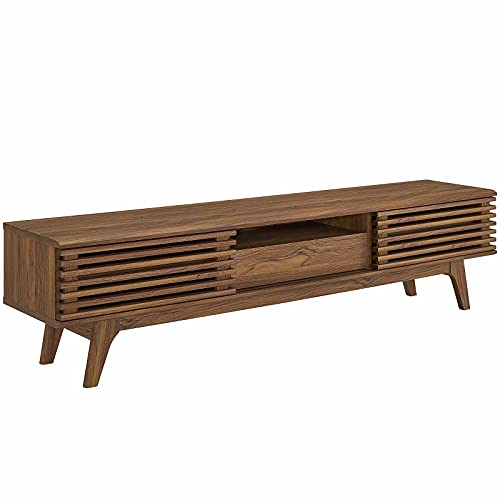
- Modway Render 70in Low Profile: Modway Render 70 Inch Mid-Century Modern Low Profile TV Stand, Walnut — Check on Amazon
- Walker Edison 70in Slatted Console: Walker Edison Modern Slatted Wood TV Stand, 70 Inch, Dark Walnut — Check on Amazon
- Nathan James Dylan 47in Cabinet: Nathan James Dylan Media Console Cabinet with Herringbone Doors, Oak and Matte Black — Check on Amazon
- Walker Edison 60in 3-Drawer Console: Walker Edison Mid-Century Modern TV Stand Console with 3 Drawers, 60 Inch, Walnut — Check on Amazon
- Bush Key West Tall 60in Stand: Bush Furniture Key West Tall TV Stand for 65 Inch TV, Linen White Oak — Check on Amazon
- Sauder Palladia Corner Console: Sauder Palladia Corner TV Stand Console, Vintage Oak — Check on Amazon
Disclosure: As an Amazon Associate, dailyhomedecorating.com earns from qualifying purchases. Links to Amazon on this page are affiliate links; they cost you nothing extra. Listing details such as price and availability change often, so check price on Amazon before you buy.
The best media console for modern homes under $700 is judged by a stricter standard than storage alone: in a modern room, the console is architecture. It sets the horizontal line of the wall, it decides whether the TV floats in a composed media arrangement or sits on an apology, and it either hides the entire apparatus of modern viewing — streamer, console, soundbar, router — or it fails the room. This guide selects six verified consoles for modern interiors and judges them on silhouette, texture, concealment and proportion, from the low slatted line of the Modway Render to the herringbone accent of the Nathan James Dylan.
Modern is not one style, so the guide covers its main dialects: minimal mid-century, textured contemporary, modern farmhouse and modern-traditional. Each review names the dialect it serves, because the most common modern-room mistake is buying a beautiful console from the wrong dialect and spending years wondering why the room does not settle.
No static prices are printed in this guide; every pick was researched inside the under $700 framing, and check price on Amazon will confirm the current figure for your chosen finish.
In this guide
Quick Picks: the best media console for modern homes under $700 shortlist
If you are short on time, start here. The table below summarises all six consoles in this guide, what each one does best, and who should look at it first. Every pick sits inside the under $700 framing of this guide at the time of research; because furniture pricing moves with finishes, sizes and promotions, always check price on Amazon on the exact finish you want before ordering.
| Pick | Best for | Width and TV fit | Storage style | Check |
|---|---|---|---|---|
| Modway Render 70in Low Profile | Best modern pick overall | 70 in, up to 70 in TVs | Slatted sliding doors with open shelving and cable routing | Check on Amazon |
| Walker Edison 70in Slatted Console | Best textured modern statement | 70 in, up to 80 in TVs | Storage cabinets and open shelves | Check on Amazon |
| Nathan James Dylan 47in Cabinet | Best modern accent for smaller rooms | 47 in, up to 50 in TVs | Push-to-open doors, adjustable shelves, three cord holes | Check on Amazon |
| Walker Edison 60in 3-Drawer Console | Best modern-classic crossover | 60 in, up to 65 in TVs | Three drawers plus closed cabinet storage | Check on Amazon |
| Bush Key West Tall 60in Stand | Best modern farmhouse interpretation | 60 in, up to 65 in TVs, 75 lb top capacity | Center cubby with cable cutout plus cabinet storage | Check on Amazon |
| Sauder Palladia Corner Console | Best for modern-traditional corners | corner profile, up to 60 in TVs | Adjustable shelves, two glide drawers, corner display shelves | Check on Amazon |
Two honest notes before the detail. First, width matters more than almost anything else: a console should be at least as wide as the TV above it, and ideally a few inches wider on each side, or the setup looks top-heavy and feels unstable. Second, none of these six is solid heirloom furniture; they are well-chosen flat-pack and ready-to-assemble consoles, which is exactly why a $700 ceiling buys so much at this level. Spend the savings on a soundbar, a proper surge protector and wall anchors rather than chasing a logo.
How the picks were chosen
Silhouette came first: low, horizontal, uninterrupted lines score highest, with sliding and push-to-open fronts favoured because they preserve the geometry. Texture came second — slats, herringbone and X-accents earn their place by adding depth without adding objects, which is the modern substitute for ornament.
Concealment was judged as a system: remote-friendly slatted doors, cord holes, enclosed backs and interiors that take a full modern setup — TV, soundbar, streamer, console, router — without a single visible cable from the seating position. Proportion was the final check: each pick states the TV sizes and wall widths where its scale reads intentional rather than accidental.
Detailed reviews: best media console for modern homes under $700 picks in depth
Modway Render 70 Inch Mid-Century Modern Low Profile TV Stand, Walnut
If the room is modern, start here. The Modway Render’s long, low 70-inch line, slatted sliding doors and walnut warmth deliver the exact silhouette contemporary interiors are built around: horizontal, calm, and free of visual clutter. The slats are not decoration for its own sake — they pass remote signals and air, so the modern look does not come at the cost of a functioning setup.
Under a 65 to 70 inch TV it reads as one composed media wall rather than furniture plus television. Keep the top disciplined — soundbar centred, one object each end at most — and it delivers the gallery effect modern rooms promise and so rarely achieve at this budget.
Living with the Render is about discipline rewarded: the sliding doors glide on their track with a fingertip, the slatted bays keep a streamer and console invisible yet responsive, and the low top becomes the calmest surface in the room if you defend its emptiness. Check your tallest component against the interior height before ordering, keep the soundbar centred, and the piece delivers the composed media wall its photographs promise. The walnut tone warms noticeably under evening light, and the long top ages gracefully because there is so little hardware on show to date it.
Who it suits: Modern and contemporary rooms with 65 to 70 inch TVs.
Pros
- Definitive low, horizontal modern silhouette
- Slatted doors hide gear without blocking remotes
- Generous top for a soundbar composition
Honest limitation: The low interior limits tall components; modern minimalism must extend to your gear list.
Choose it if the console is the room’s design anchor. Skip it if you need to house a tall receiver and a large component stack.
Check on Amazon — check price on Amazon for the current finish and delivery options.
Walker Edison Modern Slatted Wood TV Stand, 70 Inch, Dark Walnut
Modern rooms risk sterility; the Walker Edison slatted console in dark walnut is the antidote that stays inside the modern language. The slatted front adds rhythm and shadow, the dark finish grounds light walls and pale sofas, and at 70 inches wide for TVs up to 80 inches it scales to the big, flush screens modern rooms favour.
Open shelving keeps a curated object or two on display while cabinets hide the rest — the edited, intentional look modern styling depends on. It is the most architectural piece in this guide.
The slatted Walker Edison rewards owners who use its two storage types deliberately: open bays for the gear that breathes, closed cabinets for everything unsightly. Its dark walnut finish is the lowest-maintenance in this guide — dust shows late, marks show later — and its 70-inch span means it will anchor the room through the next TV upgrade as well as this one, provided the wall genuinely fits it. The slatted front also hides the minor scuffs of daily life better than any flat door, because the eye reads the rhythm of the slats rather than the surface between them.
Who it suits: Modern rooms needing texture and a darker anchor piece.
Pros
- Slatted texture adds architectural depth
- Scales to 80 inch TVs
- Dark walnut grounds bright modern schemes
Honest limitation: Needs a wide wall; on a short wall its scale reads heavy rather than architectural.
Choose it if your modern room feels flat and needs a focal texture. Skip it if your wall is narrow or your scheme is light and airy throughout.
Check on Amazon — check price on Amazon for the current finish and delivery options.
Nathan James Dylan Media Console Cabinet with Herringbone Doors, Oak and Matte Black
The Nathan James Dylan brings modern design to rooms the 70-inch consoles cannot enter. Its herringbone doors — a pattern with genuine design heritage — in oak and matte black make a 47-inch cabinet read as an accent piece, and the handle-free push-to-open front keeps the geometry uninterrupted.
For TVs up to 50 inches, it is the modern pick for studios, dens and bedrooms where the console must earn its place visually every day. Adjustable shelves and three cord holes keep the small setup as disciplined as the front promises.
The Dylan’s ownership pleasure is disproportionate to its size: the herringbone front draws compliments, the push-to-open doors keep the silhouette clean, and its modest footprint means it redeploys effortlessly — living room today, bedroom or entry cabinet in the next home. Treat it as the design piece it is, keep the gear list to its honest capacity, and it will be the last piece you consider replacing. Its scale also makes it the easiest pick here to move, deep-clean around, and rearrange on a whim, which in real homes is a feature used monthly.
Who it suits: Smaller modern rooms with TVs up to 50 inches.
Pros
- Herringbone front is a true design feature
- Handle-free, uninterrupted front
- Compact modern footprint
Honest limitation: Storage and TV capacity are both modest by design.
Choose it if you want modern character in a compact room. Skip it if your TV or gear has outgrown a 47-inch cabinet.
Check on Amazon — check price on Amazon for the current finish and delivery options.
Walker Edison Mid-Century Modern TV Stand Console with 3 Drawers, 60 Inch, Walnut
Mid-century modern is the bridge style of contemporary interiors, and the Walker Edison 60-inch three-drawer console is its most practical expression here: walnut, tapered lines, and — rare in design-led pieces — three genuinely useful drawers that keep the modern promise of clear surfaces actually achievable.
For TVs up to 65 inches, it suits modern rooms that are lived in rather than photographed: the cabinets hide the router and boxes, the drawers hide the rest, and the top stays as empty as the styling blogs insist it should be.
Long-term ownership of the three-drawer console centres on the drawers themselves: they are the component you will touch daily, so during assembly seat the runners carefully and evenly, and the drawers will glide for years; rush them and every drawer will remind you daily. The walnut laminate wipes clean, the cabinet bays fit standard component widths, and the 60-inch top leaves honest room at each end of a 65-inch TV for a speaker or a plant without crowding the screen. Owners consistently find the third drawer becomes the household’s unofficial headquarters — the place keys, chargers and the one good cable live — which is a compliment to the layout rather than an accident.
Who it suits: Modern rooms that need real storage behind the clean look.
Pros
- Drawers make clutter-free surfaces achievable
- Authentic mid-century walnut profile
- Closed cabinets for all the unlovely boxes
Honest limitation: Busier than the ultra-minimal picks; purist modern schemes may prefer the Render.
Choose it if you love modern lines but live a real life with stuff. Skip it if you want the lowest, most minimal silhouette available.
Check on Amazon — check price on Amazon for the current finish and delivery options.
Bush Furniture Key West Tall TV Stand for 65 Inch TV, Linen White Oak
Modern farmhouse is a modern style, and the Bush Key West is its representative here: a taller 60-inch body in Linen White Oak with X-pattern accents, supporting TVs up to 65 inches and 75 pounds. In a bright modern-farmhouse scheme — pale walls, black accents, natural textiles — it looks deliberate and current.
The taller cabinet also serves the modern preference for concealed everything: more volume behind doors than any low console here, with a centre cubby and cable cutout for the one device that must stay accessible.
The Key West asks one thing of its owner — respect the height. Check seated eye level before ordering, and in return it delivers the deepest enclosed storage in this guide, a bright finish that lifts the room, and tested, warranty-backed construction that shrugs off daily use. The centre cubby keeps the everyday player reachable while everything else lives behind doors. The linen-toned finish is also the most forgiving of bright rooms: it neither glares in sun nor darkens at night, and its X-pattern doors give the piece a crafted presence that flat fronts cannot match.
Who it suits: Modern farmhouse and bright contemporary-coastal rooms.
Pros
- Bright finish suits light modern schemes
- Most enclosed volume in the guide
- X-accents add crafted detail
Honest limitation: Its height raises the screen above the low line strict modern rooms prefer.
Choose it if your modern is farmhouse or coastal in flavour. Skip it if you are building a low, horizontal media wall.
Check on Amazon — check price on Amazon for the current finish and delivery options.
Sauder Palladia Corner TV Stand Console, Vintage Oak
Plenty of modern homes inherit an awkward corner, and the Sauder Palladia handles it with raised-panel doors and a Vintage Oak finish that leans traditional — yet in a modern-traditional scheme, with clean seating and restrained decor, that warmth is a feature, giving the room one crafted piece among the smooth ones.
Function stays current: adjustable shelves, glide drawers and an enclosed back with cord access for TVs up to 60 inches. Choose it when the architecture, not the trend cycle, is making the decision.
Owning the Palladia is owning a solved corner: the drawers take the media library, the adjustable shelves adapt as components change, and the display shelves quietly become the room’s photo ledge. Traditional finishes like Vintage Oak age gracefully in real homes, and the enclosed back keeps the corner — the place dust and cables conspire most — the easiest corner in the house to keep clean. It is also the pick most likely to be mistaken for a furniture-store piece rather than a flat-pack one, which in a traditional room is precisely the point.
Who it suits: Modern-traditional rooms where the TV must live in a corner.
Pros
- Solves corner architecture gracefully
- Warm traditional finish balances modern seating
- Complete storage: drawers, shelves, display space
Honest limitation: The traditional detailing will fight a strictly minimalist scheme.
Choose it if a corner dictates your layout. Skip it if your scheme is uncompromisingly minimal.
Check on Amazon — check price on Amazon for the current finish and delivery options.
Comparison table
| Console | Width | TV fit | Style | Storage |
|---|---|---|---|---|
| Modway Render 70in Low Profile | 70 in | up to 70 in TVs | Mid-century modern, low profile, walnut | Slatted sliding doors with open shelving and cable routing |
| Walker Edison 70in Slatted Console | 70 in | up to 80 in TVs | Modern slatted wood, dark walnut | Storage cabinets and open shelves |
| Nathan James Dylan 47in Cabinet | 47 in | up to 50 in TVs | Herringbone-pattern doors, oak and matte black | Push-to-open doors, adjustable shelves, three cord holes |
| Walker Edison 60in 3-Drawer Console | 60 in | up to 65 in TVs | Mid-century modern, walnut finish | Three drawers plus closed cabinet storage |
| Bush Key West Tall 60in Stand | 60 in | up to 65 in TVs, 75 lb top capacity | Modern farmhouse and coastal, X-pattern accents | Center cubby with cable cutout plus cabinet storage |
| Sauder Palladia Corner Console | corner profile | up to 60 in TVs | Traditional raised-panel doors, Vintage Oak finish | Adjustable shelves, two glide drawers, corner display shelves |
Read the table by constraint, not by taste. Start with the wall width you actually have, then the TV size you own today — not the one you might buy in three years — then the amount of gear that genuinely needs a home. The console that survives all three filters is almost always the right one, even if it was not your favourite photograph.
How to choose a media console for modern homes that fits your room
Compose the wall, do not just fill it. The console, the TV and the soundbar should read as one horizontal composition: TV centred on the console, soundbar centred under the TV, and negative space defended at both ends. Modern rooms are made by what you leave empty.
Measure the wall, the TV and the gear — in that order, with a tape, not an estimate. The console should be at least as wide as the TV and ideally a few inches wider each side; its depth must clear your deepest component plus cable bend room behind it; and its height should place the centre of the screen close to seated eye level, roughly 42 inches from the floor for most sofas.
Limit the palette on top of the console to the soundbar plus at most two objects, in materials already present in the room. Modern styling fails at the surface more often than at the furniture choice; the consoles above give you the storage to keep the top disciplined, so use it.
Think about heat honestly. Games consoles and AV receivers are small heaters. Open shelving, slatted doors and mesh-friendly fronts exist because closed solid doors trap heat and shorten component life. If your setup includes a current-generation console or a receiver, weight ventilation as heavily as storage in your final choice.
Finally, assemble where the console will live, level it, and anchor it if your household includes children or large pets. Flat-pack furniture rewards patience: sort the hardware, follow the sequence, and do not fully tighten until the frame is square. The hour you spend here decides whether the piece feels solid for a decade or wobbles from week one.
Common mistakes to avoid
Mistake zero for modern rooms: mixing dialects. A traditional raised-panel corner piece in a minimal room, or a stark low console in a warm farmhouse scheme, will nag at you daily. Name your dialect first, then shop inside it — this guide tags every pick.
Mistake two: trapping hot gear behind solid doors. If a console or receiver runs warm in an open rack, it will run hotter in a closed cabinet. Choose slatted, open or ventilated storage for heat-producing gear, or leave the door of that bay open during long sessions.
Mistake three: ignoring the soundbar. A soundbar needs width on top or a shelf of its own, and it must not be sealed inside a cabinet unless the doors are acoustically transparent. Measure the bar, then check the console top or centre shelf against it.
Mistake five: visible cables. One cable dropping behind a modern console undoes the entire effect. Route everything inside, use the cord holes provided, and add a cable raceway for the wall run to the TV if the screen is mounted.
What the under $700 budget buys a modern room
Modern rooms are unforgiving judges, which makes this budget interesting: below it, consoles look like what they cost, and the room’s composition fails at its base line. At under $700, the modern buyer gets the features the style actually runs on — long low spans, slatted doors that conceal without disconnecting, handle-free fronts, walnut and oak finishes with real grain presence — from brands that publish honest dimensions. What the tier does not buy is solid-wood slab construction or the furniture-house names; a modern room built at this level wins on proportion and discipline, not on provenance, and visitors will read the proportion long before they ask about the maker.
Allocate in modern order: silhouette first, concealment second, texture third. Silhouette is the wall’s architecture and cannot be accessorised into existence later. Concealment — the slats, cord holes and interiors that make cables vanish — is the difference between a modern room and a room with modern furniture in it. Texture is where personality enters, and it is the cheapest of the three to adjust over time with objects and textiles.
Hold back a little of the budget for the finishing layer the photographs never mention: the cable raceway for the wall run, the bias light behind the screen, the single object the console top is allowed to carry. Modern rooms are completed by those details, and a console bought at the top of the budget with nothing left for them will look unfinished next to a mid-budget console completed properly.
Delivery, warranty and returns — the modern-room notes
Wide modern consoles ship as long, heavy flat-packs, and the delivery deserves the same composition thinking as the wall: confirm the box dimensions against your door and hallway turns before ordering, clear the build space fully, and inspect every panel’s finish under your room’s actual light before assembly begins. Finish is the product in a modern room; a walnut tone that reads wrong under your lighting is a return decision to make on day one, while the window is wide and the panels are still in their film, not a compromise to style around for a decade.
The brands in this guide — Modway, Walker Edison, Nathan James, Sauder, Bush Furniture — all operate parts and support channels, and modern buyers should use them for the small things: a slatted door with a blemish, a runner that binds, a panel edge chipped in transit. A replacement panel preserves the composition; a tolerated flaw taxes it every evening. Keep the manual, with its model and part numbers, inside the console — the modern room’s zero-clutter rule applies to paperwork too, and inside the cabinet is where future-you will look.
And if the silhouette is wrong for the wall — too high, too narrow, the wrong dialect — return it inside the window and buy the right line. Modern rooms are built on a few large, correct decisions; a console that is almost right is the most expensive kind of wrong, because everything else in the room will be adjusted around it for years.
A note on soundbars and modern setups
One component deserves its own paragraph in a modern room: the soundbar. It is the only device that must live in the open, so its relationship with the console decides the wall’s success. On top, centred beneath the screen, it joins the composition; on a dedicated centre shelf behind a slatted door, it disappears while its sound passes through — the Render’s party trick, and the reason slatted fronts have moved from designer furniture into this budget. What never works is the bar sealed behind a solid door or squeezed onto a top too narrow for it, buzzing against the TV’s feet. Measure the bar before the console, confirm its home — top, open shelf or slatted bay — and the modern setup’s last visible problem disappears. The rest of the modern stack, streamer and console and router, asks only for air and a cable route, both of which the picks in this guide provide by design.
Final recommendation
The Modway Render is the modern default: if your room is contemporary and your TV is 65 inches or more, it is the console the room is asking for. Choose the slatted Walker Edison instead when the room needs darker texture, the Dylan when the room is small, and the Bush Key West when your modern is farmhouse. Modern rooms reward decisiveness — pick the dialect, then commit.
Our first call for most readers is the Modway Render 70in Low Profile — Check on Amazon. If that shape does not fit your room, the Walker Edison 70in Slatted Console (Check on Amazon) and the Nathan James Dylan 47in Cabinet (Check on Amazon) cover the next most common situations in this guide.
Styling the modern media wall
Build the composition in layers. The console is the base line; the TV, centred and — if mounted — hung so its lower edge sits just above the console top, is the second line; the soundbar, centred beneath the screen, is the third. When those three horizontals align, the wall reads as designed even before a single object is added. Break the alignment carelessly and no console, however good, will make the wall settle.
Then edit. Modern styling is subtraction with confidence: one sculptural object or a short stack of art books at one end of the console, nothing at the other, and the surface otherwise clear. If the room needs greenery, a single plant with architectural foliage outperforms a row of small pots. Let the console’s own texture — slats, herringbone, X-accents — do the decorative work it was designed to do.
Lighting finishes the wall. A bias light behind the TV or a low lamp at the room’s edge gives the composition depth after dark and is kinder to the eyes than the screen alone. Keep the light warm and indirect; the modern media wall should glow, never glare.
Setting up your media console properly
Unbox in the room where the console will live and inventory every panel and hardware bag against the parts list before a single screw turns. Flat-pack furniture punishes the discovery of a missing cam lock at step fourteen; five minutes of inventory at step zero is the cheapest insurance in the whole purchase. Build on carpet or the flattened box to protect the finish, keep a second person for any panel longer than your arm span, and resist the impact driver: hand-tighten first, square the frame, then snug everything in sequence.
Placement deserves the same care as assembly. Centre the console on the seating, not on the wall — rooms are rarely symmetrical, and the sofa is the reference point that matters every evening. Leave a working gap behind the cabinet for cable bend and airflow; a console pushed hard against the skirting crushes connectors and traps the warm air your gear is trying to shed. Once placed, level the piece: most floors slope more than you think, and a door that will not sit true is usually a floor problem wearing a furniture costume.
Wire the setup in a deliberate order: power strip first, placed where it can be reached without moving the cabinet; then the TV connection; then sources from largest to smallest. Label both ends of every cable with a strip of tape and a pen. It feels excessive on day one and feels genius on the day you swap a streamer in ninety seconds without pulling the console out. Coil surplus cable inside the cabinet, never behind it on the floor, where it becomes a dust farm and a trip line for the vacuum.
Finish with the safety pass. If the household includes children or large pets, fit the anti-tip anchor now, while the tools are out. Route the TV’s power so it cannot be pulled, check that no cable is pinched by a door or drawer, and run the hottest device — usually the games console — for an hour with the doors in their normal position, then feel the air inside the bay. Warm is fine; hot means rearrange for airflow before it becomes a reliability problem.
Materials, care and long-term ownership
Most consoles in this price band are engineered wood — MDF or particleboard — finished in laminate or veneer, and that is an honest construction at under $700 provided you treat it as furniture rather than as solid oak. The practical implications are simple: use coasters, wipe spills the day they happen rather than the week after, keep the piece out of sustained direct sun where finishes fade unevenly, and never drag a loaded console across the floor — lift it, or empty it first, because racking forces are what loosen flat-pack joints over time.
Day-to-day care is a microfibre cloth, slightly damp for sticky marks, and a strict no-abrasives rule on laminate finishes. Walnut-tone finishes forgive dust and minor marks; pale finishes like linen oak show less dust but more scuff, so a touch-up marker in a matching tone is a sensible drawer item in busy households. Slatted and herringbone fronts collect dust in their texture — a soft brush attachment on the vacuum keeps them honest in seconds.
Ownership economics favour this tier more than buyers expect. A console at this level that is assembled carefully, anchored, kept dry and not overloaded will serve a decade of ordinary use, and its cost per year undercuts both the disposable tier below it — replaced twice in the same period — and the designer tier above it, whose extra money buys material romance rather than extra function. When the room changes, these pieces also move rooms gracefully: today’s media console is tomorrow’s sideboard, entry cabinet or bedroom dresser-height storage, which is the quiet second life that makes a good under $700 buy a genuinely good one.
Finally, keep the assembly hardware. A small labelled bag with the spare cams, screws and the Allen key, taped inside a cabinet door, turns every future house move from a furniture risk into a twenty-minute job — and keeps a good console in service instead of in a skip.
Four modern rooms, four right answers
The minimal loft. Concrete, glass, one long wall: the Render’s low slatted line is the native furniture of this room. Keep the top to a soundbar and a single object, hide everything else behind the slats, and let the TV float in the composition. Any busier console — drawers with seams, traditional doors — will read as noise against the loft’s restraint.
The warm contemporary family room. Modern but lived-in: this room needs the Walker Edison three-drawer’s storage honesty inside a mid-century silhouette. It is the modern pick for households whose minimalism must survive contact with real possessions, and its walnut warmth keeps the contemporary palette from cooling into a showroom.
The design-led small room. A studio or den where every piece is visible and judged: the Dylan’s herringbone front carries the room’s design argument at compact scale. Pair it with one strong chair and a restrained rug and the media corner becomes the room’s most photographed angle rather than its apology.
The bright modern farmhouse. Pale walls, black accents, natural fibres: the Key West’s linen oak and X-doors are this room’s dialect spoken fluently, with the enclosed volume farmhouse family life requires. The error to avoid here is importing a dark walnut minimal piece that fights every other finish in the house — dialect consistency beats individual beauty.
Pre-purchase checklist
Run this checklist in order before ordering; in a modern room it doubles as a composition check, because proportion errors cannot be styled away afterwards.
One: measure the TV’s actual width and weight, not its advertised diagonal, and match both against the console’s stated capacity. Two: measure the wall run and mark it with painter’s tape at the console’s true width and height, then live with the tape for a day. Three: measure your deepest component and tallest component, and confirm the intended bay clears both with room for cables behind. Four: count power outlets within reach of the console’s position and confirm the power strip plan works without an extension lead crossing a walkway. Five: check the delivery path — door widths, hallway turns, stairs, lift size — against the box dimensions on the listing, because the best console in this guide is worthless if its box cannot reach the room.
Six: confirm the finish against your room in your light, using the listing’s room photographs rather than the studio shot; walnut reads darker in north-facing rooms and paler under warm evening bulbs. Seven: read the assembly requirement honestly — tools, time, second pair of hands — and schedule the build when you have all three. Eight: decide the anchor plan for the TV and console before the box arrives, not after the piece is loaded. Nine: photograph your current cable setup before dismantling it; the photograph is the fastest wiring diagram you will ever own. Ten: keep the receipt, the hardware spares and the instructions together inside the console itself, where future-you will actually find them.
None of this is glamorous, and all of it is the difference between the households who love their console for a decade and the households who list theirs for sale within the year. The furniture at this price is genuinely good; the outcomes differ on preparation, not on product.
FAQ
What makes a media console look modern?
A low horizontal silhouette, flat or slatted fronts without visible handles, concealed cables and gear, and a restrained finish — walnut, oak or matte tones. Proportion matters most: the console should be wider than the TV and low enough to keep the screen near seated eye level.
Are slatted TV consoles practical or just decorative?
Both. Slats pass remote signals and air to the gear inside while hiding it visually, which is why they appear on far more expensive AV furniture. They are the rare modern feature that improves function.
What TV size suits a 70 inch console?
A 70 inch console suits TVs from about 55 to 75 inches comfortably, and one pick in this guide is rated to 80 inches. Keep a few inches of console visible at each end of the TV for the composed look.
How do I hide a router and cables in a modern setup?
Place the router in a slatted or ventilated bay — never a sealed one — route power inside the cabinet, and use the console’s cord holes for the single run to the wall. From the sofa, the goal is zero visible cables.
Can modern farmhouse use a media console under $700?
Yes — the taller linen-oak pick in this guide is built for exactly that dialect, with X-pattern accents and the enclosed volume modern farmhouse rooms need. Check price on Amazon for the current finish options.
What colours pair with a walnut media console in a modern room?
Warm neutrals, matte black accents and one restrained colour — deep green, rust or ink blue — in textiles. Walnut is the warm anchor; keep surrounding finishes matte so the wood grain remains the room’s only gloss.
Is mid-century modern still a safe choice?
Yes — it is the most durable of the modern dialects because its proportions suit modern TVs and its walnut palette suits most rooms. The three-drawer pick in this guide is the practical expression of it, with storage most design-led pieces omit.
How long will a modern media console stay in style?
Low horizontal proportions and natural wood tones have outlasted several trend cycles already, because they are driven by the shape of modern TVs rather than by fashion. Choose the silhouette and finish that suit your room’s architecture, keep the surface editing disciplined, and a console from this guide should look current for the life of the furniture itself — which, assembled carefully and kept dry, is measured in decades rather than seasons.
Related guides
- Best Media Console Under $700
- Best Media Console For Modern Homes Under $300
- Best Media Console For Modern Homes Under $1000
- Best Media Console For Small Apartments Under $700
- Best Bookcase For Modern Homes Under $300
Browse those companion guides if your room needs more than a console: the right neighbours for a media wall are storage, seating and cable order, in that order.


