Where to buy
Check the latest price, availability and delivery on Amazon. Orders are placed on Amazon. We may earn a commission from qualifying purchases.
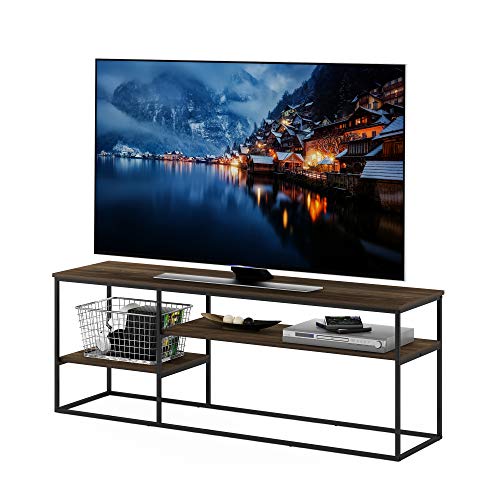
- Best overall for modern homes: Furinno Moretti 3-Tier Metal Frame TV Stand — Check on Amazon
- VASAGLE TV Stand for TV up to 70 Inches, 63-Inch 3-Tier Console — Check on Amazon
- Yaheetech TV Stand for TVs up to 65 Inch, 55-Inch Gray — Check on Amazon
- Furinno JAYA TV Stand for up to 55-Inch TV with Storage Bins — Check on Amazon
See 2 more Amazon options
- Furinno JAYA Simple Design Corner TV Stand — Check on Amazon
- Yaheetech Farmhouse TV Stand, 58-Inch with Sliding Barn Doors — Check on Amazon
Read the full guide ↓
Disclosure: As an Amazon Associate, dailyhomedecorating.com earns from qualifying purchases. Links to Amazon on this page are affiliate links; they cost you nothing extra. Listing details such as price and availability change often, so check the current Amazon listing before you buy.
The search for the best media console for modern homes under $150 runs into an immediate tension: modern interiors are defined by restraint — clean lines, negative space, nothing ornamental that does not earn its place — while a media console is, functionally, a storage unit for the least restrained objects in the house. Game consoles glow. Routers sprout antennas and status lights. Cables multiply. The modern room does not forgive any of it, which is why the console matters more in a contemporary scheme than in any other: it is the piece that decides whether the television wall reads as a composed plane of furniture or as an electronics bench that wandered in from a dorm room. Under $150 you will not find the floating walnut credenzas of the design magazines, and this guide will not pretend otherwise. What you will find, if you shop by line, proportion and finish rather than by product photography, are consoles whose frames are genuinely architectural, whose finishes sit inside a modern palette, and whose open or closed layouts can be made to disappear into a disciplined room.
Three design strategies work at this budget, and the picks below are organized around them. The first is the open frame: a metal skeleton with floating shelves, visually light, honest about its structure — the Moretti and the two industrial consoles in this guide take this route, and it is the most authentically modern of the three because it adds no visual mass the room did not ask for. The second is the low, long plane: a wide console that echoes the television’s own horizontal geometry, anchoring the wall with a single calm line, which is where the 63-inch VASAGLE earns its place in a contemporary room despite its rustic-adjacent finish options. The third is concealment: a closed cabinet that removes the equipment from the room’s visual field entirely. Our one cabinet pick is a farmhouse design, and we include it with an honest caveat — in a strictly modern interior it works only where the scheme already mixes warm, transitional elements; in a purist room it is the wrong dialect, and we say so in its review rather than selling it as something it is not.
Our short answer is this. Start with the Furinno Moretti: its black metal frame and walnut-tone shelves are the most design-literate combination in this tier, its open tiers keep a modern stack ventilated, and its price leaves room for the cable discipline that modern rooms demand. If your screen is large and the wall is long, the VASAGLE’s 63-inch plane is the proportion the room wants. If your palette runs cool and minimal, the gray Yaheetech is the finish that disappears best. The reviews below judge each console as design first and storage second — line, finish, proportion, visual weight — while keeping the engineer’s questions (width, load, heat) in view, because a beautiful console that cannot carry the television is not modern, merely decorative. Designers working to a tighter budget will find the same eye applied in Best Media Console Under $100, where narrower frames carry the modern brief for less.
In this guide
Quick Picks
In a hurry before a viewing or a delivery window? This table matches each console to the modern scheme it serves best.
| Buyer type | Pick | Why it stands out | Link |
|---|---|---|---|
| Best overall for modern homes | Furinno Moretti 3-Tier Metal Frame TV Stand | Black metal frame and walnut-tone shelves — the most architectural line in the tier | Check on Amazon |
| Best long, low plane | VASAGLE TV Stand for TV up to 70 Inches, 63-Inch 3-Tier Console | A 63-inch horizontal that echoes the screen’s geometry on long walls | Check on Amazon |
| Best cool minimal finish | Yaheetech TV Stand for TVs up to 65 Inch, 55-Inch Gray | Gray wood-and-metal that recedes in cool, neutral palettes | Check on Amazon |
| Best budget minimalism | Furinno JAYA TV Stand for up to 55-Inch TV with Storage Bins | Simple planes and hidden-bin storage for an uncluttered first modern room | Check on Amazon |
| Best for angled walls | Furinno JAYA Simple Design Corner TV Stand | Curved tiers that resolve an awkward corner without visual bulk | Check on Amazon |
| Best warm-transitional concealment | Yaheetech Farmhouse TV Stand, 58-Inch with Sliding Barn Doors | Total concealment for modern schemes that already mix warm wood elements | Check on Amazon |
How These Picks Were Chosen
Budget discipline came first, as it does in every guide in this series: each console is a genuine Amazon listing chosen to sit under $150 — check the current price on Amazon before you buy, because prices move, and the farmhouse cabinet’s street price drifts around this tier’s ceiling, which is one more reason it appears here as a conditional, warm-transitional option rather than a headline pick. Over that filter we laid design criteria that our general guide does not apply. Line: does the piece read as one deliberate gesture — a frame, a plane, a block — or as an accumulation of parts? Proportion: is it low and long relative to the screen it carries, as modern rooms prefer, or tall and narrow? Finish: does the color sit inside a contemporary palette of black, gray, walnut and white, and does it avoid the glossy, orange-toned faux woods that date a room on sight? Visual weight: how much of the wall does the piece occupy in the eye, which is not the same question as how much it occupies in inches.
We did not hands-on test these consoles. We compared manufacturer specifications — dimensions, television ratings, load limits, materials — and read them as a designer reads a plan. A steel frame is not merely stronger than tube joints; it draws a thinner, straighter line. A 63-inch top is not merely wider; it changes the wall’s composition, letting the console extend past the panel on both sides the way a credenza should. Open tiers are not merely ventilated; they create the shadow gaps and floating planes that modern furniture is built from, provided the equipment on them is arranged with the same discipline as the furniture. We also applied a finish honesty test: printed wood-tone surfaces in this tier are convincing at conversational distance and less so at inspection distance, and the reviews say which picks rely on that bargain and which — the metal frames — sidestep it by making the structure itself the finish.
The engineer’s filter still applied underneath the designer’s. A console whose claimed television size exceeds what its top width honestly supports was flagged in its review with the size we would stop at, because a panel overhanging its stand breaks the clean line the whole purchase was for. Load ratings were read per shelf, since a modern room’s stack — receiver, console, speaker — concentrates weight exactly where a styled photograph puts a vase. The result is a list that a modern homeowner can shop visually with confidence: every pick earns its place on line or finish, and none of them will embarrass the room by failing at the basic job. Readers extending the scheme along the same wall should see Best Bookshelf For Modern Homes Under $150, chosen with the same finish discipline.
The 6 Best Media Consoles for Modern Homes Under $150
Furinno Moretti 3-Tier Metal Frame TV Stand
Who it suits: Modern homeowners who want the console to read as architecture — an open black frame with warm shelves — and whose equipment stack benefits from being displayed neatly rather than hidden.
The Moretti is the pick that understands the assignment. Where most budget consoles imitate traditional furniture — panels, doors, moldings shrunk to a price — the Moretti is built the way modern furniture is actually built: a black metal frame doing the structural work in plain sight, three tiers of Columbia walnut-tone shelving suspended within it, nothing decorated, nothing disguised. The contrast is the design. Black steel against warm walnut is the material pairing that contemporary interiors return to again and again, from shelving systems to kitchen islands, because it reads simultaneously industrial and warm. In a modern living room the Moretti does not look like a compromise purchased under a ceiling; it looks like a choice. The line is sold for televisions up to 65 inches, and the open three-tier layout gives the stack the floating, separated planes that make equipment look curated rather than stored — soundbar on the top tier, console centered on the middle, the rest arranged with air around it.
Openness, in a modern room, is a discipline as much as a design. This frame rewards the owner who treats the shelves as composition: devices aligned, cables run straight down the rear uprights into a single covered strip, nothing on the shelves that does not belong to the system. Done that way, the Moretti’s tiers become part of the room’s order, and the frame’s genuine functional advantage — total airflow around consoles and receivers that run hot through long sessions — arrives as a by-product of the styling. The unit sits in the lower-middle of this guide’s budget — check the current price on Amazon — and frequently sells below its list price, which is remarkable for the most design-literate piece in the tier. It also disassembles into flat components, a virtue modern renters and frequent rearrangers will use more than they expect.
The honest caveats are about surfaces and exposure. The walnut tone is a printed finish over composite board: beautiful at the distance a room is experienced from, less rich under a fingertip or a raking light at close range. The metal frame is the real material here, and the design is wise to make it the protagonist. Exposure is the other condition — there is no door to close on a bad cable day, so the Moretti asks its owner to maintain the discipline it displays. If your household cannot keep that discipline, buy concealment instead and accept the farmhouse dialect, or choose the gray Yaheetech and arrange it with the same rigor. For the modern room that can hold its line, this is the console the budget was waiting for.
- Black metal frame with walnut-tone tiers — the contemporary material pairing, honestly expressed.
- Open tiers create floating planes and give hot equipment total airflow.
- Visually light: a long console that does not block the wall it stands against.
Honest limitation: The wood tone is a printed finish that rewards distance, and the open design displays whatever cable discipline — or its absence — the household maintains.
Choose it if your room runs modern or industrial and your stack can be arranged as composition. Skip it if you need the equipment to disappear behind doors.
VASAGLE TV Stand for TV up to 70 Inches, 63-Inch 3-Tier Console
Who it suits: Modern rooms with long walls and large screens — buyers who need the low, wide plane that anchors a contemporary television wall and the width to carry a 65- to 70-inch panel properly.
Proportion is the VASAGLE’s design argument. Modern television walls succeed or fail on one relationship: the console must be wider than the screen, extending past the panel on both sides so the composition reads as furniture carrying a screen, not a screen overwhelming a stand. At 63 inches long, 15.4 deep and a low 20.5 high, this is the only console in the guide that delivers that relationship for a 65-inch television — a panel roughly 57 inches wide — with margin to spare, and the listing rates it for sets up to 70 inches. The silhouette is a single horizontal gesture, three open tiers deep, carried on a steel frame with particleboard shelves. In the greige and black finishes the line offers, the effect is calm and architectural; the open tiers create the shadow lines that keep a wide piece from reading as a solid block.
Function follows the same logic. The full-length tiers let a modern stack arrange itself in a single visual register — soundbar centered under the screen, console and streaming gear spaced along the middle tier, the router and library below — and the open backs keep air moving around all of it. The steel frame is the construction we prefer at this price, and here it also serves the design: the frame’s uprights are slim, so the piece’s visual weight stays low even at 63 inches. It sits at the upper end of this guide’s budget — check the current price on Amazon — which in design terms buys the one thing modern rooms cannot fake: correct proportion at large scale.
Two cautions, one aesthetic and one practical. Aesthetically, the rustic-brown finish option pulls the piece toward industrial-farmhouse; in a strict modern scheme choose the darker or greige direction and let accessories stay minimal, because the styling of the shelves will decide which dialect the console speaks. Practically, 63 inches is a commitment: on a short wall it consumes the composition entirely, leaving no negative space, and negative space is the material modern rooms are made of. Measure the wall, subtract the breathing room, and if the remainder is under about five and a half feet, the 55-inch Yaheetech below is the more modern choice precisely because it is smaller.
- 63-inch low plane rated for TVs up to 70 inches — correct console-to-screen proportion at large scale.
- Steel frame keeps the visual weight low; open tiers draw shadow lines instead of mass.
- Full-length shelves arrange the whole stack in one calm register.
Honest limitation: The rustic finish options lean industrial-farmhouse, and the width eliminates negative space on short walls — modern rooms need that space.
Choose it if your wall is long, your screen is 65 inches or more, and you choose a finish in the cool register. Skip it if your wall is short or your scheme is strictly minimalist.
Yaheetech TV Stand for TVs up to 65 Inch, 55-Inch Gray
Who it suits: Cool-palette modern rooms — white walls, gray upholstery, black accents — where the console should recede into the scheme and let the screen and one or two objects carry the wall.
Gray is the hardest-working color in contemporary interiors, and this console is the guide’s gray specialist. The finish sits between the black of the frame and the pale wood tones of Scandinavian schemes, which means it can disappear into either a cool minimal room or warm a monochrome one without introducing a new color the scheme then has to answer. The design is the industrial formula — wood-effect shelves on a metal frame — but in gray the industrial reads as urban rather than rustic, a meaningful dialect difference: the same construction that looks farmhouse in walnut looks loft-modern in gray. At 55 inches long, 14 deep and 24 high, the proportions are a touch taller and narrower than the classic low credenza, which suits modern rooms where the sofa is high-backed and the screen wants lifting toward eye level.
That 24-inch height deserves a design note, because it cuts both ways in a modern scheme. Purist modern rooms keep the television wall low and horizontal, and against that doctrine this console stands slightly proud. In practice, most real modern rooms are compromises with viewing comfort, and a screen centered near seated eye level looks intentional where a too-low screen looks apologetic. The open shelves keep the stack ventilated and visible-as-composition, the frame’s lines are straight and unornamented, and the whole piece sits in the middle of this guide’s budget — check the current price on Amazon — making it the value route to a coherent cool scheme.
The engineering flag from our other guides applies unchanged: the listing rates this console for TVs up to 65 inches, but a 65-inch panel is roughly 57 inches wide, wider than this 55-inch top, so the panel would overhang and the feet could land near the edges — a broken line as well as a narrow margin. For modern rooms the honest pairing is a 55-inch television, where the console extends just past the panel and the composition closes properly. Run a 65-inch screen? Take the VASAGLE’s width or wall-mount the panel above this console, which in a modern room is often the cleanest solution of all: the console becomes a true credenza, the screen floats, and the wall achieves the gallery flatness the scheme wants.
- Gray finish recedes into cool, neutral palettes where walnut would argue.
- Industrial frame reads loft-modern in gray; straight, unornamented lines.
- 24-inch height centers the screen for higher modern sofas.
Honest limitation: A 65-inch panel overhangs the 55-inch top, breaking the proportion modern rooms are bought for; the height is also prouder than purist low-line doctrine prefers.
Choose it if your scheme is cool and your TV is 55 inches. Skip it if your screen is 65 inches and staying on the console rather than the wall.
Furinno JAYA TV Stand for up to 55-Inch TV with Storage Bins
Who it suits: First modern rooms and minimalist budgets — buyers who want simple planes, nothing ornamental, and clutter removed from sight, at the lowest price in this guide.
Minimalism on a budget usually fails at the storage: the room is composed, the lines are clean, and then daily life — remotes, controllers, chargers, mail — colonizes every surface because the furniture gave it nowhere else to go. The JAYA’s answer is disarmingly simple, and it is why a tool-free budget stand earns a place in a design guide. The form itself is pure plane and post: composite-wood shelves on twist-together tubes, no molding, no hardware theater, a silhouette that reads as a low modern bench. Into that frame slide two removable fabric bins, and the bins do the minimalist’s real work — every small object in the room’s media life disappears into them, leaving the shelves to hold only the equipment, arranged in a row. A modern room is not a room with fewer things; it is a room where the things are not visible. This console, alone in the guide at its price, builds that invisibility in.
The proportions suit smaller modern rooms: the large configuration measures 47.63 inches wide by 15.55 deep by 22.79 high, rated for televisions up to 55 inches, light enough to reposition as the room’s composition evolves, and assembled by hand in about ten minutes — a genuinely modern virtue in an era of cam-lock frustration. The rounded corners soften the piece’s geometry slightly away from strict modernism, but in practice they read as a humane detail rather than a style error, and families crossing over from our family guide will find the same stand waiting there with a different brief. It sits at the budget end of this guide — check the current price on Amazon — and the money it saves is best spent on the elements that make budget minimalism convincing: a covered cable strip, one good object for the top, and nothing else.
The limits are the budget limits, and a design audience should hear them clearly. The tube-and-panel construction will not deliver the inert, solid feel of a framed cabinet; a hand leaned on the top knows the difference. Load ratings are modest and per-shelf discipline applies. The finish is printed, and the bins — practical as they are — are fabric, which in a strict scheme should be treated as a texture choice and kept in the darker colorways. None of this displaces the JAYA as the budget route to a composed modern wall; it defines the maintenance the composition requires.
- Plane-and-post silhouette with two bins that remove daily clutter from sight.
- Tool-free assembly and a light frame that rearranges as the room evolves.
- The lowest price in the guide — budget left for the details that sell minimalism.
Honest limitation: Tube construction lacks solid-furniture heft, loads are modest, and fabric bins are a texture commitment in a strict scheme.
Choose it if minimalism and budget lead, and your TV is 55 inches or under. Skip it if you want the console itself to feel like a substantial object.
Furinno JAYA Simple Design Corner TV Stand
Who it suits: Modern rooms with an unresolved corner — open-plan spaces, studio layouts and L-shaped seating — where a diagonal screen placement solves the geometry and a curved, light stand keeps it elegant.
Modern floor plans create corner problems that traditional furniture never had to solve: open-plan rooms where the seating floats, studios where the television must share a wall with a desk and a dining table, conversions where the only honest screen position is diagonal. A corner stand in a modern room sounds like a contradiction — corners are where modernism’s straight lines go to be embarrassed — but the JAYA corner design resolves it with curves instead of bulk. Its angled sides push into a 90-degree corner, the shelves curve at the front, and at 42.04 inches wide by 15.55 deep by 22.75 high, rated for TVs up to 46 inches with a 35-pound top load, it occupies the corner the way a plant does: as a soft, low presence rather than a piece of case goods. In a room short on walls, that restraint is the design.
The diagonal placement itself is often the modern answer. It can turn the screen toward an L-shaped sectional more honestly than any flat-wall position, free the main wall for art or shelving — the composition most open-plan rooms are actually trying to achieve — and solve glare where windows face the only straight wall. The four open tiers take a simple stack without visual weight, the tool-free build assembles in minutes, and at under 30 pounds the stand can be tried in both corners before the room decides. It sits at the budget end of this guide — check the current price on Amazon — which is correct for what is, in most modern homes, a secondary placement rather than the main wall.
Limits, plainly: 46 inches caps the screen, 35 pounds caps the top load, and a corner placement commits the room’s sight lines to the diagonal — liberating where seating agrees, awkward where it does not. Cable access behind a corner unit is a reach, so plan the strip’s position at the side before the stand goes in. And anchor it; corners tempt owners to skip the strap, and modern rooms with children or large dogs need it as much as any other. Within its brief, though, this is the pick that lets a modern room stop apologizing for its corner.
- Curved, angled design resolves corners without visual bulk.
- Frees the main wall for art or shelving — the open-plan composition win.
- Light, tool-free and repositionable while the layout is still being decided.
Honest limitation: The 46-inch screen and 35-pound top limits are firm, and diagonal placement must match the seating or it fights the room daily.
Choose it if your modern layout is open-plan, angled or wall-poor. Skip it if the main wall is free and the screen is large — the room deserves the long plane instead.
Yaheetech Farmhouse TV Stand, 58-Inch with Sliding Barn Doors
Who it suits: Warm-modern and transitional homes — schemes that already mix contemporary lines with natural wood and texture — where total concealment of the equipment matters more than stylistic purity.
We include this cabinet in a modern guide with its dialect labeled, because for a large family of real modern homes it is the right answer. Not every contemporary room is a gallery of black and white: the warm-modern interior — oak floors, linen upholstery, a walnut table, plants — is the dominant modern dialect in actual houses, and in that dialect a wood cabinet with sliding doors does not break the scheme; it completes it, adding the one thing open frames cannot offer, which is a television wall that can stop being a television wall. Slide the barn doors across the 58-inch front and the equipment, the cables and the status lights vanish; the room becomes a room again. At 58 long, 16 deep and 28 high, with adjustable shelves behind the doors and a rating for TVs up to 65 inches, it is also the most capable concealment in this tier.
The modern case for it is really a case about visual silence. Open consoles, however disciplined, keep the equipment in the room’s conversation. This cabinet ends the conversation. For households that host, that work from the living room, or that simply tire of looking at a router, that silence is a design feature worth more than a purist line. It sits at the top of this guide’s budget when the live price cooperates — check the current price on Amazon, because this model’s street price drifts around the tier’s ceiling, and it belongs in an under-$150 guide only while the listing sits under it.
Now the honesty a modern buyer deserves. In a strict modern interior — monochrome, minimal, architectural — this cabinet’s barn-door hardware and farmhouse paneling speak the wrong language, and no styling will fully translate them; the Moretti exists for that room. The doors also trap heat, so a hard-working console needs a door left open during long sessions, and the 28-inch height is taller than modern doctrine prefers, lifting the screen above the low line — check it against your sofa’s eye level before committing. Choose it as what it is: the warm-modern concealment pick, excellent in its dialect, wrong in another.
- Total concealment: sliding doors remove the entire stack from the room’s visual field.
- Warm wood front completes warm-modern and transitional schemes.
- Adjustable shelves and a 65-inch rating — the most capable cabinet in the tier.
Honest limitation: Farmhouse detailing is the wrong dialect for strict modern interiors, doors trap heat, and the live price moves around this tier’s ceiling.
Choose it if your modern scheme runs warm and you want the gear gone from view. Skip it if your room is monochrome-minimal — the Moretti speaks your language.
Comparison Table
| Product | Type | Best use | Link |
|---|---|---|---|
| Furinno Moretti 3-Tier | Open metal-frame stand | Architectural frame for modern and industrial rooms | Check on Amazon |
| VASAGLE 63-Inch 3-Tier Console | Open steel-frame console | The long, low plane for large screens | Check on Amazon |
| Yaheetech 55-Inch Gray Console | Open industrial console | Cool-palette rooms with 55-inch TVs | Check on Amazon |
| Furinno JAYA 55-Inch with Bins | Open tool-free stand | Budget minimalism with hidden clutter | Check on Amazon |
| Furinno JAYA Corner Stand | Corner stand | Open-plan and angled layouts | Check on Amazon |
| Yaheetech 58-Inch Farmhouse Cabinet | Closed barn-door cabinet | Warm-modern concealment | Check on Amazon |
How to Choose the Best Media Console for Modern Homes Under $150
- Buy the proportion before the piece. The console should extend past the television on both sides — ideally by several inches per side — so the wall reads as furniture carrying a screen. A 55-inch panel wants a top around 55 to 63 inches; a 65-inch panel wants 63 inches or a wall mount. A console narrower than its screen fails the modern brief no matter how it is styled.
- Choose your strategy: display, plane or conceal. Open frames display a disciplined stack as composition. Long low consoles create a single calm plane. Closed cabinets remove the equipment from view entirely. Modern rooms succeed when the strategy is chosen deliberately and executed completely — a half-hidden, half-displayed wall satisfies no one.
- Keep the finish inside the palette. Black metal, gray, walnut tones and white are the contemporary registers in this tier. Glossy orange-brown faux woods and ornate hardware date a room instantly. When in doubt, let the frame be black and the shelves be quiet.
- Defend negative space. Measure the wall, then deliberately leave some of it empty. A console that consumes the entire wall leaves the room nowhere to breathe, and in modern interiors the empty wall is a design element, not a missed opportunity.
- Make cables part of the design brief. Run every cable straight down the rear of the unit into one covered strip, align devices on their shelves, and leave no loop visible from the seating. In an open modern console, cable work is not housekeeping; it is half the product.
- Watch the height doctrine — then break it knowingly if needed. Modern rooms prefer low and long, but the screen’s center should still meet seated eye level, roughly 42 to 48 inches from the floor. A slightly taller console that centers the picture looks more intentional than a doctrinaire low one that leaves viewers looking down.
- Respect the engineering under the styling. Per-shelf load ratings, top width versus foot span, and ventilation for hot consoles apply in modern rooms exactly as elsewhere. A sagging shelf or a cooked game console is the least modern outcome available.
- Anchor it, invisibly. A wall strap disappears behind the unit and preserves both the line and the household’s safety. Modern rooms with children or large pets need it as much as any other — minimalism is not an exemption from physics.
- Style the top with restraint. The soundbar, one object, and air. Every additional item on a modern console should have to argue for its place, and most should lose the argument. Buyers extending the same discipline to compact modern rooms will find it applied at smaller scale in Best Media Console For Small Spaces Under $150.
Styling the Television Wall: A Modern Room Checklist
The console is half the wall; the other half is what you do around it, so run this checklist once the furniture is in. First, alignment: center the screen on the console and the console on the wall’s visual center — which is not always the wall’s measured center once doors and windows take their share. A modern composition tolerates asymmetry only when it is obviously deliberate, so make small misalignments impossible rather than arguable. Second, the vertical gap: if the television sits on the console, the space between the screen’s lower edge and the top surface should hold only the soundbar; if the panel is wall-mounted above the console, a hand’s breadth of gap reads intentional, while a foot of gap reads like a mistake. Third, light: a modern media wall benefits from one indirect light source — a lamp to the side, never a reflection source opposite the screen — and the console’s open shelves should not be asked to host decorative lighting that competes with the picture.
Fourth, the shelf edit. Arrange the stack once, photograph it, and remove one thing; modern rooms are edited, not accumulated, and the photograph shows you the clutter your eye has learned to skip. Fifth, the floor line: keep the floor in front of the console clear to the rug’s edge, because the long horizontal reads only when nothing interrupts its base. Sixth, revisit seasonally. Modern interiors drift — a plant grows into the composition, a new device arrives with a white cable in a black scheme — and a ten-minute edit twice a year keeps the wall at the standard the console was bought to set. Homeowners composing the whole room rather than the one wall will find the companion discipline in Best Media Console Under $150, where the same consoles are judged on size and value without the design brief.
Common Buying Mistakes
- Buying a console narrower than the screen. The overhang breaks the proportion the entire purchase was for — and leaves the TV’s feet near the edges.
- Choosing farmhouse or traditional detailing for a strict modern room. Dialects matter: barn doors in a monochrome interior will argue with the room every day.
- Filling every shelf. Open modern consoles are compositions, and compositions need empty space between objects. Leave a shelf partly bare on purpose.
- Ignoring cables because the console “looks clean in photos.” Listing photos hide the cable nest that real equipment creates. Your room will not, unless you plan the runs.
- Letting the console consume the whole wall. No negative space, no modern room — however good the furniture is.
- Picking a glossy, orange-toned finish. It is the single fastest way to date a contemporary scheme, and this tier is full of it if you shop by thumbnail alone.
- Forgetting heat in the name of concealment. A closed cabinet with a hard-working console inside needs a ventilation plan, not just a door.
- Skipping the anchor for the sake of the line. The strap hides behind the unit. The line survives; so does the household.
Final Recommendation
- Most modern homes: Furinno Moretti 3-Tier Metal Frame TV Stand.
- Long walls, large screens: VASAGLE TV Stand for TV up to 70 Inches, 63-Inch 3-Tier Console.
- Cool, minimal palettes: Yaheetech TV Stand for TVs up to 65 Inch, 55-Inch Gray.
- Budget minimalism: Furinno JAYA TV Stand for up to 55-Inch TV with Storage Bins.
- Open-plan corners: Furinno JAYA Simple Design Corner TV Stand.
- Warm-modern concealment: Yaheetech Farmhouse TV Stand, 58-Inch with Sliding Barn Doors.
Our top two for modern homes are the Moretti — the one pick in this tier whose structure is itself the design, a black frame and warm shelves that would hold their own in rooms furnished at three times the budget — and the VASAGLE, for the large-screen modern wall where proportion is the whole game and 63 inches of low plane is the correct answer. The gray Yaheetech owns the cool palette, the JAYA proves minimalism is a storage strategy before it is a price point, the corner JAYA rescues open-plan geometry, and the farmhouse cabinet serves the warm-modern majority who want the equipment gone from view — in its own dialect, honestly labeled. Measure the panel, defend the negative space, plan the cables as design, check the live price, and the wall will compose itself.
Frequently Asked Questions
What style of media console suits a modern home best?
Open metal-frame consoles and long, low credenza-style planes suit modern homes best, because both read as single deliberate gestures — structure or plane — rather than decorated boxes. In this tier, a black steel frame with quiet wood-tone shelves is the most reliable modern combination, with gray finishes for cool palettes. Closed cabinets suit warm-modern and transitional schemes when concealment matters more than line.
Should the media console be wider than the TV?
Yes. A console that extends a few inches past the panel on each side creates the composed, furniture-first look modern rooms aim for, and it guarantees the TV’s feet sit on the top with margin. A console narrower than the screen looks overwhelmed and can leave feet near the edges. For a 65-inch TV, that means a top of about 63 inches or more — or wall-mounting the panel above a smaller console.
How do I hide cables in a modern living room?
Run every cable vertically down the back of the console, bundle them together, and collect power bricks in a single covered strip positioned behind or inside the unit. Keep device cables short, align equipment on its shelves, and avoid any loop visible from the seating. In an open-frame console this discipline is the design; in a closed cabinet, the doors do the work but you still need the strip placed where cords can reach it.
Can a farmhouse console work in a modern home?
In warm-modern and transitional interiors, yes — schemes with oak floors, linen, plants and natural wood already speak a mixed dialect, and a wood cabinet’s concealment can complete them. In strict modern rooms — monochrome, minimal, architectural — farmhouse detailing such as barn-door hardware reads as the wrong language, and an open frame or low plane is the honest choice.
Is it better to wall-mount the TV or stand it on the console?
Wall-mounting gives the flattest, most gallery-like wall and frees the console to act as a pure credenza, which many modern rooms prefer. Standing the TV on the console is simpler, renter-friendly, and keeps the screen at a height most consoles are designed around. Either works in a modern scheme; what matters is the proportion between panel and console and a deliberate gap — or none — between them.
How do I keep an open console looking tidy?
Edit it like a composition: one device per visual zone, cables run straight down the back, nothing on the shelves that is not part of the system or a single deliberate object. Photograph the wall, remove one item, and repeat the edit each season. Open consoles look tidy in homes that treat tidiness as maintenance, not as a one-time arrangement.


