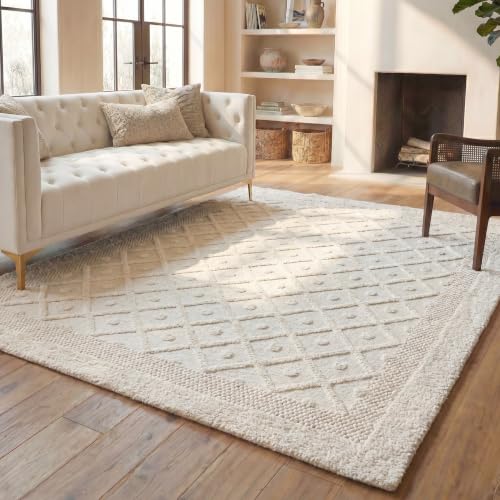
Where to buy
Check the latest price, availability and delivery on Amazon. Orders are placed on Amazon. We may earn a commission from qualifying purchases.
- Best overall: SAFAVIEH Kenya Collection KNY952A Area Rug, 8′ x 10′, Ivory — Check on Amazon
- SAFAVIEH Abstract ABT468M, Ivory & Blue, 8′ x 10′ — Check on Amazon
- SAFAVIEH Natura NAT620C, Silver, 8′ x 10′ — Check on Amazon
- SAFAVIEH Chelsea HK230B, Ivory & Light Green, 8′ x 10′ — Check on Amazon
- Loloi II Layla LAY-03, Olive/Charcoal, 7’6″ x 9’6″ — Check on Amazon
- SAFAVIEH Heritage HG625A, Red, 8′ x 10′ — Check on Amazon
Read the full guide ↓
Disclosure: As an Amazon Associate, dailyhomedecorating.com earns from qualifying purchases. Links to Amazon on this page are affiliate links; they cost you nothing extra. Listing details such as price and availability change often, so check the current Amazon listing before you buy.
Finding the best living room rug under $700 is really a question about what this budget unlocks that the tiers below it cannot. In the 8×10 ft size class — the size most living rooms actually need, including the 7’6″ x 9’6″ cuts makers sell as their 8×10 — a budget under $700 is the first tier where hand-knotted wool appears at all, where hand-tufted and hand-hooked wool stop being small-size bargains and become full-size rugs, and where the choice stops being “which compromise hurts least” and becomes “which kind of real rug do you want.” Every pick in this guide was checked in that 8×10-class size on Amazon.com in the United States, and every pick fits inside the budget in that size — check price on Amazon for the current figure on your exact size and colorway, because rug pricing moves by size more than by almost anything else.
The honest headline of this tier is that you should not spend the whole budget just because it is there. Five of the six rugs below sit comfortably inside the ceiling, and the money is best spent on fiber and construction you can verify in the maker’s own specifications: natural wool instead of a printed imitation of wool, a hand-finished pile instead of a power-loomed one, a design from a collection with a long sales history instead of a label invented last season. Our first choice for most rooms is the hand-knotted Kenya KNY952A, because hand-knotting is the construction this budget tier exists to make possible. If your room wants pattern and color, the handmade Abstract ABT468M spends the same money on design impact. And if your household’s honest priority is a rug that shrugs off traffic and never sheds, the one synthetic pick in this guide — the Loloi Layla — will outlast your patience with wool’s early shedding phase. Below you will find a quick picks table, detailed notes on all six rugs, a comparison table, a sizing and buying checklist, an honest account of what this budget does and does not buy, the mistakes shoppers make at this price, and answers to the questions that come up again and again.
In this guide
Quick Picks
Short on time, or comparing several options at once? Each row below names a buyer type and the rug that suits it, with a link to the listing. All picks were checked on the 8×10 ft size class — check price on Amazon for the current figure.
| Buyer type | Pick | Why it stands out | Link |
|---|---|---|---|
| Best overall | SAFAVIEH Kenya KNY952A, Ivory, 8′ x 10′ | Hand-knotted wool in the full 8×10 size — the construction this budget exists to buy; check price on Amazon | Check on Amazon |
| Best modern wool | SAFAVIEH Abstract ABT468M, Ivory & Blue, 8′ x 10′ | Handmade wool abstract that behaves like art for the floor, at a mid-tier positioning in this guide | Check on Amazon |
| Best textured wool | SAFAVIEH Natura NAT620C, Silver, 8′ x 10′ | Chunky knotted wool-and-cotton texture you can feel from across the room | Check on Amazon |
| Best French country wool | SAFAVIEH Chelsea HK230B, Ivory & Light Green, 8′ x 10′ | Hand-hooked wool in a soft French country palette, with real weight in the hand | Check on Amazon |
| Best designer look for the money | Loloi II Layla LAY-03, Olive/Charcoal, 7’6″ x 9’6″ | The famous vintage print in the 8×10 class for a fraction of the budget | Check on Amazon |
| Best traditional wool | SAFAVIEH Heritage HG625A, Red, 8′ x 10′ | Hand-tufted wool medallion for formal, traditional rooms | Check on Amazon |
How These Picks Were Chosen
The first filter was the budget, applied to one fixed size so the comparison means something. Rug prices are meaningless without a size attached — the same design can cost far less in a 5×7 ft than in an 8×10 ft — so every pick below was checked in the 8×10 ft class: a true 8′ x 10′ where the maker cuts one, or the nearest equivalent cut (7’6″ x 9’6″ for the Loloi Layla) where it does not. Every pick fits inside the under-$700 budget in that size. Where a maker’s larger 9×12 ft size breaks the budget — which, for the wool picks, it often does — we say so in the review rather than let an 8×10 figure pose as a whole-range figure.
The second filter was fiber and construction, verified rather than advertised. This tier is where listings start using the word “wool” loosely — wool-look, wool-feel, wool-blend with the blend doing heavy lifting — so we read the material fields in the maker specifications, not the headline adjectives. The result is a guide that is honest about its own composition: five picks are genuine wool rugs (hand-knotted, hand-tufted, hand-hooked or chunky-knotted, as listed per pick), and one pick is a synthetic included deliberately, not accidentally — the Layla, whose printed polyester surface is the trade-off behind its designer pattern at a lower positioning in this tier. If a listing in your own searching claims wool at a suspiciously synthetic price, check the specifications tab before you believe it; in this research, that one habit separated real wool from wool-flavored marketing more reliably than any brand name.
We did not test these rugs in our own homes. We read the maker listings and specification pages, compared fibers, constructions, pile heights and backings, cross-checked listings against retailer offers, and favored rugs where the money buys something you can point at. Headline claims in this category — “luxury,” “heirloom quality,” “designer” — were ignored unless the specifications backed them with a fiber, a construction and a weight. One more filter mattered at this tier: we excluded any design whose 8×10 size could not be verified as a real, orderable listing, however attractive the smaller sizes looked.
Best Living Room Rug Under $700: Our 6 Picks in Detail
The six reviews below follow the same order as the quick picks table. Each one states who the rug suits, what the specifications actually say, where the rug is honestly weak, and the simplest choose-or-skip test we can give you.
1. SAFAVIEH Kenya KNY952A, Ivory, 8′ x 10′ — Best overall
Best for: Most living rooms that want the best construction this budget can buy, in a calm ivory palette that works under almost any sofa color.
SAFAVIEH Kenya Collection KNY952A Area Rug, 8′ x 10′, Ivory is hand-knotted in a 90% wool and 10% cotton blend, with a high pile and a Moroccan boho trellis design in undyed natural ivory tones. That specification is the whole argument. Hand-knotting is the slowest, most labor-intensive way to build a rug, and in the 8×10 class it normally lives well above this budget; finding it verified inside the under-$700 tier, in a full living-room size, is exactly what this price point is for. The high pile gives it a soft, rustic depth that flat power-loomed rugs cannot imitate, and the undyed natural tones mean the color you see is the color of the wool itself, which ages gracefully instead of fading unevenly.
In a room, this is the rug for a seating group that gets used barefoot: a sofa and two chairs on a high-pile natural surface feels like a deliberate, finished room rather than a furnished one. Pair it with a proper rug pad — hand-knotted rugs have no latex back to grip the floor, and a pad adds the cushion the construction assumes. Expect the trellis pattern to read as texture from a distance and as pattern up close, which makes it forgiving of both plain sofas and patterned cushions.
- Hand-knotted construction — the premium build this tier exists to unlock
- 90% wool pile with natural, undyed ivory tones
- High pile that feels genuinely soft underfoot
Day to day: living with this rug comes down to its verified build — a 8′ x 10′ rug in 90% wool, 10% cotton, constructed as hand-knotted, with high pile over cotton component in the weave. In a full-size living room that means the surface has to hold its looks across a whole seating group, not just under one chair, and its care rhythm has to fit a room that is used every single day rather than admired on weekends. In the 8′ x 10′ size checked for this guide it sits inside the under-$700 framing with room to spare for a pad — check price on Amazon for the current figure on your colorway.
Honest limitation: Hand-knotted wool sheds in its first months and needs gentle vacuuming without a beater bar; the light ivory color also shows dark pet hair and spills more honestly than a patterned rug would.
Choose it if you want one rug, bought once, with the best construction in this guide and a palette that will outlive your next sofa. Skip it if your household needs a hose-it-off or machine-washable surface, or your room has heavy dark-pet traffic on a light rug.
2. SAFAVIEH Abstract ABT468M, Ivory & Blue, 8′ x 10′ — Best modern wool
Best for: Modern and transitional rooms that want a real wool rug whose pattern does the decorating work.
SAFAVIEH Abstract Collection ABT468M Area Rug, 8′ x 10′, Ivory & Blue is handmade from premium wool fibers with a textured abstract design in ivory and blue. Abstract designs are where handmade wool earns its keep in a modern room: the pattern is in the pile itself, tufted in colored wool, not printed on top of a flat synthetic surface, so it keeps its depth under raking window light and does not look flat from the sofa. The ivory-and-blue palette is the useful kind of modern — cool enough to feel current, warm enough in the ivory ground to sit with wood floors and leather.
Use it as the room’s one big gesture. With a pattern this active, plain upholstery and a quiet coffee table let the rug carry the design, and the blue tones pick up everything from navy cushions to pale denim and grey sofas. Wool’s natural resilience also suits a modern open-plan space where the same rug takes dining-chair traffic at one end and sofa traffic at the other, and a pad underneath will keep the hand-tufted pile from creeping on hard floors.
- Real handmade wool with the pattern worked into the pile
- Modern abstract design in a versatile ivory-and-blue palette
- Wool resilience for open-plan, multi-use rooms
Day to day: living with this rug comes down to its verified build — a 8′ x 10′ rug in wool, constructed as handmade (hand-tufted), with medium pile over cotton-style cloth backing typical of the collection. In a full-size living room that means the surface has to hold its looks across a whole seating group, not just under one chair, and its care rhythm has to fit a room that is used every single day rather than admired on weekends. In the 8′ x 10′ size checked for this guide it sits inside the under-$700 framing with room to spare for a pad — check price on Amazon for the current figure on your colorway.
Honest limitation: Hand-tufted wool sheds early on, and the light ivory ground will show red-wine and coffee accidents more than a busy traditional pattern would; spot-clean promptly and keep a wool-safe cleaner at home.
Choose it if your room is mostly plain furniture waiting for one strong design element, and you want it in real wool. Skip it if you need a rug that hides spills by pattern density — the Heritage medallion below hides far more.
3. SAFAVIEH Natura NAT620C, Silver, 8′ x 10′ — Best textured wool
Best for: Rooms that want texture more than pattern — Scandinavian, coastal and calm contemporary spaces.
SAFAVIEH Natura Collection NAT620C Area Rug, 8′ x 10′, Silver is handmade from an 80% wool and 20% cotton blend, with chunky knotted yarns that create a raised, textured surface. The Natura’s appeal is physical rather than pictorial. The chunky knotted yarns create a raised, almost hand-woven landscape across the whole surface, so the rug changes with the light during the day and feels substantial underfoot despite its low overall pile. The 80/20 wool-and-cotton blend is the honest construction behind that texture: wool for resilience and warmth, cotton giving the knots their structure.
This is the rug we would put under a low, plain sofa in a room with good windows, where a printed pattern would fight the view and a flat rug would disappear. The silver-grey tone sits comfortably with pale oak, white walls and black metal accents alike. Because the texture is the design, it also hides footprints and vacuum marks less than a cut pile does — the surface always looks slightly alive, which is either its charm or your annoyance, depending on temperament.
- Chunky hand-knotted texture no printed rug can copy
- Wool-and-cotton blend with a calm silver palette
- Low pile that clears doors and sits well under furniture
Day to day: living with this rug comes down to its verified build — a 8′ x 10′ rug in 80% wool, 20% cotton, constructed as handmade, chunky knotted yarns, with low pile with raised texture over cotton blend in the weave. In a full-size living room that means the surface has to hold its looks across a whole seating group, not just under one chair, and its care rhythm has to fit a room that is used every single day rather than admired on weekends. In the 8′ x 10′ size checked for this guide it sits inside the under-$700 framing with room to spare for a pad — check price on Amazon for the current figure on your colorway.
Honest limitation: Raised chunky knots can catch pet claws and are harder to vacuum deeply than a flat pile; crumbs settle into the texture and need a thorough suction-only clean.
Choose it if you decorate with texture — linen, oak, stone, wool throws — and want the rug to join that material story. Skip it if you have a cat that kneads rugs, or you want a surface a robot vacuum can cross without drama.
4. SAFAVIEH Chelsea HK230B, Ivory & Light Green, 8′ x 10′ — Best French country wool
Best for: Traditional, French country and cottage-style rooms that want soft color and a genuinely hand-made feel.
SAFAVIEH Chelsea Collection HK230B Area Rug, 8′ x 10′, Ivory & Light Green is hand-hooked from premium wool fibers in a French country design, weighing about 45 pounds in this size, with a low pile. Hand-hooking pulls loops of wool through a backing rather than knotting or tufting them, which gives the Chelsea its slightly informal, homey surface and its clear, soft-edged floral motifs. At about 45 pounds in this size it has the settled, stay-put weight you expect from a wool rug, and the ivory-and-light-green palette is the gentle end of traditional — it brightens a room instead of darkening it the way deep-red Orientals do.
Put it where a room leans classic but not formal: a painted-wood coffee table, linen upholstery, a fireplace, plants. The low pile keeps chair legs and door swings easy, and wool’s natural soil resistance is a quiet advantage in a pale rug — dirt sits on the fiber rather than soaking in, so regular vacuuming keeps it fresher than a pale synthetic of similar color. A pad is still recommended, both for grip and to protect the hooked loops from friction against hard floors.
- Hand-hooked wool with soft French country florals
- Low pile that suits doors, chairs and casters
- Real wool weight — about 45 pounds in 8×10
Day to day: living with this rug comes down to its verified build — a 8′ x 10′ rug in wool, constructed as hand-hooked, with low pile over cloth backing typical of hand-hooked construction. In a full-size living room that means the surface has to hold its looks across a whole seating group, not just under one chair, and its care rhythm has to fit a room that is used every single day rather than admired on weekends. In the 8′ x 10′ size checked for this guide it sits inside the under-$700 framing with room to spare for a pad — check price on Amazon for the current figure on your colorway.
Honest limitation: Hooked loops can snag if a pet digs or a vacuum beater bar grabs them, and the pale palette is not the choice for muddy-boot entry paths through the living room.
Choose it if your style runs cottage, country or soft traditional and you want real wool without a formal medallion. Skip it if you need a deep, saturated traditional anchor — that is the Heritage pick below.
5. Loloi II Layla LAY-03, Olive/Charcoal, 7’6″ x 9’6″ — Best designer look for the money
Best for: Anyone who wants the designer vintage look, zero shedding and easy care, and is happy to trade natural fiber for it.

Loloi II Layla Collection LAY-03 Area Rug, 7’6″ x 9’6″, Olive/Charcoal is power-loomed and printed in 100% polyester with a 0.13-inch pile, a canvas back, and a vintage-inspired Oriental pattern; the maker lists it as durable, shed-resistant and stain-resistant, with spot-clean-only care. The Layla is the most famous printed rug in this market for a reason: the distressed Olive/Charcoal pattern photographs like an antique and costs, in this size, a fraction of this guide’s budget. Be clear about what it is — a flat, printed polyester surface, 0.13 inches thin, on a canvas back. There is no pile to sink into. What you get instead is a rug that never sheds, resists stains, lets chairs and robot vacuums glide, and can be spot-cleaned without ceremony.
In this guide it plays two roles. For some households it is simply the right answer: dogs, toddlers, rental timelines and dining-adjacent living rooms all punish wool and reward this. For others it is the sensible placeholder — the rug you live on for two years while you decide whether the room deserves the hand-knotted budget. Either way, budget for a good felt pad underneath; at this thinness the pad, not the rug, provides whatever cushion you feel.
- Vintage designer pattern at the lowest positioning in this guide
- Non-shedding, stain-resistant and spot-clean easy
- Ultra-low pile that suits doors, casters and robot vacuums
Day to day: living with this rug comes down to its verified build — a 7’6″ x 9’6″ rug in polyester, constructed as machine made, printed, flat woven, with 0.13-inch pile over canvas. In a full-size living room that means the surface has to hold its looks across a whole seating group, not just under one chair, and its care rhythm has to fit a room that is used every single day rather than admired on weekends. In the 7’6″ x 9’6″ size checked for this guide it sits inside the under-$700 framing with room to spare for a pad — check price on Amazon for the current figure on your colorway.
Honest limitation: It is a printed flat surface, not a pile rug: no wool warmth, no cushion of its own, and up close the pattern is visibly printed rather than woven.
Choose it if easy care and the vintage look matter more to you than natural fiber, or you want to leave most of the budget unspent. Skip it if you came to this tier specifically for real wool — four of the other five picks give you exactly that.
6. SAFAVIEH Heritage HG625A, Red, 8′ x 10′ — Best traditional wool
Best for: Formal and traditional living rooms that want a classic Oriental medallion in real wool.
SAFAVIEH Heritage Collection HG625A Area Rug, 8′ x 10′, Red is hand-tufted from natural wool with a durable cotton backing, in a traditional Oriental medallion design using time-honored dyeing techniques. The Heritage is the traditional counterpart to the Abstract: where that rug is modern gesture, this one is structure — a central medallion, a defined border, and the deep red ground that has anchored formal rooms for generations. Hand-tufted wool with a cotton backing gives it a medium pile with real density, and natural-dye character means slight color variation is part of the rug, not a defect in it.
A busy, deep pattern is also the most practical camouflage in this guide: crumbs, pet hair and the small accidents of a used room disappear into it between vacuums, which is why traditional patterns survived centuries of real households. It suits wood furniture, leather, brass and bookshelves, and it can make a plain new-build living room feel established overnight. Give it a pad, rotate it twice a year for even light, and vacuum on suction or with the beater bar raised.
- Hand-tufted wool in a classic medallion layout
- Deep, busy pattern that hides everyday soil better than any pick here
- Medium pile with a dense, formal feel
Day to day: living with this rug comes down to its verified build — a 8′ x 10′ rug in wool, constructed as handmade, hand-tufted, with medium pile over durable cotton backing. In a full-size living room that means the surface has to hold its looks across a whole seating group, not just under one chair, and its care rhythm has to fit a room that is used every single day rather than admired on weekends. In the 8′ x 10′ size checked for this guide it sits inside the under-$700 framing with room to spare for a pad — check price on Amazon for the current figure on your colorway.
Honest limitation: The traditional red palette is a commitment — it will steer your room’s colors for years — and hand-tufted wool sheds during its first season.
Choose it if you want the room to feel established and formal, and you value soil-hiding pattern as a practical feature. Skip it if your decor is pale, minimal or Scandinavian — the Natura above is your wool instead.
Comparison Table
Side by side, the six picks divide cleanly: five wool rugs in four different hand constructions, and one printed synthetic. Pile and backing explain most of the living-with-it differences.
| Pick | Size checked | Material | Construction | Pile | Backing |
|---|---|---|---|---|---|
| SAFAVIEH Kenya KNY952A, Ivory, 8′ x 10′ | 8′ x 10′ | 90% wool, 10% cotton | Hand-knotted | High pile | Cotton component in the weave |
| SAFAVIEH Abstract ABT468M, Ivory & Blue, 8′ x 10′ | 8′ x 10′ | Wool | Handmade (hand-tufted) | Medium pile | Cotton-style cloth backing typical of the collection |
| SAFAVIEH Natura NAT620C, Silver, 8′ x 10′ | 8′ x 10′ | 80% wool, 20% cotton | Handmade, chunky knotted yarns | Low pile with raised texture | Cotton blend in the weave |
| SAFAVIEH Chelsea HK230B, Ivory & Light Green, 8′ x 10′ | 8′ x 10′ | Wool | Hand-hooked | Low pile | Cloth backing typical of hand-hooked construction |
| Loloi II Layla LAY-03, Olive/Charcoal, 7’6″ x 9’6″ | 7’6″ x 9’6″ | Polyester | Machine made, printed, flat woven | 0.13-inch pile | Canvas |
| SAFAVIEH Heritage HG625A, Red, 8′ x 10′ | 8′ x 10′ | Wool | Handmade, hand-tufted | Medium pile | Durable cotton backing |
How to Choose a Living Room Rug Under $700
Start with size, and be honest about your room
Measure your seating group, not your room. In most living rooms the working rule is front-legs-on: the rug should extend under the front legs of the sofa and chairs, which for a typical three-seat sofa means an 8×10 ft. If your seating group needs a 9×12 ft to sit fully on the rug, know that at this budget the wool picks generally step over the ceiling in that size while the synthetic pick does not — that trade-off, size versus fiber, is the central decision of this tier. Do not solve it by buying a wool 5×7 that floats in the middle of the floor; a too-small rug is the one mistake no fiber quality can rescue.
Spend on construction you can verify
At this budget the hierarchy that matters is hand-knotted, then hand-tufted or hand-hooked, then power-loomed — not because machines make bad rugs, but because hand construction in wool is what the extra money buys. Verify it in the specifications: look for the material field to say wool (or a stated wool blend), a construction field that names the hand process, and a weight that makes sense — a wool 8×10 in this guide runs roughly 36 to 52 pounds. A listing that says “wool look” with a polypropylene material field is a synthetic rug wearing wool’s clothes.
Match pile to your traffic, not your taste alone
High pile feels luxurious and suits quiet, barefoot rooms — and traps more dirt, dents under furniture and challenges robot vacuums. Low and medium piles are the working surfaces of family living rooms. In this guide the Kenya is the high-pile choice, the Heritage and Abstract sit in the middle, and the Natura, Chelsea and Layla live at the low end. If your living room is also a hallway, a playroom or a dining room, choose from the low end of that list no matter which look you prefer in photos.
Budget for the pad, and count it as part of the rug
None of these rugs should go straight onto hard flooring. A felt or felt-and-rubber pad stops slipping, adds the cushion thin rugs lack, protects both the rug’s backing and your floor finish, and measurably extends a wool rug’s life by absorbing friction. It is a modest extra cost next to this budget, and skipping it is the most common way buyers undercut a good rug. On carpet, use a carpet-to-carpet pad instead, or the rug will creep and bunch.
Decide your spill policy before you buy
Wool is naturally soil-resistant and forgiving of dry dirt, but it wants prompt blotting and wool-safe cleaners, and it sheds early. Printed synthetics tolerate almost any cleaner and never shed, but feel flat. Neither is “better” — they are different contracts with your household. If your living room hosts red wine, toddlers with cups or a dog who owns the sofa, sign the synthetic contract without guilt. If your room is calmer and you want a rug that improves with age, sign the wool one.
What $700 Buys — and What It Still Does Not
It helps to name the boundaries of this tier plainly. Under $700 in the 8×10 class buys genuine hand construction in wool — including, at the top of the tier, hand-knotted work like the Kenya in this guide. It buys real natural fiber, real weight and designs from established collections with long production histories. For most living rooms, this is the last tier where each step up buys something you can feel with your feet.
It does not buy everything. A large hand-knotted wool rug in a 9×12 ft from the best-known makers still lives above this ceiling, and genuinely antique or high-knot-count pieces live far above it. It also does not buy silk, or the very finest highland wools, in a full living-room size. Anyone who implies otherwise is usually quoting a smaller size, a blend with the natural fiber in the minority, or a printed imitation. Read the size and the material field, in that order, and this tier becomes remarkably honest.
Finally, this budget buys choice of palette in real wool — modern abstract, soft country floral, deep traditional red, natural undyed ivory — rather than the two-or-three safe neutrals that dominate the cheapest wool tiers. That, as much as construction, is what the money is for: a rug that is a design decision, not just a floor covering that happened to fit.
Will an 8×10 Actually Fit Your Room?
Stand in your doorway and look at the seating group, not the walls. An 8×10 works when it can sit under the front legs of the sofa and both chairs (or the sofa and a loveseat) while leaving a border of floor — ideally a roughly even border — between its edges and the walls or the next zone. In an open-plan room that border is what turns a rug into a room-within-a-room; in a closed room it is what stops the rug reading as wall-to-wall carpet that shrank. If your tape measure says the seating group plus border needs more than an 8×10 offers, the honest options at this budget are the synthetic pick in a larger size or a re-arranged seating group — not a wool rug stretched by wishful thinking.
Depth matters as much as footprint. A rug that reaches the sofa’s front legs but stops a foot short of the coffee table’s far side creates a visual stutter every time you cross the room. Lay newspaper or painter’s tape at the full 8×10 outline and live with it for an evening: walk the traffic paths, open every door that swings over the area, pull the dining chairs out if the zones touch. The outline test, done honestly, prevents the most expensive sentence in rug buying — “it looked bigger online” — and it costs one evening and a roll of tape.
One more proportion rule for this tier: the larger the rug, the calmer its pattern should be, unless it is deliberately the room’s artwork. At 8×10 a bold abstract is a wall’s worth of pattern lying down, which is why this guide pairs its loudest design with the plainest recommended styling, and why the quiet Natura and Chelsea exist for rooms whose walls already carry art, shelves and a television’s black rectangle.
Care and Ownership: The First Year With a Wool Rug
Month one is the shedding month, and it frightens more buyers than any other phase. Loose fiber worked free by tufting, hooking or knotting rises to the surface and fills the vacuum; the rug looks, briefly, like it is coming apart. It is not — it is settling. Vacuum on suction or with the beater bar raised, resist the urge to over-vacuum in a panic, and by the end of the season the loose fiber is gone and what remains is the rug you actually bought. The printed synthetic in this guide skips this phase entirely, which is a legitimate reason some households choose it.
Across the first year, two habits do most of the preserving. Rotate the rug a half-turn twice a year so that window light and the household’s traffic lanes share their work across the whole surface instead of engraving one corner. And keep the spill kit boring and ready: clean cloths, a wool-safe cleaner for the wool picks, and the discipline to blot rather than rub. Wool forgives dry dirt almost indefinitely — it sits on the fiber and vacuums away — but a rubbed-in liquid stain is a permanent signature, and no construction at any price repeals that.
By year two a good wool rug in this tier should look better than the day it arrived: the pile settles, the colors mellow a fraction, and the surface takes on the slight polish of a used, loved textile. That trajectory — improving with age instead of merely surviving it — is what the budget buys over the tiers below, and it is why the final review of any rug in this guide should happen in your head at month twelve, not at unboxing.
Common Buying Mistakes
Buying the size on sale instead of the size the room needs
Rug listings lead with their smallest, cheapest size, and the 8×10 figure is the one that must fit your budget. Shoppers regularly fall for a design at a small-size price, then either overspend at checkout or downsize to a 5×7 that leaves their sofa legs stranded on bare floor. Fix your size first, from your furniture measurements, and only compare designs whose price in that size fits the tier.
Believing the word “wool” in a headline
Wool-look, wool-feel and wool-style are marketing phrases, not materials. The material field in the specifications is the contract: it will say wool, a percentage blend, or a synthetic name. In this tier especially, where real wool is genuinely available, accepting a wool-flavored synthetic at a wool price is the most expensive mistake on this page.
Skipping the pad to stay under budget
The pad is not an accessory; it is half the system. Without it, hand-made rugs creep, thin rugs feel thinner, backings abrade against hard floors and the whole rug ages faster. If the total of rug plus pad breaks your ceiling, step down one design within this guide rather than deleting the pad.
Judging a wool rug in its first two weeks
New wool sheds. Loose surface fiber from the shearing and tufting process works its way out with vacuuming and foot traffic, and a new hand-made rug can fill a vacuum canister alarmingly often at first. That is the construction settling, not failing. Judge shedding at three months, not at ten days — and vacuum gently, on suction or with the beater bar at its highest setting, while you wait.
Putting a pale rug on a dark-pet, high-traffic path
Fiber cannot repeal contrast. An ivory rug under a black dog’s favorite route will look dirty between every clean, however good the wool is. Match the rug’s value — light or dark — and its pattern density to your household’s actual soil, the way the Heritage’s busy medallion does, and the rug will look good on ordinary weeks, not just on cleaning day.
Final Recommendation
For most readers, the Kenya KNY952A is the rug this budget was made for: hand-knotted wool, a full 8×10, and a natural ivory palette that will survive several furniture changes. Start with the SAFAVIEH Kenya KNY952A, Ivory, 8′ x 10′ if you want the safest single answer in this guide.
The Abstract ABT468M is the pick if your room needs pattern and color more than it needs ultimate construction — handmade wool with genuine design presence. If that first pick does not match your room, the SAFAVIEH Abstract ABT468M, Ivory & Blue, 8′ x 10′ is the alternative we would shortlist next.
If you read these six reviews and feel torn between the wool picks, choose by pattern density and pile against your household’s traffic, not by small differences in positioning within the tier. Every wool rug here is a legitimate use of the budget; the Layla is the legitimate refusal of it, for households whose lives are harder on rugs than wool wants to be. Buy the size your furniture measured, add the pad, and check price on Amazon for the current figure on your exact colorway before you order.
Frequently Asked Questions
Is $700 enough for a real wool rug in 8×10?
Yes — in the current market this is the tier where genuine wool in the full 8×10 class becomes normal rather than exceptional, including hand-tufted, hand-hooked and, at the top of the tier, hand-knotted constructions. Verify with the material field and the rug’s weight, and check price on Amazon for your exact size, because the same design in 9×12 will usually step over this budget.
What size living room rug should I buy?
For most seating groups, an 8×10 ft that reaches under the front legs of the sofa and chairs is the right working size, and it is the size class this guide is priced on. Smaller rooms and apartment seating groups can work with a 5×7-class rug under the coffee table and front legs only. Measure your furniture arrangement first; the rug serves the seating group, not the room’s full footprint.
Do wool rugs shed forever?
No. Hand-made wool rugs shed loose surface fiber for their first weeks to months, and the amount falls steadily with gentle vacuuming. A rug that still sheds heavily after a season of regular use is unusual. Low-pile and hooked constructions settle fastest; high piles take longest.
Hand-knotted, hand-tufted or power-loomed — does it matter?
It matters for longevity, feel and price, in that order of certainty. Hand-knotted rugs are the most durable and repairable construction and the slowest to make. Hand-tufted rugs deliver most of the wool feel for less, with a glued backing that has a finite life. Power-loomed synthetics are the easiest to clean and the least natural underfoot. This guide contains all three because different households honestly need different ones.
Can I put an 8×10 wool rug on hardwood without a pad?
You can, but you should not. A pad prevents slipping, protects the floor finish from the rug’s backing, protects the backing from abrasion, and adds cushion. For hand-knotted rugs, which have no grip of their own, a pad is effectively mandatory for safety on hard floors.
How do I clean a wool living room rug day to day?
Vacuum regularly with suction only, or with the beater bar raised to its highest setting. Blot spills immediately with a clean cloth — never rub — and use a cleaner labelled safe for wool. Rotate the rug a couple of times a year so light and traffic wear it evenly, and arrange a professional wool clean when the colors start to look tired rather than dirty.
Related Guides
If your budget or your room size points you at a neighbouring tier, these guides in the same series use the same fixed-size checking method.


