Where to buy
Check the latest price, availability and delivery on Amazon. Orders are placed on Amazon. We may earn a commission from qualifying purchases.
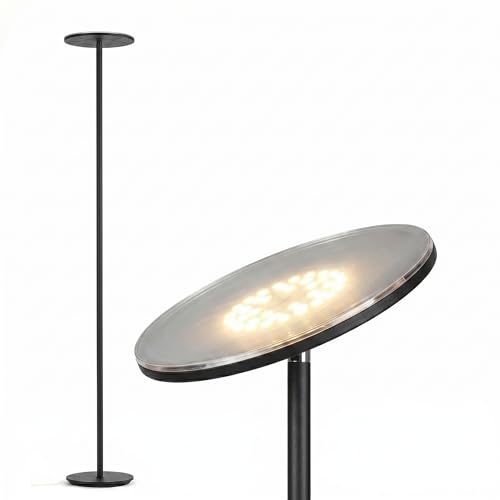
- Best overall for small spaces: Brightech Sky LED Torchiere Floor Lamp — Check on Amazon
- Brightech Litespan Slim LED Floor Reading Lamp — Check on Amazon
- addlon 4-Tier Floor Lamp with Shelves and 3CCT Bulb — Check on Amazon
- SUNMORY 32W LED Torchiere Floor Lamp with Remote — Check on Amazon
See 2 more Amazon options
- BoostArea 30W Dimmable LED Torchiere Floor Lamp — Check on Amazon
- LEPOWER Wood Tripod Floor Lamp with Linen Shade — Check on Amazon
Read the full guide ↓
Disclosure: As an Amazon Associate, dailyhomedecorating.com earns from qualifying purchases. Links to Amazon on this page are affiliate links; they cost you nothing extra. Listing details such as price and availability change often, so check the current Amazon listing before you buy.
The best floor lamp for small spaces under $100 is not a small lamp. That is the first and most useful thing to understand, because the products marketed as miniature usually solve the wrong problem: they occupy slightly less floor while delivering far less light, and a small space — a box bedroom, a dorm room, a reading nook under the stairs, the little den that is also the guest room — needs its light more, not less, precisely because there is no room for a second lamp to fix the first one’s weakness. The right question is not “how small is the lamp?” but “how much light, control and function does each inch of footprint return?” Judged that way, the winners are slim columns that wash the ceiling, a gooseneck that turns one chair into a lit workstation, and one shelf lamp whose footprint comes back to you as storage.
Six lamps earn their inches here. The Brightech Sky leads for its combination of a corner-hugging slim base, warm ceiling-bounced light and a memory dimmer — the default choice for a small bedroom or den. The Brightech Litespan Slim is the nook specialist, sliding into gaps other lamps cannot use. The addlon shelf lamp is the storage answer for dorms and small bedrooms where the floor is already full. The SUNMORY and BoostArea torchieres bring full-size output — 3,000 lumens each — to small rooms that are also dark rooms, with the BoostArea adding the widest color range for spaces that work double duty. And the LEPOWER tripod closes the list as the deliberate exception: the widest footprint here, worth its inches only where a small space has one true corner and wants it beautiful. Below: quick picks, full reviews, a comparison table, a small-space measuring checklist, the mistakes that shrink rooms further, and the questions small-space buyers ask most.
In this guide
Quick Picks
Short on time, or comparing several options at once? Each row below names a small-space situation and the product that suits it, with a link to the listing.
| Small-space situation | Pick | Why it stands out | Link |
|---|---|---|---|
| Best overall for small spaces | Brightech Sky LED Torchiere Floor Lamp | Slim corner column, warm ceiling wash, memory dimmer — light without visual bulk | Check on Amazon |
| Best for nooks and gaps | Brightech Litespan Slim LED Floor Reading Lamp | A weighted slim base that uses the inches beside a chair; 2,000 aimed lumens | Check on Amazon |
| Best where storage is scarce | addlon 4-Tier Floor Lamp with Shelves | Four shelves in the lamp’s footprint — the dorm and box-room consolidator | Check on Amazon |
| Best for dark small rooms | SUNMORY 32W LED Torchiere Floor Lamp with Remote | 3,000 lumens from a slim stance, run by remote from the bed or desk | Check on Amazon |
| Best double-duty den | BoostArea 30W Dimmable LED Torchiere Floor Lamp | Stepless 2700K–6500K turns a small den from office to evening room | Check on Amazon |
| Best one beautiful corner | LEPOWER Wood Tripod Floor Lamp | Rubberwood and linen for the small room that has exactly one display corner | Check on Amazon |
How These Picks Were Chosen
Every pick is a real Amazon listing in the under-$100 tier — check the current price on Amazon before you buy, because prices move — but the small-space filters did the real sorting. First, footprint efficiency: we compared what each lamp’s base actually occupies and favors slim discs that slide into corners or partly under furniture, plus one shelf design whose footprint returns as storage. Second, light direction: small rooms punish glare, because every seat is close to the lamp, so ceiling-bounced and shaded light ranked above bare brightness, and output was judged per room size — 2,000-plus lumens is generous in a 100-square-foot room in a way it is not in a great room. Third, reach of control: in a small space the lamp is often behind the bed, the desk or the door, so remotes, foot switches and memory functions counted for more than they would in a spacious house.
We did not use these products ourselves. We read maker listings, specification tables and user manuals, compared stated heights, base styles and control types, and flagged vagueness in the reviews where a listing withheld a dimension — in a small space, an unlisted base diameter is not a detail, it is the decision. We also excluded the category’s tempting junk: the stubby “mini” lamps whose output cannot light the rooms they are marketed for, and any design whose stability story collapsed under its own height. What remains is a list where every lamp returns more than its footprint costs.
A note on scope: this guide covers small rooms anywhere — bedrooms, dorms, dens, nooks, nurseries, home-office corners. If your small space is specifically a small apartment, with a whole home’s functions compressed into one or two rooms, the companion guide Best Floor Lamp For Small Apartments Under $100 re-sorts the same landscape by whole-home logic, and Best Arc Floor Lamp For Small Rooms Under $100 covers the arc-lamp alternative for tight seating corners.
The 6 Best Floor Lamps for Small Spaces Under $100
Brightech Sky LED Torchiere Floor Lamp
Who it suits: Small bedrooms, dens and guest rooms that need one dependable main light — warm, even, and visually almost absent.
The Sky is the small-space default because it understands the two scarcities of a small room: floor and calm. Its floor claim is a slim pole on a flat base that slides into the corner or partly under a bed frame or sofa — the dead zones of a small room’s plan. Its calm claim is the light itself: 2,190 lumens of warm 3000K fired at the ceiling, returning as an even wash with no bright object at eye level. In a small room every lamp is close to every seat, and a shaded bulb glaring from four feet away tires eyes and shrinks the room’s feel; the Sky’s bounce does the opposite, pushing the light to the room’s largest surface and making the space read at its full size. The head pivots if the wash needs aiming away from a screen.
The 3-way dimmer steps down for evening, and the memory function — the lamp wakes at its last brightness — is worth more in a small bedroom than anywhere: the same lamp is the morning light, the reading light and the 3 a.m. glow, without a blast of full power in a small dark room. Brightech’s support stands behind it, the cord runs roughly seven and a half feet for awkward outlet maps, and the price sits mid-guide — check the current price on Amazon in your finish, as finishes are separate listings. Its limits are simplicity’s limits: warm only, stepped dimming, no remote. Small spaces that work at a desk by day should read the BoostArea review; small spaces that rest should stop here.
- Slim base exploits corners and under-furniture dead zones in small floor plans.
- Ceiling-bounced warm light: no glare source at close quarters, rooms feel full-size.
- Memory dimmer makes one lamp serve morning, evening and night in a small bedroom.
Honest limitation: A single warm color temperature and no remote — in a room used as a daytime office, the fixed warmth will eventually feel like a ceiling on the space’s uses.
Choose it if your small space is a rest space first and wants one calm, reliable light. Skip it if the room works double duty — the BoostArea’s range was built for that.

Brightech Litespan Slim LED Floor Reading Lamp
Who it suits: Reading nooks, dorm desks, nursery chairs and any small space where the light’s job is one seat, done properly.
The Litespan Slim is the gap specialist. Small spaces are full of unusable slivers — eight inches between the armchair and the wall, a foot between the desk and the bed — and this lamp’s slim, weighted base was designed to live in exactly those slivers, stable while its gooseneck reaches out and bends the light down onto the seat. The output is serious: up to 2,000 lumens, dimmable, in three color temperatures — warm 3000K for the novel, 4500K for everyday tasks, and a 6000K daylight that turns a dorm desk into a place where work actually happens. One chair, one sliver of floor, and the small space gains a reading room and a study it did not have.
The LED head runs cool — relevant where the lamp stands within arm’s reach of the seat, as it always does in small rooms — and the rated life is long enough to outlast several room rearrangements. Brightech backs it; the price position is toward this guide’s premium end — check the current price on Amazon — and the premium is visibly spent on the base engineering and the beam. What it will not do is light the room around the chair: pair it with any torchiere here for the ambient layer, or accept it as the single lamp of a truly tiny nook where the chair is the room. For nurseries, a caution and a comfort: the gooseneck invites adjustment by small hands, and the cool head makes that safer than most — but place it behind the chair, out of the climbing curriculum.
- Slim weighted base colonizes the inches-wide gaps small spaces are made of.
- Up to 2,000 dimmable lumens in three temperatures — a study and reading room in one seat.
- Cool-running head, safe at the close quarters small rooms impose.
Honest limitation: Seat light only — the room still needs an ambient source — and daily repositioning of the gooseneck is part of the deal.
Choose it if your small space has one seat that matters and a gap beside it. Skip it if the whole room is dark — ambient comes first, and the Sky is above.

addlon 4-Tier Floor Lamp with Shelves
Who it suits: Dorm rooms, box bedrooms and small dens where the floor is already fully subscribed — spaces that cannot add a lamp unless the lamp brings its own storage with it.
The addlon’s proposition is unique in this guide: its footprint is not spent, it is invested. Four open shelf tiers stand in a frame scarcely wider than a normal lamp base, topped by a linen-look shade — and in a small room, those tiers are a bookcase, a nightstand and a charging shelf that the room otherwise has no space for. Beside a dorm bed it holds the textbooks, the water bottle, the phone and the alarm clock, lit from above by its own lamp. The maker rates the boards for substantial loads (heavy books low, always), the frame is ETL certified, and the light — an included 9-watt LED bulb with three switchable color temperatures, on a pull chain — is the warm local glow a bedside or a reading corner actually needs.
Scale honesty matters here: this is corner light, and a small room with no other source will still feel underlit at its far side; pair the addlon with the room’s existing overhead light or a slim torchiere and the scheme completes. The E26 socket means bulbs swap in seconds and a smart bulb can modernize it later. Check the current price on Amazon — the friendly end of this guide — and measure the intended corner with the door’s swing in mind, because a shelf frame, unlike a pole, cannot squeeze. For pure footprint economics in a furnished small room, nothing else here competes.
- Four shelves return the footprint as storage — books, chargers and nightstand duty included.
- Included 3-temperature bulb in an E26 socket; ETL certified frame; pull-chain simplicity.
- The dorm and box-room consolidator: lamp, bookcase and bedside table in one.
Honest limitation: Corner-scale light and a frame that needs its corner measured exactly — it consolidates clutter but also displays it, so messy shelves stay visible.
Choose it if your small space’s binding constraint is storage, not darkness. Skip it if the room is dark and already furnished — buy a torchiere’s lumens instead.

SUNMORY 32W LED Torchiere Floor Lamp with Remote
Who it suits: Small rooms that are also dark rooms — north-facing bedrooms, basement dens, interior rooms with one sad window — where the lamp must produce big-room light from a small-room stance.
The SUNMORY refutes the mini-lamp theory with numbers: a slim 69-inch column on a compact base, producing 3,000 lumens — the joint-highest output in this guide — aimed at the ceiling. In a small room that output is transformative rather than excessive, because the dimmer exists: stepless, by remote, from full daylight-bright down to a glow. Run it bright and a dark little den becomes workable; run it low and the same lamp is the evening’s ambience, with color temperature adjustable from 3000K to 6000K across the day. The rotatable head lets a small room with one good ceiling area aim the wash where the ceiling cooperates. Control from the bed or the desk chair, without threading past furniture, is the small-space luxury this lamp is really selling.
The integrated LED carries a 30,000-hour rated life and a foot switch backs up the remote. Check the current price on Amazon — mid-guide, despite the flagship output. Small-space cautions, honestly stated: the base is a standard disc, so give it the corner rather than the narrow passage between bed and wardrobe that small bedrooms force into service as a corridor; and in a very small room you will live on the dimmer’s lower range — which is an argument for the dimmer’s quality, and this one’s stepless control is up to it.
- 3,000 lumens from a slim column — full-size light, small-space footprint.
- Remote stepless dimming and 3000K–6000K range: the whole day from the bed or desk.
- Rotatable head aims the ceiling wash where a small room’s ceiling works best.
Honest limitation: Output this strong needs its dimmer in a tiny room, and the integrated LED is not replaceable when it eventually reaches end of life.
Choose it if your small space is dark first and small second. Skip it if the room is bright already and only wants a glow — the addlon or LEPOWER will serve it better.

BoostArea 30W Dimmable LED Torchiere Floor Lamp
Who it suits: The double-duty small room — the den that is an office by day, the bedroom with a real desk in it, the guest room that works for its living — where one lamp must change the room’s identity twice a day.
Small spaces rarely get to be one thing, and the BoostArea is built for that condition. Its 3,000 lumens match the SUNMORY, but the range is the widest here: color temperature stepless from 2700K to 6500K, brightness from 5 to 100 percent, by remote or touch panel, with a timer for the evening transition. In practice: cool and bright over the desk makes the den an office your brain believes; warm and low at seven makes it a room again. In a small space, where no wall can be moved to separate work from rest, the light has to draw the line — and this lamp draws it twice a day without occupying one extra inch. The maker’s documented UL 8-degree stability test reassures where the lamp stands near the room’s only path.
At 71 inches it is the tallest pick, and small rooms have low ceilings more often than large ones do — measure, including any ceiling fan, before ordering. Check the current price on Amazon: it typically sits at the accessible end of the mid-tier. The trade is temperament: this is the most adjustable lamp in the guide, and small spaces that want to simply be calm will find the Sky’s single warm setting more restful than a range they must manage. Buy the range if the room works; buy the warmth if it rests.
- Stepless 2700K–6500K and 5–100% brightness — one lamp, two room identities.
- 3,000 lumens with remote, touch control and a timer for the daily transition.
- Stability-tested base for the single traffic lane small rooms force.
Honest limitation: The tallest pick at 71 inches — verify low ceilings and fan clearance — and its flexibility is wasted on rooms with a single, restful job.
Choose it if your small space works by day and rests by night. Skip it if the room only rests — the Sky does rest with less to manage.
LEPOWER Wood Tripod Floor Lamp
Who it suits: The small space with one true corner — a compact living room’s reading corner, a bedroom’s dressing corner — where a single beautiful, stable object beats two space-saving appliances.
Let the caveat lead: this tripod has the widest footprint in the guide, and most small spaces should choose accordingly — which is to say, most should choose something above. But small spaces are not uniformly starved; some have exactly one corner that is not needed for storage, traffic or doors, and in that corner the LEPOWER does what no slim column can: it makes the small room feel furnished rather than equipped. Natural rubberwood legs, a flaxen linen shade glowing at roughly 61 inches, light split up and down at human scale — it is the lamp that makes a compact room look intentional. The tripod stance is also the most stable here, a genuine virtue where every passage is a near-miss.
The E26 socket, rated to 60 watts, takes any bulb including a smart one — the route to dimming and app control the lamp itself lacks — and the bulb is not included, so add it to the order; check the current price on Amazon for both. The native control is a foot switch, the linen shade wants the occasional lint-roller pass, and the footprint must be measured, not hoped. Chosen with open eyes for the right corner, it is the pick small-space buyers write to us about with the fewest regrets — the exception that proves the footprint rule, and a useful contrast to the whole-home version of this decision in Best Floor Lamp Under $100.
- Real rubberwood and linen — the one object that makes a small room feel designed.
- Tripod stance: maximum stability where every walkway passes close.
- E26 socket welcomes a smart bulb for dimming and app control.
Honest limitation: The widest footprint in the guide, no bulb included and no native dimming — it spends space deliberately, and most small rooms should not.
Choose it if your small space has one free corner and wants it beautiful. Skip it if floor area is truly contested — every other pick here spends less of it.

Comparison Table
| Product | Type | Best small-space use | Link |
|---|---|---|---|
| Brightech Sky LED Torchiere | Torchiere, warm light | The default main light for small restful rooms | Check on Amazon |
| Brightech Litespan Slim | Gooseneck reading lamp | Nooks, dorm desks and nursery chairs | Check on Amazon |
| addlon 4-Tier Shelf Lamp | Shelf floor lamp | Storage-starved dorms and box rooms | Check on Amazon |
| SUNMORY 32W LED Torchiere | Torchiere with remote | Dark small rooms needing full output | Check on Amazon |
| BoostArea 30W Dimmable Torchiere | Torchiere, wide range | Double-duty dens and desk bedrooms | Check on Amazon |
| LEPOWER Wood Tripod | Shaded tripod lamp | One beautiful corner, smart-bulb ready | Check on Amazon |
How to Choose a Floor Lamp for a Small Space
- Judge light per inch, not lamp size. Ask what each inch of footprint returns: lumens, dimming range, a seat’s worth of task light, or storage. The best small-space lamps are full-powered; they are just narrow where they meet the floor.
- Exploit dead zones. Corners, the slot beside a chair, the space partly under a bed or sofa — small rooms are full of floor that furniture cannot use but a slim base can. Measure those slots first; shop second.
- Bounce light off the ceiling. In close quarters, a visible bright bulb is glare. Torchiere wash lights the room’s biggest surface, feels calm at any seat, and makes the space read larger.
- Match output to room volume. A small room needs fewer lumens than a great room — roughly 2,000 bounced lumens is generous in a compact bedroom — but “fewer” is not “few”: underpowered mini lamps are the classic false economy.
- Put control within the room’s reach. The lamp will stand behind something. Remotes, foot switches on the walking path, and memory dimmers that wake up gentle are small-space features, not luxuries.
- Check the vertical collisions. Low ceilings, ceiling fans, bunk and loft beds, the top of a wardrobe the lamp must clear when you tilt it into place — measure height against the room’s actual obstacles, including door swings.
- Route the cord along the wall. Small rooms have no spare floor for a cable diagonal, and every trip in a small space lands on furniture. Cord path is part of the purchase.
- Let one lamp retire another object. A shelf lamp that replaces a nightstand, a reading lamp that replaces a desk lamp — consolidation is the only true space-saving, and it is available at this budget.
Small Room, Full Light: Why Output Still Matters
It is tempting to reason that a small room needs a small lamp, and the $50 tier — surveyed for this lens in Best Floor Lamp For Small Spaces Under $50 — sells exactly that reasoning, in the form of dim poles and stubby shades that leave small rooms feeling like cupboards. The physics argue otherwise. A room’s light requirement falls with its size, but its darkness does not: a north-facing box room is as dark as a north-facing great room, and it has fewer windows and no room for a second lamp to compensate. What the step to $100 buys a small space is therefore not size but sufficiency — 2,000-to-3,000-lumen torchieres on slim bases, stepless dimmers that make that output livable at close range, weighted engineering that keeps tall lamps planted in tight traffic, and one shelf design that hands its footprint back as storage.
The honest limit of the tier is glare management: at close quarters, control matters as much as output, and a bright lamp without a good dimmer is worse in a small room than a modest lamp with one. That is why every torchiere in this guide dims smoothly and why the guide’s default pick is the calmest of them. Buy output and control together, in a slim stance, and a small space stops feeling like a compromise — it feels like a room that was thought about.
Five Small Spaces, Five Answers
Small spaces differ from each other more than big rooms do, so here is the guide applied, space by space. The box bedroom: one torchiere — the Sky for rest, the SUNMORY if the room faces north — in the corner diagonal from the bed, where its wash covers the whole room and its base leaves the bed-to-door path completely clear. The dorm room: the addlon beside the bed, because dorm floors hold a bed, a desk and nothing else, and its shelves are the nightstand the housing office did not provide; add the Litespan at the desk if study light matters more than the room’s glow. The reading nook — under stairs, in a bay, at a landing’s end: the Litespan alone, because a nook is a chair with ambitions, and focused light at the chair is the whole requirement; a torchiere in a nook lights the stairs and impresses no one.
The nursery corner: stability and dimming rule — a torchiere with a true low end, placed behind the feeding chair with its cord along the wall, doing night feeds at a glow and playtime at full warmth; the Sky’s memory dimmer is the quiet hero here, waking at last night’s level instead of interrogation brightness. The home-office corner in a larger room: the BoostArea, because a corner that works needs daylight range and brightness the rest of the room may not want, and its stepless tuning draws a boundary of light where no wall exists. Five spaces, five different first lamps — and one shared logic: name the space’s real job, then let footprint, direction and control pick the lamp.
The Ten-Minute Measuring Worksheet
Before any small-space lamp is ordered, spend ten minutes with a tape measure and answer five questions in writing. One: the slot — how wide and deep is the exact floor area the base may occupy, including what the door, the drawers and the vacuum need from the same inches? Two: the slide — is there furniture the base can partly live under, and what is the clearance height beneath it? Three: the ceiling — what is the clear height at that slot, minus ceiling fans, beams and anything that hangs? Four: the outlet — where is the nearest socket, how far is the cord’s honest path along walls and behind furniture, and does the lamp’s listed cord length cover it without crossing a walkway? Five: the seat — from the slot, where does the light need to land, and does the chosen shape actually throw it there: bounce lamps need ceiling above the slot, task lamps need reach, shaded lamps need their pool to fall on the chair and not the wall.
Five answers, and the shortlist usually shortens itself — a slot too narrow for the tripod, a ceiling too low for the tallest torchiere, a cord run that disqualifies the far corner entirely. This is not pedantry; in a small space, a lamp that misses its slot by two inches is not a slightly wrong lamp, it is furniture in the middle of the room awaiting a return label. Measure once, and the lamp that arrives is the lamp that stays.
Small Spaces in Real Homes: Low Ceilings, Few Outlets, Odd Corners
Advice for small spaces usually imagines a tidy modern box; real small spaces are odder than that, and the picks survive contact with the oddity if you place them honestly. Low ceilings — the basement den, the attic bedroom under the eaves — tax the tallest torchieres: the BoostArea’s 71 inches needs its headroom, and where the ceiling slopes, a torchiere’s wash pools unevenly, which is where the shaded lamps and the Litespan earn a second look, since their light never asks the ceiling for anything. Few outlets — the older home’s small bedroom with one socket behind the bed — reward cord length and punish remotes less than they punish placement: choose the corner the cord can honestly reach, or put a smart bulb in the LEPOWER and let the wall switch stay permanently on, moving control to the phone entirely.
Odd corners — the alcove that is almost a room, the wide hallway landing, the space under a staircase — are where small-space lighting stops being a compromise and becomes the home’s character. A landing with the Sky’s warm wash becomes a place rather than a passage. The under-stair nook with a Litespan and a chair becomes the reading room the house supposedly lacks. The discipline that makes these work is the same as everywhere in this guide: measure the actual slot, respect the traffic that passes it, route the cord like you mean it, and buy output and dimming sized to the space’s real darkness rather than its square footage. Small spaces are not failed big rooms. Lit deliberately, they are the rooms people remember.
When the Small Space Is Temporary: Dorms, Rentals and First Rooms
Many small spaces are chapters rather than destinations — the dorm year, the first rental, the spare room that becomes a nursery and then a study — and the right lamp for a chapter is one that travels well and re-earns its place in the next room. Integrated torchieres move as a single piece and serve any room with a ceiling; the Litespan’s focused light is as useful at a first desk as at a later reading chair; the addlon’s shelves fit every small room a life passes through. What does not travel is installation — none of these picks asks for any — and what does not adapt is a lamp bought for one room’s exact dimensions and no other’s. If your small space has an end date, weight versatility over perfect fit: the lamp that is 90 percent right in three successive rooms beats the lamp that was 100 percent right in one. Keep the box, keep the receipt, and let the light move when you do.
Common Buying Mistakes
- Buying a mini lamp and lighting nothing. Small footprint is a property of the base, not a license for weak output.
- Placing a bright shaded lamp at eye level two feet from the only seat. In small rooms, glare is the default failure — bounce it or shade it properly.
- Ignoring the door swing, the wardrobe door and the vacuum’s route when claiming a corner. Small-space corners have more traffic engineering than large-room ones.
- Running the cord across the room’s only path because the outlet was on the wrong wall. In a small space, that cord is crossed forty times a day.
- Forgetting the ceiling: a 71-inch lamp under a low ceiling or a fan is a collision scheduled in advance. Measure the vertical room as carefully as the floor.
- Choosing a wide tripod or shelf frame by hope instead of by tape measure. Poles forgive inches; frames and legs do not.
- Lighting a double-duty room with a single fixed setting. The den that cannot change its light cannot change its job.
- Saving the box nowhere. Small spaces rearrange often, and a lamp that survives rearrangements is one that can be packed, carried and re-placed safely.
Final Recommendation
- Most small spaces: Brightech Sky LED Torchiere Floor Lamp.
- Nooks and single seats: Brightech Litespan Slim LED Floor Reading Lamp.
- Storage-starved rooms: addlon 4-Tier Floor Lamp with Shelves.
- Dark small rooms: SUNMORY 32W LED Torchiere Floor Lamp with Remote.
- Double-duty dens: BoostArea 30W Dimmable LED Torchiere Floor Lamp.
- One beautiful corner: LEPOWER Wood Tripod Floor Lamp.
Our top two for small spaces are the Sky — the calm, slim, memory-dimmed default that makes a small room feel its full size — and the SUNMORY, for the small rooms whose problem is darkness in a small disguise. The Litespan completes more small spaces than any other second lamp, and the addlon is the answer when the room’s real shortage is shelves. Measure your slot and your ceiling, check the live price on the listing, and remember the guide’s one rule: in a small space, buy light per inch — never a small lamp for its own sake.
It is worth ending where the guide began: small spaces are not apologies. The box room, the dorm, the nook under the stairs — these are the rooms where people actually read, rest and concentrate, precisely because they hold one thing at a time. A lamp chosen by the rules above does not merely fit such a room; it completes it, giving the small space the one quality it cannot manufacture for itself — light that arrives in the right amount, from the right direction, under the occupant’s control. Get the slot measured, the ceiling checked and the cord honest, and any pick in this guide will do that work for years. The room was never too small. It was only underlit.
Frequently Asked Questions
What is the best type of floor lamp for a small room?
A slim torchiere, for most small rooms: its base claims a few inches of corner, and its light bounces off the ceiling, avoiding the glare that close quarters make unbearable. Where the small room’s main need is one seat lit well, a slim gooseneck reading lamp is better; where the need is storage, a shelf lamp wins.
How many lumens does a small bedroom need from a floor lamp?
As a main source, roughly 1,500–2,500 bounced lumens lights a compact bedroom comfortably — the Sky’s 2,190 sits in that band. Dark walls, high ceilings or a room that doubles as a workspace push toward the 3,000-lumen torchieres, always with a dimmer, because small rooms need the low end as much as the high.
Can a floor lamp make a small room look bigger?
Yes — light is the cheapest space illusion there is. Ceiling-washed light pushes attention to the room’s full volume, even illumination removes the dark corners that visually amputate a room, and a slim lamp adds no visual bulk. The opposite also holds: one dim lamp in one corner makes a small room feel smaller than it is.
Where is the best place to put a floor lamp in a small bedroom?
In the corner beside the bed’s head or behind the reading chair — out of the door’s swing and the bed-to-wardrobe path, near an outlet, with the cord along the wall. If the base can slide partly under the bed frame or a nightstand’s footprint, that dead space is the best address in the room.
Are tall floor lamps a problem in rooms with low ceilings?
Only if unmeasured. Most picks here stand 61–71 inches; under an eight-foot ceiling all of them fit, but ceiling fans, low beams and loft beds change the answer. Measure the clear height where the lamp will stand — and remember a torchiere needs a little air above its head for the wash to spread.
What is the smallest footprint a useful floor lamp can have?
Useful and tiny are compatible if the design is honest about direction. The slim torchieres and the Litespan in this guide stand on bases roughly the size of a dinner plate or smaller in feel, because their light travels up or out rather than needing a wide stance for a shade — and several slide partly under furniture, reducing their effective footprint toward zero. What cannot shrink is physics: a tall lamp needs enough base weight or width to stay planted, and designs that cheat it are the ones that lean by spring. Judge footprint claims by the base’s stated diameter and weight where listed, place the lamp in the room’s dead zones, and remember that a shelf lamp’s larger footprint can still be the smallest net footprint in the room once the nightstand it replaces is subtracted.
Is a shelf floor lamp a good idea for a dorm room?
Usually, yes: dorm floors are fully subscribed before the lamp arrives, and a lamp that brings four shelves with it consolidates the nightstand, bookcase and charging point into one footprint. Just confirm the frame fits the intended corner with the door’s swing in mind, and keep heavy books on the low tiers.


