Where to buy
Check the latest price, availability and delivery on Amazon. Orders are placed on Amazon. We may earn a commission from qualifying purchases.
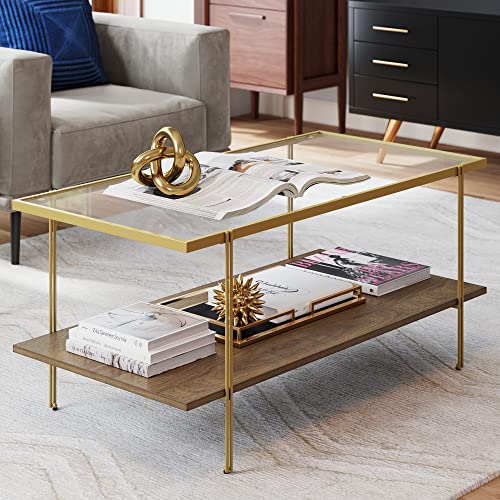
- Best overall for modern homes: Nathan James Asher Mid-Century Coffee Table, Glass Top and Rustic Oak Shelf, Gold — Check on Amazon
- VASAGLE Small Coffee Table Set of 2, Round Nesting Tables, Charcoal Grey and Ink Black — Check on Amazon
- Nathan James Paloma Round Coffee Table with Raised Tray Edge, Dark Oak — Check on Amazon
- Nathan James Doxa Industrial Coffee Table, Light Brown and Black — Check on Amazon
- WLIVE Lift Top Coffee Table, Mid Century Modern, Grey — Check on Amazon
- Furinno Modern Simplistic Criss-Crossed Coffee Table, French Oak Grey — Check on Amazon
Read the full guide ↓
Disclosure: As an Amazon Associate, dailyhomedecorating.com earns from qualifying purchases. Links to Amazon on this page are affiliate links; they cost you nothing extra. Listing details such as price and availability change often, so check the current Amazon listing before you buy.
The best coffee table for modern homes under $300 has a harder job than a traditional table: it has to be furniture and composition at once. Modern rooms run on restraint — clean lines, negative space, a short list of materials repeated with intent — and the coffee table sits at the exact center of the composition, where a wrong silhouette or a clashing finish is visible from every seat. The good news is that this budget is generous for the modern category. The design-led brands that dominate this style sell their core coffee tables well inside $300, so you are choosing among glass, nesting rounds, industrial frames and mid-century lift-tops on design merit rather than stretching to afford the look.
Our overall pick is the Nathan James Asher, because its tempered glass top, rustic oak shelf and brass-toned legs deliver the mid-century formula in its purest form while keeping the room visually open. The VASAGLE nesting set follows for flexible, sculptural arrangements in charcoal and black. The Nathan James Paloma offers minimalist round calm with a practical raised edge. The Doxa brings industrial contrast — light wood over a black box frame — at the largest scale here. The WLIVE hides a lift-top workstation inside a mid-century profile, for modern homes that also work from the sofa. And the Furinno Criss-Crossed closes the list with an X-leg design at the budget tier. Readers whose rooms are traditional or family-first will find a different filter in our guide to the Best Coffee Table Under $300; this one is curated for the modern eye first.
In this guide
Quick Picks
Short on time, or comparing several options at once? Each row below names a buyer type and the product that suits it, with a link to the listing.
| Buyer type | Pick | Why it stands out | Link |
|---|---|---|---|
| Best overall for modern homes | Nathan James Asher Coffee Table, Gold | Glass top over an oak shelf on brass-toned legs — the mid-century formula, room stays open | Check on Amazon |
| Best flexible arrangement | VASAGLE Nesting Coffee Table Set of 2 | Two round tables that overlap, separate or nest — sculpture that rearranges | Check on Amazon |
| Best minimalist round | Nathan James Paloma Coffee Table | Two-tier round table with a raised tray edge in dark oak and matte black | Check on Amazon |
| Best industrial contrast | Nathan James Doxa Coffee Table | 44-inch light wood top on a black metal box frame — the boldest scale here | Check on Amazon |
| Best hidden workstation | WLIVE Lift Top Coffee Table | Mid-century grey profile hides a lift top, compartment and adjustable shelf | Check on Amazon |
| Best budget modern | Furinno Criss-Crossed Coffee Table | X-leg silhouette in French oak grey at the lowest tier — check price on Amazon | Check on Amazon |
How These Picks Were Chosen
Every product below is a real Amazon listing, and every ASIN was cross-checked against maker specifications during research. This guide prints no fixed prices — furniture pricing moves with sales and finishes — so check price on Amazon for the current figure; all six picks sit inside the under-$300 framing. The modern filter then applied three tests. First, silhouette: would the table hold its own in a room photographed for a design feed — clean geometry, no fussy ornament, honest proportions. Second, material discipline: glass, blackened metal, warm oak tones and matte finishes that coordinate with modern sofas rather than compete with them. Third, function without visual noise: modern rooms still need storage and surfaces, but the mechanism or shelf should disappear into the design rather than announce itself.
We did not use these tables ourselves. We compared published dimensions, materials, capacities and construction, and we weighted verifiable specification over marketing language. Where a design trades practicality for looks — glass that shows fingerprints, a nesting set whose smaller table has a modest load rating — the review says so in plain terms. A modern room forgives many things, but it does not forgive a table that is annoying to live with, because annoyance is just visual noise on a delay.
The 6 Best Coffee Tables for Modern Homes Under $300
Nathan James Asher Mid-Century Coffee Table, Glass Top, Gold
Who it suits: Modern and mid-century rooms with a rug worth showing, sofas in grey, white, cognac or black, and anyone who wants the center of the room to feel lighter, not heavier.
The Asher is built from three deliberate contrasts: a clear tempered glass top, a rustic oak shelf beneath it, and slim brass-toned metal legs. The glass, 39 x 20 inches at 18 inches high, lets the floor and rug read straight through the table, so the seating area keeps its full visual size — the single most valuable trick in modern furnishing. The oak shelf grounds the composition and doubles as a display ledge: a stack of design books or a ceramic object on that shelf is seen through the top, becoming part of the room’s art rather than storage. At about 31 pounds the table is stable without being cumbersome, and the proportions follow the classic two-thirds relationship to a standard sofa.
Living with glass is a rhythm, not a burden, but it is a rhythm: fingerprints and dust show, and a microfiber wipe becomes part of tidying rather than a weekly event. In return the top cannot stain, swell or peel, and water rings are a wipe, not a scar. The oak shelf below still deserves coasters. One more honest note: in a household with small children, glass asks for a deliberate decision — our family guide, Best Coffee Table For Families Under $300, steers those readers to round wood instead, and we agree with it. For a grown-up modern room, the Asher is the pick that makes the whole seating area look considered.
- Tempered glass top preserves visual space and shows the rug beneath.
- Rustic oak shelf works as display space visible through the top.
- Brass-toned legs complete the mid-century palette.
- 39 x 20 x 18 inch proportions suit standard modern sofas.
Honest limitation: Glass shows every fingerprint and demands frequent wiping; it is also the least toddler-forgiving material in this guide.
Choose it if visual lightness leads your brief. Skip it if you hate wiping surfaces or have climbing toddlers.
VASAGLE Small Coffee Table Set of 2, Round Nesting Tables, Charcoal Grey and Ink Black
Who it suits: Modern homes that rearrange often — movie nights, guests, yoga on the rug — and anyone who prefers a sculptural cluster to a single block of table.
Nesting tables are the modern answer to a fixed footprint. This VASAGLE set pairs a large round table, 23.6 inches across at 17.7 inches high, with a smaller 19.7-inch table at 15.7 inches high, in charcoal grey tops on ink black steel frames. Overlapped, they form a layered centerpiece with two heights for drinks and books; separated, the small table migrates to a chair side or a guest’s seat; nested, the pair’s footprint shrinks to the large table alone. The maker rates each table at 66 pounds static load, and the set weighs about 21.6 pounds in total, so rearranging is a one-handed decision, not a furniture event.
The modern credentials are in the palette and the geometry: matte charcoal, matte black, circles and slim steel. The honest limits are the flip side of flexibility — neither top is large, so a full work spread or a big board game belongs elsewhere; the particleboard tops want coasters; and two small tables read as a deliberate cluster only when the room’s other pieces are equally disciplined, otherwise they can look like clutter that learned geometry. In a tight modern layout they are superb, which is why this set also anchors our guide to the Best Coffee Table For Small Apartments Under $300.
- Two tables, three arrangements: overlapped, separated, nested.
- Each table rated at 66 lb static load; total set about 21.6 lb.
- Charcoal and ink black palette suits monochrome modern rooms.
- Round tops keep traffic flowing around the cluster.
Honest limitation: Two small tops never equal one large work surface, and the look depends on a disciplined room around it.
Choose it if flexibility and sculpture outrank raw surface. Skip it if you need one big, permanent work-and-games top.
Nathan James Paloma Round Coffee Table, Dark Oak and Matte Black
Who it suits: Minimalists who want one calm, round centerpiece — and households that like the modern look but still live on their table, snacks and all.
The Paloma reduces the coffee table to a circle, a shelf and a lip. The top is 32 inches across at 18 inches high, ringed by a raised tray edge that gives the minimalist silhouette an unexpectedly practical talent: cups, remotes and objects stay on the table instead of migrating off its edge. A second tier below holds the books and the basket, and the dark oak and matte black palette is the warm end of modern — it pairs with boucle, linen and leather as happily as with grey wool. At about 26 pounds it is a settled, deliberate object, not a featherweight.
Where the Asher opens a room with transparency, the Paloma calms it with a single solid gesture. The trade-offs are a circle’s usual ones — less surface than a 39-inch rectangle, and the raised lip slightly interrupts sliding a laptop across the top — plus one of proportion: at 32 inches it suits loveseats and standard sofas, but a very long sectional will dwarf it. For the modern home that entertains, reads and snacks in the same square meter, it may be the most livable design in this guide: modern to look at, forgiving to use.
- Raised tray edge keeps everyday objects contained.
- Two-tier round design in warm dark oak and matte black.
- 32-inch top at 18 inches high; about 26 lb.
- Minimalist silhouette that still stores books and baskets below.
Honest limitation: Modest surface for its footprint class, and the lip interrupts sliding large items on and off.
Choose it if you want minimalist calm that survives real use. Skip it if you need maximum rectangular surface.
Nathan James Doxa Industrial Coffee Table, Light Brown and Black
Who it suits: Modern-industrial and Scandinavian-leaning rooms with long sofas, and anyone who wants contrast — pale wood against black structure — at full scale.
The Doxa is the largest statement in this guide: a 44.09 x 22.05 inch light brown top at 16.93 inches high, carried on a black metal box frame. In a modern room that reads too soft — all fabric, all pale — that black frame is the graphic line that organizes the space, and the 44-inch length holds the two-thirds proportion against a full three-seat sofa or sectional where smaller tables look apologetic. The open frame keeps the mass airy; you see floor through the structure, so the table’s footprint is large but its visual weight is not.
There is no storage trick here and no mechanism — the design is the function. What sits below the top stays visible, so this is a table for households whose lower shelf holds two beautiful objects, not fourteen necessary ones. At about 32 pounds it is stable and simple to reposition. Buyers should measure honestly: 44 inches plus the recommended gap at both ends asks for a genuinely long seating wall, and in a compact room the same table turns from statement to obstacle — the nesting set above exists for those rooms. For the big, calm, modern living room, the Doxa is the anchor pick.
- 44-inch top — correct proportion for full-size modern sofas.
- Black box frame adds graphic structure; open design stays airy.
- Light wood and black palette bridges Scandi and industrial schemes.
- No mechanisms or glass — the lowest-maintenance pick here.
Honest limitation: No enclosed storage, and its length overwhelms compact rooms.
Choose it if your sofa is long and your style runs industrial-modern. Skip it if your room is small or storage is a priority.
WLIVE Lift Top Coffee Table, Mid Century Modern, Grey
Who it suits: Modern homes that work from home — anyone whose living room is also the office, and who refuses to let a desk colonize the space.
The WLIVE’s party trick is that its modern profile is a disguise. Closed, it is a grey mid-century-style table, 39.4 x 19.7 inches at about 16.3 inches high, with clean lines and tapered visual cues that sit comfortably beside a modern sofa. Lift the top and it rises to about 22.6 inches — a proper laptop height — revealing a hidden compartment for the work kit: laptop, notebook, chargers, headphones, gone at 6 p.m. Below, an adjustable open shelf holds the printer paper or the coffee table books, depending on the hour. At about 41.8 pounds it feels planted in use.
This dual life is the strongest functional offer in the guide, and its limits are the lift-top family’s usual ones: the mechanism wants two hands and a centered, modest load when raised, and assembly takes longer than a fixed table’s. The grey finish is the safest modern neutral — it coordinates with white, black, walnut and chrome without arguing. For the modern home office that must vanish by evening, nothing else here competes; it is also the lead pick in our space-focused guide, Best Coffee Table For Small Spaces Under $300, for the same reason.
- Lift top converts from coffee table to laptop station in seconds.
- Hidden compartment swallows the entire work kit at day’s end.
- Adjustable shelf adapts to office or living-room duty.
- Grey mid-century profile keeps the disguise complete.
Honest limitation: The raised top carries laptop weight, not leaning weight, and assembly is the longest here.
Choose it if your modern living room doubles as your office. Skip it if you never work at the sofa — a fixed table is simpler.
Furinno Modern Simplistic Criss-Crossed Coffee Table, French Oak Grey
Who it suits: Budget-conscious modernists furnishing a first design-led room, who want a recognizable modern silhouette at the lowest tier of this budget.
Furinno’s own name for this line — Modern Simplistic — is accurate. The design is a 35.4 x 19.6 inch top at 16 inches high, carried on criss-crossed X legs in a French oak grey and black palette. The X frame is a genuine modern gesture: it gives the table a graphic profile from the side, keeps the structure open, and includes a lower shelf surface for books. At about 18.9 pounds it is easy to move, and the composite wood is CARB-compliant with a one-year limited warranty behind the brand’s tables in this range.
The honest accounting: this is a light-duty, entry-tier table. Engineered panels at this tier do not love standing water, heavy point loads or a decade of moves, and the 16-inch height sits low against tall modern sofas — measure your seat height before ordering. What it delivers, at the budget end of this guide — check price on Amazon — is the look and the geometry of modern design with a footprint that suits smaller rooms. As a first modern table, or a placeholder while a room comes together, it is a rational buy; as a ten-year anchor piece, step up to the Nathan James picks above.
- Criss-cross X-leg silhouette — modern profile from every angle.
- French oak grey and black palette coordinates with modern sofas.
- Compact 35.4 x 19.6 inch top; about 18.9 lb.
- Lowest tier of this budget — check price on Amazon.
Honest limitation: Light-duty engineered construction and a low 16-inch height — verify it suits your sofa and your expectations of lifespan.
Choose it if you want the modern look at the entry tier. Skip it if you are buying a decade-long anchor piece.
Styling the Table: The Modern Room’s Center Composition
A modern coffee table is never finished when the assembly ends, because in a modern room the top of the table is a composition, not a parking lot. The styling grammar that design stores use is simple enough to steal. Work in odd numbers and varied heights: one tall object (a vase, a sculptural piece), one low stack (two or three large-format books, spines aligned), and one organic element (a plant, a bowl of something natural) form the classic triangle that photographs well from every seat. On the Asher, that composition gains a second layer, because the oak shelf below repeats the arrangement in shadow form through the glass — style the shelf with the same discipline, in quieter tones, and the table reads as a designed object from across the room. On the Paloma, the raised lip turns the top into a tray: group objects inside it deliberately and the containment reads as intent. On the Doxa’s long top, resist filling the length; two composed groups with true empty space between them is the modern gesture, and the emptiness is doing as much work as the objects.
Color discipline matters as much as objects. A modern room usually runs two neutrals and one accent; the table’s styling should borrow from that palette, not introduce a fourth voice. Books are the easiest tool — their covers are large, flat color fields — followed by ceramics in the room’s existing metals. This is also where the finishes in this guide pull in different directions, usefully: brass-toned legs on the Asher invite warm accents; the charcoal nesting set wants monochrome styling with texture doing the talking (linen, stone, matte ceramic); the Doxa’s black frame pairs with pale, quiet objects that let the structure speak. The rule underneath all of it: if an object on the table is not beautiful, useful this week, or both, it belongs in the WLIVE’s hidden compartment — which is, in the end, the most modern styling tool in this entire guide.
One more styling truth specific to modern rooms: negative space is fragile. The difference between a composed table and a cluttered one is often two objects, and the clutter always arrives by ones — a remote, a mug, a letter, a charger. Modern households that stay modern give each of those a home that is not the tabletop: a lidded box on the shelf, a drawer nearby, the lift-top’s compartment. Buy the table whose hidden or lower storage matches your household’s actual scatter, style the top once with intent, and defend it with systems rather than willpower.
Comparison Table
| Product | Size and type | Best use | Link |
|---|---|---|---|
| Nathan James Asher | 39 x 20 x 18 in, glass top, oak shelf, brass-toned legs | Visual lightness; mid-century rooms | Check on Amazon |
| VASAGLE Nesting Set of 2 | 23.6 in + 19.7 in round, steel frame, 66 lb each | Flexible, sculptural arrangements | Check on Amazon |
| Nathan James Paloma | 32 in diameter x 18 in, two-tier, raised tray edge | Minimalist calm with everyday containment | Check on Amazon |
| Nathan James Doxa | 44.09 x 22.05 x 16.93 in, wood top, black box frame | Long sofas; industrial-modern contrast | Check on Amazon |
| WLIVE Lift Top | 39.4 x 19.7 in, lift 16.3–22.6 in, hidden compartment | A workstation that vanishes by evening | Check on Amazon |
| Furinno Criss-Crossed | 35.4 x 19.6 x 16 in, X legs, engineered wood | Modern silhouette at the budget tier | Check on Amazon |
How to Choose a Coffee Table for a Modern Home
- Let one material lead. Modern rooms repeat a short material list. If your room runs on black metal and pale wood, the Doxa speaks its language; if brass and oak already appear, the Asher extends them. A table that introduces a fifth material creates noise.
- Use glass or open frames to protect space. Transparency and see-through structure keep a modern room’s negative space intact. Solid blocks belong in rooms with volume to spare.
- Respect the two-thirds proportion. Modern composition is proportion before decoration: a table about two-thirds your sofa’s length, centered, with 14 to 18 inches of breathing room in front.
- Keep height in the modern band. Low profiles suit the style — most picks here sit between 16 and 18 inches — but confirm the top lands level with or just below your seat cushion.
- Hide function inside form. If you need storage or a work surface, choose designs where it disappears: a lift-top’s closed silhouette, a nesting set’s overlap, a shelf styled as display.
- Round softens, rectangle structures. Circles calm a room of right angles and improve flow; rectangles give graphic order and maximum surface. Modern rooms usually want one clear decision, not a compromise shape.
- Budget for the wipe. Glass and matte finishes show dust against their calm. If daily wiping annoys you, choose wood finishes with grain — the Paloma and Doxa forgive the most.
- Check the live price in your finish. Modern lines often vary by colorway. Compare the current price on Amazon for the exact finish that matches your room, not the headline variant.
Materials, Honestly: Glass, Engineered Wood and Steel at This Budget
Modern design talks about materials with unusual honesty, so this guide will too. At under $300, the wood in every pick here is engineered — MDF, particleboard or composite panels carrying a wood finish — and that is a considered trade, not a deception. Engineered panels are dimensionally stable, consistent in color, and light; they let a brand like Nathan James or VASAGLE hit a precise modern silhouette at a price a young household can pay. What they ask in return is respect for water and point loads: coasters under cold drinks, spills wiped rather than left, and no standing on the furniture. Treated that way, the finishes in this guide hold their looks for years; treated carelessly, the failure appears first at edges and seams, which is true of engineered furniture at twice this budget as well.
Glass plays a different game. The Asher’s tempered top is the most chemically indifferent surface here — it cannot stain, swell, fade or peel — and its weakness is purely cosmetic labor: it reports every fingerprint and dusting you skip. Steel frames, on the nesting set and the Doxa, are the quiet overachievers of the category: powder-coated metal does not care about water, weight within rating, or sunlight, and it is a large part of why those designs feel so visually calm — the structure never becomes the maintenance story. The lift mechanism on the WLIVE is the one genuinely mechanical material decision in the guide: a moving assembly in a static category, which rewards gentle, two-handed use and punishes forcing. None of these materials is the “best” one. The modern room’s real material skill is choosing the set whose weaknesses your household will never trigger — the wipers choose glass, the coaster-keepers choose wood finishes, the set-and-forget households choose steel and fixed tops — and then letting the strengths furnish the room for years.
It is worth closing the subject with the budget’s honest boundary. Solid hardwood, stone and designer provenance live above this guide’s ceiling, and no listing under $300 changes that, whatever its photographs imply. What this budget buys — verifiably, in the six listings above — is correct modern proportion, disciplined finishes, real function and materials that behave exactly as their specifications promise. For the overwhelming majority of modern homes, that is not the compromise tier. It is the right one.
Common Buying Mistakes
- Mixing a fifth material into a disciplined modern palette for one table’s sake.
- Choosing a solid, heavy table that eats a small modern room’s negative space.
- Buying glass, then resenting the daily wipe it honestly requires.
- Letting a nesting cluster drift into clutter — the look needs discipline around it.
- Oversizing: a 44-inch table in a room that needed the two-thirds rule applied honestly.
- Hiding nothing: open shelves styled with everyday mess undo the modern brief.
- Matching metals badly — brass, chrome and black can coexist, but only when one clearly leads.
- Forgetting function for form: a stunning table that cannot hold your laptop, books or drinks will be replaced within a year.
Finishes and Colorways: Choosing the Exact Variant
Modern lines are unusually finish-sensitive, because the same silhouette in a different colorway is effectively a different design decision. Several picks in this guide are offered in more than one finish — the nesting set’s charcoal and black is its most modern expression, the Paloma’s dark oak leans warmer than its paler alternatives, and the WLIVE’s grey is the variant that disappears most completely into a neutral scheme. The discipline is to choose the finish against the room’s existing anchors: the sofa fabric first, the floor tone second, the room’s leading metal third. A table that matches none of the three will argue with all of them daily, at the exact center of the room. When two finishes both work, choose the one that matches the element you are least likely to replace — floors outlast sofas, and sofas outlast everything else.
Lighting rewrites finishes after dark, which is when modern rooms do most of their living. Warm evening light deepens oak tones and makes brass read richer; it can also turn a cool grey slightly blue against warm walls. If your room’s evening light is warm and your walls are warm, the grey picks here stay honest; if your light runs cool and daylight is scarce, the warm picks — Paloma, Doxa — carry the room. None of this requires a showroom visit; it requires looking at your own room at 8 p.m. before ordering, which is when the table will actually be judged.
Longevity: What a Modern Table Owes You in Year Five
A modern room is a long commitment to a short palette, so the table’s fifth year matters more than its first photograph. The designs here age by different clocks. Steel frames and glass — the nesting set, the Doxa’s frame, the Asher’s top — are essentially indifferent to time within their ratings; their fifth year looks like their first, given a cloth. Engineered wood finishes age at their edges first, which is why the care notes in this guide keep returning to water discipline: the household that coasters faithfully will find the Paloma and the Criss-Crossed looking composed for years, and the household that does not will meet the evidence at the seams. The lift mechanism’s fifth year is decided in its first month — assembled square, used with two hands, kept clear of jams, it stays smooth; forced early, it complains forever.
There is also a stylistic longevity to weigh. The most trend-exposed choice in any modern guide is the one chasing this season’s exact gesture; the picks here were chosen partly for the opposite quality. A glass-and-brass mid-century rectangle, a pair of black nesting circles, a plain round two-tier table and an honest industrial frame are all designs that were modern twenty years ago and will read as modern in twenty more, because they are built from proportion and material rather than ornament. Buy the silhouette your room can keep, maintain it with the small disciplines above, and the center of your modern room will not need re-deciding when the feeds move on.
Final Recommendation
- Most modern rooms: Nathan James Asher — glass, oak and brass in perfect proportion.
- Flexible layouts: VASAGLE Nesting Set of 2.
- Minimalist calm: Nathan James Paloma.
- Long sofas, industrial edge: Nathan James Doxa.
- Work-from-sofa homes: WLIVE Lift Top.
- Budget modern: Furinno Criss-Crossed.
Choose by the material your room already speaks. Glass and brass rooms take the Asher; monochrome rooms take the nesting set or the Paloma; rooms that work for a living take the WLIVE. Measure the two-thirds proportion, check the current price on Amazon in your finish, and let the table disappear into the composition — that is what modern success looks like.
Entertaining in a Modern Room: The Table at Work
The modern room’s severest test is not the photograph but the party, when a composed centerpiece must suddenly hold drinks for six, a board game, or a sprawl of takeout containers that match nothing. The picks here pass that test in different styles. The Doxa’s 44-inch top is the natural entertainer — it absorbs a crowd’s worth of glasses and plates without a satellite surface. The nesting set entertains by multiplication, sending its small half to the armchair guest who would otherwise balance a drink on the sofa arm. The Paloma entertains by containment, its lip keeping a game night’s components in the game. The WLIVE entertains by disappearance, swallowing the day’s clutter into its compartment in the ninety seconds before the doorbell, then presenting a clean top as if the room always looks this way — which, in a modern home, is the entire performance.
Two hosting habits protect the modern brief under load. Coasters should multiply before guests arrive — a small stack placed visibly at the table’s edge converts six people’s good intentions into actual protection, because no guest hunts for a coaster in a stranger’s kitchen. And the lower shelves should be pre-cleared to half-empty, so the inevitable overflow — the extra bottle, the game box, the chargers — lands on a styled surface rather than starting a pile on the floor. Entertaining is where modern minimalism usually dies; with a table whose storage and surface were chosen for it, the room survives the evening with its composition intact, and the morning after needs a dishwasher, not a redesign.
The One-Room Modern Brief: Studios and Open Plans
Modern style is disproportionately chosen for studios and open-plan spaces, where one room must read as a designed whole from every angle — and where the coffee table is visible from the bed, the desk and the kitchen simultaneously. In that exposure, silhouette discipline matters triple: the table is never “in the living room,” it is in every room. The glass Asher and the open nesting set earn special mention here, because their transparency keeps a one-room home from partitioning itself visually into crowded zones. The WLIVE answers the studio’s other demand — a work surface that vanishes — while the Paloma’s calm circle anchors a seating zone without a rectangle’s territorial claim. If your modern home is one room wearing four hats, rank these four picks by which hat your room wears most, and let the base guide’s remaining picks serve homes with doors.
The Coffee Table and the Rug: A Modern Pairing
No modern table is judged alone; it is judged standing on the rug, and the pairing has rules worth stating. The rug should extend beyond the table on every side — a border of rug visible around the footprint is what makes the seating zone read as one island — and in a modern room it should also reach under the sofa’s front legs, anchoring the whole composition. Pattern discipline follows the table: a glass top like the Asher’s can carry a patterned or textured rug beneath it, because the rug becomes the table’s visible surface; a solid, sculptural table like the Paloma or the Doxa pairs better with a quieter floor, where one of the two is allowed to speak at a time. Color temperature should agree — warm oak over a cool grey rug is the classic modern argument, resolved by choosing the rug in the table’s temperature family or the table in the rug’s. Get the pairing right and the center of the room looks inevitable; get it wrong and even the best table in this guide looks like it is visiting.
Frequently Asked Questions
What coffee table shape suits a modern living room best?
Both clean rectangles and pure circles work; the deciding factor is your room’s geometry. Rectangles reinforce the grid of a modern layout and maximize surface. Circles soften a room full of right angles and improve circulation. Avoid fussy silhouettes — scrollwork, cabriole legs, ornate edges — which fight the modern brief regardless of shape.
Is a glass coffee table practical?
Practical in durability, demanding in upkeep. Tempered glass cannot stain, swell or peel, and it keeps small rooms feeling open. It shows fingerprints, dust and rings immediately, so it suits owners who wipe as they tidy. Households with small children should weigh the decision carefully and consider the round wood options in this guide instead.
How do nesting coffee tables work in a modern room?
A nesting set gives you a variable footprint: overlapped for a layered centerpiece, separated when guests need side surfaces, nested down to one table’s footprint when the floor must clear. Keep the surrounding room disciplined — the cluster reads as sculpture only when the rest of the space is equally intentional.
What height should a modern coffee table be?
Modern style favors lower profiles, and most picks here sit between 16 and 18 inches. The functional rule still governs: the top should land level with your sofa’s seat cushion or up to about two inches below it. A very low table under a high, deep sofa fails ergonomically no matter how good it looks.
Can a modern coffee table have storage without ruining the look?
Yes — the trick is storage that disappears. A lift-top’s hidden compartment, a lower shelf styled with a few deliberate objects, or a two-tier round table all store things without visual noise. What breaks the modern brief is open storage filled with everyday clutter; the storage type matters less than the discipline of what shows.
Which finish coordinates with a grey modern sofa?
Grey is the most accommodating base in modern design. Black frames and charcoal tops extend a monochrome scheme; warm oak and brass add the contrast most grey rooms need; a grey table like the WLIVE disappears tonally for a calm, layered look. Choose based on whether your room needs contrast or calm.
How do I keep a modern coffee table from looking cluttered?
Give every everyday object a hidden home — the lift-top’s compartment, a lidded box on the lower shelf, a drawer nearby — and style the top once with a deliberate group of two or three objects. Clutter returns one item at a time, so the defense is a nightly sixty-second reset, not a monthly purge. If the reset keeps failing, the diagnosis is storage, not discipline: the table you need is the one whose hidden capacity matches your household’s actual scatter.
Do modern coffee tables work in transitional rooms?
Yes — the warmer picks in this guide were chosen partly for that bridge. The Paloma’s dark oak round and the Doxa’s wood-and-black frame both sit comfortably between modern and traditional neighbors, softening a modern scheme or sharpening a traditional one. The glass Asher is the most committed modernist here; in a transitional room, the round wood designs usually integrate with less friction.


