Where to buy
Check the latest price, availability and delivery on Amazon. Orders are placed on Amazon. We may earn a commission from qualifying purchases.
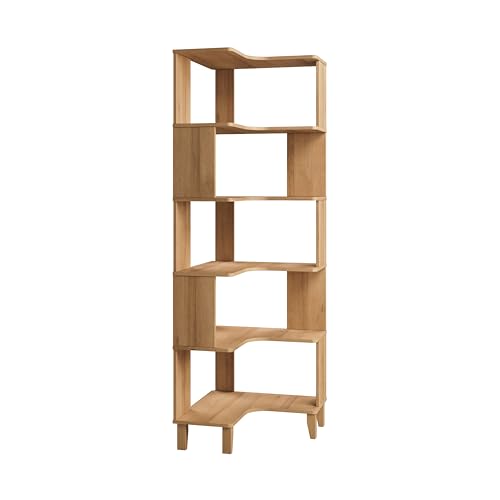
- Best overall for small apartments: Prepac Nordik 6-Tier Corner Bookcase, Natural Oak — Check on Amazon
- Sauder Barrister Lane Bookcase, Scribed Oak — Check on Amazon
- VASAGLE 6-Tier Glass Bookshelf, Metallic Gold — Check on Amazon
- Sauder Bookcase with Doors, Chalked Chestnut — Check on Amazon
- International Concepts Shaker Bookcase, Solid Parawood — Check on Amazon
See 1 more Amazon option
- Concepts In Wood Traditional Triple Wide Bookcase, Dry Oak — Check on Amazon
Read the full guide ↓
Disclosure: As an Amazon Associate, dailyhomedecorating.com earns from qualifying purchases. Links to Amazon on this page are affiliate links; they cost you nothing extra. Listing details such as price and availability change often, so check the current Amazon listing before you buy.
Finding the best bookcase for small apartments under $1000 is an exercise in geometry before it is an exercise in taste. In a small apartment, floor space is the scarcest resource you own, walls are already spoken for, and every piece of furniture is auditioned against the same brutal question: what do you give me per square foot? A bookcase answers that question better than almost any other furniture — it stores vertically, it hugs walls, and the right one converts space that was earning nothing (a corner, the wall under a window, the strip beside a door) into a full library. But the wrong one is a disaster at exactly apartment scale: a deep, dark tower that eats the room’s light, blocks its only good wall, and still strands your tallest books. This guide is built around the formats that win the geometry: corners, low-and-wide walls, glass that does not darken, and one honest big-wall option for the minority of apartments that can carry it.
The six picks each claim a different piece of apartment geometry. The Prepac Nordik leads because the corner is the most wasted space in any small home, and it turns one into six tiers at over 71 inches tall. The Sauder Barrister Lane takes the low wall — under windows, under the TV — with ten cubbies and a display top. The VASAGLE glass case stores a full tower’s worth while letting light pass through it, which in a small room is worth shelves by itself. The doored Sauder is the one-case strategy for studios: display above, entire hidden infrastructure below. The International Concepts Shaker is the low solid-wood case for under-window walls and tight footprints. And the Concepts In Wood triple wide is included honestly for large lofts and railroad apartments with one genuinely big wall — with its conditions stated plainly. Renters and small-space shoppers should also read our Best Bookcase For Small Spaces Under $1000 guide, and the Best Bookcase For Small Apartments Under $700 roundup covers the same geometry at a lower tier.
Two apartment realities shape every review below. The first is light: small rooms usually have one window wall, and a bookcase placed badly taxes the whole home’s brightness, so light behavior is scored like a specification here. The second is commitment: apartment furniture must survive moves, fit elevators and stairwells, and work in the next apartment too — so dimensions, weight and re-usability are treated as first-class criteria, and anchoring advice is written for renters honestly, including when a low format is the smarter answer than a tall case you cannot strap to a stud.
A note on budget, because under $1000 in a small apartment deserves a defense: you are not buying more bookcase than a small home needs — you are buying the formats and finishes that small homes specifically reward. Corner engineering, glass, doors and solid wood all cost more than a slab tower, and in a small space each of them pays you back daily in light, order or usable geometry. The slab tower is cheaper because it does less. In a large house that trade can make sense; in 600 square feet, it rarely does.
In this guide
Quick Picks
| Pick | Bookcase | Best for | Size (W × D × H) | Amazon |
|---|---|---|---|---|
| Best overall for small apartments | Prepac Nordik Corner, Natural Oak | Dead corners, vertical storage | 23.3 × 23.3 × 71.5 in | Check on Amazon |
| Best low and wide | Sauder Barrister Lane, Scribed Oak | Under windows and TVs | 53.2 × 12.1 × 47.5 in | Check on Amazon |
| Best for light | VASAGLE 6-Tier Glass, Metallic Gold | Dark or compact rooms | 31.5 × 11.8 × 70.9 in | Check on Amazon |
| Best studio all-in-one | Sauder Bookcase with Doors, Chalked Chestnut | Display plus hidden storage | 35.3 × 13.2 × 69.8 in | Check on Amazon |
| Best low solid wood | International Concepts Shaker, Unfinished | Under-window walls, tight spots | 48 in tall, Shaker profile | Check on Amazon |
| Best for big-wall lofts | Concepts In Wood Triple Wide, Dry Oak | One-wall library, large units | 72 × 10.6 × 72 in | Check on Amazon |
How These Picks Were Chosen
We filtered the under-$1000 field through an apartment’s constraints. First, footprint efficiency: every pick had to store a lot per square foot of floor — by going tall in a corner, going wide under a window line, or going visually weightless in glass. Second, depth discipline: shelves deep enough for real books and bins (roughly 11 inches or more where it matters) without the 16-inch depths that eat a small room’s floor. Third, light behavior: cases that transmit light, sit below window height, or present a composed face scored up; dark towers scored down. Fourth, apartment logistics — verified dimensions and model numbers from established makers (Prepac, Sauder, International Concepts, Concepts In Wood, VASAGLE), honest assembly footprints, and formats that can plausibly survive a move and work in a different room next lease. Fifth, renter realism: anchoring matters for tall cases, so we favored formats that either anchor easily against two walls (the corner case), sit low enough to reduce the stakes, or earn their anchor honestly.
Prices in this category move with sales and finishes, so check price on Amazon rather than trusting a printed number; the under-$1000 framing is the ceiling these picks were selected against. If your apartment is small but your budget is smaller, the same geometry-first logic runs through our Best Bookcase Under $700 guide at the tier below.
What did not make the cut: three handsome towers over 14 inches deep whose footprints cost more room than their shelves returned, a cube system whose assembled size could not pass a standard apartment doorway without disassembly, and several cases with no verifiable dimensions beyond a marketing graphic — in a small apartment, an unverifiable dimension is a return waiting to happen. The six survivors are cases whose geometry we could check, defend, and fit on a floor plan.
The 6 Best Bookcases for Small Apartments Under $1000
Prepac Nordik 6-Tier Corner Bookcase, Natural Oak (SBR-2210-1)
Who it suits: Almost every small apartment, because almost every small apartment has the same asset sitting idle: a corner. If your walls are full and your floor is fuller, start here.
The Nordik occupies 23.25 inches along each wall and rises 71.5 inches through six tiers — a full bookcase’s capacity conjured from the one footprint that was storing nothing. Its leg structure is designed to sit flush into the corner, so there is no awkward triangular gap collecting dust behind it, and the natural oak finish with mid-century lines keeps it looking like furniture rather than a storage hack. In apartment terms the math is unbeatable: the corner’s floor space had zero alternative use, so every one of the six tiers is storage bought for free. It suits the living-room corner by the reading chair, the bedroom corner that currently holds a chair-shaped clothes pile, and the studio corner that divides sleep from living better than a screen would, because it stores while it divides.
Pros:
- Six tiers on a footprint that was storing nothing
- Flush-fit legs — no dust canyon behind the case
- 71.5-inch height exploits the corner’s full vertical
- Two-wall contact makes anchoring simple and secure
Honest limitation: Corner shelves are narrower than flat-wall shelves — wide bins and big game boxes do not fit the geometry, and the stated per-shelf weight limit is modest. It is a books, media and objects tower, not heavy storage.
Choose it if your corner is empty and your shelves are overflowing. Skip it if your storage is mostly wide bins — the Barrister Lane below is built for those.
Living with it: Corners are dark by nature, so load it bright: pale objects and the lightest spines up top, a plant where it catches window light, heavier books low. In a studio, place it at the junction between zones and it quietly becomes the room’s organizing landmark — the place guests’ eyes land, styled like it matters, because in a small home the corner case is always on display.
Sauder Barrister Lane Bookcase, Scribed Oak (414724)
Who it suits: Apartments whose usable wall is low and long — under the windows, beneath the wall-mounted TV, along the wall the sofa faces — and renters who prefer a case that does not need to be tall to be capacious.
The Barrister Lane is 53.15 inches wide, 12.13 inches deep and just 47.52 inches tall: ten cubbyholes with ID label tags under a gallery-edged display top. In a small apartment, low-and-wide beats tall-and-narrow three ways. It keeps the room’s sightlines and window light uninterrupted, because nothing crosses the sight plane. Its top becomes a working surface — lamp, plant, the mail tray, a record player — effectively adding a console table’s function to a bookcase’s footprint. And its cubbies swallow the apartment clutter that has nowhere else to go: games, craft supplies, the shoe overflow by the door, each in a labeled home. The scribed oak finish is warm and forgiving, and at under four feet the case is the most stable format here — though anchoring remains good practice in any home.
Pros:
- Ten labeled cubbies organize a whole apartment’s categories
- Low profile preserves window light and sightlines
- Gallery top doubles as a console surface
- Wide, low stance is inherently stable
Honest limitation: Fixed cubbies will not take tall art books or oversized volumes, and 53 inches of width needs a genuinely long low wall — measure the under-window run before ordering, radiators included.
Choose it if your best wall is a low one. Skip it if your only space is vertical — that is the Nordik’s or the VASAGLE’s job.
Living with it: Style the cubbies in a limited palette of bins and books so the grid reads as order rather than inventory, and keep the gallery top at three groupings maximum. In a studio it is the natural media wall — screen above, everything else in labeled cubbies below — and in a one-bedroom it turns the living room’s long wall into the storage the closets never provided.
VASAGLE 6-Tier Bookshelf, Tempered Glass, Metallic Gold (ULGT502A01)
Who it suits: Small apartments that are short on light — north-facing units, deep floor plans, rooms where a solid tower would create a permanent shadow with shelves in it.
At 31.5 inches wide, 11.8 inches deep and 70.9 inches tall, the VASAGLE holds six tiers in tempered glass on a metallic gold frame, and its apartment superpower is that it barely interrupts the room: light passes through it, sightlines pass through it, and the far wall stays visible, so the room reads its full size instead of ending at a bookcase. That perceptual space is real space in a small home — a glass tower in the corner leaves the room feeling like a room, where the same capacity in dark wood feels like a closet with a sofa in it. The gold frame warms the small palettes apartments usually run, and glass wipes clean in seconds, which matters when every surface is within arm’s reach of the kitchen.
Pros:
- Light and sightlines pass through — the room keeps its size
- Six full tiers in a modest 31.5-inch width
- Gold frame adds warmth small palettes need
- Glass wipes clean instantly
Honest limitation: Glass is a display material: mixed loads of objects and moderate book stacks, not a dense hardcover wall. It must be anchored like any tall case, and fingerprints are a weekly wipe in a home where everything is close.
Choose it if your apartment’s scarcest resource is light. Skip it if you need maximum book density — choose the doored Sauder or, with a big wall, the triple wide.
Living with it: Keep it edited — glass rewards air, and a small room rewards it twice. One plant, one stack of large books laid flat, objects grouped in threes, and a shelf left nearly empty will make visitors assume the apartment is bigger than it is. That illusion, maintained for the price of a weekly wipe, is the best square-footage bargain in this guide.
Sauder Bookcase with Doors, Chalked Chestnut (426310)
Who it suits: Studio and one-bedroom households running the one-case strategy — where a single piece of furniture must be library, media storage, office overflow and visual calm, all at once.
This Sauder is 35.28 inches wide, 13.23 inches deep and 69.76 inches tall, with three adjustable open shelves and a cabinet behind framed doors. The apartment logic is the doors: in a small home there is no spare room for the untidy categories to live in, so they live in your sightline unless something closes on them. Behind these doors go the router and its cables, the game console accessories, the paperwork, the cleaning supplies that do not fit the kitchen — the entire infrastructure that makes small spaces look smaller. Above, the open shelves carry the presentable third: books, a plant, the objects that make the room yours. The 13.2-inch depth is the deepest here, sized for the bins and boxes apartment storage actually uses, and the Chalked Chestnut finish keeps the tall face warm rather than looming.
Pros:
- Doors hide the infrastructure that makes small rooms look cluttered
- Deepest shelves here — bins, consoles and big books fit
- One case does library, media and storage in 35 inches of wall
- Adjustable shelves adapt to changing apartment needs
Honest limitation: A tall, solid case is a visual commitment in a small room — place it on the wall that can carry weight, not opposite the window. It needs anchoring, which renters should clear with a landlord; the low picks below are the no-anchor-needed alternatives.
Choose it if one case must do everything. Skip it if your lease forbids wall anchors and your ceilings are low — the Barrister Lane gives you storage without the height.
Living with it: Put it where the room’s clutter is generated — beside the desk zone in a studio, by the entry in a one-bedroom — because storage works where it stands. Load heavy low, keep the open shelves edited to the presentable, and let the doors close on the rest; in a small apartment, that closing is the difference between a room that resets every evening and one that never does.
International Concepts Shaker Bookcase, Solid Parawood, Unfinished
Who it suits: Apartment dwellers with a low wall and long plans — renters who move with their furniture, and anyone who wants solid wood that adapts to the next apartment’s palette as easily as this one’s.
The Shaker stands 48 inches tall in solid parawood, in a clean Shaker profile, sold unfinished by International Concepts. Its apartment virtues compound. Low cases fit the walls apartments actually offer free — under windows, under sloped ceilings, along the wall a tall case would darken. Solid wood survives moves better than laminate panels, which chip at corners in every stairwell; parawood dents honestly and repairs invisibly. And the unfinished surface is a renter’s strategy: paint it this apartment’s white now, repaint it the next home’s color later, and the case never becomes the piece that does not go. At 48 inches it also asks nothing of your landlord — no anchor debate, no patch-and-paint at move-out — while holding a working collection at a height everything on it can be reached without a stool.
Pros:
- Solid parawood survives moves and repairs invisibly
- 48-inch profile fits under windows and low ceilings
- Paint it per apartment — it never becomes the odd piece out
- No anchoring dilemma for renters
Honest limitation: It arrives unfinished — a weekend of painting stands between delivery and books. Low also means fewer shelves than the towers; this is the curated collection’s case, not the archive’s.
Choose it if you want one solid case that follows you between homes. Skip it if you need maximum capacity in this apartment, now — the Nordik stores more per footprint.
Living with it: In the current apartment it is the under-window library and plant ledge; in the next it may be the entry console-height case or the bedroom’s. Owners who keep the paint code on a card taped inside a shelf find every move-in ends with the case looking built for the new room — the closest thing rental life has to built-ins.
Concepts In Wood Traditional Triple Wide Bookcase, Dry Oak (MI7272-CCC)
Who it suits: The minority of small-apartment dwellers with a genuinely big wall — loft tenants, railroad-flat residents, and anyone whose “small apartment” is small in rooms rather than in wall length — who would rather have one library wall than storage scattered through every room.
Seventy-two inches wide, 72 tall, 10.63 deep, fifteen shelves in three bays, in genuine wood veneer with solid molding and a Dry Oak finish. The counterintuitive apartment argument is consolidation: one wall, fully committed, can hold the books, media, office supplies and display that would otherwise colonize five separate corners of a small home — and a home with one storage wall and clear floors feels larger than a home with modest storage everywhere. In a loft with industrial bones, the warm veneer wall is also the room’s entire decorative event, which lets everything else stay minimal. We include it with its conditions in bold: measure the wall, the elevator and the stairwell turns before ordering, and be certain of the lease’s remaining length, because this is the least movable object in the guide.
Pros:
- Fifteen shelves consolidate a whole home’s storage onto one wall
- Clear floors elsewhere make the apartment feel larger
- Genuine veneer wall is a complete design statement
- Three bays organize books, media and work separately
Honest limitation: It is heavy, a major assembly, and a commitment — the wrong choice for short leases, walk-ups with tight turns, or walls under six feet. Anchoring a case this size is mandatory, landlord conversation included.
Choose it if you have the wall, the lease length and the collection. Skip it if any of those three is doubtful — the Nordik plus the Barrister Lane will store nearly as much with none of the commitment.
Living with it: Assign the bays by life zone — books, work, display — and defend the floors the wall has liberated: nothing migrates back into corners, because the wall’s whole value is the emptiness it creates elsewhere. A reading chair and a lamp in front of it complete the room; the rest of the apartment stays spare, and guests will misjudge the square footage upward, every time.
Apartment Geometry: Where Bookcases Actually Fit
Small apartments offer four reliable bookcase locations, and this guide’s picks map onto them deliberately. The corner (the Nordik) is pure found space — no other furniture wants it, and vertical is free. The low wall under windows or along the sofa’s back (the Barrister Lane, the Shaker) is the most underused run in rental housing, because tenants assume windows forbid furniture; below the sill line, they do not. The light path — any spot where a solid case would shadow the room — belongs to glass (the VASAGLE), which stores without spending brightness. The work wall beside the desk or entry (the doored Sauder) is where storage earns most, because clutter is generated at desks and doors, and storage placed at the source gets used; storage placed across the room becomes a pile’s halfway house.
Measure each location the apartment way: footprint from the baseboard face, height against the ceiling’s lowest point (soffits and sloped ceilings lie), and the delivery path — hallway turns, elevator door, stairwell landing — with the same care as the wall itself. A case that fits the room but not the route is a return with a restocking story. Tape the footprint on the floor for a day before ordering; living around the tape tells you more about traffic flow than any floor plan.
Comparison Table
| Bookcase | Geometry it claims | Light effect | Standout trait | Amazon |
|---|---|---|---|---|
| Prepac Nordik Corner | Corner | Neutral, corner-placed | Six tiers on dead space | Check on Amazon |
| Sauder Barrister Lane | Low long wall | Preserves window light | 10 cubbies + console top | Check on Amazon |
| VASAGLE 6-Tier Glass | Any wall, visually light | Transmits light | Tower capacity, room keeps size | Check on Amazon |
| Sauder with Doors | Work wall | Solid, warm face | Doors hide infrastructure | Check on Amazon |
| International Concepts Shaker | Low wall, tight spots | Low, sightlines open | Solid wood, repaintable | Check on Amazon |
| Concepts In Wood Triple Wide | One big wall | Warm, architectural | 15 shelves, consolidated storage | Check on Amazon |
How to Choose the Best Bookcase for a Small Apartment
Inventory your free geometry first. Walk the apartment and list what is actually available: a corner, a low wall, a work wall, one big wall. The list chooses the pick — corner means Nordik, low wall means Barrister Lane or Shaker, big wall means the triple wide becomes a real option. Buying the case before the geometry is how towers end up in front of windows.
Spend depth carefully. Apartment shelves need about 11 to 13 inches for bins, games and big books — the doored Sauder’s depth — but every inch of case depth is an inch of floor. If your storage is books only, the 10.6 to 11.8 inch picks store them fully while returning floor space; if it is bins and boxes, pay the depth and take it from the work wall, not the living wall.
Protect the light like square footage. In a one-window room, a bookcase decision is a lighting decision. Keep tall solid cases off the window wall and out of the light’s path across the room; use glass, low profiles and corners for the rest. You will feel this choice every afternoon, long after you have forgotten the shelf count.
Decide the anchor question before the case. Tall cases need strapping to a stud. If your lease allows it (most do, with patching at move-out), any pick here is open to you. If it genuinely does not, buy low — the Barrister Lane and the Shaker hold a serious collection at heights where the anchoring stakes are lowest — rather than standing a tower unanchored and hoping.
Buy for the next apartment too. Formats that re-deploy — corner, low, glass — will find a wall in almost any floor plan, and solid wood survives the moving process that chips laminate. A case that only works in this apartment’s one configuration is a deposit-risk and a resale listing waiting to happen.
Count the case against the closet you do not have. Apartment storage decisions are really one decision: what lives in the open, what lives behind doors, and what leaves the home. A bookcase with doors or cubbies absorbs categories — media, paper, games, craft — that otherwise demand a second piece of furniture the floor cannot spare. When you compare prices, compare the case against the case-plus-credenza it replaces; on that honest accounting, the doored and cubbied picks in this guide are the cheapest storage in it, whatever the listing says. The discipline that completes the system is an exit: a donation habit for books and objects alike, because in a small apartment the collection’s growth must be matched by its circulation, or no case at any price will keep up.
Studio Apartments: One Room, Every Job
The studio is the small apartment with the difficulty turned up: the bookcase is simultaneously in your living room, bedroom, office and entry, and it is visible from everywhere, including the bed. That visibility changes the priorities. Composure beats capacity: a studio case is judged by what the room looks like at a glance, which is why doors (the Sauder) and glass (the VASAGLE) outperform open slab shelving here — one hides the evidence, the other dissolves into light. Zoning is a feature: a low case like the Barrister Lane placed perpendicular at the foot of the living zone draws the studio’s only honest boundary line, storing on both its shelves and its top while telling the eye where sleeping stops and living starts. Height is privacy: a tall case at the right junction — the Nordik in the corner where bed meets room — screens sightlines without a curtain or a screen that stores nothing.
The studio mistake is treating the case as a smaller version of a house bookcase. It is a different instrument: part wall, part wardrobe for objects, part room divider, part backdrop for video calls. Choose it for the worst moment — the room seen whole, from the door, on a tired evening — rather than the best one, because in a studio the worst moment is the one you live in. The picks above were scored with that moment in mind, which is why the composed and the light-transmitting formats lead this guide.
Rearranging, Seasons and the Small Apartment’s Second Act
Small apartments get rearranged more than houses — a new work-from-home setup, a partner moving in, a lease renewed with different ambitions — and a bookcase at this price should survive the rearrangement habit. The formats here were chosen partly for that: corner and low cases re-deploy into almost any new layout, glass works in every room including a hallway, and solid wood tolerates being moved, bumped and repainted as its role changes. Before a rearrangement, photograph the styled shelves; small-space styling is hard-won, and a photo lets you rebuild the composition that worked instead of reinventing it around a tired Sunday.
Seasonal rotation is the other small-space discipline a good case enables. A shelf of the collection rotates out to a closet box each season — winter’s heavy reading in, summer’s out — and the apartment’s visible library stays fresh at a third of its true size. This is the honest answer to “how much bookcase does a small apartment need”: less than the collection, if the case is good and the rotation is real. Buy the case for the displayed two-thirds of your life, store the archived third cheaply, and the small apartment stops being a compromise and starts being a curation — which, residents of well-kept small homes will tell you, was the point all along.
Common Buying Mistakes
Blocking the window wall with a tall case. The most expensive mistake in small-apartment furnishing: the room loses its light to gain shelves that a corner or a low wall would have provided free.
Measuring the wall but not the route. Stairwell turns and elevator doors reject more apartment bookcases than walls do. Measure the delivery path with the same tape you used on the wall.
Choosing depth by the photo. Shallow cases strand bins and big books; deep cases eat floors. Measure your largest regular object and buy the depth it needs — no more, because the surplus is floor you live on.
Standing a tall case unanchored because the lease is short. Short leases do not shorten physics. Anchor it and patch two small holes at move-out, or buy a low format. Those are the options; an unanchored tower is not a third one.
Scattering small storage instead of committing to one format. Three undersized shelves in three corners hold less and clutter more than one proper case. Small apartments reward commitment: one geometry, fully used.
Final Recommendation
For most small apartments, buy the Prepac Nordik Corner Bookcase: six tiers on the only footprint that was earning nothing, in a finish and silhouette that flatter small rooms — it is the highest storage-per-square-foot purchase in this guide. If your free wall is low and long, the Sauder Barrister Lane turns it into labeled order plus a console surface. The VASAGLE buys light, the doored Sauder buys calm, the Shaker buys a solid case that follows you between homes, and the triple wide — wall, lease and collection permitting — buys a one-wall library that makes the rest of the apartment feel bigger. Measure your geometry, protect your light, anchor what is tall — and a small apartment stops feeling like a storage problem.
Measuring a Small Apartment Like You Mean It
Small-space measuring has its own rules, because the tolerances are the room. Measure from the baseboard face, not the wall — baseboards steal half an inch of depth and tall heaters steal more, and a case planned to the wall will rock on the baseboard or stand off it in a dust-collecting lean. Measure the ceiling at its lowest honest point along the tilt-up path: a tall case is stood up by rotation, so the diagonal, not the height, is the number that must clear — in low-ceilinged units the diagonal of a 71-inch case can be the deciding fact of the whole purchase. Measure the route as a second room: door widths, the elevator’s depth, the stairwell’s turn, with the packaged dimensions from the listing rather than the assembled ones. Measure your objects, not your hopes: the tallest book, the widest bin, the console’s depth with its cables bent behind it — cables add two inches nobody budgets for, and they are why “fits on paper” cases bulge in person.
Then live with the tape. A footprint taped on the floor for twenty-four hours reveals the traffic collisions, the door swings and the chair pull-outs that no measurement predicts. In a large room this ritual is optional; in a small apartment it is the difference between a case that feels inevitable and one that feels imposed. Every pick in this guide rewards the ritual — their dimensions are verified and their geometry is deliberate — but the ritual itself is the reader’s half of the bargain.
Frequently Asked Questions
What is the best bookcase style for a small apartment?
The one that matches your free geometry: corner towers for dead corners, low wide cases for under-window walls, glass for dark rooms, and doored cases where clutter needs to disappear. This guide’s six picks map onto those four situations; the mistake is buying a generic tall tower for all of them.
Do bookcases make good gifts or first-apartment purchases for someone else?
The adaptable formats do — a low solid-wood case or a corner tower will find a wall in almost any first home, and both survive the moves that define early housing. Tall, finish-specific cases are riskier gifts because proportion and palette are personal; if you are buying for someone else’s small apartment, choose the format that disappears (low, paintable, or glass) and let the recipient’s own objects supply the personality.
How can a renter make a small apartment feel bigger with a bookcase?
Exploit the vertical the rent already pays for, keep the window wall low, and choose one format that disappears — glass that transmits light, or a low case painted toward the wall’s tone. Then defend the floors the storage liberates: a small apartment feels bigger in its empty square feet, not its filled ones, and the right case is the one that manufactures emptiness everywhere except where it stands.
Can I anchor a bookcase in a rental apartment?
Usually yes — most leases allow small screw holes that are patched at move-out, and a stud anchor leaves exactly that. Ask the landlord if you are unsure; if anchoring is genuinely off the table, choose a low format like the Barrister Lane or the Shaker rather than leaving a tall case unanchored.
How deep should an apartment bookcase be?
Books alone are happy at 10 to 12 inches. If the case must also take storage bins, game boxes or a console, look for 12 to 13 inches — the doored Sauder’s depth. Deeper than that rarely earns its floor space in a small home.
Will a big bookcase make my small apartment feel smaller?
A dark, deep tower in the wrong place will. A glass tower, a low case under the windows, or a corner case will not — they store without spending light or sightlines. One consolidated library wall can even make a loft feel larger by clearing every other corner. Placement and material matter more than size alone.
Is a corner bookcase worth it?
In a small apartment, it is often the best storage bargain available: the corner had no other use, so six tiers there are effectively free capacity. Its limits are real — narrower shelves, modest loads — but as a books-and-objects tower it outperforms almost any use of the same corner.
How do I move a bookcase between apartments safely?
Empty it fully, remove shelves and doors, and move the frame wrapped — never carry a case loaded or by its top. Solid wood and framed cases tolerate moves best; keep the hardware and model information for reassembly, and re-anchor at the new address before loading.
How do I choose between a corner bookcase and a low bookcase for a studio?
Choose by what the studio lacks. If the room needs a boundary and vertical storage, the corner tower wins — it marks the junction between zones while storing upward. If the room needs a surface and sightlines — a media wall, a console, a divider that does not darken — the low case wins. Studios with both problems, and the floor for it, are the one case where the pair beats either single pick.
Where is the best place for a bookcase in a studio apartment?
At a zone junction: the corner where the sleeping area meets the living area, or low and perpendicular at the foot of the living zone, where a case divides space while storing. Avoid the wall directly opposite the bed for tall, busy shelving — it is the last thing you see at night — and keep the window wall for low cases only.
Should I buy one large bookcase or several small ones for an apartment?
One proper case, almost always. Several small shelves scatter storage, multiply visual clutter and hold less in total than a single well-chosen format using one piece of geometry fully. The exception is pairing two complementary formats — a corner tower plus a low case — when a home genuinely has two kinds of free geometry.
Related guides: all-round picks at this tier — Best Bookcase Under $1000; even tighter rooms — Best Bookcase For Small Spaces Under $1000; family apartments — Best Bookcase For Families Under $1000; modern apartments — Best Bookcase For Modern Homes Under $1000; smaller apartment budget — Best Bookcase For Small Apartments Under $400.


