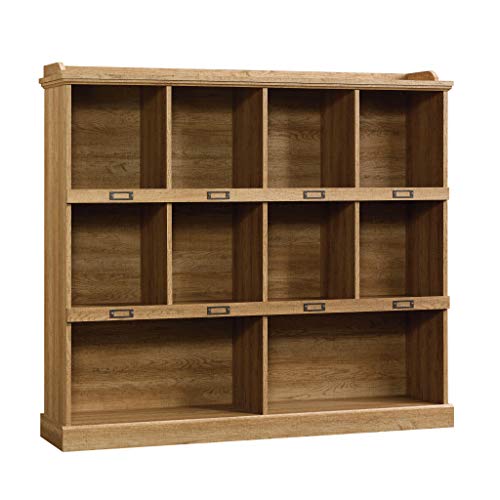
Where to buy
Check the latest price, availability and delivery on Amazon. Orders are placed on Amazon. We may earn a commission from qualifying purchases.
- Best overall for families: Sauder Barrister Lane Bookcase, Scribed Oak — Check on Amazon
- Sauder Bookcase with Doors, Chalked Chestnut — Check on Amazon
- International Concepts Shaker Bookcase, Solid Parawood — Check on Amazon
- Concepts In Wood Traditional Triple Wide Bookcase, Dry Oak — Check on Amazon
- Prepac Nordik 6-Tier Corner Bookcase, Natural Oak — Check on Amazon
See 1 more Amazon option
- VASAGLE 6-Tier Glass Bookshelf, Metallic Gold — Check on Amazon
Read the full guide ↓
Disclosure: As an Amazon Associate, dailyhomedecorating.com earns from qualifying purchases. Links to Amazon on this page are affiliate links; they cost you nothing extra. Listing details such as price and availability change often, so check the current Amazon listing before you buy.
Choosing the best bookcase for families under $1000 is a different exercise from choosing one for a quiet, adults-only living room. A family bookcase gets climbed toward, crashed into, loaded by small hands at the bottom and by teenagers at the top, and asked to store two incompatible things at once: the books and objects you want on display, and the board games, craft supplies, school overflow and charging cables you very much do not. It also has a safety job no other furniture in the room carries — a tall, loaded case is the classic tip-over hazard in a home with children, so stability and anchoring are not footnotes in this guide; they are selection criteria. The good news is that a generous budget genuinely helps here: it buys lower, wider formats, doors that close on the chaos, cubbies that give every category a labeled home, and construction that survives family life instead of merely photographing well before it.
The six picks below each solve a family problem. The Sauder Barrister Lane leads the guide because its ten labeled cubbies are, functionally, a household operating system — every kind of family clutter gets a named home at a height children can reach. The Sauder bookcase with doors hides the untidy half of family storage behind framed doors while keeping deep shelves for games and big books. The International Concepts Shaker is solid parawood at a child-friendly 48 inches, finishable in a wipeable paint you choose. The Concepts In Wood triple wide is the whole-family library wall for homes where everyone reads. The Prepac Nordik turns a playroom or bedroom corner into six tiers of vertical storage. And the VASAGLE glass case is included honestly — as the pick for the grown-up end of the room or for families with older children — with its cautions stated plainly. Families working with less room should also see our guide to the Best Bookcase For Families Under $700, and everyone should read the safety section below before loading a single shelf.
A word about how this guide treats safety, because it shapes every review. Any bookcase taller than about four feet in a home with children should be anchored to a wall stud — full stop, no exceptions for “it feels heavy.” Weight does not prevent tipping; a child climbing open shelves moves the load exactly where physics least wants it. Every tall pick below is reviewed with its anchoring reality in mind, heavy items are assigned to low shelves throughout, and the low-format picks (the Barrister Lane and the Shaker) earn their places partly because their geometry is inherently more forgiving. Spend five of your thousand dollars on a proper anti-tip kit if your pick does not include one; it is the best-value line item in this entire guide.
Finally, a note on realism: family storage fails when it is designed for the family you wish you had. If your household will not maintain a labeling system, the Barrister Lane’s cubbies still work as open bins — but if it will, they are transformative. If doors will simply be left open, an open case is the honester buy. The reviews below describe how each case behaves in an actual busy home, including the parts of family life — sticky fingers, marker incidents, the great game-box avalanche — that showroom photography leaves out.
In this guide
Quick Picks
| Pick | Bookcase | Best for | Size (W × D × H) | Amazon |
|---|---|---|---|---|
| Best overall for families | Sauder Barrister Lane, Scribed Oak | Labeled cubbies, kid-reach storage | 53.2 × 12.1 × 47.5 in | Check on Amazon |
| Best for hiding clutter | Sauder Bookcase with Doors, Chalked Chestnut | Doors for games, gear and mess | 35.3 × 13.2 × 69.8 in | Check on Amazon |
| Best low and solid | International Concepts Shaker, Unfinished | Solid wood at child height | 48 in tall, Shaker profile | Check on Amazon |
| Best family library | Concepts In Wood Triple Wide, Dry Oak | A bay for every reader | 72 × 10.6 × 72 in | Check on Amazon |
| Best for corners | Prepac Nordik Corner, Natural Oak | Playroom and bedroom corners | 23.3 × 23.3 × 71.5 in | Check on Amazon |
| Best for older kids’ rooms | VASAGLE 6-Tier Glass, Metallic Gold | Display for collections and trophies | 31.5 × 11.8 × 70.9 in | Check on Amazon |
How These Picks Were Chosen
We filtered the under-$1000 field through a family’s priorities, which are not a smaller household’s priorities. First, stability and format: low and wide cases scored up, towers scored only with a credible anchoring story, and every pick had to stand sensibly in a room where balls, dogs and running children are part of the environment. Second, storage that matches family reality — cubbies sized for bins, doors for the mess, depth for board-game boxes and picture books, which are wider and more awkward than adult novels. Third, surfaces that forgive: finishes that wipe clean, solid wood that can be sanded after the inevitable marker incident, and no delicate detailing at toddler height. Fourth, verified identity — real models from established makers (Sauder, Prepac, International Concepts, Concepts In Wood, VASAGLE) confirmed against listings and retailer data, because a family purchase has to be replaceable and supportable for years. Fifth, reach: at least some storage in every pick sits at heights children can use themselves, because a family bookcase children cannot reach is just a parent-fetching machine.
We deliberately included one honest stretch pick — the glass VASAGLE — because families are not one age. Households with teenagers, or a defined grown-up zone in an open-plan room, may want exactly that display case; households with toddlers should read its limitation and choose differently. Prices move in this category, so check price on Amazon rather than trusting any printed number; the under-$1000 framing is the ceiling we selected against. Our companion guide to the Best Bookcase Under $1000 covers the same tier from a general buyer’s angle, and the Best Bookcase For Families Under $400 guide covers the same family logic at a smaller budget.
What did not make the cut: two tall, narrow towers whose proportions were tip-prone even by tower standards, a white-gloss case whose finish would record every fingerprint and scuff a family produces within a week, and several open cube systems with proprietary connectors — when a connector breaks in year three of family service, “proprietary” means the whole unit is landfill. The six survivors are cases a family can load, label, hide things in, and lean on for a decade.
The 6 Best Bookcases for Families Under $1000
Sauder Barrister Lane Bookcase, Scribed Oak (414724)
Who it suits: Families whose core problem is categories — many kinds of things, owned by many people, none of them with a home. If your living room floor currently hosts the overflow, start here.
The Barrister Lane is 53.15 inches wide, 12.13 inches deep and 47.52 inches tall, divided into ten storage cubbyholes, each of which accepts an ID label tag. That combination — cubbies plus labels plus a height children can reach — is the most family-functional format in this guide. Board games get a cubby. Each child gets a cubby. The library books that must not migrate get a cubby. Craft supplies, remotes, the tablet chargers: cubbies. The gallery-style top, edged to keep things in place, becomes the display surface for the family’s presentable objects at a height where they are seen but not grabbed. The Scribed Oak finish has a weathered, cottage character that hides the scuffs of family life better than gloss finishes do, and the low, wide stance is inherently the most tip-resistant geometry here — though in a home with climbers, anchor it anyway.
Pros:
- Ten cubbies with ID label tags — a system the whole family can follow
- 47.5-inch height puts storage within children’s reach
- Wide, low stance is the most stable format in this guide
- Gallery top displays family objects safely above grab height
Honest limitation: Cubbies are fixed-format: tall art books and oversized picture-book collections will not fit every cubby, and per-cubby loads should stay moderate. It organizes family life brilliantly; it is not a heavy reference library.
Choose it if your family’s problem is “everything lives on the floor.” Skip it if your collection is mostly tall books — the doored Sauder or the triple wide below will fit them better.
Living with it: The Barrister Lane works when the labels are treated as law for the first month — after that, the system runs itself and tidying becomes a five-minute reset instead of a negotiation. Put the heaviest cubbies (games, dense books) along the bottom row, keep one cubby deliberately empty as the household’s “incoming” slot, and let children own their cubbies completely; a labeled space a child controls is a space a child tidies. Under a wall-mounted TV or along the play wall of a family room, it quietly becomes the hardest-working furniture in the house.
Sauder Bookcase with Doors, Chalked Chestnut (426310)
Who it suits: Families who want the room to look calm at adult eye level while family life continues at full volume behind closed doors.
At 35.28 inches wide, 13.23 inches deep and 69.76 inches tall, this is the deep-storage pick: three adjustable shelves in the open upper section for the books and objects you are happy to display, and a hidden storage area behind framed doors for everything else. The 13.2-inch depth is the family-relevant spec — board-game boxes, big picture books, storage bins and the console accessories all fit without the overhang that makes shelves look chaotic. The Chalked Chestnut finish and decorative metal hardware give it a proper furniture presence, and at roughly 89 pounds assembled it feels planted. In family terms, the doors are the feature: guests arrive, doors close, and the room’s entire untidy infrastructure disappears in four seconds.
Pros:
- Doors hide games, gear and clutter instantly
- Deepest shelves here — 13.2 inches fits bins and big game boxes
- Three adjustable shelves adapt as children grow
- Substantial, furniture-grade presence and weight
Honest limitation: At nearly 70 inches tall in a child’s environment, the wall anchor is non-negotiable — fit it before loading, to a stud. It is also a two-person build, and the doors need a final adjustment once the case is loaded and level.
Choose it if hidden storage and deep shelves top your list. Skip it if you cannot anchor to a wall — choose the low Barrister Lane or the Shaker instead.
Living with it: Load it the way families actually live: heaviest games and reference books on the fixed bottom shelf behind the doors, children’s current favorites on the lowest open shelf where they can serve themselves, and the breakable display objects on top, out of the climbing zone. The adjustable shelves earn their keep over years — picture-book height now, chapter-book height later, adult shelves eventually — which is exactly the lifespan a family purchase at this price should have.
International Concepts Shaker Bookcase, Solid Parawood, Unfinished
Who it suits: Families who want solid wood, a child-height profile, and a finish they control — including the ability to repair the evidence of childhood.
International Concepts builds this Shaker case from solid parawood — real hardwood throughout, from a maker whose whole catalog is solid wood. At 48 inches tall, every shelf sits within a school-age child’s reach, and the low profile removes the climbing incentive that tall towers present. It arrives unfinished, which for a family is a feature disguised as homework: you choose the finish, and the smart family choice is a durable painted finish in a color that forgives — painted parawood wipes clean, touches up in minutes with leftover paint, and can be repainted entirely when the room graduates from nursery colors to teenage ones. Solid wood also absorbs family accidents differently from laminate: a dent is character, a scratch can be sanded, and nothing ever peels.
Pros:
- Genuinely solid parawood — sandable, repairable, refinishable
- 48-inch height: reachable by children, low tip profile
- You choose a wipeable, touch-up-friendly painted finish
- Shaker styling survives every redecoration of a growing room
Honest limitation: It arrives unfinished — budget a weekend and materials before it holds a book. And 48 inches of height means fewer shelves than the tall picks; this is a child’s and family’s working case, not the whole library.
Choose it if you want the case children use daily to be solid, low and repairable. Skip it if you need maximum capacity or a case finished on delivery day.
Living with it: In a child’s bedroom it becomes the self-serve library that builds independent readers; in a family room it holds the rotating current collection while the archive lives elsewhere. Keep the leftover paint — you will use it twice a year for thirty seconds and the case will look new for a decade. Felt pads under the bookends and a no-drinks rule are the only other management it asks for.
Concepts In Wood Traditional Triple Wide Bookcase, Dry Oak (MI7272-CCC)
Who it suits: Reading families — the households where every member has a collection, the school projects need reference shelf space, and the “family library” is a real room function rather than a decorating idea.
Seventy-two inches wide, 72 inches tall and 10.63 inches deep, with fifteen shelves across three bays: this is the case that gives every reader a territory. One bay per parent, one for the children, or one bay per subject with the family reference shelf in the middle — the three-bay format makes either system physical. Concepts In Wood builds with genuine wood veneers and solid wood molding under a ten-step polyurethane finish the maker describes as stain-resistant — a specification that matters in a house where juice boxes and homework coexist with books. The Dry Oak finish is warm and traditional, the kind of library wall that makes a family room feel like the house’s intellectual center, which in a reading family it is.
Pros:
- Fifteen shelves across three bays — a territory for every reader
- Genuine wood veneer with a stain-resistant polyurethane finish
- Traditional library presence the whole family grows into
- Adjustable shelving across bays adapts to changing collections
Honest limitation: It is a six-foot commitment: heavy, a serious assembly project, and it must be anchored — a case this size in a family home gets the full strap-to-stud treatment, no debate. The 10.6-inch depth suits books better than deep bins.
Choose it if your family’s collections have outgrown every case you own. Skip it if your widest wall is spoken for or your children are at the peak climbing age and you cannot anchor — revisit it in a few years.
Living with it: Assign the bays on day one and defend the borders lightly — the system survives because swaps are allowed but territories are real. Children’s bay at their height, with their shelf heights adjusted as they grow; the step stool lives beside the case for the top shelves, and the top shelves hold the family’s least-touched reference, not the bedtime favorites. A library wall also teaches a quiet lesson by existing: books are furniture-grade citizens in this house.
Prepac Nordik 6-Tier Corner Bookcase, Natural Oak (SBR-2210-1)
Who it suits: Families short on wall but long on corners — playrooms, children’s bedrooms and family rooms where every straight wall is already working and the corner is doing nothing.
The Nordik stands 71.5 inches tall in a 23.25 by 23.25 inch corner footprint, with six tiers and legs designed to sit flush into the corner. In a playroom, that geometry is gold: the corner was never going to hold anything else, and six tiers of it hold a rotating toy-and-book library at heights that stack by age — toddler books and soft toys low, chapter books and games in the middle, the breakable and the “ask a parent” items up top. The natural oak laminate finish wipes clean, the mid-century lines keep a child’s room from looking like a warehouse, and Prepac’s flat-pack experience shows in a case that assembles without drama. Because it touches two walls, anchoring is easy and doubly secure.
Pros:
- Converts a dead corner into six tiers of family storage
- Height stacks storage by age — low for little kids, high for valuables
- Wipe-clean laminate finish suits playrooms
- Two-wall contact makes anchoring simple and solid
Honest limitation: Corner shelves are not bin-shaped — wide game boxes and big bins do not fit the geometry, and the stated per-shelf weight limit is modest. It is a books-and-toys corner, not heavy storage.
Choose it if a corner is your only free space. Skip it if your storage is mostly wide bins and boxes — the Barrister Lane’s cubbies fit those better.
Living with it: Corners go dark, so give the Nordik the brightest books and a small plant or lamp nearby; in a child’s room it pairs naturally with a reading chair angled into the corner, making a nook children genuinely claim as theirs. Rotate the low shelves with the seasons and the current obsessions — the corner library stays interesting because it changes, and the out-of-rotation stock lives in the doored Sauder or a closet.
VASAGLE 6-Tier Bookshelf, Tempered Glass, Metallic Gold (ULGT502A01)
Who it suits: Families with older children and teenagers — or households with a defined grown-up zone — who want a display case for trophies, collections, plants and the objects that make a room feel finished.
At 31.5 inches wide, 11.8 inches deep and 70.9 inches tall, the VASAGLE pairs six tempered glass shelves with a metallic gold frame, and what it offers a family is a place where the precious things live visibly: the trophies, the Lego builds that survived, the ceramics, the good editions. Glass keeps the room bright, wipes clean in seconds — no small thing in a family home — and the open frame means a fully loaded case still feels light. We include it with eyes open: in a home with toddlers, glass shelving at climbing height is the wrong purchase, and no styling benefit changes that. In a home with a ten-year-old collector, it may be exactly right, and it will still be right when that collector is seventeen.
Pros:
- Tempered glass displays collections, trophies and builds beautifully
- Wipes clean in seconds — family-proof surface
- Six tiers at nearly 71 inches in a bright, open format
- A case teenagers do not outgrow aesthetically
Honest limitation: Not for homes with very young children, and not for heavy book walls — glass takes mixed display loads, not six tiers of hardcovers. Fingerprints are a weekly wipe, forever.
Choose it if your children are older and display is the job. Skip it if anyone in the house is under five — choose any other pick in this guide and revisit glass later.
Living with it: Give each child a shelf that is theirs to curate and the case becomes a family gallery that updates itself — this season’s obsession at eye level, last season’s retired upward. Anchor it like every tall case here, keep heavy objects off the top tier, and let the negative space do the styling work: glass looks expensive when it is not crowded.
Safety First: Anchoring, Loading and Placement in a Family Home
This section matters more than any pick above it. Bookcases are tall, narrow and front-heavy when loaded, and a child climbing shelves to reach a top-shelf treasure applies force at exactly the worst point. The rules are simple and absolute. Anchor every case over four feet tall to a wall stud with a proper anti-tip strap or bracket — into the stud, not into drywall anchors alone. Load heavy low: the densest books, games and bins belong on the bottom shelves of every case, which lowers the center of gravity and the bow risk at once. Keep climbing incentives low: the toy or book a child wants most should never live on the top shelf of a tall case. Mind the doors: doored cases get their doors closed in play hours, because an open door is a handle and a handle is an invitation.
Placement helps too. Tall cases belong against walls away from the room’s running lanes; corners (the Nordik’s whole idea) are naturally protected positions. Low cases like the Barrister Lane and the Shaker reduce the stakes of everything above — which is why, in homes with children under six, this guide quietly hopes you start there and treat the tall picks as anchored, considered purchases rather than defaults.
Comparison Table
| Bookcase | Format | Family strength | Watch out for | Amazon |
|---|---|---|---|---|
| Sauder Barrister Lane | Wide, low cubbies | Labeled system, kid-reach | Fixed cubby sizes | Check on Amazon |
| Sauder with Doors | Tall, doored | Hides clutter, deep shelves | Must be anchored | Check on Amazon |
| International Concepts Shaker | Low, solid wood | Repairable, child height | Arrives unfinished | Check on Amazon |
| Concepts In Wood Triple Wide | 72-in library wall | A bay per reader | Big, heavy, anchor essential | Check on Amazon |
| Prepac Nordik Corner | Corner tower | Uses dead corner space | Modest shelf loads | Check on Amazon |
| VASAGLE 6-Tier Glass | Tall, open glass | Display for older kids | Not for toddlers | Check on Amazon |
How to Choose the Best Bookcase for Your Family
Start with your children’s ages, not your taste. Under six: low, wide, anchorable, nothing glass, nothing climbable-looking. Six to twelve: doors and cubbies earn their keep, and children can own low shelves in taller cases. Teenagers: buy the case you actually like — the VASAGLE and the library wall both come into play — because the safety constraints relax and the aesthetic ones take over.
Inventory what the case must store. Family storage is wider than book storage: game boxes, picture books, bins of small toys, school supplies, devices. Measure the biggest box and the widest bin, then check depth and cubby dimensions against them. The doored Sauder’s 13.2-inch depth and the Barrister Lane’s cubbies exist because standard 10-inch bookcase shelves reject standard family objects.
Decide what must disappear. Every family has a category that makes the room look undone — for most, it is games, chargers and school paper. If that category is large, doors are not a style choice but a sanity one, and the doored Sauder or the Barrister’s covered-by-system cubbies should lead your shortlist.
Choose finishes for the marker test. Ask of every finish: what happens when a felt-tip, a juice box and a toy car have all met this surface in the same week? Laminate wipes, polyurethane shrugs, painted solid wood touches up, and gloss white records everything. Family furniture is maintained, not preserved — buy the finish whose maintenance you will actually do.
Plan for the family in five years. Adjustable shelves, neutral finishes and formats that work in a bedroom later as well as a family room now are what make a four-figure case a decade purchase. The toddler’s cubby wall becomes the schoolchild’s homework station storage; the library wall just keeps absorbing readers. Buy the case that has a second act.
Organizing a Family Bookcase by Zone
However good the case, a family bookcase works because of its zones, and the zones follow one principle: altitude equals access. The bottom zone — everything below a child’s shoulder — belongs to children entirely: their books spine-out at their spacing, their bins, their current projects. This is the zone that must survive being “tidied” by a four-year-old, so nothing breakable, nothing precious, and nothing that matters if it lands spine-up. The middle zone is the family’s shared working storage: games in play this month, the household reference shelf, the library books due back, the charging basket. It is the highest zone children should serve themselves from, with a step stool if the case is tall — and the stool lives beside the case, not in a closet, or it will never be used. The top zone belongs to adults: display objects, the good editions, the breakables, and anything whose loss would genuinely sting. Things migrate downward as children grow and upward as they prove fragile, and a five-minute re-zone each season keeps the whole system honest.
Within the zones, two small disciplines do the heavy lifting. The first is the one-in-one-out shelf: children’s collections grow by accretion, and a bookcase with no exit fills until it fails; a donation box that lives beside the case makes outgrowing a book a normal event rather than a storage crisis. The second is labeling at child reading level — pictures for pre-readers, words for readers — because a system a child cannot read is a system only adults maintain, and systems only adults maintain are called “tidying up after everyone,” which is the outcome this guide exists to prevent. The Barrister Lane’s ID tags make both disciplines physical, but they work in any case in this guide with a handful of bin labels.
One Case, Many Childhoods: Planning for Growth
A family bookcase bought well at this price serves three different households in sequence. In the toddler years it is mostly a safety object and a bin wall: low shelves, soft and board books, everything heavy at the bottom, doors and cubbies doing crowd control. In the school years it becomes infrastructure: homework reference, project supplies, a library that grows by the foot, and the first collections that deserve display rather than storage. In the teenage years it turns into territory — a teen’s own shelves are a small sovereignty, and the family case either grants it gracefully (a bay, a corner, a glass shelf of their own) or loses the teenager’s things to the bedroom floor.
Buying for that arc is why this guide weights adjustability, neutral finishes and second-act formats so heavily. Adjustable shelves re-gap from picture books to paperbacks without a new purchase. A finish that can be repainted (the solid-wood Shaker) or that never dated in the first place (oak tones, chalked neutrals) survives the room’s redecorations. And a format with a second act — the cubby wall that becomes craft and hobby storage, the library wall that simply keeps reading, the corner case that moves to a first apartment — is worth more than a slightly prettier case that only makes sense for a five-year-old’s room. The families who get a decade from one purchase are not the ones who bought the most expensive case; they are the ones who bought the case whose third act they could already picture.
Common Buying Mistakes
Buying tall and narrow for a child’s room. It is the worst combination in the category: tip-prone, climbable-looking, and mostly out of the child’s reach. Low and wide beats tall and narrow until children are well into school age.
Skipping the anchor because the case is heavy. Weight does not prevent tipping — geometry and climbing do the damage, and a loaded case falls with more force, not less. Strap it to a stud.
Storing the favorite toy on the top shelf. You have built a climbing incentive at the most dangerous height. Favorites live low; the top shelf is for things children are indifferent to.
Choosing open shelving for a family whose clutter is visual. Some households are calmed by systems and doors; open shelves display their chaos faithfully. Be honest about which household yours is.
Forgetting the picture books. Children’s books are oversized, square and awkward, and they defeat standard shelf spacing. Measure them, and favor adjustable shelves or cubbies for the years when they dominate the collection.
Final Recommendation
For most families, buy the Sauder Barrister Lane: ten labeled cubbies at child height in a low, wide, stable format is the closest thing this category has to a family operating system, and its gallery top keeps the grown-up display alive above the action. If your family’s pain is visible clutter, step to the Sauder Bookcase with Doors and let the doors do their four-second magic — anchored to a stud, loaded heavy at the bottom. The Shaker is the solid-wood, child-height purist pick; the Concepts In Wood is the reading family’s library wall; the Nordik rescues the corner; the VASAGLE waits, beautifully, for the years when display matters more than durability. Choose by your children’s ages, anchor whatever you buy, and the family bookcase problem is solved for a decade.
Care, Repair and the Family Damage Playbook
Family furniture is maintained under fire, so here is the honest playbook by material. Laminate (the Barrister Lane, the Nordik) shrugs off juice, glue sticks and most markers with a damp cloth; permanent marker usually yields to a dab of rubbing alcohol on the cloth, tested in a hidden spot first. Polyurethane-finished veneer (the Concepts In Wood) resists stains by design — wipe spills promptly, use coasters as a household habit rather than a rule you enforce, and never drag game boxes across it when a lift would do. Painted solid wood (the Shaker, finished your way) is the most repairable surface in family furniture: scuffs touch up from the leftover paint pot in under a minute, dents steam out or sand out, and a full repaint resets the case for a new room or a new child. Glass (the VASAGLE) wants a microfiber cloth weekly and delivers a like-new surface every time — the one material here that never accumulates a history.
Two habits protect every material at once. Felt pads under anything heavy or rough that lives on a shelf — bookends, storage boxes, the trophy with the gritty base — prevent the slow scratch archaeology that makes cases look tired. And a twice-yearly five-minute inspection — shelf pins seated, anchor strap taut, door hinges snug, feet level — catches the small looseness that, ignored, becomes the wobble a family eventually blames on the furniture rather than the maintenance. None of this is burdensome; all of it is the difference between a case that serves a childhood and one that serves a warranty period.
Frequently Asked Questions
What is the safest bookcase format for toddlers?
Low and wide, with no glass and nothing that invites climbing — in this guide, the 47.5-inch Barrister Lane and the 48-inch solid-wood Shaker. Even low cases should be anchored in a climber’s home, heavy items belong on the bottom, and the favorite toy never lives on top.
Do I need to anchor a bookcase if it is very heavy?
Yes. Tipping is a geometry problem, not a weight problem: force applied high on a tall case multiplies at the base. A strap into a wall stud takes minutes, costs almost nothing, and is invisible in use. There is no weight at which a tall bookcase in a child’s home becomes exempt.
Are cubbies or shelves better for children’s books?
Cubbies win for mixed family storage because they corral categories and fit bins; adjustable shelves win for book collections because picture books and chapter books need different gaps. Many families use both — cubbies for the system, one adjustable case for the library.
How do I keep a family bookcase tidy without constant effort?
Give every category a fixed, labeled home, keep one slot deliberately empty for incoming items, and put children’s own things at their height so tidying is something they can do rather than watch. Systems fail when the home for an item is unclear, not when children are careless.
Is glass shelving ever OK in a family home?
With older children and teenagers, yes — tempered glass is strong, wipes clean and displays collections well, anchored and loaded sensibly. With children under five, we recommend against it in their spaces; every other pick in this guide serves young families better.
What finish survives family life best?
For wiping: quality laminate and polyurethane finishes. For repairing: painted solid wood, which touches up in minutes and can be repainted as rooms change. Gloss white and delicate veneers at toddler height are the finishes families regret.
How much should a family spend on a bookcase?
Spend on format and safety-relevant construction — doors, cubbies, depth, stability — rather than on decoration. This under-$1000 tier buys all of those honestly; below it, our family guides at lower budgets keep the same logic with simpler materials.
Where should a family bookcase go in the room?
Against a wall, out of the main running lane, and ideally where it can be anchored into a stud — corners and the wall beside a reading chair are the classic spots. Avoid placing tall cases where a door swings into them or directly behind a play area where balls and ride-on toys travel; the case should be part of the room’s calm edge, not its collision zone. Low cases can sit under windows and under wall-mounted screens, where their tops become useful display ledges.
How do I stop children climbing the bookcase?
Remove the incentives and the opportunity together: favorites and treasures live on low shelves, never on top; do not store tempting items above the case; keep chairs and climbable furniture away from tall cases; and anchor the case regardless, because supervision has gaps and physics does not. If climbing is persistent, choose the lowest format that meets your storage need — it is the honest engineering answer.
Can a family bookcase work in a child’s bedroom instead of the living room?
Yes — for many families it works better, because the bedroom case can be entirely the child’s: low, labeled, and theirs to manage. The low Shaker and the corner Nordik are the natural bedroom picks in this guide. Keep the shared family storage (games, reference, the parents’ books) in the living room case, and let the bedroom case build the habit that matters most: a child who shelves their own books is a reader with a system.
Are bookcases with doors better than open bookcases?
For shared family rooms, usually — doors convert visual noise into a calm wall in seconds and keep dust off what is behind them. Open cases win where the collection itself is the decor and the household’s clutter is low. Many families land on one of each: doors where life happens, open shelves where books are the point.
How should I arrange books so a family bookcase looks good, not just full?
Use the zones in this guide — children low, shared in the middle, display on top — then give each shelf one resting point: a horizontal stack, a plant, or a framed photo among the upright rows. Cubbies look best mostly filled with one or two left light; a library wall looks best with a few gaps kept deliberately. Five minutes of editing per shelf is the entire secret, and it survives because the system underneath it is doing the real work.
What about bookcases for a shared kids’ room or a playroom corner?
Prioritize the corner and the cubbies: a corner tower like the Nordik keeps the room’s walls free for beds and desks while stacking storage by age, and a cubby case gives siblings territories that reduce disputes to a labeling question. Keep the shared favorites low, each child’s own shelf inviolable, and the breakables in the grown-up room’s case entirely — geography prevents more arguments than rules do.
Related guides: general picks at this tier — Best Bookcase Under $1000; smaller family budget — Best Bookcase For Families Under $700; modern family rooms — Best Bookcase For Modern Homes Under $1000; small family spaces — Best Bookcase For Small Apartments Under $1000; tight rooms — Best Bookcase For Small Spaces Under $1000.


