Where to buy
Check the latest price, availability and delivery on Amazon. Orders are placed on Amazon. We may earn a commission from qualifying purchases.
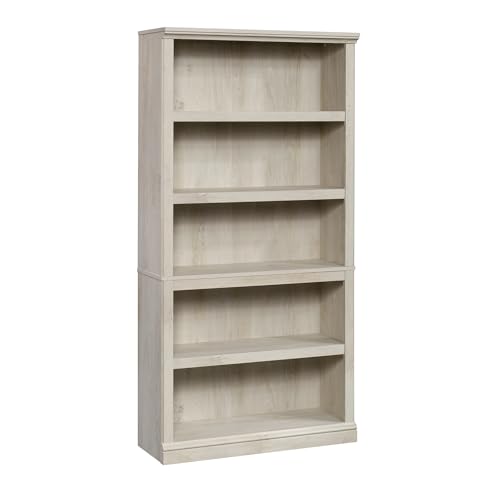
- Best overall: Sauder Select 5-Shelf Bookcase, Chalked Chestnut — Check on Amazon
- Nathan James Theo 6-Shelf Tall Bookcase, Rustic Oak/White — Check on Amazon
- HSH Industrial 5-Tier Wide Etagere Bookcase, Rustic Oak — Check on Amazon
- Tribesigns 72-Inch 6-Tier White Library Bookcase — Check on Amazon
See 2 more Amazon options
- Nathan James Theo 5-Shelf Bookcase, Brown Walnut/Black — Check on Amazon
- Tribesigns 6-Tier Corner Shelf, 75-Inch Narrow Tower — Check on Amazon
Read the full guide ↓
Disclosure: As an Amazon Associate, dailyhomedecorating.com earns from qualifying purchases. Links to Amazon on this page are affiliate links; they cost you nothing extra. Listing details such as price and availability change often, so check the current Amazon listing before you buy.
Finding the best bookcase for small spaces under $700 is really a search for narrow towers, corner units and shallow ladders that fit where a wide case never will. A $700 ceiling changes the conversation completely compared with budget shelving. Below it sit the wobbly flat-pack towers that sag under a full row of hardcovers within a year; at this level you can demand engineered panels that stay flat, metal frames that do not flex, adjustable shelves that adapt as your collection changes, and finishes that still look intentional after years of dusting. This guide is written for anyone with a nook, hallway, alcove or compact room, and every pick below was chosen to be a genuine, verifiable Amazon listing that fits honestly inside the under-$700 framing — check price on Amazon on the live listing before you buy, because furniture pricing moves with finish, size and season.
Measure depth before width. In a small space a 12-inch-deep case preserves the room while a 16-inch-deep one eats it. Corners, the wall beside a door, and the gap beside a sofa are your real sites — measure those, not the empty middle of the wall. That single measurement step eliminates half the disappointment in furniture buying. The other half is load: books are far heavier than most people estimate. A single shelf-width row of hardcovers can outweigh a small child, and a fully loaded five-shelf case concentrates that weight on four small feet. Every case in this guide was screened for the structural answers to that load — cross-bracing, wall anchoring, thick shelves or metal frames — and the detailed reviews below are frank about which designs carry books best and which are happier mixing books with lighter display pieces. Readers building a whole wall of storage should also compare the step-up view in Best Bookcase Under $1000 and the value view in Best Bookcase Under $400 before committing, because the right answer sometimes sits one tier away from the one you searched for.
Our short answer is this. Start with the Sauder Select if you want one wide, traditional, endlessly adjustable case that simply works. Choose a Nathan James Theo ladder if your room rewards an open, airy profile and you can anchor to the wall. Take the HSH when width and an industrial frame matter most, the white Tribesigns library case when a bright modern wall of shelving is the goal, and the Tribesigns corner tower when the only free space you own is a corner. The sections below explain how the picks were chosen, review each case in detail, compare them side by side, and close with the measuring, loading and anchoring mistakes that matter most for this lens.
In this guide
Quick Picks: Best Bookcase for Small Spaces Under $700
The table below matches each case to the household and room it serves best. Full reasoning for every row follows in the detailed reviews.
| Buyer type | Pick | Why it stands out | Link |
|---|---|---|---|
| Best overall | Sauder Select 5-Shelf Bookcase, Chalked Chestnut | Wide traditional case with three adjustable shelves — the most flexible full-size storage in this budget | Check on Amazon |
| Best tall ladder for display | Nathan James Theo 6-Shelf Tall Bookcase, Rustic Oak/White | Tall six-shelf ladder that leans light and airy — books below, display above | Check on Amazon |
| Best wide and heavy-duty | HSH Industrial 5-Tier Wide Etagere Bookcase, Rustic Oak | Widest case here at 47.2 inches — long rows of books and decor on one wall run | Check on Amazon |
| Best modern white library | Tribesigns 72-Inch 6-Tier White Library Bookcase | Clean white six-tier library case that brightens a modern room instead of darkening it | Check on Amazon |
| Best warm modern ladder | Nathan James Theo 5-Shelf Bookcase, Brown Walnut/Black | Walnut-and-black ladder with a warmer, moodier modern look than the white Theo | Check on Amazon |
| Best for corners and narrow gaps | Tribesigns 6-Tier Corner Shelf, 75-Inch Narrow Tower | Narrow 75-inch corner tower that turns dead corner space into six shelves | Check on Amazon |
How These Picks Were Chosen
We did not hands-on test these bookcases. Instead we compared manufacturer specifications and live Amazon listings — dimensions, shelf counts, adjustability, materials and anchoring — and kept only models whose details could be verified from the listing or the maker’s published specifications. Any case whose size, material or shelf configuration could not be confirmed was excluded rather than guessed at, and that verification is documented in the sources file published alongside this guide.
Small-space cases win on footprint efficiency: tall and narrow beats short and wide, corner geometry reclaims dead space, and open backs keep a compact room feeling open instead of boxed in. We also applied a budget-honesty filter: a case only belongs in an under-$700 guide if its normal listing position sits comfortably in this tier in its standard finish. Oversized statement pieces and solid-hardwood library furniture that live above this ceiling were left out, however handsome, because recommending a case you cannot actually buy at the searched budget helps nobody.
Structure came next. We looked for at least one of three load answers on every pick: adjustable shelves thick enough to resist sagging, a metal frame that carries the load independently of the boards, or bracing — a back panel, an X-bar or a wall anchor — that stops the slow sideways racking which loosens joints over time. Finally we weighed assembly reality: all six picks are home-assembly furniture, so clear hardware, pre-drilled accuracy and the option of two-person assembly counted in their favor, and each review below states plainly where a second pair of hands is genuinely needed.
The 6 Best Bookcase for Small Spaces Under $700 Picks in Detail
Sauder Select 5-Shelf Bookcase, Chalked Chestnut
Who it suits: Wide traditional case with three adjustable shelves — the most flexible full-size storage in this budget.
The verified specification is the starting point: 35.3 x 13.2 x 69.8 inches, five shelves with three adjustable, engineered wood with slide-on moldings, model 423033, about 83 pounds assembled. Those numbers decide the daily experience more than any styled photograph does. Shelf depth determines whether art books sit flush or overhang; overall height decides whether the top shelf is usable storage or a dust shelf you can barely reach; and the frame or panel construction decides whether the case still feels rigid in year three. Read the listing’s dimension diagram against your own tape measurements before ordering — furniture returns are possible on Amazon, but a 70-inch case is a large object to repackage, and thirty seconds with a tape measure prevents the whole exercise.
At 35 inches wide the Sauder is the widest case a small space should consider, and only where a genuine wall run exists — in return its adjustable shelves swallow a whole collection in one footprint. In daily use, load the heaviest books on the lowest shelves, work upward with lighter rows and display pieces, and leave a little breathing room on each shelf rather than packing every tier solid — a bookcase styled with some negative space looks better and is kinder to the shelves. Dusting is easiest on smooth finishes with a microfiber cloth; open ladder and etagere designs collect dust on more exposed surfaces but reward you with a room that feels lighter and less boxed-in.
- Verified dimensions and shelf configuration as listed above.
- Suits books mixed with display, baskets or media depending on shelf spacing.
- Check price on Amazon — finish and size options change the live listing price.
Assembly is a two-person, unhurried job: the panels are large, the finished case is heavy, and standing it upright safely is the moment a second pair of hands pays for itself. Once placed, the slide-on moldings give the edges a finished look unusual at this level, and the chalked chestnut tone sits comfortably between traditional cherry cases and pale modern ones — one reason it transitions between rooms and decor changes so well over a long ownership.
Honest limitation: Like all home-assembly cases at this level, it is not solid hardwood furniture: respect the maker’s load guidance, anchor tall units to the wall, and expect assembly to take real time rather than minutes.
Choose it if its role in the Quick Picks table matches your room. Skip it if your measurements disagree with its footprint — the right case at the wrong size is the wrong case.
Nathan James Theo 6-Shelf Tall Bookcase, Rustic Oak/White
Who it suits: Tall six-shelf ladder that leans light and airy — books below, display above.
The verified specification is the starting point: Six-shelf wall-mount ladder design, wood shelves on an industrial metal frame, rustic oak shelves with white frame, must be anchored to the wall. Those numbers decide the daily experience more than any styled photograph does. Shelf depth determines whether art books sit flush or overhang; overall height decides whether the top shelf is usable storage or a dust shelf you can barely reach; and the frame or panel construction decides whether the case still feels rigid in year three. Read the listing’s dimension diagram against your own tape measurements before ordering — furniture returns are possible on Amazon, but a 70-inch case is a large object to repackage, and thirty seconds with a tape measure prevents the whole exercise.
Ladders are small-space naturals: the Theo’s frame is shallower than a closed case, the open sides keep sightlines flowing, and six shelves stack a library into the floor area of a single chair. In daily use, load the heaviest books on the lowest shelves, work upward with lighter rows and display pieces, and leave a little breathing room on each shelf rather than packing every tier solid — a bookcase styled with some negative space looks better and is kinder to the shelves. Dusting is easiest on smooth finishes with a microfiber cloth; open ladder and etagere designs collect dust on more exposed surfaces but reward you with a room that feels lighter and less boxed-in.
- Verified dimensions and shelf configuration as listed above.
- Suits books mixed with display, baskets or media depending on shelf spacing.
- Check price on Amazon — finish and size options change the live listing price.
Plan the wall before the build: locate studs, mark the anchor points, and confirm the ladder sits exactly where its lean looks intentional — centered on a wall segment or aligned to a sofa edge. Six shelves reward a loading plan made in advance: books low and dense, a mid-height display band at eye level, and the lightest objects on the top tier where they silhouette against the wall.
Honest limitation: Like all home-assembly cases at this level, it is not solid hardwood furniture: respect the maker’s load guidance, anchor tall units to the wall, and expect assembly to take real time rather than minutes.
Choose it if its role in the Quick Picks table matches your room. Skip it if your measurements disagree with its footprint — the right case at the wrong size is the wrong case.
HSH Industrial 5-Tier Wide Etagere Bookcase, Rustic Oak
Who it suits: Widest case here at 47.2 inches — long rows of books and decor on one wall run.
The verified specification is the starting point: 47.2 x 12.7 x 70.0 inches, five wide tiers, MDF boards on a thick metal frame with reinforced X-shaped cross bar, rustic oak finish. Those numbers decide the daily experience more than any styled photograph does. Shelf depth determines whether art books sit flush or overhang; overall height decides whether the top shelf is usable storage or a dust shelf you can barely reach; and the frame or panel construction decides whether the case still feels rigid in year three. Read the listing’s dimension diagram against your own tape measurements before ordering — furniture returns are possible on Amazon, but a 70-inch case is a large object to repackage, and thirty seconds with a tape measure prevents the whole exercise.
Honestly, the HSH is the exception in this guide — include it only if your ‘small space’ is a long narrow room where one wide, shallow run along the long wall beats two towers competing for corners. In daily use, load the heaviest books on the lowest shelves, work upward with lighter rows and display pieces, and leave a little breathing room on each shelf rather than packing every tier solid — a bookcase styled with some negative space looks better and is kinder to the shelves. Dusting is easiest on smooth finishes with a microfiber cloth; open ladder and etagere designs collect dust on more exposed surfaces but reward you with a room that feels lighter and less boxed-in.
- Verified dimensions and shelf configuration as listed above.
- Suits books mixed with display, baskets or media depending on shelf spacing.
- Check price on Amazon — finish and size options change the live listing price.
The X-braced back is both the structure and the style: it stops the wide span racking and gives the case its industrial signature, so place it where the back can be appreciated or at least not hidden behind a sofa’s full height. Wide tiers invite long, low arrangements — a full row of books beside a horizontal stack and a plant — rather than many small objects, which disappear at this scale.
Honest limitation: Like all home-assembly cases at this level, it is not solid hardwood furniture: respect the maker’s load guidance, anchor tall units to the wall, and expect assembly to take real time rather than minutes.
Choose it if its role in the Quick Picks table matches your room. Skip it if your measurements disagree with its footprint — the right case at the wrong size is the wrong case.
Tribesigns 72-Inch 6-Tier White Library Bookcase
Who it suits: Clean white six-tier library case that brightens a modern room instead of darkening it.
The verified specification is the starting point: About 72 inches tall, six tiers, white finish, large open library format for living room, bedroom or office. Those numbers decide the daily experience more than any styled photograph does. Shelf depth determines whether art books sit flush or overhang; overall height decides whether the top shelf is usable storage or a dust shelf you can barely reach; and the frame or panel construction decides whether the case still feels rigid in year three. Read the listing’s dimension diagram against your own tape measurements before ordering — furniture returns are possible on Amazon, but a 70-inch case is a large object to repackage, and thirty seconds with a tape measure prevents the whole exercise.
Height is the small room’s free resource, and this case spends it fully: 72 inches of shelving on a standard footprint, in a white finish that stops tall storage from looming. In daily use, load the heaviest books on the lowest shelves, work upward with lighter rows and display pieces, and leave a little breathing room on each shelf rather than packing every tier solid — a bookcase styled with some negative space looks better and is kinder to the shelves. Dusting is easiest on smooth finishes with a microfiber cloth; open ladder and etagere designs collect dust on more exposed surfaces but reward you with a room that feels lighter and less boxed-in.
- Verified dimensions and shelf configuration as listed above.
- Suits books mixed with display, baskets or media depending on shelf spacing.
- Check price on Amazon — finish and size options change the live listing price.
A white library case is a backdrop, and backdrops reward planning: decide your color story before loading, because the spines and objects become the room’s palette. The height suits a step-stool household — keep a small, good-looking stool nearby rather than climbing the shelves, and reserve the top tier for the lightest, least-needed items in the house.
Honest limitation: Like all home-assembly cases at this level, it is not solid hardwood furniture: respect the maker’s load guidance, anchor tall units to the wall, and expect assembly to take real time rather than minutes.
Choose it if its role in the Quick Picks table matches your room. Skip it if your measurements disagree with its footprint — the right case at the wrong size is the wrong case.
Nathan James Theo 5-Shelf Bookcase, Brown Walnut/Black
Who it suits: Walnut-and-black ladder with a warmer, moodier modern look than the white Theo.
The verified specification is the starting point: Five-shelf wall-mount ladder, brown walnut wood shelves on a black industrial metal frame, open design, wall anchoring required. Those numbers decide the daily experience more than any styled photograph does. Shelf depth determines whether art books sit flush or overhang; overall height decides whether the top shelf is usable storage or a dust shelf you can barely reach; and the frame or panel construction decides whether the case still feels rigid in year three. Read the listing’s dimension diagram against your own tape measurements before ordering — furniture returns are possible on Amazon, but a 70-inch case is a large object to repackage, and thirty seconds with a tape measure prevents the whole exercise.
The five-shelf Theo fits the wall beside a door or between two windows where a six-shelf tower would crowd the ceiling — same shallow ladder footprint, slightly gentler height. In daily use, load the heaviest books on the lowest shelves, work upward with lighter rows and display pieces, and leave a little breathing room on each shelf rather than packing every tier solid — a bookcase styled with some negative space looks better and is kinder to the shelves. Dusting is easiest on smooth finishes with a microfiber cloth; open ladder and etagere designs collect dust on more exposed surfaces but reward you with a room that feels lighter and less boxed-in.
- Verified dimensions and shelf configuration as listed above.
- Suits books mixed with display, baskets or media depending on shelf spacing.
- Check price on Amazon — finish and size options change the live listing price.
Five shelves at a slightly gentler height make this the ladder for rooms where a six-tier tower would crowd the ceiling line. The walnut tone deepens under warm evening light, which suits reading corners and living rooms used mostly after dark; pair it with a warm-white lamp nearby and the whole corner becomes the room’s evening destination.
Honest limitation: Like all home-assembly cases at this level, it is not solid hardwood furniture: respect the maker’s load guidance, anchor tall units to the wall, and expect assembly to take real time rather than minutes.
Choose it if its role in the Quick Picks table matches your room. Skip it if your measurements disagree with its footprint — the right case at the wrong size is the wrong case.

Tribesigns 6-Tier Corner Shelf, 75-Inch Narrow Tower
Who it suits: Narrow 75-inch corner tower that turns dead corner space into six shelves.
The verified specification is the starting point: 75 inches tall, six narrow tiers, corner/square tower format, rustic open design for small spaces, living room or bathroom. Those numbers decide the daily experience more than any styled photograph does. Shelf depth determines whether art books sit flush or overhang; overall height decides whether the top shelf is usable storage or a dust shelf you can barely reach; and the frame or panel construction decides whether the case still feels rigid in year three. Read the listing’s dimension diagram against your own tape measurements before ordering — furniture returns are possible on Amazon, but a 70-inch case is a large object to repackage, and thirty seconds with a tape measure prevents the whole exercise.
This is the small-space headline pick: corners are the only truly free real estate in a compact room, and 75 inches of corner shelving holds a surprising library without touching a single usable wall. In daily use, load the heaviest books on the lowest shelves, work upward with lighter rows and display pieces, and leave a little breathing room on each shelf rather than packing every tier solid — a bookcase styled with some negative space looks better and is kinder to the shelves. Dusting is easiest on smooth finishes with a microfiber cloth; open ladder and etagere designs collect dust on more exposed surfaces but reward you with a room that feels lighter and less boxed-in.
- Verified dimensions and shelf configuration as listed above.
- Suits books mixed with display, baskets or media depending on shelf spacing.
- Check price on Amazon — finish and size options change the live listing price.
Corner placement has one trap: skirting boards and uneven rental floors can leave a tall narrow tower rocking slightly, so use the adjustable feet or a discreet shim at setup and then anchor as directed. Loaded well — heaviest tier at the bottom, display rising to the top — a corner tower is the most stable-feeling narrow format here, because the corner itself braces two sides.
Honest limitation: Like all home-assembly cases at this level, it is not solid hardwood furniture: respect the maker’s load guidance, anchor tall units to the wall, and expect assembly to take real time rather than minutes.
Choose it if its role in the Quick Picks table matches your room. Skip it if your measurements disagree with its footprint — the right case at the wrong size is the wrong case.
Comparison Table
| Product | Verified specification | Best use | Link |
|---|---|---|---|
| Sauder Select 5-Shelf Bookcase, Chalked Chestnut | 35.3 x 13.2 x 69.8 inches, five shelves with three adjustable, engineered wood with slide-on moldings, model 423033, about 83 pounds assembled | Best overall | Check on Amazon |
| Nathan James Theo 6-Shelf Tall Bookcase, Rustic Oak/White | Six-shelf wall-mount ladder design, wood shelves on an industrial metal frame, rustic oak shelves with white frame, must be anchored to the wall | Best tall ladder for display | Check on Amazon |
| HSH Industrial 5-Tier Wide Etagere Bookcase, Rustic Oak | 47.2 x 12.7 x 70.0 inches, five wide tiers, MDF boards on a thick metal frame with reinforced X-shaped cross bar, rustic oak finish | Best wide and heavy-duty | Check on Amazon |
| Tribesigns 72-Inch 6-Tier White Library Bookcase | About 72 inches tall, six tiers, white finish, large open library format for living room, bedroom or office | Best modern white library | Check on Amazon |
| Nathan James Theo 5-Shelf Bookcase, Brown Walnut/Black | Five-shelf wall-mount ladder, brown walnut wood shelves on a black industrial metal frame, open design, wall anchoring required | Best warm modern ladder | Check on Amazon |
| Tribesigns 6-Tier Corner Shelf, 75-Inch Narrow Tower | 75 inches tall, six narrow tiers, corner/square tower format, rustic open design for small spaces, living room or bathroom | Best for corners and narrow gaps | Check on Amazon |
How to Choose the Bookcase for small spaces under $700
Start with the wall, not the catalog. Measure depth before width. In a small space a 12-inch-deep case preserves the room while a 16-inch-deep one eats it. Corners, the wall beside a door, and the gap beside a sofa are your real sites — measure those, not the empty middle of the wall. Write down three numbers — available width, ceiling height, and the depth you can surrender without crowding the room’s traffic path — and let those numbers shortlist for you. A case that fits the tape always beats a more beautiful case that fits the photograph.
Next, count your books honestly and weigh the plan, not the hope. Measure your current collection in shelf-feet: lay a tape along your existing shelves or stack your books and measure the row. Most households underestimate by a third, then buy a case that is full on day one with nowhere for the collection to grow. Buy roughly a third more shelf space than you currently fill. Then match construction to load: full rows of hardcovers and reference books want the Sauder’s panel construction or the HSH’s metal frame, while mixed book-and-display loads can ride happily on the lighter ladder designs.
Shelf adjustability is the quiet feature that decides long-term satisfaction. Fixed shelves force your storage to obey the manufacturer’s spacing; adjustable shelves let a case absorb tall cookbooks, board-game boxes, vinyl records, storage baskets and a child’s changing book sizes across a decade of use. If you choose a fixed-shelf ladder or etagere, measure your tallest items against its published tier spacing first. Finally, decide the anchoring question before checkout, not during assembly: tall cases must be secured to the wall, ladder cases are designed to be secured to the wall, and if your wall type or lease forbids anchors entirely, choose a lower, wider, freestanding design and load it bottom-heavy.
Finish deserves one practical test: hold it against your floor and your largest existing furniture piece in the room’s actual light. Warm rustic oak flatters warm floors and traditional rooms; white opens small or dark rooms and suits modern schemes; walnut-and-black adds contrast where a room is pale and plain. There is no wrong finish, only finishes fighting the room they live in — a point explored further in Best Bookcase For Modern Homes Under $700 for contemporary rooms and in Best Bookcase For Families Under $700 for high-traffic family spaces.
Assembly, Anchoring and Long-Term Care
Set aside a clear floor area larger than the case itself, a soft blanket to build on, and more time than the box promises. Home-assembly furniture rewards patience at three specific moments: sorting and checking every panel and hardware piece before the first screw turns, because a missing cam discovered at step nine costs an hour; keeping every fastener a quarter-turn loose until the whole frame is square, then tightening in a cross pattern so the case does not lock in a lean; and standing the finished unit upright with two people, lifting from the base rather than pulling from the top. Build the case in the room it will live in whenever the doorway diagonal is in any doubt — a case that fits its wall but not its own doorway is a classic and entirely avoidable disaster.
Anchoring deserves its own paragraph because it is the step most often postponed forever. Fit the anti-tip restraint the same day as assembly, into a stud where the wall allows, and re-check it after the first fully loaded month: new cases settle, carpets compress, and a strap fitted to an empty case can loosen as the real weight arrives. If you rent and your lease restricts fixings, ask — many landlords approve a single small anchor hole in writing precisely because it prevents a far larger damage claim, and the hole fills in minutes at move-out. Households with children or large dogs should treat anchoring as part of the purchase price in time, not an optional accessory.
Care is simple but not zero. Dust with a dry or barely damp microfiber cloth, working top-down so each shelf’s dust does not land on a cleaned one below. Keep cases out of direct, all-day sun where you can — finishes fade unevenly when half a case is sunlit — and lift, never drag, when repositioning: dragging a loaded case racks the joints and can snap a foot. Once a year, during a shelf edit, check the fasteners you can reach and snug any that have worked loose under load cycles. That ten-minute ritual is the difference between a case that feels solid in year five and one that has quietly become furniture you apologize for.
What the Under-$700 Budget Actually Buys
Understanding the tier helps you spend it well. Below this level, cases economize on panel thickness, hardware quality and finish durability, and the compromises show up as sagging shelves and wobbling frames within a few years. In the under-$700 tier those basics are properly funded: shelves thick enough for real book loads, metal frames or braced panels, finishes that survive daily dusting, and hardware that assembles square. What this tier does not buy is solid hardwood throughout, dovetailed joinery or heirloom hand-finishing — and for the overwhelming majority of living rooms, it does not need to. Spend the tier’s headroom on the right size and the right structure for your load, not on the most ornate finish in the range, and check price on Amazon for the exact finish you choose, since finish options within one listing can sit at different live prices.
Common Mistakes
Skipping the wall anchor. Filling a small room with a low, wide case. Low furniture spreads the visual clutter at eye level when seated; tall narrow storage lifts it out of the sightline. More generally: every tall bookcase, however sturdy it feels empty, becomes top-heavy as it fills, and anchoring takes minutes. Do it on assembly day, into a stud where possible, before a single book goes on.
Loading top-down. New owners style the eye-level shelves first and fill downward, which is exactly backwards for stability. Fill the bottom shelf first, keep the heaviest rows lowest, and let the top shelves carry the lightest loads — paperbacks, plants and display pieces.
Ignoring shelf sag. A shelf bowing under a full row of hardcovers is telling you the load exceeds its comfortable span. Redistribute heavy books toward the shelf ends, interleave them with lighter items, or move reference sets to the widest-framed case — sag ignored becomes a shelf that never sits flat again.
Measuring width but not the diagonal. Tall cases are tilted upright during assembly and delivery. A 75-inch tower needs its diagonal clearance in the room and a path through doors and hallways; measure the route, not just the destination, especially in apartments — see also Best Bookcase For Small Apartments Under $700.
Final Recommendation
For most readers, the decision resolves cleanly. The Sauder Select 5-Shelf Bookcase, Chalked Chestnut is the default recommendation — Check on Amazon — because adjustable, wide, traditional storage solves the widest range of rooms and collections at this budget. If your room or lens points elsewhere, follow it without hesitation: the corner tower in Best Bookcase For Small Spaces Under $700 solves a problem no wide case can, and the ladders reward any room that values air and light over maximum cubic storage. Whichever you choose, measure twice, anchor once, load bottom-up — and Check on Amazon alongside your first choice before you decide, because the wide HSH is the one pick whose span changes what a single case can hold.
Finding Bookcase Space You Did Not Know You Had
Small spaces hide shelving sites in plain sight. Audit five of them before concluding there is no room: the corner behind a door’s swing, the wall segment between two windows, the depth beside a wardrobe, the landing or hallway stretch longer than four feet, and the wall above a low piece of furniture such as a desk or dresser, where a wall-mount ladder can start its lowest shelf above the furniture’s surface. The corner tower exists for the first site; the Theo ladders exist for the second and fifth; the narrow end of this guide’s range exists for all of them. Measure each candidate site in width, depth and height, and note skirting boards and outlets — a case that must float two inches off the wall for a plug loses its small-space advantage.
Scale discipline keeps a compact room honest. One tall, narrow case reads as architecture; three small cases read as clutter. If your collection genuinely exceeds one tower, prefer a matched pair of the same narrow design on either side of a window or sofa — symmetry makes multiple units look like one decision. Keep the top of a small-space case clear or carry it deliberately to the ceiling with the lightest display; a half-used top shelf at eye level is what makes tall storage feel oppressive in a small room.
Light and color finish the job. In a compact or north-facing room, white and pale-oak cases return light to the room while dark walnut absorbs it — choose walnut only where the room has light to spare or where you deliberately want a cozy, enclosed reading nook. That single finish decision changes how large the room feels more than any other choice in this guide.
Before You Order: A Five-Minute Checklist
Run this checklist in order and you will avoid nearly every return in this category. One: confirm the three measurements — wall width, ceiling height, and the depth you can surrender — against the listing’s dimension diagram, not the headline photo. Two: confirm the route — doorways, hallway turns and, in apartments, the elevator or stairwell — against the case’s height and its diagonal. Three: decide the anchor point and locate the stud now, while you can still choose a different wall or a different design calmly. Four: count your collection in shelf-feet and check it against the case’s shelf count with a third to spare. Five: choose the finish in the room’s real light, against the floor and the largest furniture piece it will live beside. A case that passes all five checks is almost never returned, and the five minutes cost less than repacking a seventy-inch bookcase.
If two picks both pass, break the tie with the second room test: imagine the case in the next room — or the next home — it might serve. The design that still makes sense there is the one that will still be earning its floor space in ten years, and at this budget that longevity, not any single feature, is what you are really buying.
FAQ
How many books does a bookcase under $700 typically hold?
It depends on width and shelf count rather than price. A five-shelf case around 35 inches wide holds several hundred average books when fully loaded with books alone; most households mix books with display and baskets, so plan by shelf-feet — measure your current rows and add about a third for growth.
Should a tall bookcase always be anchored to the wall?
Yes. Any tall case becomes top-heavy as it fills, and manufacturers of tall and ladder designs supply or specify anchoring for exactly that reason. Anchor into a stud where possible, on assembly day, before loading the shelves.
Are ladder bookcases as strong as traditional cases?
A wall-mounted ladder transfers part of its stability to the wall and suits mixed loads of books and display very well. For maximum rows of heavy reference books on every shelf, a panel case or metal-frame etagere is the more conservative choice.
What is the best bookcase depth for books?
Around 11 to 13 inches suits most books: standard hardcovers and paperbacks sit flush without wasted depth, while much deeper shelves invite double-rowing that hides the back row. Art and coffee-table books are the exception and appreciate the deeper shelves.
Is engineered wood a problem at this price?
Not when it is honestly specified and properly loaded. Quality engineered panels with good edging stay flat and resist the humidity swings that can trouble solid wood; the key is respecting load guidance and keeping heavy rows low.
Still deciding between footprints? Compare the narrower options in the narrower budget options in our under-$300 bookcase guide and the room-by-room guidance in our main under-$700 bookcase guide before you order.


