Where to buy
Check the latest price, availability and delivery on Amazon. Orders are placed on Amazon. We may earn a commission from qualifying purchases.
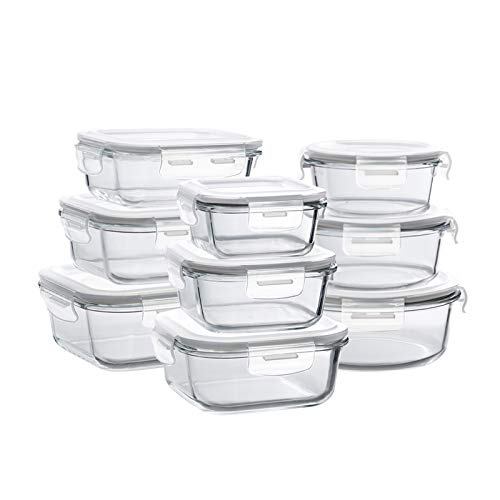
- Best glass system: Bayco 9 Sets Glass Meal Prep Containers with Lids — Check on Amazon
- Rubbermaid Premier Easy Find Lids Containers, Set of 10 (20 Pieces) — Check on Amazon
- Rubbermaid Easy Find Lids Food Storage Containers, 42-Piece Set — Check on Amazon
- Prep Naturals 5 Pack 27 oz Glass Meal Prep Containers, 2-Compartment — Check on Amazon
- Rubbermaid Brilliance Meal Prep Containers, 10-Piece Set — Check on Amazon
- Rubbermaid Brilliance Food Storage Containers, 24-Piece Set — Check on Amazon
Read the full guide ↓
Disclosure: As an Amazon Associate, dailyhomedecorating.com earns from qualifying purchases. Links to Amazon on this page are affiliate links; they cost you nothing extra. Listing details such as price and availability change often, so check the current Amazon listing before you buy.
Finding the best meal prep containers for families under $150 is harder than the wall of near-identical boxes suggests, because ‘meal prep container’ covers three genuinely different tools — divided portion trays, latching travel systems and reheating glass — sold side by side as if they were interchangeable. This guide separates them. Every pick below was chosen for family kitchens, at a budget framed by the under $150 tier, with the trade-offs stated plainly. If you are comparing across budgets, our wider roundup in Best Meal Prep Containers Under $25 shows how the same systems scale.
Family meal prep is a logistics problem wearing a kitchen costume. One Sunday session has to become school lunches, two different work lunches, a toddler’s portions and at least one dinner nobody has to cook on Wednesday — in containers that children can open, adults can seal, and the dishwasher can process in bulk. Counts, mixed sizes and lids that stay attached to their bases matter more here than any single premium feature.
This guide therefore favours systems over singles: graduated sets that cover a 0.5-cup berry pot and an 8-cup family chilli in the same lid language, divided trays that portion adult and child meals differently, and honest notes about which picks are adult-only luxuries. Every pick was judged on family throughput — how a set behaves when fifteen boxes move through it in a week.
Under $150 is a whole-kitchen budget: a premium system for daily meals, a glass set for reheating, tray packs for volume and minis for sauces can all coexist inside it. This guide treats the tier as a build-out — the picks below are the components of one complete, standardised kitchen rather than six alternatives — and the final recommendation assembles them into a shopping order.
A note on who should keep reading and who should not. If your food never leaves the house and your current tubs close properly, the honest advice is to buy the one missing layer — usually mini pots or one latching box — rather than a whole new system. If, on the other hand, your week involves commutes, school bags, a freezer rotation or a pantry that sheds packets, the system thinking in this guide will pay for itself in the first month. The picks are ordered so that the strongest answer for family kitchens at this tier comes first, and every later pick exists because it does a job the earlier ones do not.
In this guide
Quick Picks
In a hurry? This table matches each pick to the job it does best for family kitchens. Full reasoning, limitations and choose-or-skip advice follow in the detailed reviews.
| Buyer type | Pick | Why it stands out | Link |
|---|---|---|---|
| Best glass system | Bayco 9 Sets Glass Meal Prep Containers with Lids | Borosilicate glass with locking lids, in nine graduated sizes | Check on Amazon |
| Best lid organisation | Rubbermaid Premier Easy Find Lids Containers, Set of 10 (20 Pieces) | Lids that snap to bases, in stain-resistant Tritan | Check on Amazon |
| Best high-count household set | Rubbermaid Easy Find Lids Food Storage Containers, 42-Piece Set | Maximum count with snap-together lids for big households | Check on Amazon |
| Best divided glass set | Prep Naturals 5 Pack 27 oz Glass Meal Prep Containers, 2-Compartment | Divided glass for desk lunches that reheat properly | Check on Amazon |
| Best leak-resistant set | Rubbermaid Brilliance Meal Prep Containers, 10-Piece Set | Latching, vented, leak-resistant — the commuter-grade seal | Check on Amazon |
| Best premium full system | Rubbermaid Brilliance Food Storage Containers, 24-Piece Set | The full premium system: twelve latching Tritan containers | Check on Amazon |
How picks were chosen for the best meal prep containers for families under $150
We judged every candidate against the six criteria that decide whether a container system survives real use in family kitchens. Brand fame earned nothing; systems were ranked on how their compartments, lids, materials and counts behave across a full week, and on whether the range can be topped up in the same sizes later. Glass specialists were compared in depth in Best Glass Meal Prep Containers Under $50, and the seal-focused alternatives in Best Airtight Food Storage Containers Under $50.
- Counts and sizes for mixed appetites. A family set needs smalls for children, mids for lunches and larges for family portions in one purchase. Single-size packs force a second system immediately.
- Lids children can close and adults can trust. Click or clip lids give children a definite close and parents an audible check. Lids that snap to bases survive the school-bag round trip far better than loose ones.
- Survivability over elegance. Family containers get dropped, frozen, microwaved and left in bags over weekends. Mid-duty replaceable systems often beat premium ones on real family economics.
- Divided options for picky eaters. Compartments keep foods from touching — a genuine requirement for many children, not a preference — and portion adult meals in the same session.
- Dishwasher throughput. Everything must survive daily top-rack cycles without warping into lid-misfit. Warped family containers are the number one cause of the mystery-leak lunch bag.
- A small-pot supply for sauces and dips. Ketchup for one child, dressing for another, hummus for a third: families consume mini pots faster than any other size. Budget for them explicitly.
Specifications were taken from the makers’ own listings and checked for the details that change how a container behaves: whether a stated capacity is per container or per set, whether a lid is a gasket seal or a plain snap, and whether ‘microwave safe’ applies to the base only or to the vented lid as well. Where a listing was ambiguous, this guide describes the conservative version of the claim — a container that is probably leak-resistant is described as exactly that, never upgraded in print to a promise the maker did not make.
One more filter deserves stating: we favoured systems over singles wherever the budget allowed. A container is a multi-year purchase, and a matched system — shared lids, shared footprints, add-on pieces that still exist next year — outlasts and out-organises a drawer of unrelated bargains. The exception is deliberate and labelled: at the lowest tiers, one excellent small pack is a smarter buy than a poor imitation of a big set, and this guide says so where it applies.
How family systems divide the work: trays, big sets and glass
Divided trays handle the portioning: identical boxes for each child’s lunch, adult trays with the protein section filled deeper. Their sameness is the point — packing four lunches becomes an assembly line, not four decisions.
Big graduated sets — TakeAlongs, Easy Find Lids — handle the storage layer behind the trays: the family-size batch in the 8-cup tub, components in the mids, berries and dips in the smalls. One lid language across all of it keeps a busy fridge legible.
Glass plays a smaller, specific family role: the shared dishes. A family portion baked, stored and reheated in one glass vessel saves a transfer and a wash, while plastic carries everything that leaves the house in a bag.
Detailed reviews
1. Bayco 9 Sets Glass Meal Prep Containers with Lids — Best glass system
Who it suits: Preppers who reheat in the container and want oven-capable glass with locking lids, in a graduated nine-size system.
Bayco’s nine-set is the glass anchor of this general guide — included deliberately, because a ‘meal prep containers’ roundup that pretends glass does not exist would mislead anyone who reheats at work. The borosilicate bases tolerate freezer-to-oven cooking (lids off), never stain, never smell of last week, and the snap-locking lids with silicone seals close the transport gap that plain Pyrex-style lids leave open.
The graduated sizes suit real prep better than nine identical boxes for many cooks: big tubs for batch components, mid sizes for mains, smalls for sides. The costs are weight and care — a full glass week is heavy in a bag, and glass chips if it meets a tiled floor at speed. Many households land on the hybrid this pick enables: glass at home and office, plastic trays for the days that involve cycling, kids or chaos.
Glass changes the emotional register of prep: meals look like food rather than rations, reheating in the same vessel tastes like a second cooking, and a five-day rotation leaves no smell or stain behind to remind you of Monday. The graduated sizes get used unevenly — the mid sizes daily, the largest for batch days, the smallest for sides — which is the signature of a well-chosen set. The weight is real on carry days, and most owners settle into glass for home and office days and let plastic travel, a hybrid this guide endorses rather than apologises for.
Family kitchens benefit from glass for the shared dishes — bake, store and reheat a family portion in one vessel, with plastic trays handling packed lunches.
Pros
- Borosilicate glass goes from freezer to oven (without lids) and never stains or holds odours
- Snap-locking lids with silicone seals handle transport far better than plain glass-set lids
- Nine graduated sizes cover mains, sides and batch components
Honest limitation: Glass is heavy and breakable: a nine-container glass week in a work bag is a real carry, and lids must stay out of the oven and be vented or removed in the microwave.
Choose it if the fit above matches your week; skip it if the limitation is the thing you will hit daily. Current price and availability: Check on Amazon.
At a glance — material: Borosilicate glass; lids: Snap-locking lids with silicone seal; capacity: Nine glass containers in graduated sizes with lids.
2. Rubbermaid Premier Easy Find Lids Containers, Set of 10 (20 Pieces) — Best lid organisation
Who it suits: Anyone whose current system fails at the lid drawer: Premier’s lids snap to bases and to each other, so pairs stay together.
Premier is Rubbermaid’s answer to the two everyday failures of food storage: stained, fogged bases and missing lids. The bases are Tritan — clear, shatterproof and notably resistant to the tomato-and-turmeric staining that ages ordinary plastic — and the Easy Find Lids system snaps each lid to the bottom of its base and to neighbouring lids, so storage is paired rather than piled.
For meal prep the graduated sizes handle the support roles beautifully — components, leftovers, next-day lunches — and the grey-lidded system looks calm in a way rainbow budget sets do not. The seal is a firm snap rather than a latched gasket, which is entirely adequate for fridge and freezer storage and short trips upright, but this guide would not send a Premier box of soup sideways in a rucksack; that job belongs to the latching Brilliance picks.
The Premier set’s daily dividend is at the cupboard, not the table: open the door and every container stands with its lid snapped beneath it, paired and ready, instead of the usual excavation. In service the Tritan bases stay notably clearer than standard plastic through tomato and turmeric rotations, and the graduated sizes cover the unglamorous majority of storage — components, leftovers, tomorrow’s lunch. The snap seal asks to be kept upright with liquids, a fair trade for a system whose organisation never decays.
Families lose lids at industrial rates; a system whose lids physically attach to bases survives family life noticeably better than loose-lid sets.
Pros
- Easy Find Lids snap onto container bases and stack with each other — no orphan lids
- Tritan bases resist stains and odours and are shatterproof
- One lid size fits multiple bases within the system, cutting matching time
Honest limitation: The snap-on seal is secure for storage but is not the fully leakproof latching seal of the Brilliance line; soups in transit still belong in Brilliance or glass.
Choose it if the fit above matches your week; skip it if the limitation is the thing you will hit daily. Current price and availability: Check on Amazon.
At a glance — material: Tritan plastic, BPA-free, stain-resistant; lids: Easy Find Lids that snap to bases and each other; capacity: Ten containers with lids in assorted sizes, grey lids.
3. Rubbermaid Easy Find Lids Food Storage Containers, 42-Piece Set — Best high-count household set
Who it suits: Big households and batch cooks who want the Easy Find lid logic at maximum count and minimum cost per container.
The 42-piece Easy Find Lids set scales Rubbermaid’s snap-together lid system to full household size: twenty-one graduated containers whose lids snap onto their bases and onto each other. At this count, a set stops being ‘the good containers’ and becomes the kitchen’s default storage layer — prep components, leftovers, packed lunches and freezer batches all draw from the same pool without rationing.
The plastic is standard BPA-free material rather than Tritan, which is the honest trade for the count and price: perfectly serviceable, freezer- and dishwasher-safe, but more prone to gradual staining than the premium lines. The lid system is what keeps a set this size sane — stored snapped to their bases, twenty-one containers occupy orderly stacks instead of the traditional avalanche, and finding a matched pair takes seconds at 7 a.m.
Running twenty-one containers sounds like a storage problem until the lids snap onto the bases and the whole fleet stands in paired stacks; the set manages itself in a way loose-lid fleets never do. In a busy week the count is the comfort — there are always clean boxes for the next job while others are in bags, the dishwasher or the freezer. The plastic marks gradually with heavy use, as standard plastic does, but individual sizes are cheap to refresh, and the system’s real asset — never hunting a lid — does not wear out.
This is the family-scale pick — twenty-one containers absorb a big family’s week, including freezer spares and the ones currently in school bags.
Pros
- Twenty-one containers is the highest count in this guide’s premium-system picks
- Lids snap to bases and each other, keeping a large set manageable
- Graduated sizes span snack pots to large batch tubs
Honest limitation: Standard plastic rather than Tritan, so long-term staining resistance is weaker than Premier or Brilliance; heavy curry rotations will mark the bases over time.
Choose it if the fit above matches your week; skip it if the limitation is the thing you will hit daily. Current price and availability: Check on Amazon.
At a glance — material: BPA-free plastic; lids: Easy Find Lids that snap to bases and each other; capacity: Twenty-one containers with lids in graduated sizes, red lids.
4. Prep Naturals 5 Pack 27 oz Glass Meal Prep Containers, 2-Compartment — Best divided glass set
Who it suits: Desk-lunch preppers who want divided glass: a protein and a side kept apart, reheated in one oven-safe vessel.
Prep Naturals’ 27 oz two-compartment set answers the most common glass complaint — ‘but my foods touch’ — with a moulded divider in a borosilicate base. Five containers make a working week of divided lunches: protein in the large section, grain or vegetables in the smaller one, both reheated together in the same vessel with the lid off or vented.
The snap-lock lids with silicone seals put these ahead of basic glass sets for transport, and the glass itself brings the usual dividends: no staining from a week of tomato-based prep, no lingering odours, and oven reheating that plastic cannot offer. The fixed divider is the honest limitation — if your meals do not split roughly two-thirds/one-third, the format fights you — and five glass boxes are a considered purchase rather than a bulk bargain.
The divided glass format settles into a desk-lunch routine beautifully: protein and side portioned on Sunday, carried carefully, reheated together at noon with the lid vented off, and washed clean of any trace by evening. The fixed divider ratio shapes the menu — meals that split two-thirds to one-third thrive; soup weeks need a different vessel — and owners quickly learn to plan around it. For the right menu pattern, no plastic tray matches the eating quality this set delivers at the desk.
Parents packing their own work lunches alongside family plastic systems get a grown-up divided set that reheats properly at the office.
Pros
- Two compartments in glass — divided meals without plastic trays
- Borosilicate bases are oven-, freezer- and microwave-capable (lids off/vented)
- Snap-lock lids with silicone seal travel better than standard glass lids
Honest limitation: Five containers cover one person’s week only, the divider is fixed so ratios cannot change, and glass weight adds up across a five-day carry rotation.
Choose it if the fit above matches your week; skip it if the limitation is the thing you will hit daily. Current price and availability: Check on Amazon.
At a glance — material: Borosilicate glass; lids: Snap-lock airtight lids with silicone seal; capacity: Five 27 oz two-compartment glass containers with lids.
5. Rubbermaid Brilliance Meal Prep Containers, 10-Piece Set — Best leak-resistant set
Who it suits: Commuters and anyone carrying saucy meals in a bag, where a genuinely leak-resistant seal matters more than tray count.
The Brilliance Meal Prep set takes Rubbermaid’s premium container architecture — Tritan bases, four-latch lids, silicone seals, steam vents — and shapes it for packed meals. The seal is the headline: latched shut, these containers carry dressed salads, curries and even soups in a work bag with a confidence snap-lid trays cannot match, and the lids’ vents mean reheating does not require decanting or splatter-guards.
Tritan is the other half of the appeal. It stays glass-clear, shrugs off tomato and turmeric staining that fogs cheaper plastic, and does not hold odours between a fish curry on Monday and a fruit salad on Friday. The trade-off is count and price per box: this is a five-container set, sized for one person’s week or a couple’s lunches, and building a family-scale Brilliance system means buying in multiples — which the higher tiers in this guide assume.
Daily service is where the Brilliance premium shows: lids latch with the same positive action in month six as in week one, the Tritan stays clear enough to read contents through, and the vented microwave routine — latches closed, vent open, no splatter — becomes second nature. The set rewards being kept together as a unit rather than scattered through a general drawer. Five boxes is a tight fleet, so owners tend to run it as the A-team for travel meals while cheaper trays carry fridge-only duty, a division of labour this guide recommends openly.
Families should read this as the parents’ set — leakproof boxes for work bags — while cheaper trays handle the children’s volume; mixing tiers is the economical pattern.
Pros
- Latching lids with silicone seal are leak-resistant enough for soups and dressings in transit
- Tritan bases stay clear and resist stains and odours far better than basic plastic
- Built-in steam vents let you microwave with the latches closed and lid on
Honest limitation: Five containers is a working week for one person only; households or two-person prep need multiples, which raises the real cost of the system.
Choose it if the fit above matches your week; skip it if the limitation is the thing you will hit daily. Current price and availability: Check on Amazon.
At a glance — material: Tritan plastic, BPA-free; lids: Four-latch locking lids with silicone seal and steam vents; capacity: Five containers with lids in the Brilliance meal-prep configuration.
6. Rubbermaid Brilliance Food Storage Containers, 24-Piece Set — Best premium full system
Who it suits: Households standardising on one premium system for prep, leftovers and pantry duty, and willing to pay for seals that travel.
The 24-piece Brilliance set is the full-system version of the meal-prep set above: twelve Tritan containers in assorted sizes, every one with the four-latch, silicone-sealed, vented lid that defines the line. Standardising on Brilliance means every container in the fridge seals the same way, stacks on the same footprint logic, and reheats with its lid vented rather than balanced ajar.
For meal prep specifically, the assorted sizes cover the real workflow — big tubs for batch components, mid sizes for portioned mains, smalls for sauces — without dropping to a second, leak-prone system for the saucy jobs. The honest costs are money and lid care: this is premium plastic pricing, and the seals reward a quick rinse of the gasket channel rather than neglect. Judged over years of daily use, though, the per-week cost is small.
As a whole-fridge system, the 24-piece set changes the feel of a prep session: every size seals the same way, stacks on the same logic and reheats with its lid vented, so there is nothing to remember per box. The gaskets deserve thirty seconds of care — a rinse and a dry before stacking — and in return the seals stay trustworthy with soup, which no snap-lid set in this guide can claim. It is the set least likely to be replaced within five years, and that longevity is the real argument for its tier.
For families the assorted sizes end the nightly hunt for a tub that fits; everything from a whole lasagne to a toddler’s berries has a Brilliance home.
Pros
- Twelve Brilliance containers cover prep and storage in one consistent system
- Same leak-resistant latching seal and vented lids across every size
- Tritan clarity and stain resistance keep the set looking new for years
Honest limitation: This is the premium end of plastic: the set costs what several budget tray packs cost, and the lids, while durable, should not go in the oven or under a grill.
Choose it if the fit above matches your week; skip it if the limitation is the thing you will hit daily. Current price and availability: Check on Amazon.
At a glance — material: Tritan plastic, BPA-free; lids: Four-latch locking lids with silicone seal and steam vents; capacity: Twelve containers with lids in assorted sizes.
Comparison table
The six picks side by side. Prices are not printed — they change too often to be useful in print — so use the links to check the current Amazon listing for linked picks.
Read the table by columns, not rows. The material column predicts staining, weight and oven use; the lid column predicts what happens to soup in a bag; the capacity column predicts how the set divides a week. A pick that wins one column and loses the other two is a specialist, and the reviews above name the specialty plainly — match the column you care about most to the pick that wins it, and let the other columns be merely adequate.
| Pick | Material | Lids | Capacity | Link |
|---|---|---|---|---|
| Bayco 9 Sets Glass Meal Prep Containers with Lids | Borosilicate glass | Snap-locking lids with silicone seal | Nine glass containers in graduated sizes with lids | Check on Amazon |
| Rubbermaid Premier Easy Find Lids Containers, Set of 10 (20 Pieces) | Tritan plastic, BPA-free, stain-resistant | Easy Find Lids that snap to bases and each other | Ten containers with lids in assorted sizes, grey lids | Check on Amazon |
| Rubbermaid Easy Find Lids Food Storage Containers, 42-Piece Set | BPA-free plastic | Easy Find Lids that snap to bases and each other | Twenty-one containers with lids in graduated sizes, red lids | Check on Amazon |
| Prep Naturals 5 Pack 27 oz Glass Meal Prep Containers, 2-Compartment | Borosilicate glass | Snap-lock airtight lids with silicone seal | Five 27 oz two-compartment glass containers with lids | Check on Amazon |
| Rubbermaid Brilliance Meal Prep Containers, 10-Piece Set | Tritan plastic, BPA-free | Four-latch locking lids with silicone seal and steam vents | Five containers with lids in the Brilliance meal-prep configuration | Check on Amazon |
| Rubbermaid Brilliance Food Storage Containers, 24-Piece Set | Tritan plastic, BPA-free | Four-latch locking lids with silicone seal and steam vents | Twelve containers with lids in assorted sizes | Check on Amazon |
How to choose: making the best meal prep containers for families under $150 decision
Plan by person, then buy by system. List each family member’s weekly containers — school lunches times five, work lunches times five, toddler portions, freezer spares — and total them before looking at pack sizes. Most families discover they need twenty-plus containers in circulation, which immediately points to the big graduated sets rather than boutique five-packs.
Assign colours or sizes per person where the system allows it. Bentgo’s colour range and Sistema’s blue clips both let children identify their own box, which cuts morning friction and lost-container rates in one move. Keep one premium latching set for the adult whose lunch travels furthest and wettest.
Finally, protect the system from attrition: store containers lidded or lid-snapped in one cupboard zone, run a Sunday count, and top up the size that disappears — in most families the 2-cup and the mini pots — rather than buying a whole new set each time the drawer feels thin.
Budget discipline matters at this tier in particular. The under $150 framing is a ceiling for a set or a strategy, not a target to hit with extras you do not need. Spend first on the containers that will hold your most frequent and most perishable meals; add the nice-to-have sizes when the core system proves itself. For a neighbouring lens on the same budget, see Best Meal Prep Containers For Small Kitchens Under $150.
Common mistakes to avoid
Buying one small premium set for a whole family. Five beautiful containers cannot serve four people’s week. The family then reverts to assorted tubs and the premium set becomes the ‘good’ boxes nobody uses. Count the household first.
Giving children lids they cannot close. A lid a seven-year-old cannot seal is a spill scheduled for the school run. Test the close with the smallest hands that will use it, and prefer click or clip feedback.
Sending glass in school bags. Glass is for the family table and the adult office. Weight and breakage make it the wrong material for a child’s rucksack, however good it reheats.
Prepping identical portions for different ages. A teenager and a toddler cannot eat from the same template. Divided trays and graduated sets exist so one cook session can portion differently per person.
Forgetting the freezer rotation. Family prep needs freezer spares — the emergency dinner, the grandparents’ portion. If every container is in daily lunch service, the freezer layer never forms.
Letting lids live separately from bases. In family volumes, separated lids are lost lids. Systems whose lids snap to bases, or a strict lidded-storage rule, are survival features, not tidiness preferences.
Sizes and capacities, decoded
Container sizes are quoted in ounces, cups and litres interchangeably, which makes comparison harder than it should be. The working conversions for this guide: 4 oz is half a cup — a sauce or dressing portion. 24 oz is three cups — the classic single-meal tray. 32 oz is four cups — a generous main or a large salad. Family and batch sizes run from there: an 8-cup tub takes a family portion of soup or a whole batch of grains, and anything beyond that is catering, not meal prep.
Judge capacity by filled weight as well as volume. A 32 oz tray of stew is a serious object in a bag; the same tray of salad is nothing. For family kitchens, the practical fleet is a stack of meal-size boxes in the 24–32 oz band, a support set of 2-cup and 4-cup tubs for components and leftovers, and minis at 4 oz for everything liquid and small. Sets that duplicate one size many times suit templated prep; graduated sets suit mixed cooking. Neither is wrong — but they are not interchangeable, and choosing the wrong shape of abundance is the quietest way to waste a tier’s budget.
One more measurement matters and is rarely printed: stacked height. Six filled trays of one system should form a single stable column inside a standard fridge shelf. If a set’s lids dome or its bases taper so sharply that stacks lean, the fridge grid fails before the seals do. Every system in this guide stacks flat by design — verify it with your own shelf height in the first week, while returns are still easy, rather than discovering a centimetre of interference in month three.
A worked family week with these containers
A realistic family week runs like this. Sunday: a family-size batch in the largest tub, adult mains portioned in divided trays, children’s lunches assembled in their assigned colours or sizes, toddler portions in the smalls, and one full dinner sealed for the freezer. Weekday mornings become a draw-down, not a preparation: each person takes their shelf position’s box, and the fridge grid shows at a glance whose lunch is missing.
Midweek, the support sizes do the quiet work — the half casserole into a mid tub, the berries into minis, tomorrow’s sandwiches staged in rectangles. By Friday the count itself is the report: which sizes ran out (buy more of those), which never moved (stop buying those). A family system tuned by two weeks of counts will fit the household better than any reviewer’s recommendation, including this one — use the picks here as the starting fleet, then let your own Friday count edit it.
Care, cleaning and long-term use
Wash lids with attention to the seal: food film in a gasket channel or under a clip is where odours and mould start, and it is the first place a busy wash misses. A soft brush along the seal line once a week keeps latching and clip lids closing as designed, and letting lids dry fully before stacking stops the musty smell that transfers to the next meal.
Store containers the way the system intends — lids snapped to bases on Easy Find systems, trays nested, glass stacked by size. The storage method is not tidiness for its own sake: it is how you notice a missing lid while it is still findable, and how seals stay unwarped by being stored under pressure they were not designed for.
Final recommendation
Start with the Bayco 9 Sets Glass Meal Prep Containers with Lids if you want the strongest single answer at this tier — it is the pick we would hand to a friend asking for the best meal prep containers for families under $150 without further questions. Start with the Rubbermaid Premier Easy Find Lids Containers, Set of 10 (20 Pieces) if you want the strongest single answer at this tier — it is the pick we would hand to a friend asking for the best meal prep containers for families under $150 without further questions as the alternative if your week leans the other way. Between them they cover the great majority of real kitchens shopping in this tier; the remaining picks earn their places for the specific jobs named in their reviews.
Whichever you choose, buy the system, not the bargain: matched footprints, lids you can replace and sizes you can top up will still be organising your fridge years after an assorted bargain set has become a drawer of orphans. Readers building out further can step up through Best Meal Prep Containers Under $50 when the first system proves itself.
Setting up a family system in the first week
Start with a full count and a cull: empty the container cupboard, retire the warped and the lidless, and store the new system lidded in one zone. Let each child practise opening and closing their assigned boxes before the first school morning depends on it.
Run the first Sunday prep as an assembly line — adult portions, child portions, freezer spares — and label shelves, not boxes: trays on one fridge shelf, components below, minis in the door. By the second week the family should be packing from the system without asking where anything lives.
Lids, seals and vents: a quick glossary
Snap lid. A lid that presses on and holds by friction and a rolled rim. Fast, cheap and entirely adequate inside a fridge; not a travel seal. GladWare’s Lock Tight and the tray lids in this guide work this way. Click or clip lid. A lid with a positive locking action — Rubbermaid’s QuikClik click, Sistema’s KLIP IT clips — that compresses a flexible seal and tells you, audibly or by feel, that it is shut. Better freshness, better upright transport.
Latching gasket lid. The top tier: latches on two or four sides clamp the lid down onto a silicone gasket, producing the leak-resistant, airtight close that Brilliance is built around. This is the only design in the guide trusted with soup in a bag. Steam vent. A small closable vent in a latching lid that opens for microwaving, so the meal reheats with the lid on and the splatter contained. Easy Find Lid. Rubbermaid’s snap-to-base system: lids attach to container bottoms and to each other, trading a gasket seal for permanent pairing — the right trade when lid loss, not leakage, is your kitchen’s failure mode.
Frequently asked questions
How many containers does a family of four need?
Typically twenty to thirty in circulation: five school and work lunches each for the week is already fifteen to twenty boxes, plus component storage, freezer spares and washing slack. Big graduated sets exist precisely because family counts reach this level.
Are divided containers good for picky eaters?
Yes — compartments keep foods physically separate, which is a genuine requirement for many children, and they let one prep session portion different combinations per child without extra dishes.
Should kids take glass containers to school?
Generally no. Glass is heavier and breakable; plastic trays and tubs survive bags and playgrounds better. Keep glass for home storage, family dishes and adult use.
Are meal prep containers microwave, freezer and dishwasher safe?
The picks in this guide are rated by their makers for all three, with two standing rules: lids come off or are vented in the microwave, and no plastic or glass lid goes in an oven. Glass bases are the only parts here that are oven-capable.
What is the difference between snap lids and latching lids?
A snap lid presses on and holds by friction — fine for fridge storage. A latching lid clamps a silicone gasket down with clips or latches, which is what makes a container leak-resistant enough for saucy food in a bag. The price difference between the two is mostly this seal.
Do divided containers keep food from mixing?
Divided trays keep solid foods apart well, but the compartments share one lid space, so very liquid sauces can migrate over a divider in transit. For soups and thin dressings, use a sealed round container or a mini pot instead.
How do I stop plastic containers staining?
Rinse tomato- and oil-based foods promptly, avoid microwaving oily sauces in light plastic for long cycles, and step up to Tritan or glass for curry-heavy rotations — both resist staining far better than basic plastic.
Can I put hot food straight into meal prep containers?
Let food cool to roughly room temperature first. Sealing hot food traps steam, which waters down the meal, pressures the lid and shortens seal life. Cooling first is the single easiest quality habit in meal prep.
Related guides
Keep building your system with our guides to Best Glass Meal Prep Containers Under $50, Best Freezer Storage Containers Under $25 and Best Pantry Storage Containers Under $25, chosen to sit alongside this one without repeating it.


