Where to buy
Short on time? This shortlist for the best glass food storage containers for pantry organization under $10 is the place to start — check the latest price, availability and delivery on Amazon. Orders are placed on Amazon. We may earn a commission from qualifying purchases.
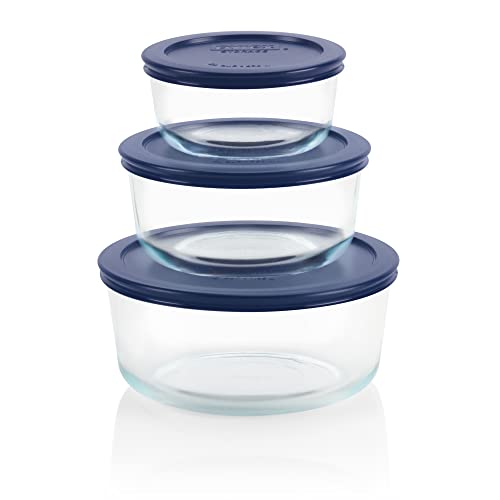
- Best — and only — small linked starter at this level: Pyrex Simply Store 3-Pack Glass Containers (2, 4 & 7 Cup) — Check on Amazon
Some picks in this guide are covered in prose only, without a purchase link, because no listing we could verify honestly belongs in this budget tier. Those picks are still reviewed in full below, and the reason is stated plainly rather than hidden.
Read the full guide ↓
Disclosure: As an Amazon Associate, dailyhomedecorating.com earns from qualifying purchases. Links to Amazon on this page are affiliate links; they cost you nothing extra. Listing details such as price and availability change often, so check the current Amazon listing before you buy.
Finding the best glass food storage containers for pantry organization under $10 is really a search for the right combination of glass, lid and sizes for the way your household actually cooks and stores — not the biggest piece count in a product photograph. This guide works through six picks at this budget, judged on glass type, honest lid security, size logic and how each set behaves across an ordinary week, and it is written specifically for pantry organisers decanting dry goods into glass.
Glass storage containers earn a second career in the pantry: decanting the half-bags and open packets that otherwise slump, spill and quietly go stale — flour working stock, grains bought in small quantities, nuts, dried fruit, coffee, baking odds and ends, and the snack rotation a household actually eats. Glass shows the fill level at a glance, shrugs off the odours of whatever it held last month, and its weight keeps containers planted on the shelf instead of skating around like empty plastic tubs.
Honesty about limits matters in this lens. True bulk — a sack of rice, five kilos of flour — belongs in large dedicated canisters, and no pick in this guide pretends otherwise. What these sets offer the pantry is the small-to-mid tier, the 1-to-7-cup band where most decanting actually happens, with gasketed lids that keep humidity and pantry pests on the right side of the seal far better than a rolled-down bag ever will.
Shape is the pantry’s deciding factor. Rectangles tile a shelf with almost no wasted air between them; rounds leave crescent gaps that add up to a lost container’s worth of space per shelf. This guide weights rectangular footprints, flat label-friendly lids and wide scoop-friendly mouths heavily here, and flags which seals are tight enough for dry goods that must stay crisp for weeks, not days.
One honesty note belongs at the top, because it shapes the whole guide: a full glass food storage system — a complete set of containers with sealing lids, from a verifiable brand — does not exist at $10 or under. What $10 genuinely buys in glass is a small starter pack of two or three containers, or the first piece of a build-it-slowly system. This guide links only the one small pack we could verify at this level, covers the real systems in prose without links so you can see exactly what a step up buys, and never dresses a three-pack up as a family fleet.
If you are still deciding which budget level fits, the wider series helps: start with Best Glass Food Storage Containers For Families Under $15 for a neighbouring budget in this same group, then come back here for the picks tuned to pantry organisers decanting dry goods into glass.
In this guide
Quick Picks: the best glass food storage containers for pantry organization under $10 at a glance
Six picks, six different strengths. The table pairs each situation with the one product in this guide that fits it best; the detailed reviews below explain the trade-offs behind each row.
| Best for | Pick | Why it stands out | Link |
|---|---|---|---|
| Best — and only — small linked starter at this level | Pyrex Simply Store 3-Pack Glass Containers (2, 4 & 7 Cup) | Small mixed-size glass storage set; Tempered soda-lime glass (US Pyrex storage glass) | Check on Amazon |
| Best first full set (prose-only step-up) | Pyrex Simply Store 10-Piece Glass Food Storage Set | Mixed round glass storage set; Tempered soda-lime glass | Prose only — see review |
| Best sealed-lid set (prose-only step-up) | Anchor Hocking TrueSeal 10-Piece Glass Food Storage Set, Mineral Blue | Round glass set with silicone-sealed lids; Tempered glass, made in the USA glass | Prose only — see review |
| Best borosilicate set (prose-only step-up) | Bayco 9 Sets Glass Meal Prep Containers with Lids | Borosilicate meal-prep set, mixed sizes; Borosilicate glass | Prose only — see review |
| Best piece-by-piece route (prose-only) | IKEA 365+ Glass Food Storage Containers | Modular glass storage system (sold by IKEA); Glass bases in the 365+ system | Prose only — see review |
| Best hinge-lid system (prose-only step-up) | Glasslock 18-Piece Assorted Oven Safe Glass Container Set | Tempered-glass mixed set with four-hinge locking lids; Tempered glass (oven-safe series) | Prose only — see review |
How these picks were chosen
Every pick had to pass the same five tests, weighted for pantry organisers decanting dry goods into glass. We verified each model against maker and retailer listings before including it — glass types, lid systems, set compositions and capacities in the reviews come from those listings, and the sources file published with this article records them pick by pick. Products we could not verify were left out or covered without links, however often they appear in round-ups. Where a format honestly does not exist at this budget, the guide says so instead of inventing a listing.
Shelf tiling and footprint. Rectangular bases and straight walls that sit flush against neighbours; rounds are marked down for pantry duty however good they are in the fridge.
Seal quality for dry goods. Silicone-gasket snap, hinge or latch lids keep flour dust in and humidity out; loose press-on lids score for short-rotation snacks only.
Visibility and labelling. Clear glass on all sides, flat lid tops that take a label, and shapes that show the fill level from the front of the shelf.
Decant-friendly openings. Wide mouths that accept a scoop or funnel without a grain waterfall; narrow or heavily shouldered shapes lose points.
Stacking for vertical space. Stable stacking two-high at the back of deep shelves, with lids that stay seated when the front container is pulled out.
Finally, we weighted the results for pantry organisers decanting dry goods into glass specifically. A set can be excellent in general and wrong for this guide’s reader; the ordering below reflects the criteria above as they apply to pantry organisers decanting dry goods into glass, which is why sibling guides in this series — written for other situations at the same budget — rank some of the same products differently.
Detailed reviews: the best glass food storage containers for pantry organization under $10, pick by pick
1. Pyrex Simply Store 3-Pack Glass Containers (2, 4 & 7 Cup) — Best — and only — small linked starter at this level
Who it suits: Households whose week matches its capacity — three containers: 2-cup, 4-cup and 7-cup — one lunch, one side dish, one family leftover — and who want its particular balance of glass type and lid security. If that is your kitchen, this is one of the most satisfying ways to spend this budget.
Start with what it is: a small mixed-size glass storage set, built around tempered soda-lime glass (us pyrex storage glass), closed by bpa-free plastic snap-on lids (not oven safe). Those three facts — format, glass, lid — predict almost everything about how it will behave in your kitchen, and the rest of this review is really an unpacking of them.
Capacity, stated as real food rather than piece-count marketing: three containers: 2-cup, 4-cup and 7-cup — one lunch, one side dish, one family leftover. Read that against your own week before anything else in this review. In a guide written for pantry organisers decanting dry goods into glass, that capacity is best spent on the loads the criteria section describes, and the set rewards households whose routine matches its shape. Ask it to cover a completely different pattern of cooking and it will feel wrong for reasons that have nothing to do with quality.
The lid system deserves its own paragraph, because it decides what this set can be trusted to carry. BPA-free plastic snap-on lids (not oven safe) — in daily terms that means the difference between a container you toss into a bag without thinking and one you carry flat, in hand, like a bowl of soup at a buffet. The reviews in this guide never call a press-on lid leakproof, and where a gasketed system earns the word, it is because the seal is a removable silicone ring compressed evenly by the closure, not because the listing said so.
Borosilicate and soda-lime glass fail differently, and knowing which you own changes how you cook. Borosilicate’s low thermal expansion lets it shrug off the freezer-to-oven swing that defines meal prep. Tempered soda-lime glass is mechanically tough — it survives knocks that would chip lesser vessels — but its expansion rate asks for a gentler temperature path. Neither fact makes one glass ‘better’; it makes them suited to different weeks.
Living with it long-term comes down to care that is simple but specific. Wash lids and gaskets as deliberately as the glass: lids on the top rack, gaskets lifted out weekly, washed warm and soapy, and dried fully before reseating — a gasket put away damp is next week’s mystery smell. The glass itself will outlast several generations of lids if the rims are treated kindly, so judge this pick as a system: excellent glass with an orphaned lid is a bowl, not a container.
Pros:
- Fastest lids in the guide — on and off with one hand
- Flat lids stack calmly in fridge and cupboard
- Decades-proven glass from an established maker
- Format and sizes: Three containers: 2-cup, 4-cup and 7-cup — one lunch, one side dish, one family leftover
Honest limitation: Only three containers — a starter or top-up, never a full meal-prep system; lids are simple press-on, not locking, so soup in a gym bag is a gamble.
Choose it if its sizes match the meals you actually make and its lid class matches how the food travels. Skip it if your routine needs a different lid class or a different size logic — the neighbouring picks in this guide exist for exactly those cases. — Check on Amazon
2. Pyrex Simply Store 10-Piece Glass Food Storage Set — Best first full set (prose-only step-up)
Who it suits: Households whose week matches its capacity — five containers with lids in graduated round sizes for everyday leftovers — and who want its particular balance of glass type and lid security. If that is your kitchen, this is one of the most satisfying ways to spend this budget.
Start with what it is: a mixed round glass storage set, built around tempered soda-lime glass, closed by bpa-free plastic lids, blue in the documented listing. Those three facts — format, glass, lid — predict almost everything about how it will behave in your kitchen, and the rest of this review is really an unpacking of them.
Capacity, stated as real food rather than piece-count marketing: five containers with lids in graduated round sizes for everyday leftovers. Read that against your own week before anything else in this review. In a guide written for pantry organisers decanting dry goods into glass, that capacity is best spent on the loads the criteria section describes, and the set rewards households whose routine matches its shape. Ask it to cover a completely different pattern of cooking and it will feel wrong for reasons that have nothing to do with quality.
The lid system deserves its own paragraph, because it decides what this set can be trusted to carry. BPA-free plastic lids, blue in the documented listing — in daily terms that means the difference between a container you toss into a bag without thinking and one you carry flat, in hand, like a bowl of soup at a buffet. The reviews in this guide never call a press-on lid leakproof, and where a gasketed system earns the word, it is because the seal is a removable silicone ring compressed evenly by the closure, not because the listing said so.
The gasket is the real freshness technology in any of these sets. A silicone ring, cleanly seated and evenly compressed by latches or snaps, is what stands between Tuesday’s soup and Thursday’s fridge smell. Glass walls are non-porous and odour-neutral by nature, but a dusty or pinched gasket quietly cancels that advantage — which is why the sets whose gaskets lift out for washing age the most gracefully.
Living with it long-term comes down to care that is simple but specific. Glass bases themselves are nearly maintenance-free: dishwasher-safe across this guide, unbothered by tomato, turmeric or beetroot, and restored completely by a soak if a baked-on edge ever appears. It is the plastic lid, not the glass, that sets the system’s care rhythm. The glass itself will outlast several generations of lids if the rims are treated kindly, so judge this pick as a system: excellent glass with an orphaned lid is a bowl, not a container.
Pros:
- Fastest lids in the guide — on and off with one hand
- Flat lids stack calmly in fridge and cupboard
- Decades-proven glass from an established maker
- Format and sizes: Five containers with lids in graduated round sizes for everyday leftovers
Honest limitation: Round shapes store less densely than rectangles in a crowded fridge; press-on lids are splash-resistant rather than truly leakproof.
Choose it if its sizes match the meals you actually make and its lid class matches how the food travels. Skip it if your routine needs a different lid class or a different size logic — the neighbouring picks in this guide exist for exactly those cases. — this pick is covered in prose only in this guide, for the reason stated in the tier note above; check price on Amazon if you find a current listing there
3. Anchor Hocking TrueSeal 10-Piece Glass Food Storage Set, Mineral Blue — Best sealed-lid set (prose-only step-up)
Who it suits: Households whose week matches its capacity — five round containers: one 1-cup, two 2-cup, one 4-cup and one 7-cup — and who want its particular balance of glass type and lid security. If that is your kitchen, this is one of the most satisfying ways to spend this budget.
Start with what it is: a round glass set with silicone-sealed lids, built around tempered glass, made in the usa glass, closed by trueseal lids with silicone seal ring, mineral blue. Those three facts — format, glass, lid — predict almost everything about how it will behave in your kitchen, and the rest of this review is really an unpacking of them.
Capacity, stated as real food rather than piece-count marketing: five round containers: one 1-cup, two 2-cup, one 4-cup and one 7-cup. Read that against your own week before anything else in this review. In a guide written for pantry organisers decanting dry goods into glass, that capacity is best spent on the loads the criteria section describes, and the set rewards households whose routine matches its shape. Ask it to cover a completely different pattern of cooking and it will feel wrong for reasons that have nothing to do with quality.
The lid system deserves its own paragraph, because it decides what this set can be trusted to carry. TrueSeal lids with silicone seal ring, mineral blue — in daily terms that means the difference between a container you toss into a bag without thinking and one you carry flat, in hand, like a bowl of soup at a buffet. The reviews in this guide never call a press-on lid leakproof, and where a gasketed system earns the word, it is because the seal is a removable silicone ring compressed evenly by the closure, not because the listing said so.
Headspace is a safety feature, not wasted room. Liquids expand as they freeze, and a container filled to the rim gives that expansion nowhere to go except against the glass and the lid. A clear finger of empty space at the top is the difference between a frozen soup that thaws perfectly and a hairline crack discovered at the worst possible moment.
Living with it long-term comes down to care that is simple but specific. Once a month, run a fingernail slowly around each rim under good light. A chip you can feel is a container to retire from freezer and oven duty — it can live on as a dry-goods or desk container, but thermal stress finds chips. The glass itself will outlast several generations of lids if the rims are treated kindly, so judge this pick as a system: excellent glass with an orphaned lid is a bowl, not a container.
Pros:
- Snap-lock gasket seal suited to saucy, carried food
- Borosilicate or tempered bases that reheat in the same vessel
- Lids interchange across the set’s sizes in daily use
- Format and sizes: Five round containers: one 1-cup, two 2-cup, one 4-cup and one 7-cup
Honest limitation: All-round line-up: brilliant for soups, grains and round-fridge-door storage, less space-efficient for packed rectangular meal-prep rows.
Choose it if its sizes match the meals you actually make and its lid class matches how the food travels. Skip it if your routine needs a different lid class or a different size logic — the neighbouring picks in this guide exist for exactly those cases. — this pick is covered in prose only in this guide, for the reason stated in the tier note above; check price on Amazon if you find a current listing there
4. Bayco 9 Sets Glass Meal Prep Containers with Lids — Best borosilicate set (prose-only step-up)
Who it suits: Households whose week matches its capacity — nine containers in graduated sizes — a full week of varied portions rather than identical boxes — and who want its particular balance of glass type and lid security. If that is your kitchen, this is one of the most satisfying ways to spend this budget.
Start with what it is: a borosilicate meal-prep set, mixed sizes, built around borosilicate glass, closed by snap-locking lids with silicone seal. Those three facts — format, glass, lid — predict almost everything about how it will behave in your kitchen, and the rest of this review is really an unpacking of them.
Capacity, stated as real food rather than piece-count marketing: nine containers in graduated sizes — a full week of varied portions rather than identical boxes. Read that against your own week before anything else in this review. In a guide written for pantry organisers decanting dry goods into glass, that capacity is best spent on the loads the criteria section describes, and the set rewards households whose routine matches its shape. Ask it to cover a completely different pattern of cooking and it will feel wrong for reasons that have nothing to do with quality.
The lid system deserves its own paragraph, because it decides what this set can be trusted to carry. Snap-locking lids with silicone seal — in daily terms that means the difference between a container you toss into a bag without thinking and one you carry flat, in hand, like a bowl of soup at a buffet. The reviews in this guide never call a press-on lid leakproof, and where a gasketed system earns the word, it is because the seal is a removable silicone ring compressed evenly by the closure, not because the listing said so.
Stacking load travels through lids, not walls. When filled containers stack, the weight of the top box rests on the lid and rim of the one below — which is why flat, rigid lids stack calmly and domed or soft lids wander. Judge any set’s stacking by its lid tops, not by how neatly the empty bases nest in the shop photograph.
Living with it long-term comes down to care that is simple but specific. Store bases nested with a cloth or paper layer between them if your cupboard is tight; glass-on-glass in a jolting drawer is how rim chips are born. Lids stored flat and dry keep their gaskets uncompressed and sealing evenly. The glass itself will outlast several generations of lids if the rims are treated kindly, so judge this pick as a system: excellent glass with an orphaned lid is a bowl, not a container.
Pros:
- Snap-lock gasket seal suited to saucy, carried food
- Borosilicate or tempered bases that reheat in the same vessel
- Lids interchange across the set’s sizes in daily use
- Format and sizes: Nine containers in graduated sizes — a full week of varied portions rather than identical boxes
Honest limitation: Mixed sizes nest and stack less uniformly than a single-size fleet; label lids by size for the first weeks.
Choose it if its sizes match the meals you actually make and its lid class matches how the food travels. Skip it if your routine needs a different lid class or a different size logic — the neighbouring picks in this guide exist for exactly those cases. — this pick is covered in prose only in this guide, for the reason stated in the tier note above; check price on Amazon if you find a current listing there
5. IKEA 365+ Glass Food Storage Containers — Best piece-by-piece route (prose-only)
Who it suits: Households whose week matches its capacity — mix-and-match rectangles and rounds bought piece by piece — and who want its particular balance of glass type and lid security. If that is your kitchen, this is one of the most satisfying ways to spend this budget.
Start with what it is: a modular glass storage system (sold by ikea), built around glass bases in the 365+ system, closed by snap-on or leak-tight lid options in the 365+ system. Those three facts — format, glass, lid — predict almost everything about how it will behave in your kitchen, and the rest of this review is really an unpacking of them.
Capacity, stated as real food rather than piece-count marketing: mix-and-match rectangles and rounds bought piece by piece. Read that against your own week before anything else in this review. In a guide written for pantry organisers decanting dry goods into glass, that capacity is best spent on the loads the criteria section describes, and the set rewards households whose routine matches its shape. Ask it to cover a completely different pattern of cooking and it will feel wrong for reasons that have nothing to do with quality.
The lid system deserves its own paragraph, because it decides what this set can be trusted to carry. Snap-on or leak-tight lid options in the 365+ system — in daily terms that means the difference between a container you toss into a bag without thinking and one you carry flat, in hand, like a bowl of soup at a buffet. The reviews in this guide never call a press-on lid leakproof, and where a gasketed system earns the word, it is because the seal is a removable silicone ring compressed evenly by the closure, not because the listing said so.
Glass rewards a cool-down habit. Hot food sealed immediately steams its own lid, rains condensation back onto the meal, and pressures the gasket while it is warm and most pliable. Ten uncovered minutes on the counter before lidding is the cheapest quality upgrade in all of meal prep, whatever set you own.
Living with it long-term comes down to care that is simple but specific. Wash lids and gaskets as deliberately as the glass: lids on the top rack, gaskets lifted out weekly, washed warm and soapy, and dried fully before reseating — a gasket put away damp is next week’s mystery smell. The glass itself will outlast several generations of lids if the rims are treated kindly, so judge this pick as a system: excellent glass with an orphaned lid is a bowl, not a container.
Pros:
- Snap-lock gasket seal suited to saucy, carried food
- Borosilicate or tempered bases that reheat in the same vessel
- Lids interchange across the set’s sizes in daily use
- Format and sizes: Mix-and-match rectangles and rounds bought piece by piece
Honest limitation: Availability and pricing run through IKEA rather than Amazon, so it is reviewed here without a purchase link.
Choose it if its sizes match the meals you actually make and its lid class matches how the food travels. Skip it if your routine needs a different lid class or a different size logic — the neighbouring picks in this guide exist for exactly those cases. — this pick is covered in prose only in this guide, for the reason stated in the tier note above; check price on Amazon if you find a current listing there
6. Glasslock 18-Piece Assorted Oven Safe Glass Container Set — Best hinge-lid system (prose-only step-up)
Who it suits: Households whose week matches its capacity — nine containers mixing rectangles, squares and rounds — roughly 0.7-cup minis up to a 6.3-cup large rectangle — and who want its particular balance of glass type and lid security. If that is your kitchen, this is one of the most satisfying ways to spend this budget.
Start with what it is: a tempered-glass mixed set with four-hinge locking lids, built around tempered glass (oven-safe series), closed by four-hinge locking lids with silicone gasket. Those three facts — format, glass, lid — predict almost everything about how it will behave in your kitchen, and the rest of this review is really an unpacking of them.
Capacity, stated as real food rather than piece-count marketing: nine containers mixing rectangles, squares and rounds — roughly 0.7-cup minis up to a 6.3-cup large rectangle. Read that against your own week before anything else in this review. In a guide written for pantry organisers decanting dry goods into glass, that capacity is best spent on the loads the criteria section describes, and the set rewards households whose routine matches its shape. Ask it to cover a completely different pattern of cooking and it will feel wrong for reasons that have nothing to do with quality.
The lid system deserves its own paragraph, because it decides what this set can be trusted to carry. Four-hinge locking lids with silicone gasket — in daily terms that means the difference between a container you toss into a bag without thinking and one you carry flat, in hand, like a bowl of soup at a buffet. The reviews in this guide never call a press-on lid leakproof, and where a gasketed system earns the word, it is because the seal is a removable silicone ring compressed evenly by the closure, not because the listing said so.
Rims are where glass containers live and die. Chips almost never start on walls; they start where rims strike taps, granite edges and each other in the sink. Sets with slightly rolled, reinforced rims and households that wash glass separately from heavy pans keep their containers intact for years longer.
Living with it long-term comes down to care that is simple but specific. Glass bases themselves are nearly maintenance-free: dishwasher-safe across this guide, unbothered by tomato, turmeric or beetroot, and restored completely by a soak if a baked-on edge ever appears. It is the plastic lid, not the glass, that sets the system’s care rhythm. The glass itself will outlast several generations of lids if the rims are treated kindly, so judge this pick as a system: excellent glass with an orphaned lid is a bowl, not a container.
Pros:
- Snap-lock gasket seal suited to saucy, carried food
- Borosilicate or tempered bases that reheat in the same vessel
- Lids interchange across the set’s sizes in daily use
- Format and sizes: Nine containers mixing rectangles, squares and rounds — roughly 0.7-cup minis up to a 6.3-cup large rectangle
Honest limitation: Four hinges per lid is the most fiddly closure in this guide — secure once latched, slow when you are sealing nine containers in a row; rounds in the mix tile a fridge less densely than the rectangles.
Choose it if its sizes match the meals you actually make and its lid class matches how the food travels. Skip it if your routine needs a different lid class or a different size logic — the neighbouring picks in this guide exist for exactly those cases. — this pick is covered in prose only in this guide, for the reason stated in the tier note above; check price on Amazon if you find a current listing there
Comparison table
The six picks side by side. Read the lid column first — it decides what the set can carry — then glass type, then capacity.
| Pick | Format | Glass | Lids | Link |
|---|---|---|---|---|
| Pyrex Simply Store 3-Pack Glass Containers (2, 4 & 7 Cup) | Small mixed-size glass storage set | Tempered soda-lime glass (US Pyrex storage glass) | BPA-free plastic snap-on lids (not oven safe) | Check on Amazon |
| Pyrex Simply Store 10-Piece Glass Food Storage Set | Mixed round glass storage set | Tempered soda-lime glass | BPA-free plastic lids, blue in the documented listing | Prose only |
| Anchor Hocking TrueSeal 10-Piece Glass Food Storage Set, Mineral Blue | Round glass set with silicone-sealed lids | Tempered glass, made in the USA glass | TrueSeal lids with silicone seal ring, mineral blue | Prose only |
| Bayco 9 Sets Glass Meal Prep Containers with Lids | Borosilicate meal-prep set, mixed sizes | Borosilicate glass | Snap-locking lids with silicone seal | Prose only |
| IKEA 365+ Glass Food Storage Containers | Modular glass storage system (sold by IKEA) | Glass bases in the 365+ system | Snap-on or leak-tight lid options in the 365+ system | Prose only |
| Glasslock 18-Piece Assorted Oven Safe Glass Container Set | Tempered-glass mixed set with four-hinge locking lids | Tempered glass (oven-safe series) | Four-hinge locking lids with silicone gasket | Prose only |
How to choose the best glass food storage containers for pantry organization under $10 for your kitchen
Step 1: name the job before the set. Write down what the containers must do in a real week — how many lunches travel, how many stay home, what gets frozen, what gets baked. The job list, not the shelf at the shop, decides whether you need a uniform fleet, a mixed household set, or a small starter pack plus patience.
Step 2: choose your glass by your temperature path. Freezer-to-oven cooking points to borosilicate. Fridge-to-microwave routines are served perfectly well by tempered soda-lime glass, usually at a friendlier cost per container. Stovetop and broiler are off-limits to every pick in this guide.
Step 3: choose your lid by your liquids. Dry and stay-at-home food tolerates press-on lids. Sauces carried any distance need a silicone gasket under snaps or latches. Soup in a commuting bag needs the strongest seal you can buy and a flat carry — no lid class repeals physics.
Step 4: weight the choice for pantry organisers decanting dry goods into glass. Re-read the criteria section above and rank the five tests by your own routine. The best pick in this guide is the one whose strengths line up with the test you ranked first, which is why the Quick Picks table is organised by situation rather than by a single winner.
Step 5: check the current listing before ordering. Set compositions, lid colours and included extras differ between listings of the same model family. Confirm the exact contents and sizes on the live listing, and check price on Amazon at that moment rather than relying on any figure quoted elsewhere.
Two related guides in this series are worth a look while you decide: Best Glass Food Storage Containers For Pantry Organization Under $25 covers a neighbouring situation at this budget, and Best Glass Food Storage Containers Under $50 looks at the same problem from a different angle. For the dry-goods side of the kitchen, Best Glass Food Storage Containers For Meal Prep Under $75 is the natural companion read.
Common mistakes to avoid
Decanting bulk staples into storage-set sizes. A 3-cup container of flour empties in one baking session and refills become a chore you abandon. Keep bulk in big canisters; use these sets for the small, the precious and the perishable.
Storing spices in clear glass on a lit shelf. Light degrades spices and herbs quickly. Glass pantry sets belong in cupboards and drawers for anything aromatic; clear-and-visible is for grains, pasta and snacks.
Skipping the contents and date label. Glass makes everything look identical — three white powders, four beige grains. Label the lid or base with contents and the month it was decanted, every time.
Sealing slightly warm or damp goods. Decanting grains that carry any moisture seals the problem in with them. Goods go in cool and dry, and the rim gets wiped before the gasket closes.
Mixing lid systems on the same shelf. Two brands means two lid hunts at arm’s length in a cupboard. Standardise the pantry shelf on one system and let the fridge keep the other.
Setup, care and knowing when to replace a container
Set the system up once, properly. On day one, wash everything, seat every gasket deliberately, and match each lid to its base with the set unhurried in front of you. Decide where the system lives — one cupboard zone or one deep drawer, bases nested, lids together — and label nothing yet; live with the sizes for a fortnight first. For pantry organisers decanting dry goods into glass, that first arrangement matters more than it sounds, because a storage system whose home is wrong gets abandoned in week three no matter how good the glass is.
Care is a rhythm, not a project. Daily: rinse gaskets when a container carried something oily or strong-smelling, and let lids dry before stacking them away. Weekly: Store bases nested with a cloth or paper layer between them if your cupboard is tight; glass-on-glass in a jolting drawer is how rim chips are born. Lids stored flat and dry keep their gaskets uncompressed and sealing evenly. Monthly: inspect rims for chips and gaskets for nicks or flattening, and re-seat any seal that has started to sit unevenly. None of this is deep maintenance; it is the small attention that separates a set that seals like new in year three from one that weeps in month three.
Replace parts before you replace sets. A flattened gasket, a warped lid or a single chipped base are component failures, not system failures — established brands sell lids and singles precisely so the rest of the set can serve on. Retire an individual glass base from oven and freezer duty the moment a rim chip appears, and replace the whole system only when spares disappear or your household’s pattern of cooking has genuinely outgrown its size logic.
One last ownership note for pantry organisers decanting dry goods into glass: the happiest owners of any pick in this guide treat the lids as the consumable and the glass as the permanent asset. Budget your attention accordingly — glass forgives almost everything except a dropped corner; lids forgive almost nothing except being washed gently and stored dry.
Final recommendation
For most readers of this guide, start with the Pyrex Simply Store 3-Pack Glass Containers (2, 4 & 7 Cup): it best matches the criteria that matter for pantry organisers decanting dry goods into glass at this budget — a glass type matched to real cooking, a lid class described honestly, and sizes that map onto real food. It is the pick we would buy first with $10 and the one against which the others in this guide are alternatives for specific situations.
Whichever you choose, match the glass to your temperatures, the lid to your liquids, and the sizes to your real week. Those three decisions matter more to fresh food and calm cupboards than any single product choice in this guide.
Frequently asked questions
Are glass food storage containers airtight enough for flour and sugar?
The gasketed snap-lock, hinge-lock and latching picks in this guide seal well enough for everyday pantry staples in normal kitchen humidity. Press-on lids suit high-turnover snacks but let fine flour dust escape and humid air creep in over weeks.
Glass or plastic for pantry storage?
Glass wins on odour neutrality, visibility, shelf weight and lifespan; plastic wins on cost per litre at very large volumes. Most organised pantries end up hybrid: big canisters for bulk, glass for the decanted working stock — precisely the tier this guide covers.
How do I keep pantry glass organised long-term?
One system, one shelf logic: group by use (baking, grains, snacks), label every lid with contents and month, and keep spare lids in stock. Review the shelf monthly and move anything ageing toward the front.
Can pantry pests get into glass containers?
A clean silicone gasket under a properly closed snap, hinge or latch lid is an effective barrier. The weak points are press-on lids and gaskets with flour dust in the seal — wipe the rim before closing, every time.
What sizes work best for decanting?
The 7-cup size swallows a standard bag of sugar or a generous grain refill; 3-to-4-cup suits flour working stock, rice and pasta shapes; 1-to-2-cup is the nut, dried-fruit and refill band. A mixed set maps surprisingly well onto a real pantry.
Still comparing? These related guides on the same site cover the neighbouring ground: Best Airtight Food Storage Containers For Pantry Organization Under $30, Best Glass Food Storage Containers For Families Under $15 and Best Glass Food Storage Containers For Pantry Organization Under $25.


