Disclosure: As an Amazon Associate, dailyhomedecorating.com earns from qualifying purchases. Links on this page are affiliate links; they cost you nothing extra. Prices and availability change often, so check the current Amazon listing before you buy.
This is a space heater worth it guide is written for one practical job: helping you warm the room you actually sit in, safely and without guesswork. Whether you are researching a is a space heater worth it for a home office, a spare bedroom, a rented flat or a chilly living-room corner, the advice below starts with the room, moves through the heater types and the safety rules that never change, and only then names specific models worth considering. Read it in order the first time, then use the sections that match your room when you come back to compare.
Key Takeaways
- Best for: readers who want focused warmth in one occupied room and will follow strict placement and supervision rules.
- Not suited for: anyone who wants unattended, overnight or whole-home heating from a portable appliance.
- Must-have features: a tip-over switch and an overheat shutoff on every model you consider.
- Best habit: plug directly into a wall outlet, keep generous clearance, and switch off when you leave.
In this guide
Is a Space Heater Worth It: The Short Answer First
Fire safety comes before comfort in every recommendation in this guide. Keep heaters well clear of bedding, curtains, furniture and anything flammable, with generous clearance on every side, and set the heater on a flat hard floor — never on a bed or on deep rug pile. Never leave a space heater running unattended or while sleeping, and turn it off whenever you leave the room. Plug the heater directly into a wall outlet — never into an extension cord or a power strip. A tip-over switch and an overheat shutoff are must-have features, not optional extras, and any heater without both belongs off your shortlist. Keep children and pets away from hot surfaces, and teach everyone in the home that the grille is never a place for hands, toys or laundry. Finally, remember what the appliance is for: a space heater heats one room or one person zone — it is not a whole-home heating replacement, and this guide uses comfort framing only.
What You Actually Get
The useful way to judge warmth delivery and how heat spreads from a small appliance into a lived-in room without turning the whole home up is to picture a normal evening, not a showroom. You come in, you sit down, and you want the cold edge taken off the air around you without fuss. Children, pets and visitors change the calculation completely. A heater that is perfectly manageable for a careful adult at a desk can be a poor choice on the floor of a busy family room. Hot surfaces, trailing cords and a unit that can be knocked all demand distance and supervision. If you cannot guarantee clearance and attention in that room, the honest answer is to choose a different room, a different time of day, or a different way of staying warm. Renters and spare-room hosts have a particular version of this decision. You usually cannot add insulation, replace windows or change the main heating system, so a portable heater feels attractive precisely because it asks nothing of the building. That flexibility is real, but it does not relax any safety rule. The outlet must be a wall outlet, the floor must be flat and hard, and the heater must be switched off and put away properly when guests who do not know its rules are using the room. If a model handles this well for your household, it deserves its place on the shortlist. If it does not, no badge or finish will rescue it.
The useful way to judge placement, clearance and the everyday habits that keep a heater useful rather than worrying is to picture a normal evening, not a showroom. You come in, you sit down, and you want the cold edge taken off the air around you without fuss. Placement does more work than most feature lists admit. A heater tucked behind a sofa has to warm furniture before it warms you, and a heater aimed across a draughty hallway spends its effort on air that leaves immediately. Put the unit where its output reaches the occupied zone first, keep the path clear, and close the doors and curtains that you can close. Small changes like that often matter more than stepping up to a larger-looking model. Care is unglamorous and decisive. Dust builds up on grilles and intakes, and a heater that is wiped down and checked regularly behaves better than one that is dragged out of a cupboard and hoped for the best. Let the unit cool fully, unplug it, and follow the maker guidance for cleaning. Store it upright, dry and with the cord loosely coiled, and inspect the plug, cord and housing before the first cold evening of the next season. That is the pattern throughout this guide: room first, habits second, model third — and safety rules that never bend for convenience.
Start with the room, not the box. When you think about controls, thermostats and timers, and why simple controls often beat a crowded remote in daily use, the honest question is how you actually live in that space during the coldest part of the day. Noise and light shape whether a heater earns a permanent place in the room. Fan-assisted models make an audible sound that some people read as reassuring white noise and others find tiring over a long evening. Radiators are effectively silent, which many readers prefer for conversation or television. Indicator lights, displays and beeps also matter in a bedroom you use before sleep, even though the heater itself must never run while you are asleep or unattended. Children, pets and visitors change the calculation completely. A heater that is perfectly manageable for a careful adult at a desk can be a poor choice on the floor of a busy family room. Hot surfaces, trailing cords and a unit that can be knocked all demand distance and supervision. If you cannot guarantee clearance and attention in that room, the honest answer is to choose a different room, a different time of day, or a different way of staying warm. That is the pattern throughout this guide: room first, habits second, model third — and safety rules that never bend for convenience.
Keep the safety checklist in view as you read: generous clearance from bedding, curtains, furniture and anything flammable, a flat hard floor, a direct wall outlet, and a heater that is never left running unattended or while sleeping.
The Real Costs Beyond Money
The useful way to judge placement, clearance and the everyday habits that keep a heater useful rather than worrying is to picture a normal evening, not a showroom. You come in, you sit down, and you want the cold edge taken off the air around you without fuss. Children, pets and visitors change the calculation completely. A heater that is perfectly manageable for a careful adult at a desk can be a poor choice on the floor of a busy family room. Hot surfaces, trailing cords and a unit that can be knocked all demand distance and supervision. If you cannot guarantee clearance and attention in that room, the honest answer is to choose a different room, a different time of day, or a different way of staying warm. Care is unglamorous and decisive. Dust builds up on grilles and intakes, and a heater that is wiped down and checked regularly behaves better than one that is dragged out of a cupboard and hoped for the best. Let the unit cool fully, unplug it, and follow the maker guidance for cleaning. Store it upright, dry and with the cord loosely coiled, and inspect the plug, cord and housing before the first cold evening of the next season. That is the pattern throughout this guide: room first, habits second, model third — and safety rules that never bend for convenience.
Most disappointment with a is a space heater worth it search comes from skipping controls, thermostats and timers, and why simple controls often beat a crowded remote in daily use. Shoppers compare shapes and finishes first, then discover that the room, the seating position and the daily routine were the real deciding factors all along. Running cost is best thought about in habits rather than promises. Heating the room you are in, for the hours you are actually there, is a different proposition from trying to lift the temperature of an entire home with a portable appliance. Use the lowest setting that keeps you comfortable, warm the person zone rather than the corners of the room, and treat the heater as a supplement to clothing, blankets and closed doors, not as a substitute for common sense. Renters and spare-room hosts have a particular version of this decision. You usually cannot add insulation, replace windows or change the main heating system, so a portable heater feels attractive precisely because it asks nothing of the building. That flexibility is real, but it does not relax any safety rule. The outlet must be a wall outlet, the floor must be flat and hard, and the heater must be switched off and put away properly when guests who do not know its rules are using the room. If a model handles this well for your household, it deserves its place on the shortlist. If it does not, no badge or finish will rescue it.
There is a simple test for noise, light and sleep-adjacent use in a bedroom corner where you are awake and nearby: if the heater only works when everything else in the room is arranged around it, it is the wrong heater for that room. Controls deserve a calm second look. A clear dial or a few well-spaced buttons is easy to use with cold hands and tired eyes, while a dense touch panel can be frustrating in low light. A thermostat that cycles the heater sensibly helps avoid the swing between too warm and suddenly chilly, and a timer is only useful if you understand it well enough to set it correctly while you are awake and present. Whatever the control style, the rule does not change: set it, stay nearby, and switch it off when you leave. Renters and spare-room hosts have a particular version of this decision. You usually cannot add insulation, replace windows or change the main heating system, so a portable heater feels attractive precisely because it asks nothing of the building. That flexibility is real, but it does not relax any safety rule. The outlet must be a wall outlet, the floor must be flat and hard, and the heater must be switched off and put away properly when guests who do not know its rules are using the room. If a model handles this well for your household, it deserves its place on the shortlist. If it does not, no badge or finish will rescue it.
Keep the safety checklist in view as you read: generous clearance from bedding, curtains, furniture and anything flammable, a flat hard floor, a direct wall outlet, and a heater that is never left running unattended or while sleeping.
Who It Pays Off For
Start with the room, not the box. When you think about controls, thermostats and timers, and why simple controls often beat a crowded remote in daily use, the honest question is how you actually live in that space during the coldest part of the day. Placement does more work than most feature lists admit. A heater tucked behind a sofa has to warm furniture before it warms you, and a heater aimed across a draughty hallway spends its effort on air that leaves immediately. Put the unit where its output reaches the occupied zone first, keep the path clear, and close the doors and curtains that you can close. Small changes like that often matter more than stepping up to a larger-looking model. Running cost is best thought about in habits rather than promises. Heating the room you are in, for the hours you are actually there, is a different proposition from trying to lift the temperature of an entire home with a portable appliance. Use the lowest setting that keeps you comfortable, warm the person zone rather than the corners of the room, and treat the heater as a supplement to clothing, blankets and closed doors, not as a substitute for common sense. Write that requirement down before you shop. A shortlist built from your own room notes is far more reliable than one built from photographs alone.
There is a simple test for noise, light and sleep-adjacent use in a bedroom corner where you are awake and nearby: if the heater only works when everything else in the room is arranged around it, it is the wrong heater for that room. Children, pets and visitors change the calculation completely. A heater that is perfectly manageable for a careful adult at a desk can be a poor choice on the floor of a busy family room. Hot surfaces, trailing cords and a unit that can be knocked all demand distance and supervision. If you cannot guarantee clearance and attention in that room, the honest answer is to choose a different room, a different time of day, or a different way of staying warm. Noise and light shape whether a heater earns a permanent place in the room. Fan-assisted models make an audible sound that some people read as reassuring white noise and others find tiring over a long evening. Radiators are effectively silent, which many readers prefer for conversation or television. Indicator lights, displays and beeps also matter in a bedroom you use before sleep, even though the heater itself must never run while you are asleep or unattended. If a model handles this well for your household, it deserves its place on the shortlist. If it does not, no badge or finish will rescue it.
There is a simple test for running costs in plain language, and why heating one occupied zone can feel very different from heating empty rooms: if the heater only works when everything else in the room is arranged around it, it is the wrong heater for that room. Controls deserve a calm second look. A clear dial or a few well-spaced buttons is easy to use with cold hands and tired eyes, while a dense touch panel can be frustrating in low light. A thermostat that cycles the heater sensibly helps avoid the swing between too warm and suddenly chilly, and a timer is only useful if you understand it well enough to set it correctly while you are awake and present. Whatever the control style, the rule does not change: set it, stay nearby, and switch it off when you leave. Renters and spare-room hosts have a particular version of this decision. You usually cannot add insulation, replace windows or change the main heating system, so a portable heater feels attractive precisely because it asks nothing of the building. That flexibility is real, but it does not relax any safety rule. The outlet must be a wall outlet, the floor must be flat and hard, and the heater must be switched off and put away properly when guests who do not know its rules are using the room. If a model handles this well for your household, it deserves its place on the shortlist. If it does not, no badge or finish will rescue it.
Fire safety comes before comfort in every recommendation in this guide. Keep heaters well clear of bedding, curtains, furniture and anything flammable, with generous clearance on every side, and set the heater on a flat hard floor — never on a bed or on deep rug pile. Never leave a space heater running unattended or while sleeping, and turn it off whenever you leave the room. Plug the heater directly into a wall outlet — never into an extension cord or a power strip. A tip-over switch and an overheat shutoff are must-have features, not optional extras, and any heater without both belongs off your shortlist. Keep children and pets away from hot surfaces, and teach everyone in the home that the grille is never a place for hands, toys or laundry. Finally, remember what the appliance is for: a space heater heats one room or one person zone — it is not a whole-home heating replacement, and this guide uses comfort framing only.
Who Should Skip It
Keep the safety checklist in view as you read: generous clearance from bedding, curtains, furniture and anything flammable, a flat hard floor, a direct wall outlet, and a heater that is never left running unattended or while sleeping.
Alternatives to Consider
Keep the safety checklist in view as you read: generous clearance from bedding, curtains, furniture and anything flammable, a flat hard floor, a direct wall outlet, and a heater that is never left running unattended or while sleeping.
How to Get the Most Value If You Buy
Fire safety comes before comfort in every recommendation in this guide. Keep heaters well clear of bedding, curtains, furniture and anything flammable, with generous clearance on every side, and set the heater on a flat hard floor — never on a bed or on deep rug pile. Never leave a space heater running unattended or while sleeping, and turn it off whenever you leave the room. Plug the heater directly into a wall outlet — never into an extension cord or a power strip. A tip-over switch and an overheat shutoff are must-have features, not optional extras, and any heater without both belongs off your shortlist. Keep children and pets away from hot surfaces, and teach everyone in the home that the grille is never a place for hands, toys or laundry. Finally, remember what the appliance is for: a space heater heats one room or one person zone — it is not a whole-home heating replacement, and this guide uses comfort framing only.
The Decision Checklist
The useful way to judge room size, doors and draughts, and why the same heater feels strong in a study and weak in an open-plan space is to picture a normal evening, not a showroom. You come in, you sit down, and you want the cold edge taken off the air around you without fuss. Noise and light shape whether a heater earns a permanent place in the room. Fan-assisted models make an audible sound that some people read as reassuring white noise and others find tiring over a long evening. Radiators are effectively silent, which many readers prefer for conversation or television. Indicator lights, displays and beeps also matter in a bedroom you use before sleep, even though the heater itself must never run while you are asleep or unattended. Renters and spare-room hosts have a particular version of this decision. You usually cannot add insulation, replace windows or change the main heating system, so a portable heater feels attractive precisely because it asks nothing of the building. That flexibility is real, but it does not relax any safety rule. The outlet must be a wall outlet, the floor must be flat and hard, and the heater must be switched off and put away properly when guests who do not know its rules are using the room. That is the pattern throughout this guide: room first, habits second, model third — and safety rules that never bend for convenience.
Start with the room, not the box. When you think about households with children, pets and visitors, where placement and supervision matter more than any feature list, the honest question is how you actually live in that space during the coldest part of the day. Ceramic models tend to feel quick because a fan pushes warmed air toward you, while oil-filled radiators feel slower at first and then steadier once the body of the heater is warm. Neither approach is automatically better. Quick, directed warmth suits a desk, a reading chair or a bathroom-adjacent dressing corner where you are present for a short stretch. Steady, silent warmth suits a longer evening in one room, provided you give it time to come up to temperature and you keep the door mostly closed. Care is unglamorous and decisive. Dust builds up on grilles and intakes, and a heater that is wiped down and checked regularly behaves better than one that is dragged out of a cupboard and hoped for the best. Let the unit cool fully, unplug it, and follow the maker guidance for cleaning. Store it upright, dry and with the cord loosely coiled, and inspect the plug, cord and housing before the first cold evening of the next season. That is the pattern throughout this guide: room first, habits second, model third — and safety rules that never bend for convenience.
There is a simple test for rentals, spare rooms and home offices, where you cannot change the building but you can change the corner you sit in: if the heater only works when everything else in the room is arranged around it, it is the wrong heater for that room. Care is unglamorous and decisive. Dust builds up on grilles and intakes, and a heater that is wiped down and checked regularly behaves better than one that is dragged out of a cupboard and hoped for the best. Let the unit cool fully, unplug it, and follow the maker guidance for cleaning. Store it upright, dry and with the cord loosely coiled, and inspect the plug, cord and housing before the first cold evening of the next season. Ceramic models tend to feel quick because a fan pushes warmed air toward you, while oil-filled radiators feel slower at first and then steadier once the body of the heater is warm. Neither approach is automatically better. Quick, directed warmth suits a desk, a reading chair or a bathroom-adjacent dressing corner where you are present for a short stretch. Steady, silent warmth suits a longer evening in one room, provided you give it time to come up to temperature and you keep the door mostly closed. If a model handles this well for your household, it deserves its place on the shortlist. If it does not, no badge or finish will rescue it.
Keep the safety checklist in view as you read: generous clearance from bedding, curtains, furniture and anything flammable, a flat hard floor, a direct wall outlet, and a heater that is never left running unattended or while sleeping.
Recommended Models to Consider
Each model below is presented prose-only, positioned by tier in words rather than by any fixed price. Check the current listing carefully for the exact variant, the safety features and the maker guidance before you buy, and use a qualitative tier — entry, mid or premium — to place it in your budget thinking.

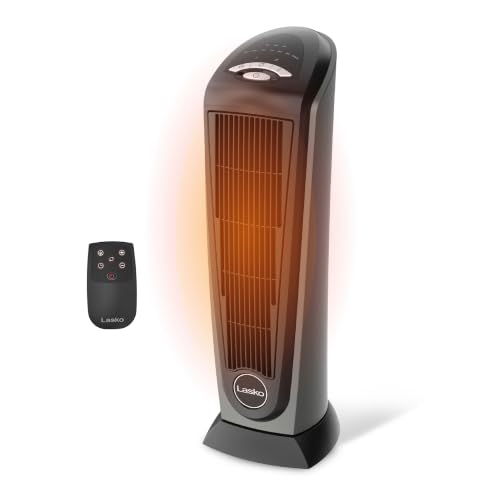
Lasko Ceramic Space Heater
Best for: readers whose room matches ceramic tower and compact ceramic designs that warm the air around a desk or chair quickly. Not suited for: unattended use, overnight use, or any room where clearance and supervision cannot be guaranteed. This is a entry-tier option in qualitative terms — check price on Amazon listing pages and retailer listings at the time you shop, and confirm the tip-over switch and overheat shutoff are listed for the exact variant.
There is a simple test for warmth delivery and how heat spreads from a small appliance into a lived-in room without turning the whole home up: if the heater only works when everything else in the room is arranged around it, it is the wrong heater for that room. Renters and spare-room hosts have a particular version of this decision. You usually cannot add insulation, replace windows or change the main heating system, so a portable heater feels attractive precisely because it asks nothing of the building. That flexibility is real, but it does not relax any safety rule. The outlet must be a wall outlet, the floor must be flat and hard, and the heater must be switched off and put away properly when guests who do not know its rules are using the room. Running cost is best thought about in habits rather than promises. Heating the room you are in, for the hours you are actually there, is a different proposition from trying to lift the temperature of an entire home with a portable appliance. Use the lowest setting that keeps you comfortable, warm the person zone rather than the corners of the room, and treat the heater as a supplement to clothing, blankets and closed doors, not as a substitute for common sense. Write that requirement down before you shop. A shortlist built from your own room notes is far more reliable than one built from photographs alone.
- Strengths: focused warmth for an occupied zone; clear controls; easy to position on a flat hard floor.
- Strengths: no installation needed; works as a supplement in rentals and spare rooms.
- Strengths: straightforward care when dust is wiped away regularly.
- Trade-offs: needs constant supervision; only heats one zone; must be kept well clear of soft furnishings.
- Trade-offs: fan versions, where fitted, are audible; radiator versions are slow to start.
- Trade-offs: hot surfaces mean children and pets must be kept away at all times.
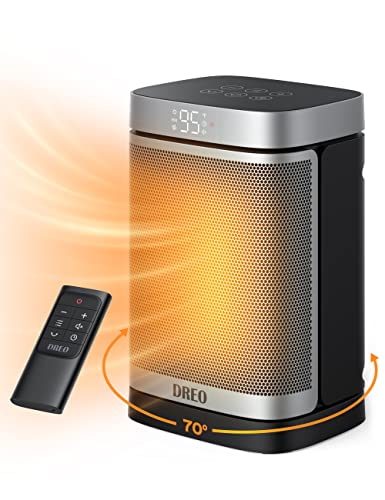
Dreo Space Heater
Best for: readers whose room matches quiet ceramic designs with smooth oscillation and a modern control layout. Not suited for: unattended use, overnight use, or any room where clearance and supervision cannot be guaranteed. This is a mid-tier option in qualitative terms — check price on Amazon listing pages and retailer listings at the time you shop, and confirm the tip-over switch and overheat shutoff are listed for the exact variant.
Start with the room, not the box. When you think about placement, clearance and the everyday habits that keep a heater useful rather than worrying, the honest question is how you actually live in that space during the coldest part of the day. Noise and light shape whether a heater earns a permanent place in the room. Fan-assisted models make an audible sound that some people read as reassuring white noise and others find tiring over a long evening. Radiators are effectively silent, which many readers prefer for conversation or television. Indicator lights, displays and beeps also matter in a bedroom you use before sleep, even though the heater itself must never run while you are asleep or unattended. Controls deserve a calm second look. A clear dial or a few well-spaced buttons is easy to use with cold hands and tired eyes, while a dense touch panel can be frustrating in low light. A thermostat that cycles the heater sensibly helps avoid the swing between too warm and suddenly chilly, and a timer is only useful if you understand it well enough to set it correctly while you are awake and present. Whatever the control style, the rule does not change: set it, stay nearby, and switch it off when you leave. That is the pattern throughout this guide: room first, habits second, model third — and safety rules that never bend for convenience.
- Strengths: focused warmth for an occupied zone; clear controls; easy to position on a flat hard floor.
- Strengths: no installation needed; works as a supplement in rentals and spare rooms.
- Strengths: straightforward care when dust is wiped away regularly.
- Trade-offs: needs constant supervision; only heats one zone; must be kept well clear of soft furnishings.
- Trade-offs: fan versions, where fitted, are audible; radiator versions are slow to start.
- Trade-offs: hot surfaces mean children and pets must be kept away at all times.
Vornado Vortex Heater
Best for: readers whose room matches whole-room air circulation designs that move warmed air gently around a room. Not suited for: unattended use, overnight use, or any room where clearance and supervision cannot be guaranteed. This is a mid-tier option in qualitative terms — check price on Amazon listing pages and retailer listings at the time you shop, and confirm the tip-over switch and overheat shutoff are listed for the exact variant.
The useful way to judge controls, thermostats and timers, and why simple controls often beat a crowded remote in daily use is to picture a normal evening, not a showroom. You come in, you sit down, and you want the cold edge taken off the air around you without fuss. Noise and light shape whether a heater earns a permanent place in the room. Fan-assisted models make an audible sound that some people read as reassuring white noise and others find tiring over a long evening. Radiators are effectively silent, which many readers prefer for conversation or television. Indicator lights, displays and beeps also matter in a bedroom you use before sleep, even though the heater itself must never run while you are asleep or unattended. Controls deserve a calm second look. A clear dial or a few well-spaced buttons is easy to use with cold hands and tired eyes, while a dense touch panel can be frustrating in low light. A thermostat that cycles the heater sensibly helps avoid the swing between too warm and suddenly chilly, and a timer is only useful if you understand it well enough to set it correctly while you are awake and present. Whatever the control style, the rule does not change: set it, stay nearby, and switch it off when you leave. In short, judge this part of the decision by your room and your routine, and let the product name come second.
- Strengths: focused warmth for an occupied zone; clear controls; easy to position on a flat hard floor.
- Strengths: no installation needed; works as a supplement in rentals and spare rooms.
- Strengths: straightforward care when dust is wiped away regularly.
- Trade-offs: needs constant supervision; only heats one zone; must be kept well clear of soft furnishings.
- Trade-offs: fan versions, where fitted, are audible; radiator versions are slow to start.
- Trade-offs: hot surfaces mean children and pets must be kept away at all times.

Honeywell Ceramic Heater
Best for: readers whose room matches straightforward ceramic designs with simple dials and clear heat settings. Not suited for: unattended use, overnight use, or any room where clearance and supervision cannot be guaranteed. This is a entry-tier option in qualitative terms — check price on Amazon listing pages and retailer listings at the time you shop, and confirm the tip-over switch and overheat shutoff are listed for the exact variant.
Most disappointment with a is a space heater worth it search comes from skipping noise, light and sleep-adjacent use in a bedroom corner where you are awake and nearby. Shoppers compare shapes and finishes first, then discover that the room, the seating position and the daily routine were the real deciding factors all along. Noise and light shape whether a heater earns a permanent place in the room. Fan-assisted models make an audible sound that some people read as reassuring white noise and others find tiring over a long evening. Radiators are effectively silent, which many readers prefer for conversation or television. Indicator lights, displays and beeps also matter in a bedroom you use before sleep, even though the heater itself must never run while you are asleep or unattended. Ceramic models tend to feel quick because a fan pushes warmed air toward you, while oil-filled radiators feel slower at first and then steadier once the body of the heater is warm. Neither approach is automatically better. Quick, directed warmth suits a desk, a reading chair or a bathroom-adjacent dressing corner where you are present for a short stretch. Steady, silent warmth suits a longer evening in one room, provided you give it time to come up to temperature and you keep the door mostly closed. That is the pattern throughout this guide: room first, habits second, model third — and safety rules that never bend for convenience.
- Strengths: focused warmth for an occupied zone; clear controls; easy to position on a flat hard floor.
- Strengths: no installation needed; works as a supplement in rentals and spare rooms.
- Strengths: straightforward care when dust is wiped away regularly.
- Trade-offs: needs constant supervision; only heats one zone; must be kept well clear of soft furnishings.
- Trade-offs: fan versions, where fitted, are audible; radiator versions are slow to start.
- Trade-offs: hot surfaces mean children and pets must be kept away at all times.
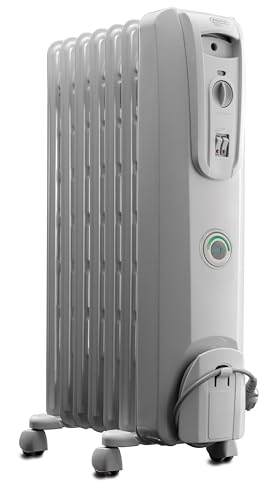
De’Longhi Oil-Filled Radiator Heater
Best for: readers whose room matches oil-filled radiator designs that give steady, lingering warmth without a fan. Not suited for: unattended use, overnight use, or any room where clearance and supervision cannot be guaranteed. This is a premium-tier option in qualitative terms — check price on Amazon listing pages and retailer listings at the time you shop, and confirm the tip-over switch and overheat shutoff are listed for the exact variant.
Start with the room, not the box. When you think about running costs in plain language, and why heating one occupied zone can feel very different from heating empty rooms, the honest question is how you actually live in that space during the coldest part of the day. Placement does more work than most feature lists admit. A heater tucked behind a sofa has to warm furniture before it warms you, and a heater aimed across a draughty hallway spends its effort on air that leaves immediately. Put the unit where its output reaches the occupied zone first, keep the path clear, and close the doors and curtains that you can close. Small changes like that often matter more than stepping up to a larger-looking model. Children, pets and visitors change the calculation completely. A heater that is perfectly manageable for a careful adult at a desk can be a poor choice on the floor of a busy family room. Hot surfaces, trailing cords and a unit that can be knocked all demand distance and supervision. If you cannot guarantee clearance and attention in that room, the honest answer is to choose a different room, a different time of day, or a different way of staying warm. In short, judge this part of the decision by your room and your routine, and let the product name come second.
- Strengths: focused warmth for an occupied zone; clear controls; easy to position on a flat hard floor.
- Strengths: no installation needed; works as a supplement in rentals and spare rooms.
- Strengths: straightforward care when dust is wiped away regularly.
- Trade-offs: needs constant supervision; only heats one zone; must be kept well clear of soft furnishings.
- Trade-offs: fan versions, where fitted, are audible; radiator versions are slow to start.
- Trade-offs: hot surfaces mean children and pets must be kept away at all times.
PELONIS Space Heater
Best for: readers whose room matches compact ceramic and radiator designs aimed at small rooms and spare spaces. Not suited for: unattended use, overnight use, or any room where clearance and supervision cannot be guaranteed. This is a mid-tier option in qualitative terms — check price on Amazon listing pages and retailer listings at the time you shop, and confirm the tip-over switch and overheat shutoff are listed for the exact variant.
There is a simple test for cleaning, dust and storage, because a heater that is easy to wipe down is a heater that stays in good condition: if the heater only works when everything else in the room is arranged around it, it is the wrong heater for that room. Care is unglamorous and decisive. Dust builds up on grilles and intakes, and a heater that is wiped down and checked regularly behaves better than one that is dragged out of a cupboard and hoped for the best. Let the unit cool fully, unplug it, and follow the maker guidance for cleaning. Store it upright, dry and with the cord loosely coiled, and inspect the plug, cord and housing before the first cold evening of the next season. Children, pets and visitors change the calculation completely. A heater that is perfectly manageable for a careful adult at a desk can be a poor choice on the floor of a busy family room. Hot surfaces, trailing cords and a unit that can be knocked all demand distance and supervision. If you cannot guarantee clearance and attention in that room, the honest answer is to choose a different room, a different time of day, or a different way of staying warm. Write that requirement down before you shop. A shortlist built from your own room notes is far more reliable than one built from photographs alone.
- Strengths: focused warmth for an occupied zone; clear controls; easy to position on a flat hard floor.
- Strengths: no installation needed; works as a supplement in rentals and spare rooms.
- Strengths: straightforward care when dust is wiped away regularly.
- Trade-offs: needs constant supervision; only heats one zone; must be kept well clear of soft furnishings.
- Trade-offs: fan versions, where fitted, are audible; radiator versions are slow to start.
- Trade-offs: hot surfaces mean children and pets must be kept away at all times.
Related Guides and Next Steps
Use the companion guides in this cluster to check your thinking from another angle before you buy.
- space heater review guide
- space heater reviews guide
- space heater buying guide guide
- space heater pros and cons guide
- how to choose a space heater guide
- space heater vs fireplace heater guide
- space heater seasonal deals guide
- humidifier comfort guide
- air purifier seasonal guide
- quiet air purifiers for bedrooms
Frequently Asked Questions
Can a space heater warm a whole home?
No. A space heater is designed for one room or one person zone. Expecting it to replace a whole-home heating system leads to disappointment and to unsafe habits, such as leaving units running in empty rooms. Use it where you are, while you are there, and let the main heating system do the whole-home job.
Where should I place a space heater in a room?
On a flat hard floor, well clear of bedding, curtains, furniture and anything flammable, with generous clearance on every side. Never place it on a bed or on deep rug pile, and never tuck it behind furniture where its output is blocked and its heat builds up against soft materials.
Can I use an extension cord or power strip?
No. Plug the heater directly into a wall outlet, every time. Extension cords and power strips are not the right connection for a heater, and no convenience justifies changing that rule. If the right outlet is not within reach of a safe floor position, move the seating or choose a different room.
Can I leave a space heater on while I sleep?
No. Never leave a space heater running unattended or while sleeping. Warm the room before bed if you wish, then switch the heater off. Rely on bedding and the main heating system overnight, not on a portable appliance that needs supervision.
Which safety features are essential?
A tip-over switch and an overheat shutoff are must-have features. Check that both are listed for the exact variant you are buying, test that you understand the controls, and keep children and pets away from hot surfaces whenever the heater is in use or cooling down.
How do I keep running costs sensible?
Heat the occupied zone, use the lowest comfortable setting, close doors and curtains, and switch off the moment you leave. Clothing and blankets are part of the system too. Sensible habits matter more than chasing a particular model name or a headline feature.
Final Word
Choose the heater that fits your room, your routine and your willingness to follow the safety rules without exception. A modest model used carefully will serve you better than an elaborate one used casually. Re-read the safety section before the first use each season, check the cord and plug, and enjoy the simple comfort of a warm corner on a cold day — while you are there to enjoy it.