Disclosure: As an Amazon Associate, reviewstook.com earns from qualifying purchases. Links to Amazon on this page are affiliate links; they cost you nothing extra. Listing details such as price and availability change often, so check the current Amazon listing before you buy.
When the heating bill climbs and the bedroom window begins to feel like a draft machine, the bed is the first place you notice it. This guide looks at the best quilts for winter, meaning bedding that adds a solid layer of weight and cover without turning into a full duvet project. We focus on four quilt sets from well-known home brands, each one suited to a different kind of cold bedroom.
A quilt is a different thing from a thick comforter. The stitched pattern holds the filling in place, so the cover stays even across the bed instead of slumping to one side. That makes quilts easy to layer, easy to wash and easy to carry from the bed to the sofa. Many shoppers who search for the best warm quilts and the best heavy quilts really want a stackable base layer rather than one enormous cover.
You will find a comparison table, short write-ups of each set, advice on layering, and answers to the questions people ask most about winter bedding. Fill weights and warmth levels change between sizes and colors, so we point you to each listing for the exact numbers instead of guessing.
Quick Comparison
| Product | Best for | Main point | Link |
|---|---|---|---|
| Madison Park Quebec Reversible Coverlet Set | Layering over a duvet | Two looks in one reversible cover | Check on Amazon |
| Nautica Craver Quilt Set | Classic cold-weather styling | Pattern-led design with matching shams | Check on Amazon |
| Eddie Bauer Edgewood Quilt Set | Cabin and lodge bedrooms | Outdoor-brand look and feel | Check on Amazon |
| Tommy Hilfiger Quilt Set | Guest rooms that need to look tidy | Plaid-style tailoring and sham pairing | Check on Amazon |
In this guide
How These Options Were Chosen
We built this list from manufacturer listings, published product descriptions and the way each brand positions its bedding. We have not used these products ourselves, so you will not find claims about how a quilt felt on a particular night. Instead we looked at construction type, what is included in the set, how easy the cover is to care for, and how well each design fits a cold-season bedroom.
Because we are working from public information, anything we are not sure about is left out, and we send you to the listing for sizes, fabrics and fill details. Treat the list as a shortlist to compare, not a final verdict.
The 4 Best Quilts for Winter Beds
Madison Park Quebec Reversible Coverlet Set
Madison Park sells a wide range of quilted bedding, and the Quebec coverlet set is a good example of the reversible style. Two faces mean you can flip the bed to match the season or the room, which is handy when a winter palette feels too dark in March. The set normally comes with matching shams, so the whole bed looks finished in one step.
For cold weather, the strength of a coverlet like this is flexibility. Spread it over a duvet for a heavier stack, or use it alone on mild nights when a full comforter would be too much. The quilted stitching keeps the filling spread out, which stops the bunching you sometimes see in plainer covers.
The trade-off is that a coverlet is a layer, not a complete winter solution. If your bedroom is truly cold, plan to pair it with a duvet or a thick blanket underneath. Check the listing for the fabric content, the fill description and the sizes offered before you order.
Who should skip it: anyone who wants one heavy cover that does all the work on its own. Everyone else who likes to build a bed in layers will find this an easy base.
Nautica Craver Quilt Set
Nautica is known for coastal and classic styling, and its quilt sets tend to lean on strong patterns and clean borders. The Craver set suits a bedroom where you want the winter bed to look deliberate and tidy rather than piled high. It is sold as a multi-piece set, so look at the listing to see how many shams are included.
In practice this is the quilt for people who care as much about appearance as warmth. It sits flat, it frames the pillows neatly and it works with both light and dark headboards. A flatter quilt like this layers well under a throw at the foot of the bed, which is a simple way to add weight in the coldest weeks.
The honest limitation is that style-led quilts are not usually the thickest option on the shelf. If your priority is the heaviest possible cover, look at the listing for fill details and compare against the other sets here. Fit matters too: confirm that the size you pick drapes far enough over the sides of your mattress.
Who should skip it: shoppers hunting for the bulkiest, most insulated cover available. This one is better for balance and looks.
Eddie Bauer Edgewood Quilt Set
Eddie Bauer built its name on outdoor clothing and gear, and its home line carries that lodge-and-trail personality into the bedroom. The Edgewood quilt set fits a cabin bedroom, a spare room in an older house or any space where a rugged, woodsy feel makes sense in winter.
The appeal here is mood as much as material. Warm tones and cabin-style patterns make a cold room feel more welcoming at a glance, and a quilt in this style looks right with flannel sheets and a wool throw. Pairing it with warm sheets is a better strategy than relying on any single cover.
As with most quilt sets, the details that decide warmth are the fill and the weight, and those vary by size, so read them on the listing. Eddie Bauer products are sold in several patterns, so confirm that the Edgewood name and the colorway you want match what you add to your cart.
Who should skip it: people who prefer a plain, neutral bedroom. The pattern-forward design can dominate a minimalist space.
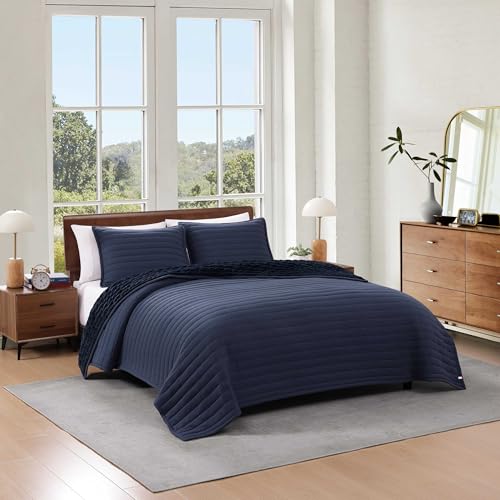
Tommy Hilfiger Quilt Set
Tommy Hilfiger bedding usually brings preppy, tailored styling, with plaids and stripes that read well in a guest room. A quilt set from this brand is a sensible pick when the room needs to look made-up and welcoming for visitors who arrive in cold weather.
The practical benefit is that a stitched quilt is quick to make a bed with. You pull it straight, set the shams and you are done, which matters in a guest room that gets changed often. Because quilts are lighter than most comforters, they are also easier to wash at home when the season ends.
Keep expectations realistic. A fashion-brand quilt set is designed to look good first, so if the room is draughty, put a heavier blanket under it and keep the quilt as the top layer. The exact pattern names and sizes change over time, so check the listing and match the title carefully.
Who should skip it: shoppers looking for performance bedding for a very cold room. Choose it for presentation, with extra layers added as needed.
Best for Cold Sleepers
If you always feel the chill, the Madison Park Quebec coverlet is the most useful first pick because it is built to sit over another cover. Put it on top of a duvet and you get a stacked bed that you can peel back one layer at a time as the night warms up. That control matters more than any single piece of bedding.
Best for Cabin and Cottage Bedrooms
The Eddie Bauer Edgewood set is the natural fit here. Lodge-style patterns suit exposed wood, plaid curtains and a wool rug, and the whole room reads as one winter scene. Pair it with a heavier flannel sheet set so the bed feels as warm as it looks.
Best for Guest Rooms
Choose the Tommy Hilfiger set when visitors are coming. Its tailored look gives the bed a made-up appearance with little effort, and the matching shams do half the styling for you. Leave a folded throw at the foot so guests can add warmth on their own terms.
Best for a Polished Main Bedroom
The Nautica Craver set earns this slot. It balances pattern and calm, so it holds its own in a main bedroom where the bed is the focal point. Under a cold window, add a second blanket beneath it instead of expecting the quilt to do everything.
How to Choose Quilts for a Cold Bedroom
Begin with how you plan to use the quilt. If it is the only cover on the bed, you need something with a thicker fill, and you should read the description for the weight of the filling. If it is one layer in a stack, a medium quilt is usually enough, and the stitching and fabric matter more than raw bulk.
Next, read the size chart carefully. Quilts are often cut slightly larger than the mattress, but the drop on each side varies. A deeper mattress or a pillow-top needs a generous size, otherwise the sides leave the sheets exposed and cold air gets in. If two people share the bed, a wider cut also reduces the tug-of-war.
Look at the stitch pattern. Tight, even channels hold the filling steady through repeated washes. Very wide spacing can let the fill migrate, which leaves thin patches. A pattern that repeats across the whole surface is a good sign for durability.
Consider the fabric. Cotton covers feel crisp and breathe well, while polyester blends tend to dry faster and resist wrinkles. Neither is right for everyone, and the listing should tell you the exact content. If you tend to overheat at night, choose a lighter quilt and add a throw you can kick off.
Think about layering, not just the quilt. Flannel or brushed sheets, a wool blanket and a duvet insert all contribute. A mid-weight quilt over a warm base often outperforms one bulky cover because you can adjust it.
Finally, check what is in the box. Some sets include shams, some include only the quilt, and a few add decorative pillows. Make sure the pieces you want are listed before you buy.
Common mistakes to avoid:
- Buying on pattern alone and skipping the size and fill details.
- Choosing a size that is too small for a deep mattress.
- Expecting a decorative quilt to replace a heavy winter duvet in a very cold room.
- Ignoring the care label, then discovering the quilt needs a larger washer than you own.
Layering and Safety Notes
Winter bedding should be warm without being hazardous. Keep quilts and blankets well clear of space heaters and radiators, and do not tuck bedding against a heat source. If you use an electric blanket, follow the maker’s instructions and do not pile heavy bedding on top of it unless the manual allows that.
Check the manufacturer’s care label before you wash anything. Large quilts can strain a small washer, and a laundromat machine with more capacity is often the better choice. If you have any doubt about a product’s fire or flammability information, read the listing and the label instead of assuming.
Care and Troubleshooting
Most quilt sets are made to be laundered at home, but always check the label for the water temperature and drying advice. Wash on a gentle cycle with a mild detergent, and dry on a low setting so the stitching and filling stay even. Adding a couple of clean dryer balls helps break up clumps.
| Problem | Likely cause | What to try |
|---|---|---|
| Fill feels lumpy | Damp filling after drying | Re-dry on low with dryer balls |
| Corners curl | Folded while still warm | Shake out and air flat |
| Fading | Hot wash or direct sun | Wash cooler and dry indoors |
Store the quilt in a breathable cotton bag over summer rather than in sealed plastic, which can trap moisture.
Fill, Stitching and Why Quilts Run Light
A quilt is built differently from a comforter, and that construction explains most of what you feel at night. Two fabric layers sandwich a thin batting, usually polyester or a cotton-poly blend, and rows of stitching hold the batting in place. Because the fill is thin and evenly spread, a quilt drapes flat and breathes well. The trade-off is that it traps less air than a puffy comforter, so a quilt on its own is a mid-weight cover rather than a deep-winter one.
Stitch pattern matters more than most shoppers expect. Tight channel or box stitching keeps fill from migrating, which prevents cold spots after a few washes. Wide, sparse stitching feels loftier at first but can leave thin patches near the edges. Look at product photos for how close the quilting lines run, and treat a very flat, ribbed surface as a sign of a lighter, more year-round piece.
Polyester batting dries fast, resists clumping and stays hypoallergenic for most sleepers, which is why it dominates this category. Cotton batting is heavier and absorbs moisture, so it feels cool to the touch but takes longer to dry. If a listing does not state the fill, assume polyester and plan your layering around that.
Reading Fabric and Fill Labels Before You Order
Marketing names such as microfiber, brushed, or velvet describe the cover, not the warmth. A brushed or velvety face feels warmer on contact because it holds a thin layer of air against your skin, while a crisp cotton sateen face feels cooler until your body heat catches up. For a cold bedroom, a soft-surface cover is the more comfortable starting point.
- Check whether the cover is cotton, polyester, or a blend. Blends are easier to care for and wrinkle less; pure cotton breathes better.
- Look for a stated fabric weight or fill weight. If neither is given, compare listed thickness and customer photos of the edge profile.
- Confirm the set contents. Many quilts ship as a set with matching shams, and the sham count changes the price per piece, not the warmth of the quilt itself.
- Note the finished dimensions, not only the size name. Two queen quilts can differ by several inches of drop on each side.
The finished measurement is the number that decides how the bed looks. A queen mattress that is 14 inches deep needs far more overhang than a slim 9 inch mattress to look tailored, and a quilt cut for a thin bed will sit short on a pillow top.
Matching a Quilt to Your Heating Setup
How warm a quilt feels depends on the room as much as the product. In a bedroom held at 68 degrees with central heat, a single quilt over a flat sheet is usually enough for most sleepers. In a room that drops to the low 60s overnight, plan on a quilt plus a second layer, and consider which layer sits closest to you.
- Forced-air heat: air is dry and moves, so breathable fabrics stay comfortable and static can be a nuisance with polyester. A cotton flat sheet underneath helps.
- Radiant or baseboard heat: cold air pools near the floor and windows. A quilt with generous overhang blocks drafts along the sides of the bed.
- Unheated or part-time rooms: cabins and guest rooms benefit from a quilt with a thicker feel plus a fleece or wool throw folded at the foot.
- Electric blanket users: put the electric blanket under the quilt, not on top, so heat is trapped rather than lost to the room. Follow the heated blanket maker’s rules on layering.
Partners who sleep at different temperatures can split the job. Use one shared quilt and give the colder sleeper an extra throw, rather than buying a heavier cover that overheats the other side of the bed.
Seasonal Rotation and Storage
A winter quilt does not have to live on the bed year round. Many households rotate: a heavier quilt from late fall through early spring, then a lighter coverlet or cotton blanket in summer. Rotating also halves the wear on each piece, which extends the life of the stitching and the cover.
When you pack a quilt away, make sure it is completely dry first. Trapped moisture is the main cause of musty smells and mildew in storage. Fold it loosely and store it in a breathable cotton bag or a cardboard box rather than a sealed plastic bin, which holds humidity. Avoid hanging heavy quilts for long periods, because the batting can sag and pull on the stitching. Refold along different lines each season so creases do not set in one place.
Before putting a quilt back on the bed in the fall, air it out for a few hours and give it a gentle shake to redistribute the fill. If a stored quilt smells stale, a cycle in the dryer on low heat with a clean towel usually freshens it.
Why Winter Beds Fail, and How a Quilt Fixes the Right Failure
Most winter beds are not cold because their owners lack bedding; they are cold because the bedding they have works as a single, unadjustable lump. One heavy cover is either too much in a mild week or not enough in a bitter one, and it offers no way to handle the difference between the cold of midnight and the relative warmth of a body that has been asleep for hours. A quilt earns its place in a winter bed by restoring adjustability: as the structured top layer of a system, it lets you add and remove warmth beneath it without remaking the bed’s appearance or disturbing the sleeper beside you.
The second common failure is cold air rather than cold bedding. Gaps at the shoulder, a cover too short to stay tucked at the foot, a quilt that slides off a smooth sheet in the night: these let the bed’s warm air escape faster than any fill can replace it. A generously sized quilt with enough drop to hang past the mattress sides seals the bed’s edges in a way a merely adequate size never will, and that seal is worth more on a January night than a modest difference in fill between two quilts of the right size.
The Cold Bedroom Versus the Cold Sleeper
Diagnose your problem before you shop. A cold bedroom, an unheated spare room, a stone-walled cottage, a top-floor flat under a thin roof, asks for insulation across the whole bed and probably for attention to the room itself: a rug on a bare floor, curtains that close properly, a door that does not leak the landing’s air under it. A cold sleeper in a warm house asks for something narrower: a personal extra layer, a warmer quilt on their side of the arrangement, and freedom to adjust without heating a partner who is already comfortable.
Quilts serve both diagnoses well because they layer without bulk. For the cold room, the quilt caps a serious stack of blanket and sheet with a stitched surface that holds the stack together and stops layers sliding apart in the night. For the cold sleeper, a quilt folded lengthways over their half of the bed doubles the insulation exactly where it is wanted, a trick that looks deliberate thanks to the quilt’s finished edges and pattern.
Heating Habits and the Bed That Has to Compensate
How a home is heated decides what its winter bedding must do. A house heated evenly all night asks little of its quilts; a house where the heating rests overnight, as many do, hands the bed a falling temperature curve that reaches its coldest just before dawn, which is precisely when sleep is lightest and a cold bed wakes people. If your home cools at night, build the bed for the hour before the heating returns, not for the warmth of bedtime, and let a quilt’s layered system carry you through that coldest stretch.
Rooms heated by a single source, a stove in the living room, a heater in the hall, create warm and cold zones that bedding must bridge. The bedroom at the far end of such a house benefits from the fullest version of the winter system: warm sheet fabric, a real blanket, and the quilt on top holding everything in place. Guests in such rooms deserve a word of explanation and an extra folded layer in reach, because they cannot know the house’s nightly rhythm the way its owners do.
Pre-Warming and Other Small Mercies
A quilt cannot warm a bed that starts cold, and in a truly cold room the first ten minutes decide whether the night begins well. The old remedies remain the good ones: a hot water bottle placed between the sheets while the bed is made, removed or moved to the feet at bedtime, takes the shock out of cold cotton in a way no fill can. Where an electric blanket is used, follow its maker’s guidance carefully, keep it beneath the sleepers rather than above them, and let the quilt sit on top as the bed’s visible, insulating finish once the pre-warming is done.
Warm sleepwear and socks are part of the same honest system, and there is no failure in them. A winter bed is a collaboration between room, bedding and sleeper, and the quilt’s role, holding warmth in, presenting a finished bed, adjusting in layers, is the central one, but it was never meant to be the only one.
Winter Quilts for Cabins, Cottages and Occasional Beds
Occasional beds in cold places make special demands. A cabin or cottage bed may stand in an unheated room for weeks, then be asked to welcome tired travellers on the coldest night of the year. Bedding for that life must be resilient to cold storage, quick to feel comfortable and easy to launder in bulk at the season’s end. A well-stitched quilt over a serious blanket meets the brief better than a delicate luxury cover, and it suits the rooms themselves, where stitched textiles and honest materials have always belonged.
Before guests arrive at a cold property, air the bedding even if it was stored clean, because quilts absorb the still smell of a closed room. A few hours over chairs near a lit stove or in weak winter sun restores freshness that no amount of folding away carefully can preserve on its own. Make the beds with the full layered system from the first night rather than adding layers apologetically after someone has slept cold; hospitality in a winter house is mostly the art of anticipating the cold before your guests have to mention it.
Children, Older Relatives and Safe Warmth
Layered quilts are a kind way to warm the beds of people who should not rely on electric heat alone. For older relatives, a bed built with a proper blanket and a quilt on top gives steady, passive warmth that cannot be left switched on or set too high, and an extra folded throw within reach lets them adjust without calling for help in the night. Keep the layers light enough to move under easily; warmth that pins a frail sleeper down is a burden, not a comfort, and several light layers beat one crushing one for exactly this reason.
For children, the same lightness principle applies, along with a check that the quilt’s size cannot pool on the floor where it becomes a trip hazard in a dark room. Children in cold houses often love the ritual of a heavy-looking winter bed made specially for the season, and a quilt with a traditional pattern carries that sense of occasion better than any plain modern cover. Let them choose between two suitable quilts if you can; a child who picked the bed’s cover defends it against complaints and climbs in happily.
Reading Warmth Claims Without Being Misled
Winter bedding descriptions lean on evocative words, cosy, plush, ultra-warm, that describe a feeling rather than a construction. Translate them back into facts before you buy: what is the quilt filled with, how much of it is there, what are the face fabrics, and how large is the quilt really. A modestly filled quilt in a generous size, layered over a blanket you already own, will out-warm a dramatically described quilt that barely reaches the mattress edges, because winter warmth is a system of coverage and trapped air, not a slogan.
Photographs deserve the same translation. A winter bed in a listing is usually shown in a warm, lamplit room with the quilt arranged over unseen layers, which is honest enough as far as it goes, provided you understand that the layers are part of the product you are really being shown. Buy the quilt as the top of your own system, check its size against your bed with a tape measure rather than optimism, and the evocative words can be enjoyed for what they are.
The Spring Reckoning
Winter quilts should be assessed in spring, when the season’s evidence is in. Did the stitching hold through weekly use and washing? Did the fill stay evenly distributed or migrate into the corners? Did the bed’s system adapt to the mild weeks, or did everyone end up sleeping on top of the covers by March? Wash the quilt on a bright day, inspect it in good light, mend the small failures while they are small, and store it clean and loosely folded. A quilt that passes its spring reckoning year after year is a genuinely good one, and the notes you keep, even a line in a phone, will make next winter’s bed-making faster and warmer.
Pairing a Winter Quilt With the Rest of the Room
A winter bedroom asks more of its textiles than any other room in the house, and the quilt should be dressed as part of a team. Curtains that close fully, a rug that takes the shock out of the floor for bare feet, and cushions or a throw in tones drawn from the quilt’s pattern turn a merely warm bed into a room that feels like shelter. Traditional and cabin-style quilts carry this arrangement naturally, because their patterns were designed for rooms with wood, lamplight and weather outside the window.
Colour plays a warming role of its own in winter. Deep, saturated tones absorb the room’s lamplight and read as warmth before a hand ever touches the bed, while the same quilt in a pale palette would feel cooler in the identical room. If your winter bedroom struggles to feel cosy despite adequate heating, changing the bed’s cover to a richer-toned quilt is one of the few decorative changes that genuinely alters the room’s emotional temperature, and it costs nothing to run.
Choosing Between the Winter Picks
Among the quilts in this guide, choose first by your room’s cold rather than by pattern. The coldest rooms want the most substantial construction and the most generous size, layered over a blanket as a matter of course. Milder rooms and heated homes can take the lighter, more decorative options and still sleep warmly. Guest rooms want the quilt that layers most forgivingly, since you cannot know each visitor’s preference, and cabins want the one that washes and stores with the least ceremony.
Whichever you choose, give it the full system to work within: a sheet that suits the season, a blanket in reserve, edges tucked and sealed, and a room whose curtains and door do their part. A winter quilt asked to work alone will always feel like a compromise. A winter quilt at the top of a thoughtful bed is one of the great simple pleasures of the cold months, and it will earn that place from the first frost to the last.
The Middle of the Night: Adjusting Without Waking the House
Every winter sleeper knows the three-in-the-morning calculation: too cold to stay as you are, too asleep to remake the bed properly. A layered quilt system is designed for that moment. The extra blanket or folded throw should live where a half-asleep hand can find it, at the foot of the bed or on the chair beside it, not in a cupboard across a cold landing. Likewise, a quilt that can be pulled up by its top edge without dragging the whole arrangement sideways earns its keep nightly in a way that never appears in any description of it.
Partners benefit from the same design. When one sleeper’s extra layer is physically separate, a quilt folded on their side, a throw of their own, the other sleeper’s bed stays undisturbed, and the small hours stay peaceful. Winter beds fail socially as often as they fail thermally, and the fixes are the same: independent layers, generous sizes, and everything within reach before the lights go out.
When the Quilt Is Right but the Bed Still Feels Cold
If a good quilt in a proper system still leaves you cold, look beyond the bed before replacing it. A mattress on a cold floor or against an outside wall radiates the room’s chill upward, and an insulating layer beneath the mattress or a rug beneath the bed can change the bed’s climate more than another blanket on top. Draughts at window and door, a pillow that has gone flat and cold, and pyjamas that suit summer better than January all masquerade as bedding failures. Work through them in order of cheapness, and most winter beds are warm within the week, with the quilt you already chose doing the job it was always capable of.
The Pleasure Principle in Winter Bedding
It is worth ending on the reason winter quilts inspire loyalty out of proportion to their simplicity. A bed that is reliably warm, that looks like an invitation from the doorway, that can be adjusted in the dark by touch alone, changes how a household feels about the whole season. Evenings end earlier and more willingly; mornings begin in a bed nobody resents leaving slowly. Choose the quilt that gives your coldest room that character, keep its layers honest and its stitching mended, and winter becomes the season the bed was made for.
A Note on Winter Guests Who Say Nothing
Most overnight guests will not tell you they slept cold; they will simply sleep badly and remember the visit a little less warmly. Hosts of winter beds should therefore build the guest bed for the coldest plausible sleeper rather than for their own habits: the full layered system, an extra blanket folded where it can be seen, and a word at bedtime pointing it out, so using it feels invited rather than like rummaging through someone else’s cupboards. A quilt makes that invitation visible, because a bed that looks layered and generous tells the guest, before a word is spoken, that the house has thought about the night ahead. In a cold-climate home, that thoughtfulness is the heart of hospitality, and the winter quilt is its most eloquent expression.
The Quilt Drawer and the Honest Inventory
Once a year, ideally on the bright day when the winter quilt is washed and put away, take stock of the household’s cold-weather bedding as a whole. Count what you actually have: the quilts, the blankets, the throws that migrate to beds in January. Most households discover they own warmth in the wrong places, three throws in the living room and a guest bed short of a blanket, and a ten-minute redistribution in spring saves a panicked purchase on the first cold night of autumn. A winter quilt at the centre of an honest inventory, rather than at the centre of a hopeful one, is a quilt that will be ready, mended and in its place when the frost arrives.
The First Frost Checklist
When the first cold night is forecast, the winter bed should already be made rather than merely planned: quilt washed and inspected, blanket aired, warm sheets on, the spare throw folded where a cold sleeper can find it in the dark. Households that hold that small readiness each autumn never spend a shivering night promising to sort the bedding tomorrow, and the quilt, arriving at the season prepared and in its place, begins its best months exactly as it should.
Frequently Asked Questions
Is a quilt warm enough for a real winter?
On its own, a quilt can be enough for a mild or well-heated room. In a cold bedroom, use it as part of a stack with a duvet or blanket underneath.
How do quilts differ from heavyweight comforters?
A comforter is usually thicker and puffier, while a quilt is flatter with stitched channels. A heavyweight comforter quilt blends both ideas, so read the listing for the fill description.
Can I use a quilt as a bedspread?
Yes. A quilt set with shams works as a decorative top layer, and it is common to fold it back at night.
What size should I buy?
Match your mattress size, and go up if your bed is deep or if two people share it. Compare the dimensions on the listing to your mattress depth.
Are these suitable for US winters in every region?
Winters differ widely between states, so judge by your own room temperature and heating. Add or remove layers to fit.
How do I keep a quilt from shifting?
Use a fitted base layer and a duvet cover or flat sheet underneath so friction holds the stack together.
Is a quilt or a duvet insert warmer for winter?
A duvet insert is usually warmer because it holds more loose fill and traps more air. A quilt is thinner and flatter, so it works best as a mid-weight layer or as one part of a layered setup. If your bedroom is very cold, pair a quilt with a blanket underneath rather than expecting it to do all the work.
Can I put a quilt on top of a weighted blanket?
Yes. Place the weighted blanket closest to you and the quilt over it, so the quilt covers the bulk and keeps drafts out. Check the weighted blanket maker for any limit on layering, and avoid stacking so many layers that you cannot move comfortably or that you overheat during the night.
Do quilts shrink in the wash?
Cotton covers can shrink a little, especially if washed hot and dried on high heat. Polyester blends shrink far less. To limit it, wash on a gentle, cool cycle, use low heat in the dryer, and check the care tag first. Quilting stitches can pucker slightly after the first wash, which is normal.
What is the difference between a quilt and a coverlet?
A coverlet is usually a lighter, slimmer bed cover with little or no fill, often quilted in a simple pattern and meant to lie flat or layer over a blanket. A quilt generally has a defined batting layer and more warmth. Some listings use the words loosely, so check the stated fill and thickness.
Bottom Line
The best quilts for winter are the ones you can adjust. Madison Park suits layering, Nautica and Tommy Hilfiger lead on tidy styling, and Eddie Bauer brings a cabin mood. Read the listing for fill and size details, pair your quilt with warm sheets and a throw, and you will have a bed that keeps up with the cold.