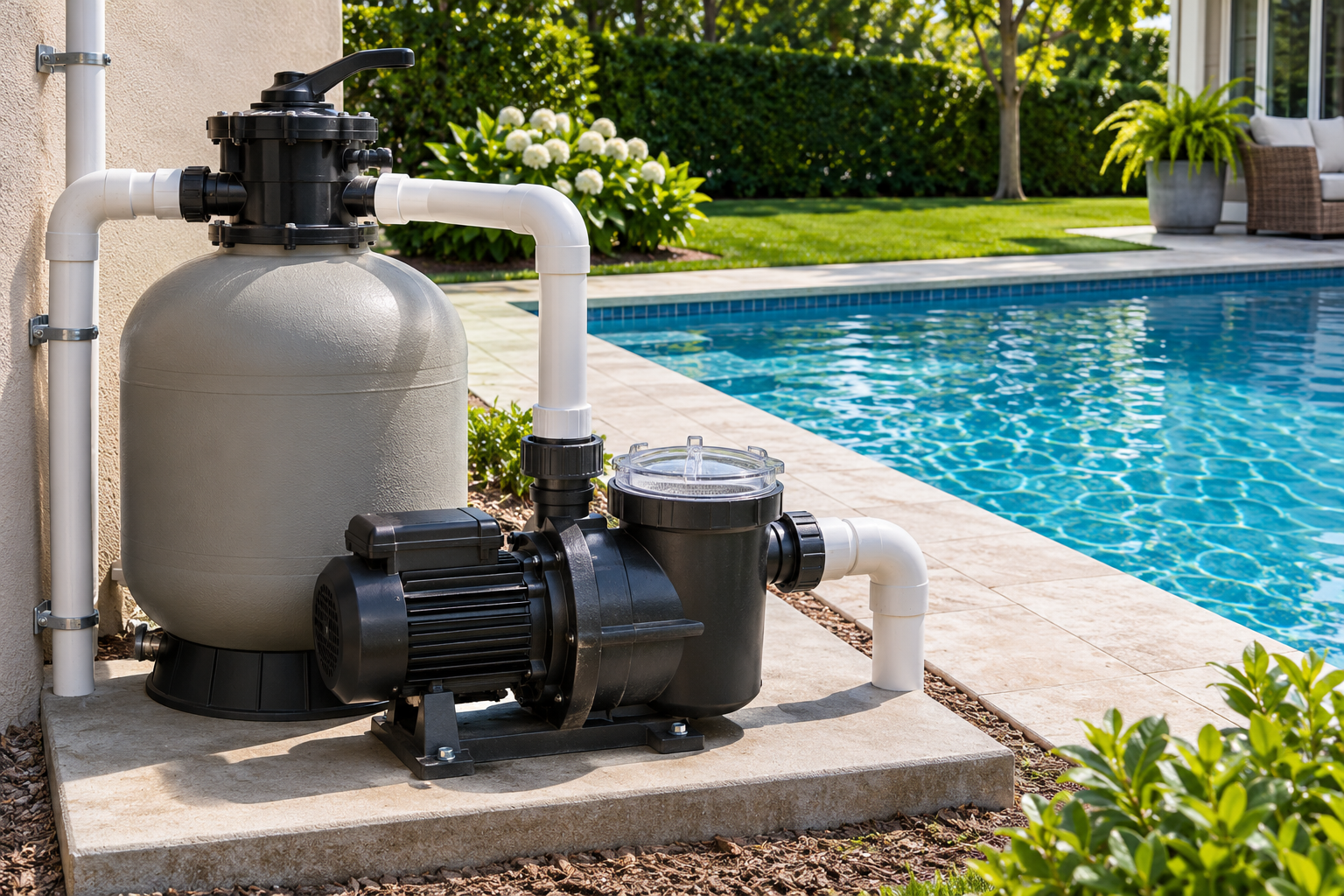
Amazon product examples to compare
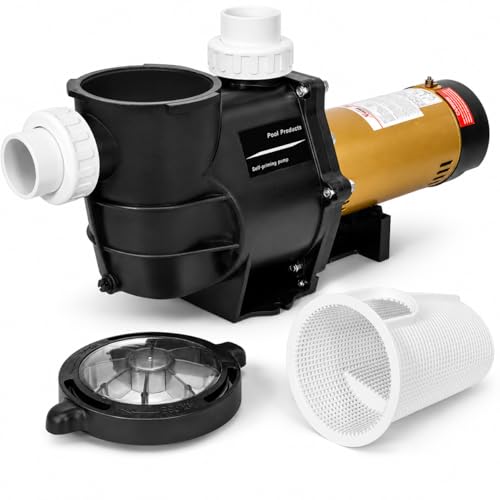
ASIN: B01AAWQRUYView on Amazon

ASIN: B07XYZ7WQLView on Amazon

ASIN: B0DZNVKPS9View on Amazon
Certain content that appears on this site comes from Amazon. This content is provided “as is” and is subject to change or removal at any time. Product examples and images are supplied through Amazon Creators API; check the current listing for specifications and availability.
As an Amazon Associate, DailyHomeDecorating.com earns from qualifying purchases.
For an inground pool, the pump is not a standalone purchase. It is the center of a matched system: the pool volume, the buried plumbing, the filter, any heater or salt system, and any spa, cleaner, or water feature on the same loop. A pump that looks perfect on paper can perform badly if it pushes more water than the filter can handle, too little to turn the pool over in a day, or a flow that existing pipe size turns into wasted energy and noise.
That is why this guide treats shopping for the best pool pumps for inground pools as a sizing exercise. It starts with numbers you can calculate at home — volume, turnover, head, and pipe size — then shows how to check a candidate against the filter and plumbing you already own. Get the match right and the water stays clearer and the pump runs quieter. Get it wrong and no feature list will rescue the result.
What to Look for First
Do the sizing work before you look at any pump. Four calculations and checks, done in order, will narrow the field more reliably than any headline horsepower figure.
Start With Pool Volume
Every other decision depends on how much water your pool actually holds, in gallons. For a rectangular pool, multiply length by width by average depth, then multiply by a standard conversion factor for gallons; for oval, round, and freeform pools, use the shape formula or calculator the pool industry provides for that shape, using average depth — the shallow end plus the deep end divided by two — rather than the deep end alone. If your pool has a tanning ledge, a deep diving well, or an attached spa that circulates with the pool, include or separate those volumes according to how they are plumbed.
Do not guess from a neighbor’s similar-looking pool. Two pools with the same surface dimensions can differ by thousands of gallons because of depth profile, and that error carries through every calculation that follows. If builder paperwork lists a volume, verify it against your own rough calculation.
Turnover: How Fast the Whole Pool Should Pass Through the Filter
Turnover describes passing a volume equal to the entire pool through the filter once. Divide your pool volume by the number of hours you want one turnover to take, then divide by 60, and you have the flow in gallons per minute your system needs to deliver in real conditions. Many residential owners plan around completing at least one turnover during a normal daily run, and local codes or health guidance for your area may specify expectations, especially for pools open to guests.
Turnover is a planning tool, not a guarantee of clean water — chemistry, bather load, and filter condition matter too. But without enough turnover, distant corners stay uncirculated, debris settles instead of reaching the skimmer, and chemicals never fully mix.
Flow Rate and Total Dynamic Head
A pump’s flow is not a single fixed number. It falls as resistance rises, and that resistance — total dynamic head — comes from pipe length, fittings, elbows, valves, the filter, the heater, and the height differences in the system. Inground pools often have long buried runs between the pool and the equipment pad, so their head is typically higher than that of a simple above-ground setup with short hoses.
This is why you should judge a pump by the flow it delivers at an estimate of your system’s head, not by its maximum flow at zero resistance. If a manufacturer publishes a flow-versus-head chart, use it: find your estimated head and read the flow there. If your calculated required flow for turnover sits near the top of what a pump can deliver at that head, the pump will strain, run long hours, and leave no margin for a filter that gradually loads with dirt between cleanings.
Pipe Size and Filter Compatibility
Pipe size sets a practical ceiling on sensible flow. Smaller-diameter plumbing creates more friction at a given flow, raising head, energy use, and noise, and trying to force very high flow through small existing pipe is one of the most common sizing errors in replacement purchases. Note the diameter of your suction and return lines at the equipment pad before shopping, and treat it as a constraint, not a detail to discover after delivery.
Filter compatibility is the matching constraint on the other side. Every filter has a designed flow range: push water through faster than that range and a sand or cartridge filter cleans less effectively and can suffer damage, while a flow far below the range may not backwash a media filter properly or distribute water evenly. Your new pump’s delivered flow at your head should sit comfortably inside your existing filter’s stated range — or your budget should honestly include a filter change as part of the same project. The same check applies to heaters, salt chlorine systems, and automatic cleaners that specify minimum or maximum flows.
Types of Pool Pumps Explained
Once sizing has narrowed the field, pump type decides how flexibly you can hit your target flow day after day.
Single-Speed Pumps
A single-speed pump runs at one fixed speed whenever it is on. It is simple, but that speed is rarely ideal for every job: a cleaner or spa may need far more flow than daily filtration, and energy use rises sharply with speed. Efficiency rules in many areas now restrict new single-speed installations, so check current local requirements before assuming this remains an option.
Two-Speed Pumps
A two-speed pump offers a high speed for tasks that need strong flow and a low speed for longer, quieter filtration runs at lower energy use. It is a middle path: more flexible than single-speed, simpler than full variable control. The compromise is that neither speed may land exactly on the flow your turnover calculation calls for, so you adjust run time to compensate.
Variable-Speed Pumps
A variable-speed pump lets you set the speed — and therefore the flow — to match the job: slow for daily filtration, faster for vacuuming, a cleaner, backwashing, or spa jets. Because pump energy use falls dramatically at lower speeds, running slower for longer often filters as much or more water while using less electricity than short, fast runs. The trade-offs are a higher purchase price and more electronics at the equipment pad, which makes correct installation, surge consideration, and keeping the control panel dry more important.
Key Features That Actually Matter
Programmability and Controls
Useful controls let you schedule different speeds for filtration, cleaning, and features without daily manual changes. What matters is not the number of programs but whether the control is understandable enough that you will actually set it up and revisit it seasonally. A pump whose schedule matches your turnover plan protects water quality on the weeks you are busy or away.
Priming and the Pump Basket
Inground pumps sit above water level at the equipment pad in most layouts, so they must prime — fill the suction line and pump housing with water — at each start. A design that primes reliably, a lid you can open and seal without a struggle, and a basket large enough for your debris load all affect daily life. Leaves that pass or overflow a small basket reach the impeller and cut flow, undoing your sizing work.
Connections Matched to Existing Plumbing
Check inlet and outlet size and position against your pad. A pump whose ports align closely with existing pipe saves fittings, and every fitting saved is friction and a potential leak avoided. If a candidate requires a tangle of adapters to mate with your plumbing, its delivered flow will not match the clean chart figure you sized from.
Motor Protection and Noise
Look for a motor enclosure suited to outdoor equipment-pad life, protected from direct sprinkler spray and flooding, and controls that behave sensibly after a power interruption. Noise also belongs in this list: a correctly sized pump running at moderate speed is usually far quieter than an oversized pump throttled or run flat out, so noise is often a sizing result rather than a separate specification.
How to Choose by Use Case
Straight Replacement on Existing Plumbing and Filter
This is the most common inground purchase, and the most constrained. Your pipe size, filter range, and pad layout are already fixed, so the winning pump is the one whose delivered flow at your head fits the filter and achieves turnover within a sensible run time — not the most powerful pump the pad can hold. Photograph and measure the current installation before shopping.
Small to Midsize Inground Pools
Smaller pools need less flow for turnover, which makes them ideal candidates for slower, longer, energy-saving runs. Resist carrying over a large pump size out of habit; excess flow through a modest filter reduces cleaning performance. Spend the effort instead on programming and on confirming the cleaner still gets the minimum flow it needs at one of your scheduled speeds.
Large, Deep, or High-Demand Pools
Big volumes, heavy bather loads, and hot sunny climates push turnover needs up. Here the check runs the other way: confirm the candidate can still deliver required flow late in the day against a loading filter, and confirm the plumbing can carry that flow without excessive friction. If both checks fail, the honest answer may be a plumbing or filter project, not just a pump swap.
Pools With Spas and Water Features
An attached spa, waterfall, deck jets, or a pressure-side cleaner each need their own flow at the moment they run. Size and program for modes: a filtration mode that meets turnover, and feature modes that temporarily deliver more. A variable-speed pump usually fits this pattern best, provided every mode still respects the filter’s maximum flow or the plumbing routes feature water appropriately under your installer’s design.
Safety: Electricity and Water at the Equipment Pad
Pool circulation equipment combines water, electricity, and outdoor exposure permanently, so safety requirements here are strict and specific. Always shut off power at the breaker before opening the pump, handling wiring, or servicing the system, and never reach into a pump housing while the motor could start — automatic timers can start a pump without anyone present, so treat the breaker, not the control panel, as the off switch.
Pool pumps should be properly grounded and bonded as local electrical code requires, and ground-fault circuit interrupter (GFCI) protection should be in place and tested as code and the manufacturer direct. Wiring, bonding, and any replacement involving electrical connections should be done or checked by a licensed electrician familiar with pool installations; pool electrical rules exist because water, bare feet, and metal fittings are a uniquely risky combination. Keep the pad clear of standing water, repair damaged conduit or cords promptly, and never bypass a protective device that trips — find the fault instead. Children should not operate pump controls or open pump lids, and the pump lid should never be opened while the system is pressurized and running.
Installation Tips That Prevent Problems
Set the pump on a solid, level pad, positioned to keep suction runs as short and straight as the layout allows, since every extra elbow adds head. Follow the manufacturer’s directions for the flooded or above-water position of your pump relative to the pool waterline, and fill the pump housing with water before the first start to help priming and protect the seal from a dry run. Leave working room around the lid, basket, and unions; a pump shoehorned against a wall will not be cleaned or serviced on schedule.
After installation, verify the match. The pump should prime and settle into a steady, mostly air-free view through the lid. Check every joint under pressure, confirm filter pressure is in its normal range, and note the clean-filter reading as your baseline. Set the schedule from your turnover calculation, recheck clarity and skimmer action over the first week, and record the settings at the pad.
Care and Maintenance
A well-matched pump still needs a small routine. Empty the pump basket and skimmer baskets regularly — in leaf season, frequently — because a clogged basket starves the pump, drops flow, and can cause loss of prime and noisy, strained running. Keep an eye on the filter pressure gauge: a rise above your clean baseline means the filter is loading and adding head, which quietly reduces the flow your sizing assumed, so clean or backwash the filter by its own instructions.
Inspect the lid O-ring, keeping it clean and lubricated as the manual directs, since air drawn in at the lid is a common cause of bubbles and lost performance. Listen for new grinding or rattling, and look for water under the pump, which can signal a failing shaft seal — catching it early protects the motor. Keep motor ventilation clear of leaves and chemicals, and winterize following local practice if your pool closes in freezing weather.
Common Mistakes to Avoid
The classic inground mistake is replacing a pump by horsepower alone, matching the old label — or going one size up for luck — without checking flow against head, pipe size, or filter range. An oversized replacement can push the filter past its designed flow, clean worse than the pump it replaced, waste energy, and roar through undersized pipe, while an undersized one never achieves turnover and gets blamed for water problems that chemistry alone cannot fix.
Other frequent errors include calculating turnover from a guessed volume, sizing from maximum flow instead of flow at your system’s head, ignoring a heater or salt system’s flow limits, and setting a variable-speed schedule by sound or habit instead of by the turnover the pool needs. Owners also forget the cleaner: a slow, efficient filtration speed may fall below what a suction or pressure cleaner requires, so the pool is filtered but never actually cleaned. Finally, many people install a new pump against an old, undersized, or damaged filter and expect the pump to compensate. Pumps move water; filters clean it. The match between them, not the strength of either alone, decides the result.
Frequently Asked Questions
How do I calculate how many gallons my inground pool holds?
Use your pool’s shape formula: length times width times average depth, converted to gallons, with average depth taken as the shallow and deep ends averaged. Use a shape-specific calculator for oval or freeform pools, and verify any volume figure from old paperwork against your own calculation.
What turnover rate should I aim for?
Plan for at least one full turnover of the pool volume through the filter during a normal daily run as a practical residential starting point, and follow any stricter local code or health guidance that applies to your pool. Hot weather, heavy use, and debris may call for more run time.
Can I install a more powerful pump on my existing filter?
Only if the flow it actually delivers at your system’s head stays within the filter’s designed flow range. More flow than the filter is rated for reduces cleaning performance and can damage media or internals. Check the filter’s stated range before, not after, choosing the pump.
Why does my new pump run louder than the old one?
Common causes are flow forced through pipe that is too small for it, the pump running faster than the job requires, air being drawn in at the lid or suction side, or a clogged basket or filter raising resistance. Check sizing and priming first; loud running is often a system match problem, not a defective pump.
Is a variable-speed pump worth it for an inground pool?
For many inground owners, yes, because daily filtration usually needs far less flow than cleaning or spa use, and slower running uses much less energy. The value depends on your electricity cost, run hours, and any local efficiency rules or rebates, which you should verify for your area rather than assuming.
How long should I run my pool pump each day?
Long enough, at the speed you have set, to deliver your target turnover — calculated from your pool volume and the flow your system actually delivers at that speed. Split the run if your system needs a separate higher-speed period for a cleaner or features, and extend it in hot or heavy-use periods.
Inground Pool Pump Models to Compare
- Pentair IntelliFlo3 VSF 1.5 HP (011065): A variable-speed and flow pump with 115/208–230 V options; compare the flow range with your filter, heater, and cleaner. Search Amazon by exact model · Manufacturer specifications.
- Pentair IntelliFlo3 VSF 3 HP (011075): Higher capacity for systems whose calculated flow and head call for it; avoid upsizing by horsepower alone. Search Amazon by exact model · Manufacturer specifications.
Conclusion
The best pool pumps for inground pools are sized and matched to the pool you actually have: a verified volume, a turnover target turned into required flow, a pump that delivers that flow at your system’s real head, plumbing that can carry it, and a filter whose range it respects. Do the calculations before comparing types, and verify the match on the pad after installation. Shortlist pumps that pass every check and choose the one that fits the system, not the biggest label. A pump chosen that way lets the filter do its job and runs at the speed the work requires.