Disclosure: As an Amazon Associate, reviewstook.com earns from qualifying purchases. Links to Amazon on this page are affiliate links; they cost you nothing extra. Listing details such as price and availability change often, so check the current Amazon listing before you buy.
The best pillows for day beds are the ones that let a single piece of furniture work as a bed at night and a sofa during the day. That usually means a mix of three shapes: large square pillows that lean against the wall, a long bolster or two at the ends, and a smaller lumbar or accent pillow for the center. This guide covers six widely sold options that fit that formula, with honest notes on where each one falls short.
We also look at the practical questions that come up with day beds, such as which pillows suit the back of a day bed, what changes if you own a Hemnes-style frame, and how many pillows are enough before the bed turns into a heap. Start with the Quick Picks table if you are in a hurry.
In this guide
Quick Picks for Day Bed Setups
| Situation | Pick | Why | Link |
|---|---|---|---|
| Best overall | Utopia Bedding 26 x 26 Inserts | Large euro size that fills a wall or back panel | Check on Amazon |
| Best for lounging with a book | Lunderg Reading Pillow | Backrest shape with arms for sitting upright | Check on Amazon |
| Best for small spaces | Anickal Lumbar Covers | Slim covers that add color without taking space | Check on Amazon |
| Best for a sofa look | Deconovo Velvet Bolster Covers | Roll shape for the arms of the bed | Check on Amazon |
| Best firm bolster | Hugger Mugger Yoga Bolster | Dense rectangular shape for a rigid feel | Check on Amazon |
How These Picks Were Chosen
We looked for pillows that are easy to find, come in sizes that suit day bed frames, and have clear listings. All notes come from maker pages and published specifications. We have not used these products ourselves, so we say nothing about how they wear over time. Always confirm the exact size on the current listing.
1. Utopia Bedding Throw Pillows Insert 26 x 26 Inches Pack of 2
Large euro-size squares are the backbone of most day bed setups. Leaned against the wall or the back panel, they make the bed look like a sofa and give the whole arrangement a clean, full silhouette. Utopia Bedding is a well-known name in everyday basics such as inserts and bed pillows, and this pack is the simple, practical start of a day bed layout.
- The 26 inch size is large enough to read as a backrest rather than an accent.
- Sold as a pair, which gives a symmetrical look on a twin-size frame.
- Works with standard euro covers, so you can restyle with the seasons.
A day bed is a more public piece of furniture than a regular bed. It sits in a living room, a sunroom or a home office, so people see the pillows more than they would in a bedroom. Large squares give you a way to keep the look tidy even when the bed is in use, because they stack neatly and hide the wall behind the mattress.
The limitation is that inserts alone are not decorative, so you need covers, and a pair of large squares can crowd a narrow bed if you add too much else. Check the listing for fill and cover size compatibility.
These pillows pair well with the lumbar and bolster picks below. A common layout puts the two large squares side by side against the wall, a bolster at each end, and one lumbar pillow centered in front. That arrangement takes up little floor space and still gives you something to lean on while reading.
Choose it if you want a sofa-style back row. Skip it if your day bed sits in a very tight room and you need low-profile pieces.
2. Lunderg Reading Pillow Bed Rest Pillow with Arms
A backrest pillow with arms is a different tool from a flat square. It is designed to sit on the mattress and let you lean upright with the pillow holding its own shape, which suits people who treat the day bed as a reading corner or a place to watch television.
- A built-in backrest means you do not need to prop up loose pillows behind you.
- Arms and a seat-style shape make it feel more like a chair on the bed.
- It sits in front of the wall or back panel, so it pairs with euro pillows behind it.
The trade-off is looks and storage. It is a functional shape and can dominate a styled bed, and it takes space when the bed is made up for guests. A cover or a neutral color helps it blend in. Check the listing for the dimensions and the fabric.
It is a better fit for a day bed that is used every day than for a spare room that only sees guests now and then. If you share the space with a partner or child, consider a second one so the bed is not a one-seat sofa.
Because it has a defined shape, it also makes the rest of the layout easier. You can put euro pillows behind it, add a lumbar in front for color, and put a throw over the arms to soften the look. Many buyers keep it at one end of the bed and leave the other end open for a bolster, which keeps the bed from feeling crowded.
Choose it if you read or work on the day bed. Skip it if you want a purely decorative bed that is easy to tidy.
3. Anickal Boho Lumbar Pillow Covers 12 x 20 Inch
A lumbar pillow is the small rectangle that finishes a day bed. In front of two large squares, a slim lumbar adds a pop of pattern or color without stealing sleeping space. Anickal sells a wide run of patterned covers in boho and geometric styles, which is helpful if you want something with more personality than a plain solid.
- The 12 x 20 inch shape is the most common lumbar size, so inserts are easy to find.
- Patterned covers are an easy way to add color to a neutral bed.
- Covers are light and simple to swap when you change the room.
As with any cover, you need an insert, and a pattern can look busy next to a printed quilt. Keep the rest of the bed simple and let the lumbar do the talking. Confirm the pack size and closure on the listing.
If your day bed sits under a window, a pair of lumbar pillows at the ends can also act as arm rests without hiding the frame. Pick colors that pull from the curtains or a nearby rug so the arrangement feels connected.
Lumbar covers also let you refresh the bed quickly. Swap a warm rust pair in autumn for a pale blue pair in spring and the room feels new, while the big pillows underneath stay put. Just remember that these covers fit only lumbar inserts, so check that your insert is the right size before you order a set of covers.
Choose it if you like a bit of pattern. Skip it if you want a plain, hotel-style look.
4. Deconovo Velvet Bolster Pillow Covers Neck Roll 6 x 18 Inch
Bolsters are the classic arm rests of a day bed. A roll at each end turns the mattress into an obvious sofa shape and keeps the bed from looking like a plain twin. Deconovo makes velvet and other fabric covers in a wide range of colors, including these roll-style covers.
- The round roll shape adds a traditional day bed detail.
- Velvet gives a soft, finished texture that suits living rooms and studies.
- Covers keep the long-term cost low because you can change colors without replacing the insert.
The limitation is that a bolster cover needs a matching roll insert and the 6 x 18 inch size is on the slim side for a full-length day bed arm. Check the listing for the cover length and closure, and measure your bed before you buy.
Use them as a pair at either end, in a color that picks up the quilt or throw. They are also handy as a spacer between large pillows when you want the back row to look neat.
When you choose a color, think about the frame. A black metal day bed looks sharp with deep green or navy velvet, while a white or wooden frame looks warmer with mustard, terracotta or soft gray. Velvet shows brush marks, which some people like and others smooth out with a quick hand stroke, so factor that into your decision if the bed sees heavy use.
Choose it if you want that traditional roll silhouette. Skip it if you prefer a flat, modern line.
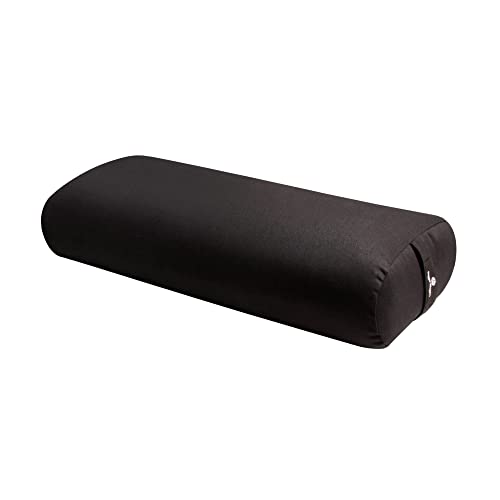
5. Hugger Mugger Standard Rectangular Yoga Bolster
Not every bolster needs to be soft. Hugger Mugger is a long-established yoga brand, and its standard rectangular bolster is a dense, flat-topped cushion. On a day bed, a firm bolster like this works as a lounging pad, a low arm rest or a footrest at one end.
- A rectangular shape sits flat on the mattress and does not roll away.
- A removable cover is typical for the line, so check the listing for washing directions.
- It doubles as a floor cushion or exercise accessory when the day bed is not in use.
The honest limitation is style. A yoga bolster looks athletic, so it is better as a hidden helper under a throw than as the main decorative piece. It is also firmer than most people expect for a sofa pillow.
It suits homes where the day bed lives in a yoga room, studio or home gym. If you only want the sofa look, the velvet bolster above is a better match.
One practical way to use it is to place it flat at the foot of the day bed under a folded throw. This gives guests a firm place to put their feet up and keeps the look clean, since the cushion is hidden. Another is to tuck it between the mattress and the wall to close a gap. Whichever you choose, check the dimensions on the listing and compare them with your bed.
Choose it if you want a firm, flat cushion that does double duty. Skip it if you want a soft, plush sofa feel.
6. Bedsure Throw Pillow Inserts Pack of 4 18 x 18 Inch
Four 18 inch inserts give you a flexible kit for a day bed that needs more than the big back row. Use two as mid-row accents, one under a lumbar cover for a bigger look, and keep one spare. Bedsure is a household name for bedding, and the inserts are a simple, familiar format.
- A pack of four means one purchase covers the whole bed.
- The 18 inch size matches the most common decorative covers.
- It is easy to use as a spare when a cover is in the wash.
The limitation is that 18 inch squares can look small next to large euro pillows, so use them as a middle layer rather than the main back row. Check the listing for fill type and cover compatibility.
Think of this pack as the toolbox for the rest of the bed. If you buy velvet bolster covers and lumbar covers, you will probably end up needing extra inserts, and having a set of familiar squares on hand makes experimenting easy. They are also helpful for guests, since you can pull one out to prop a laptop or a tray without disturbing the display row.
Choose it if you want an easy fill set for several covers. Skip it if you already own inserts.
Comparison of All Six Options
| Product | Size | Material | Key feature | Best use | Link |
|---|---|---|---|---|---|
| Utopia Bedding 26 x 26 | 26 x 26 in | Polyester fill | Pack of 2 euro size | Back row | Check on Amazon |
| Lunderg Reading Pillow | Check listing | Fabric and fill | Backrest with arms | Reading and lounging | Check on Amazon |
| Anickal Lumbar Covers | 12 x 20 in | Fabric cover | Boho patterns | Accent layer | Check on Amazon |
| Deconovo Bolster Covers | 6 x 18 in | Velvet cover | Roll shape | Day bed ends | Check on Amazon |
| Hugger Mugger Bolster | Check listing | Dense fill | Flat rectangular form | Firm lounging pad | Check on Amazon |
| Bedsure Inserts | 18 x 18 in | Polyester fill | Pack of 4 | Middle layer | Check on Amazon |
Best Pillows for the Back of a Day Bed
When people search for the best pillows for the back of a day bed, they usually mean the row that leans against the wall or the frame’s back panel. The goal is a backrest that looks full and stays in place. Two large euro squares do the job for most frames. A single long pillow can work too, but it tends to slide, and two squares let you move one aside for sleeping.
Think about height. If the back panel is low, larger pillows fill the gap and hide the wall. If the back panel is tall, you can use smaller squares and save space. A backrest pillow with arms gives a seat-like surface, which suits reading. Keep covers in a fabric with a little grip, such as linen or textured cotton, because very slick covers slide down.
Pillows for a Hemnes Daybed
People often ask about the best pillows for a Hemnes daybed, the IKEA frame with a slatted back and sides. It is built for a twin-size style mattress, so the usual rules apply: two euro squares along the back, one bolster or lumbar per side, and one smaller accent in the middle. The slats are open, so the pillows rest against them and the layout stays tidy.
Check IKEA’s current product page for the interior dimensions, and compare them with the pillow sizes in the listings above. If the frame includes a back panel, large squares sit upright more easily. If you leave the frame without a wall behind it, a firm backrest pillow keeps the layout stable. Keep the pillows light enough to move, since you will shift them every night.
The same frame also works as a guest bed in a small office. In that case, store the decorative pieces in a basket or a nearby chest so you can clear the bed in a minute. The Hemnes style has a clean, simple look, so cover colors in white, gray or natural linen tend to sit comfortably with it, and a single patterned lumbar adds a little warmth without clashing.
How to Choose the Best Pillows for Day Beds
- Measure the bed first. Length, width and the height of the back panel decide which sizes work.
- Layer by size. Large in the back, medium in the middle, small in front.
- Choose at least one firm piece. A bolster or backrest holds its shape better than a soft square.
- Pick washable covers. A day bed is used constantly, so look for covers with a zipper.
- Keep colors to two or three. The bed already has a mattress, quilt and throw to coordinate.
- Plan the night shift. Decide where decorative pillows go when you sleep, so they do not end up on the floor.
- Check fill and cover compatibility. Cover size should be equal to or slightly smaller than the insert.
Common Buying Mistakes
The biggest mistake is buying too many pillows. Day beds are narrow, and a pile of six can make the bed unusable. Start with a back row, an end piece for each side and one accent, then stop.
The second is forgetting covers. An insert looks plain and does not protect the fill. Buy covers in the same order or confirm the ones you own.
The third is choosing the wrong shape. A round bolster can roll on a smooth quilt, so a flat or weighted piece works better if you plan to lean on it.
The fourth is ignoring storage. If the bed has to be cleared each night, choose pillows you can stack in a basket, rather than structured pieces that need a shelf.
Final Recommendation
For most day beds, buy the Utopia Bedding 26 inch inserts for the back row, add the Deconovo bolster covers on a pair of inserts, and finish with one Anickal lumbar cover. That combination gives the sofa look without overfilling the bed.
- For readers and remote workers: Lunderg Reading Pillow.
- For a yoga room or studio: Hugger Mugger bolster.
- For extra fill: Bedsure inserts.
Our two top picks are below. Check the current size and colors on the listing before you order.
Anatomy of a Day Bed That Works as a Sofa
A day bed succeeds as a sofa only when its pillows do the structural work that a sofa’s back and arms normally do, and that work can be broken into three layers. The back layer is the wall of support: large, firm pillows standing against the wall or the frame’s back rail, giving seated people something real to lean on. In this guide, the Utopia Bedding inserts at the largest size and the Bedsure inserts in quantity are the raw material of that layer, because a back built from several firm squares can be shaped to the bed’s length and refreshed one pillow at a time. The middle layer is posture: a reading pillow such as the Lunderg, with arms of its own, turns one seat of the day bed into a genuine reading chair, while a firm rectangular bolster like the Hugger Mugger gives the lower back or the neck a defined place to rest. The front layer is the accent: lumbar covers such as the Anickal boho covers and the Deconovo velvet bolster covers bring colour, pattern and texture, and because they are covers, they are the cheapest layer to change when the room’s mood changes.
Seen this way, the common day bed disappointment, a row of soft bed pillows slumping against a wall, is simply a missing back layer. Sleeping pillows are engineered to compress under a head; sofa backs must resist a leaning adult. Building the back from inserts meant to hold shape, then dressing them in covers you actually like, converts the bed’s personality completely. The seat depth shrinks to something sofa-like, guests stop perching on the edge, and the bed starts being used in the daytime hours it was bought for.
Depths, heights and the geometry of sitting
A twin day bed is deep, deeper than most sofas, and pillow geometry is how that depth is tamed. Each layer of pillows along the back removes some depth, and the goal is a seat where a seated person’s feet can reach the floor or rest comfortably while their back is genuinely supported. Tall backs suit tall frames and rooms where the day bed is the main seating; a lower, longer arrangement suits a guest room where the bed must still read as a bed at a glance. Bolsters earn their keep at the ends, closing the gap between the back layer and the frame’s arms, and a single long lumbar across the front of the back layer ties the arrangement together visually while giving the lower back its support. None of this requires precision instruments; it requires standing back, sitting down, and adjusting until the seat feels inevitable rather than assembled.
Dressing the Layers: Covers, Colour and Change
Because two of the key picks in this guide are covers rather than filled pillows, the styling system deserves attention. Covers separate the pillow’s structure from its appearance, which means the back layer can stay constant for years while the room changes around it. The Anickal lumbar covers bring a relaxed, patterned, boho note that suits rooms with plants, woven textures and collected objects. The Deconovo velvet bolster covers bring a smoother, richer note that suits rooms leaning modern or formal. Owning both styles for the same inserts is a small extravagance with an outsized effect: the day bed can be redressed for a season, a guest or a change of bedding in minutes, and the spare set stores flat in a drawer.
Colour strategy for a day bed works best in families. Choose the back layer in the room’s quietest tone, the bedding’s neighbour rather than its rival, then let the lumbar and bolster layer carry the accent colour, and repeat that accent once more in the room, in a throw, a lampshade or a cushion on a nearby chair, so the bed looks connected rather than decorated in isolation. Pattern should be rationed by layer: if the bedding is patterned, keep the pillows calm; if the bedding is plain, the pillows are where the room’s pattern budget can be spent, and a boho lumbar against plain linen is a reliable, good-looking spend.
Washing, rotating and keeping the arrangement fresh
Day bed pillows work harder than bed pillows because they are leaned on, sat against and handled daily, so a light maintenance rhythm keeps the whole arrangement inviting. Plump the back layer back into shape as part of making the bed, since inserts hold their form best when they are regularly redistributed rather than left compressed in one posture. Rotate which inserts sit at the ends and which in the middle every few weeks, evening the wear. Wash covers according to their care guidance before they look tired rather than after, because lumbar and bolster covers sit exactly where hands and hair rest. And keep one honest rule: when an insert has gone permanently flat, replace the insert, not the whole arrangement, since the covers and the system you have built around them are the investment worth keeping.
From Bed to Sofa and Back: The Daily Conversion, Made Graceful
A day bed lives a double life, and the households that love theirs are the ones that make the daily conversion a small ritual rather than a wrestling match. The morning change from bed to sofa has three moves: strip or fold the night bedding to its daytime state, stand the back layer of pillows in its line, and place the lumbar and bolster accents in front. Done in that order, it takes minutes, and the trick is to give every element a home within arm’s reach: night pillows into a basket or a closet shelf, the throw folded over the back layer rather than stuffed behind it, and the reading pillow waiting at the end where its user actually reads. When each piece has a place, the conversion stops depending on tidiness and starts depending on habit, which is far more reliable.
The evening conversion reverses the ritual, and it is where a thoughtful arrangement pays again. Accent covers that are merely decorative can stay; the back layer rotates down or moves to the ends to become the sleeper’s surround; and the bolster that spent the day at a neck or a lower back can serve at night under knees or along the bed’s open side as a boundary for a restless guest. The Hugger Mugger bolster is particularly willing in this double role, since its firm, rectangular form was designed to support a body in deliberate positions, while the reading pillow’s arms make it the piece guests ask about and the piece most likely to migrate to a chair elsewhere in the house. Let it migrate. A day bed system that lends its parts to the household is a system that gets used, and used pillows are the whole point.
Guest readiness without a guest room panic
The day bed’s finest hour is the unplanned guest, and readiness is a matter of what is stored where. Keep the guest set complete and together: bedding that fits the twin mattress, a pillow arrangement that converts as described, and a small basket with the things a guest cannot ask for gracefully at midnight. When the call comes, the room changes in ten minutes, and the guest meets a bed that looks intended rather than improvised. Afterward, covers wash, inserts plump back into their daytime line, and the room returns to its sofa life with no residue of the visit except goodwill. Households that run this routine a few times stop thinking of the day bed as a compromise for small spaces and start thinking of it as the most flexible piece of furniture they own, which, arranged with the layered system in this guide, it genuinely is.
Troubleshooting the Common Day Bed Complaints
Every day bed owner meets the same handful of complaints, and each has a cause that can be fixed at the level of arrangement rather than replacement. The first is the slump: pillows that begin the morning upright and end the afternoon in a heap. Slumping is a firmness problem in the back layer, solved by inserts that hold shape, packed close enough to support each other, and by giving the row a slight lean against a wall or rail rather than asking it to stand free. The second is the slide: covers and pillows that creep forward as people sit. Sliding is a friction problem, eased by textured covers, by tucking the back layer’s base slightly under the mattress edge where the design allows, and by bolsters at the ends that close the row like bookends.
The third complaint is the perch: guests who sit on the very edge and never settle back, which signals that the seat still reads as a bed. The cure is depth reduction, another layer or a firmer back, until a seated person’s back meets support without a conscious lean. The fourth is the mess: an arrangement so elaborate that nobody dares disturb it, which defeats the furniture entirely. If your day bed has crossed that line, remove pieces until sitting down feels unceremonious again; the Lunderg reading pillow and one good lumbar can carry a corner beautifully while the full arrangement serves the main stretch. The fifth is the clash: pillows chosen one at a time that never became a family. The cure there is the colour discipline described earlier, quiet backs, accents in one repeated colour, and the willingness to retire a favourite cushion to another room for the sake of the whole.
Fitting the system to different frames
Frames differ, and the pillow system adapts. A frame with a high back rail wants a back layer that rises just above it, so the line of pillows reads as upholstery rather than as objects behind a fence. A frame with open slats benefits from the back layer being dressed in covers whose backs are as presentable as their fronts, since they will be seen from behind. A trundle frame, which must clear the bed that rolls beneath, asks that nothing in the arrangement hangs low at the front, so bolsters and lumbars should sit on the mattress rather than drape over its edge. A frame without arms needs the end bolsters most of all, because they manufacture the boundary that arms would otherwise provide. In every case the principle is the same: read the frame’s geometry first, then build the layers to complete it, and the day bed will look less like a bed wearing pillows and more like the sofa it was always capable of being.
Fabrics Up Close: Velvet, Cotton, Weave and Fill
The picks in this guide touch skin and clothing all day, so their fabrics are not a finishing detail but the substance of the purchase. Velvet, as in the Deconovo bolster covers, brings a smooth, light-catching surface that reads rich at close range and suits the pieces the hand meets most, since a bolster is held, hugged and leaned on rather than merely seen. Its care is a matter of brushing the pile in one direction and following the maker’s washing guidance, and its reward is a depth of colour that flat weaves cannot imitate. Woven and printed cotton-style covers, such as the Anickal lumbar covers, bring the opposite virtues: a matte, relaxed surface, patterns that hide the evidence of daily handling, and an easygoing character that suits rooms where the day bed is used by everyone including the dog.
Fill is the hidden half of every pillow decision. Inserts like the Utopia Bedding and Bedsure sets are the structure beneath the covers, and their job is to recover: to be leaned on for an evening and to stand back up the next morning. A fill that recovers slowly will make even beautiful covers look tired by afternoon, while a resilient fill keeps the whole arrangement looking intentional with nothing more than a daily plump. The reading pillow and the yoga bolster solve the fill question differently, with shaped, firmer constructions designed for defined postures, which is why they hold their roles in the arrangement for years while softer decorative pillows rotate around them.
The day bed in a studio or small apartment
Nowhere does the day bed earn its keep more completely than in a studio, where it must be bed, sofa and sometimes the room’s only soft furniture. In that setting the layered pillow system stops being styling and becomes the room’s living room: the back layer is the sofa back for every evening, the reading pillow is the armchair for every book, and the bolsters are the arms of a sofa that does not exist. Studio dwellers should dress the system one level more formally than a spare room would need, because the bed is always on display, and choose covers that coordinate with the room’s daytime identity rather than its bedding. A throw that lives folded over the back layer completes the disguise, and guests who never see the room at night will simply remember a comfortable sofa in a small, well-arranged home. That transformation, achieved entirely with the six kinds of pieces in this guide, is the strongest argument for taking day bed pillows seriously as furniture rather than as decoration.
Small Spaces, Teen Rooms and Other Day Bed Territories
Beyond the spare room, the day bed holds territory in several distinctive settings, and each asks something specific of its pillows. In a teenager’s room, the bed is sofa, study perch and social headquarters in one, and the pillow system should be built for resilience and self-expression: a firm back layer that survives being leaned on by several teenagers at once, covers that wash easily and often, and accents the teenager chooses personally, because a day bed dressed by its occupant gets made in the morning far more willingly than one dressed by a parent. The reading pillow earns a special place here, since homework and reading in bed are the room’s main industries, and a bolster gives the long wall of the bed a finished edge that makes the whole room look older and more deliberate.
In a home office that doubles as a guest room, the day bed’s pillows carry the room’s professional disguise. By day, a composed back layer in calm covers lets the room host a video call without announcing that the host sleeps guests behind the desk; by night, the same system converts as this guide has described. Choose covers in the office’s palette rather than the bedroom’s, keep the accents tailored rather than soft and scattered, and the room will read as an office that happens to contain a handsome day bed, which is exactly the impression such rooms are meant to give. In a child’s room transitioning away from a small bed, the day bed with a friendly wall of pillows becomes the reading sofa where stories happen, and the bolsters serve as the arms of a seat sized for shared books, a role they perform nightly in many houses without ever being credited for it.
The principle underneath every arrangement
Strip away the settings and one principle governs every successful day bed in this guide: pillows are structure first and decoration second. Build the back so a body can trust it, shape the seat so a guest settles instead of perching, close the ends so the arrangement feels held, and only then spend the colour and pattern that make the bed beautiful. Households that reverse that order, buying the beautiful accents first and wondering why the bed never works as a sofa, usually own all the right pieces in the wrong priority. Reorder the same pieces by the layers described here, and the furniture transforms without a single new purchase, which is the most satisfying kind of decorating there is.
When Pillows Wear Out: A Realistic Replacement Order
A day bed arrangement does not age all at once, and knowing the order in which its parts tire saves money and keeps the system looking coherent. Covers usually show life first, at the points where hands pull them and heads rest against them, but covers are also the cheapest and most enjoyable part to renew, and a fresh set can make the whole bed look newly bought. Inserts tire second, losing their recovery gradually until the back layer needs a firmer hand to stand; replacing inserts in pairs keeps the back’s height even, and the retired inserts often serve perfectly well as floor cushions or spare-bed pillows elsewhere in the house. The shaped pieces, the reading pillow and the bolster, tire last, because their firmer constructions were built for sustained postures, and they may outlast two generations of the covers and inserts around them.
The mistake to avoid is replacing everything at once in a flush of dissatisfaction, which discards good structure and lands the household with an entirely new system to break in. Renew in the order above, one layer at a time, living with each change for a few weeks before judging the next. Most day beds that look tired need only their covers; most that feel tired need only their inserts; and the rare bed that needs both is still a frame, a mattress and a system you understand, dressed again for years of double duty. That patience is the economic soul of the layered approach this guide recommends, and it is why the arrangement, once built, tends to stay built.
The Borrowed Wisdom of Sofa Styling, Applied to a Bed
Everything this guide recommends for a day bed has a cousin in ordinary sofa styling, and recognising the kinship helps owners trust the system. Sofa stylists build a back row of larger cushions, a middle row of mediums and a front accent, exactly the layering described here. They ration pattern to one layer, repeat a colour across the arrangement, and leave enough empty seat that the furniture invites use instead of admiration. The day bed asks for the same discipline with one added demand: every layer must be movable, because the sofa becomes a bed each night. That single difference explains the emphasis on covers, inserts and shaped pieces throughout this guide, and it is also the day bed’s advantage. A sofa’s styling is fixed by its upholstery; a day bed’s styling is a wardrobe, and the household that treats it as one gets a new-looking piece of furniture whenever it cares to change the dress, without ever changing the furniture.
A note on scent, airing and the guest-room test
Day bed pillows spend their lives in the room’s air, and a fresh arrangement is partly a matter of airing. Give the back layer a regular turn and a shake outdoors or at an open window when the bedding is changed, wash covers before they are asked to welcome a guest rather than after a guest has gone, and let sunlight reach the inserts occasionally in the course of ordinary room use. The guest-room test is simple: enter the room as a visitor would, and let your first impression judge. An arrangement that looks composed and smells like nothing but the room itself has passed, and it will keep passing with nothing more elaborate than the small, regular attentions described here.
Frequently Asked Questions
How many pillows does a twin day bed need?
Five or six is plenty: two large squares, two bolsters or lumbars, and one accent. More than that and the bed becomes hard to use.
What size pillows work best against the wall?
Twenty-six inch euro squares are the usual choice. Twenty-four inch squares can also work on a narrower frame.
Do bolsters need special covers?
Yes, bolster covers come in specific lengths and diameters, so match the cover to your insert as listed.
Can I use bed pillows as day bed pillows?
You can, but standard bed pillows are soft and flat, so they flop against a wall. Dense inserts and backrest shapes hold their form.
Will these fit a Hemnes frame?
The pillows are sold by size, not by frame. Check IKEA’s page for the interior dimensions, then compare them with the sizes shown on each listing.
How do I keep covers from sliding?
Choose covers with a textured weave and avoid satin. A light grip pad between the pillow and the quilt also helps.
Should the pillows match the bedding?
They should coordinate rather than match. Choose two or three colors that already appear in the quilt or throw, and vary the texture between velvet, linen and plain cotton so the bed looks layered, not flat.
Is a yoga bolster comfortable as a sofa arm?
It is firmer than a typical sofa cushion, so it suits people who like a solid feel. If you want a softer arm rest, choose a polyester-filled roll with a velvet cover instead.
What if the color is not right?
Review the return terms on the Amazon listing before ordering, and compare the cover with your bedding in daylight when it arrives.