Affiliate disclosure: As an Amazon Associate, DailyHomeDecorating.com earns from qualifying purchases. If you buy through links on this page, we may receive a commission at no extra cost to you.
This guide is about cordless stick and stick-style vacuums for carpet pile, not floor-cleaning robots or wet carpet shampooers. We focus on powered heads, carpet height, runtime under load, dust capacity, and maintenance.
Cordless carpet vacuum examples to compare
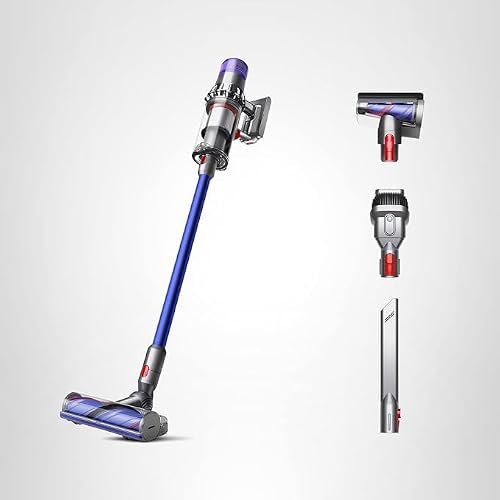
Dyson V11 Origin Cordless Vacuum, 185AW, 3 Power Modes, Up to 60 Minutes,² Deep Cleans Hard Floors and Carpets, Detangles pet Hair, Converts to Handheld
ASIN: B00FZPRUTY
The verified listing describes the Dyson V11 Origin with three power modes, an up-to-60-minute runtime claim, and use on hard floors and carpets. Multiple modes make it useful to compare for the tradeoff between longer low-power maintenance and higher-demand carpet passes. The stated runtime is a listing maximum; check mode-specific details and the current included floorhead.

LG Cordzero Q3 Cordless Stick Vacuum Cleaner, Graphite Color, with LED Crevice Tool, Auto Multi-Surface Detect, Dual Floor Max Lite Nozzle
ASIN: B0G669JBZ1
The LG CordZero Q3 listing describes an auto multi-surface detect feature and a Dual Floor Max Lite nozzle, along with an LED crevice tool. This makes it a useful model to examine for homes where carpet meets hard flooring. Confirm the exact carpet setting, battery runtime, and included attachments in the current product specifications.

Hoover ONEPWR Evolve Pet Elite Cordless Vacuum, Lightweight Stick Vac | Small Upright Vacuum, Ideal for Pet Hair, XL Dirt Cup Capacity, Cordless Vacuums for Home Use
ASIN: B0BS71D8C9
The Hoover ONEPWR Evolve Pet Elite listing describes a lightweight cordless stick vacuum with an XL dirt cup and pet-focused positioning. A larger cup can reduce interruptions during carpet sessions, but it does not establish suction or deep-pile performance. Verify the floorhead, battery included, runtime, and compatibility with any additional ONEPWR batteries.

Bissell PowerClean FurGuard 280W Self-Standing Cordless Vacuum, 4039 | Self-Cleaning Brush roll; wall Mount; Removable Battery; Upholstery Tool; 280W Strong Suction
ASIN: B0DQLLPYGM
The Bissell PowerClean FurGuard listing describes a self-cleaning brush roll, removable battery, wall mount, upholstery tool, and 280W motor. A removable pack can make charging and replacement more flexible; check the exact battery model and how its runtime is stated. The listed features make it worth comparing for regular carpet and upholstery maintenance.
Certain content that appears on this site comes from Amazon. This content is provided “as is” and is subject to change or removal at any time. Product examples and images are supplied through Amazon Creators API; confirm specifications and availability on the current listing.
Browse the Home & DIY section. For the broader mixed-floor comparison, see vacuums for hardwood floors and carpet. The dedicated hardwood stick vacuum guide focuses on the opposite floorhead challenge.
Carpet changes what a cordless vacuum has to do
A cordless vacuum that feels effortless on tile can struggle on carpet. Carpet fibers resist the floorhead, hold dust and hair below the surface, and can make a powered brush work harder. Battery use changes with that load, especially when the vacuum runs in a higher suction mode or a motorized brush is engaged. The best cordless vacuums for carpet therefore need a floorhead designed for pile, a brush roll that can maintain contact without bogging down, and enough practical runtime to finish the rooms you intend to clean.
This guide focuses on cordless stick and stick-style vacuums for carpet—not robotic cleaners, wet carpet shampooers, or general mixed-floor buying advice. We look at pile height, brush-roll behavior, airflow, battery use under load, dust capacity, and carpet care. A vacuum’s headline runtime is not the same as the time it will run while deeply cleaning a thick rug. Check the settings and floorhead details for the exact model before deciding.
Quick picks by carpet-cleaning need
The Dyson V11 Origin listing offers three power modes, an up-to-60-minute runtime claim, and use on carpets and hard floors, making it the mode-flexible comparison. LG’s CordZero Q3 listing includes auto multi-surface detection and a Dual Floor Max Lite nozzle, useful features to investigate for transitions between rooms. Hoover’s ONEPWR Evolve Pet Elite advertises a lightweight stick-style design and XL dirt cup, which may reduce bin interruptions. The Bissell PowerClean FurGuard lists a removable battery and self-cleaning brush roll.
These are product examples selected from verified Amazon listings, not independently tested winners. The feature language, runtime, battery, and attachments can vary by version or bundle. We avoid ranking carpet pickup without comparable hands-on testing. Treat the cards as starting points for checking brush height, carpet compatibility, current model number, consumables, battery support, and return terms.
How carpet pile height affects cleaning
Low-pile carpet has shorter, denser fibers and is generally easier for a stick vacuum to move across than a plush surface. A medium-pile carpet has longer fibers that can create more drag and hold debris deeper. High-pile and shag rugs place even more resistance against the nozzle and brush. The same cordless vacuum may glide easily on a flat runner but feel difficult to push on a soft bedroom carpet.
Pile height is not the only factor. Density, backing, carpet age, and fiber type influence how the floorhead moves and how debris is held. A low-pile commercial carpet can be dense and resistant, while a thicker-looking rug may be loosely woven. If possible, test the vacuum on your own floor during the return window. Stop if the head seals to the carpet, stalls, or pulls the rug excessively.
Powered brush rolls and agitation
A powered brush roll rotates to lift debris and hair from carpet fibers. It can help the vacuum gather particles that airflow alone may not dislodge, particularly on denser or longer pile. The brush also creates resistance and can wrap with hair. A cordless model’s motor and battery must support both suction and the roller, so a high setting may shorten the session. Check whether the brush roll can be turned off or whether the model automatically changes floor behavior.
For carpet, examine the roller design and how easy it is to access. Hair that winds around an axle can slow the brush and reduce pickup. A self-cleaning or anti-tangle claim may help, but periodic inspection is still sensible. Look for a release mechanism, replacement roller availability, and a manual that explains cleaning. Do not assume two Shark, Dyson, LG, Hoover, or Bissell models use interchangeable heads or batteries because their names share a product family.
Brush height and carpet seal
A floorhead should make useful contact with the carpet without becoming so sealed that it is hard to push. Some vacuums use an adjustable head or multiple carpet modes; others rely on airflow channels or automatic detection. If the nozzle feels stuck, creates a high-pitched seal, or pulls a lightweight rug off the floor, change the setting if the manual permits. Do not force the head or remove parts to improve movement unless the manufacturer directs you to.
Carpet height settings are meaningful only when the exact floorhead supports them. Check the model’s manual or diagrams, not just an online product title. Automatic surface detection can make transitions easier, but verify which surfaces and modes it detects. Thick rugs may need a slower pass or a different machine. The user should be able to maneuver the vacuum safely with one hand and keep control of the wand.
Runtime under carpet load
Advertised runtime commonly refers to a particular setting or a maximum condition. When suction is raised, a powered brush spins, and the head works against carpet, the battery can drain faster than during a low-power pass across hard floors. If a product page says “up to” 60 minutes, read the fine print to see which mode and tool are used for that number. Do not plan a full home carpet session around an optimistic maximum without allowance for boost mode and second passes.
Estimate your actual cleaning time by room and pile. If a bedroom takes 10 minutes on medium pile and a high-traffic living room needs 20, choose a model with enough usable runtime in the mode you will use—not just the longest headline. A removable battery can add flexibility if a compatible spare is available, but a spare is an extra expense and needs safe charging. Models without detailed runtime data should be checked on the current manufacturer specifications before purchase.
Battery design, removable packs, and charging
A removable battery makes charging away from the dock possible and may allow a replacement pack, but compatibility and availability are specific to the model. Verify the pack’s part number, voltage, and charging instructions. A product title mentioning a removable battery does not mean a second battery is included. Compare the cost of a spare and the warranty coverage before relying on one to finish a large home.
Charging and storage affect daily convenience. Check whether the vacuum uses a wall mount, floor dock, or direct charger. Measure the location and consider whether the pack remains attached while charging. Store batteries and vacuums away from extreme heat, dampness, and direct weather. Follow the manual about long-term storage and charging habits; do not substitute a generic adapter.
Suction modes: use the right one instead of maxing out
Max suction can be helpful for a localized spill of dry debris or a heavily used carpet area, but running every room in boost mode may drain the battery quickly. Lower or automatic modes may be adequate for regular maintenance on a short pile. Start with the manufacturer’s recommended setting for your carpet and increase power only when necessary. If the head is difficult to push, review airflow and brush settings rather than simply using more force.
Mode names differ across brands. Eco, auto, medium, and boost do not necessarily provide comparable output. Check which mode is recommended for carpet and how the vacuum behaves with the chosen floorhead. On a multistory home, you may want to clean high-pile rooms with a stronger mode and use a lower setting on rugs that need only surface pickup. A battery indicator can help you plan the session, but it does not measure carpet cleanliness.
Dust cups and interruption frequency
Carpet can hold more dust, lint, and hair than a smooth floor, so the dust cup may fill faster than expected. A small bin can require emptying in the middle of a room, which is frustrating during longer sessions. Compare usable capacity where the manufacturer provides it, but remember that capacity figures can be measured differently. Hair may occupy space and block a cyclone inlet before the cup appears full.
The Hoover ONEPWR Evolve Pet Elite listing advertises an XL dirt cup, which is relevant for longer carpet passes. Check how the cup detaches and empties, whether the filter needs frequent cleaning, and if the vacuum stands on its own for a pause. Bagless emptying can release dust, so dispose of contents carefully. For a household with pets, cleaning the cup and brush after use may be a regular part of ownership.
Choosing among stick, stick-style upright, and convertible models
Cordless stick vacuums usually prioritize light handling and above-floor use. Some stick-style designs have a larger body or floorhead that behaves more like a compact upright and may hold more debris. Convertible models detach the wand or pod for stairs, furniture, and car interiors. These formats can all be useful on carpet, but they differ in weight distribution, cup location, and how much force is needed to push the head.
If you mainly clean carpeted floors, test the feel of the powered head and handle. A lightweight body is not automatically easy to use if the carpet creates heavy drag. If you need stairs or upholstery, check how the motor unit feels when removed from the wand. Look for a stable way to set the vacuum down between rooms; some stick models cannot stand unsupported.
Carpet types and the settings to verify
Low-pile runners can often use a different head setting from a plush bedroom carpet. Dense loop carpet may snag a brush or create more resistance, while a delicate weave may require a gentler tool. Read the carpet manufacturer’s care recommendations, especially for wool or specialty fibers. If the vacuum manual excludes a floor type, take that guidance seriously rather than relying on a generic multi-surface badge.
Check whether the vacuum head has a setting for carpet, whether the brush stays on, and if suction adjusts automatically. For shag and very high pile, an ordinary stick vacuum may be a poor fit. The head can become buried and the motor can strain. A canister vacuum with a purpose-designed adjustable head or a traditional upright may work better. If you are unsure, ask the carpet installer or vacuum maker before using a powered roller.
A closer look at the Dyson V11 Origin
The Dyson V11 Origin product title returned by Amazon’s Creators API lists 185 AW, three power modes, up to 60 minutes, deep cleaning for hard floors and carpet, detangling pet hair, and handheld conversion. These are listing claims and should be confirmed on the current page. The multiple modes are relevant to carpet because runtime and resistance change with the setting and the powered floorhead.
When evaluating this model, verify the exact head included and whether the product is a new or renewed version. Check the accessory bundle, battery replacement details, wall dock, and filter maintenance. The listed maximum runtime does not mean that a high-demand carpet pass will last an hour. Compare the runtime in the specific mode you expect to use and make sure the price reflects the precise configuration.
A closer look at LG CordZero Q3
The verified LG CordZero Q3 listing identifies a Dual Floor Max Lite nozzle, auto multi-surface detect, an LED crevice tool, and a graphite finish. Those features make it an interesting option for a home with carpet-to-hard-floor transitions. The listing information we confirmed does not give a runtime figure in the title; check the full specifications for battery duration, modes, and what the box includes before comparing it with models that advertise a maximum runtime.
Confirm the head’s behavior on your carpet pile. Ask whether auto detection changes suction or brush behavior, and whether there is a user-controlled setting if the automatic response is not ideal. Check the battery pack and replacement availability, wall-mount dimensions, and how the filter is serviced. For a new generation model, verify that current replacement parts and support instructions are available in your region.
A closer look at Hoover ONEPWR Evolve Pet Elite
The Hoover ONEPWR Evolve Pet Elite listing describes a lightweight cordless stick-style vacuum with an XL dirt cup and pet-focused use. That larger collection capacity can be appealing on carpet because more fibers and hair may be picked up in a single session. It is part of Hoover’s ONEPWR battery family, but battery compatibility, included pack, and charging accessories must be confirmed for the exact bundle.
Check the floorhead brush, height adjustment, battery runtime, and whether the cleaner can stand securely when paused. The listing title does not establish performance on high-pile carpet, so compare the manual’s floor guidance and recent owner feedback for a similar pile type. This model may suit frequent maintenance if the battery is adequate for your rooms; do not assume that the pet branding guarantees a tangle-free roller.
A closer look at Bissell PowerClean FurGuard
The Bissell PowerClean FurGuard listing describes a 280W cordless vacuum with a self-cleaning brush roll, removable battery, wall mount, and upholstery tool. Its listed features make it worth comparing for carpet and household hair, but 280W is a motor power figure rather than a direct measure of carpet pickup. Check the product’s suction and runtime specifications in the current listing and use the model’s approved brush setting for your carpet.
A removable battery can make charging and replacement easier, while the upholstery tool adds above-floor flexibility. Find out whether the battery is included in the selected option, how long it takes to charge, and whether the wall mount holds tools. The self-cleaning brush feature may reduce hair wrapping but still needs inspection. Confirm replacement roller availability and read the care instructions for the exact floorhead.
Carpet care: vacuum frequency and direction
Frequent light cleaning can remove surface debris before it settles, but the right schedule depends on traffic, pets, and household needs. Use slow, overlapping passes rather than racing over a room. If your carpet has a visible pile direction, vacuuming in more than one direction may help lift surface fibers, but follow the carpet maker’s advice for delicate styles. Avoid pressing the head into the carpet; let the tool and suction do the work.
Entry mats can reduce the amount of grit carried onto carpet. Vacuum high-traffic routes more often than a rarely used guest room. For embedded dirt or a spill, use a carpet-safe cleaning method and allow the area to dry fully. A cordless vacuum is intended for dry debris unless the product explicitly says otherwise; never use a dry stick vacuum on liquids.
Brush-roll and filter maintenance on carpet
After a few carpet sessions, inspect the powered brush for wrapped hair and fibers. Follow the manual’s removal steps and keep fingers away from sharp edges or powered parts. Clean the brush with the supplied tool and check the ends for packed lint. If the brush stops or the unit shows an error, disconnect the battery or power according to the manufacturer’s directions before clearing a jam.
Filters need regular care because carpet dust can load them quickly. Tap or wash only as permitted, and reinstall only when a washable filter is fully dry. Keep air paths and seals clear. A clogged filter can reduce suction and increase motor strain. If the vacuum seems weak, check the head, wand, bin, and filter before concluding that the battery or motor has failed.
Small homes, pets, and stairs
A cordless model can be convenient in a compact home where a carpeted bedroom and a few rugs are cleaned in short sessions. You may not need a second battery if the floor area is modest, but check runtime in the setting you will use. A removable handheld unit can help with stairs, upholstery, and car interiors, though a carpet floorhead is not appropriate for every fabric surface.
Pet households should consider the amount of hair, the dust cup, brush maintenance, and filter replacement. If hair is long, examine the roller after every few passes. For stairs, weight distribution and tool balance matter; a vacuum may be light as a full stick but awkward when held at arm’s length. Test the grip and conversion mechanism before committing if comfort is a concern.
When a cordless stick is not enough
A cordless stick may not be the best primary carpet vacuum for a large home with thick pile, many rooms, or long deep-cleaning sessions. If it repeatedly runs out of battery, struggles to move, or needs multiple passes, consider a corded upright or canister with a carpet-specific powered head. A cordless machine can still serve as a quick-clean companion for stairs and spot debris.
For mixed hardwood and carpet, use the separate mixed-surface vacuum guide, which considers floor transitions. For a lighter head on hardwood, see stick vacuums for hardwood floors. These are different selection problems: carpet pile and brush agitation matter more here than a floorhead that glides on a smooth surface.
What to check before checkout
Write down the exact model number, included head, battery, charger, attachments, runtime conditions, dust cup size, and replacement part path. Confirm whether the listing is new, renewed, or a bundle with extras. Read the return window and warranty terms, and check whether the battery is covered separately from the vacuum body. If a listing shows multiple color or model choices, verify that the selected variant remains in the cart.
For carpet, prioritize a head designed for your pile, manageable push force, sufficient practical runtime, and a brush roll that is easy to maintain. For stairs and upholstery, add a comfortable handheld conversion and useful tools. A removable battery is valuable if replacement packs are supported and affordable. Do not buy a feature you will not use simply because the specification list is longer.
Frequently asked questions
Are cordless vacuums powerful enough for carpet? Some are suitable for low- and medium-pile carpet when equipped with a powered head, but performance depends on the exact model, setting, pile, and debris. Thick or dense carpet may be easier with a corded machine.
Does a cordless vacuum’s runtime change on carpet? Yes. Powered brush rolls and higher suction can draw more energy than low-power use on smooth floors. Check mode-specific estimates and leave a margin for second passes.
Should the brush roll be on for carpet? Many carpet surfaces benefit from agitation, but delicate weaves and certain loop piles may require a different setting. Follow the carpet and vacuum manufacturers’ recommendations.
Can I use a cordless stick vacuum on shag carpet? Some heads may be difficult to push or can become trapped in high pile. Check the manual’s exclusions and test carefully; a different floorhead or vacuum type may be needed.
Is a removable battery worth it? It can simplify charging and replacement, but only if compatible packs are available at a reasonable cost. Confirm the exact battery code before relying on a spare.
How often should I clean the brush roll? Check it regularly, especially if you have pets or long hair. Follow the manual’s steps and clear wraps before they obstruct rotation.
Can a cordless vacuum shampoo carpet? No, unless it is explicitly a wet carpet cleaner. A dry cordless stick should not be used on liquids or shampooed carpet.
Final recommendation
For the best cordless vacuums for carpet, compare the exact powered floorhead and battery behavior before comparing brand names. The Dyson V11 Origin brings three modes and a stated up-to-60-minute maximum; LG’s CordZero Q3 lists auto multi-surface detection; Hoover’s Evolve Pet Elite emphasizes an XL dirt cup; and Bissell’s FurGuard lists a removable battery and self-cleaning brush. Each offers a different set of tradeoffs, and none should be assumed to clean every carpet equally well.
Match the vacuum to pile height, room size, and the tasks you expect to handle on a charge. Check the manufacturer’s carpet guidance, verify accessories and replacement parts, and treat runtime as dependent on mode and load. If the home has thick carpet or requires long sessions, compare with corded machines before deciding. A cordless vacuum is most useful when it has enough battery and brush control for the carpet you actually own.