Disclosure: As an Amazon Associate, dailyhomedecorating.com earns from qualifying purchases. Links to Amazon on this page are affiliate links; they cost you nothing extra. Prices and availability change often, so check the current Amazon listing before you buy.
The best tubs for ice baths are not a separate species of tub, and that is the first useful thing to know. The best tubs for ice baths are deep, well-insulated soaking tubs that hold a seated adult, keep cold water cold without demanding a mountain of ice, and drain completely so the ritual is easy to repeat. Purpose-built plunge barrels exist, but many people prefer a proper bathtub shape: you can sit with your legs extended or tucked, the rim gives you something solid to hold as you lower yourself in, and the same tub serves a hot soak on the days you want warmth instead. This guide ranks six verified tubs for cold-water use by depth, insulation, footprint, and drainage, and it is honest about the trade-offs, because an ice bath in a beautiful tub is still an ice bath.
Cold immersion is a comfort and training ritual, and this guide treats it that way. It makes no medical promises, because cold water is a stressor as much as a pleasure: sessions should be short, temperatures sensible, and anyone with a heart condition, circulation problems, pregnancy, or any doubt at all should talk to a clinician before trying it and never plunge alone. What a good tub can honestly offer is control: a depth that covers your torso, walls that slow the warming of the water, and a size that matches your body and your space. Readers whose main interest is the training side should also read Best Ice Bath Tubs For Athletes, which ranks similar tubs by post-workout practicality rather than by home-bathroom fit.
Use the Quick Picks to match a tub to your space, then read the reviews for the details that decide cold use specifically: how the insulation behaves in reverse, how the drain handles a full tub of melting ice, and how easy the tub is to clean after repeated cold cycles. The buying guide and how-to sections cover ice quantities, temperature discipline, and session routines in practical terms.
Where to Buy
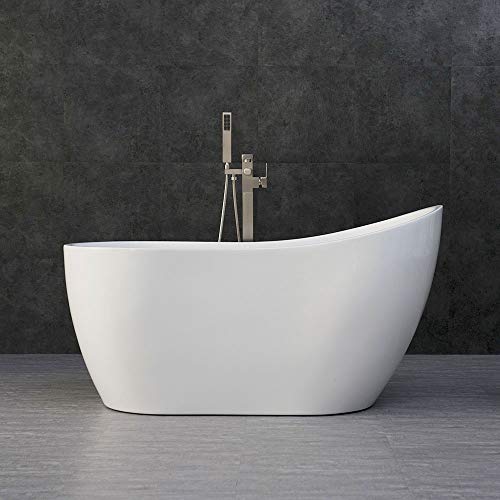
All six picks are sold on Amazon, where you can check the current price, availability, and delivery arrangements before ordering. Start with the WOODBRIDGE Acrylic Freestanding Contemporary Soaking Tub for the deepest compact cold soak, and confirm the listing via its Check on Amazon link. The other five are the Empava 59 Inch Freestanding Bathtub — Check on Amazon; the DeerValley 55″ Acrylic Freestanding Bathtub — Check on Amazon; the FerdY Tahiti 55″ Acrylic Freestanding Bathtub — Check on Amazon; the Streamline 75″ Freestanding Soaking Bathtub — Check on Amazon; and the KINGSTON BRASS 60-Inch Contemporary Alcove Acrylic Bathtub — Check on Amazon.
In this guide
Quick Picks
| Pick | Badge | Why it earns its place |
|---|---|---|
| WOODBRIDGE Acrylic Freestanding Contemporary Soaking Tub | Best Overall | Deep, tall, and double-walled: chest-level cold immersion in a 54-inch footprint that holds temperature. |
| Empava 59 Inch Freestanding Bathtub | Best Deep Soak | 15-inch soaking depth, anti-slip bottom, and double-wall acrylic in an everyday 59-inch size. |
| DeerValley 55″ Acrylic Freestanding Bathtub | Best Compact | A space-saving 55-inch deep soaking tub with center drain for small bathrooms, apartments, and guest baths. |
| FerdY Tahiti 55″ Acrylic Freestanding Bathtub | Best Budget | Double-walled insulation and lumbar support at the most approachable point in this guide. |
| Streamline 75″ Freestanding Soaking Bathtub | Best for Tall Users | 75 inches and 82 gallons for full-length cold immersion when smaller tubs force a tucked posture. |
| KINGSTON BRASS 60-Inch Contemporary Alcove Acrylic Bathtub | Best Alcove | A 58.2-gallon alcove tub with 14-inch water depth for a permanent cold-plunge corner in a standard opening. |
Key Takeaways
- Insulation works both ways: the double walls that keep a hot soak hot also keep cold water cold and cut your ice bill.
- Depth beats length for plunging; a seated, chest-deep posture is the goal for most users.
- Smaller tubs need far less ice to reach and hold a target temperature, which matters if you plunge several times a week.
- A textured or non-slip bottom and a solid rim matter more in cold water, when hands and feet are numb.
- Keep sessions short, temperatures moderate, and never plunge alone or without medical clearance if you have any relevant condition.
- Complete drainage and easy cleaning decide whether the ritual survives past the first month.
How These Picks Were Chosen
Every linked pick comes from the verified product pool for this site, with dimensions and construction taken from manufacturer listing data and reproduced in the spec boxes. For cold use, the selection weighted four things: soaking depth, because a plunge that stops at the waist misses the point; insulation, because uninsulated tubs demand constant ice; interior shape that supports a stable seated posture with a safe grip on entry and exit; and drainage that empties a full, icy tub without fuss. Dual-purpose value counted too: every pick here is also an excellent hot soaking tub, so the purchase is not hostage to a single habit.
Filtered out were shallow standard tubs whose water depth cannot cover a seated torso, jetted tubs whose plumbing complicates cold use and cleaning, and any product whose cold-use claims came with medical promises this guide will not repeat. Stock tanks and unlined barrels were also left aside: they plunge perfectly well, but they are not bathtubs, they offer no shaped support, and they belong to a different buying guide. What remains is a set of real tubs that happen to be excellent cold vessels.
The method is specification-based and practical rather than laboratory-based. Temperature behavior is described from construction principles that are well established: insulated double walls slow heat transfer in both directions, and smaller volumes change temperature faster per bag of ice. No recovery, injury, or performance claims are made for any pick; cold immersion here is presented as a personal comfort and training ritual with sensible safety limits.
The 6 Best Tubs for Ice Baths — Reviewed
WOODBRIDGE Acrylic Freestanding Contemporary Soaking Tub
Our badge: Best Overall
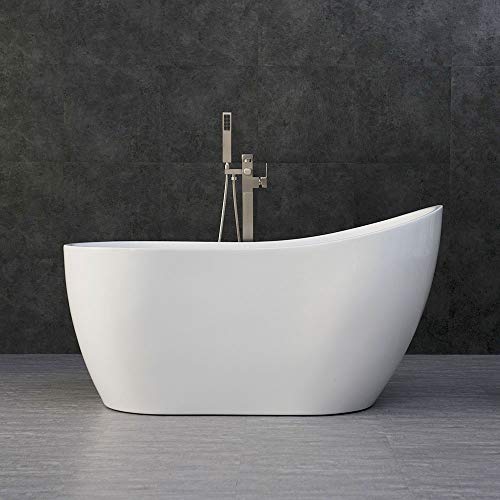
The WOODBRIDGE Acrylic Freestanding Contemporary Soaking Tub is the natural first choice for cold water. It stands 29 inches tall in a compact 54-inch length, holds an effective 55 gallons, and its double-walled Lucite acrylic construction, reinforced with resin and fiberglass, slows the warming of cold water just as it slows the cooling of hot. Seated inside, the water reaches chest level, which is the immersion most plungers actually want, and the non-slip surface, meeting ASTM slip-resistance standards, is a real safety feature when your feet have gone numb. The reinforced bottom is rated by the maker for loads up to 1000 pounds, and the brushed nickel overflow and drain are included.
Strengths
- Deep, tall interior gives chest-level immersion in a small footprint.
- Double-walled insulated acrylic reduces ice demand and holds temperature.
- Non-slip surface and sturdy reinforced construction suit cold, numb-footed exits.
Trade-offs
- Tall rim is a deliberate climb out with cold legs; stage a stable step and towels.
- Tall users sit tucked rather than extended.
- 55 gallons still needs a meaningful amount of ice in warm weather.
| Color | Brushed Nickel |
|---|---|
| Size | 54 inches long |
| Dimensions | 54 x 29 x 29 inches |
| Weight | 75 pounds |
In a weekly plunging routine, the WOODBRIDGE’s size is its economy. A 55-gallon fill reaches a bracing temperature with far less ice than a large oval, the insulated walls hold that temperature through a short session without drifting, and the compact footprint fits the corner of a bathroom, garage-adjacent washroom, or large closet conversion where a plunge station can live permanently. The glossy Enduraclean surface wipes down quickly after each use, which matters because cold tubs used often grow a waterline film just like hot ones.
The exit deserves respect: plan a non-slip mat, a towel within reach, and a moment sitting on the rim before standing, because cold legs are unreliable legs. Within that sensible routine, this is the most complete home ice bath in the guide, and on rest days it reverts to being a superb deep hot soak, the dual use that justifies its place in a home rather than a gym. For keeping its acrylic and fiberglass surfaces right, see Best Cleaner For Fiberglass Tubs And Showers.
Best for: regular home plungers who want depth, insulation, and a small footprint / Not suited for: tall users who need to extend their legs fully
Choose the WOODBRIDGE if you will plunge often and want the ice bill and the footprint kept small. Skip it if full-length extension is essential and look at the Streamline. Check on Amazon

Empava 59 Inch Freestanding Bathtub
Our badge: Best Deep Soak
The Empava 59 Inch Freestanding Bathtub brings a 15-inch soaking depth, ergonomic back support, and double-wall acrylic to a 59-inch footprint, with a 45-gallon capacity that is the most ice-efficient in this guide. Its textured anti-slip bottom is exactly what cold water calls for, the center drain empties the tub completely, adjustable leveling feet keep drainage true, and cUPC certification covers the plumbing credentials. For apartment-sized bathrooms and modest ice budgets, it is the deep plunge that asks the least of everything around it.
Strengths
- 15-inch depth with the smallest capacity here: fast to chill, economical on ice.
- Textured anti-slip bottom and ergonomic back support for a stable seated plunge.
- Double-wall acrylic, center drain, and leveling feet included.
Trade-offs
- 45 gallons is a seated plunge; larger users may want more water around them.
- Back support shaping favors one reclined end.
- External faucet required for filling, as with all freestanding picks.
| Color | White |
|---|---|
| Size | 59 Inch |
| Dimensions | 59.1 x 29.5 x 26.8 inches |
| Weight | 66.1 pounds |
The Empava’s plunging personality is efficiency. Less water means the temperature drops faster per bag of ice, the session starts sooner after a workout, and draining and refilling for the next use is a small job rather than a project. The back support keeps you seated upright without sliding as the cold takes your coordination, and the anti-slip floor gives your feet purchase for a controlled stand at the end. At 66.1 pounds it is also the easiest of these tubs to position in a rental-friendly or upstairs bathroom, subject always to floor and load common sense.
As a hot tub it is equally good, which makes it the dual-purpose value of this list. Clean it with soft cloths and mild cleaners, keep the textured floor brushed so its grip stays honest, and it will serve both rituals for years. If you plunge daily and buy ice by the bag, do the arithmetic: this tub’s smaller volume is a recurring saving that compounds.
Best for: frequent plungers, smaller bathrooms, and anyone watching the ice budget / Not suited for: very large users wanting maximum water volume
Choose the Empava for depth per gallon and per square foot. Skip it if you want a long, stretched plunge. Check on Amazon
DeerValley 55″ Acrylic Freestanding Bathtub
Our badge: Best Compact
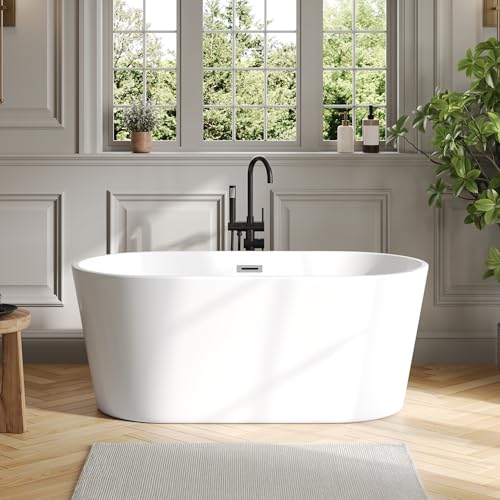
The DeerValley 55″ Acrylic Freestanding Bathtub is a deep soaking tub in a deliberately compact silhouette, designed, in its maker’s words, to maximize soaking space while keeping a small footprint for apartments, guest bathrooms, and smaller layouts. It has a center drain and integrated overflow, an ergonomic interior, and a smooth premium acrylic surface that resists stains and cleans easily. For cold use, that combination means a genuine seated plunge in rooms where a larger tub, or a dedicated plunge barrel plus a bathtub, simply cannot both fit.
Strengths
- Compact 55-inch footprint with an interior designed to maximize soaking space.
- Center drain and integrated overflow for complete, simple drainage.
- Smooth, stain-resistant acrylic that is quick to wipe down after each plunge.
Trade-offs
- Single-wall description gives no insulation claim, so expect to use somewhat more ice than the double-walled picks.
- Compact interior means a tucked, seated posture for most adults.
- No verified weight in the pool data; confirm handling details on the listing.
| Color | White |
|---|---|
| Size | 55 Inch |
| Dimensions | 55.12 x 29.53 x 22.05 inches |
The DeerValley suits the plunge-corner approach: a small bathroom, a garage washroom, or a guest bath that doubles as your cold station. Its clean silhouette and light, bright finish keep a small room from feeling like a utility space, and the straightforward installation, helped by the included stainless overflow cover and chrome-finished drain, makes it a realistic weekend project. Because it is not marketed as insulated, the honest routine is to chill the water shortly before use, plunge promptly, and not expect a morning fill to hold temperature into the evening in a warm room.
It remains a fully capable hot soaking tub for the household, which is the compact-home argument in full: one fixture, two rituals, no extra floor space surrendered. Keep the acrylic glossy with non-abrasive care, and protect the finish when moving it into place, since compact rooms invite bumps during installation.
Best for: apartments and small bathrooms needing one tub for both hot soaks and cold plunges / Not suited for: users who want insulation to hold temperature for hours
Choose the DeerValley when footprint is the binding constraint. Skip it if ice economy over long holds is your priority, and pick a double-walled model. Check on Amazon

FerdY Tahiti 55″ Acrylic Freestanding Bathtub
Our badge: Best Budget
The FerdY Tahiti 55″ Acrylic Freestanding Bathtub earns the budget badge for cold use on the strength of one feature: double-walled, fiberglass-insulated construction at the most approachable end of this guide. Insulation is the recurring cost-saver in ice bathing, and the FerdY has it, along with sloped lumbar support that keeps a seated plunger stable, a pre-installed brushed nickel drain with a toe-tap action you can work with numb feet, an integrated slotted overflow, and cUPC certification. The glossy acrylic surface is easy to clean, and at 72.84 pounds installation is undramatic.
Strengths
- Double-walled insulation at a budget-friendly position in the range.
- Lumbar support and toe-tap drain suit cold, clumsy exits.
- Pre-installed drain and overflow; light enough for easy placement.
Trade-offs
- 14-inch water depth is a shallower plunge than the deepest picks.
- Compact interior means a seated, tucked posture.
- Alternative drain finishes cost extra if you want to match other fittings.
| Color | Brushed Nickel Drain |
|---|---|
| Size | Tahiti 55″ |
| Dimensions | 55.31 x 30.91 x 23.43 inches |
| Weight | 72.84 pounds |
For a first dedicated home plunge setup, the FerdY removes excuses. It fits small rooms, it insulates, it drains with a tap of the toe when your hands are cold and full of towel, and it cleans in minutes. The lumbar slope deserves a specific mention for cold use: as the chill sets in, posture slumps, and a shaped back keeps you seated safely rather than sliding. Its 14-inch depth will leave taller torsos a little higher in the water than the WOODBRIDGE, which you can partly offset by filling right to the overflow and tucking your knees to lower your shoulders.
As with every pick here, it doubles as a warm soaking tub, and FerdY offers the design in larger sizes if your room allows an upgrade later. For finish care shared with its fiberglass-reinforced construction, the cleaning notes in Best Cleaner For Fiberglass Tubs And Showers are directly relevant, and for the room around a compact plunge corner, Best Wall Shelves For Bedrooms Under $100 offers the small-space shelving logic that keeps towels and a thermometer within reach.
Best for: first-time plungers and budget-conscious regulars / Not suited for: deep-immersion purists
Choose the FerdY for insulated cold use without overspending. Skip it if maximum depth is non-negotiable. Check on Amazon

Streamline 75″ Freestanding Soaking Bathtub
Our badge: Best for Tall Users
The Streamline 75″ Freestanding Soaking Bathtub solves the tall plunger’s problem, which is that compact tubs force a knees-to-chest tuck that leaves half the torso out of the water. At nearly 75 inches long with an 82-gallon capacity, it lets a tall user sit with legs extended and shoulders down, the full-immersion posture smaller tubs cannot offer. The 3.2mm acrylic with fiberglass insulation and a stainless-steel reinforced frame holds temperature well for its size, the internal drain is pre-installed, and the included bamboo tray gives you a dry place for a timer and a phone, which is how disciplined sessions actually get timed.
Strengths
- Full-length immersion for tall users, with room to extend the legs completely.
- Thick insulated acrylic and a reinforced frame at a large size.
- Included tray supports timers and session tracking.
Trade-offs
- 82 gallons demands the most ice of any pick here to chill from tap temperature.
- Needs a large room and a planned delivery route.
- Overkill for smaller users, who will spend more on ice for the same session.
| Color | Polished Chrome |
|---|---|
| Dimensions | 74.8 x 35.4 x 27.6 inches |
| Weight | 134.5 pounds |
The honest arithmetic of the Streamline is ice. Chilling 82 gallons takes either a lot of bagged ice or a plan: fill with the coldest tap water, pre-chill overnight in a cool room where possible, and add ice shortly before the session rather than hours ahead. For a tall athlete whose alternative is a half-immersion in a small tub, that cost buys the real thing, and the insulated shell at least stops the water warming quickly once it is cold. Two-person cold sessions are also possible here, which some training partners prefer for accountability and safety, since plunging with someone present is the safer habit anyway.
Everything else about the tub is the flagship story from the soaking guides: rigid, glossy, easy to clean, and handsome enough to anchor a bathroom. Just buy it with your eyes open about running costs, and it will not disappoint.
Best for: tall plungers and training partners who plunge together / Not suited for: small rooms or tight ice budgets
Choose the Streamline if your height rules out compact tubs. Skip it if a seated compact plunge meets your needs at a fraction of the ice. Check on Amazon

KINGSTON BRASS 60-Inch Contemporary Alcove Acrylic Bathtub
Our badge: Best Alcove
The KINGSTON BRASS 60-Inch Contemporary Alcove Acrylic Bathtub is the permanent-installation answer: a three-wall alcove tub in acrylic with fiberglass and resin reinforcement, a tile flange and integral apron, a right-hand drain, 14 inches of water depth to the overflow, and a 58.2-gallon capacity. In a garage bathroom, basement bath, or dedicated recovery room with a standard 60-inch alcove, it becomes a fixed plunge station that is always ready, plumbed, and drained, with no freestanding filler to plan and no tub to move.
Strengths
- Alcove installation makes a permanent, plumbed plunge station in a standard opening.
- 58.2-gallon capacity with 14-inch water depth for a proper seated immersion.
- Acrylic with fiberglass and resin reinforcement and an easy finished apron face.
Trade-offs
- Drain kit is not included and must be purchased separately.
- Right-hand drain configuration must match the room’s plumbing.
- Alcove walls limit the stretched positions a freestanding oval allows.
| Color | Glossy White |
|---|---|
| Size | 60 inch (L) x 30-11/16 inch (W) x 22-1/16 inch (H) |
| Dimensions | 60 x 30.69 x 22.06 inches |
| Weight | 95 pounds |
The alcove format has underappreciated cold-use virtues. Three tiled walls give you something solid on every side, a showerhead overhead makes rinsing and cleaning effortless, and the whole station reads as a normal bathroom fixture to everyone else in the house. The tile flange and apron keep water where it belongs through years of filling and draining cycles. Insulation is not a stated feature, so expect mid-pack ice economy, improved by the alcove itself, which shelters the tub from room air on three sides.
Budget for the separate drain kit, confirm the right-hand drain against your plumbing before ordering, and this becomes the set-and-forget plunge installation. For households converting a spare bath into a recovery room, it is the most integrated option in the guide.
Best for: permanent plunge stations in a standard alcove / Not suited for: freestanding layouts or left-hand drain plumbing without replumbing
Choose the Kingston if your plunge corner is a real alcove. Skip it if you want a freestanding tub you can reposition. Check on Amazon
Comparison Table
| Pick | Length | Capacity / Depth | Insulation Note | Check price on Amazon |
|---|---|---|---|---|
| WOODBRIDGE 54 Inch | 54 in | 55 gallons, deep tall profile | Double-walled | Check price on Amazon |
| Empava 59 Inch | 59.1 in | 45 gallons, 15-in depth | Double-wall | Check price on Amazon |
| DeerValley 55 Inch | 55.12 in | Deep soaking interior | Not stated | Check price on Amazon |
| FerdY Tahiti 55″ | 55.31 in | 14-in water depth | Double-walled, fiberglass | Check price on Amazon |
| Streamline 75″ Freestanding | 74.8 in | 82 gallons | Fiberglass insulated | Check price on Amazon |
| KINGSTON BRASS Alcove 60″ | 60 in | 58.2 gallons, 14-in depth | Not stated | Check price on Amazon |
How to Choose the Best Tubs for Ice Baths
Put Depth Ahead of Length
A plunge is a seated posture. Water depth to the overflow decides whether your torso is in or out, and for most adults something in the region of 14 to 16 inches of water, in a tub tall enough to contain it when you displace your share, gives a genuine immersion with knees tucked. Length only becomes the priority if you are tall enough that a compact interior forces your shoulders up and out, in which case step up to a long tub and accept the ice cost knowingly.
Treat Insulation as an Ice Budget
Every bag of ice you do not need is money and effort saved every week for years. Double-walled, fiberglass-insulated tubs slow warming measurably, and smaller volumes chill faster and cheaper. If you plunge three or more times a week, insulation and modest capacity will save you more than any other feature on the specification sheet. If you plunge twice a month, a simpler tub and a few extra bags are a fair trade.
Plan Entry, Exit, and the Wet Floor
Cold water numbs hands and feet and slows reactions. Choose a tub with a non-slip or textured bottom where you can, keep the rim clear to grip, stage a mat and towel before you fill, and consider a stable step for tall tubs. Never plunge alone, never plunge after drinking alcohol, and get out on a timer rather than on bravado. Anyone with cardiovascular or circulation concerns, or who is pregnant, should get medical advice before starting; this is a comfort ritual, not a treatment, and it should always stay inside sensible limits.
Check Drainage and Cleaning Before You Commit
You will drain and refill this tub constantly. A drain that empties fully, a surface that wipes clean in minutes, and no jets or hidden channels to harbor grime are what separate a ritual that lasts from one abandoned by February. Freestanding tubs need a filler plan; alcove tubs need the right drain hand and a separate drain kit where noted. Write the full parts list down before ordering.
How to Take an Ice Bath at Home, Step by Step
Fill the tub with cold tap water first, then add ice gradually and stir, checking with a bath thermometer until you reach your target. Beginners should start with cool rather than frigid water, in the upper range people commonly use for cold immersion, and work down over weeks as the habit forms; there is no prize for the coldest first session. Set a timer before you get in, lower yourself in steadily while breathing slowly, and keep sessions short, a few minutes at most when you are starting out. Keep your hands in or out consistently rather than fidgeting, and end the session on the timer, not when you stop feeling cold, because that signal arrives late.
Afterward, exit slowly, sit on the rim for a moment, dry off, and dress warmly. Let the water drain fully, rinse the tub, and wipe it down so it is ready for the next session; a tub left full of melting ice water grows a film and a smell faster than you would expect. Note your temperature, duration, and how the session felt in a simple log; progression in cold work is mostly the discipline of small, recorded steps.
Problem: The water will not get cold enough — Start with the coldest tap fill, add ice in stages with stirring, plunge in the coolest part of the day, and choose a smaller or insulated tub if the problem persists.
Problem: The water warms up before the session ends — Chill closer to session time, keep a spare bag of ice for a mid-session top-up, and favor double-walled tubs that slow the drift.
Problem: Getting out feels unsteady — Shorten the session, warm the room, stage a mat and towel at the rim, sit before standing, and always have someone else in the house when you plunge.
Problem: The tub develops a slippery film — Drain fully after every use, rinse and wipe the surface, and clean weekly with a soft cloth and mild cleaner rather than letting residue build.
Ice, Water, and the Real Running Cost of a Home Plunge
The purchase price of the tub is the small number in ice bathing; the recurring number is ice and water. A compact 45- to 55-gallon tub in a cool room might need a modest number of bags to drop from tap temperature to a bracing plunge, while an 82-gallon tub on a warm day can need several times that, every session. Households that plunge daily often graduate to keeping a chest freezer with reusable ice blocks or frozen water bottles, which cuts the bagged-ice cost dramatically and is easier on drains than loose ice. However you chill, build the routine around the tub you can afford to run, because the best ice bath is the one that still exists in your routine in six months. That arithmetic is why this guide ranks an efficient 45-gallon tub so highly and treats the big oval as a specialist’s choice rather than a default.
Cold Water Safety, Without the Hype
Cold immersion attracts exaggerated claims in both directions, miracle and menace, and the truth a buyer needs is simpler. Cold water is a strong stimulus: it will wake you up, it will feel intense, and it demands respect in the form of short sessions, gradual progression, a buddy in the house, and medical clearance for anyone with a relevant condition. It is not a treatment for injuries or diseases, and this guide recommends tubs for the comfort and discipline of the ritual itself. Children should not use ice baths outside supervised, age-appropriate cool-water play that looks nothing like an adult plunge. If a session ever leaves you with prolonged shivering that will not settle, confusion, or chest discomfort, end the experiment and seek medical advice. Kept inside those lines, a home plunge is a bracing, honest pleasure, and the right tub makes it a controlled one. Readers building a broader home recovery corner may also find Best Solar Bird Bath Water Pumps a cheerful contrast for the garden, and the athlete-specific ranking in Best Ice Bath Tubs For Athletes covers post-training routines in more depth.
Common Buying Mistakes
Buying the Biggest Tub for the Coldest Fantasy
Large tubs cost the most to chill and the most to run. Unless your height demands length, a deep compact tub delivers the same immersion for a fraction of the ice.
Ignoring Insulation
An uninsulated tub in a warm room eats ice continuously. Double-walled construction pays for itself in bags not bought.
Starting Far Too Cold
Beginning at the coldest temperature you have seen online is how people quit, or worse. Start cool, progress gradually, and let the logbook, not ego, set the temperature.
Forgetting the Exit
Numb feet, a tall rim, and a wet floor are a predictable combination. Stage mats, towels, and a step before the first fill, and never plunge home alone.
Leaving the Tub Full Between Sessions
Standing melt water grows film and odor and ages finishes. Drain, rinse, and wipe after every use; the two minutes buy years of service.
Plunging Through the Seasons: Summer Heat and Winter Discipline
The same tub behaves like two different products across the year, and planning for both keeps the ritual alive. In summer, the enemy is warm tap water and a warm room: fills start closer to your target, but the ice load to finish the job climbs, and an uninsulated tub in a sunlit bathroom can drift upward during even a short session. Summer plungers do best with the insulated picks in this guide, with ice added at the last moment, and with sessions scheduled for the coolest part of the day. Frozen reusable blocks earn their freezer space in summer most of all, because bagged ice bought daily becomes the habit’s biggest cost exactly when the habit is most pleasant to keep. In winter, the arithmetic reverses and the psychology inverts: tap water arrives genuinely cold, a modest amount of ice finishes the job, and the insulated tub’s job becomes keeping the water from feeling punishingly colder than planned, while the real challenge becomes leaving a warm house’s warm room and getting in at all. Winter is when the staged exit, the warm robe, and the heated bathroom stop being luxuries and become the difference between a ritual kept and a ritual quietly dropped until spring.
Households in genuinely cold climates should also think about where the tub lives. A plunge station in an unheated garage or outbuilding changes every assumption: fills can start near freezing without any ice at all, which sounds like a gift until pipes, drainage, and the bather’s own exit across a cold floor enter the picture. The rigid acrylic tubs in this guide are indoor fixtures designed for plumbed bathrooms, and they will serve a heated garage bathroom or basement bath beautifully; they are not frost-proof outdoor vessels, and letting water stand in any tub in a freezing space is an invitation to damage. Keep the station in the heated envelope of the house, and winter becomes the plunge season when the water is cheapest and the contrast is most bracing, rather than the season the pipes burst.
Sharing the Tub: Households, Partners, and Hygiene
A home plunge tub rarely serves one person for long. Partners adopt it, teenagers get curious, and training friends ask to try, and the tub that was bought as private equipment becomes a small household facility. That is mostly good, since plunging with company is safer and more sustainable, but it deserves a few ground rules agreed in advance. Everyone rinses before entering, because a cold tub shared across a week concentrates the same film as a hot one. The water is drained after the day’s last session rather than held for tomorrow’s first, because standing water, cold or not, is a hygiene problem wearing a convenience costume. Each user logs their own temperature and time, and nobody, especially a guest, starts at the household’s coldest setting to be polite; guests start warm and short, with the regular’s supervision, or they do not start at all.
Children change the rules completely. A plunge tub is not a paddling pool, and cold immersion at adult temperatures and durations is an adult practice. If children use the tub at all, it should be as an ordinary lukewarm bath under ordinary bath supervision, at a different time from the plunge routine, with the station’s ice and equipment stored out of reach. Set that boundary when the tub arrives rather than improvising it later, and the shared household and the serious ritual will coexist without either undermining the other.
After the Plunge: Warming Up and the Meltwater Question
What happens in the ten minutes after you climb out decides how the plunge feels in memory, and a few habits make it reliably good. Exit slowly, since cold legs are clumsy legs, and keep a towel and warm layers at the tub’s edge rather than across the room. Dry off and dress warmly, then let the body rewarm itself with movement, a walk around the house, light chores, before reaching for a hot shower; the gradual internal rewarming is the part practitioners describe as the afterglow, and blasting the skin with heat immediately mainly produces a strange tingling contrast most people do not love. A warm drink is the traditional companion and earns its place. If you feel genuinely unwell, dizzy, or unable to stop shivering hard after a reasonable interval, that is the body filing a report the safety section of this guide already covered: shorten the next plunge, warm the water, and treat the episode as information rather than weakness.
Then there is the tub full of meltwater, which first-time plungers consistently underestimate as a chore. In a plumbed bathtub the answer is the drain, and the only craft is timing: pull the plug once you are dressed and warm, and let the cold water leave at its own pace while you get on with the day. Households that plunge in the garden or garage face the more interesting version of the question, and the melt has honest second lives: it is clean, cold water that garden beds, lawns, and potted plants accept gratefully in summer, it can flush a patio or wash down outdoor furniture, and in a heatwave a basin of it by the door is a foot-cooler the whole household will use. What it should not do is sit. Standing meltwater warms, grows a biofilm, and attracts insects within days, so the rule is drain or deploy within a day, rinse the tub, and let it dry, which also happens to be the hygiene rhythm the rest of this guide prescribes. Ice that has not melted can be scooped back to the freezer in a pinch, though most households find the ritual simpler when each plunge starts with fresh ice and a clean conscience about the small cost, a cost the running-cost section has already priced honestly.
Final Recommendation
The top pick is the WOODBRIDGE Acrylic Freestanding Contemporary Soaking Tub: deepest compact immersion, real insulation, a non-slip surface, and a footprint that fits a home routine. The runner-up is the Empava 59, the most ice-efficient deep plunge here; reach it through its Check on Amazon link. Tall users should step up to the Streamline, small apartments to the DeerValley or FerdY, and anyone with a spare alcove bath to the Kingston for a permanent station. Whichever you choose, keep sessions short, temperatures gradual, and the ritual honest, and the tub will earn its place.
Frequently Asked Questions
Can I use a regular bathtub as an ice bath?
Yes, if it is deep enough to cover your torso when seated and you can fill and drain it conveniently. The picks in this guide are regular soaking tubs chosen because their depth, insulation, and drainage make them unusually good at the job; a shallow standard tub will chill, but your shoulders will stay out of the water.
How much ice does a home ice bath need?
It depends on tub volume, tap water temperature, and your target. Compact tubs in the 45- to 55-gallon range need substantially less than large tubs, and insulated walls reduce the top-up needed during a session. Many regular plungers switch to reusable frozen bottles or blocks from a chest freezer to cut the recurring cost.
How cold and how long should a session be?
Beginners should start with cool water and very short sessions, progressing gradually over weeks, and should always use a thermometer and a timer rather than guessing. This guide deliberately avoids prescribing a medical protocol; if you want a structured program, or you have any health condition, get advice from a clinician first.
Will cold water damage an acrylic tub?
Normal ice-bath temperatures are well within what acrylic tubs handle; they are built for hot water, which is the more demanding direction. Avoid dropping large ice blocks from a height onto the surface, add ice gently, and clean with non-abrasive products to protect the gloss.
Is a freestanding or alcove tub better for plunging?
Freestanding tubs offer deeper, more flexible interiors and can be placed in a spare room with a filler plan; alcove tubs give you a permanent plumbed station with walls and a showerhead for rinsing. Choose by your space: the Kingston suits a dedicated alcove, the WOODBRIDGE a flexible corner.
How do I keep an ice bath tub clean?
Drain fully after every session, rinse, and wipe with a soft cloth; clean weekly with a mild non-abrasive cleaner and keep the drain clear. Because the tub is drained constantly, buildup is easy to prevent and hard to excuse.


