Disclosure: As an Amazon Associate, dailyhomedecorating.com earns from qualifying purchases. Links to Amazon on this page are affiliate links; they cost you nothing extra. Prices and availability change often, so check the current Amazon listing before you buy.
The best cotton blankets for winter start with a paradox most shoppers do not expect: cotton is not the warmest fiber, and that is exactly why some sleepers swear by it in January. A cotton blanket breathes, absorbs and releases moisture, never builds static, and never produces the clammy, overheated feeling that synthetic-heavy winter bedding can. Its warmth is honest and moderate — which means the winter skill with cotton is layering: the right cotton blanket, in the right weave, in the right position in the stack, will keep most sleepers in most heated homes comfortable all winter, with a cleaner, drier feel than fleece ever manages.
This guide ranks the cotton blankets in our verified pool that genuinely serve winter, and it is transparent about the pool’s limits: four linked picks carry cotton as a primary fiber, and two further slots are filled with prose-only recommendations — classic winter cotton types described qualitatively, with no links and no invented specifications — because a winter cotton guide that omitted thermal-weave and flannel cotton blankets would be lying by omission. Where a linked pick has a real limitation (a toddler-sized blanket, a throw-sized quilt), the review says so in plain language. For the synthetic counterpart to this guide, see Best Fleece Blankets For Bed; for winter bedding strategy generally, see Best Blankets For Sleeping Winter.
The through-line: choose cotton for its feel and its breathing, then engineer the warmth with layers. Shoppers who need a single blanket to defeat an unheated bedroom should buy wool or heated instead — and this guide will tell them so rather than oversell a fiber.
Where to Buy
The linked picks below are sold on Amazon, where you can check the current price and size before buying; the two prose-only picks are classic types to search for by description. Start with our top pick, the Bedsure Cooling Cotton Waffle Blanket — Check on Amazon. The remaining linked picks: Bearaby Cotton Hand-Knit Weighted Blanket — Check on Amazon; Tache Cotton Patchwork Quilt Blanket — Check on Amazon; Woolino Toddler Blanket — Check on Amazon. The prose-only picks (a heavyweight cotton thermal blanket and a cotton flannel blanket) are reviewed in their own blocks below with guidance on what to look for.
In this guide
Quick Picks
| Pick | Badge | Why it earns its place |
|---|---|---|
| Bedsure Cooling Cotton Waffle Blanket for Hot Sleepers | Best Overall | A cotton and bamboo-rayon waffle at full queen size — the breathable winter layer that works in the stack all season. |
| Bearaby Cotton Hand-Knit Weighted Blankets for Adults – Chunky Knit Blanket – Sustainable | Best Weighted Cotton | Fifteen pounds of pure cotton yarn in an open knit: winter pressure without synthetic fill. |
| Tache Cotton Patchwork Quilt Blanket Country Farm Cottage Vintage Antique Ditsy Floral Paisley | Best Cotton Quilt Layer | A pre-washed cotton patchwork quilt — the traditional middle layer of a winter cotton bed. |
| Woolino Toddler Blanket – Merino Wool and Organic Cotton Baby Blanket | Best for Kids’ Beds | Merino wool lining with a GOTS-certified organic cotton outer, sized for toddlers and small children. |
| Heavyweight cotton thermal blanket (prose-only) | Best Traditional Thermal | The classic waffle-thermal weave in full bed sizes — winter cotton’s old workhorse, described below. |
| Cotton flannel blanket (prose-only) | Best Flannel Feel | Brushed cotton flannel: the warmest-feeling cotton surface for cold-sheet nights, described below. |
Key Takeaways
- Cotton’s winter virtues are breathability, moisture handling, and zero static — its warmth is moderate and must be layered.
- Weave is warmth: thermal and waffle weaves trap air in their structure and out-warm flat cotton weaves of the same weight.
- The winter cotton stack is sheet, cotton blanket, and a warm top layer; the cotton does the breathing while the top does the insulating.
- Two slots in this guide are prose-only classic types (thermal and flannel) because the verified pool does not carry them — no links, no invented specs.
- In an unheated or very cold bedroom, cotton alone is the wrong tool; pair it with wool or heated layers.
How These Picks Were Chosen
We filtered the verified pool for cotton as a primary fiber and winter-plausible construction, and only four products passed honestly: a cotton-blend waffle bed blanket, a pure-cotton knit weighted blanket, a cotton patchwork quilt, and a merino-and-organic-cotton child’s blanket. Rather than pad the guide with synthetic blankets wearing cotton adjectives, we completed the six with the two cotton types every winter guide should discuss — the heavyweight thermal-weave blanket and the cotton flannel blanket — as prose-only picks, described by their well-known category characteristics without links or fabricated specifications. That is the brief this site works to: linked picks only from verified products, honest prose for the rest, and the gap flagged rather than hidden.
Within the linked picks, ranking followed winter usefulness. The waffle blanket leads because it is the only full-bed-size cotton layer in the pool and because its weave is a genuine winter asset in a stack. The Bearaby follows as the weighted option — its open knit is a summer virtue, but in winter, layered under a warm top blanket, its cotton weight is exactly what pressure-seekers with natural-fiber principles need. The Tache quilt is the traditional cotton middle layer. The Woolino is included with its size stated in the first line of its review: it is a toddler blanket, included because parents searching this keyword are often furnishing a child’s bed, and for that bed it is excellent.
What we excluded, and why: the pool’s fleece, sherpa, and microplush blankets (synthetic, however lovely), the heated blankets (polyester faces), and the wool Pendleton (a great winter blanket, but this guide’s keyword is cotton, and honesty about fiber is the guide’s whole premise). Readers who want the best winter blanket regardless of fiber should read this alongside our heavy-blankets guide and choose with open eyes.
The 6 Best Best Cotton Blankets for Winter — Reviewed

Bedsure Cooling Cotton Waffle Blanket for Hot Sleepers
Our badge: Best Overall
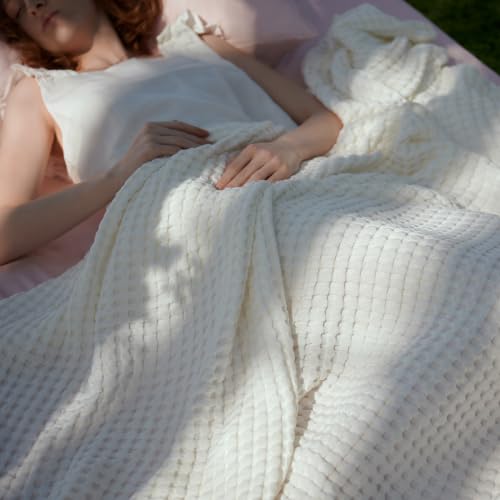
The Bedsure Cooling Cotton Waffle Blanket for Hot Sleepers is marketed for hot sleepers, and in a winter guide it earns its place for the opposite reason: its waffle weave is a structure, and structure is what makes cotton work in winter. The blend — 50% cotton, 50% rayon derived from bamboo — is woven into a three-dimensional grid whose pockets trap still air, and trapped air is insulation in any fiber. At queen 90×90 inches, it is the only true bed-size cotton blanket in this pool.
Strengths
- Waffle structure traps air for real warmth while staying breathable — the winter stack’s ideal middle
- Full queen coverage with durable stitching and maker-rated shrink and fade resistance
- Bamboo-rayon component wicks moisture, keeping the winter bed drier than flat cotton does
Trade-offs
- It is a blend, not 100% cotton — purists should note the rayon half before buying
- Alone, it will not defeat a cold bedroom; it is engineered for layered warmth
- Waffle texture can catch on jewelry and rewards gentle washing
| Color | 01 – Ivory |
| Size | Queen (90″ X 90″) |
| Weight | 3.8 Pounds |
The winter deployment: waffle over the top sheet, duvet or wool blanket over the waffle. The cotton layer manages the skin-side climate — absorbing the night’s moisture, breathing through its grid — while the top layer provides the deep insulation cotton cannot. The result is a bed that feels dry at 3 a.m. in a way all-synthetic stacks rarely do. In milder winter climates and heated homes, the waffle alone over a flannel sheet is a complete and very pleasant answer.
At 3.8 pounds it has enough body to feel like a winter blanket rather than a summer afterthought, and the ivory texture dresses a winter bed handsomely under a folded-back duvet. It is also the easiest winter cotton to own: machine washable, quick to dry relative to heavier cotton weaves, and sized to double as the summer blanket when the season turns — the same dual citizenship we praised in Best Blankets For Warm Weather.
Best for: heated homes, layering sleepers, and anyone wanting one cotton blanket for the whole year / Not suited for: unheated bedrooms as a sole blanket, or 100%-cotton purists
Choose it as the winter cotton foundation; skip it only if your bedroom is genuinely cold and unlayered. Check on Amazon
Bearaby Cotton Hand-Knit Weighted Blankets for Adults – Chunky Knit Blanket – Sustainable
Our badge: Best Weighted Cotton
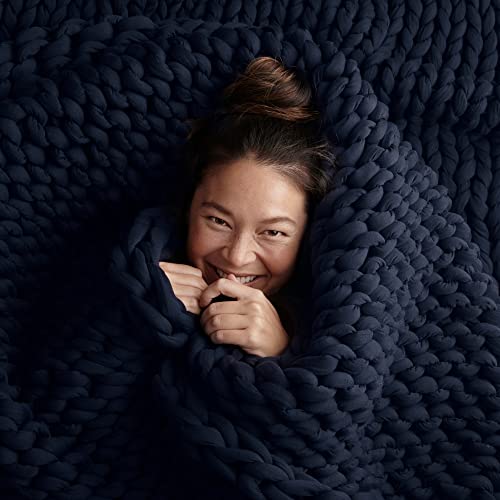
The Bearaby Cotton Hand-Knit Weighted Blankets for Adults – Chunky Knit Blanket – Sustainable is the only weighted blanket in this pool whose weight is entirely cotton: thick yarn, hand-knitted, 15 pounds of it, with no glass beads, no polyester fill, and no synthetic shell. For the winter sleeper who wants pressure and natural fiber in the same product, it is effectively the only candidate — and winter is when its one summer virtue, the open knit’s airflow, becomes a layering feature instead.
Strengths
- Pure cotton weight — OEKO-TEX Standard 100 certified yarn per the maker — for natural-fiber households
- In winter stacks, the open knit lets a warm top layer’s heat reach you while the pressure stays in contact
- Machine washable despite its 15 pounds, and beautiful enough to be the bed’s visible layer
Trade-offs
- By itself in a cold room, the open knit does not insulate — it must be paired with a warm layer
- Premium price, single-sleeper 40×72-inch footprint
- Loops can snag; a winter duvet over it should have a smooth cover
| Color | Midnight Blue |
| Size | 15 lbs (40”x72”) |
| Weight | 15 pounds |
The winter stack that flatters the Bearaby: sheet, Bearaby, warm top blanket. The knit delivers its even, gentle pressure directly, and the top layer — wool if you have it, a duvet if you do not — supplies the insulation the knit deliberately lacks. Because the weight layer and the warmth layer are separate, you can tune warmth nightly without surrendering the pressure, which is the most sophisticated weighted setup available in any fiber. On mild winter nights in heated apartments, the Bearaby alone over a sheet is sufficient and pleasantly breathable.
Sizing follows the ten-percent-of-body-weight guidance; this 15-pound version fits the broad middle. The midnight blue reads as intentional décor through the grey months. For the comfort-ritual side of weighted cotton, our Best Blankets For Anxiety guide covers this same blanket’s evening role in depth.
Best for: weighted sleepers with natural-fiber principles and heated homes / Not suited for: cold rooms as a sole layer, or bead-blanket devotees who want denser uniformity
Choose it to keep weight and cotton together all winter; skip it if your only winter problem is cold. Check on Amazon

Tache Cotton Patchwork Quilt Blanket Country Farm Cottage Vintage Antique Ditsy Floral Paisley
Our badge: Best Cotton Quilt Layer
The Tache Cotton Patchwork Quilt Blanket Country Farm Cottage Vintage Antique Ditsy Floral Paisley is the traditional form of winter cotton: a real cotton patchwork quilt with a thin poly-cotton fill, vermicelli stitching, and a plain cotton reverse. Quilts like this were the winter middle layer for generations — too light alone for deep cold, perfect as the breathable stratum between sheet and heavy top blanket — and the Tache executes the form honestly at throw size.
Strengths
- Real cotton patchwork with pre-washed softness — the dry, familiar hand winter cotton lovers want
- Thin fill adds a genuine step of warmth without the stuffiness of synthetic loft
- Doubles as the couch and reading layer, so its winter use extends beyond the bed
Trade-offs
- Throw size (50×60 inches): a personal or twin-bed layer, not queen coverage
- The fill is a poly-cotton blend, so the quilt is cotton-dominant rather than cotton-pure
- Vintage floral styling suits cottage and farmhouse rooms more than minimal ones
| Color | Burgundy |
| Size | 50×60 |
On a twin bed or a child’s bed, the Tache over a sheet with a warmer blanket available is a complete traditional winter setup. On a larger bed, its role is the personal layer: across the torso, at the foot, or over one sleeper in an asymmetric stack. The burgundy and beige patchwork does real decorative work in a winter room, which matters for a layer that lives visibly on the bed.
Care follows the maker’s guidance: cold delicate washing, gentle detergent, low or air dry. Treated so, cotton patchwork softens for years. If you love the quilt form and need bed-size coverage, the waffle pick above is the pool’s larger cotton answer; the Tache is for those whose bed — or whose lap — fits its honest dimensions.
Best for: twin beds, traditional cotton layering, and cottage-style winter rooms / Not suited for: queen coverage or cotton-purity requirements
Choose it for the classic quilt layer; skip it if you need full-bed dimensions. Check on Amazon
Woolino Toddler Blanket – Merino Wool and Organic Cotton Baby Blanket
Our badge: Best for Kids’ Beds
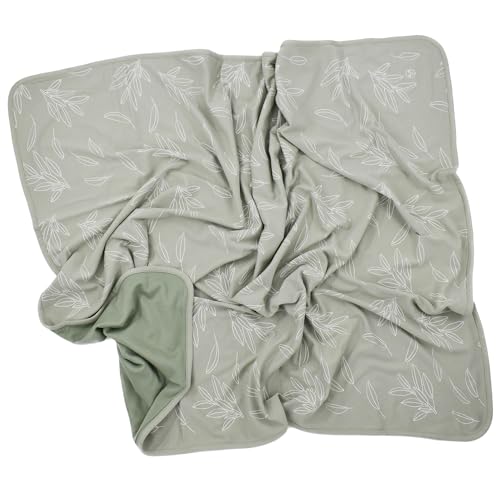
Size first, because it decides everything about this pick: the Woolino Toddler Blanket – Merino Wool and Organic Cotton Baby Blanket measures 52.5 by 40 inches and is made for toddlers and small children. It earns its place in a winter cotton guide because its outer layer is GOTS-certified organic cotton and its lining is Australian merino wool — a natural-fiber construction that regulates a small sleeper’s temperature through winter better than the synthetic blankets that dominate children’s bedding.
Strengths
- Merino wool lining temperature-regulates: warm in cold rooms, breathable when the heating runs hot
- GOTS-certified organic cotton outer, chemical-free per the maker, silky and itch-free against skin
- Machine washable — a non-negotiable virtue in a toddler’s blanket
Trade-offs
- Toddler dimensions only — it is not an adult blanket and cannot serve as one
- Premium pricing for a small blanket, reflecting its natural materials
- The wool component means following the maker’s wash guidance rather than a hot cotton routine
| Color | Sage |
| Size | 40 inch |
For a child’s winter bed, the construction logic is exactly right: small bodies are worse at regulating temperature and worse at reporting discomfort, so a blanket that buffers both directions — merino’s specialty — earns its premium. The generous-for-a-toddler size works across a crib-to-bed transition and as a stroller and car blanket through winter errands. Woolino is a US company specializing in merino baby essentials, per the maker, with the warranty and support posture to match.
Adults reading this guide for their own bed should skip to the waffle and thermal picks; parents furnishing a small bed in natural fibers have found their answer. Safe-sleep note: blankets of any kind do not belong in an infant’s crib; this is a toddler product, and its use should follow the maker’s age guidance and standard safe-sleep practice.
Best for: toddlers and small children in natural-fiber households / Not suited for: any adult bed or infant cribs
Choose it for the child’s bed; skip it for your own. Check on Amazon
Heavyweight Cotton Thermal Blanket (Prose-Only)
Our badge: Best Traditional Thermal
This slot is a prose-only recommendation — a classic product type described qualitatively, with no link and no invented specifications, because the verified pool for this guide does not include one. The heavyweight cotton thermal blanket is the winter cotton of hospitals, hotels, and grandparents’ houses: a dense waffle-thermal weave in 100% cotton, in full bed sizes, whose deep cellular texture traps more air than any flat cotton weave and which emerges from commercial laundering unharmed for years.
What to look for when you shop the type: a genuinely deep thermal weave you can see through slightly when held to light (the air cells are the insulation), a weight that feels substantial in the hand for its size, tight edge binding, and 100% cotton content if purity is your reason for shopping this guide. In use, it is the winter stack’s hardest-working layer — over the sheet it takes the abrasion and the weekly wash, under a duvet it adds the air-trapping structure that turns loft into warmth. It is also the cotton blanket most tolerant of hot washing, which is why institutions standardized on it. Its limits are the fiber’s limits: in a cold, unheated room it needs a serious top layer, and it will never feel plush. Buy it as infrastructure, not as luxury, and it will serve a decade.
Best for: traditionalists, hot-wash households, and the base layer of a serious winter stack / Not suited for: anyone wanting softness or standalone warmth in a cold room
Choose the type if you value durability and washability above all; there is no link for this pick — search the description and judge the weave in hand or by the listing’s stated construction.
Cotton Flannel Blanket (Prose-Only)
Our badge: Best Flannel Feel
Also prose-only, for the same reason: the pool carries synthetic flannel fleece but no cotton flannel blanket, and the difference is the entire point of this keyword. Cotton flannel is cotton woven and then brushed, raising a soft nap that feels warm the instant it touches skin — the property that makes flannel sheets beloved in winter — while remaining a natural, breathable, static-free fiber. A cotton flannel blanket is the lightest-feeling way to take the cold edge off a winter bed.
What to look for: flannel brushed on both sides for maximum softness, a midweight hand (heavy flannel blankets exist and are the winter prize), and Portuguese or long-staple cotton claims where offered, since flannel quality is fiber quality. In the stack, flannel belongs against the sleeper — as the top sheet substitute or the first blanket — where its warm-touch nap does its work, with the waffle or thermal layer and a top blanket above it. Its honest limits: flannel pills if it is cheap, it is the least warm cotton per layer in this guide, and it asks for the same gentle, no-hot-wash care as other quality cotton if you want the nap to last. For sleepers whose winter complaint is specifically the shock of cold bedding at first contact, flannel cotton is the answer the fiber itself gives.
Best for: cold-sheet sufferers, natural-fiber purists, and the skin-side layer of a winter stack / Not suited for: standalone warmth or buyers who hate any pilling risk
Choose the type for feel; there is no link for this pick — judge listings by fiber content, brushing, and weight in hand.
Comparison Table
| Pick | Cotton content | Size | Winter role | Check price on Amazon |
|---|---|---|---|---|
| Bedsure Cooling Cotton Waffle Blanket | 50% cotton / 50% bamboo rayon | Queen 90″x90″ | Breathable middle layer | Check price on Amazon |
| Bearaby Cotton Hand-Knit Weighted Blanket | 100% cotton yarn | 40″x72″ | Weighted layer | Check price on Amazon |
| Tache Cotton Patchwork Quilt | Cotton patchwork, poly-cotton fill | 50″x60″ | Traditional quilt layer | Check price on Amazon |
| Woolino Toddler Blanket | Organic cotton outer, merino lining | 52.5″x40″ | Child’s bed | Check price on Amazon |
| Cotton thermal blanket (prose-only) | 100% cotton thermal weave | Bed sizes | Base layer workhorse | Check price on Amazon |
| Cotton flannel blanket (prose-only) | 100% cotton flannel | Bed sizes | Skin-side warm-touch layer | Check price on Amazon |
How to Choose the Best Cotton Blankets for Winter
Be honest about your bedroom’s temperature
Cotton’s winter range is the heated home: roughly, rooms that stay in the mid-60s Fahrenheit or above with a proper top layer. Below that, cotton becomes a layer in a wool-or-heated system rather than the system. The most expensive cotton mistake is buying it to do a cold room’s whole job; the happiest cotton owners are those who bought it for feel and breathing in a warm-enough house.
Choose weave before fiber percentage
Within cotton, structure decides warmth: thermal and waffle weaves trap air and out-perform flat weaves of equal weight by a wide margin. A 50% cotton waffle (the Bedsure) will sleep warmer than a 100% cotton flat-weave blanket. Purists can have both — the prose-only thermal type is 100% cotton in a cellular weave — but never buy a flat cotton weave for winter and expect the fiber name to save it.
Assign each cotton layer a job in the stack
Skin-side: flannel for warm touch. Middle: waffle or thermal for air-trapping and moisture handling. Top: the insulation cotton cannot provide (duvet, wool). Weighted cotton like the Bearaby slots between sheet and top layer. A stack with assigned jobs beats a pile of blankets every night of winter — and it tells you exactly which layer to adjust when the night goes wrong.
Weight your care routine
Cotton’s great practical virtue is washability, but weaves differ: thermal cotton tolerates hot, frequent washing (its institutional heritage), waffle wants gentleness to protect its grid, patchwork quilts want cold delicate cycles, and knit cotton wants room to move in the machine. Buy the cotton whose care matches the tempo of your household’s laundry, especially for kids’ beds.
Size cotton generously
Cotton can shrink slightly in early washes even when pre-shrunk claims are made, and winter layering wants drape to seal edges. The queen waffle’s 90 inches is the right instinct. For the prose-only types, buy the size above your instinct if you are between sizes, and wash before first use so the bed you make is the bed you keep.
How to Layer a Cotton Winter Bed
Build it in order. Fitted sheet (flannel if your house runs cold — the warm-touch effect starts at the skin). Top sheet or the flannel blanket as the skin-side layer. Then the structure layer: waffle or thermal cotton, tucked at the foot. Then the insulation: duvet or wool blanket. Then, optionally, the identity layer — the patchwork quilt folded at the foot, the weighted knit on one sleeper’s side. Adjust nightly by removing or adding from the top; adjust seasonally by swapping the structure layer’s weight. Cotton beds reward this discipline with a dry, static-free, breathable sleep that synthetic stacks genuinely cannot imitate — the reason cotton loyalists accept the layering work without complaint.
Problem: the cotton bed feels cold for the first ten minutes — that is cotton’s honest cold-touch; a flannel skin-side layer or flannel sheets remove the shock entirely.
Problem: you wake damp despite cotton’s reputation — too much synthetic above the cotton is trapping what the cotton absorbed; let the stack breathe by replacing the top layer or dropping one layer.
Problem: the waffle blanket stretched out of shape — it was hung wet or washed hot; dry it flat or tumble low, and handle the grid gently when wet.
Problem: the cotton stack is not warm enough in a cold snap — add insulation on top, not more cotton in the middle; cotton layers beyond two add weight, not warmth.
Problem: static everywhere despite cotton bedding — check the pajamas and the top layer; the static source is usually a synthetic somewhere in the stack, rarely the cotton itself.
Why Cotton Loyalists Refuse to Switch
Talk to someone who has slept in cotton for decades and the reasons are sensory, not technical. Cotton smells like nothing, and after washing it smells like clean. It does not crackle, cling, or shine. It feels cool in summer and, in the right weave and stack, entirely adequate in winter — and its inadequacies are honest ones you can layer around, rather than the clammy surprises of synthetics. There is also a longevity argument: quality cotton bedding softens for years before it thins, and a thermal cotton blanket can outlast several fleece replacements, which reframes its price entirely. None of this makes cotton the warmest choice — this guide has been careful not to claim that — but warmth is one variable in a night’s sleep, and for a large minority of sleepers, it is not the variable that was failing. If your winter problem was never really cold — if it was stuffiness, static, and waking damp under synthetics — cotton was always your answer, and winter was never the obstacle it appeared to be. Readers in exactly that position often pair this guide with Black Friday Throw Pillow And Blanket Deals to time the natural-fiber purchases, since quality cotton is the bedding most worth buying on sale.
Cotton for Winter Guests and Children’s Rooms
Guest beds are where cotton’s virtues compound: it washes completely clean between visitors (a moral as well as hygienic point), it offends no one’s fiber principles, and a layered cotton bed lets a guest tune their own warmth by adding or removing a layer without instructions. Make the guest bed with the full stack and a folded quilt at the foot, and you have covered sleepers from the always-cold to the radiator-roasted. Children’s rooms follow the same logic with the safety notes attached: cotton layers sized to the bed, nothing heavy on small bodies, and — for toddlers — purpose-built natural options like the Woolino in this guide rather than adult blankets folded down. A child who sleeps in breathable cotton also generates less laundry drama, because cotton forgives the hot, frequent washing that children’s bedding demands. In both rooms, cotton is the hospitable fiber: neutral, washable, and honest.
Cotton Weights and Thread Counts: Reading a Listing Like a Weaver
Cotton blanket listings are vaguer than they should be, so a buyer needs a small vocabulary. GSM — grams per square meter — is the most honest number when given: winter cotton blankets live at the heavier end of the scale, and a listing that publishes GSM is at least willing to be judged. Weave names matter more than thread count, which is a sheet metric that means little for blankets: thermal, waffle, herringbone, and twill are structures with real thermal consequences, while a plain tabby weave in a blanket is a summer object whatever its thread count. “Long-staple” and named cottons signal smoother, stronger yarn that pills less and softens better with age — worth a premium in a blanket you will wash for a decade. Pre-shrunk claims should be read as “shrinks less,” and the first wash still belongs before the first night. Finally, edges tell the truth about a cotton blanket’s maker: bound, hemmed, or woven selvages survive; raw or overlocked edges on a heavy blanket announce a short life. Judge a cotton listing by weave, weight, fiber length, and edges, in that order, and the marketing adjectives can safely be ignored.
The Winter Cotton Bed for Hot Sleepers
A specific and underserved reader deserves direct address: the hot sleeper in a cold house. This person needs winter for their face and summer for their body — cold air to breathe, minimal insulation over the torso — and cotton is their fiber precisely because of the moderation this guide has treated as a limitation. For them, the winter stack inverts: a single waffle or thermal cotton layer over the sheet, no duvet, the wool and fleece reserved for the partner’s side of the bed. They should also claim the bed’s cool side, sleep in cotton rather than synthetics, and keep the bedroom as cold as the household allows. Cotton’s breathability and moisture handling mean their winter nights stay dry instead of clammy, and the absence of static is a small nightly mercy. If that is you, this guide’s ranking still holds — the waffle first — but your stack stops at one layer, and the prose-only flannel makes an excellent skin-side addition for the coldest weeks when even a hot sleeper wants the warm-touch start. Round out the bed’s look with the layering-friendly picks in Best Throw Pillows Under $100 and the winter bed is both honest and handsome.
How Cotton Winter Blankets Age, and When to Replace Them
Cotton ages gracefully and legibly. A waffle blanket announces its years by flattening — the grid that once stood in relief relaxes, and with it goes the air-trapping that made it a winter blanket; it retires honorably to summer duty. A thermal blanket thins at the fold lines and the hip line after years of hot washing, and when light shows through the wear points, its insulation has gone with the fiber. A patchwork quilt fades — often beautifully — and fails at the stitching before the fabric, which is why quilts get re-stitched and handed down while other blankets get replaced. Knit cotton can stretch under its own weight if stored hanging or washed carelessly; stored folded and washed gently, it holds its shape for years. The replacement signal across all cotton types is the same: when the structure goes, the winter performance goes, because winter cotton is structure. Budget accordingly — a good cotton winter layer is a multi-year purchase, and its cost per winter is among the lowest in bedding. When you do replace, the old cotton blanket’s second life is assured: painters, campers, pet owners, and movers all run on retired cotton blankets, the most reusable textile in the house.
Caring for Cotton Through the Winter Season
Winter cotton care is mostly about rhythm. Wash the skin-side and structure layers every one to two weeks in season — winter bedding collects more than summer’s, between closed windows, heating dust, and longer hours in bed. Shake cotton blankets outdoors weekly if you can; the airing does measurable work for freshness between washes. Keep a spare structure layer if your household runs colds through the winter, so a sick bed can be stripped and remade in cotton immediately. Dry cotton completely before it returns to the bed or the shelf — winter’s indoor drying is slow, and a faintly damp cotton blanket in a cold bedroom feels colder than no blanket. At season’s end, wash everything, dry it thoroughly, and store it where spring will find it clean; the household that stores cotton properly in March owns next winter’s bedding already.
Common Buying Mistakes
Expecting cotton to match wool’s warmth
It will not, layer for layer. Buy cotton for breathability and feel, and engineer warmth with the stack. Shoppers who skip this honesty return beautiful blankets and blame the fiber.
Buying a flat-weave cotton blanket for winter
Without a thermal or waffle structure, a cotton blanket is a summer product in winter clothing. Weave is the warmth; check it before the fiber percentage impresses you.
Ignoring blend labels
“Cotton blanket” listings hide blends of every ratio. The linked picks here state their content plainly — 50% in the waffle, cotton-dominant in the quilt — and your own shopping should demand the same clarity.
Putting adult blankets on a toddler’s bed
Children need size-appropriate, breathable layers and no heavy or weighted products. The Woolino exists in this guide precisely to keep small sleepers in their own category.
Washing structured cotton like a rag
Hot, rough cycles flatten waffle grids and distort knits. Cotton is washable, not invincible; gentle handling keeps the structures that make winter cotton work.
Final Recommendation
Start with the Bedsure Cooling Cotton Waffle Blanket for Hot Sleepers: its air-trapping weave and full queen size make it the most useful winter cotton layer in the pool, and it will serve you in every other season too. The runner-up for natural-fiber weighted sleepers is the Bearaby — Check on Amazon — layered under real insulation. Complete the traditional stack with a thermal or flannel cotton of the prose-only types described above, dress a child’s bed with the Woolino, and accept cotton’s honest terms: it breathes, it washes, it lasts — and in a layered bed in a heated home, that is a complete winter.
Finally, consider the cotton bed as a multi-year project rather than a single purchase. Most households build it in stages: the waffle or thermal layer first, because it transforms the existing stack immediately; the flannel addition when the cold-touch complaint surfaces; the quilt or the weighted knit when the bed’s character — or its sleeper — calls for it. Staged buying lets each layer prove itself in your actual bedroom, with your actual heating, before the next dollar follows it. It also spreads the cost of quality natural-fiber bedding across seasons, which is how the households with the enviable blanket chests actually built them. Cotton rewards patience in buying as it does in washing: slowly, and for years.
One more audience reads this keyword every year: the allergy-conscious household, for whom fiber choice is partly about what can be washed hot and often. Cotton’s tolerance for thorough laundering — thermal weaves especially — is a genuine advantage there, and the linked picks in this guide are all machine washable per their makers, with the waffle and thermal types best suited to a high-tempo wash routine. Readers managing dust concerns should pair washable cotton layers with washable everything else on the bed and treat the weekly hot wash as part of the bedding system, not an occasional deep clean. We make no medical claims for any blanket; the claim here is purely practical — cotton survives the laundry that such households need, and survives it for years.
If you take one sentence from this guide, take this one: in winter, cotton is not the blanket — it is the climate system the other blankets plug into. Judge it by how it breathes, wicks, washes, and layers, give it a real top layer to work under, and it will repay you with the driest, calmest winter sleep of any fiber in the house. Judge it as a standalone heater and it will disappoint you exactly as its honest specifications predict. The fiber has not changed in centuries; only the expectations need adjusting, and adjusted expectations are what this guide exists to set.
Frequently Asked Questions
Are cotton blankets warm enough for winter?
In a heated home, yes — as part of a layered stack. A structured cotton blanket (waffle or thermal weave) over a sheet and under a duvet or wool top layer keeps most sleepers comfortable all winter, with better breathability than synthetics. In an unheated or very cold bedroom, cotton alone is not enough and should be paired with wool or heated bedding.
Which cotton weave is warmest?
Thermal (cellular/waffle) weaves, because their structure traps still air, and trapped air is insulation. Waffle-weave cotton blends like the Bedsure in this guide use the same principle. Flat-weave cotton blankets are the coolest and belong to summer.
Is a cotton blend as good as 100% cotton?
For winter layering, often yes: the Bedsure’s cotton and bamboo-rayon waffle adds moisture wicking that pure cotton lacks, while keeping cotton’s hand-feel. Purists who want 100% cotton should choose thermal-weave types and accept slower drying. Read labels — blends vary enormously.
How do I wash cotton winter blankets?
Follow the maker’s guidance for the specific weave: thermal cotton tolerates regular warm washing; waffle weaves prefer gentle cycles to protect the grid; patchwork quilts want cold and delicate; knit cotton needs a gentle cycle and thorough drying. Wash before first use, and dry fully before storing.
Can children use cotton weighted blankets?
No — weighted blankets in this guide are adult products sized for adult bodies. For children’s winter beds, use size-appropriate cotton layers, and for toddlers, purpose-built options like the merino-and-organic-cotton Woolino. Blankets do not belong in an infant’s crib at all.
Do cotton blankets shrink in winter washing?
Some early shrinkage is normal for cotton, especially in the first few washes and especially with warm water. Quality blankets are cut with this in mind, and following the maker’s temperature guidance keeps shrinkage modest. Buying with a little size margin — as this guide recommends — means the blanket that fits your bed in October still fits it in February.
Why does my cotton blanket feel cold when I first get into bed?
Cotton conducts heat away from skin initially and warms to your temperature within minutes — the opposite of fleece’s instant warmth. A flannel cotton layer against the skin eliminates the effect entirely, which is precisely why traditional winter stacks put flannel first and structure second.


