Disclosure: As an Amazon Associate, dailyhomedecorating.com earns from qualifying purchases. Links to Amazon on this page are affiliate links; they cost you nothing extra. Prices and availability change often, so check the current Amazon listing before you buy.
The best blankets for HTV — heat transfer vinyl — are not chosen the way ordinary blankets are. A crafter shopping this keyword needs a blank: a blanket whose surface will accept a vinyl design under a heat press or household iron, hold it through washing and gifting, and look like a finished, personalized product when it is done. That means smooth, low-pile, even surfaces; fibers that tolerate press temperatures without melting or scorching; and a weave flat enough that the vinyl bonds across the whole design instead of bridging over texture. A blanket that is wonderful to sleep under can be a terrible blank, and a plain, inexpensive fleece can be a perfect one.
This guide ranks the blankets in our verified pool by their suitability as HTV blanks, and it is transparent about the pool’s nature: these are finished consumer blankets, not wholesale craft blanks, so two of the six slots are prose-only recommendations describing the dedicated blank types crafters buy in quantity — with no links and no invented specifications. Where a pool blanket has a disqualifying side (a sherpa back, a waffle texture), the review says exactly which face to press and which to avoid. If your HTV work is mostly apparel and gifts beyond blankets, the technique sections here still apply; if your interest is blankets as finished décor rather than craft surfaces, our Best Fleece Blankets For Bed guide covers the same fleece family from the sleeper’s side.
One safety and honesty note that governs the whole guide: always follow your vinyl manufacturer’s temperature and time guidance for the specific fiber you are pressing, and test-press a hidden corner first. Polyester fleece and high heat are a workable combination only inside the vinyl’s specified window — scorching and melting are the failure modes, and they are preventable with a test and a timer.
Where to Buy
The linked picks below are sold on Amazon, where you can check the current price and size before buying; the two prose-only picks are blank types to search for by description. Start with our top pick, the Bedsure Fleece Bed Blanket Queen Size — Check on Amazon. The remaining linked picks: Exclusivo Mezcla Fleece Throw Blanket — Check on Amazon; Bedsure GentleSoft Sherpa Fleece Throw Blanket — Check on Amazon; Tache Cotton Patchwork Quilt Blanket — Check on Amazon. The prose-only picks (bulk polyester fleece craft blanks and smooth cotton blanket blanks) are reviewed in their own blocks below.
In this guide
Quick Picks
| Pick | Badge | Why it earns its place |
|---|---|---|
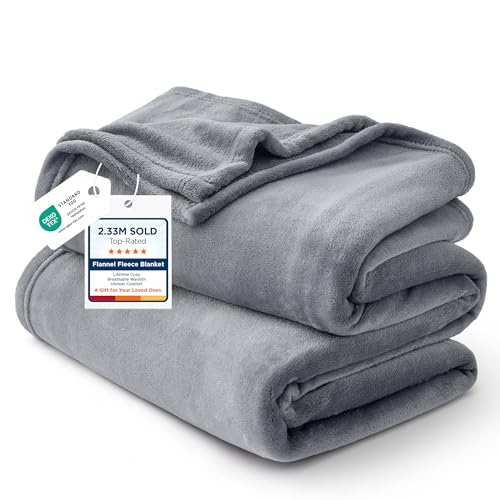
| Bedsure Fleece Bed Blankets Queen Size Grey – Soft Cozy Warm Winter Blanket | Best Overall | Smooth flannel fleece in a true queen size — one blanket yields multiple projects, or one very grand personalized bed blanket. |
| Exclusivo Mezcla Soft Large Fleece Throw Blanket for Couch | Best Budget Blank | Double-brushed smooth fleece at a throw price — the practice-and-gift blank that forgives experiments. |
| Bedsure GentleSoft Sherpa Fleece Throw Blanket for Couch | Best Two-Sided Project | Press the smooth flannel face; the sherpa back makes the finished piece feel like a premium gift. |
| Tache Cotton Patchwork Quilt Blanket Country Farm Cottage Vintage Antique Ditsy Floral Paisley | Best Cotton Surface | Cotton tolerates press heat with the least melting risk — suited to small motifs placed between seams. |
| Bulk polyester fleece craft blanks (prose-only) | Best for Production | The dedicated 50×60 craft blank sold in multi-packs for Etsy-style production, described below. |
| Smooth cotton blanket blanks (prose-only) | Best for Baby and Photo Gifts | Flat cotton and cotton-jersey blanks that take detailed vinyl and photograph beautifully, described below. |
Key Takeaways
- Surface is everything: smooth, low-pile, even fabric bonds vinyl; texture, pile, and waffle weaves defeat it.
- Polyester fleece is the classic HTV blanket blank — but press temperature discipline is what separates success from a melted patch.
- Cotton is the forgiving fiber for heat; it suits smaller designs and makers newer to pressing textiles.
- Two slots here are prose-only dedicated blank types, because production crafters buy blanks, not finished blankets.
- Always test-press a corner, use a protective sheet, and let the design cool as your vinyl’s instructions direct.
How These Picks Were Chosen
We evaluated the verified pool as blanks, not as bedding. The criteria were surface smoothness (does the face present a flat, continuous bonding area?), pile depth (will vinyl sit on top of fibers rather than sealing to them?), fiber heat behavior (polyester fleece works within HTV temperature windows but scorches beyond them; cotton tolerates heat more forgivingly), and the practical geometry of projects — a queen blanket is raw material for multiple throws, while a throw is one finished gift. On those criteria, most of the pool honestly fails: sherpa pile, faux fur, waffle weave, open knit, and weighted constructions are not pressable surfaces, and this guide excludes them rather than pretending otherwise.
Four pool products pass with qualifications stated in their reviews: two smooth fleeces (the category’s classic blank), one reversible whose flannel face is pressable while its sherpa face is not, and one cotton patchwork whose flat cotton panels accept small designs between seams. The remaining two slots go to the prose-only types that dedicated crafters actually buy — bulk fleece blanks and smooth cotton blanks — described qualitatively so readers can find them by description. That structure follows this site’s rule for partial-fit keywords: linked picks only where the product genuinely serves, honest prose for the rest, and the gap flagged in the open rather than papered over with irrelevant products.
A note on what this guide is not: it is not a vinyl guide. Brands, finishes (matte, glitter, flock), and press equipment vary, and the vinyl maker’s instructions for your specific product outrank any general guidance here. What this guide chooses is the textile half of the project — the blanket — and the technique sections cover the textile side of pressing it well.
The 6 Best Best Blankets for HTV — Reviewed

Bedsure Fleece Bed Blankets Queen Size Grey – Soft Cozy Warm Winter Blanket
Our badge: Best Overall
The Bedsure Fleece Bed Blankets Queen Size Grey – Soft Cozy Warm Winter Blanket is the best HTV surface in this pool for one structural reason: smooth flannel fleece, uninterrupted, at queen scale. The 90×90-inch face is a single even bonding field — no seams crossing your design area, no texture for vinyl to bridge — and the size means a crafter can produce several personalized throws from one blanket, or make one large personalized bed blanket that no craft blank catalog sells.
Strengths
- Smooth, low-pile flannel face bonds vinyl evenly across large designs
- Queen dimensions multiply project options: cut throws, a full-bed design, or matching sets
- Reinforced stitching and durable fabric survive the washing that finished HTV gifts will get
Trade-offs
- Polyester fleece demands temperature discipline — test-press and respect your vinyl’s specified window
- Grey is a mid-tone canvas: light vinyls pop, dark vinyls need contrast checking before you commit
- Cutting a queen blanket into projects is a commitment; there is no un-cutting it
| Color | Grey |
| Size | Queen (90″ X 90″) |
| Weight | 3.19 pounds |
Working notes: lay the fleece flat and lint-roll it immediately before pressing — fleece holds fibers and dust that will otherwise be sealed under your design forever. A pressing pillow under the work area evens pressure on a soft textile that otherwise compresses unevenly under a press. Because the blanket is a finished consumer product with hemmed edges, plan cut lines to reuse the hems as finished edges for at least two sides of each throw you cut from it; the remaining edges can be hemmed, fringed, or left as fleece’s forgiving cut edge, which does not fray.
Finished-piece care is the maker’s normal fleece routine — gentle machine washing — which quality HTV tolerates well once properly bonded. If your projects are gifts or sales, include a care card (wash inside out, gentle, low dry) with each piece; it protects the design and makes the work feel professional. For the fleece’s day job as a bed blanket, see Best Blankets For Queen Size Bed.
Best for: large designs, multi-project cutting, and personalized bed blankets / Not suited for: crafters who want ready-to-press single throws with no cutting
Choose it for scale and surface; skip it if you want blanks that need no preparation. Check on Amazon

Exclusivo Mezcla Soft Large Fleece Throw Blanket for Couch
Our badge: Best Budget Blank
The Exclusivo Mezcla Soft Large Fleece Throw Blanket for Couch is the blank for learning and for volume gifting: double-sided brushed flannel fleece — smooth on both faces, which doubles your canvas — at 50×70 inches and a price that forgives a ruined press. Every HTV crafter needs a supply of blanks they are not afraid of, and this is the pool’s.
Strengths
- Smooth brushed faces on both sides: two canvases per blanket, no wrong side
- XL throw size fits standard personalized-throw projects with room to center designs
- Accessible price tier makes it the practice blank and the school/team gift blank
Trade-offs
- Forest green is a dark, saturated canvas — plan vinyl colors for contrast (whites, metallics, lights)
- Thin fleece shows press marks if temperature or pressure overshoots; the test corner is mandatory
- Anti-static finish per the maker: press a test area, since finishes can affect first-bond behavior
| Color | Forest Green |
| Size | Throw XL (50″ x 70″) |
| Weight | 1.55 pounds |
The double-brushed surface deserves a technique note: brushed fleece has a very short nap, and vinyl bonds to it well, but the design’s edges will show the nap’s softness rather than a screen-print crispness — an aesthetic most blanket projects want. For crisp small text, keep letter heights generous; fine serifs and hairline details are the first casualties of any fleece canvas, and names-and-dates designs should be proofed at size before the press closes.
Its afterlife as a finished gift is excellent: the same blanket is a genuinely good throw (it appears across our guides in that role), so the recipient gets a working blanket with a design on it, not a craft object that happens to be blanket-shaped. That distinction is what separates HTV gifts people keep from HTV gifts people store.
Best for: beginners, bulk gifting, team and school projects / Not suited for: fine-detail typography or light-colored canvas requirements
Choose it to learn and to produce; skip it for gallery-detail work. Check on Amazon

Bedsure GentleSoft Sherpa Fleece Throw Blanket for Couch
Our badge: Best Two-Sided Project
The Bedsure GentleSoft Sherpa Fleece Throw Blanket for Couch is a one-face blank with a luxurious secret: press your design on the smooth 220 GSM flannel face, and the 260 GSM sherpa reverse turns the finished throw into the plushest personalized gift in this guide. The rule is absolute — vinyl goes on the flannel, never on the sherpa, whose pile cannot bond a design and will scorch long before it seals.
Strengths
- Smooth flannel face is a proper bonding surface with a soft hand
- Sherpa back upgrades the finished piece’s perceived value enormously
- 50×60 inches is the classic personalized-throw size recipients expect
Trade-offs
- Half the blanket is unpressable — designs live on one face only
- The sherpa’s bulk under a press demands a pressing pillow and patience to get even pressure
- Grey flannel is a mid-tone canvas, like the Bedsure queen: check vinyl contrast first
| Color | 01 – Grey |
| Size | Throw (50″ X 60″) |
| Weight | 2.03 pounds |
Pressing technique for this construction: work on a firm, padded surface with the sherpa side down on a pressing pillow, so the pile compresses evenly and the flannel face presents flat to the press. Protect the sherpa from direct heat spillover — it is polyester pile and resents stray contact with a hot platen edge. The finished piece should be cooled flat; peeling and handling per your vinyl’s instructions matter more on a two-texture piece because the blanket’s weight shifts as you move it.
The gift logic is the review’s heart: a name or design on smooth flannel, a cloud of sherpa behind it, is the personalized blanket format that dominates holiday gifting for a reason. It was recognized in the Good Housekeeping Best Bedding Awards as a fuzzy fleece throw per the maker; as an HTV canvas-plus-backing, it is the most complete project in this pool.
Best for: premium personalized gifts with a one-face design / Not suited for: double-sided designs or pile-side printing of any kind
Choose it when the finished feel matters as much as the design; skip it if your design wraps or doubles. Check on Amazon

Tache Cotton Patchwork Quilt Blanket Country Farm Cottage Vintage Antique Ditsy Floral Paisley
Our badge: Best Cotton Surface
The Tache Cotton Patchwork Quilt Blanket Country Farm Cottage Vintage Antique Ditsy Floral Paisley is the pool’s cotton option, and cotton changes the pressing temperament entirely: no melting risk at standard HTV temperatures, a stable surface that takes heat calmly, and a patchwork structure that suits small, placed motifs — a name in a corner panel, a monogram, a small design per square — rather than one large graphic.
Strengths
- Cotton tolerates press heat forgivingly — the lowest-risk fiber for newer pressers
- Flat cotton panels bond vinyl crisply, including smaller detail than fleece allows
- The patchwork itself is half the design: vinyl adds personalization to an already-finished look
Trade-offs
- Seams and quilting divide the canvas: designs must be planned panel by panel
- The busy burgundy floral pattern competes with designs — subtle, well-placed motifs only
- Thin quilt with light fill: pressing pressure must be even to avoid imprinting the quilting pattern into the design
| Color | Burgundy |
| Size | 50×60 |
Plan the project around the patchwork grid: choose the calmest panel (the beige reverse is a legitimate canvas too, and plainer), size the motif to sit inside one panel with margin from the seams, and use the vermicelli quilting as a texture the design floats above rather than fights. Cotton’s crispness makes this the pool’s best surface for lettering — names, dates, and short phrases read cleanly where fleece would soften them.
The finished piece is a personalized heirloom-style quilt, a different gift register from the fleece throws: wedding, baby, and memorial projects live here. Wash it as the maker directs (cold, delicate, gentle detergent) and advise recipients likewise; cotton HTV, properly bonded, tolerates that routine well.
Best for: lettering, monograms, and heirloom-style personalized quilts / Not suited for: large single graphics or bold designs that fight a busy pattern
Choose it for cotton’s forgiveness and crispness; skip it for big fleece-style graphics. Check on Amazon
Bulk Polyester Fleece Craft Blanks (Prose-Only)
Our badge: Best for Production
This slot is a prose-only recommendation — a product type described qualitatively, with no link and no invented specifications, because the verified pool for this guide contains finished blankets rather than craft blanks. The dedicated HTV fleece blank is a 50×60-inch polyester fleece throw sold in multi-packs precisely for customization: uniform color across the pack, smooth low-pile faces, no retail branding or decorative stitching, and a price per piece that only makes sense in quantity.
What to look for when you shop the type: consistent color lot within a pack (buy the whole run for a project series at once), a smooth face you can verify from listing close-ups or reviews from other crafters, and colors matched to your vinyl palette — white and light grey blanks are the production staples because every vinyl color reads on them. In use, they behave like the Bedsure and Exclusivo fleeces above, with the same temperature discipline and the same test-corner rule. For a seller or a team-parent producing twenty personalized throws, this type — not finished retail blankets — is the correct supply chain, and this guide flags it honestly rather than dressing retail products up as production blanks.
Best for: Etsy sellers, team and event production, and craft fair inventory / Not suited for: one-off gifts, where a finished retail blanket’s quality shows
Choose the type for volume; there is no link for this pick — search the description and judge by crafter reviews and face smoothness.
Smooth Cotton Blanket Blanks (Prose-Only)
Our badge: Best for Baby and Photo Gifts
Also prose-only, for the same reason: the pool’s cotton products are finished quilts and blends, not blanks. The smooth cotton blanket blank — flat cotton or cotton-jersey, usually in white or soft pastels, sized for babies and for photo-props — is the HTV surface for the most delicate projects: birth announcements, milestone blankets, and name gifts where the design carries fine detail and the photograph matters as much as the object.
What to look for: a genuinely flat, smooth face (jersey knits press beautifully but can stretch — stabilize your technique, not the fabric, by pressing on a firm surface and not dragging the press), high cotton content for heat forgiveness, and a color that suits the design’s palette and the camera. Cotton blanks take HTV with the crispest detail of any blanket surface, which is why the baby-blanket industry runs on them. Their limits are size and warmth — these are keepsake and photo textiles first, working blankets second — and for a recipient who wants a blanket to use hard, the fleece picks above are the honest recommendation.
Best for: baby gifts, milestone and photo blankets, fine-detail designs / Not suited for: hard-use blankets or large adult throws
Choose the type for detail and delicacy; there is no link for this pick — judge listings by face smoothness and cotton content.
Comparison Table
| Pick | Pressable surface | Size | Best project | Check price on Amazon |
|---|---|---|---|---|
| Bedsure Fleece Bed Blanket Queen | Smooth flannel fleece, full face | 90″x90″ | Large designs, cut projects | Check price on Amazon |
| Exclusivo Mezcla Fleece Throw | Brushed fleece, both faces | 50″x70″ | Learning, bulk gifts | Check price on Amazon |
| Bedsure GentleSoft Sherpa Throw | Flannel face only | 50″x60″ | Premium one-face gifts | Check price on Amazon |
| Tache Cotton Patchwork Quilt | Cotton panels | 50″x60″ | Lettering, monograms | Check price on Amazon |
| Fleece craft blanks (prose-only) | Smooth fleece, uniform packs | 50″x60″ typical | Production runs | Check price on Amazon |
| Cotton blanks (prose-only) | Flat cotton / jersey | Baby sizes typical | Fine detail, photo gifts | Check price on Amazon |
How to Choose the Best Blankets for HTV
Grade the surface before anything else
Run the checklist: Is the face smooth at the scale of your design? Is the pile low enough for vinyl to seal to the fabric rather than perch on fibers? Are there seams, quilting, or texture crossing your design area? A blanket that fails any of these will fail the project, however lovely it is as bedding. The pressable faces in this guide passed; the pool’s sherpa, faux fur, waffle, and knit surfaces did not, and no technique fixes a texture problem.
Match fiber to your experience
Cotton forgives heat mistakes; polyester fleece punishes them with scorch and melt marks but rewards discipline with a soft, durable, giftable finish. New pressers should learn on cotton or on the budget fleece with test corners, and graduate to large fleece pieces when their time-and-temperature instincts are proven. Glitter and specialty vinyls have their own windows — the vinyl maker’s chart for your exact product is the authority, always.
Size the design to the textile
Fleece softens fine detail; cotton keeps it. Keep fleece lettering bold and generously sized, save hairlines and small serifs for cotton, and proof intricate designs on a test blank at final size before the gift piece goes under the press. A design that reads at arm’s length on a screen may vanish into fleece nap at the same size.
Plan the canvas color as part of the design
Mid-tone greys, deep greens, and burgundies are beautiful blankets and demanding canvases. Check every vinyl color against the actual blanket in daylight before cutting a full design. Production crafters standardize on light blanks for this reason; gift crafters can embrace dark canvases with metallic and light vinyls chosen deliberately.
Decide retail blanket versus craft blank honestly
One-off gifts deserve finished retail blankets — the recipient feels the quality difference. Production runs deserve craft blanks — the economics and uniformity demand them. Mixing the two models (retail prices for production volume, blank quality for a wedding gift) is how HTV projects disappoint; this guide’s structure exists to keep the models separate.
How to Press HTV on a Blanket Without Ruining It
The sequence that protects both design and blanket: pre-wash or at least lint-roll and pre-press the area briefly to remove moisture and flatten the nap. Position the design and check it twice — fleece forgives many things but not a crooked name. Cover with a protective sheet (parchment or a Teflon sheet) so the platen never touches vinyl or bare fleece directly. Press at your vinyl maker’s specified temperature, pressure, and time for the fiber — no improvisation — using a pressing pillow beneath soft or thick constructions to even the pressure. Peel warm or cold exactly as your vinyl specifies, then let the piece cool flat and undisturbed. A short second press with the protective sheet, where your vinyl’s instructions allow it, sets the bond for the washing life ahead.
Problem: the vinyl will not stick at the edges — pressure is uneven (add the pressing pillow) or the surface has texture or lint; re-clean, re-press with the protective sheet, and check your temperature against the vinyl’s chart.
Problem: a shiny scorch patch around the design — temperature or time overshot for polyester; lower both per the vinyl’s fleece guidance, always use the protective sheet, and test on a corner of the next piece.
Problem: the design cracks after washing — the bond was incomplete (usually pressure or peel timing) or the wash was hot and rough; advise gentle inside-out washing on every gift, and review your peel step.
Problem: letters look fuzzy — the design is too fine for fleece nap; enlarge the lettering, choose a bolder cut, or move the project to cotton.
Designing for Blankets: Scale, Placement, and What Sells the Illusion
Blanket designs live at a different scale than shirt designs. A throw is read from across a room and from the couch’s other end, so the classic placements are generous: a centered chest-scale motif for a folded display, a corner name for a personal touch that survives folding, or a lower-third design that reads when the blanket is draped. Names and dates remain the most-gifted content in the category because they convert a commodity textile into a specific person’s object — the entire economic and emotional logic of HTV on blankets. Consider the fold: a design that disappears into the blanket’s folded state will only be seen in use, which may be exactly right for a private gift and exactly wrong for a display piece. And design for the wash: delicate floating elements and hairline connections age worst, while bold, well-bonded shapes look new after years of laundry — the difference between a keepsake and a novelty is usually visible in the design file before the press ever closes. For the finished pieces’ life as décor, the styling guidance in Best Throw Pillows Under $100 helps a personalized blanket land in a room like it was always there.
HTV Blankets as Gifts and Small Business
The personalized blanket is a proven gift and a proven small-business product because it solves the giver’s eternal problem: a useful object made specific. The crafters who succeed at it share habits this guide has embedded throughout — consistent blanks (one model, known behavior), tested settings recorded per blank-and-vinyl combination, care cards in every package, and honest fiber labeling so recipients wash correctly. They also respect the boundary this guide draws: retail-quality blankets for the pieces sold as premium, craft blanks for volume lines, and never a sherpa pile or waffle weave under a press pretending to be a canvas. If you are starting, start with the Exclusivo-class budget fleece and a notebook; the notebook — settings, times, results — becomes the business’s real asset within a month. Seasonal demand for personalized blankets peaks with the holidays, and stocking blanks early is the producer’s version of the advice in Black Friday Throw Pillow And Blanket Deals.
Choosing Vinyl for Blanket Projects: Matte, Glitter, Flock, and Foil
The blanket is half the project; the vinyl is the other half, and its finish changes both the technique and the result. Standard matte HTV is the workhorse: it bonds predictably, reads cleanly on fleece and cotton, and its low sheen suits the soft textiles it lands on — names, dates, and simple graphics in matte are the category’s bread and butter. Glitter HTV is thicker and stiffer, with a textured surface of its own; on blankets it works best as bold shapes and short words rather than fine lettering, and its extra thickness asks for the firmer end of your pressure range and a careful peel. Flock HTV — the velvety, raised finish — is the blanket specialist’s secret: its soft, fuzzy surface belongs on textiles the way icing belongs on cake, and a flocked name on a fleece throw feels manufactured in the best sense, though its pile-like face should be brushed, not picked, when weeding. Foil and holographic finishes are the divas: striking on a dark fleece canvas, less forgiving of temperature error, and best reserved for makers whose test-corner discipline is proven. Across all finishes, the rule from the technique section holds with doubled force: the vinyl maker’s chart for that exact product and fiber governs, because specialty finishes narrow the window that standard matte leaves wide.
Weeding, Layering, and Multi-Color Designs on Blankets
Blanket designs are large, which changes the craft’s middle steps. Weeding — removing the excess vinyl around a cut design — is slower at blanket scale and harder on fleece-bound projects, because the design will eventually sit on a soft, slightly giving surface rather than a rigid shirt form; weed on a firm, well-lit table, and consider a light box or bright raking light for pale vinyls on pale carrier sheets. Layering multiple colors is entirely possible on blankets, with two disciplines: press each layer for a shorter initial time than its full cure (the final press cures all layers together), and never layer on top of glitter or flock finishes, whose surfaces will not accept another layer’s bond — design so those finishes sit beside, not beneath, other colors. Registration at blanket scale is the third discipline: mark your center lines on the blanket with tailor’s chalk or heat-erasable pen before the first layer, because a design that drifts two degrees reads as a mistake at throw distance even when each layer is perfect. Makers moving from apparel to blankets consistently report the same surprise — the pressing is the easy part; the planning is the craft — and the seasonal gift projects in Best Blankets For Fall are full of designs that reward exactly this planning.
Selling HTV Blankets: Pricing, Photography, and Shipping
For makers turning the craft into a shop, three business details decide whether the blankets make money. Pricing must count the whole object: the blank at its real cost, the vinyl by the design’s actual area, the press time, the packaging, and — the line everyone forgets — the failure rate, because a ruined press is a cost of goods and should be priced as one across the successful pieces. Photography sells softness badly by default, so shoot the blanket the way recipients experience it: draped over a couch arm in window light, one close shot that shows the design’s bond and edges honestly, and one scale shot with a human or a chair, because buyers cannot judge a 50×60 throw from a flat lay alone. Shipping favors fleece over cotton quilts — it is lighter and compresses without creasing anxiety — and a vacuum-sealed presentation (the storage logic of our other guides, used commercially) cuts parcel size dramatically; include the care card in every package, both as customer care and as the cheapest returns-prevention in the business. The shops that last in this category are the ones whose tenth blanket is indistinguishable from their first: same blank, same settings notebook, same bond — a standard the cotton purists of Best Cotton Blankets For Winter would recognize as the craft’s real product.
HTV on Blankets for Teams, Schools, and Events
The largest single use of HTV blankets outside gifting is group identity: the team blanket with the roster’s names, the school blanket in colors with the mascot, the reunion blanket with the year and the family name, the fundraiser blanket sold at the school gate. Group projects change the craft’s priorities. Consistency becomes the product — twenty blankets must match, which means one blank model bought in one order (dye lots vary in fleece as in yarn), one design file, one set of recorded press settings, and a production order that presses the same color layer across all blankets before moving to the next, assembly-line style. Names are the error surface: a roster typed once and proofed by a second person against the official list, because a misspelled name on a blanket is forever in a way a misspelled program is not. Budget honestly for the group’s sake — the per-blanket cost at group scale is dominated by the blank itself, and the budget fleece in this guide exists precisely so a class set does not require a bond issue. The makers who run these projects well treat them as small manufacturing: a sample blanket first, approved by the group, then production. The sample is not overhead; it is the contract.
Troubleshooting the Finished Blanket: A Field Guide to Almost-Right
Most HTV blanket failures are not disasters but almost-rights, and they diagnose in a pattern. If the design bonded everywhere except one corner, the press’s pressure or the blanket’s thickness varied at that corner — the pressing pillow and a firmer surface are the cure, and a careful re-press under the protective sheet often rescues the piece. If the vinyl looks perfect but lifts after the first wash, the bond was surface-deep: time or temperature fell short of the vinyl’s specification, and the lesson is recorded in the settings notebook against that blank-and-vinyl pairing. If the design wrinkled the fabric beneath it, the blanket moved while hot — fleece especially must cool undisturbed, because the textile’s memory is set while the adhesive is. If colors bled or shifted on a dark canvas, the design needed a white underbase layer, the standard solution for printing light colors on dark grounds. And if the blanket itself bears a faint press outline — the rectangle of slightly flattened fleece around the design — the pressure was honest but the nap needs reviving: a gentle steam and a brush, never a bare iron, usually restores it. Keep the notebook, test the corners, and the almost-rights become rarer every project, which is the entire trajectory of craft competence in any medium.
The Starter Kit: What a Beginner Actually Needs
HTV blanket work needs less equipment than the craft’s marketing suggests, and a short honest list saves beginners a cart of regrets. The essentials are a cutting machine or sharp craft scissors for small designs (blanket-scale designs favor the machine), a heat press or a firm household iron with a reliable temperature setting (the press earns its price in even pressure across large designs, the iron serves apprenticeships honorably), a pressing pillow, protective sheets, a weeding tool, a hard flat work surface, and a lint roller that will be used before every single press. The notebook — settings, times, results per blank and vinyl — belongs on the essentials list ahead of half the hardware. What can wait: specialty vinyls beyond one matte and one glitter, a second press, bulk blank inventory, and every gadget whose purpose is a problem you have not met yet. The craft’s real tuition is a handful of test blankets, and the budget fleece in this guide is priced for exactly that tuition. Buy the kit small, press the tests honestly, and let the projects themselves tell you what to buy next — they will, in order, and the order will be right.
A Note on Copyrighted Designs and Team Logos
One professional caution belongs in every HTV guide: the design on the blanket must be yours to use. Team logos, school mascots, brand marks, and licensed characters belong to their owners, and selling blankets that carry them without a license is infringement regardless of how small the shop is — the “I made it by hand” defense does not exist in trademark law. Personal, non-commercial use sits in a greyer area that makers should still approach with respect, and fan-art for sale is the category that draws the letters. The safe and creatively richer path is original design: names, dates, inside jokes, original artwork, and the public-domain and properly licensed design files that reputable marketplaces sell with commercial terms stated. A personalized blanket business built on original work never has to flinch at an envelope, and its designs become its identity rather than its liability.
Common Buying Mistakes
Pressing pile, sherpa, or waffle textures
Vinyl cannot seal to a landscape. It bridges, lifts, and peels — usually after gifting, which is the worst time. Press only the smooth faces identified in this guide.
Skipping the test press
Every new blanket-and-vinyl combination gets a corner test. The thirty seconds it takes are cheaper than any blanket in this guide.
Using shirt settings on fleece
Polyester fleece scorches at enthusiastic temperatures. Your vinyl’s textile-specific chart — not habit, not a video’s settings for a different fabric — governs the press.
Designing fine detail for a fleece canvas
Small serifs and hairlines drown in nap. Bold for fleece, fine for cotton — match the design’s resolution to the textile’s.
Forgetting the care card
Recipients wash gifts like laundry, not like craft projects. A card (inside out, gentle, low dry) saves the design and makes your work look professional.
Final Recommendation
For most HTV blanket projects, start with the Bedsure Fleece Bed Blankets Queen Size Grey – Soft Cozy Warm Winter Blanket: the smoothest, largest canvas in the pool, at a price that tolerates learning. The runner-up for gift-grade finished feel is the GentleSoft sherpa throw — Check on Amazon — pressed on its flannel face only. Learn on the Exclusivo, letter on the Tache’s cotton, and graduate to the prose-only blank types when production calls. Respect the surface, the temperature window, and the test corner, and your designs will outlast the blankets’ first owners’ expectations.
Frequently Asked Questions
Can you put HTV on a fleece blanket?
Yes — smooth, low-pile fleece is the classic HTV blanket canvas. Use your vinyl manufacturer’s temperature and time for polyester, protect the surface with a sheet, use a pressing pillow for even pressure, and test a corner first. Avoid pile, sherpa, and textured faces, which cannot bond a design.
What temperature should I use for HTV on fleece?
The temperature your specific vinyl specifies for polyester textiles — it varies by vinyl type and brand, and this guide deliberately does not print a universal number. Fleece scorches above its comfort zone, so start from the vinyl maker’s chart, test on a hidden corner, and adjust in small steps.
Will HTV survive washing on a blanket?
A properly bonded design on a suitable surface survives normal gentle washing for years. Bond quality (pressure, time, correct peel) decides longevity more than the wash does. Advise recipients to wash inside out, gentle cycle, low dry, and include that card with gifts.
Can I press HTV on sherpa or faux fur?
No. Pile surfaces cannot seal vinyl — it perches on the fibers, lifts, and the pile scorches under press heat. On reversible blankets like the GentleSoft, press the smooth flannel face only and let the pile be the backing.
Is cotton or fleece better for HTV blankets?
Cotton is more forgiving of heat and holds finer detail; fleece is softer, warmer, and the standard for personalized throws, with bolder design requirements. Choose cotton for lettering and baby projects, fleece for cozy gift throws — and dedicated blanks of either for production.
Why did my design peel off the blanket?
The usual causes are an unsuitable surface (texture or pile), insufficient pressure (no pressing pillow on a soft textile), incorrect peel timing for your vinyl, or lint sealed under the design. Re-check the surface first — most peeling mysteries are texture problems diagnosed too late.


