Disclosure: As an Amazon Associate, dailyhomedecorating.com earns from qualifying purchases. Links to Amazon on this page are affiliate links; they cost you nothing extra. Prices and availability change often, so check the current Amazon listing before you buy.
The best foam mattresses for back pain are a study in what foam does uniquely well and where it must be engineered carefully. Foam’s gift is contour: it molds to the lumbar curve, fills the hollow at the small of the back, and distributes load so no single vertebra’s neighborhood carries the night alone. Foam’s risk is surrender: a core too soft or too thin lets the pelvis sink, and the spine spends eight hours in a hammock it never chose. Every pick in this guide is foam that has solved the surrender problem — with high-density cores, zoned firmness, adaptive support layers, or responsive foam chemistries that firm up as you settle. This is comfort framing, not medical claims: no mattress treats a back condition, and persistent pain deserves a clinician. But a foam mattress that holds your alignment while cradling your curves is the specific thing foam shoppers with sore backs are looking for, and it exists at every tier in this guide.
We excluded hybrids and the grid on purpose — this keyword asks about foam, and foam deserves its own honest tournament. Within it, the philosophies genuinely differ: classic contouring memory foam, zoned foam, adaptive bounce-back foam, copper foam, and dense-core foam all appear below, because “foam mattress” is a family, not a product.
Where to Buy
All six picks are sold on Amazon — verify current price, size, and trial terms on the listing before buying. Start with the Nectar 12″ Memory Foam Mattress, the firm contouring benchmark with a year to evaluate it; confirm it via this Check on Amazon link. The remaining picks: GhostBed Classic 11 Inch Memory Foam Mattress — Check on Amazon; Casper Sleep Original 11″ Memory Foam Mattress — Check on Amazon; Zinus 12 Inch Green Tea Memory Foam Mattress — Check on Amazon; Tuft & Needle Original Legacy Mattress — Check on Amazon; Layla 10″ Copper Infused Memory Foam Mattress — Check on Amazon.
In this guide
Quick Picks
| Pick | Badge | Why it earns its place |
|---|---|---|
| Nectar 12″ Memory Foam Mattress | Best Overall | Firm contouring over an adaptive support layer — the lumbar filled, the pelvis held, for a full trial year. |
| GhostBed Classic 11 Inch Memory Foam Mattress | Best Dense Core | A high-density core that treats alignment as the product, with a lively latex-gel surface. |
| Casper Sleep Original 11″ Memory Foam Mattress | Best Zoned Foam | Firmer foam under the lumbar and hips, gentler at the shoulders — zoning as back strategy. |
| Zinus 12 Inch Green Tea Memory Foam Mattress | Best Value | Patented zoned relief and certified materials in a twelve-inch queen at a friendly tier. |
| Tuft & Needle Original Legacy Mattress | Best Responsive Foam | Adaptive foam that firms as you settle — support that arrives in proportion to load. |
| Layla 10″ Copper Infused Memory Foam Mattress | Best Adjustable | Copper foam’s load response in a flippable build — two back strategies in one mattress. |
Key Takeaways
- Foam helps backs by filling the lumbar curve; it hurts backs by letting the pelvis sink. The core decides which foam you bought.
- Density and zoning are the two honest predictors of a foam mattress’s back performance — read for both.
- Medium-firm is the starting band for most back sleepers; surface cushion and core support must be specified separately.
- Responsive foams (adaptive, copper, latex-layered) suit combination sleepers whose backs resent being trapped in one contour.
- Foam’s motion isolation is a back feature: a partner’s movement absorbed is a spine not jolted at 3 a.m.
- Budget foam versions of this same logic live in Best Affordable Mattresses For Back Pain; this guide is the foam family’s full-strength tournament.
How These Picks Were Chosen
We screened the pool’s all-foam mattresses for back-relevant engineering: a named support architecture (adaptive layer, high-density core, zoning, load-responsive foam), firmness in the supportive band, and enough depth — ten inches minimum — for an adult’s nightly load. Soft, thin, or purely plush foam was excluded. We then diversified by foam philosophy deliberately, because back pain foam shoppers are usually refugees from one philosophy already and deserve genuinely different answers, not six renamings of the same slab.
Trials were weighed as diagnostic instruments: foam’s back verdict takes weeks, and the longest trials here (a year, 120 nights, a hundred nights) are treated as features of the product, not promotions. As always in this lot: desk research, verified listings, comfort framing only.
The 6 Best Foam Mattresses for Back Pain — Reviewed

Nectar 12″ Memory Foam Mattress
Our badge: Best Overall
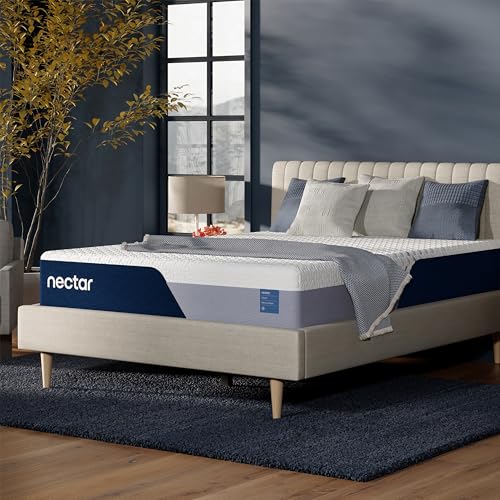
The Nectar 12″ Memory Foam Mattress is foam’s back-pain thesis executed completely: a contouring memory foam layer that relieves pressure and reduces stress on high-tension areas like the hips and back, over an adaptive support layer that promotes proper spinal alignment, under a cooling cover — in a feel the brand describes as firm with a touch of comfort. The contour fills the lumbar hollow so the lower back is supported by contact rather than bridged; the support layer refuses the pelvic sink that turns contour into hammock. A 365-night trial and forever warranty make it the most evaluable foam purchase in the pool.
Strengths
- Contour-plus-support layering is exactly the foam architecture backs ask for
- Firm lean keeps back and stomach sleepers level all night
- A year-long trial: the back’s verdict, delivered across seasons
Trade-offs
- Side sleepers may find the firm contour under-cushions the shoulder
- Slow foam response for frequent repositioners
- Seventy-eight pounds at setup and rotation
| Color | White |
| Size | Queen |
| Dimensions | 80 x 60 x 12 inches |
| Weight | 78 pounds |
The nightly experience is consistency: the Nectar feels at 4 a.m. as it felt at 11 p.m., because quality foam over a real support layer does not progressively surrender. Morning stiffness that traces to a sagging bed has nowhere to come from. Motion isolation is total in the foam manner — a partner’s restlessness is absorbed where it happens — and the cooling cover keeps the deep contour from the warmth penalty that historically taxed memory foam.
For the back-pain shopper, the trial is the review that matters: give it the structured month, keep the morning log, and let the trend decide. Most foam refugees — people whose cheap foam trough taught them to fear the material — discover here that the material was never the problem. The core was.
Best for: back and stomach sleepers wanting firm contouring with maximum evaluation time / Not suited for: plush-seeking side sleepers
Choose it as foam’s benchmark for backs; skip it if you need a soft shoulder welcome. Check on Amazon

GhostBed Classic 11 Inch Memory Foam Mattress
Our badge: Best Dense Core
The GhostBed Classic 11 Inch Queen Memory Foam Mattress builds its back case on a single word: density. Its high-density foam core is the product’s center of gravity — credited by the brand with supporting spinal alignment and easing hip and back discomfort (comfort framing, as always) — while cooling gel memory foam and aerated latex above it keep the surface soft, springy, and breathable. The feel is medium-firm and balanced for all positions, with minimal motion transfer despite its liveliness.
Strengths
- The densest support story in the guide — alignment as engineering priority
- Latex-gel surface responds instantly; no trapped feeling for sore backs to fight
- At fifty pounds, kind to the back that must rotate it
Trade-offs
- Contains a latex layer — not for latex-sensitive shoppers
- Uniform support; no zoning for specific spinal neighborhoods
- Lively surface may feel restless to stillness seekers
| Color | White |
| Size | Queen |
| Dimensions | 80 x 60 x 11 inches |
| Weight | 50 pounds |
Density is foam’s durability dial: a dense core resists the body-impression cycle that converts this year’s supportive mattress into next year’s trough. For a back that notices half-inch changes — and sore backs do — that resistance is the product. The GhostBed’s surface personality helps too: position changes, which stiff backs perform with care, are assisted by the latex’s spring rather than resisted by foam’s grip, and the morning exit is correspondingly kinder.
It is also the value-honest pick of this guide: North American made, CertiPUR-US certified, and priced by its tier as the accessible route to a serious core. If your back’s biography is a series of foam mattresses that started firm and ended soft, the GhostBed is written in your language.
Best for: back sleepers who burn through softening foam mattresses / Not suited for: latex-sensitive shoppers or zoning seekers
Choose it for the core; skip it if you want contouring diplomacy. Check on Amazon

Casper Sleep Original 11″ Memory Foam Mattress
Our badge: Best Zoned Foam
The Casper Sleep Original 11″ Memory Foam Queen Mattress brings foam’s most intelligent back idea: zoning. Its Zoned Support design uses firmer foam under the hips, waist, and lower back — the exact geography where alignment is decided — while the rest of the surface stays forgiving. The pelvis, foam’s traditional surrender point, meets a zone engineered to refuse; the shoulders meet one engineered to receive. Add breathable open-cell foam, deep motion isolation, CertiPUR-US materials, and a hundred-night trial.
Strengths
- Zoned firmness spends support exactly where backs need it
- Medium-firm diplomacy serves back, side, and combination sleepers in one bed
- Breathable foam removes memory foam’s heat tax on restless backs
Trade-offs
- Foam zoning is subtler than the Nectar’s firmness or coil zoning elsewhere
- Eleven inches may under-serve very heavy sleepers’ pelvic support
- No verified weight in the pool data
| Color | Light Gray |
| Size | Queen |
| Dimensions | 80 x 60 x 11 inches |
Zoning is the answer to the foam dilemma stated in this guide’s introduction: how to contour without surrendering. The Casper contours where contour is safe and refuses where refusal matters, and the sleeper experiences it not as technology but as a back that was simply held correctly all night. Couples double the benefit — two different bodies, one zoned logic, and motion isolation that keeps each body’s night private.
Its foams are designed against sinking and sagging over years, protecting the zoning’s benefit from the slow fade that un-zones lesser mattresses. For the combination sleeper with a complaining back — the most common back-pain profile of all — this is the foam pick with the fewest asterisks.
Best for: combination sleepers and couples wanting zoned foam intelligence / Not suited for: very heavy sleepers needing maximum pelvic support
Choose it for the smartest foam geography; skip it if you want a firmer, simpler slab. Check on Amazon

Zinus 12 Inch Green Tea Memory Foam Mattress
Our badge: Best Value
The Zinus 12 Inch Queen Green Tea Memory Foam Mattress delivers patented zoned pressure relief — targeted cushioning and support by body zone — at the friendliest tier in this guide, with CertiPUR-US foams, an OEKO-TEX Standard 100 cover, fiberglass-free construction, and green tea and charcoal freshness infusions. For back shoppers, its zones do the Casper’s trick at a lower price position: receive the shoulders and hips, hold the waist, keep the line.
Strengths
- Zoned support and relief at a value tier — the guide’s engineering-per-dollar leader
- Dual certifications and fiberglass-free build
- Twelve-inch depth with a durable base foam
Trade-offs
- Foam support will soften sooner over the years than the GhostBed’s dense core
- Sleeps warmer than the breathable Casper despite the knitted cover
- Needs airing time after unboxing
| Color | White |
| Size | Queen |
| Dimensions | 80 x 60 x 12 inches |
| Weight | 62.3 pounds |
The Zinus is where this guide tells budget-bound back shoppers to start: its zoning is real, its materials are documented, and its queen depth is honest. The freshness infusions keep the foam neutral between protector washes — a small thing that matters in a mattress asked to serve nightly for years. Motion isolation is the full foam silence couples prize.
Manage the lifespan expectation with open eyes: value foam, rotated and protected, gives years of aligned service, but the support curve bends sooner than the premium cores above it. For many households that trade is exactly right — flagship money stays saved, and the back gets its zoning now. Its back-pain value is also why it anchors the affordable sibling guide linked in this article’s takeaways.
Best for: budget-conscious back and combination sleepers wanting real zoning / Not suited for: shoppers prioritizing decade-scale core rigidity
Choose it for zoned value; skip it if you run hot and heavy. Check on Amazon

Tuft & Needle Original Legacy Mattress
Our badge: Best Responsive Foam
The Tuft & Needle Original Legacy Medium Firm Gel Foam Queen Mattress is foam for people whose backs hate foam’s personality: its T&N Adaptive foam contours with bounce-back support, its Flex foam firms as you settle deeper — support arriving in proportion to load, which is a back’s favorite kind — and its ventilated Release foam enhances pressure relief. Gel and graphite conduct heat away, the cover cools, and the certifications (CertiPUR-US, GREENGUARD Gold) are the guide’s deepest file.
Strengths
- Load-responsive firming: the deeper you settle, the more support answers
- Easy movement — sore backs change position without negotiation
- Serious cooling for a foam mattress, with dual certifications
Trade-offs
- Ten inches is the guide’s slimmest depth; heavy sleepers get less travel
- Up to two weeks of break-in before the feel settles
- Less motion isolation than true memory foam
| Color | White |
| Size | Queen |
| Dimensions | 80 x 60 x 10 inches |
| Weight | 72 pounds |
The Tuft & Needle’s back argument is dynamic: a static surface can only be right for a static body, and backs in pain are anything but. Adaptive foam’s firming-under-load behavior means the pelvis — heavier — automatically receives more support than the legs, a passive zoning that works in every position without a zone map. Combination sleepers feel it most: every roll is assisted, every new position is met at the right depth.
Give it the brand’s own counsel — two weeks of break-in — before grading, because adaptive foams genuinely change over their first fortnight. After that, its verdict is usually swift: backs that felt trapped by memory foam feel freed by this, and the freedom is supportive rather than soft.
Best for: combination sleepers and foam skeptics wanting responsive support / Not suited for: deep-contour devotees or very heavy sleepers
Choose it for foam that moves with you; skip it if you love the classic hug. Check on Amazon

Layla 10″ Copper Infused Memory Foam Mattress
Our badge: Best Adjustable
The Layla 10″ Copper Infused Memory Foam Mattress closes the guide with foam’s most adaptable back strategy: a flippable mattress, soft on one face and medium-firm on the other, built from copper-infused memory foam whose particles condense under load and push back proportionally — more support exactly where your back and hips press hardest. Copper’s thermal conductivity cools the contour, the trial runs 120 nights, two memory foam pillows are included, and each mattress is made to order in the USA.
Strengths
- Two firmness strategies for a back whose needs change
- Copper foam’s load response targets support to the heaviest zones automatically
- Efficient cooling for a deep-contouring foam
Trade-offs
- Flipping sixty-nine pounds requires help and planning
- The soft face can let a back sleeper’s pelvis sink — start medium-firm
- Variable-response feel takes nights to learn
| Color | Natural |
| Size | Queen |
| Dimensions | 80 x 60 x 10.5 inches |
| Weight | 69 pounds |
Backs are not consistent critics: the firmness that delights in a good month can punish in a stiff one. The Layla is the only foam pick here that can change its answer without a purchase order, and that adaptability is a genuine back feature, not a gimmick. The copper foam handles the within-night adaptation — support scaling with load — while the flip handles the across-month adaptation. Together they make the most forgiving foam platform in the guide for an unpredictable back.
Start on the medium-firm face, log a month, and flip only on evidence. Couples with different back stories will find the two faces a negotiation mechanism no other foam here offers. For the back-pain shopper who has returned a mattress for being almost right, almost is what this mattress was built to fix.
Best for: changeable backs and couples negotiating firmness / Not suited for: solo sleepers who cannot arrange flipping help
Choose it for adaptability; skip it for a single fixed feel you already trust. Check on Amazon
Comparison Table
| Pick | Foam Philosophy | Back Strategy | Profile | Check price on Amazon |
|---|---|---|---|---|
| Nectar 12″ Memory Foam | Classic contouring | Adaptive support layer, firm | 12 inch | Check price on Amazon |
| GhostBed Classic 11″ | Dense core + latex layer | High-density alignment | 11 inch | Check price on Amazon |
| Casper Original 11″ | Zoned foam | Firmer lumbar/hip zone | 11 inch | Check price on Amazon |
| Zinus 12 Inch Green Tea | Zoned foam, value | Patented zone map | 12 inch | Check price on Amazon |
| Tuft & Needle Original | Adaptive foam | Firming under load | 10 inch | Check price on Amazon |
| Layla 10″ Copper | Copper foam, flippable | Load response + two faces | 10.5 inch | Check price on Amazon |
How to Choose the Best Foam Mattress for Back Comfort
Interrogate the Core Before the Comfort Layer
Foam listings lead with the hug and hide the skeleton. For backs, reverse the reading: find the support layer’s description — adaptive, high-density, zoned, load-responsive — and treat any listing that cannot describe its core in concrete terms as a soft mattress in disguise. The comfort layer decides your first night; the core decides your second year, and backs live in the second year.
Zoning Versus Uniformity: Match to Your Back’s Map
If your discomfort is lumbar-concentrated, zoning (Casper, Zinus) spends support where you live. If it is general — whole-back stiffness, no single address — a uniformly excellent core (GhostBed, Nectar) serves better than a map aimed elsewhere. If it migrates, adaptability (Layla, Tuft & Needle) is the philosophy that follows it. Backs have geographies; buy the map that matches yours. The side-sleeping version of this geography is worked out in Best Mattresses For Back Pain And Side Sleepers.
Firmness: The Supported Medium
Most back sleepers land in the medium-firm band with a cushioned surface — firm enough to hold the pelvis, soft enough to spare the shoulder blades. Both extremes fail in foam specifically: plush foam hammocks the spine, and rock-hard foam bridges the lumbar curve, leaving it unsupported in mid-air. If you cannot decide, the flippable pick exists precisely for you.
Depth and Density Scale With Weight
Heavier bodies compress foam further and need more of both depth and density to achieve the same alignment. A ten-inch adaptive foam that delights an average back sleeper may bottom out under a heavier one. When between sizes of commitment, heavier back shoppers should choose the twelve-inch, dense-core end of this guide — the cost of undershooting is a trough, and troughs are this keyword’s enemy.
Foam Sleeps Warm Unless It Is Engineered Not To
Heat makes backs restless, and restless backs re-load their sore points all night. Gel infusions, graphite conduction, copper networks, open-cell structures, and cooling covers all appear in this guide as back features, not luxuries. If you sleep hot, weight them as heavily as the support spec — a cool, aligned night beats a warm, aligned hour followed by thrashing.
How Do You Keep a Foam Mattress Supportive?
Foam support is perishable and care is the preservative. Rotate head-to-foot every three to six months — monthly in the first season, when foam takes its early set — to distribute the pelvic load across the core’s life. Keep a protector on: moisture degrades foam’s responsiveness invisibly and permanently. Support the mattress on a base that does not sag and whose slats are close enough that foam cannot extrude between them. Air the bed in the morning. Never fold or bend the mattress beyond the maker’s guidance when moving it. Followed faithfully, this routine is the difference between the support you bought and the support you remember.
Problem: a pelvic trough is forming — rotate now, audit the foundation with a straight edge, and document with photos while warranty remedies are young.
Problem: the foam feels firmer in winter — memory foam firms as rooms cool; a slightly warmer bedroom or a few minutes of body heat restores the designed feel.
Problem: my back prefers the floor some nights — your surface may be too soft for your current state; the flippable and firm picks exist for backs that periodically want maximum discipline.
Problem: shoulder pain joined the back pain — your core is right and your surface is thin for side sleeping; a zoned pick or a thin surface cushion addresses the shoulder without surrendering the lumbar.
Problem: the mattress sleeps hotter than promised — bedding first: breathable sheets and a lighter duvet rescue most foam cooling systems from sabotage.
Foam Versus Hybrid for Backs: The Honest Boundary of This Guide
This guide is foam’s tournament, but intellectual honesty requires the boundary note: hybrids answer back support with coils that hold their profile longer than any foam core, and some backs — especially heavier ones and foam-trough veterans — ultimately belong there. Foam’s counter-arguments are contour precision, motion isolation, and price. If you trial two foam philosophies from this guide and your back still files complaints, the evidence is telling you to change architecture, not brand — and the hybrid picks in our sibling guides (the Sealy and Ashley Chime among them) are the next door, not a defeat. A guide that cannot tell you when to leave its category is a sales document; this one would rather be useful.
Back Sleep Position Mechanics on Foam
Foam interacts with each position differently, and back-pain shoppers should buy for their actual position, not their aspirational one. Back sleeping is foam’s home game: the contour fills the lumbar curve, the pelvis is cradled level, and a thin pillow completes the line — most back sleepers in this guide will be happy on any pick, with firmness the only argument. Side sleeping on foam demands the shoulder’s depth, which is why zoned and softer-faced picks carry the side-sleeping verdicts here. Stomach sleeping on foam is the discipline test: the pelvis must not sink, full stop, which is why the firmest cores (Nectar, GhostBed) own that verdict. Combination sleeping is foam’s negotiation — responsive chemistries (Tuft & Needle, Layla, GhostBed’s latex) exist because classic contouring foam charges a toll at every position change, and backs in pain pay tolls reluctantly.
Foam Generations: Why Today’s Foam Is Not Your Parents’ Foam
Skeptics of foam for back pain often argue from memory — the foam mattress of fifteen years ago, a single block of slow, hot, quickly-tired material that slept like a marshmallow by its second summer. The modern foam mattress is a different technology wearing the same name, and understanding the generations clarifies this guide’s picks. First came the single-density block: cheap, uniform, and doomed to compact along the sleeper’s load map. The layered generation split the jobs — a comfort foam for pressure, a transition foam for posture, a dense base for support — and back comfort improved in proportion to the base’s density, which is why this guide reads density language in listings the way sommeliers read labels. The current generation adds physics: gel and graphite for heat, open-cell structures for airflow, load-responsive foams that firm as they compress, and zoning that varies support along the body’s length. Each generation’s failure mode also moved: blocks sagged everywhere, layered beds sag at the comfort layer first, and modern beds most often disappoint at the edges — a progression that tells the shopper exactly where to press during a trial.
The practical consequence for back-pain shoppers is that the question “is foam good for backs?” has expired; the live question is “which foam architecture, at which density, under which body?” The reviews in this guide answer it product by product, and the hybrid alternative — for shoppers whose answer keeps coming back “not foam” — is developed in Best Mattresses For Sore Backs and the lot’s hybrid coverage. Readers whose back story is specifically the side-sleeping combination will find the foam analysis continued in Best Mattresses For Back Pain And Side Sleepers, where the shoulder’s vote counts equally with the spine’s. Judge the generation in front of you, not the memory behind you. And if the back in question also runs hot at night — a common pairing, since pain and broken sleep feed each other — Best Mattresses For Night Sweats covers the cooling end of the foam market with the same architecture-first method.
Foam and the Aging Back: How Needs Change Across Decades
The foam question changes with the sleeper’s decade, and a guide that ignores the calendar underserves both ends of it. Younger backs — desk-stiff, sport-sore, generally resilient — use foam mainly for its pressure kindness and its silence in shared beds; almost any well-cored medium-firm build in this guide serves them, and their shopping error is overbuying specification they will not feel. Middle decades add weight, accumulated desk years, and the first morning stiffness that does not fully clear by coffee; density and depth start earning their premiums here, because the load is real and the recovery window is narrowing. Later decades add the considerations this lot’s joint and pressure guides treat in depth: thinner tissue over the contact points, circulation that forgives less, medications that dull the position-shift reflex, and mornings where the bed’s edge and the effort of rising are genuine design requirements. Foam answers those decades best in its responsive forms — the latex-blend and adaptive builds that let an older sleeper move without paying the foam tax — over cores dense enough that the support outlasts the sleeper’s planning horizon.
The practical consequence is that a foam purchase should be dated as honestly as it is specced: the right mattress for a thirty-year-old’s back is a five-to-seven-year companion bought at value; the right mattress for a sixty-year-old’s back is infrastructure, bought at the top of the household’s range with mobility and pressure weighted like support itself. Both shoppers are in this guide’s audience, and the reviews’ trade-offs are written to route each to their decade’s answer. Buy for the back you have, at the age you are, with the trial as your witness — the foam will do the rest.
Foam Density, Decoded: The One Number That Predicts a Foam Mattress’s Life
Foam listings speak in adjectives because the honest number is unflattering to half the market — but shoppers can learn to extract it. Density, expressed in pounds per cubic foot, measures how much material is actually in the foam: it is the difference between a support core that holds its response for years and one that is mostly air wearing a foam costume. Brands disclose it unevenly — sometimes in the specification table, sometimes in the Q&A, sometimes only through support chat — and the effort of asking is the shopper’s filter: a brand that will state its base density in writing is a brand whose base has nothing to hide. Where the number cannot be obtained, the proxies are weight and warranty: a queen foam mattress’s shipping weight correlates with its material content more honestly than any adjective, and a warranty’s impression threshold states, in the manufacturer’s own numbers, how much sag the brand itself expects before it calls the mattress failed.
Comfort layers play by softer rules — their job is yield, and lower density there is a design choice rather than a cheat — which is why the density question should always be asked about the support core specifically. A mattress is its core with a comfort story on top; buy the core’s number, enjoy the story, and the foam will keep the promise the story made. That single discipline, applied at any budget, is most of what separates the foam purchases in this guide’s success stories from the category’s disappointments.
The Hotel Test and Other Free Foam Research
Foam shoppers own a research asset they rarely exploit: every hotel night, guest room, and short-term rental is a free trial of somebody else’s specification, and back-pain sleepers should interrogate those nights the way this guide interrogates home trials. The morning that surprises you — better or worse than home — deserves two minutes of investigation before checkout: photograph the mattress tag if the bedding allows, note the construction type and apparent depth, and record the morning rating beside it in the same log that grades your home candidates. Across a year of ordinary travel, that log becomes a personal database no showroom can replicate: your back’s verdicts on a dozen constructions, collected at no cost, in real sleep rather than showroom minutes.
The rental market adds a second free dataset, since furnished rentals skew heavily to the value foam brands in this guide — a month in a furnished apartment on a Zinus-class mattress is a longer trial than any retailer offers, and relocating professionals have quietly used it as one for years. Research is where you find it; the back does not care whether the mattress was yours. Log everything, and let the accumulated evidence — not the loudest listing — write the final specification.
Foam in the Guest Room, the Rental, and the Second Home
Foam’s virtues compound in the household’s secondary beds, and a back-pain household should think of its spare sleeping surfaces as part of the same system — because backs do not check which room they are in. The guest room running a decent foam mattress from this guide’s value end gives visiting backs the same level kindness as the primary bed, at a fraction of the primary budget, and guests with known back issues will quietly rank your house accordingly. The rental property’s calculus is colder and just as clear: foam’s boxed delivery, no-flip maintenance, and predictable replacement cycle make it the landlord’s rational default, and tenants’ backs benefit from the rationality. The second home, visited in bursts, suits foam’s indifference to irregular use — no springs to rust in coastal air, no seasonal sag from standing empty — provided the humidity is managed and the protector stays on between visits.
The through-line is that foam, bought by density and depth rather than by story, is the most deployable sleep technology in the modern home. The back-pain household that standardizes on it — primary, guest, rental, retreat — maintains one knowledge base, one rotation habit, and one standard of level everywhere its people sleep.
Foam’s Environmental Ledger, Honestly Kept
Foam shoppers increasingly ask about the material’s footprint, and the honest ledger has entries on both sides. The debits are real: conventional foam is petroleum-derived, bulky to transport in finished form (the box compression that defines this category is partly an emissions technology), and unwelcome in most recycling streams at end of life. The credits deserve their lines too: CertiPUR-US certification governs the chemistry of what off-gasses into your bedroom; a durable foam mattress kept for its full life outperforms, on any per-year accounting, a “natural” mattress replaced twice as often; and take-back and recycling programs for foam are genuinely growing in metropolitan areas. The shopper’s highest-leverage environmental act in this category is unglamorous — buy the density that lasts, keep it for its whole life, and dispose of it through a program rather than a curb. Longevity is the greenest specification foam sells, and it is the same one your back was already asking for.
The Simplest Possible Summary
Foam for back pain, compressed to one breath: buy the densest core your budget reaches, in the deepest profile your room accepts, at the firmness your position’s evidence supports — then protect it, rotate it, and judge it by a fortnight of logged mornings rather than a first impression. Every page of this guide is commentary on that sentence. The sentence is enough.
Common Buying Mistakes
Buying the Hug and Ignoring the Core
The showroom lie-down tests the comfort layer only. Backs live or die by the support core beneath it, which no five-minute test can feel. Read the core’s description; if there is not one, there is not a core worth buying.
Assuming All Memory Foam Is the Same
This guide contains six foam philosophies that feel and behave differently — contouring, dense, zoned, adaptive, copper. A shopper burned by one has learned about one. Let the trial, not the trauma, generalize.
Choosing Plush for a Sore Back
Soft feels kind at contact and cruel at hour six, when the pelvis has sunk and the spine has followed. Backs need cushion at the surface and discipline beneath — both, always, in that order of construction and reverse order of importance.
Skipping the Foundation Audit
Foam telegraphs base flaws perfectly. A sagging foundation under a great foam mattress produces a bad foam experience and a wrongful return. Straight edge first, mattress second.
Judging in the Adaptation Window
A back trained by a bad mattress protests a good one for the first week or two — new alignment is a new demand. Structured trials with morning logs exist to separate adaptation from incompatibility. Use them before concluding anything.
Final Recommendation
The Nectar 12″ Memory Foam Mattress is foam’s most complete back answer: contour that fills the lumbar curve, an adaptive core that refuses the sink, and a year to verify both with your own mornings. Density devotees should take the GhostBed, zoning believers the Casper or the value-priced Zinus — Check on Amazon for its current listing — and changeable backs the Layla’s two faces. Audit your foundation, log your mornings, and let four weeks of evidence outrank any review, including this one. For the pillow that completes the foam system, Best Throw Pillows For Bedrooms Under $200 is a reasonable shelf to start from — though a dedicated pillow matched to your position will always outrank a decorative one.
Frequently Asked Questions
Is memory foam good for back pain?
Well-engineered memory foam is one of the best surfaces for back comfort, because it contours to support the lumbar curve while distributing load. Poorly engineered foam — thin, soft, coreless — is one of the worst. The material is not the variable; the architecture is, which is why this guide reviews architectures.
What firmness foam mattress is best for backs?
Medium-firm with a cushioned surface is the reliable starting point for most back sleepers. Stomach sleepers should lean firmer, side sleepers need more surface give over the same core discipline, and flippable designs exist for backs that cannot decide in advance.
Why does my back hurt more on a new foam mattress?
Usually adaptation: your muscles and posture calibrated to the old mattress’s flaws, and correct alignment is initially unfamiliar work. Give it two to four weeks with a morning log. If pain is new, severe, radiating, or worsening, that is a clinical question, not an adaptation one — get it evaluated.
How long will a foam mattress stay supportive?
Quality cores in this guide are built and warranted for years of nightly service. Rotation, moisture protection, and a sound foundation determine whether yours reaches that horizon; comfort layers soften first, and a mattress whose support has faded should be replaced on the back’s evidence, not the calendar’s.
Foam or hybrid for a bad back?
Foam contours more precisely and isolates motion completely; hybrids hold support longer and move more easily. Trial foam’s best architecture for your position first — this guide — and let your back’s verdict, not category loyalty, decide whether to cross over.
Can a topper fix a foam mattress that hurts my back?
A topper adjusts surface feel only. If the core sags, a topper follows the sag. If the core is sound and the surface is merely too firm, a thin topper is a legitimate, economical fix. Diagnose which problem you have before spending on either.


