Disclosure: As an Amazon Associate, dailyhomedecorating.com earns from qualifying purchases. Links to Amazon on this page are affiliate links; they cost you nothing extra. Prices and availability change often, so check the current Amazon listing before you buy.
The best latex mattresses for side sleepers exist because side sleeping is the hardest job in mattress design and latex is unusually good at it. A side sleeper’s shoulder and hip must sink deeply enough to keep the spine straight, yet the surface must push back instantly when they move — and it must do both for a decade without taking a permanent body impression. Latex’s natural elasticity delivers exactly that combination: it yields under concentrated pressure, distributes load across its resilient structure, and springs back the moment you roll. This guide covers the latex landscape honestly. Our verified pool contains exactly one mattress with a genuine latex layer, and it is reviewed first as a linked pick; the true all-latex and latex-hybrid categories that define this keyword are covered as prose-only guidance — what to look for, how Dunlop and Talalay differ, and who each suits — with no invented listings, because we will not fabricate products we cannot verify. Two further linked picks offer the closest pool alternatives for side sleepers who like latex’s responsive philosophy in modern foam and grid form.
Why side sleepers specifically benefit from latex is worth one paragraph of physics. Foam relieves pressure by compression: it must be soft enough to let the shoulder in, which risks letting the pelvis plunge too. Latex relieves pressure by distribution: its rubber structure spreads load sideways through the material, so the shoulder sinks while the surrounding surface stays supportive — the waist does not collapse, the spine stays level, and the sleeper can still move freely because nothing has to “melt” back into shape. Add latex’s natural breathability and famous durability, and the category’s premium reputation among side sleepers is earned, not marketed.
Where to Buy
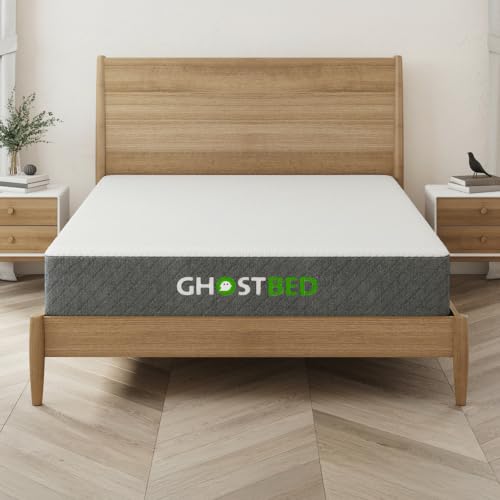
The linked picks are sold on Amazon — check current price, size, and availability there before buying. Start with the GhostBed Classic 11 Inch Memory Foam Mattress, the pool’s latex-layer pick; confirm it via this Check on Amazon link. The other linked picks: Purple Mattress — Check on Amazon; Tuft & Needle Original Legacy Mattress — Check on Amazon. The all-latex categories — natural Dunlop latex, Talalay latex comfort builds, and latex-over-coil hybrids — are prose-only picks in this guide, with shopping guidance in their sections.
In this guide
Quick Picks
| Pick | Badge | Why it earns its place |
|---|---|---|
| GhostBed Classic 11 Inch Memory Foam Mattress | Best Overall | Aerated latex in a four-layer build: latex’s airflow and resilience with gel foam pressure relief for side sleepers. |
| Natural Dunlop Latex Mattress (prose-only) | Best Pure Latex | Dense, durable, supportive latex — the traditional all-latex answer for side sleepers who run warm. |
| Talalay Latex Comfort Mattress (prose-only) | Best for Shoulder Pressure | Softer, more uniform Talalay comfort layers that cradle the shoulder point most gently. |
| Latex-Over-Coil Hybrid (prose-only) | Best Premium | Latex comfort over pocketed coils: maximum responsiveness, airflow, and edge support. |
| Purple Mattress | Best Responsive Alternative | Not latex — a flexing grid that answers shoulder and hip pressure with the same instant-response philosophy. |
| Tuft & Needle Original Legacy Mattress | Best Budget Alternative | Not latex — adaptive gel-graphite foam with bounce-back support for side sleepers who dislike foam sink. |
Key Takeaways
- Latex relieves side-sleeping pressure by distributing load, not just compressing — shoulders sink while the waist stays supported.
- Dunlop latex is denser and firmer, the support-layer standard; Talalay is softer and more uniform, the comfort-layer favorite for shoulders.
- Latex sleeps temperature-neutral and outlasts foam comfort layers — the premium is partly a durability purchase.
- Known latex sensitivity is the category’s one hard exclusion; if that is you, the responsive alternatives here are your picks.
- Side sleepers should pair any latex pick with a properly lofted pillow; the shoulder the mattress receives must be matched at the neck.
- Our verified pool holds one latex-layer mattress (the GhostBed); the pure latex categories are prose guidance — compare them against the contouring-foam approach in Best Mattresses For Back Pain And Side Sleepers before deciding your material.
How These Picks Were Chosen
Transparency first: this keyword asks for a material our pool barely contains. Rather than mislabel foam mattresses as latex — a small dishonesty that would poison the whole guide — we structured it as one linked latex-layer pick, three prose-only latex category picks covering the real market’s shape, and two linked responsive alternatives clearly labeled as not latex. Every linked product’s review uses only its verified pool data. The prose-only sections describe categories and shopping criteria qualitatively, with no specifications, prices, or model claims.
Selection criteria for side-sleeper suitability across all six: shoulder and hip pressure handling, waist support integrity, responsiveness for position changes, temperature behavior, and durability of the comfort surface. Latex’s reputation scores on all five; the alternatives were chosen because they match latex on responsiveness and temperature, the two traits side sleepers most often cite when foam disappoints them.
The 6 Best Latex Mattresses for Side Sleepers — Reviewed

GhostBed Classic 11 Inch Memory Foam Mattress
Our badge: Best Overall
The GhostBed Classic 11 Inch Queen Memory Foam Mattress is the pool’s genuine latex story: its four layers combine cooling gel memory foam, high-density support foam, and aerated latex — latex chosen, as in all-latex beds, for the airflow its open structure allows and the resilience it contributes. The result is a medium-firm mattress with a soft, supportive, springy character and minimal motion transfer, designed for stomach, back, side, and combo sleepers, CertiPUR-US certified and made in the USA and Canada. For a side sleeper curious about latex’s feel without committing to an all-latex price, this layered introduction is the honest entry point.
Strengths
- Aerated latex layer brings real latex airflow and bounce to the comfort stack
- Springy, responsive surface makes side-to-side rolls effortless — no foam crater to climb out of
- High-density core supports spinal alignment for the waist while shoulders sink above
Trade-offs
- It is a latex-layer hybrid of foams, not an all-latex mattress — purists should read the prose picks below
- Medium-firm lean may under-cushion very light side sleepers’ shoulders
- Latex content means known latex-sensitive shoppers should choose another pick
| Color | White |
| Size | Queen |
| Dimensions | 80 x 60 x 11 inches |
| Weight | 50 pounds |
On the bed, the GhostBed feels like the compromise side sleepers describe wanting: the gel foam receives the shoulder with genuine give, the latex keeps the surface alive and cool, and the dense core stops the pelvis from over-rotating. Position changes — the side sleeper’s nightly dozen — happen without the rocking effort memory foam demands, and a partner’s movement is damped to a rumor. At fifty pounds it is also the easiest queen in this guide to rotate and manage, which matters for a comfort layer you intend to keep responsive for years.
Judge it as what it is: the most latex a shopper can get from this pool, in a well-balanced mainstream build. If its layered approach delights you but you want the full material commitment, the prose-only categories below describe the upgrade path. If its medium-firm lean leaves your shoulder unconvinced after the trial, the Talalay guidance is your next stop — softer comfort layers are that category’s entire purpose.
Best for: side sleepers wanting latex resilience and airflow inside a mainstream, trial-backed mattress / Not suited for: all-latex purists or latex-sensitive shoppers
Choose it for the pool’s real latex layer with foam’s forgiveness; skip it if only a full latex build will do. Check on Amazon
Natural Dunlop Latex Mattress (Prose-Only Pick)
Our badge: Best Pure Latex
Dunlop is the original latex process and still the backbone of the all-latex market: liquid latex is whipped, poured, and vulcanized in a mold, producing a dense, supportive rubber with a slightly firmer feel at the bottom of each layer than the top. An all-Dunlop mattress — typically two or three layers of graduated firmness in a zippered organic cotton and wool cover — is the purest expression of this keyword: buoyant, breathable, extraordinarily durable, and supportive enough that side sleepers get shoulder relief from the material’s distribution rather than from softness alone. We describe the category qualitatively; no verified product is linked.
Strengths
- The most durable comfort material in the mattress world — measured in decades, not years
- Dense, even support that keeps a side sleeper’s spine level without a soft waist
- Naturally breathable and temperature-neutral; no cooling infusions required
Trade-offs
- Firm-leaning by nature; shoulder-dominant side sleepers may need a softer top layer in the stack
- Heavy — latex is dense, and all-latex queens are two-person furniture
- Premium pricing across the category, with quality varying by latex origin and blend
Shopping guidance: ask what the latex actually is — natural latex content percentages separate the genuine article from synthetic blends wearing the word. Look for zippered covers that let you rearrange or replace layers, because an all-latex mattress is a system you tune over years, not a sealed purchase you endure. Firmness is usually offered in layered choices; side sleepers generally want the comfort layer at the soft end of the maker’s range over a medium or firm support layer. Buy from sellers who state layer composition plainly and offer a real trial — latex feel is distinctive, and your shoulder’s verdict after a month is the only specification that matters.
Best for: long-horizon side sleepers who want the purest, most durable latex build / Not suited for: shoppers needing a plush, sinking shoulder cradle or an easy-to-move bed
Choose it as the buy-once latex mattress; skip it if you know you love soft, slow foam.
Talalay Latex Comfort Mattress (Prose-Only Pick)
Our badge: Best for Shoulder Pressure
Talalay is latex’s refinement: the molded latex is vacuum-sealed and flash-frozen before vulcanizing, producing a more uniform, airier cell structure that feels softer and more consistent than Dunlop at the same density. In mattress design, Talalay is the comfort-layer specialist — the top layer a side sleeper’s shoulder actually meets — often paired over Dunlop or coil support. For the side sleeper whose complaint is precisely located (one shoulder, one hip, pressure that foam either crushes or ignores), a Talalay-topped build is the category’s most surgical answer, described here as prose-only guidance.
Strengths
- Softest, most uniform latex feel — the gentlest reception a shoulder point can get
- Consistent cell structure means consistent pressure distribution, edge to edge
- Breathable, resilient, and durable like all quality latex
Trade-offs
- Talalay is the most expensive latex to produce, and mattresses built on it price accordingly
- Its softness is a comfort-layer virtue and a support-layer vice — it needs a real core beneath
- Availability is narrower; fewer sellers, longer lead times, more research required
Shopping guidance: Talalay appears most often as the top layer of a hybrid design — Talalay over Dunlop, or Talalay over coils — so shop the whole stack, not the headline. Side sleepers should confirm the comfort layer’s softness rating is genuinely at the plush end; a firm Talalay top defeats the purpose. Because the category is premium and specialized, weight the seller’s trial and layer-exchange policies heavily: the ability to swap a comfort layer’s firmness after a month at home is worth more than any showroom minute. If your pressure story is dominated by one rebellious shoulder, this is the latex configuration aimed at you.
Best for: shoulder-dominant side sleepers wanting the softest latex reception over real support / Not suited for: budget shoppers or anyone who prefers a firm, on-top feel
Choose it for targeted shoulder kindness; skip it if Dunlop’s firmer purity already suits you.
Latex-Over-Coil Hybrid (Prose-Only Pick)
Our badge: Best Premium
The latex hybrid — a latex comfort layer over a pocketed coil support core — is where the category’s premium money concentrates, and side sleepers are the reason. Coils contribute what even latex cannot: individually responsive support that firms exactly under the pelvis, airflow through the entire mattress body, and edge support that lets a side sleeper use the full width of the bed. The latex above them distributes the shoulder and hip load with its characteristic buoyancy. The combination is the most responsive, coolest, and most durable architecture in this guide, described qualitatively as a prose-only pick.
Strengths
- Maximum responsiveness: coils and latex together make position changes effortless
- Best airflow of any latex configuration — the coolest latex sleep available
- Coil edge support and durability complete a genuinely premium, long-life build
Trade-offs
- The most expensive configuration in the latex world
- Motion isolation, while good for coils, trails all-foam and all-latex builds
- Heavier and more complex to buy well — coil counts and latex specs both need reading
Shopping guidance: in hybrids, the comfort layer’s latex type decides the shoulder story (Talalay for softness, Dunlop for firmer support) while the coil unit decides the waist story — look for individually pocketed coils and a stated approach to zoning, since a firmer coil band under the pelvis is what keeps a side sleeper’s spine straight. Treat vague hybrids (“latex-infused foam over springs”) as marketing, not latex; the comfort layer should be actual latex, named by process. This is the configuration for the side sleeper who has decided to buy the best version of the idea once — and for couples, where one partner’s side sleeping meets the other’s back sleeping, its diplomacy is unmatched in the category.
Best for: premium side sleepers and mixed-position couples wanting the ultimate responsive build / Not suited for: tight budgets or motion-sensitive light sleepers
Choose it as the category’s summit; skip it if its price requires financing your sleep.

Purple Mattress
Our badge: Best Responsive Alternative
The Purple Mattress contains no latex, and we label it plainly as the alternative for side sleepers who want latex’s two signature behaviors — instant response and point-by-point pressure distribution — from a different material entirely. Its two inches of GelFlex Grid flex away under the shoulder and hip while holding firm under the waist, which is functionally the same trick latex performs by distribution, executed by a polymer lattice. The grid’s air channels make it temperature-neutral, and its medium-firm feel serves every position.
Strengths
- Grid flexes at pressure points exactly as a side sleeper needs — the closest non-latex analogue to latex distribution
- Instantly responsive; no warm-up, no sink, easy rolling
- Sleeps temperature-neutral through open air channels
Trade-offs
- Not latex: shoppers buying for material purity or natural content should stay with the prose picks
- One hundred pounds — the heaviest setup in this guide
- The grid feel is distinctive enough that the trial is essential
| Color | White |
| Size | Queen |
| Dimensions | 80 x 60 x 11 inches |
| Weight | 100 pounds |
Include the Purple in a latex guide? Only honestly, as we have: it is the pick for the side sleeper whose latex interest is functional rather than material — who wants the shoulder to disappear into the surface, the waist to stay held, the bed to stay cool, and the whole thing to respond instantly. On those four criteria it competes with latex directly and, on temperature, beats it. What it cannot offer is latex’s natural-material story or its decades-long comfort-layer lifespan; its value case rests on feel, not purity.
Practical notes mirror its other appearances in this lot: plan the setup with help, use the full trial (the grid persuades slowly), and pair it with a side-sleeper’s pillow of proper loft. If your shoulder has rejected foam and you are latex-curious but latex-price-shy, the grid is the legitimate third door.
Best for: function-first side sleepers wanting latex-like response and cooling without latex / Not suited for: natural-material purists and latex loyalists
Choose it for performance; skip it for purity. Check on Amazon

Tuft & Needle Original Legacy Mattress
Our badge: Best Budget Alternative
The Tuft & Needle Original Legacy Medium Firm Gel Foam Queen Mattress is the second honest alternative: no latex, but a foam philosophy built on latex’s favorite adjective — responsive. Its T&N Adaptive foam, infused with cooling gel and heat-conducting graphite, provides contouring pressure relief with bounce-back support; Flex foam firms as you settle deeper, and ventilated Release foam enhances pressure relief. For a side sleeper whose foam complaint is specifically the trapped, slow feeling, this is the pool’s corrective, at the friendliest tier in this guide, with CertiPUR-US and GREENGUARD Gold certifications and a hundred-night trial.
Strengths
- Bounce-back adaptive foam — pressure relief without the quicksand
- Gel and graphite cooling plus a cooling cover for warm side sleepers
- Dual third-party certifications at an accessible tier
Trade-offs
- Not latex in any layer; material purists, see the prose picks
- Ten inches is slim for heavier side sleepers’ shoulder travel
- The brand advises up to two weeks of break-in before judging the feel
| Color | White |
| Size | Queen |
| Dimensions | 80 x 60 x 10 inches |
| Weight | 72 pounds |
The Tuft & Needle earns its place in a latex guide the same way a good understudy earns a role: it performs the same emotional beats — responsiveness, cooling, pressure relief that does not swallow — in a more accessible production. Side sleepers who roll frequently will feel the kinship immediately: the surface answers movement instead of negotiating with it. Its medium feel is democratic across positions, which suits combination sleepers who start on their side and end on their back.
Budget honesty: this is the pick for the shopper who priced all-latex, inhaled sharply, and still wants the responsive philosophy tonight rather than next year. It will not outlast latex, and it will not feel identical — but as a trial-backed, certified, cooling, bounce-back bed for a side sleeper, it is the alternative we can recommend without a wink. The broader foam-versus-latex decision is worked through in Best Mattresses For Pressure Relief, where mechanisms are compared head to head.
Best for: budget-conscious side and combination sleepers wanting responsive, cooling foam / Not suited for: anyone specifically committed to natural latex materials
Choose it for latex philosophy at a foam price; skip it if the material itself is the point. Check on Amazon
Comparison Table
| Pick | Material Truth | Shoulder Answer | Response | Check price on Amazon |
|---|---|---|---|---|
| GhostBed Classic 11″ | Latex layer + foams (linked) | Gel foam give over latex resilience | Springy | Check price on Amazon |
| Natural Dunlop Latex | All-latex (prose-only) | Distribution, firmer feel | Instant, buoyant | Check price on Amazon |
| Talalay Comfort Build | Latex comfort layer (prose-only) | Softest latex reception | Instant, plush | Check price on Amazon |
| Latex-Over-Coil Hybrid | Latex + coils (prose-only) | Latex distribution + coil zoning | Most responsive | Check price on Amazon |
| Purple Mattress | Grid, not latex (linked) | Grid flexes away at the point | Instant | Check price on Amazon |
| Tuft & Needle Original | Adaptive foam, not latex (linked) | Contouring with bounce-back | Responsive foam | Check price on Amazon |
How to Choose the Best Latex Mattress for Side Sleepers
Dunlop or Talalay: Choose by Layer Job
The Dunlop-versus-Talalay question dissolves once you assign jobs. Support layers want Dunlop’s density and durability. Comfort layers — the two to three inches your shoulder meets — want Talalay’s softness and uniformity if your shoulder is the problem, or Dunlop’s firmer distribution if you prefer sleeping on rather than in. Many of the best side-sleeper builds stack both: Talalay over Dunlop. When a seller cannot tell you which process made which layer, that silence is your answer about the seller.
Firmness: Softer Surface, Honest Core
Side sleepers need the surface soft enough for the shoulder to reach spinal alignment — in latex terms, a comfort layer at the soft end of the maker’s range — over a core that refuses to let the pelvis over-rotate. Uniformly soft latex is as much a trap as uniformly soft foam. When shopping layered builds, configure soft-over-supportive deliberately, and use layer-exchange policies to tune after real nights, because shoulder geometry is personal in a way no firmness chart captures.
Check the Latex Itself: Natural Content and Blends
“Latex” on a label can mean natural rubber, a natural-synthetic blend, or (in the loosest marketing) a foam with latex aspirations. Natural latex carries the durability and feel this guide celebrates; blends trade some of both for price. Neither is automatically wrong — a transparent blend at a fair price beats a vague “natural” claim — but you are entitled to know which you are buying, stated as content, before money moves. The GhostBed pick in this guide is transparent about its structure (latex as one layer among foams), which is the standard of honesty to demand everywhere.
Weight, Height, and the Shoulder Equation
Heavier side sleepers load the shoulder point harder and need either deeper comfort layers or firmer latex that distributes before bottoming; lighter side sleepers may not compress firm latex enough to engage its give, and for them Talalay-soft comfort layers or the grid’s flex do the work. There is no weight at which “medium latex” is automatically right. Map your own build honestly against the layer stack you are quoted, and let trial policies absorb the residual uncertainty.
The Pillow Is Half the Purchase
A side sleeper’s shoulder sinks into latex by design; the head and neck then need a pillow whose loft equals that sink depth plus the shoulder’s width, or the neck bends all night and blames the mattress at dawn. Budget for a proper side-sleeper pillow with the mattress, and judge the pair together during the trial. Several “latex didn’t work for me” stories are pillow stories wearing a mattress costume.
How Do You Care for a Latex Mattress?
Latex rewards simple care with extraordinary lifespan. Keep it on a supportive, breathable base — solid platforms are fine, widely spaced slats are not, since latex is heavy and conforms into gaps. Use a protector; latex itself resists dust mites and moisture issues well, but the cover and your bedding still need the hygiene routine. Rotate the mattress head-to-foot a few times a year to distribute the shoulder load across the surface; layered builds with zippered covers let you flip or rearrange layers, which is the deepest form of rotation any mattress allows. Keep latex out of prolonged direct sunlight, which degrades rubber over time, and never fold an all-latex mattress for moving — roll it if the maker allows, or move it flat with help. Done faithfully, this minimal routine is how latex comfort layers outlive two generations of foam.
Problem: the latex feels firmer than expected — latex does not soften with warmth like memory foam; if the shoulder verdict is still negative after two weeks, the comfort layer is too firm for you — exchange the layer or choose Talalay-soft rather than waiting for a break-in that latex does not really have.
Problem: a slight rubber scent at unboxing — natural latex has a mild inherent scent that fades with ventilation over days; air the room and delay the protector by a day if it bothers you.
Problem: the mattress feels heavy and awkward to rotate — it is; latex is dense. Rotate with two people, on a schedule, and consider it the price of a material that will not need replacing.
Problem: partner feels my movements more than on foam — responsiveness transmits more motion than memory foam absorbs; a latex hybrid with pocketed coils localizes better, and separate bedding reduces the felt disturbance.
Problem: unsure whether a “latex” listing is genuine — ask for the layer’s process (Dunlop or Talalay) and natural content in writing; a seller who cannot answer is selling a story, not a material.
Latex and Temperature: Why Side Sleepers Who Run Hot End Up Here
The side sleeper’s heat problem is structural: a large contact patch pressed into foam for hours, with the shoulder and hip — high-pressure, low-airflow zones — generating the warmest microclimate on the bed. Memory foam insulates exactly where it touches. Latex’s open, pincore-ventilated structure lets air move through the comfort layer itself, so the surface stays near room temperature and the sleeper stays settled. Settled is the operative word: hot sleepers shift position to find cool surface, and every shift re-loads the shoulder. A temperature-neutral surface is therefore a pressure feature as much as a comfort one — the same insight that drives the cooling obsession in Best Mattresses For Night Sweats. Latex arrives at cool sleep without gels, phase-change covers, or graphite: just holes and rubber, working every night for a decade.
Latex Versus Memory Foam for Side Sleepers: The Honest Scorecard
Memory foam wins on motion isolation and on the deep, slow hug that some side sleepers genuinely love; it is also cheaper per inch and available everywhere. Latex wins on responsiveness, temperature, durability, and on pressure distribution that does not require softness. The grid wins on instant point flex and cooling, loses on material naturalness and weight. Adaptive foams split the difference at friendly prices. None of these verdicts is a ranking of worth — they are a map of trade-offs, and side sleepers should choose by which loss they mind least. If you have loved foam for years, latex’s buoyancy may feel like a betrayal; if foam has always felt like a trap, latex will feel like a door opening. The trial policies in this category exist because the scorecard is personal, and the only honest way to fill it in is a month of your own nights.
Latex Care and Longevity: Protecting the Investment
Natural latex is among the most durable comfort materials sold — and among the most sensitive to a few specific abuses, which is why its owners’ manual matters. Ultraviolet light and ozone degrade latex steadily, so a latex mattress belongs under a protector and bedding at all times, never aired in direct sun the way cotton futons enjoy. Heat and petroleum-based products are the other enemies: keep heating pads off the surface for extended periods, and use water-based cleaning only, blotting rather than soaking, since latex’s open cells will hold moisture against the core if drenched. Rotation still applies — latex takes impressions far more slowly than foam, but a heavy hip zone is a heavy hip zone, and quarterly turns distribute the decades evenly. The reward for this modest care is the category’s signature: a latex mattress in year ten commonly sleeps closer to its year-one feel than a five-year-old conventional foam bed, which is the entire economic argument for the material’s premium stated in one sentence.
End-of-life honesty completes the picture: natural latex is biodegradable in principle and recyclable in a growing number of municipal programs, a gentler exit than the foam landfill story — one more reason the material’s devotees stay devotees. Shoppers weighing that whole-life value against the linked and prose-only options in this guide should also weigh the household’s other sleepers: a partner who is a back sleeper will find latex’s responsiveness as congenial as you do, which is more than can be said for deep memory foam, and Best Mattresses For Back Pain And Side Sleepers covers the shared-bed version of the negotiation. One caution belongs in the care file too: natural latex resists dust mites well, but a true latex allergy is a hard exclusion — Best Mattresses For Allergies covers the alternatives for sensitive households. Buy latex for the feel, keep it for the decades, care for it like the natural material it is.
Latex and the Pillow: Completing the Side Sleeper’s Geometry
Latex’s responsiveness solves the mattress half of the side sleeper’s alignment; the pillow solves the other half, and the two must be specified together because latex changes the equation. On slow foam, the shoulder sinks deep and the head’s support needs shrink accordingly; on latex, the shoulder rides higher, the neck’s span from surface to head widens, and a pillow that was correct on the old mattress can leave the neck tilted down toward the bed all night — a misalignment that presents, confusingly, as the new mattress “causing” neck pain. The fix is sequencing, as this lot’s guides repeat: grade the mattress alone for the trial’s first week, then adjust pillow loft in the second, choosing a pillow with enough height to fill the latex-elevated shoulder gap and enough resilience to hold that height at 4 a.m. Latex pillows themselves are the natural pairing — the same responsive, durable, temperature-neutral material, holding loft for years where fiberfill collapses in months — though any pillow that holds its height honestly serves the geometry.
The shoulder itself gives the verdict data: a side sleeper whose shoulder wakes numb or tingling is riding too high or too firm at the contact point; one whose neck aches on the pillow side has a loft problem; one whose hip aches has a mattress problem. Separating those three reports — shoulder, neck, hip — is the diagnostic skill this keyword’s shoppers most need, because each routes to a different fix and only one of them is the mattress. Run the audit before the trial ends, while every fix is still free.
Latex Sourcing and Sustainability: What the Labels Mean
Side sleepers choosing latex often arrive with an environmental motive alongside the comfort one, and the category’s labels reward a brief decoder. Natural latex begins as rubber-tree sap, foamed and baked by one of two processes — Dunlop, the older and denser, and Talalay, the more uniform and airy — and a mattress may be natural, synthetic (petroleum-derived SBR), or a blend wearing the natural name prominently. Certifications sort the claims: GOLS certifies organic latex content, OEKO-TEX and eco-INSTITUT test the finished foam for harmful substances, and the FSC mark follows responsibly managed rubber plantations. None of these labels changes how the mattress sleeps — the shoulder cannot read — but they decide what the premium buys beyond feel, and shoppers paying natural prices are entitled to natural contents verified by somebody other than the seller.
The sustainability ledger, honestly kept, favors natural latex on most counts: a renewable feedstock, a product life measured in decades rather than years, and end-of-life pathways gentler than conventional foam’s. Its costs are transport (plantations are tropical, customers mostly are not) and the agricultural footprint of any plantation crop. Weighed whole, a natural latex mattress kept for its full life — which is the care regime this guide prescribes — is among the most defensible purchases in the bedroom, for the sleeper’s shoulder and for the ledger alike.
Latex for the Guest Room and the Growing Child
Two secondary uses deserve mention because latex’s economics change their math. The guest room is the first: a latex mattress there will outlast several generations of guest-room foam, holds its feel across years of intermittent use without the sag that occasional loading still carves into cheap cores, and gives visiting side sleepers — which is to say, most guests — a genuinely kind surface. The second is the older child or teenager graduating to a first real bed: latex’s durability spans the remaining growth years and the young-adult move beyond them, and its responsive kindness suits young side sleepers whose shoulders are lighter and need a surface that yields without demanding weight to engage. In both cases the premium that seems indulgent for a secondary bed amortizes across a service life that secondary beds rarely achieve — latex does not know it is in the spare room, and it will not act like it.
Latex and Temperature: The Side Sleeper’s Second Complaint
Side sleepers generate a distinctive thermal pattern — a large contact area held still for long stretches — and foam’s habit of warming that patch is why so many arrive at latex with heat as their second complaint after pressure. Latex’s open-cell structure and inherent breathability address it passively and permanently: there is no gel to exhaust by 3 a.m., no phase to change, just air paths that stay open for the mattress’s whole life. Shoulder comfort brought you here; temperature is frequently the reason owners give, five years on, for never going back.
Common Buying Mistakes
Buying “Latex” Without Asking Which Latex
Dunlop or Talalay, natural or blended, layer or infusion — the answers change the product entirely. A listing that will not specify is not selling the latex this guide is about.
Choosing a Uniformly Firm Latex for a Shoulder Problem
Firm latex distributes load beautifully but may not give a troubled shoulder the depth it needs. Soft comfort layer over supportive core is the side sleeper’s configuration; uniform firmness is a back sleeper’s.
Ignoring a Known Latex Sensitivity
Latex is often recommended to allergy-conscious shoppers for its resistance to mites and mold — but a true latex sensitivity overrides all of that. If you have one, the grid and adaptive-foam alternatives in this guide are your picks, full stop.
Underestimating the Weight
All-latex mattresses are seriously heavy. Stairs, small doorways, and solo living are real constraints; plan delivery and rotation help, or choose a hybrid or layered pick whose weight you can actually manage.
Judging Latex in a Showroom Minute
Latex does not warm up or soften in five minutes like foam; its feel at minute one is its feel at year five, which is its virtue — but shoulder verdicts still need weeks of real sleep, including your worst nights. Use the trial.
Final Recommendation
Within our verified pool, the GhostBed Classic 11 Inch Memory Foam Mattress is the latex side sleeper’s practical buy: a real aerated latex layer inside a balanced, cooling, trial-backed mattress. Shoppers committing to the full material should follow the prose guidance — Talalay comfort over Dunlop or coil support for shoulder-dominant sleep, all-Dunlop for firm purity — and demand layer transparency from any seller. If latex’s price or your own sensitivity closes that door, the Purple’s grid is the functional alternative — Check on Amazon to review its trial — and the Tuft & Needle carries the responsive philosophy at a friendly tier. Whichever route you take, pair it with a proper side-sleeper pillow and judge it across a month of mornings. To finish the side-sleeper’s bed, Best Throw Pillows For Bedrooms Under $100 is a useful hunting ground for the support cushions that complete the geometry.
Frequently Asked Questions
Is latex really better than memory foam for side sleepers?
It is better at specific things: instant response, temperature neutrality, durability, and distributing pressure without requiring a soft surface. Memory foam is better at motion isolation and deep contouring. “Better” resolves to your priorities — the scorecard section above lays out the trade honestly.
What is the difference between Dunlop and Talalay latex?
Dunlop is the denser, firmer, traditional process — the support-layer standard. Talalay is vacuum-sealed and frozen during production, yielding a softer, more uniform cell structure favored for comfort layers. Side sleepers often want Talalay on top for the shoulder and Dunlop beneath for support.
How firm should a latex mattress be for side sleeping?
Soft at the comfort layer, supportive at the core. The shoulder needs depth of give to reach alignment; the pelvis needs a core that stops it rotating. Uniform firmness in either direction — all soft or all firm — fails one of those two jobs.
Does latex sleep cool?
Yes, structurally: latex’s open cell and pincore structure lets air move through the material, so it stays temperature-neutral without cooling additives. It is one of the main reasons hot side sleepers migrate to latex from memory foam.
How long does a latex mattress last?
Latex is the durability leader among comfort materials; quality latex layers routinely outlast foam comfort layers by years, which is the core of the category’s value argument despite premium pricing. Rotation and a breathable, supportive base protect that lifespan.
I have a latex sensitivity. What should I choose?
Not latex — including latex-layer hybrids like the GhostBed. The responsive alternatives in this guide (the Purple’s grid, the Tuft & Needle’s adaptive foam) deliver similar responsiveness and pressure distribution without latex content. When in doubt about sensitivity, discuss it with your clinician before buying any latex product.


