Disclosure: As an Amazon Associate, dailyhomedecorating.com earns from qualifying purchases. Links to Amazon on this page are affiliate links; they cost you nothing extra. Prices and availability change often, so check the current Amazon listing before you buy.
The best affordable mattresses for back pain disprove the assumption that back comfort is a luxury purchase. What a sensitive back actually needs from a mattress is not exotic: a support core that keeps the spine level and does not sag within a year, enough surface cushioning that bony points do not force your posture into a twist, and a trial long enough to verify both with your own mornings. None of that requires a flagship price — it requires foam density, honest construction, and a brand willing to warranty the result. This guide finds those things at affordable tiers, with comfort framing only: no mattress treats back conditions, and persistent pain belongs in a clinician’s office. But a sagging, unsupportive bed is an everyday aggravation an affordable mattress can absolutely remove.
We screened the pool’s accessible tier for support-first construction — high-density cores, coil systems, lumbar-minded layers, zoned designs — and rejected the cheap-and-cheerful mattresses whose listings promise softness without structure. Every pick below has a documented support story and a trial or warranty that lets you test it at home, because at this end of the market the trial is your quality control.
Where to Buy
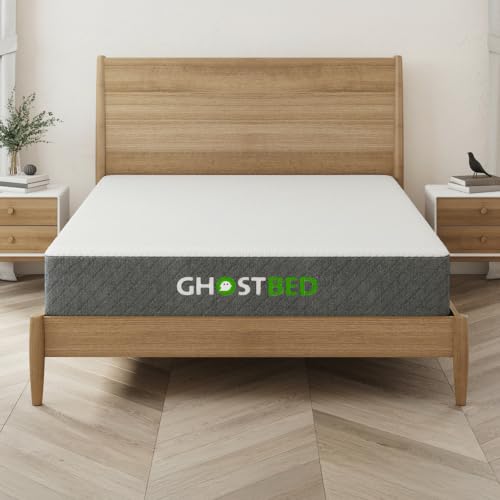
All six picks are sold on Amazon — check the current price and trial terms on the listing before buying, since affordable-tier prices move the most. Start with the GhostBed Classic 11 Inch Memory Foam Mattress, whose high-density core is the strongest support-per-tier story here; confirm it via this Check on Amazon link. The remaining picks: Signature Design by Ashley Chime 12 Inch Hybrid Mattress — Check on Amazon; Zinus 12 Inch Green Tea Memory Foam Mattress — Check on Amazon; Novilla Bliss Queen Size Mattress — Check on Amazon; Linenspa 8 Inch Hybrid Mattress — Check on Amazon; Best Price Mattress 6 inch Bed-In-A-Box — Check on Amazon.
In this guide
Quick Picks
| Pick | Badge | Why it earns its place |
|---|---|---|
| GhostBed Classic 11 Inch Memory Foam Mattress | Best Overall | A high-density foam core built for spinal alignment, in a medium-firm feel with cooling layers, at an accessible tier. |
| Signature Design by Ashley Chime 12 Inch Hybrid Mattress | Best for Lumbar Support | A dedicated gel lumbar layer over 13-gauge pocketed coils, with a 180-night trial — in a full size. |
| Zinus 12 Inch Green Tea Memory Foam Mattress | Best Zoned Foam | Patented zoned pressure relief and certified materials in a twelve-inch queen. |
| Novilla Bliss Queen Size Mattress | Best Queen Value | Three-layer weight-distributing foam with a hundred-day trial — a full queen bed at a friendly tier. |
| Linenspa 8 Inch Hybrid Mattress | Best Compact | Real coils under memory foam in a twin — the small-room and guest-room back-friendly pick. |
| Best Price Mattress Full Mattress 6 inch Bed-In-A-Box | Best Budget | Layered memory foam with a supportive high-density base in a slim full-size profile. |
Key Takeaways
- Affordable back comfort = dense support core + adequate surface cushion + a real home trial. In that order.
- Coils at this tier (Ashley Chime, Linenspa) buy support longevity that budget foam cannot promise.
- Zoned and lumbar-targeted designs exist at affordable prices — you do not need a flagship to get them.
- Thin mattresses (six inches) are stopgaps for nightly back care; eight to twelve inches is the working range.
- Your foundation is half the support system; a cheap mattress on a sagging base fails exactly like an expensive one.
- Judge by morning stiffness over three to four weeks, not by the first night — the method is detailed in Best Mattresses For Sore Backs, this guide’s closest sibling.
How These Picks Were Chosen
We filtered the pool to its accessible tiers, then applied a support audit: does the listing document a high-density core, a coil unit with a stated gauge, a zoned design, or a lumbar-specific layer? Picks needed at least one, plus a trial or warranty meaningful enough to test the claim at home. Pure-plush budget mattresses — thick softness over unspecified foam — were excluded no matter how popular, because for back comfort they are the category’s most reliable disappointment: wonderful in week one, trough-shaped by month six.
Sizes vary across these picks deliberately. Affordable back-comfort shoppers are often furnishing a single bed, a teen’s room, a guest room that hosts an achy parent, or a first apartment queen. The guide covers twin, full, and queen footprints and says plainly which is which in every review, so nobody orders a twin expecting a queen. Prices are never quoted — check the listing — but each pick’s tier positioning is described honestly.
The 6 Best Affordable Mattresses for Back Pain — Reviewed

GhostBed Classic 11 Inch Memory Foam Mattress
Our badge: Best Overall
The GhostBed Classic 11 Inch Queen Memory Foam Mattress leads because its design spends money in the right order for this keyword: a high-density foam core that supports spinal alignment sits at the center of a four-layer build, with cooling gel memory foam and aerated latex adding comfort and airflow above it. The brand frames the core as helping alleviate hip and back discomfort and morning stiffness — comfort claims we report as framing — in a balanced medium-firm feel for stomach, back, side, and combo sleepers. It is CertiPUR-US certified and made in the USA and Canada.
Strengths
- High-density core prioritizes alignment — the expensive-sounding feature at an accessible tier
- Aerated latex and gel foam keep it cooler and more responsive than basic memory foam
- Fifty pounds: the easiest queen here to set up and rotate, a real consideration for a sore back
Trade-offs
- Uniform support — no zoning or dedicated lumbar layer
- Medium-firm with springy character; deep-hug foam fans should look at the Zinus
- Budget tier means the refinement layers are thinner than flagship builds
| Color | White |
| Size | Queen |
| Dimensions | 80 x 60 x 11 inches |
| Weight | 50 pounds |
The GhostBed’s ownership experience is defined by consistency and lightness. The dense core does not take a body impression quickly, so the alignment you buy is the alignment you keep; the responsive surface makes the position changes that stiff backs perform all night easy instead of effortful; and when rotation day comes, one person with a complaining back can actually do it — an underrated form of back-friendliness that no flagship’s spec sheet mentions. Motion transfer is minimal despite the liveliness, so a partner’s schedule does not become your back’s problem.
For the affordable shopper, the calculus is compelling: the single most important back-comfort component — the support core — is this mattress’s headline investment, while the savings come from simpler comfort layers above it. If your back’s complaint is “my mattress sags and I wake stiff,” this is the most direct affordable answer in the pool.
Best for: back and stomach sleepers wanting dense, durable support without flagship pricing / Not suited for: sleepers wanting zoned or lumbar-targeted engineering
Choose it for core-first value; skip it if you want a plush, slow contouring surface. Check on Amazon

Signature Design by Ashley Chime 12 Inch Hybrid Mattress
Our badge: Best for Lumbar Support
The Signature Design by Ashley Chime 12 Inch Hybrid Full Size Mattress in a Box is the affordable pick with a lumbar thesis: a high-density gel memory foam layer targets the lower back specifically, over 13-gauge pocketed coils with reinforced perimeter rows. The brand positions it directly at full-size shoppers seeking back comfort at a medium-firm level, backs it with a 180-night home trial and a ten-year warranty, and certifies its foams through CertiPUR-US. In a full-size footprint, it is the most back-engineered mattress at its tier in this pool.
Strengths
- Dedicated lumbar gel layer — targeted support, not generic firmness
- 13-gauge pocketed coils deliver durable, responsive support with real edge strength
- 180-night trial is generous at any tier and remarkable at this one
Trade-offs
- Full size only in this listing; couples need a queen pick instead
- Firm coil gauge feels assertive to plush-preference side sleepers
- Supportive lean means less contouring hug than the foam picks
| Color | White |
| Size | Full |
| Dimensions | 74.4 x 53.3 x 12 inches |
| Weight | 62 pounds |
Coils are the affordable shopper’s durability friends: a 13-gauge pocketed unit holds its support shape for years, moves independently to localize support, and lets air circulate so the mattress sleeps neutral. The lumbar layer concentrates extra material exactly where affordable mattresses usually skimp, and the perimeter rows mean the support survives to the bed’s edge — relevant when you sit on the side each morning, easing into the day. Adjustable-base compatibility adds a comfort option many back-sensitive sleepers value.
The full-size footprint is a feature, not a limitation, for its audience: single sleepers, smaller bedrooms, and guest rooms where a back-comfort bed earns its keep nightly. If that is your room, the Chime delivers engineering that queen shoppers pay more to find, at a tier that respects the budget in this keyword’s title.
Best for: single sleepers with lower-back focus on a full-size frame / Not suited for: couples or plush-seeking side sleepers
Choose it for targeted lumbar value; skip it if you need a queen. Check on Amazon

Zinus 12 Inch Green Tea Memory Foam Mattress
Our badge: Best Zoned Foam
The Zinus 12 Inch Queen Green Tea Memory Foam Mattress brings patented zoned pressure relief to the affordable queen: targeted cushioning and support distributed by body zone, in a medium-firm feel, over a durable base foam, with a breathable knitted cover. For back comfort, zoning is the smart spend — the waist and lumbar zone holds firmer while shoulders and hips receive more give, keeping the spine’s line without punishing its pressure points. CertiPUR-US foams, an OEKO-TEX cover, and fiberglass-free construction complete a materials file that punches above its tier.
Strengths
- Zoned design supports the lumbar while cushioning hips and shoulders
- Twelve-inch queen depth at an affordable tier — real material for the money
- Certified, fiberglass-free materials with freshness infusions
Trade-offs
- Foam support will soften sooner over years than the coil picks
- Sleeps warmer than hybrids despite the breathable cover
- Needs a day or two of airing after unboxing
| Color | White |
| Size | Queen |
| Dimensions | 80 x 60 x 12 inches |
| Weight | 62.3 pounds |
The Zinus is the pick for the affordable shopper who sleeps in more than one position and aches in more than one place: the zoning handles back alignment, the contouring handles pressure, and the foam’s motion absorption keeps a partner out of the equation. Green tea and charcoal infusions keep the foam fresh between protector washes — a small mercy in a bed bought to be slept on hard for years. Its queen footprint at this tier makes it the default recommendation for couples furnishing a first real bed on a budget.
Manage expectations on lifespan: a foam mattress at this tier, rotated faithfully and kept dry, gives years of good service, but the support will soften gradually in a way coils resist. For many households that trade is exactly right — flagship money stays in the bank, and the back gets its support now. Shoppers who want the foam feel with a flippable, longer-horizon design should compare the approach in Best Foam Mattresses For Back Pain, where this pick’s foam cousins are assessed on feel alone.
Best for: couples and combination sleepers wanting zoned foam support at an affordable queen tier / Not suited for: shoppers prioritizing decade-long support rigidity
Choose it for zoned value in a queen; skip it if you run hot and restless. Check on Amazon

Novilla Bliss Queen Size Mattress
Our badge: Best Queen Value
The Novilla Bliss Queen Size Mattress is the straightforward queen bargain of this guide: twelve inches of three-layer foam — NanoGel memory foam contouring on top, comfort and support layers distributing weight evenly and easing tension at the back and hip — with CertiPUR-US certification, a breathable knitted cover, a hundred-day trial, and ten-year protection. Nothing about it is exotic, and that is its virtue: the fundamentals of back-comfortable foam, executed completely, at the tier where most households actually shop.
Strengths
- Even weight distribution across a full twelve-inch, three-layer stack
- Hundred-day trial and ten-year protection de-risk the budget purchase
- Gel foam and breathable cover keep contouring from sleeping stuffy
Trade-offs
- No zoning or lumbar targeting — support is even-handed
- Expansion can take up to seventy-two hours
- Foam edges are the soft spot for sitting, as with most foam queens
| Color | Bliss |
| Size | Queen (U.S. Standard) |
| Dimensions | 80 x 60 x 12 inches |
| Weight | 61.5 pounds |
The Novilla’s back story is distribution: instead of concentrating engineering in one zone, it spreads support evenly, which suits back sleepers whose discomfort is general rather than localized — the whole-surface ache of a too-soft or worn-out bed. The contouring layer keeps pressure off the hip and shoulder points, the support layers keep the pelvis from sinking, and the motion isolation is the deep quiet of layered foam. For a primary bedroom on a budget, it is the pick that asks the fewest questions and answers the most common ones.
Give it its full expansion window before judging, rotate it on schedule, and protect it from moisture; budget foam rewards basic care with a longer supportive life. If, after the trial, your back reports that it needs targeting rather than evenness, the Chime’s lumbar layer and the Zinus’s zones are the in-guide upgrades — which is another way of saying this guide is a ladder, and the Novilla is its honest first rung in a queen.
Best for: budget couples and general back sleepers wanting a complete queen package / Not suited for: sleepers needing targeted lumbar engineering
Choose it for complete-package value; skip it if your back wants a specialist. Check on Amazon
Linenspa 8 Inch Hybrid Mattress
Our badge: Best Compact
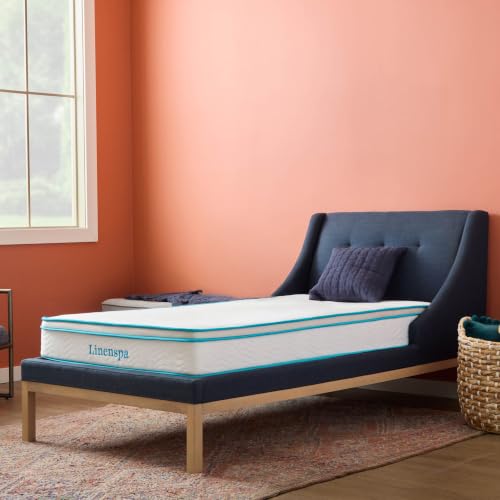
The Linenspa 8 Inch Hybrid Mattress puts real innerspring coils under a memory foam comfort layer in a twin footprint — the most back-credible construction available at its size and tier. The medium-firm feel suits back and stomach sleepers, the coils supply responsive support and airflow that budget foam cannot, and the whole mattress weighs thirty-six pounds, making it the manageable pick for youth rooms, guest rooms, daybeds, and small spaces where a sore-backed sleeper actually lives.
Strengths
- Coil support at a budget tier — durability and responsiveness foam cannot match here
- Medium-firm feel aligned with back and stomach sleeping
- Light and compact: one person can set it up, rotate it, and move it
Trade-offs
- Twin size only in this listing — one sleeper by design
- Eight inches is the minimum credible depth for nightly adult back care
- Coils transmit more motion than foam, a minor point in a twin
| Color | Mattress Only |
| Size | Twin |
| Dimensions | 74 x 39 x 8 inches |
| Weight | 36 pounds |
The Linenspa’s honesty is refreshing: it does not pretend to be a luxury bed; it is a correctly built small hybrid with a ten-year warranty, and correctly built is what backs ask for. Teenagers growing into adult frames, college-adjacent renters, grandparents’ guest rooms that host real sleepers — these are its habitats, and in each it replaces the category’s usual suspect (a tired futon pad or a foam slab) with actual support. Allow it one to three days to expand fully after unboxing, faster in a warm room.
If your affordable back-pain project is a small room, this is your pick; if it is a shared queen, look above. Either way, its existence in this guide makes the guide’s larger point: at the affordable end, construction type (coils, density, zoning) predicts back comfort far better than brand or thickness theater. Our Best Mattresses Under $200 guide explores the floor of this market — and its compromises — in full.
Best for: single sleepers, teens, and guest rooms needing real coil support on a budget / Not suited for: couples or anyone needing a queen
Choose it for compact coil value; skip it if you need width. Check on Amazon

Best Price Mattress Full Mattress 6 inch Bed-In-A-Box
Our badge: Best Budget
The Best Price Mattress Full Mattress 6 inch Bed-In-A-Box is the floor of this guide, included with clear eyes: six inches of layered foam — memory foam over support and high-density layers, green-tea infused, CertiPUR-US certified, with a ten-year warranty — in a slim full-size profile. For a back sleeper of lighter build, a temporary living situation, or a budget that simply ends here, a correctly layered six inches beats a worn-out anything. It is a stopgap with good bones, and we will treat it as exactly that.
Strengths
- Layered construction with a high-density base — support intent at the lowest tier
- CertiPUR-US foams and a ten-year warranty at a minimal price position
- Thirty pounds: trivially easy to move, rotate, and set up alone
Trade-offs
- Six inches bottoms out sooner for heavier sleepers and side sleepers
- Support lifespan will be shorter than the eight-to-twelve-inch picks
- Full size only in this listing; minimal edge presence
| Color | White |
| Size | 6 Inch |
| Dimensions | 75 x 54 x 6 inches |
| Weight | 30.42 pounds |
Who is this mattress honestly for? The renter between leases sleeping on a futon frame, the family furnishing a spare room this month rather than next year, the lighter back sleeper whose current mattress is a decade-old trough. In each case the alternative is not a flagship — it is nothing, or something worse. The layered build contours to relieve pressure points, the base keeps a level of support a single-slab foam pad cannot, and the green tea infusion keeps it fresh. Add a supportive platform rather than a soft base, rotate monthly at this thickness, and it will do its stopgap duty respectably.
Just do not mistake it for the destination. If your back is a daily concern and the budget can stretch at all, the eight-to-twelve-inch picks above are where affordable back care actually lives; this mattress is the bridge that gets you there without sleeping on the floor — or on the ancient mattress whose sag started the problem — in the meantime.
Best for: temporary setups and lighter back sleepers at the strictest budget / Not suited for: heavier sleepers or anyone buying a five-year primary bed
Choose it as an honest stopgap; skip it if you can reach the deeper picks. Check on Amazon
Comparison Table
| Pick | Support System | Size | Profile | Check price on Amazon |
|---|---|---|---|---|
| GhostBed Classic 11″ | High-density foam core | Queen | 11 inch | Check price on Amazon |
| Ashley Chime 12″ Hybrid | 13-gauge coils + lumbar gel | Full | 12 inch | Check price on Amazon |
| Zinus 12 Inch Green Tea | Zoned foam + base | Queen | 12 inch | Check price on Amazon |
| Novilla Bliss 12″ | Three-layer foam | Queen | 12 inch | Check price on Amazon |
| Linenspa 8 Inch Hybrid | Innerspring coils + foam | Twin | 8 inch | Check price on Amazon |
| Best Price Mattress 6″ | Layered foam + HD base | Full | 6 inch | Check price on Amazon |
How to Choose an Affordable Mattress for Back Comfort
Audit the Core, Not the Cover Story
Affordable mattresses market their comfort layers (gel! green tea! copper!) and hide their cores. For back comfort, reverse the reading order: find the support layer first — its density language, coil gauge, or zoning — and only then enjoy the comfort story. A mattress whose listing cannot describe its support in concrete terms is asking you to fund the unknown. Every pick in this guide passed that audit; use it on any mattress you consider outside this list.
Depth Is the Budget Variable That Matters Most
Within affordable tiers, inches correlate with support life: six inches is a stopgap, eight is a minimum for nightly adult use, ten to twelve is the durable working range. If your budget forces a choice between a thinner mattress with fancy infusions and a deeper one with plain foam, take the depth. Your back cannot feel an infusion; it can absolutely feel two extra inches of support travel.
Let the Trial Do the Quality Control
At this end of the market, manufacturing variance is real, and the home trial is how you insure against it. Prefer the longest trial your tier offers (the Chime’s 180 nights is the standout here), note the trial’s start date, and run a genuine three-to-four-week test with morning notes. A brand that offers a long trial at a low price is telling you its return rate is low — believe the signal.
Fix the Foundation Before the Mattress
The cheapest back-comfort purchase in this entire topic is a straight edge and ten minutes: check your slats, platform, or box spring for sag, and replace a failed base before any mattress. Affordable mattresses are blamed for foundation failures constantly, and the fix is cheaper than the return shipping. This audit matters even more when money is tight — it protects the one purchase you are making.
Match Firmness to Position, Not to Myth
“Firm is good for backs” is a half-truth that sells a lot of hard, wrong mattresses. Back sleepers want medium-firm support with lumbar integrity; side sleepers want that same core under more surface give, or the shoulder pressure will twist the spine the mattress is trying to straighten; stomach sleepers want the firmest surface here to keep the pelvis from sagging into an arch. The picks above are labeled by position fit in their verdicts — use them.
How Do You Make an Affordable Mattress Last?
Budget mattresses repay basic care with disproportionate lifespan. Rotate head-to-foot every two to three months in the first year (foam takes its set early), then twice a year. Keep a protector on from night one — moisture is the affordable foam’s fastest aging mechanism. Support it correctly: slats close together for foam, no sagging box springs for anything. Air the bed in the morning before making it. And be honest about load: a budget mattress asked to carry well beyond its design weight will fade early no matter how it is treated, which is why heavier sleepers should start at the deeper, coil-bearing end of this guide. None of this costs money; all of it buys time — which, at this tier, is the whole value proposition.
Problem: a dip is forming after a few months — rotate immediately, check the foundation with a straight edge, and document with photos while the warranty window is young.
Problem: the mattress feels harder than in the store photos suggested — foam firms in cold rooms and softens over the first weeks; a thin cushioning layer is a legitimate adjustment that does not void the support beneath.
Problem: morning stiffness is unchanged — audit the pillow and the foundation before the mattress; if both are sound and four weeks have passed, use the trial return while it exists.
Problem: edges collapse when sitting — common in budget foam; sit further onto the bed, and next time weight the coil picks, whose perimeters are built for it.
Problem: the mattress sleeps hot — breathable bedding first; gel and aerated picks here run cooler, but a heavy duvet defeats any of them.
Affordable Back Comfort Is a System, Not a Product
The households that solve back comfort on a budget rarely do it with one purchase. They do it with a sequence: foundation audit (free), pillow matched to position (modest), mattress with a real core (this guide), and habits — rotation, protection, a consistent sleep schedule — that cost nothing. Each element is small; the system is the intervention. This is also why the guide resists telling you to stretch to a flagship: a mid-tier mattress inside a complete system outperforms a flagship dropped onto a sagging base under a pancake pillow, at half the total spend. Spend in the order the system demands, and stop when your mornings say you are done.
When Affordable Is Not Enough: Reading Your Own Signals
There are two honest signals that a back needs more than this guide. The first is clinical: pain with leg symptoms, numbness, weakness, or pain that persists and worsens regardless of sleep surface belongs to a clinician, and no tier of mattress shopping substitutes. The second is structural: if you are a substantially heavier sleeper, or a couple with a large combined load, budget mattresses will age fast under you, and the economics flip — a mid-tier hybrid bought once can cost less per year than budget foam bought twice. Our Best Mattresses For Overweight guide treats that load question directly. Knowing which situation you are in is the beginning of shopping well at any price.
Stretching a Tight Budget Across the Whole Sleep System
An affordable mattress does not sleep alone: it sleeps under a pillow, on a foundation, inside a room — and the budget shopper’s skill is allocating scarce dollars across that system in the order the body notices them. The mattress takes the majority, always, because it sets the spine’s line for eight hours. The pillow takes the next share, and it is not a garnish: a new mattress changes the shoulder-to-surface geometry, and an old pillow at the wrong height can counterfeit a mattress failure for weeks — which is why this lot’s guides keep repeating the one-variable rule, changing the pillow in the trial’s second week rather than buying both blind on day one. The foundation takes third priority and rewards inspection over purchase: a sound existing base is free, a sagging one must be fixed before any mattress can be judged, and a simple platform repair often costs less than the delivery fee on a new frame. The protector, fourth, is the cheapest insurance in the system and the one budget shoppers most regret skipping, because a single unprotected spill can void a warranty that was half the value purchase’s point.
What the system view forbids is the scattered budget: a mid mattress, a luxury topper to fix what the mattress should have been, premium pillows compensating for a surface that sags — each accessory purchasing back a fraction of what the right mattress would have provided outright. The picks in this guide were chosen so the mattress line of the budget does the maximum work, leaving accessories to do only what accessories can. Shoppers furnishing a whole room on the same discipline will find Best Mattresses Under $200 works the tier below with the same allocation logic, and Best Throw Pillows For Bedrooms Under $100 covers the finishing layer once the sleep system itself is sound. Affordable, done in the right order, is not a compromise — it is a method.
When Affordable Is Not Enough: Recognizing the Step-Up Moment
Honesty about this band includes its exit criteria — the signs that a back’s requirements have outgrown what affordable construction can serve, so the next purchase should climb a band rather than repeat this one. The first sign is load: a sleeper whose weight has moved into the ranges where budget foam bottoms out will spend affordable mattresses at twice the expected rate, and the arithmetic inverts — one mid-tier purchase outlasts two budget ones and sleeps better in every month of both. The second sign is specificity: a back whose problem has been diagnosed into a particular pattern — a disc condition, a post-surgical requirement, a clinician’s firmness prescription — deserves the targeted engineering that lives a band up, where zoned systems and premium trials reduce the cost of being wrong. The third sign is the couple divergence: two backs whose needs have separated beyond what one uniform affordable mattress can mediate will each sleep at a compromise that a zoned or dual-firmness step-up could actually solve.
None of these signs indicts the affordable purchase that preceded them. A budget mattress that served three good years while a household’s finances, body, or diagnosis clarified has done exemplary work — it bought time and information at the lowest possible price, which is this band’s deepest function. The mistake is not buying affordable; the mistake is buying affordable repeatedly after the evidence says the requirement has changed. Read your own replacement history as data: if the interval between mattresses is shrinking, the band is wrong, not the brand — and the step up, taken once with this guide’s trial discipline, is cheaper than the pattern it replaces.
The Student, the Renter, and the First Job: Affordable Backs in Transition
A large share of this keyword’s readers are furnishing a transition — the first apartment after school, the rental across town for the new job, the room that must serve for two years and no longer — and their back pain is often the futon-and-air-mattress era sending its final invoice. The transitional shopper’s correct strategy differs from the settler’s in one respect: portability and reversibility outrank the last increment of specification. A mattress in this guide’s value tier that arrives in a box, moves in a car, fits the next apartment’s unknown frame, and carries a trial that survives the move’s chaos serves a transitional life better than a marginally superior mattress that anchors its owner to the current address. Weight matters here in the literal sense — the picks’ weights are in their spec boxes, and a sixty-pound queen is a one-person move while an eighty-pound one is a friendship test.
The back, meanwhile, does not care about the life stage’s impermanence: it grades every night on the same curve. The transitional discount that is never worth taking is the sleeping surface itself — the floor months, the inherited mattress of unknown history, the sofa as a lifestyle. This band exists precisely so that a tight, temporary budget never has to make that trade: real support, real trial, real warranty, at a number a first paycheck can carry. Buy the value pick, keep the paperwork in the cloud for the move, and let the back arrive at the next chapter in better shape than the last one left it.
The Two-Pillow Rule and Other Small Expenditures That Punch Above Their Price
Affordable systems thinking extends past the mattress to the smallest line items, and a few deserve naming because their effect-to-cost ratio embarrasses products fifty times their price. The second pillow is the first: back-pain sleepers use pillows as tools — between the knees on side nights, under the knees on back nights, behind the back for reading that does not slump — and a household with exactly one pillow per sleeper has disarmed itself of the cheapest positional therapy in the category. A simple bed-height adjustment is the second: risers or a lower frame that puts the surface at the height where feet rest flat while sitting makes every exit a non-event for a stiff back, for the cost of a pizza. The third is light: a lamp reachable without twisting, on the nightstand the back can actually reach, prevents the nightly contortion that undoes a careful mattress’s work before sleep even starts.
None of these appears in mattress advertisements, because none of them can be sold at mattress margins. All of them belong in an affordable back-pain guide, because the reader’s budget is finite and the back does not care which line item helped it.
Back Pain on a Schedule: Shift Workers and Irregular Sleepers
A final population deserves direct address: the shift workers, nurses, drivers, and new parents whose backs hurt partly because their sleep happens at war with the clock. For irregular sleepers, the mattress’s job description gains a line — it must deliver its best sleep quickly, in daylight, in fragments, without a wind-down runway. Responsive surfaces that settle a body fast, blackout-friendly pairings the room must provide, and cooling that works at noon in July all matter more than the last increment of specification. The affordable picks in this guide serve that job honestly, and the irregular sleeper should weight responsiveness and temperature above the showroom virtues when the shortlist is graded. A back that sleeps in shifts deserves equipment chosen for shifts.
A Note on Dignity and the Budget Purchase
One last thing, because budget guides too rarely say it: choosing an affordable mattress is not a lesser decision, and a back does not grade its support by the invoice. The sleepers in this guide’s picks are not waiting for permission to rest well until their finances change — they are resting well now, on specifications chosen with more care than most flagship buyers ever apply. That care, not the price, is the purchase. Everything else is upholstery.
Common Buying Mistakes
Buying Thickness Theater
A fourteen-inch budget mattress of low-density foam is not a premium bed; it is a tall soft one. Density and coil gauge predict support; height predicts only sheet problems. Read the core description, not the profile number.
Skipping the Trial Because the Price Felt Safe
Cheap and wrong is still wrong, and it costs the same back. A budget mattress without a usable trial is a gamble dressed as a saving — the picks here all offer a way to verify at home.
Putting a New Mattress on a Dead Foundation
The most common affordable-mattress “failure” is an inherited sag. Audit first, or you will return a good mattress and keep the actual problem.
Choosing Plush for a Bad Back
Soft feels kind in a five-minute lie-down and lets the pelvis sink for eight hours. Back comfort lives in supported medium-firmness with surface cushion — both halves, always.
Ignoring the Return Mechanics Until Day 99
Know how a return works — who picks up, what condition, what window — before you need it. Calendar the trial’s end date the day the mattress arrives.
Final Recommendation
For most affordable back-comfort shoppers, the GhostBed Classic 11 Inch Memory Foam Mattress is the buy: a high-density, alignment-first core with cooling, responsive comfort layers, at a tier that respects the budget. Lumbar-focused single sleepers should take the Ashley Chime’s targeted engineering, couples on a budget the Zinus or Novilla queens — Check on Amazon to compare their current listings. Audit your foundation first, use the full trial with morning notes, and remember that the system around the mattress — pillow, base, habits — is where affordable back comfort is actually won. For the next price conversation up, Best Mattresses Under $400 maps what a little more budget buys in this same support-first language.
Frequently Asked Questions
Can an affordable mattress really help morning back stiffness?
It can remove a common aggravator: a sagging or unsupportive sleep surface that holds your spine out of alignment all night. Many people find mornings improve when the bed stops being part of the problem. It is comfort improvement, not treatment — persistent or worsening pain deserves clinical evaluation.
What firmness should a back sleeper choose at this tier?
Medium-firm with a documented support core is the reliable starting point. Avoid both extremes: plush builds that let the pelvis sink, and rock-hard slabs that concentrate pressure at the shoulders and hips and twist the spine around them.
Foam or coils for back comfort on a budget?
Coils (the Chime, the Linenspa) hold support longer and sleep cooler; quality foam (the GhostBed, the Zinus) isolates motion and contours more closely. At this tier, a well-built version of either beats a poorly built version of the other — audit the specific construction, not the category.
How long will an affordable mattress stay supportive?
With rotation, protection, and a sound foundation, the deeper and coil-bearing picks here are built for years of service; thin budget foam will soften sooner. The warranty terms on each listing state the brand’s own expectation — read them as data.
Is a six-inch mattress ever a good idea for a back sleeper?
As a stopgap for a lighter back sleeper, yes — a layered six-inch beats a worn-out mattress or the floor. As a long-term primary bed for an adult with daily back concerns, the eight-to-twelve-inch picks are the honest recommendation.
Should I add a topper to an affordable mattress for back comfort?
Only to adjust surface feel on a mattress whose support is sound. A topper cannot repair a sagging core, and a thick plush topper can undermine a good core’s alignment. Fix support with the mattress; fix surface feel with the topper — in that order.


