Disclosure: As an Amazon Associate, dailyhomedecorating.com earns from qualifying purchases. Links to Amazon on this page are affiliate links; they cost you nothing extra. Prices and availability change often, so check the current Amazon listing before you buy.
The best mattresses for bunk beds are safety products wearing a comfort product’s clothes. The governing fact is the guardrail: the top of the mattress must sit low enough below the top of the guardrail that a sleeping, rolling body stays contained — the standard guidance is at least five inches of rail above the mattress surface — which means the best mattresses for bunk beds are chosen by profile first and comfort second. Too thick is not a luxury problem on a top bunk; it is a geometry failure. This guide ranks the pool’s bunk-appropriate mattresses with that discipline in front: slim, supportive, honestly sized, and clear about which bunk each pick belongs on.
Our verified pool is a general mattress pool, so this guide works the way a careful parent or furnisher should: the top-bunk picks are the slim profiles whose verified dimensions suit bunk geometry, and the deeper picks are explicitly assigned to bottom bunks and trundles, where profile is a comfort choice rather than a safety one. Every review states its bunk assignment plainly. Measure your own frame’s guardrail and foundation before ordering — bunk frames vary, and the mattress must fit the frame you own, not the category’s average. If the bunk is really a guest or everyday arrangement in disguise, our Best Twin Mattresses For Adults guide covers the adult twin case in full.
Where to Buy
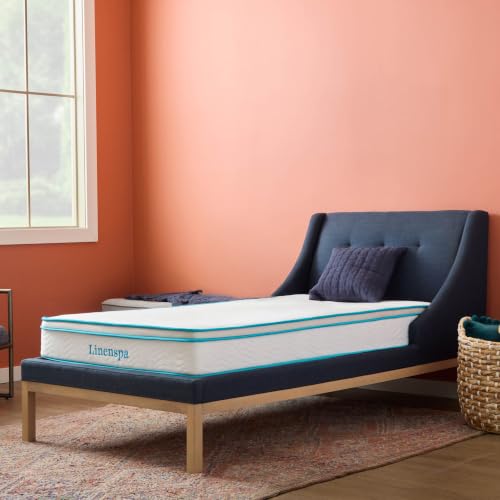
All six mattresses are sold on Amazon, with current pricing and sizes on each listing. Start with our top pick for bunks, the Linenspa 8 Inch Hybrid Mattress, Medium Firm, Bed in a Box, Twin — Check on Amazon. The other five are the Best Price Mattress 6 inch Bed-In-A-Box — Check on Amazon; the Milliard Trifold Mattress, Twin XL Size — Check on Amazon; the Lucid 10 Inch Gel Memory Foam Mattress — Check on Amazon; the Casper Sleep Original 11″ Memory Foam Queen Mattress — Check on Amazon; and the GhostBed Classic 11 Inch Mattress — Check on Amazon. Confirm the twin size and exact dimensions on each listing against your frame’s measurements before ordering.
In this guide
Quick Picks
| Pick | Badge | Why it earns its place |
|---|---|---|
| Linenspa 8 Inch Hybrid Mattress | Best Overall | Eight inches of coil-supported twin — the top-bunk profile with real support inside it |
| Best Price Mattress Full Mattress 6 inch Bed-In-A-Box | Best for Top Bunks | Six inches is the guardrail’s favorite number — maximum rail clearance, honest foam (verify twin size) |
| Milliard Trifold Mattress, Twin XL Size, 6 inch | Best Trundle & Spare | The bunk ecosystem’s spare: trundles, sleepovers, and the floor beside the bunk (note the XL length) |
| Lucid 10 Inch Gel Memory Foam Mattress | Best Bottom Bunk | Ten inches of gel-layered comfort where profile is free to be comfort (verify twin size) |
| Casper Sleep Original 11″ Memory Foam Queen Mattress | Best for Older Kids | Zoned support for growing bodies on the bottom bunk or a teen’s twin frame (verify twin size) |
| GhostBed Classic 11 Inch Mattress | Best Responsive | Buoyant, cooler sleep for the bottom bunk’s older occupant (verify twin size) |
Key Takeaways
- Guardrail geometry rules the top bunk: keep at least five inches of rail above the mattress surface.
- Profile is the first specification — six to eight inches for top bunks, comfort’s choice below.
- Measure your frame: bunk lengths and widths vary, and twin XL does not fit every bunk.
- Coil cores in slim profiles give bunk sleepers adult-grade support without the height.
- Bottom bunks deserve real mattresses too — they host the older, heavier sleepers.
- Fit is a safety check, not a preference: no gaps at the edges, no overhang, no exceptions.
How These Picks Were Chosen
From our verified pool we selected for bunk duty: profiles compatible with guardrail geometry for top bunks, support adequate for the sleeper’s size (including adults on bottom bunks), verified dimensions we could publish honestly, and constructions that tolerate bunk foundations — typically slats or bunkie boards — without complaint. Each pick carries a bunk assignment, and picks whose pool listings are verified in larger sizes carry an explicit instruction to confirm the twin configuration and dimensions on the listing, because bunk fit is measured in inches and invented specifications are unacceptable in a safety category.
Method honesty: guardrail guidance here follows the widely published consumer safety standard for bunk beds (rail extending at least five inches above the mattress surface; snug fit with no dangerous gaps). Your frame’s manufacturer instructions govern where they differ. Nothing in this guide substitutes for measuring your own frame. Households whose bunk serves adult guests should cross-check the support discussion in Best Air Mattresses For Guests, where slim formats do similar work.
The 6 Best Best Mattresses for Bunk Beds — Reviewed
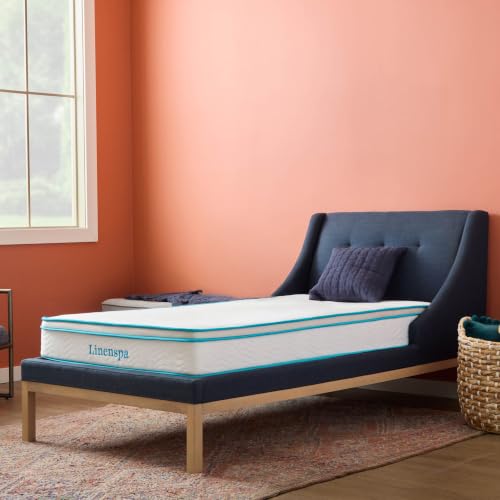
Linenspa 8″ Hybrid
Our badge: Best Overall
The Linenspa 8 Inch Hybrid Mattress is the bunk category’s ideal made purchasable: a verified twin (74 x 39 inches) with a steel-coil core under memory foam, in an eight-inch profile that respects guardrails on most standard frames while delivering support no foam pad can match. At 36 pounds it is also the mattress a parent can actually install on a top bunk without a second adult and a prayer — a practical safety property in itself.
Strengths
- Verified twin dimensions with a coil core — fit and support, both honest
- Eight-inch profile preserves guardrail clearance on typical frames
- Light enough for one adult to place on the top bunk safely
Trade-offs
- Confirm your frame’s rail height: eight inches suits most, not all, guardrails
- Medium-firm feel may read firm to a small child used to plush
- Hybrid motion is livelier than foam for the bottom bunk’s neighbor
| Color | Mattress Only |
| Size | Twin |
| Dimensions | 74 x 39 x 8 inches |
| Weight | 36 pounds |
The coil core matters on bunks for a reason beyond comfort: bunk foundations are often simple slat runs or boards, and a hybrid’s support is substantially self-contained — the coils carry the sleeper even where the foundation is merely adequate. Foam-only slim mattresses lean harder on their foundations, which makes the Linenspa the forgiving choice for the average bunk frame as actually built.
Its maker’s positioning names guest rooms and bunks’ natural habitats — small rooms, second beds — and the 10-year limited warranty gives the purchase a primary-bed’s accountability in a category usually sold as an afterthought.
For top or bottom bunks on standard frames, this is the guide’s default answer.
Best for: standard bunk frames, top or bottom / Not suited for: frames whose guardrails demand a six-inch maximum
Choose the Linenspa if your frame’s rail math accepts eight inches. Skip it if your guardrail is short — take the six-inch pick. Check on Amazon

Best Price Mattress 6″ Memory Foam
Our badge: Best for Top Bunks
The Best Price Mattress 6″ Memory Foam is the guardrail’s favorite: six inches of green-tea memory foam that keeps the sleeping surface low and the rail above it tall. Our pool listing is verified in a full configuration (75 x 54 inches); the bunk application is the twin configuration, which must be confirmed on the current listing — dimensions and price — before ordering, as with every size-specific purchase in this category.
Strengths
- Six-inch profile maximizes guardrail clearance — the top bunk’s first requirement
- Green tea freshness for kids’ rooms and closed bunk alcoves
- At roughly thirty pounds in this configuration, installation is a one-adult job
Trade-offs
- Six inches suits children and lighter teens; adult bottom-bunk sleepers need the deeper picks
- Pool listing verified in full — confirm the twin configuration on the listing
- Firmer thin feel will read hard to plush-habituated kids
| Color | White |
| Size | 6 Inch |
| Dimensions | 75 x 54 x 6 inches |
| Weight | 30.42 pounds |
The six-inch discipline deserves respect as the category’s safety center: every inch below eight is an inch of rail doing its job, and for younger top-bunk sleepers — the population the guardrail exists for — the trade of depth for clearance is the right trade at almost any comfort price. The foam’s firm, thin character also suits the bunk’s reality: kids sleep everywhere and on everything, and a supportive, fresh, correctly fitted six inches serves them better than a plush ten that compromises the rail.
On the foundation side, thin foam telegraphs gaps: bunk slats or a bunkie board must be close and even beneath it, a check this guide’s buying section makes a ritual.
For young top-bunk sleepers, this is the safety-first pick.
Best for: top bunks and younger sleepers / Not suited for: adults or heavier teens as a primary bed
Choose Best Price if rail clearance is your binding constraint. Skip it for the bottom bunk’s adult — take the Lucid or Casper. Check on Amazon

Milliard Trifold Mattress, Twin XL
Our badge: Best Trundle & Spare
The Milliard Trifold Mattress is the bunk ecosystem’s indispensable spare: a six-inch foam trifold that serves the trundle, hosts the sleepover on the floor beside the bunk, and stores in the closet between both. One measurement caveat, stated plainly because this category runs on measurements: the verified listing is twin XL at 78 inches long, which exceeds many bunk and trundle frames built for standard twins — measure your trundle’s length before ordering, or plan this pick for floor duty, where its length is pure generosity.
Strengths
- Six-inch profile fits trundle clearances and guardrail math alike
- Folds to storage — the bunk room’s spare bed without a spare room
- Washable cover, essential in kids’ ecosystems
Trade-offs
- Twin XL length (78″) will not fit standard-twin trundles — measure first
- Six-inch foam is a guest-and-kid surface, not an adult primary
- Fold seams are faintly perceptible
| Color | White |
| Size | Twin XL |
| Dimensions | 78 x 38 x 6 inches |
Every bunk household discovers the third-sleeper problem: the friend, the cousin, the sibling displaced by a growth spurt’s room reshuffle. The trifold is that problem’s standing answer — deployed in two minutes, slept on without apology, and gone by breakfast. Its foam consistency beats the air mattresses usually assigned to the role on every axis a kid can feel, and its washable cover survives the role’s realities.
As a trundle mattress where the length fits, the same virtues apply with a frame around them; where it does not fit, the floor role is not a demotion but the product’s original design.
For the bunk room’s spare and trundle (length permitting), this is the pick.
Best for: sleepovers, floor duty, and long trundles / Not suited for: standard-twin trundle frames or adult primary use
Choose the Milliard if your bunk room needs a spare that stores. Skip it if your trundle is standard length and floor duty is not wanted. Check on Amazon

Lucid 10″ Gel Memory Foam
Our badge: Best Bottom Bunk
The Lucid 10 Inch Gel Memory Foam Mattress takes the bottom bunk, where the guardrail does not rule and comfort may: ten inches of gel memory foam over a ventilated transition layer and a bamboo-charcoal base, with itemized construction and a 10-year warranty. Bottom bunks host the older child, the teen, the occasional adult — sleepers whose weight and warmth deserve a real mattress, and whose bunk’s headroom, not its rail, is the profile constraint. Our pool listing is verified in queen; confirm the twin configuration on the listing.
Strengths
- Gel and charcoal manage the bottom bunk’s warmer, stiller air
- Ten inches of layered support for heavier bottom-bunk sleepers
- Itemized construction with a decade of warranty
Trade-offs
- Ten inches is too much profile for most top bunks — bottom assignment is deliberate
- Pool listing verified in queen — confirm twin configuration on the listing
- Headroom shrinks: tall sitters on the bottom bunk should measure
| Color | White |
| Size | Queen |
| Dimensions | 79 x 59 x 10 inches |
| Weight | 57.9 pounds |
The bottom bunk’s microclimate is a real phenomenon — enclosed on three sides, under a deck, in a room’s stillest air — and the Lucid’s cooling stack is the guide’s most deliberate answer to it. The charcoal base manages the moisture that still air encourages; the gel surface greets the sleeper cool even in the alcove’s warmth.
For the teen whose bottom bunk is effectively their primary bedroom, this pick upgrades the arrangement from furniture to bed, with support layers that will still be working when the bunk is outgrown and the mattress moves to a frame.
For bottom bunks with headroom, this is the comfort pick.
Best for: bottom bunks, teens, warm alcoves / Not suited for: top bunks or low-headroom bottom bunks
Choose the Lucid for the bottom bunk’s comfort. Skip it for any top bunk. Check on Amazon

Casper Sleep Original 11″
Our badge: Best for Older Kids
The Casper Sleep Original serves the bunk household’s oldest occupant — the teen on the bottom bunk or the young adult in a twin frame — with Zoned Support that maps adult loads properly: firmer at the hips, softer at the shoulders, breathable throughout. Growing bodies spend growth’s most mattress-sensitive years on these beds, and a zoned, certified, trial-backed mattress is the upgrade that respects the fact. Our pool listing is verified in queen; confirm the twin configuration on the listing.
Strengths
- Zoned support sized for older, heavier sleepers
- Breathable perforated foam for enclosed bunk air
- Trial and warranty terms that treat a kid’s bed like a real purchase
Trade-offs
- Eleven inches: bottom bunk or twin frame only, never a top bunk
- Pool listing verified in queen — confirm twin configuration on the listing
- Premium-for-the-category positioning
| Color | Light Gray |
| Size | Queen |
| Dimensions | 80 x 60 x 11 inches |
The Casper’s bunk argument is really a life-stage argument: the bottom bunk of a sixteen-year-old is a primary bed in every way that matters — eight hours, adult weight, growth in progress — and it deserves a primary mattress’s engineering rather than the category’s leftovers. Zoning supports the changing body without prescribing a firmness the teenager will outgrow by spring.
When the bunk years end, a mattress of this quality moves to the first apartment’s frame and keeps working — an afterlife the six-inch picks cannot promise and the household budget will appreciate.
For the oldest bunk occupant, this is the grown-up pick.
Best for: teens and young adults on bottom bunks or twin frames / Not suited for: top bunks or young children
Choose the Casper for the bunk’s senior sleeper. Skip it for the top bunk, always. Check on Amazon

GhostBed Classic 11″
Our badge: Best Responsive
The GhostBed Classic closes the guide with the bottom bunk’s responsive option: gel memory foam over aerated latex, medium-firm, made in the USA and Canada per the listing. Older kids and teens change position constantly, and a buoyant surface that releases the body instantly suits the bottom bunk’s restless demographic — while the aerated latex answers the alcove’s warmth with airflow rather than chemistry. Our pool listing is verified in queen; confirm the twin configuration on the listing.
Strengths
- Responsive surface for restless, growing sleepers
- Gel plus aeration for the bottom bunk’s warm microclimate
- Medium-firm balance across positions and ages
Trade-offs
- Eleven inches: bottom bunk assignment only
- Pool listing verified in queen — confirm twin configuration on the listing
- Livelier feel transmits more motion than foam-only picks
| Color | White |
| Size | Queen |
| Dimensions | 80 x 60 x 11 inches |
| Weight | 50 pounds |
The GhostBed’s bunk virtue is the exit: bottom-bunk sleepers sit up into a low ceiling and swing out under a deck, and a surface that helps rather than holds makes that choreography safer and easier — a small, daily kindness that responsive foam provides and deep memory foam taxes. For the teen whose bunk is a room, a fort, and a bed in rotation, that ease of movement is the comfort that gets used most.
Its dense base keeps the buoyancy grounded, and the medium-firm center will serve the same sleeper on a frame later — the afterlife argument again, which bunk purchases should always price in.
For the restless bottom-bunk sleeper, this is the responsive pick.
Best for: teens and restless sleepers on bottom bunks / Not suited for: top bunks or deep-cradle seekers
Choose the GhostBed for the bottom bunk’s mover. Skip it for the top bunk or for stillness seekers. Check on Amazon
Comparison Table
| Pick | Bunk assignment | Construction | Size listed | Profile | Check price on Amazon |
|---|---|---|---|---|---|
| Linenspa Hybrid | Top or bottom (verified twin) | Foam + steel coils | Twin | 8 inches | Check price on Amazon |
| Best Price Mattress | Top bunk (verify twin) | Green tea memory foam | Full listed | 6 inches | Check price on Amazon |
| Milliard Trifold | Trundle / floor (twin XL) | Memory foam trifold | Twin XL | 6 inches | Check price on Amazon |
| Lucid Gel | Bottom bunk (verify twin) | Gel foam + charcoal base | Queen listed | 10 inches | Check price on Amazon |
| Casper Original | Bottom / teen twin (verify) | Zoned foam | Queen listed | 11 inches | Check price on Amazon |
| GhostBed Classic | Bottom bunk (verify twin) | Gel foam + aerated latex | Queen listed | 11 inches | Check price on Amazon |
How to Choose the Best Mattress for a Bunk Bed
Measure the frame before anything else
Three numbers govern everything: the foundation’s length and width (the mattress must fit snugly, with no dangerous gaps), the guardrail’s height above the foundation (the mattress’s top must sit at least five inches below the rail’s top), and the bottom bunk’s headroom (the sleeper must sit up without meeting the deck). Write them down; shop with them open. No review, including this one, can substitute for your frame’s arithmetic.
Assign profile by bunk, not by preference
Top bunks get six to eight inches, decided by the rail math. Bottom bunks get the sleeper’s comfort choice, decided by headroom. Trundles get six inches and a length check. The assignments in this guide’s reviews follow that discipline; let your frame’s numbers overrule them where they differ.
Match support to the sleeper’s size
Young children thrive on the slim picks. Older kids, teens, and adults need the coil core or the deeper, zoned constructions — a bunk is a primary bed for whoever sleeps in it nightly, and primary loads apply. Bedding must fit the profile exactly; deep-pocket mistakes on a six-inch mattress are a nightly annoyance, sourced correctly via Black Friday Bedding Deals 2026 and finished with Best Throw Pillows Under $500 for the bottom bunk’s reading hours.
Check the foundation like a safety inspector
Bunk foundations range from engineered slat rolls to a few hopeful boards. Thin mattresses telegraph gaps; all mattresses deserve even support. A bunkie board forgives most foundations and costs little — on a bunk, it is close to mandatory equipment.
How Do You Fit a Mattress to a Bunk Bed Safely?
Install in order: foundation inspected and boarded if needed, mattress placed and fully expanded (bed-in-a-box models need their stated window before a child sleeps on them), then the three checks — fit (no gaps a small body could find at the edges), rail (five inches of guardrail above the surface, re-measured with bedding on), and ladder-side clearance. Repeat the rail check whenever the mattress changes, the bedding gets thicker, or a topper is proposed: toppers on top bunks consume rail height and should be treated as profile, because the guardrail cannot tell the difference.
Then assign the bunks by the household’s real demographics: the younger and lighter sleeper up top on the slim pick, the older and heavier below on the deeper one, and the trifold in the closet for the ecosystem’s third sleeper. Platform-style bunk frames follow the same fit discipline as our Best Mattresses For Platform Bed guide prescribes for their grown-up cousins.
Problem: the mattress overhangs or gaps at the edges — wrong size for the frame, full stop; exchange it rather than padding the gap, which creates a worse hazard.
Problem: the guardrail barely clears the mattress — step down a profile (the six-inch pick exists for this) or raise the rail if the frame allows; never solve it by hoping.
Problem: the bottom bunk’s sleeper hits their head — headroom is spent by profile; move the deep pick’s sleeper to a frame, or step the bottom bunk down to the Linenspa’s eight inches.
Problem: the trundle will not close — length or height is over: the trifold’s XL length and six-inch height must both clear the trundle’s box; measure the box, not the brochure.
Problem: a child wants the plush mattress up top — the rail math is not negotiable by preference; put the plush on the bottom bunk and let the top keep its clearance.
The Bunk as a Piece of Safety Equipment
It helps to say plainly what this category is: a bunk bed is a raised sleeping platform for the household’s most vulnerable sleepers, and its mattress is part of the containment system, not an accessory to it. That is why this guide leads with measurements instead of feels, assigns profiles instead of preferences, and treats a two-inch difference as a headline rather than a footnote. The comfort matters — children sleep a third of their growing lives on these surfaces, and support shapes that growth’s rest — but comfort operates inside the geometry, never instead of it. Households that internalize that order will find every pick here easy to choose among, because the frame’s numbers will have done most of the choosing already.
Growing With the Bunk: A Buying Sequence
Bunk households buy mattresses in a predictable biography: slim sixes for the first top bunk, the eight-inch hybrid as bodies grow, deeper bottom-bunk mattresses as teens claim the lower deck, and finally the whole set dissolving into first apartments. Buying with the biography in view changes the arithmetic — the Linenspa bought for a top bunk at seven becomes the bottom bunk’s mattress at twelve and a guest twin at seventeen, while the cheapest six-inch foam serves its two years and exits. Neither strategy is wrong; they are different total costs wearing different stickers. Decide which biography your household is buying, and the guide’s picks sort themselves by stage.
Bunk households should also plan the mattress rotation as a family system rather than a series of emergencies: the new mattress enters at the top bunk or the oldest child’s bed, the still-sound one it replaces cascades to the younger bunk or the trundle, and the genuinely finished one exits. Cascading only works when every mattress in the chain was bought to a standard — fit verified, support honest, protector worn from its first night — which is why this guide insists on primary-bed paperwork even for a six-inch foam. A household that buys bunks that way discovers its mattress budget stretching across childhoods, with each purchase upgrading two beds at once.
The bunk room’s budget has the same cascade logic, and our Best Mattresses Under $500 guide’s discipline — certifications first, mechanism before marketing — is the right rule for stretching it: the slim picks here live in that band’s world, and their paperwork proves a bunk mattress need not be an anonymous one. Spend the savings from the cascade on the foundation boards and protectors that keep every mattress in the chain honest longer; in a bunk room, systems beat singles every time.
Common Buying Mistakes
Buying profile by comfort for the top bunk
The guardrail sets the top bunk’s maximum, and preference does not outrank it. Six to eight inches, verified against your rail.
Skipping the frame measurements
Bunk dimensions vary by maker and era. A mattress that almost fits is a hazard with good marketing; measure, then order.
Assuming twin XL fits a bunk
Many bunk and trundle frames are built for standard twins. The XL’s extra length is a feature only where the frame agrees.
Adding a topper to the top bunk
A topper is profile. It consumes guardrail clearance exactly like a thicker mattress, and the rail does not care about the distinction.
Furnishing the bottom bunk as an afterthought
The bottom bunk hosts the heaviest sleeper in the system. Its mattress deserves primary-bed standards, not the leftover budget.
One more bunk ritual deserves institutional status in the household: the twice-yearly fit audit. Children grow, mattresses compress, bedding thickens, and the guardrail clearance that was generous in September can be marginal by spring — not because anything failed, but because everything changed a little. On the same calendar as the smoke-alarm batteries, re-measure the rail clearance with the bedding on, check the edges for gaps, and confirm the ladder-side fit. Five minutes, twice a year, and the bunk’s safety stays a fact instead of becoming a memory of the day it was installed.
And when the bunk years end — they end suddenly, in a growth spurt or a room reshuffle — the mattresses bought to this guide’s standard do not end with them. The hybrid twin becomes a guest bed, the trifold becomes the camping and sleepover fleet, the bottom bunk’s deeper mattress becomes a first apartment’s primary. Buy the bunk years like the first chapter of the mattresses’ lives rather than a disposable interlude, and the household’s bedding budget will feel the difference for a decade.
Bunk beds in guest and rental contexts — the lake house, the ski condo, the grandparents’ spare room — follow the same geometry with adult stakes: the top bunk’s rail math does not relax because the sleeper is a visiting uncle, and the bottom bunk’s mattress will be judged by grown bodies at breakfast. Hosts furnishing bunks for mixed ages should buy the top bunk to the child’s standard (slim, verified, clearance audited) and the bottom bunk to the adult’s (the Linenspa’s coil core at minimum, the deeper picks where headroom allows), and should test both themselves before the first guests arrive. A bunk room that sleeps its adults well is remembered as hospitality; one that sleeps only its children well is remembered as a visit survived.
The bunk’s acoustic life deserves a sentence, because children conduct their most important conversations after lights-out and a creaking, lively mattress taxes the whole room’s sleep. Foam constructions whisper; hybrids murmur; the household that values the bunk room’s quiet will weight the foam picks’ stillness accordingly, while the household whose bunk is a fort first and a bed second can let support rule alone. Either way, the choice is conscious — which is all this guide ever asks of a bunk purchase: that the geometry be measured, the assignments be deliberate, and the comfort be chosen inside the safety rather than instead of it.
Siblings sharing a bunk across a wide age gap present the category’s classic fitting problem in miniature: the top bunk’s mattress must serve the younger body’s lightness safely while the bottom’s serves the older body’s near-adult load, and a single purchase decision rarely fits both. Buy them as the separate decisions they are — the slim verified pick above, the grown construction below — and resist the two-for-one bundle that averages them into mutual mediocrity. The cascade logic from the earlier section then works in the household’s favor: as the younger grows into the bottom bunk, the older’s mattress graduates to a frame, and each purchase keeps serving the next stage.
And a word for the adults who grew up on bunks and now furnish them: your nostalgia is data about durability, not about comfort standards. The bunk mattress of memory — thin, sprung, faintly heroic — survived because children are resilient, not because it was good. Your children deserve the version of the bunk that keeps the adventure and upgrades the sleep: measured rails, honest support, and a bottom bunk you would not apologize for sleeping in yourself. Buy that version.
The bunk purchase also has a paperwork discipline that mirrors its safety discipline, and households with children should adopt it without embarrassment: keep the frame’s manual, the mattress’s listing specifications, and your own rail measurements in one folder, physical or digital, in the room’s closet. When a grandparent asks whether the top bunk is safe for a visit, when a mattress is replaced years later by a different adult, when a frame is handed to another family — the folder answers with numbers instead of memories. Bunk safety is a chain of custody, and the folder is how the chain survives the household’s own turnover.
And a genuinely final note for the child reading over a shoulder, because bunk guides are secretly written for two audiences: the top bunk is a privilege with a physics, and the mattress up there was chosen — measured, fitted, audited — so that the adventure at altitude costs nobody their sleep or their safety. Sleep well up there. The rail, and the arithmetic beneath it, have got you.
The bunk decision also deserves a word about the child who will not sleep up top, or down below, or in the room at all for a season — because bunk households discover that sleeping arrangements are negotiations with developing people, and the mattress that fits the frame must also fit the current treaty. The ecosystem this guide builds — a sound top pick, a real bottom bed, a trifold in reserve — is precisely the flexibility those negotiations require: bodies can be reassigned across the system without any assignment becoming a punishment detail. Buy the system, not the single mattress, and the bunk room survives its own politics.
There is a craftsmanship note worth adding for the households assembling flat-pack bunks, which is most of them: the frame’s own assembly quality enters the mattress’s life directly. A bunk torqued a quarter-inch out of square will rock its mattresses, loosen its slats, and print its imperfections into every night’s sleep; the hour spent leveling, squaring, and re-tightening the frame at assembly — and again at the first month — is mattress maintenance performed in advance. The picks here tolerate honest frames beautifully; no mattress tolerates a dishonest one for long.
And the category’s economics close the case: bunk mattresses are bought more often, by more households, with less deliberation than any other bed in the home — which is exactly why the deliberation in this guide is worth having once, on paper, where it can be reused at every cascade and replacement for a decade of childhoods. Measure once, file it, buy to the standard, and the bunk room stops being a recurring emergency and becomes what it should be: the most fun bedroom in the house, resting on arithmetic nobody has to think about again.
The bunk category’s final lesson is about where deliberation belongs. Parents agonize, reasonably, over the visible choices — the frame’s style, the room’s theme, the bedding’s pattern — while the mattress, the component a child’s body actually audits for a third of their childhood, gets the leftover attention and the leftover budget. This guide exists to invert that allocation once, on paper, so the household never has to think about it again: geometry measured, assignments made, support bought to a standard, paperwork filed. The visible choices can then be as joyful and unserious as a child’s room deserves, because the serious part underneath them has been done properly.
Sleep, for a growing body, is not a luxury category — it is where growth hormone does its work, where the day’s learning consolidates, where tomorrow’s mood is manufactured. The bunk is where much of that sleep happens in the households that own one. Furnish it like it matters, because measurably, it does.
Measure the frame, assign the profiles, buy the support to a standard, and file the numbers — then let the bunk room go back to being the most fun bedroom in the house, resting on arithmetic nobody has to think about again until the next cascade.
Grandparents furnishing the bunk room for visiting grandchildren should hear the guide’s method in their own register: the measurements protect the children you host, the support standard respects the bodies still growing in your care, and the filed paperwork means the room is right every visit without being re-thought every visit. Buy to the standard once, keep the ladder hardware tight, and let the bunk room be what grandchildren remember — the most exciting bed in the family, and, though they will not know it for thirty years, one of the best-slept-in too.
And when the last child cascades out and the frame comes down, the system’s soundest pieces — the bottom-bunk mattress, the trifold — retire into guest and travel service with years left in them, because they were bought to a standard rather than to a season.
The tape measure, the assignment chart, and the paperwork folder: three unglamorous objects that, between them, make the bunk room the most competently furnished space in the house. Everything else is bedding.
Safety, support, and a little ceremony at bedtime: the bunk asks for all three, and the mattress — measured, assigned, and bought to standard — is how the first two stop depending on vigilance and start depending on arithmetic. Vigilance tires; arithmetic does not. That is the deepest reason this guide measures everything.
Measured, assigned, and bought to standard — the bunk room’s mattresses can now be forgotten about for years, which is the highest state a child’s bed can achieve.
Childhood is short and sleep is long; the bunk that serves both well is the one whose mattresses were chosen before the bedding was.
Five inches of rail above the surface, support beneath it, and a chart on the wall — the bunk room, solved.
Final Recommendation
For most bunk frames, the Linenspa 8 Inch Hybrid Mattress is the answer that needs no caveats beyond your own rail measurement: a verified twin, a coil core, an eight-inch profile, and a weight a parent can install safely. If your guardrail demands the slimmest profile, take the runner-up path — Check on Amazon for the six-inch Best Price (twin configuration to be confirmed on the listing). The Milliard covers the trundle and the sleepover, the Lucid cools the bottom bunk, the Casper grows with the oldest occupant, and the GhostBed keeps the restless one comfortable. Measure your frame first — length, width, rail, headroom — and let those four numbers, applied to this guide’s assignments, make the decision with you.
Related guides
Frequently Asked Questions
How thick should a top bunk mattress be?
Thin enough that at least five inches of guardrail extends above its surface — typically a six-to-eight-inch profile. Your frame’s rail height is the authority; measure from the foundation to the rail’s top and subtract five.
Can adults sleep on bunk mattresses?
On the bottom bunk, with an adult-grade pick — the Linenspa’s coil core or the deeper bottom-bunk options here. Top bunks and slim six-inch foams are for lighter sleepers, and frame weight limits govern absolutely.
Does twin XL fit a standard bunk bed?
Often not: many bunk frames are built to standard twin length. The Milliard review flags its 78-inch length for exactly this reason. Measure the frame’s foundation before choosing any XL.
What foundation do bunk mattresses need?
Even, gap-free support: the frame’s slats if they are close and sound, or a bunkie board over them. Thin mattresses especially telegraph gaps, and bunk foundations are the most variable in bedding.
Why do some picks show larger sizes in their spec boxes?
Our pool verifies those models in larger configurations, and we publish only verified specifications. Each such review directs you to confirm the twin configuration and dimensions on the current listing; the Linenspa is verified as a twin outright.
When should a bunk mattress be replaced?
When it sags visibly, when the sleeper outgrows its support class (a teen on a child’s six-inch foam), or when the fit changes — a mattress that has compressed unevenly can open gaps at the edges, which is a safety item, not a comfort one.


