Affiliate disclosure: As an Amazon Associate, Daily Home Decorating may earn from qualifying purchases. Product links may earn a commission at no extra cost to you.
The best vacuums for rugs are the ones that remove grit without grabbing the rug, lifting its corners, pulling fringe into a brush roll, or leaving debris behind in the pile. That means choosing a tool for the rug in front of you, not relying on one “carpet” label to cover every woven surface. A flatweave cotton runner, a low-pile synthetic rug, a wool loop rug, a plush shag, and a hand-knotted heirloom can all respond differently to the same vacuum head.
This is a rug-focused buying guide, not a ranking of vacuums for wall-to-wall carpet or a guide to washing rugs. It emphasizes adjustable suction, brush-roll shutoff, smooth floor tools, controlled edge cleaning, and safer fringe handling. We compare product specifications and manufacturer guidance; we have not lab-tested the models below. Always follow your rug maker’s care label and vacuum manual. If the rug’s fiber, backing, age, or construction is valuable or uncertain, ask its maker or a rug professional before using a powered brush. In pet homes where fur embeds in rugs and upholstery, our guide to vacuuming cat hair covers tools and filtration for that separate challenge.
For a home with mixed area rugs, a canister with suction control and a non-powered floor nozzle is a flexible place to start. A vacuum with a brush-roll shutoff can also work when your rugs range from smooth to low pile. If you have thick rugs or lots of pet hair, a powered head may help on robust low-pile surfaces, but it should be switchable or adjustable so it does not aggressively groom delicate fibers. For fringe, use suction-only or a soft attachment and clean the edge by hand.
Quick picks for different rug needs
| Model example | Rug situation it may suit | Rug-friendly feature to check | Main tradeoff |
|---|---|---|---|
| Eureka Mighty Mite 3670G | Flatweaves, low pile, and delicate rugs needing suction-only passes | Canister format, suction control, tool changes | Less mechanical agitation for embedded debris |
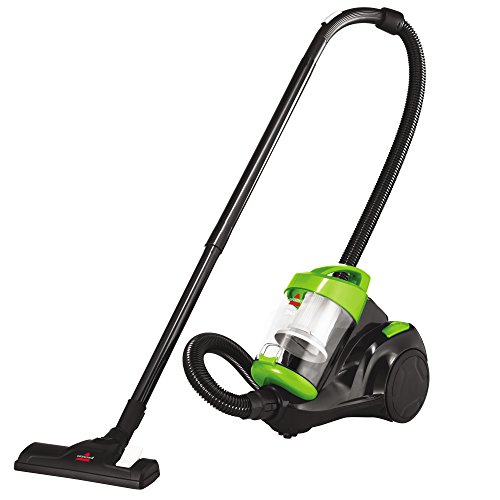
| BISSELL Zing 2156A | Small homes with low-pile rugs and several hard floors | Variable suction and a simple canister nozzle | Not designed as a deep-pile carpet powerhead |
| Shark Navigator Lift-Away Deluxe NV360 | Durable low-pile area rugs mixed with bare floors | Brush-roll shutoff and suction-release collar | Upright floor head can be too aggressive for fringe or delicate weave |
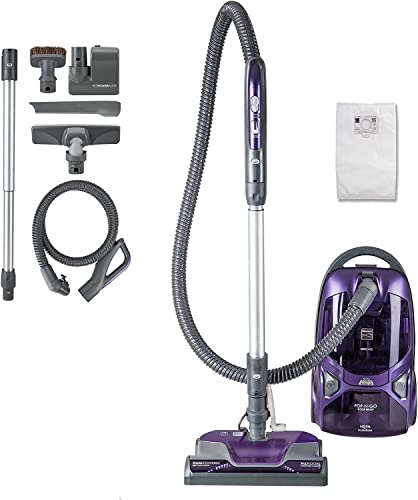
| Kenmore 600 Series 81615 | Robust rugs needing powered pickup plus hose tools | Powered nozzle and electronic suction control | Use the manual’s guidance for delicate rugs and check package details |
The examples are not universal prescriptions. A vacuum that performs well on one area rug may be unsuitable for another rug in the same home. Before comparing price or brand, identify pile height, fiber, weave, backing, fringe, and cleaning instructions.

Eureka Mighty Mite 3670G
A lightweight canister with suction control and a non-powered floor nozzle arrangement. It suits buyers who want to avoid a rotating brush on fragile or fringed rugs and are comfortable making slower suction-only passes.
BISSELL Zing 2156A
A compact bagless canister with variable suction control and an included floor nozzle. The suction setting can help tailor airflow for lightweight rugs, but verify the current package and avoid a powered brush on fringe or delicate yarns.

Shark Navigator Lift-Away Deluxe NV360
An upright with brush-roll shutoff and a suction-release collar. Those controls offer more flexibility than a fixed brush, though the manual floor nozzle still needs cautious use around rug corners and fringe.
Kenmore 600 Series 81615
A bagged canister package with a powered floor nozzle and separate tools. It can be useful for sturdy rugs that need brush agitation, but the manual notes that some delicate carpets may need the agitator turned off. Check the exact bundle and use the appropriate head.
Start with the rug, not the vacuum
Before choosing a vacuum, turn back a corner and look at the label, backing, pile, and edge finish. The care label may identify wool, cotton, nylon, polypropylene, viscose, jute, or a blend. It may also give instructions that matter more than general advice. A hand-tufted rug, a flatweave, a hooked rug, and a machine-made cut pile can react differently even when they look similar from above.
Note whether the rug has cut pile, loop pile, a shaggy surface, a flatwoven structure, or long decorative fringe. Loop construction and loose yarn can catch a rotating brush. Long pile can wrap around a roller or create enough seal for strong suction to make the head hard to push. A thin rug may be pulled toward the nozzle or bunch up. A textured or uneven backing may need a gentler approach. These are not small usability details: they determine whether the vacuum can move smoothly without tugging or lifting the rug.
Check how securely the rug sits. A rug pad can reduce sliding and bunching, but a pad does not make every vacuum head safe for every rug. Make sure the pad is compatible with both rug and floor and that the rug lies flat. If the rug creeps during a test pass, stop and secure it before continuing. Do not hold the rug down with your foot while a powered brush is running near the edge; the head can pull the textile toward the roller.
For antique, hand-knotted, silk, viscose, looped, or unusually fragile rugs, avoid assuming that a household vacuum’s “low” setting is enough. Follow the rug maker’s specific instructions. If a vacuum test produces fuzz, pulled loops, fringe movement, color transfer, or an edge that curls, stop. A professional rug cleaner can advise on maintenance for valuable pieces.
How pile changes vacuum choice
Flatweave and very low pile
Flatweaves have little raised pile for a brush roll to groom. A suction-only canister tool, smooth combination floor head, or vacuum with brush shutoff is often easier to control. A soft floor tool can collect dust without a spinning roller. If the rug is lightweight, reduce suction until the tool glides rather than sealing to the fabric. A straight suction head is also convenient for narrow runners because it can pass along the length without dragging a rotating bar across the edge.
Flatwoven fibers can still snag. Fringe, tassels, loose loops, and handmade edges need attention. Start the cleaning stroke away from the fringe and work toward it carefully, stopping short of loose threads. Use a soft upholstery or dusting tool over fringe rather than sending a powered floor head across it. If the care instructions say to avoid brush agitation, follow that instruction even if the rug appears sturdy.
Low-pile rugs
Low pile can be cleaned with more vacuum formats than plush rugs, but “low pile” does not automatically mean “beater bar safe.” A dense synthetic rug with a stable backing may tolerate a controlled brush roll, while a low-pile wool rug with loops or loose yarn may not. Brush-roll shutoff lets a household use powered agitation where suitable and suction-only where it is safer. Variable suction can help prevent a small rug from lifting or sliding.
If a motorized head is appropriate, set its height for the surface and begin with a gentle pass in an inconspicuous area. The vacuum should move without excessive pulling. Do not force it through a spot where the head is sticking; reduce suction, switch off the brush, or use a different attachment. For scattered crumbs and surface debris, slow overlapping passes can be enough without using the most aggressive setting.
Medium pile, plush pile, and shag
Longer pile can wrap around a brush roll or get pulled into the intake. A high-pile setting, suction adjustment, brush shutoff, or a straight-suction nozzle can improve control. Some shag rugs are intentionally loose or have long fibers; check their care instructions closely. A vacuum head should not dig down into the rug, pull strands, or require the user to yank it back. If that happens, stop rather than risking a damaged surface.
A suction-only nozzle may leave some embedded grit behind in a deep pile because it does not agitate the fibers. That tradeoff can be preferable to damaging the rug. If the rug’s manufacturer permits brushing, use a tool designed for its pile and keep the roller height raised enough that it does not catch. For a high-value shag, ask the maker or cleaner what vacuum head is appropriate.
Fringe, borders, corners, and rug edges
Fringe is one of the most vulnerable parts of a rug. Long threads can wrap around a rotating brush, tangle in wheels, or be pulled under the floor head. Keep the powered head away from the fringe. Clean the main field first, then use a soft attachment by hand at the edge, or gently shake or comb loose debris from fringe according to the rug maker’s instructions. Do not pull the vacuum backward over tassels.
Rug borders can also be vulnerable, especially if binding is loose, a corner has begun to curl, or threads are exposed. Avoid running the leading edge of the vacuum head over a curled corner; it can catch and tear the binding. Flatten and repair the corner if possible, or use a handheld attachment while supporting the edge. Work slowly around the perimeter and avoid repeatedly scraping the same binding.
Some rug manufacturers recommend avoiding corners or fringe entirely with floor heads. Ruggable, for instance, provides care instructions specific to its own rug products and recommends low suction and avoiding the fringe/corners on some rug types. That does not establish a universal rule for all rugs, so check your own product instructions. A safe general habit is to vacuum the central field with the floor head and finish the border with a suitable soft attachment.
Brush-roll shutoff, suction control, and floor heads explained
Brush-roll shutoff
A brush-roll shutoff stops the rotating brush while leaving suction available. This is valuable when a home has both rugs and hard floors, or when one rug should be cleaned without a beater bar. It is also useful if you need to move from a sturdy low-pile rug to a delicate one. Check that the switch really turns off the brush roll, and understand whether the vacuum has separate settings for hard floors and carpet.
Brush-roll shutoff does not make a powerful upright automatically safe for every rug. The head can still pull fabric through suction, and wheels or edges can catch on fringe. A delicate rug may need a different floor attachment or lower suction. Consider how easy it is to control the machine on the rug and how quickly you can change modes without bending or interrupting the job.
Variable suction and suction-release controls
Variable suction is especially helpful for lightweight rugs, thin runners, and plush pile that seals around the floor head. A canister with a slider or dial may reduce suction at the machine or at the handle. Some uprights have an air-release collar to admit air and reduce the force that makes the head stick. The mechanism differs by model, so read the manual and begin with lower suction.
Do not confuse lower suction with a guaranteed gentle setting. A rotating brush can still snag fibers even if the motor suction is reduced. Conversely, suction-only can still lift a thin rug if the nozzle seals tightly. The best control is a combination: use a safe floor head, reduce suction as needed, keep the head flat, and stop if the textile moves.
Floor nozzle types
A suction-only floor tool has no powered roller. It is often a useful match for delicate fibers, hard floors, and flatweaves. A combination nozzle may include a retractable brush strip and a switch for carpet or bare floors. A turbine head uses airflow to spin a small brush, while an electric powerhead uses a motor to turn its roller. A motorized head can loosen grit and hair from durable low pile, but it needs more care around edges and loops.
Look at the exact included head, not just the vacuum body. A canister’s value may depend on whether its floor tool is a smooth suction nozzle or an electric powerhead. A vacuum family can have several bundles with different attachments. A retailer image may show an accessory not included in the selected package. Confirm package contents, model number, and whether the head is powered, adjustable, or has a shutoff switch.
Area rugs are not the same as wall-to-wall carpet
A carpet vacuum roundup often emphasizes deep agitation over a broad, fixed surface. Rugs move. They have exposed edges, corners, bindings, fringes, and sometimes a separate rug pad underneath. The head can catch a corner or pull a thin rug toward the intake even when it would move freely across installed carpet. An area rug also may use fibers or weaving that need gentler care than a typical synthetic carpet.
That difference changes the buying priorities. For wall-to-wall carpet, cleaning width, brush-roll speed, height adjustment, and sustained agitation can dominate. For rugs, control matters just as much: can the brush be switched off? Can suction be reduced? Is a smooth attachment included? Can the user reach edges without dragging a large head over fringe? Is the rug stable enough to remain flat during a pass?
If your home has large, robust low-pile rugs and substantial carpet, a powered brush head may be practical. If your rugs are mostly flatweave, delicate, fringed, or varied, a suction-adjustable canister or an upright with a real brush shutoff offers more options. For carpet-heavy homes, see our separate guide to vacuums for homes with both hardwood and carpet; for rugs specifically, use the pile and edge instructions here to choose the safer head.
How to select a vacuum based on rug fiber and construction
Wool and wool-blend rugs
Wool rugs can shed loose fibers, particularly when new. The amount and normal shedding period depend on construction and fiber quality. A strong rotating brush can pull at loose yarns, while suction-only cleaning may be gentler. Some manufacturers advise raising a beater bar rather than disabling it; others recommend avoiding brush bars. Because care advice can differ by weave and product, the rug label should take priority over a broad material rule.
Use a clean filter and avoid vacuuming loose yarn into a floor head. If the rug is new and shedding, empty the bin or change the bag more often so airflow remains strong. Do not trim pulled loops with scissors; ask the maker or a rug repair professional how to handle them.
Jute, sisal, and other plant-fiber rugs
Plant-fiber rugs can be textured and prone to shedding or edge damage. Their backing and weave matter as much as the fiber name. A suction-only tool or soft attachment is a conservative starting point. Avoid aggressive back-and-forth brush agitation unless the manufacturer explicitly says it is suitable. If the floor tool catches on the weave, switch to an attachment and use shorter, controlled strokes.
Synthetic rugs
Many machine-made synthetic rugs are designed for everyday use, but backing, pile, and construction vary. A durable low-pile polypropylene rug may tolerate a brush roll better than a soft, loosely woven synthetic rug. Look for care instructions and test the vacuum in a low-visibility area. If the rug is anchored securely and the yarn is stable, a powered head with adjustable height may offer more soil removal; around fringe, keep the powered head away.
Silk, viscose, and delicate decorative rugs
These fibers and finishes can be sensitive to friction, moisture, and pulling. Do not choose a vacuum based on a general “all floors” claim. Contact the seller or maker for care instructions. If vacuuming is permitted, use the gentlest recommended attachment and avoid brush agitation unless specifically approved. High-value or antique pieces may be better maintained with a professional’s advice.
Model-by-model notes for rug cleaning
Eureka Mighty Mite 3670G: suction-only control in a compact canister
The Mighty Mite 3670G is a bagged canister design with a non-powered floor tool setup, suction control, and above-floor tools. Eureka lists it at about 8.6 pounds and states that the model cleans carpets, hard floors, and area rugs. Without a powered roller at the floor head, it avoids the brush-bar snag risk that can be a concern for fringe, loops, and delicate edges. Its canister format also allows the wand to work around a small rug without pushing a heavy upright body over it.
The tradeoff is that suction alone may not agitate deeply embedded debris from a dense, high-pile rug as effectively as a suitable powered head. It is a better fit for users prioritizing controlled surface cleaning, low-pile rugs, and delicate textiles than for homes relying on one tool to deep-clean wall-to-wall plush carpet. Check the current package for the exact floor nozzle and filtration consumables. The Eureka product page lists the 3670G specifications and attachments.
BISSELL Zing 2156A: adjustable suction for small rugs and mixed floors
The Zing 2156A is a bagless canister with variable suction control and a combination floor nozzle. BISSELL lists low-pile carpet and bare floors among its surface types and provides a 2-liter dirt bin. The suction control can help reduce the tendency to lift a lightweight rug, while a canister wand allows precise work around a border. For rugs with fringe, use a soft tool and keep the floor head clear of loose threads.
It is not a substitute for a powered carpet head if you expect to remove deeply embedded soil from thick pile. Emptying and cleaning a bagless bin can release dust, so do that away from the rug and follow the filter-care instructions. The BISSELL Zing 2156A specifications identify the model’s suction control, floor nozzle, and listed surface types.
Shark Navigator Lift-Away Deluxe NV360: brush shutoff and an upright head
The NV360 offers an upright powered brush for carpet and a brush-roll shutoff for suction-only operation. Shark also describes a suction-release collar for high-pile carpets and area rugs in the owner’s instructions. This gives it more flexibility than a fixed-brush upright, especially in a home with durable low-pile rugs and bare floors. Its upright format can cover larger rugs efficiently when the rug is stable and the brush is suitable.
Still, a powered floor nozzle is a reason for caution around fringe, loops, raised borders, and lightweight corners. Turn off the brush where needed, open the suction release if the head pulls, and use an attachment around edges. The manufacturer’s Shark NV360 product page describes the brush-roll shutoff and specifications. The manual should guide operation for the exact unit revision.
Kenmore 600 Series 81615: powered pickup with an off-switch strategy
The Kenmore 81615 is a bagged canister package with a powered PowerMate floor nozzle, electronic suction control, and additional tools. A powered head can help on sturdy low-pile rugs with tracked-in grit and hair. The manual says that some delicate carpets may require the PowerMate agitator to be turned off to prevent damage. That instruction makes the mode control and suitable attachment important, not optional.
Use the powered brush only where the rug manufacturer permits it and where the pile is stable. For delicate or fringed rugs, switch to an appropriate suction-only attachment, lower suction if the rug lifts, or use a separate gentle vacuum. Check the exact listing’s included nozzles, bags, and filters, because Kenmore model numbers and retail packages vary. The Kenmore 81615 product page describes its canister and PowerMate system.
How to test a vacuum on a rug safely
- Read both manuals. Check the vacuum’s head settings and the rug’s care label. If the instructions conflict, follow the rug maker’s limits.
- Secure the rug. Make sure the rug and pad lie flat and do not slide. Do not test near a curled corner.
- Start with the gentlest suitable attachment. Use suction-only or low suction if the fiber or weave is delicate, and keep the powered brush off when required.
- Test a hidden area. Use a short pass on a less visible part of the rug. Watch for lifting, fuzz, snags, or movement in the fringe.
- Keep the nozzle away from fringe. Clean fringe separately with a soft tool if the rug maker allows it.
- Stop at the first sign of damage. Do not pull the vacuum harder or make repeated passes over a snagging spot.
Testing is not a substitute for care instructions, but it helps reveal whether a rug is too light, the suction is too high, or a head is catching. If the rug moves, lower suction or change the attachment. If it continues to move even at a gentle setting, do not use that floor head on that rug.
A rug-friendly vacuuming routine
Pick up small hard objects before vacuuming. Move furniture carefully so the legs do not snag the weave. If the rug is reversible and the care label permits it, occasional cleaning of the underside can help remove grit trapped beneath; do not assume every rug should be flipped or vacuumed on both sides. Shake smaller rugs outdoors only if their backing and construction allow it, and avoid forceful beating unless the maker recommends it.
On the rug field, make slow overlapping passes instead of rushing. If the pile lays in a visible direction, try one gentle pass with the pile and assess whether a cross-direction pass is safe. A handheld attachment can reach corners, borders, and fringe without dragging a large floor head over them. Vacuum beneath the rug and clean the floor as appropriate when you rotate or lift it, because trapped grit can abrade the finish on the floor underfoot.
Keep the brush roll, wheels, and nozzle free of hair and thread. Disconnect the vacuum before removing wrapped material and follow the manual. A clogged brush can tug at the rug instead of gliding over it. Replace bags and wash or replace filters on schedule so suction remains controlled; a full bag or dirty filter can change how the tool behaves. Let washed filters dry fully before reinstalling them.
Common mistakes that damage rugs
- Using a powered roller on fringe. The threads can wrap around the roller or be pulled under the nozzle.
- Assuming all “carpet” settings fit rugs. Rugs have exposed edges and may use delicate construction unlike fixed carpet.
- Running maximum suction on a light rug. The rug may lift or bunch even if the brush is off.
- Forcing a head that sticks. Stop, reduce suction, raise the head if possible, or change to a different tool.
- Vacuuming curled edges repeatedly. The nozzle can catch and worsen a lifted binding or corner.
- Using the same attachment on every rug. Pile, fiber, backing, and weave can call for different settings.
- Ignoring the rug’s care label. Brand-neutral vacuum advice cannot override product-specific instructions.
Frequently asked questions
What kind of vacuum is best for most area rugs?
A canister with suction control and a non-powered floor tool is a versatile starting point for many flatweave and low-pile rugs. A vacuum with a brush-roll shutoff is useful if some rugs are durable enough for agitation. The correct choice depends on the exact rug, particularly its fringe and pile.
Should I turn the beater bar off on an area rug?
Turn it off when the rug maker recommends avoiding brush agitation, when the rug has fringe or loose loops, or when the brush catches or pulls fibers. Some robust low-pile rugs permit a powered brush, but follow the rug instructions and test carefully. A brush shutoff does not remove suction-related risks.
Can I vacuum fringe?
Keep a powered floor head away from fringe. If the rug maker permits vacuuming the fringe, use a soft attachment and controlled, gentle passes. Avoid pulling the vacuum backward across tassels.
Why does my vacuum lift a rug?
The nozzle may create a strong seal, the suction may be too high, the rug may be lightweight, or the floor head may be unsuitable for that pile. Reduce suction, open a suction-release control, use a different attachment, or secure the rug with a compatible pad. Stop if the rug continues to move.
Are canister vacuums better for rugs?
They can be easier to control around area-rug edges because the user moves a wand and floor tool instead of steering a large upright body across the textile. A canister with suction control and the right nozzle is especially versatile for delicate or small rugs. A powered canister head may still be aggressive, so verify its controls and attachments.
Can a robot vacuum clean rugs with fringe?
Fringe and loose edges can snag in a robot’s wheels or brushes. Some rug manufacturers advise against robot vacuums for their products. If using one, follow both the rug and robot instructions, keep fringe secured only in a maker-approved way, and supervise a test rather than assuming a robot will avoid the edge.
Should I use a carpet cleaner or shampooer on an area rug?
This guide covers dry vacuuming, not washing. A carpet extractor or wet cleaner can damage some rug fibers, dyes, backings, and adhesives. Use only methods approved by the rug manufacturer, and ask a professional for delicate or valuable rugs.
Final recommendation
For flatweaves, delicate fibers, fringe, or a collection of different rugs, prioritize suction control and a suction-only or soft floor tool. The Eureka Mighty Mite and BISSELL Zing examples fit that general approach, while a Shark NV360 adds brush-roll shutoff for homes with more durable low-pile rugs. The Kenmore 81615 adds powered agitation for rugs that can tolerate it, with the manual’s advice to turn the agitator off for some delicate surfaces.
There is no single rug vacuum setting that suits every rug in a home. Match the floor head to the pile, keep powered brushes away from fringe, reduce suction if the textile lifts, and stop if the rug snags. Read product-specific care instructions before buying and use the exact model’s manual to confirm attachments and controls. These small checks protect the rug and make the vacuum more useful across the rest of the room.
Amazon content disclosure: Product names, images, and other product data on this page are supplied through Amazon’s Creators API. Availability, model variations, and seller information can change; confirm details on the retailer’s listing before purchase.